Hobbies and interests
Business And Entrepreneurship
Artificial Intelligence
Advertising
Reading
Business
I read books multiple times per month
Michael Wanyoike
1x
Finalist1x
Winner
Michael Wanyoike
1x
Finalist1x
WinnerBio
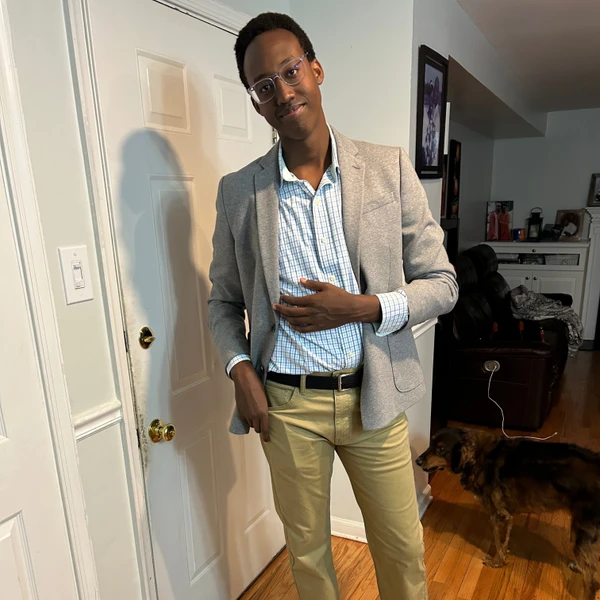
My name is Michael, and I am currently a junior in high school. I have a strong interest in entrepreneurship, with a particular focus on business, marketing, and sales. I am hard-working, goal-driven, and motivated by turning ideas into meaningful results. In addition to my academic and professional interests, I care deeply about the environment and global impact. I helped plant 500 trees in a Maasai community, in Kajiado, Kenya to support rainfall restoration efforts in drought-stricken areas.
Education
Wilmington Friends School
High SchoolMiscellaneous
Desired degree level:
Bachelor's degree program
Majors of interest:
- Business, Management, Marketing, and Related Support Services, Other
Career
Dream career field:
Marketing and Advertising
Dream career goals:
business owner
Medical Dietary Aide
Acts2022 – Present4 years
Sports
Tennis
Junior Varsity2022 – 2022
Football
Varsity2023 – Present3 years
Arts
School
Visual Arts2023 – 2024
Public services
Volunteering
Praise Assembly — Participated in church outreach and community service projects, supported local initiatives, and assisted with Sunday School by helping supervise children, prepare activities, and create a welcoming, supportive environment.2020 – 2024Volunteering
Hagley Museum — Assisted staff with supervising and engaging children in summer programs and activities, supports educational exhibits and hands-on projects, and helps ensure a safe, welcoming, and enjoyable experience for visitors and campers.2024 – 2024
Future Interests
Advocacy
Volunteering
Philanthropy
Entrepreneurship
“I Matter” Scholarship
One moment that clearly defines how I helped someone in need happened on a hot summer day at a traffic light. I saw a man standing on the corner holding a sign, asking for help. Cars passed by without stopping, and it would have been easy to do the same. Instead, I felt a responsibility to act.
I asked my mother if I could help and she agreed. We went to a nearby Walmart and I purchased some sandwiches and water. We returned and found the man still begging for food. The heat was intense, and he looked exhausted. I walked up to him and handed him the food and drink, his gratitude was immediate and genuine. In that moment, I realized that helping someone is not always about solving every problem they face, but about responding to their most immediate need. By stopping, acknowledging him, and offering what I could, I was able to provide both physical relief and a sense of dignity.
That experience shaped how I approach helping others. It taught me that action matters, especially in moments when it is easier to look away. I carried that mindset into other opportunities to serve.
In eighth grade, I worked with my family to prepare and serve breakfast to 60 men and women at a local homeless shelter. While preparing the food required effort, what mattered most was the interaction. As I served meals, I was able to speak with individuals and hear parts of their stories. It reinforced that helping someone is not only about providing resources, but also about offering respect and human connection.
My efforts to help others have also extended beyond my local community. After visiting a children’s home in Kibera, Kenya, one of the largest slums in Africa, I saw children who lacked basic educational resources but had a strong desire to learn. I helped organize drives to collect books, school supplies, and computers, which we shipped back to create a small library. Years later, I returned and saw children reading for hours, many holding books for the first time. By helping provide access to education, I was able to contribute to opportunities that could shape their futures.
In a Maasai village in Esukuta, Kenya, I encountered families living without basic sanitation. Recognizing the health and safety risks, I helped raise funds to build toilets and bathing facilities. This provided a safer and more dignified environment, particularly for women and children. In that same community, I also helped lead an initiative to plant over 500 trees, contributing to long-term environmental sustainability.
Each of these experiences reflects a different way I have helped someone in need—whether by meeting an immediate need, like providing food and water, or by contributing to long-term solutions, like improving access to education and sanitation. I have learned that helping others requires awareness, initiative, and a willingness to act.
The man at the traffic light may not remember me, but that moment stays with me. It reminds me that helping someone in need does not always require extraordinary resources—sometimes it simply requires the decision to stop, to notice, and to help
Hines Scholarship
College, to me, represents opportunity, growth, and purpose. It is more than a place to earn a degree, it is a space where I can develop the knowledge, skills, and perspective needed to turn my experiences into meaningful action. I see college as a bridge between where I am now and the impact I hope to make in the world.
My journey has already shown me the power of access and opportunity. Through my service work in Kenya, I witnessed how something as simple as a book, a safe facility, or a planted tree can transform lives. Children who once had no access to educational resources were able to read and learn. Communities without basic sanitation gained dignity and safety. These experiences shaped my understanding of what is possible when people are given the tools they need to succeed. College, for me, is where I will gain those tools on a deeper level, learning not only how to help, but how to build sustainable systems that create lasting change.
At the same time, my personal challenges have prepared me for the demands of higher education. Living with epilepsy has taught me resilience and adaptability, while dyslexia has pushed me to approach learning in creative and determined ways. I have learned how to persevere through obstacles, manage my time effectively, and seek out resources when I need support. These experiences have strengthened my work ethic and shown me that challenges do not define my limit, they shape my growth.
In college, I am seeking more than academic success. I want to challenge myself, engage with diverse perspectives, and develop critical thinking skills that will allow me to solve real-world problems. I am particularly interested in studying business and entrepreneurship, with the goal of creating organizations that address gaps in education and economic opportunity. I want to learn how to build initiatives that are not only impactful, but also sustainable, programs that empower individuals to create better futures for themselves and their communities.
Beyond the classroom, I hope to continue serving others through volunteer work and leadership opportunities. I want to collaborate with peers who are equally driven to make a difference and to be part of a community that values both innovation and compassion. College offers a unique environment where ideas can grow into action, and I intend to take full advantage of that.
Ultimately, what I am trying to accomplish goes beyond personal achievement. I want to create pathways for others, whether that means expanding access to education, improving living conditions and the environment or providing opportunities for economic growth. My goal is to use what I learn in college to build something that lasts, something that continues to impact lives long after I am directly involved.
College is not just the next step in my education; it is the foundation for the future I hope to build. It is where I will turn my passion for service into purpose-driven action, equipping myself to make a meaningful and lasting difference in the world
Michael Rudometkin Memorial Scholarship
To embody selflessness means showing up consistently, even when it is inconvenient, and using whatever resources I have to create opportunities for others. Selflessness is not as a single act, but as a way of living that requires awareness, humility, and a willingness to act when others are in need. It is not about recognition or reward, but about impact. I strive to live this out by listening and responding to real needs, that extend beyond my immediate world.
Part of how I embody selflessness comes from my ability to empathize with others’ struggles. Living with epilepsy has taught me how quickly life can become uncertain. A seizure can disrupt my day without warning, leaving me physically drained and mentally exhausted. In addition, living dyslexia has challenged me to find new ways of learning in systems that are not always designed for me. These experiences have shaped my perspective. I understand what it feels like to face obstacles that are not always visible, and that understanding pushes me to support others who may feel overlooked or discouraged. For me, selflessness often begins with recognizing those quiet struggles and responding with patience, compassion, and action.
I embodied selflessness after visiting a children’s home in Kibera, Kenya, one of the largest slums in Africa, I witnessed firsthand what it meant to live without access to basic educational resources. The children had no books, computers, or library, yet they had an undeniable eagerness to learn. Moved by their determination, my brother and I organized drives in our community to collect books, school supplies, and computers. We shipped these materials back to the children’s home, helping to create a small library. When we returned 4 years later, we saw children spending hours reading, many holding books for the first time. That moment reinforced my belief that even small, intentional actions can create lasting change.
In another community, a Maasai village in Esukuta, Kenya, I learned of the challenges of living without basic sanitation. Families, especially women and children, faced daily safety and health risks. In response, my brother and I helped raise funds to build toilets and bathing facilities, providing a sense of dignity and security. In that same village, we led an initiative to plant over 500 trees, contributing to environmental restoration and long-term sustainability.
My commitment to selflessness extends beyond international work and into my own community. On a hot summer day, I encountered a homeless man standing at a traffic light asking for help. I provided him with food and water, recognizing an immediate need and responding without hesitation. In eighth grade, with the support of my family, I prepared and served breakfast to 60 men and women at a local homeless shelter. Experiences like these remind me that selflessness is not defined by scale—it is defined by the willingness to act, whether the impact is on one person or many.
I have learned that selflessness requires initiative. It is not enough to feel empathy; meaningful impact comes from acting on it. Looking ahead, I plan to combine my passion for service with my interest in business and entrepreneurship. I want to create systems that empower individuals, not just temporarily assist them. My goal is to build organizations that expand access to education and vocational training for underserved communities. By providing resources, skills, and opportunities, I hope to create long-term pathways for success.
These experiences are more than accomplishment; they are reflections of how I strive to live. Selflessness defined by a pattern of choosing to act, to give, and to uplift others whenever I can.
Tawkify Meaningful Connections Scholarship
Some relationships don’t just influence who you are, they help you finally understand who you’ve been all along. For me, that relationship began in 6th grade with my math teacher, Mrs. Megan Hegenbarth (Mrs. H.).
Mrs. H was not just a teacher; she was observant in a way that made me feel known. She paid attention—not only to how I performed in class, but to how I learned, how I processed, and how I showed up each day. After a few months into my 6th grade year, she said something that stayed with me: I was a “different learner.”
Those words landed heavily. I had sensed that truth for years, but hearing it spoken aloud brought both validation and uncertainty. I didn’t yet have the language or understanding to know what “different” meant, only that I had spent much of my academic life trying to learn in ways that never quite worked.
From early elementary school, learning, especially reading, felt like trying to solve a puzzle with missing pieces. I searched for explanations. I wondered if I was autistic; my pediatrician said I was not. I questioned whether I had ADHD; after extensive testing, a psychologist ruled that out as well. Still, the struggle remained. At the same time, I endured severe bullying, which only deepened my sense of isolation. I knew I was different, even if no one could tell me why.
Despite evaluations from school specialists, I did not qualify for additional academic support. By the end of 6th grade at my charter school, I felt both discouraged and invisible.
Then came an unexpected turning point. After my brother and I completed a service project in Kenya: collecting books and helping open a library in a children’s home in one of Africa’s largest slums, I was invited to apply to a private school. My entrance exam scores were low, and I was advised to repeat 6th grade rather than move on to seventh.
A few months later, I found myself in Mrs. H’s classroom. What set her apart was not just her ability to teach math, but her willingness to be curious about me. She didn’t settle for assumptions or labels, she asked questions, paid attention, and advocated for deeper understanding. With her encouragement, I underwent educational testing that finally provided an answer: I was dyslexic.
That diagnosis changed everything. For the first time, my struggles had a name, not as a limitation, but as a different way of learning. It brought relief, clarity, and direction. Mrs. H. became the key that unlocked a door that had been closed for years. Through her attentiveness, she gave me something I had long been missing: the chance to be seen accurately.
More importantly, she helped reshape how I saw myself. Instead of focusing on what I lacked, she and my parents encouraged me to recognize the strengths that often accompany dyslexia: creativity, problem-solving, and big-picture thinking. What once felt like a barrier became a source of possibility.
That relationship with my 6th grade math teacher did more than improve my academic experience; it fundamentally shaped how I build connections with others. Mrs. H. taught me, through her actions, the power of noticing people. Her empathy made me more aware of the quiet struggles others carry. Because she was curious about my experience, I have learned to approach others with the same curiosity—asking questions, listening deeply, and valuing each person’s story.
I am currently a junior high school, and I plan to attend college as a business and marketing major. My goal is to develop the skills, knowledge, and connections necessary to build sustainable enterprises. My goals extend beyond personal success. Having experienced what it feels like to go unseen, I am committed to creating opportunities for others—particularly young black men with learning differences, who may be overlooked despite their potential.
In the long term, I hope to establish a philanthropic foundation focused on education and access. I want to invest in students who, like me, may not fit traditional molds but possess extraordinary ability. I believe that with the right support, recognition, and encouragement, their trajectories can change just as mine has.
Mrs. H. did more than teach me math. She showed me the impact of truly seeing someone, and in doing so, she changed how I see myself and how I choose to see others. That lesson continues to shape every relationship I build and every goal I pursue.
Our Destiny Our Future Scholarship
Some of the most defining moments in my life have come from witnessing struggle and hope side by side. I have seen what it means to live without access to basic resources—and I have also seen how even the smallest act of compassion can change the trajectory of someone’s life. Those experiences have shaped not only what I have done, but who I am becoming.
My volunteer work in Kenya opened my eyes in ways I will never forget. After visiting a children’s home in Kibera, one of the largest slums in Africa, my brother and I were deeply moved by what we saw. The children had no books, computers, or library—yet they had an undeniable eagerness to learn. When we returned to the United States, we committed ourselves to making a difference. We collected books, school supplies, and computers, and shipped them to the children’s home, helping to create a small library.
Four years later, we returned to visit. What struck me most was not what was missing, but what was present—the hunger to learn. Children who had so little sat for hours reading, holding onto books as if they were treasures. Some had never owned a book before. Watching their excitement and determination showed me how powerful access to education truly is.
That realization stayed with me as I continued my work. In a Maasai village in Esukuta, Kenya, my brother and I helped raise funds to build toilets and bathing facilities for a community living without basic sanitation. It was difficult to witness the daily challenges they faced, especially for women and children, but it was even more powerful to see the dignity that came with change. Something as simple as a safe place to bathe transformed daily life. In that same community, we also spearheaded a project to plant over 500 trees, contributing to environmental restoration. Each tree represented a step toward a more sustainable future—one I hope to continue building.
While these experiences have shaped my purpose, my personal journey has also been marked by challenges that are often unseen. Living with epilepsy means living with uncertainty. A seizure can interrupt my life without warning, leaving me physically drained and mentally exhausted. Dyslexia has also made learning very difficult, forcing me to find alternative ways to succeed in environments that are not always designed for me.
There have been moments of frustration and self-doubt. However, these challenges have taught me resilience, adaptability, and perseverance. More importantly, they have deepened my empathy. I understand what it feels like to struggle quietly, and that understanding fuels my desire to uplift others who may feel overlooked or unsupported.
I plan to make a positive impact in the world by combining my passion for service with my interest in business and entrepreneurship. My goal is not simply to achieve personal success, but to create opportunities for others. I hope to build organizations and initiatives that expand access to education and vocational training for underserved communities. By equipping individuals with skills, resources, and support, I want to help them create sustainable futures for themselves and their families.
I believe meaningful impact comes from meeting real needs with intention and consistency. Whether it is building a library, improving sanitation, or creating economic opportunities, lasting change begins with understanding people and investing in their potential.
My journey has not been easy, but it has given me something far more valuable than comfort— it has given me purpose. I am committed to using my experiences, challenges, and opportunities to create a future where more people are seen, supported, and empowered to thrive.
Dr. G. Yvette Pegues Disability Scholarship
I am seventeen years old and a junior in high school, but my academic journey did not begin with confidence or clarity. From elementary school onward, learning—especially reading—felt like trying to solve a puzzle with missing pieces. I questioned whether I was autistic. My pediatrician said I was not. I wondered if I had ADHD. After extensive testing, a psychologist confirmed I did not. Yet despite every answer being “no,” I continued to struggle academically and endured severe bullying. I knew I was different long before I understood why.
As a young child, I also had a noticeable stutter, which made speaking in class intimidating and further isolated me from my peers. Although I was evaluated by school learning specialists, I did not qualify for a formal learning plan. By the end of sixth grade at my charter school, I felt discouraged, misunderstood, and invisible within an educational system that could not see how I learned.
An unexpected opportunity changed everything. After my brother and I completed a service project in Kenya—where we collected books and helped open a library in a children’s home in one of Africa’s largest slums—I was invited to apply to a private school. My entrance exam scores were low, and I was advised to repeat sixth grade rather than advance to seventh. Accepting that recommendation was humbling, but it became one of the most important decisions of my life.
A few months later, my math teacher noticed something others had missed: I was not incapable—I was neurodivergent. She encouraged my family to pursue educational testing, which revealed that I was dyslexic. That diagnosis brought profound relief. For the first time, my struggles had a name, and more importantly, a path forward. Instead of focusing on limitations, my parents encouraged me to recognize the strengths associated with dyslexia: creativity, innovation, resilience, and big‑picture thinking.
I embraced that mindset fully. As I learned more about how my brain works, I discovered a natural pull toward business and entrepreneurship—fields that reward problem‑solving and unconventional thinking. I began painting on canvas and selling my artwork, completing paid odd jobs in my neighborhood, and eventually launching an online business that generated revenue. Each venture strengthened my confidence and showed me that my neurodiversity was not an obstacle, but a competitive advantage.
In addition to dyslexia, living with epilepsy has further shaped my perspective. Managing an invisible disability has deepened my empathy for others navigating challenges that are often misunderstood or overlooked. These experiences have solidified my commitment to using education not only for personal success, but for meaningful impact.
I plan to major in business to gain the skills, knowledge, and leadership experience necessary to build sustainable enterprises that create opportunity. After college, I intend to grow my own businesses while reinvesting in underserved communities. I hope to support the Dyslexia and Epilepsy Foundations through financial contributions and advocacy, and to empower young men from underserved backgrounds, who have entrepreneurial potential but lack access to resources, mentorship, and capital.
My long‑term goal is to operate successful businesses alongside a philanthropic foundation focused on education, economic independence, and opportunity creation.
What once felt like a limitation has become my greatest strength. My neurodiversity has taught me perseverance, creativity, and compassion—qualities that drive both innovation and service. I am no longer searching for what makes me different. I am using it to build a future that uplifts others.
Thank you in advance for your consideration.
Arlin Diaz Memorial Scholarship
Personal Journey
In the summer of 2022, I returned to Delaware from a camping trip in Missouri with my Royal Rangers team, expecting life to resume as normal. Instead, I began experiencing something I could not explain. I felt constantly exhausted, mentally foggy, and disconnected from myself. When my parents asked how I felt, the only word I could find was “discombobulated.” I slept for long stretches yet woke up feeling unrested. My appetite disappeared, my focus declined, and I struggled to function in ways I never had before.
Over the next several months, my life became defined by uncertainty. I endured multiple doctor visits, blood tests, emergency room trips, and numerous studies—none of which gave clear answers. Each time I improved, I hoped the episode was over, only for the symptoms to return weeks later. By the fall, my health began to interfere with my education. I missed school frequently, sometimes needing days of uninterrupted sleep to recover. The hardest part was not the physical fatigue, but the mental burden of not knowing what was happening to my body.
In the spring of 2023, my condition worsened, leading to hospitalization and extensive neurological testing. When doctors initially suspected multiple sclerosis, my family and I were frightened. Although that diagnosis was ruled out, I left the hospital still without answers. A physician told my parents that whatever was happening was “neurological and had not yet fully revealed itself.” That uncertainty tested my patience, but it also taught me perseverance and faith in the face of the unknown.
A few months later, in the summer of 2023, further testing—including another EEG—finally provided clarity. I was diagnosed with Focal Epilepsy, specifically focal unaware seizures. While the diagnosis brought relief in understanding what I was facing, it also meant adapting to a new reality. Seizures are often invisible; their aftermath brings days of brain fog, confusion, and exhaustion. I learned to take medication twice daily and to respect my body’s limits. At first, I resisted the idea of needing medication for life—I wanted to feel like a typical teenager—but over time, epilepsy taught me ownership, self-discipline, and maturity beyond my years.
Living with epilepsy has not been easy. Each seizure comes with the risk of academic setbacks, memory lapses, and the emotional strain of unpredictability. Yet through this challenge, I’ve discovered resilience and determination I did not know I had. I’ve learned to adapt my study habits, manage my time, and stay focused, even on difficult days. Most importantly, epilepsy has taught me that strength is often built in silence—through small acts of consistency and self-belief.
Impact of the Scholarship
Receiving this scholarship would significantly ease the financial pressures of pursuing my education. Managing epilepsy includes ongoing medical expenses—neurology visits, medication, and monitoring—all of which add to the burden of college costs. This support would allow me to focus more on my academic growth and less on financial worry, helping me dedicate my energy to learning and leadership. With greater financial stability, I can take full advantage of educational opportunities—such as internships, leadership programs, and community involvement—that align with my goal of studying business and entrepreneurship.
To me, honoring Arlin’s memory means living with the same courage, compassion, and determination that his legacy represents. I intend to embody those values not only through academic excellence, but also by using my experience to bring awareness to neurological conditions and to encourage others facing invisible challenges. I want my perseverance to serve as a reflection of Arlin’s spirit—showing that adversity can fuel purpose, and that life’s hardest challenges often bring forth the strongest character.
This scholarship represents more than financial assistance—it is a vote of confidence in my potential and a reminder that my story, like Arlin’s, can be a source of inspiration and impact. I am determined to use this opportunity to grow academically, serve others, and build a future that honors the resilience and legacy this scholarship stands for.
Thank you in advance for your consideration.
Michael Wanyoike
Dylan's Journey Memorial Scholarship
Living with dyslexia has shaped every part of my academic journey and, in many ways, who I am as a person. Some of my earliest memories of school are filled with frustration and self-doubt. I remember sitting in my elementary classroom, gripping a book while my classmates read aloud with confidence. When it was my turn, the words seemed to blur together. I could feel my face grow warm as I struggled, painfully aware of how far behind I felt. In those moments, I did not feel capable or intelligent—I felt different.
As the years passed, dyslexia continued to affect how I learned and how I viewed myself. Assignments that seemed simple to others required extra time, repeated effort, and emotional energy. I often questioned why learning felt so much harder for me and whether I would ever be able to succeed academically. Being misunderstood and underestimated took a toll on my confidence, and there were moments when giving up felt easier than continuing to push forward.
However, dyslexia also taught me lessons that cannot be found in textbooks. I learned perseverance through struggle and strength through vulnerability. I learned how to advocate for myself, ask for help, and develop strategies that worked for my learning style. Slowly, I began to realize that my worth was not defined by how quickly I could read, but by my determination to keep trying. Each small victory—finishing a book, improving a grade, completing a challenging assignment—felt monumental because I knew how much effort it required.
Over time, my learning disability became a source of motivation rather than shame. Dyslexia taught me how to think differently, approach problems creatively, and persist when things feel overwhelming. These qualities have shaped my work ethic and character far beyond the classroom. I now approach challenges with resilience, patience, and confidence in my ability to grow.
My desire to pursue higher education is deeply rooted in this journey. College represents opportunity, independence, and the chance to fully embrace my potential. It is a place where I can continue challenging myself, expanding my knowledge, and proving that learning disabilities do not limit ambition or success. I want to use my education not only to achieve my own goals, but also to advocate for students who feel unseen or discouraged, as I once did.
I believe I am a strong candidate for this scholarship because I have transformed adversity into purpose. I have faced challenges that tested my confidence and perseverance, yet I continue to move forward with determination and hope. This scholarship would provide meaningful support as I pursue higher education and continue to grow academically and personally. More importantly, it would affirm that students with learning disabilities deserve opportunity, understanding, and belief. I am committed to using my experiences, education, and voice to create positive impact and inspire others to see their challenges as sources of strength.
Maurice Geyen Business Scholarship
WinnerI am seventeen years old and a junior in high school, but my academic journey did not begin with confidence or clarity. From elementary school onward, learning—especially reading—felt like trying to solve a puzzle with missing pieces. I questioned whether I was autistic. My pediatrician said I was not. I wondered if I had ADHD. After extensive testing, a psychologist confirmed I did not. Yet I continued to struggle academically, all while enduring severe bullying. I knew I was different, even if I did not yet know why.
As a young boy, I also had a noticeable stutter, which made speaking in class intimidating and further isolated me from my peers. Despite evaluations by school learning specialists, I did not qualify for a specialized learning plan. By the end of sixth grade at my charter school, I felt discouraged and unseen.
Everything changed through an unexpected opportunity. After my brother and I completed a service project in Kenya—where we collected books and helped open a library in a children’s home in one of Africa’s largest slums—I was invited to apply to a private school. My entrance exam scores were low, and I was advised to repeat sixth grade instead of entering seventh. Though humbling, I accepted.
A few months later, my math teacher noticed something others had missed: I was not incapable—I learned differently. She recommended educational testing, which revealed that I was dyslexic. That diagnosis brought relief. For the first time, I had an explanation. Instead of fear, my parents encouraged me to focus on the strengths associated with dyslexia: creativity, problem-solving, and big-picture thinking.
I embraced that mindset. As I learned more about dyslexia, I discovered a natural pull toward business and entrepreneurship. I became energized by ideas that solved problems and could be monetized. I began painting on canvas and selling my work to friends and family, completing paid odd jobs in my neighborhood, and launching an online business that generated revenue. Each venture taught me resilience, discipline, and confidence.
I plan to major in business to gain the skills, knowledge, and connections necessary to build sustainable enterprises. After college, I intend to grow my own businesses while giving back. Living with epilepsy has shaped my empathy, and I hope to support epilepsy foundations through financial contributions. I also want to help young men from underserved backgrounds—especially in Kenya—who have business potential but lack resources. My long-term goal is to run successful businesses alongside a philanthropic foundation that invests in education and opportunity.
What once felt like a limitation became my greatest strength. I am no longer searching for what makes me different—I am building a future because of it.
Learner Math Lover Scholarship
I love math not because it comes easily to me, but because it does not. Math has challenged me in ways few other subjects have, yet it has also taught me some of my most important lessons about perseverance, growth, and possibility.
For a long time, I struggled with math. Concepts took longer to understand, and answers did not come naturally. There were moments when frustration tempted me to give up. But instead of closing doors, math opened them. It showed me that learning is not about speed or perfection—it is about curiosity and effort. Every problem became an invitation to think differently, to try again, and to trust that understanding would come with patience.
Math is the gateway to learning because it trains the mind to ask questions, recognize patterns, and solve problems. It teaches discipline and logical thinking, skills that reach far beyond numbers and equations. Through math, I learned how to break down complex ideas into manageable steps, a skill that has helped me across all subjects and in life.
Most importantly, math taught me confidence. Each small victory—solving a difficult problem or finally grasping a concept—proved that growth is possible even in areas of struggle. Loving math means loving the process of learning itself.
Because of math, I have learned not to fear challenges, but to see them as opportunities. That mindset has shaped who I am and who I am becoming.
Gabriel Martin Memorial Annual Scholarship
Epilepsy has deeply shaped my life, influencing how I see myself, others, and my goals for the future. Living with epilepsy means living with uncertainty every single day. Seizures are unpredictable, and that unpredictability creates a constant awareness that my body can suddenly lose control without warning. Even during moments of calm or happiness, there is always a lingering sense of wondering when the next seizure might strike. This reality has affected how I move through life, forcing me to be cautious, prepared, and mentally strong.
When a seizure occurs, its impact lasts far beyond the moment itself. For three to four days afterward, I struggle to function physically and mentally. My body feels exhausted, my focus is limited, and even simple tasks become challenging. Missing school, falling behind academically, or having to step away from activities I care about can be frustrating and discouraging. These recovery periods have tested my patience and determination, especially when I am working hard and still feel held back by something I cannot control.
Throughout this journey, my parents have played an essential role in teaching me resilience. They have consistently encouraged me to keep moving forward, even when epilepsy made life feel unfair or overwhelming. Through their support, I have learned that setbacks do not define me and that perseverance matters more than perfection. Their belief in my strength has helped me push through moments of doubt and frustration, reminding me that challenges can shape character rather than limit potential.
Football has also been a powerful source of strength in my life. The sport has taught me grit, discipline, and accountability—lessons that have helped me overcome challenges both physically and academically. Football taught me how to push through discomfort, stay committed, and remain focused even when results are not immediate. These skills have carried over into the classroom, helping me stay disciplined with my studies and determined to succeed despite setbacks caused by epilepsy.
Living with epilepsy has also made me more sensitive to the struggles of others. Experiencing a chronic condition firsthand has taught me empathy and compassion for people facing invisible challenges. I understand how isolating and exhausting chronic conditions can be, and this awareness has shaped how I treat others. While epilepsy has brought obstacles into my life, it has also given me resilience, discipline, and empathy—qualities that will continue to guide me as I work toward my future goals.
William "Bill" Scotti Memorial Football Scholarship
Football has played a significant role in shaping who I am, not only as an athlete but also as a person. From the beginning, the sport has taught me discipline, grit, and the importance of teamwork. Practices demand consistency, focus, and accountability, and being part of a team has shown me that success is never achieved alone. Football has pushed me to give my best effort every day, whether in training, in games, or in how I carry myself off the field.
My journey in football has not been without serious challenges. Living with epilepsy has sometimes affected my ability to play and perform at the level I expect of myself. During the season, I also sustained a hip fracture, which forced me to step away from the game at a time when I wanted to be contributing the most. These experiences were both physically and emotionally difficult, and there were moments when frustration and disappointment made me question whether it was worth continuing. However, football taught me how to remain positive despite setbacks and hardships. When I could not support my team on the field, I found other ways to contribute—encouraging my teammates, helping them stay focused, and remaining mentally engaged in every practice and game.
A major reason I was able to persevere through these challenges is the mentorship of my football coach. He has been more than just a coach to me; he has been a constant source of encouragement and guidance. During moments when I felt discouraged or considered quitting, he reminded me of my potential and the bigger picture. He emphasized that adversity is part of growth and that resilience is built through perseverance. His belief in me, even when I struggled to believe in myself, motivated me to keep pushing forward.
Football has also helped me refocus on my priorities, both academically and personally. The structure of the sport has taught me how to manage my time, stay organized, and hold myself accountable in the classroom as well as on the field. It has shown me that effort does not always guarantee the results I hope for, but that does not mean the effort is wasted. Instead, football has taught me to keep pushing, to learn from setbacks, and to grow stronger through the process. These lessons will stay with me long after my playing days are over, shaping how I approach challenges in every area of my life.