Hobbies and interests
Architecture
Motorcycles
Cars and Automotive Engineering
Reading
Academic
Business
I read books multiple times per month
Michael Smock
1x
FinalistMichael Smock
1x
FinalistBio
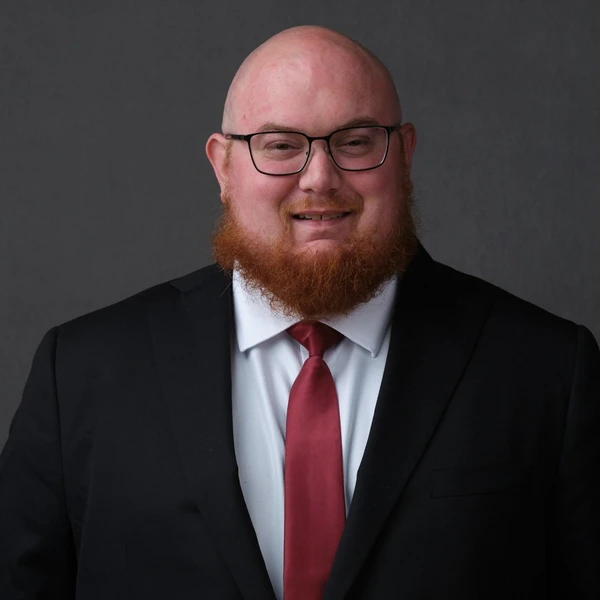
Mike Smock is a college student pursuing a career in risk management and insurance, with a strong interest in property and casualty insurance. He is actively involved in professional organizations, including Gamma Iota Sigma and Delta Sigma Pi, where he has held leadership and committee roles focused on professional development and academic excellence. Mike has participated in industry conferences and educational programs that have strengthened his commitment to the insurance profession. He is passionate about continuous learning, service, and building a career that helps individuals and businesses manage risk and protect their futures.
Education
Ball State University
Bachelor's degree programMajors:
- Business, Management, Marketing, and Related Support Services, Other
Ivy Tech Community College-East Central
Associate's degree programMajors:
- Business, Management, Marketing, and Related Support Services, Other
Lincoln College of Technology-Indianapolis
Trade SchoolMajors:
- Mechanic and Repair Technologies/Technicians, Other
Miscellaneous
Desired degree level:
Master's degree program
Graduate schools of interest:
Transfer schools of interest:
Majors of interest:
- Business, Management, Marketing, and Related Support Services, Other
Career
Dream career field:
Business Supplies and Equipment
Dream career goals:
underwriter
Produce
Payless Supermarket2025 – Present1 year
Sports
Baseball
Club1998 – 201618 years
Public services
Volunteering
Arf Muncie — Handyman2025 – Present
Harry & Mary Sheaffer Scholarship
Building a truly empathetic and understanding global community requires more than just good intentions; it demands actionable support, active listening, and a dedication to protecting the vulnerable. I intend to use my unique blend of professional training in risk management and my passion for grassroots community leadership to foster an environment where people feel genuinely secure and empowered to succeed.
At its core, the field of risk management and insurance is fundamentally about empathy. It is the practice of helping individuals and businesses navigate uncertainty, mitigate devastating losses, and ultimately rebuild their lives after their worst days. I view this discipline not merely as a business function, but as a profound societal safety net. By deeply understanding the unique vulnerabilities that different communities face—whether those stem from natural disasters, sudden economic shifts, or unforeseen personal crises—I aim to advocate for and implement solutions that provide tangible security. When individuals and entire communities have a reliable safety net to fall back on, they are far better positioned to thrive, collaborate, and extend empathy to others. My goal is to apply this analytical yet compassionate lens to ensure that protection is accessible and equitable.
Furthermore, I believe that cultivating a global community of understanding begins with empowering the leaders of tomorrow on a local level. Through my leadership roles in professional organizations, particularly my work with Delta Sigma Pi and Gamma Iota Sigma, I have made it a priority to connect my peers with the resources, scholarships, and mentorship they need to achieve their professional goals. Fostering a collaborative, rather than a fiercely competitive, environment teaches young professionals the invaluable lesson of lifting each other up. By guiding younger members, facilitating major networking opportunities like career fairs, and acting as a dedicated mentor, I am helping to cultivate a network of future business leaders who prioritize ethical support and mutual understanding over solitary success.
Finally, true empathy requires staying grounded in everyday, grassroots service. It is easy to discuss global communities in the abstract, but the real work happens on the ground. Whether it is facilitating access to essential knowledge as a university library ambassador or dedicating my time to local animal rescue initiatives, direct community service reinforces the vital importance of showing up for the most vulnerable among us. Working with rescued animals, in particular, teaches a universal, unspoken language of compassion and patience that translates into every human interaction. These localized experiences constantly remind me that every large-scale global initiative must be deeply rooted in compassion for the individual.
Ultimately, I will build a more empathetic global community by operating at the intersection of professional protection and personal empowerment. By utilizing my risk management skills to mitigate systemic vulnerabilities and leveraging my leadership experience to foster collaborative success among my peers, I hope to create a powerful ripple effect. When we provide stability and lead with compassion locally, we lay the groundwork for a more understanding world.
Ethel Hayes Destigmatization of Mental Health Scholarship
My experience with mental health has profoundly shaped my goals, relationships, and understanding of the world. In 2019, I was admitted to a psychiatric unit and diagnosed with Bipolar II disorder and depression. That moment marked a turning point in my life—not because everything suddenly became easier, but because I finally had language and structure for struggles I had been quietly carrying for years. What I once believed was simply inconsistency or failure turned out to be months-long depressive episodes followed by periods of hypomania. Understanding that reality forced me to reframe how I see myself, others, and the paths I choose.
In terms of my goals, mental health transformed how I define success. Before my diagnosis, I chased productivity and achievement as proof of worth, often ignoring warning signs until I burned out. Now, my goals are more sustainable and purpose-driven. I still hold myself to high standards academically and professionally, but I measure progress by consistency, growth, and resilience rather than perfection. I am deeply motivated to build a career where empathy, structure, and responsibility matter—qualities that are essential not only for my stability, but for meaningful leadership. My lived experience has made me especially drawn to fields that value risk assessment, long-term planning, and accountability, because I understand firsthand what happens when risks are ignored and systems fail people.
Mental health has also reshaped my relationships in challenging but meaningful ways. I have struggled to maintain friendships and close relationships, particularly during depressive episodes when isolation feels safer than vulnerability. For a long time, I interpreted this as a personal flaw. Therapy and self-reflection helped me realize that my difficulty was not a lack of care, but a lack of tools. Learning to communicate boundaries, recognize emotional patterns, and ask for help has made my relationships more honest, even when they are imperfect. I am more intentional now—choosing quality over quantity, and authenticity over surface-level connection. While this has narrowed my circle, it has deepened my trust in the relationships that remain.
Perhaps most importantly, mental health has changed how I understand the world. I no longer see behavior as simply “good” or “bad,” “motivated” or “lazy.” I see complexity. I see invisible battles. I understand that many people are doing the best they can with the tools they have at that moment. This perspective has made me more patient, less judgmental, and more willing to listen. It has also strengthened my sense of responsibility to contribute positively to my community. I know how life-altering it can be when someone is met with understanding instead of dismissal, structure instead of chaos, and opportunity instead of stigma.
Living with Bipolar II and depression has required discipline, self-awareness, and humility. It has taught me that strength is not the absence of struggle, but the willingness to confront it honestly and consistently. While mental illness is not something I would have chosen, it has given me clarity about who I am and what matters to me. It has shaped me into someone who values stability, service, and integrity—both in my personal life and in my future career.
Ultimately, my experience with mental health has not limited my vision for the future; it has sharpened it. I move forward with intention, empathy, and a deep respect for the unseen challenges others carry. That understanding guides my goals, grounds my relationships, and informs how I navigate the world every day.
Mikey Taylor Memorial Scholarship
My experience with mental health has profoundly shaped my beliefs, relationships, and career aspirations. In 2019, I was hospitalized and later diagnosed with Bipolar II disorder and depression. For years before, my prolonged periods of depression and months of hypomania were often misunderstood as ADHD, leaving me frustrated, isolated, and uncertain about my future. Receiving an accurate diagnosis gave me clarity, tools to manage my mental health, and a foundation to rebuild both my personal and professional life.
This journey has shaped my beliefs in meaningful ways. It has taught me the importance of empathy, patience, and understanding. Experiencing mental health challenges firsthand has shown me that everyone faces struggles that may not be visible, and that these challenges can profoundly affect behavior, communication, and decision-making. It has also strengthened my belief in resilience—the idea that setbacks are not failures but opportunities to grow, adapt, and develop new strategies to succeed.
My mental health journey has particularly influenced my relationships, though not without challenges. I have often struggled to maintain friendships and close personal relationships because my mood episodes can affect my ability to communicate consistently or engage socially. These difficulties have been frustrating, but they have also taught me valuable lessons about self-awareness, boundaries, and compassion. I have learned to prioritize relationships with people who are understanding and supportive, and I have developed skills in honest communication about my needs and limitations. At the same time, I have become more attuned to the struggles of others, which allows me to offer support, empathy, and patience in a meaningful way. These lessons have strengthened my ability to work collaboratively and connect authentically with people, even in professional or team settings.
Professionally, my mental health experience has directly shaped my career aspirations. I am pursuing a career in risk management and insurance, a field that requires analytical thinking, problem-solving, and a commitment to helping others navigate uncertainty. My experiences with unpredictability and resilience have given me a deep appreciation for the importance of preparation, planning, and support systems—principles that I hope to apply in my future career. Beyond technical expertise, I aim to approach my work with empathy, understanding, and integrity, knowing firsthand the difference that support and guidance can make during challenging times.
Ultimately, my mental health journey has taught me resilience, self-awareness, and the value of empathy. While I have faced difficulties in maintaining friendships and relationships, these experiences have deepened my understanding of human connection and strengthened my commitment to personal growth. They have guided my beliefs, shaped my approach to relationships, and inspired me to pursue a career where I can make a tangible, positive impact on others’ lives. My journey has shown me that challenges, though difficult, can become opportunities for growth, understanding, and meaningful contribution.
Bonita J. Gribble Memorial Scholarship
I am a first-generation college student pursuing a career in risk management and insurance, a field that combines analytical thinking with service to others. Insurance is ultimately about protecting people, businesses, and communities from uncertainty, and I am motivated by the responsibility of helping others recover and move forward after unexpected events. Through my academic coursework, internships, and professional involvement, I am building the skills and experience necessary to become a knowledgeable, ethical, and dependable professional in this industry.
Growing up in a low-income family, I quickly learned the value of hard work, perseverance, and resourcefulness. As the first in my family to attend college, I faced unique challenges navigating higher education, from understanding financial aid to advocating for academic opportunities. These experiences instilled resilience, determination, and a deep appreciation for the transformative power of education. Attending college has been both a personal achievement and a critical step toward breaking cycles of financial struggle in my family. Higher education has provided structure, mentorship, and resources to pursue a meaningful career while balancing academics, personal responsibilities, and financial constraints.
My passion for higher education is also informed by my personal journey with mental health. In 2019, I was hospitalized and later diagnosed with Bipolar II disorder and depression. Before this, my symptoms were often misunderstood as ADHD, leading to months-long depressive episodes followed by periods of hypomania. Receiving an accurate diagnosis was life-changing—it gave me clarity, tools to manage my mental health, and the ability to focus on long-term goals. College has provided a framework to build resilience, self-discipline, and focus, allowing me to continue growing academically, professionally, and personally despite challenges.
Beyond academics, I am deeply involved in professional organizations that align with my career goals. As a member of Delta Sigma Pi, I have developed leadership, teamwork, and communication skills that prepare me for a professional career. Through Gamma Iota Sigma, I have attended industry conferences, participated in scholarships, and connected with mentors, gaining hands-on insight into risk management and insurance while expanding my professional network. These experiences have reinforced that success requires not only technical knowledge but also emotional intelligence, resilience, and accountability—qualities I have worked hard to cultivate.
Receiving this scholarship would play a critical role in helping me achieve my goals. It would alleviate financial stress associated with tuition, textbooks, and professional development, allowing me to focus fully on my studies, leadership roles, and experiential learning opportunities. Beyond the financial support, this scholarship would affirm that hard work, perseverance, and dedication can create meaningful opportunities for first-generation students from low-income backgrounds.
Ultimately, my goal is to build a career in insurance and risk management where I can protect individuals and organizations from risk while making a positive impact in my community. This scholarship would allow me to continue pursuing higher education with focus, purpose, and determination, empowering me to reach my full potential and give back to the profession and the communities it serves.
Elizabeth Schalk Memorial Scholarship
I am a college student whose understanding of mental illness was shaped by a pivotal moment in 2019, when I was admitted to a psychiatric unit and formally diagnosed with Bipolar II disorder and depression. That experience marked a turning point in my life—not because it was easy, but because it finally brought clarity to years of confusion about my mental health.
Before my diagnosis, many of my symptoms were attributed to ADHD. While that explanation accounted for my difficulty focusing and fluctuating energy levels, it never fully explained the emotional extremes I experienced. I cycled through months-long depressive episodes marked by exhaustion, hopelessness, and a persistent sense of inadequacy. These periods were followed by extended stretches of hypomania, where I felt unusually driven, confident, and capable of taking on far more than was sustainable. At the time, I believed this was simply how my brain worked. I did not yet understand that these patterns were signs of a mood disorder rather than a behavioral or attention issue.
My admission to the psychiatric ward forced clinicians—and myself—to put the pieces together. For the first time, professionals recognized that my struggles were not isolated symptoms but part of a larger, cyclical pattern. Receiving an accurate diagnosis of Bipolar II and depression was both overwhelming and validating. It was difficult to confront the reality of a lifelong mental health condition, yet it was also a relief to finally have an explanation that made sense of my experiences.
Mental illness has affected not only me but also my family. My hospitalization challenged all of us to confront stigma, fear, and uncertainty surrounding mental health. While there were moments of misunderstanding, my diagnosis ultimately opened the door to more honest communication and mutual learning. My family’s support has been instrumental in my recovery, and navigating this journey together strengthened our relationships in ways I did not expect.
Since my diagnosis, managing Bipolar II and depression has required consistency, self-awareness, and humility. Therapy and structured coping strategies have helped me recognize early warning signs of mood shifts and take proactive steps to protect my mental health. I have learned the importance of balance, boundaries, and asking for help—skills that continue to guide me academically, professionally, and personally.
Living with mental illness has also shaped my character. It has made me deeply empathetic toward others whose struggles may not be visible. It has taught me patience, accountability, and resilience. I am more thoughtful in my decisions and more aware of the long-term impact of neglecting mental well-being.
Although Bipolar II and depression are ongoing challenges, they do not define my limitations—they reflect my strength. My experiences have given me perspective, discipline, and a commitment to growth. I move forward not only determined to succeed, but to do so in a way that honors mental health, authenticity, and compassion for myself and others.
Future Green Leaders Scholarship
Sustainability should be a top priority in the field of risk management and insurance because environmental risk has become one of the most significant and complex challenges facing modern society. Climate change, extreme weather events, resource scarcity, and evolving environmental regulations are no longer distant threats; they are already influencing loss frequency, claims severity, underwriting assumptions, and long-term financial stability. As an industry built on identifying, evaluating, and mitigating risk, insurance has both a responsibility and an opportunity to lead in promoting sustainable practices that protect people, businesses, and communities.
Environmental risk directly affects the core functions of insurance. Increasing natural catastrophes such as floods, wildfires, and hurricanes strain claims operations and challenge traditional pricing models. At the same time, businesses face heightened exposure due to supply chain disruptions, regulatory compliance risks, and reputational damage related to environmental performance. If sustainability is not integrated into risk assessment and decision-making, insurers risk underestimating exposures and jeopardizing solvency. Prioritizing sustainability allows insurers to improve loss predictability, encourage resilience, and adapt to a rapidly changing risk landscape.
Beyond managing losses, the insurance industry plays a powerful role as a market influencer. Through underwriting standards, coverage incentives, and risk engineering services, insurers can actively encourage policyholders to adopt safer and more sustainable practices. For example, insurers can incentivize resilient construction, energy-efficient systems, and proactive loss prevention measures. In doing so, insurance shifts from being purely reactive to becoming a catalyst for long-term risk reduction. This alignment of sustainability and profitability demonstrates that environmental responsibility is not only ethically important but also financially sound.
In my future career in risk management and insurance, I see myself contributing to sustainability by helping organizations understand and mitigate environmental risks before they result in losses. Whether working in underwriting, claims, or risk consulting, I aim to use data-driven analysis to support informed decision-making and proactive risk management strategies. I am particularly interested in how loss prevention, claims trends, and risk modeling can be used to identify environmental vulnerabilities and promote more resilient operations.
Additionally, I hope to advocate for education and communication that help clients recognize the connection between sustainable practices and long-term financial stability. By supporting businesses in improving safety standards, reducing environmental exposures, and planning for climate-related risks, I can help create outcomes that benefit insurers, policyholders, and communities alike. Sustainability-focused risk management not only reduces losses but also strengthens trust and long-term relationships within the industry.
Ultimately, sustainability and risk management share a common goal: protecting what matters most. By prioritizing sustainability, the insurance industry can help build a more resilient future while remaining true to its mission of managing uncertainty and safeguarding economic stability. As a future professional in this field, I am committed to being part of that solution.