Hobbies and interests
Real Estate
Painting and Studio Art
Architecture
Self Care
Mental Health
Finance
Anthropology
Archaeology
History
Cars and Automotive Engineering
Reading
Academic
Self-Help
I read books daily
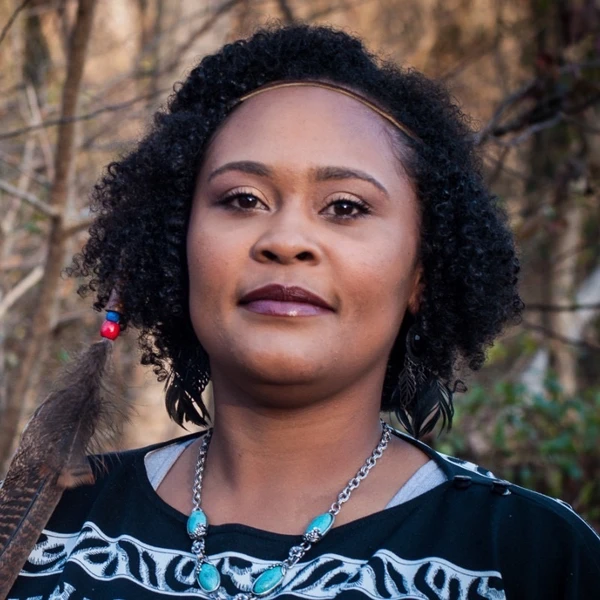
Mia Jackson
1x
FinalistMia Jackson
1x
FinalistBio
Student • Survivor • Future Urban Planner
I’m a resilient single mother and student pursuing an Associate’s degree in Social Sciences, with plans to transfer into a Bachelor’s program in Urban Planning. After serving as a full-time caregiver to my grandmother and surviving years of domestic violence and family abuse, I’ve spent the last four years navigating housing instability while rebuilding my life.
Through education, I’m committed to designing more equitable communities and empowering other women, especially survivors, to reclaim financial independence and stability. My journey is fueled by purpose, and I’m using every challenge I’ve faced as a blueprint to create safer, more supportive systems for others.
Education
Northern Virginia Community College
Associate's degree programMajors:
- Social Sciences, General
Minors:
- Sociology and Anthropology
Paul Mitchell the School-Tysons Corner
Trade SchoolMajors:
- Cosmetology and Related Personal Grooming Services
Miscellaneous
Desired degree level:
Doctoral degree program (PhD, MD, JD, etc.)
Graduate schools of interest:
Transfer schools of interest:
Majors of interest:
- City/Urban, Community, and Regional Planning
- Social Sciences, General
- Sociology and Anthropology
- Anthropology
Career
Dream career field:
Architecture & Planning
Dream career goals:
To build safe and sustainable communities.
Owner/Operator
Mia Stylist MUA2006 – 202115 years
Equity Elevate Scholarship
I’m Mia B. Jackson, a proud Native American and African American woman, first-generation college student, single mother, and survivor. My path hasn’t been easy, but I’ve learned to turn adversity into ambition and hardship into a mission. Right now, I’m in the process of searching for a new apartment. This step feels monumental after years of housing instability. Every viewing, every budgeting spreadsheet, and every conversation with a leasing office carries both hope and anxiety. After surviving domestic violence and extended periods of homelessness, trusting that I can create and sustain stability for my daughter and myself feels like a courageous act in itself.
Being homeless as an Indigenous person carries its own particular kind of grief. I walk the same land my ancestors once did, but now it has been claimed, paved, and priced beyond our reach. The same soil that once held our ceremonies and communities is now a commodity that I’ve struggled to afford as I seek to rebuild. Living without a home on stolen ancestral land has deepened my commitment to reclaiming space, restoring dignity, and rewriting what community means for people like me.
When I made the decision to go back to school, I was homeless, jobless, and caring for my daughter on my own. I had just left an abusive relationship and a toxic family environment after years of being the primary caregiver for my elderly grandmother. We were constantly in survival mode. But even during the most uncertain times, I knew I had a purpose bigger than pain. That purpose was education, and more importantly, transformation—mine and others’.
I’m pursuing an associate degree in Social Sciences and plan to transfer into a bachelor’s program in Urban Planning. My career goals are rooted in reclaiming and reshaping community structures—especially for Indigenous people, Black mothers, and other historically marginalized groups. I want to design neighborhoods that reflect our values, protect our traditions, and promote real safety and opportunity. My studies will allow me to bridge ancestral wisdom with modern systems to create environments that affirm rather than erase.
As a multiracial woman with deep cultural roots, my lived experiences shape every aspect of how I show up in the world. I’ve been told I’m too different, too complex, too visible; but I’ve come to see those qualities as power. I’ve used my voice to advocate for women in shelters, to create healing spaces online, and to challenge systems that fail people like me. I don’t just want to earn a degree. I want to dismantle barriers and open doors for women who are still trying to find their way through.
Scholarships like this make that possible. They don’t just fund dreams. They fuel them. Your support wouldn’t just help me stay in school. It would help me secure safe, long-term housing, continue raising a daughter who sees her mother rise, and work toward the future we’ve fought so hard to reclaim.
I am not asking for charity. I’m inviting you to invest in change. Because when single mothers rise, communities rise. And when women like me are given a chance, we don’t just make it—we make it count.
Little Miami Brewing Native American Scholarship Award
I am a proud member of the Tauxenant Band of the Pamunkey Indians of Virginia, and a direct descendant of Keziah Powhatan, niece of Chief Powhatan. My lived experience as a Native American woman is shaped by both reverence and resistance. Reverence for the sacred land my ancestors protected, and resistance to the erasure that continues to threaten our presence, history, and identity.
My people are a first-contact tribe. The legacy of colonialism surrounds us, not just in textbooks or museums, but in the very ground we walk on. Our traditional territory, which holds the remains and spirits of my ancestors, is now known as Great Falls National Park. While it is protected in name, it is treated more like a recreational park than a sacred space. People walk their dogs and play soccer where my people once gathered and where many still rest. I visit to connect, to pray, and to honor them, but it is often difficult to do so in peace.
I grew up just outside of Washington, D.C., in an area that is both the historical homeland of my people and a hub of generational wealth for many non-Native families. In school, I was told that my people were extinct. My identity was questioned and erased by peers, teachers, and even institutions meant to support education. These experiences were painful, but they also lit a fire in me to preserve and protect our presence.
Our history has also been shaped by the impact of racialized laws in the pre-Jim Crow era. Pamunkey people were prohibited from marrying or cohabitating with African Americans, causing many—including members of my own family—to leave the reservation in protest. To survive, they integrated into colonized society and lived as “colored.” Language and traditions were suppressed, and much of our heritage was lost. But my grandmother, Keziah Boston, who served as the Tauxenant chief, kept our stories and genealogy alive. Her devotion ensured that I would know where I come from, even when others tried to deny it.
Being multiracial, a direct result of colonialism, I have often been fetishized for my cultural heritage and appearance. People have treated my identity as exotic rather than sacred, which has added another layer of difficulty in navigating both personal relationships and public spaces.
I am currently pursuing an Associate degree in Social Sciences, with plans to transfer into a Bachelor’s program in Urban Planning. My goal is to build communities that reflect Indigenous values—respect for land, stewardship, and collective care. I want to shift power dynamics in urban development so that Native voices are not only included, but centered. The land remembers, even when society does not. I want to be a bridge between ancestral knowledge and future possibilities.
This scholarship would not only support my education, but also affirm my right to speak, lead, and be visible as a Native woman. It would help me carry forward the vision of my ancestors and ensure that Indigenous youth after me never feel invisible or silenced.
My heritage is not a story of loss. It is a story of survival, strength, and continuity. I carry that story forward with honor and intention.
Gladys Ruth Legacy “Service“ Memorial Scholarship
I am Mia B. Jackson, a first-generation African American college student, single mother, and survivor of domestic violence. I am also a first-born daughter, which has shaped my identity in deep and complex ways. From an early age, I was expected to lead, nurture, and hold space for others. Those expectations, combined with my own natural drive and compassion, led me into community service long before I knew to call it that.
As a young adult, I opened a beauty salon. For many, that might seem like a business decision, but as you know, for African American women, the beauty salon is more than a place for hair. It is a cultural cornerstone, a sanctuary, and a space of sisterhood. My salon was a place where women came to feel safe, to laugh, to cry, and to be seen. It was where I first learned how powerful it can be to serve others by simply allowing them to be fully themselves.
I’ve always been different, not just in how I carry myself, but in the way I think and the vision I hold for the world. I don’t believe in doing things just because they’ve always been done a certain way. I believe in building new systems that reflect care, creativity, and community. After years of serving as a full-time caregiver to my elderly grandmother, I made the difficult decision to leave an abusive home environment. That decision cost me everything, and I’ve been navigating housing instability ever since. But what I never lost was my purpose.
Even in moments of survival, I find ways to serve. I’ve mentored other women in shelters and transitional housing, shared resources with struggling single moms, and created free educational content to help others rebuild. These acts may seem small, but they’re deeply personal. They represent my refusal to let adversity harden me. I use my story not as a wound but as a bridge.
Today, I am pursuing an Associate degree in Social Sciences with plans to transfer into a Bachelor’s program in Urban Planning. My goal is to help design communities that are safer and more supportive for people of color, mothers, and survivors. I believe that every person deserves access to dignity, safety, and the freedom to be themselves.
What makes me different is not just the challenges I’ve faced, but the way I’ve turned them into fuel for service. I do not hide my scars. I use them to show others what is possible. I believe in showing up fully, in being unapologetically myself, and in honoring the legacy of women like Gladys Ruth who modeled courage, community, and care.
This scholarship would help me maintain the stability I need to complete my studies, but more than that, it would be a tribute to a shared legacy. I am not just pursuing a degree, I am pursuing a mission to uplift and transform. To be myself fully, and to remind others that they can do the same.
Linda Hicks Memorial Scholarship
My name is Mia B. Jackson, and I’m writing to share how surviving domestic violence and becoming homeless not only reshaped my life but awakened my purpose. Like Linda Hicks, I know what it means to give your all as a caretaker, even when no one is there to care for you. I understand the silent toll of abuse and the daily bravery required to keep going when the support system you need simply doesn’t exist.
For years, I was the primary caretaker for my elderly grandmother. As her health declined, I gave up my business and financial stability to care for her full time. But the abuse within my family made it impossible to continue safely. I was pushed out of the home, isolated, and left without resources. That moment began a cycle of homelessness that I am still navigating today. My daughter and I have been battling housing instability for nearly four years. And yet, through this journey, I found clarity. My experiences were not the end of my story. They were the beginning of my mission.
Today, I am pursuing an Associate degree in Social Sciences with plans to transfer into a Bachelor’s program in Urban Planning. I am passionate about building stronger, more nurturing communities—especially for women, mothers, and people of color who are too often expected to carry burdens alone. I believe that the “village” concept should be more than a metaphor. We need real systems of support that honor care work, protect survivors, and promote equity.
My life experience has inspired me to focus on empowering women through financial education and accessible community resources. I know from personal experience that economic dependence often prevents survivors from leaving unsafe situations. I want to change that. Whether through advocacy, workshops, mentoring, or policy design, I am committed to offering what I never had: a safe exit, a clear plan, and a network of compassionate support.
This scholarship represents more than financial aid. It is an opportunity to honor Linda Hicks by continuing the legacy she left, of strength, sacrifice, and love. It would provide essential support for my education, but more importantly, it would help me and my daughter secure and maintain stable housing so I can continue moving forward with dignity and focus. Without that basic stability, it becomes almost impossible to succeed academically or personally. With it, I can complete my studies, expand my work in the community, and become the kind of leader I needed when I was struggling.
I am deeply grateful for the opportunity to apply for this scholarship and to share my vision. I hope to build the kind of world Linda once dreamed of, a world where no one suffers in silence, where women are seen and supported, and where survival is not the end goal but the foundation for something greater.
Charles B. Brazelton Memorial Scholarship
As a child, I never had any career aspirations. Looking back, I realize that I wanted to be exactly like my grandmother, and for good reason. My grandmother was no ordinary woman. Born in 1927, she farmed her father's land alongside her brothers, with a similar vision: to be just like her father. My grandmother bought her first piece of property at the age of 19, from a relative, and owned her own home before she married. She worked multiple jobs, cleaning, catering, and at the post office. And in her second marriage, she had created so much stability for herself that she was able to bail my grandfather out from foreclosure. My grandmother, a woman of color, born in a time when women didn't conduct their own affairs, owned 7 properties off of the sweat of her own brow, in her lifetime.
This essay may seem to be so focused on my grandmother, rather than on my own career aspirations, but the plot thickens. As her own personal mini-me, I shared many interests with my grandmother: cooking, gardening, entertaining our family on holidays and other special occasions, and we especially loved road trips. But there is one thing I never saw myself wanting to do until now, and it just so happens to be her dream career: Architecture. In all of her home ownership, she built two homes from the ground up, and renovated 3 with her own hands. In my family, women are no strangers to tools, and we love a good project.
Now, as I have my own goals of homeownership, I realize that (much like my grandmother) I don't want to just own a home. I want to own a few, and have them exactly the way I want them. I also want to own multiple multi-family properties. Therefore a degree in Architecture would help me further the vision I have for my life, significantly. It would also help me accomplish what she couldn't do (in what seems like ancient times) with 5 children to raise. I never modeled myself after my grandmother to make her proud, I modeled myself after her because she was truly spectacular, and inspiring. With a degree in Architecture, I will be able to create affordable, healthy, and functional homes for myself and others to grow in, safely, and comfortably... exactly the way I envision them to be.
My love for architecture was a hidden gem. It always made sense that my grandmother had dreams of being one, since she was dead set on being the woman version of the Monopoly man. I have always been very creative, but the thing that really draws me in, is usefulness. I've taught myself how to do so many things out of sheer usefulness. This time, after battling mold illness and homelessness, my needs are home-centered. I need to understand how to make homes with safer, more environmentally friendly, materials, and how to make beautiful communities affordable.
I still want to be just like my grandmother when I grow up.