Hobbies and interests
Babysitting And Childcare
Church
Choir
Singing
Coaching
Concerts
Counseling And Therapy
Criminology
Criminal Justice
Guitar
Law
Linguistics
Mental Health
Mentoring
Music
Poetry
Piano
Psychology
Self Care
Reading
Spanish
Social Work
Volleyball
Volunteering
Community Service And Volunteering
Writing
Youth Group
Reading
Realistic Fiction
I read books multiple times per week
Mia MacLean
3x
Nominee1x
Finalist1x
WinnerMia MacLean
3x
Nominee1x
Finalist1x
WinnerBio
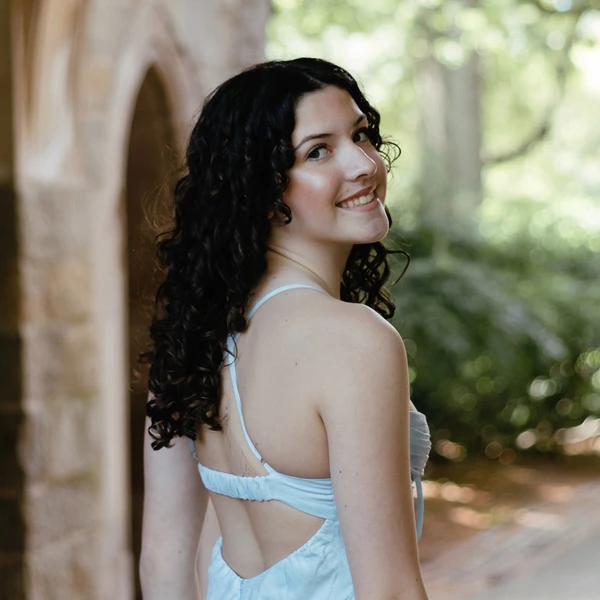
Hi, my name is Mia MacLean. I'm driven, curious, and dedicated to creating a future that my family can be proud of. I love learning new things, challenging myself, and contributing to my community. I hope to continue my education at a university, majoring in Psychology, with the goal of becoming a clinical psychologist and one day opening my own mental health center. I value resilience and integrity, and am constantly pushing myself to grow and become the best version of myself.
Education
Wayland High School
High SchoolMiscellaneous
Desired degree level:
Doctoral degree program (PhD, MD, JD, etc.)
Majors of interest:
- Psychology, General
- Criminology
- Clinical, Counseling and Applied Psychology
Career
Dream career field:
Mental Health Care
Dream career goals:
Open a mental health center
Beach Volleyball Coach
Boston United Volleyball Club2022 – Present4 years
Sports
Volleyball
Club2022 – Present4 years
Awards
- most valuble neaau player
Volleyball
Varsity2022 – 20253 years
Awards
- league all star
Arts
Wayland High School
Musicconcerts2022 – Present
Public services
Volunteering
Urban Hope NYC — student2023 – 2023Volunteering
Urban Hope NYC — Leader2025 – 2025Volunteering
Connect Carribean Missions — student2022 – 2022Volunteering
Connect Carribean Missions — Leader2024 – 2024
Future Interests
Advocacy
Volunteering
Entrepreneurship
Ella's Gift
I expected anger when I finally told my father how deeply his addiction had hurt me, but instead he simply said, “thank you.”
My father’s addiction had shaped my childhood long before that phone call. I spent countless nights sitting at the top of the stairs or hiding behind the fridge listening to my parents fight, until they finally divorced when I was four. I loved my dad deeply and treasured our weekends together, but I always felt a heaviness as I packed my bag, anxious about which version of him I would find. Eventually, his addiction created so much instability that I was no longer allowed to see him when I was eight, and over time, the calls stopped as he slowly disappeared from my life.
After years of silence, I learned that my father had been arrested, and for the first time in my life he was sober. Each day I accepted the phone call from Worcester County Jail, and we spoke cautiously, shaped by years of distance and anger I wasn’t ready to confront.
After a huge fight with my mom, I went to my room and sat down in front of my mirror. I couldn’t recognize the person looking back at me. She had sad eyes and looked hollow, like the only thing within her was anger—my dad’s anger, and until I confronted the source of it, I’d never get anywhere. I decided that I never wanted to see her looking back at me again. I picked up the phone and found the courage to tell him the truth about how much his addiction had hurt me and how that pain had spilled over into the way I treated the people around me.
Instead of becoming defensive, he thanked me for my honesty, and for the first time it felt like we were rebuilding a relationship that addiction had nearly destroyed.
Less than a month after we finally faced the addiction that had shaped our relationship for my entire life, it took him from me. The grief that followed felt world-shattering. I realized I couldn’t survive this alone, and needed to begin learning how to hold grief instead of letting it consume me.
My healing began when I reluctantly joined a grief group through my church and finally allowed myself to process everything I had lost. I attended every Friday for months, but I didn’t feel like I was getting anywhere. During one meeting, my pastor handed me a piece of paper and asked me to write a lament about our pain. As I started to write, the anger, confusion, and heartbreak I had been carrying for years poured onto the paper. Everything started to get lighter as I stopped fighting my grief and admitted I didn’t have the answers. I looked at the page again and began to wonder if what I’d been through could mean something more than just surviving.
As I continued learning how to carry my grief, I also began sharing my story with others who were facing similar pain. One of the most meaningful moments came after I spoke about my experiences at a summer camp in front of more than four hundred people. After my speech, I saw a teary-eyed girl I had never met walking up to me. She stopped and said only two words: “My dad.” I understood. I hugged her and told her what I once needed to hear myself: that she wasn’t alone and that even though it wasn’t fair, her story has a purpose. Through mission trips and speaking at shelters, I continue having those conversations, listening to people on every side of addiction and seeing how deeply it affects families.
Managing my own anxiety and depression has taught me that I can’t always slow down, but I can choose how to carry it. On hard days, I lose myself in music, and journaling the way I learned through the lament—allowing myself to confront what I’m feeling instead of pushing it down. I’ve also learned to keep the conversation open with people I trust, because silence was what made everything harder for so long. In college I plan to continue doing all of those things, and to keep pouring my energy into helping others—because outreach isn’t just something I do for other people. It’s been part of how I heal.
These experiences shaped the future I want to pursue. I plan to study psychology so that the little girl hiding anxiously behind the fridge, wanting desperately to fix her dad, can be seen—to help the angry teenager fill herself with love and recognize her reflection again. I want to be the person for struggling adolescents that I didn’t always have.
ADHDAdvisor Scholarship for Health Students
The clearest moment I realized I could help others with mental health was when I shared my story in front of four hundred people at camp. With so many eyes on me, I spoke about the grief I’ve endured and my own mental health struggles. I was nervous, but I spoke anyway. What stayed with me afterward was that people came up to me and shared their own stories. I learned that people don’t always need answers, they need someone to stay. I wasn’t trying to fix anyone—I wanted them to feel less alone.
Since then, supporting others’ mental health has become something I do intentionally, in both big moments and everyday ones. I sit with people in their own grief and listen to them without judgment. Each week, I lead a mentorship group for younger high school girls and create a comfortable space where everyone feels safe enough to talk. For the people struggling around me, presence matters more than perfect advice. So I show up, even when it’s uncomfortable.
The impact I’m proudest of is creating a space for honesty—because honesty is where healing begins. After my speech at camp, people came up to me and told me, “I thought I was the only one,” or “I was too scared to talk about this.” That moment showed me how stigma drops when someone goes first, and I try to continue to be the first and become the person who others trust. I’ve learned that silence can be dangerous, but being heard can change everything.
I plan to turn what I’ve learned through real life into a career that provides structured, lasting support for teenagers. I’m studying psychology in college with the goal of becoming a clinical psychologist. After that, I plan to open my own teen-focused mental health center that offers both inpatient and outpatient treatment. It’s going to include therapy and mentorship, peer support groups, strong follow-up care, and be focused on listening-based care where everyone feels dignified and respected. I won’t wait until I get my degree, so I plan to keep volunteering while I’m studying. I want mental health care to feel safe, human, and real.
I can’t take away someone’s pain, but I can make sure they don’t carry it alone. In my future career, I want to be the person who stays and helps people feel seen before they reach a breaking point.
Mental Health Profession Scholarship
WinnerPeople assume that mental health care is always healing. I learned early that it isn’t. At twelve years old, I entered an inpatient mental health program, expecting it to be the place that finally made things feel safe again. Instead, it showed me how quickly young people can be overlooked, misunderstood, or silenced inside systems meant to protect them. That experience didn’t just shape how I see mental health—it shaped the kind of person I want to become. Even now, as I work through my own mental health challenges, I carry the belief that no teenager should ever have to question whether they’re truly being cared for when they’re at their most vulnerable.
At my lowest point, I wasn’t just struggling emotionally—I was trying to survive my own mind. I was struggling with depression, suicidal ideation, and self-harm. It felt impossible to get out of bed every day to take care of myself, and I felt trapped in my own mind. Healing wasn’t a switch—it was a practice. I finally started to heal through therapy, faith, journaling, and leaving everything out on the volleyball court. My progress hasn’t been linear, but I can proudly say that this January, I’m four years free of anorexia and three years free of self-harm.
Even after I started healing, grief tested everything I’d learned about staying afloat. My dad passed away at the end of my freshman year, and once again, it felt impossible to get out of bed. When life finally started to feel as normal as it could four months later, my best friend passed away, too. I was so angry at the world and lived in constant anxiety about who would be next, but then I realized I couldn’t control the losses I experienced—I could only control what I did with the love I still had. I still feel my grief daily, but I’ve learned how to carry it and use it for good.
Healing became even more meaningful when I stopped hiding and began helping others feel less alone. This past summer, I spoke about my grief publicly to four hundred people at camp and shared my story. It was fulfilling to see how many people it touched and to be able to speak to them about their struggles afterwards. After my dad passed away, I met so many people who were starting their own grief journeys, and in the midst of all of my pain, I’ve been able to help them through theirs. I’ve learned that honesty reduces the stigma surrounding mental health. Sharing my story became a way of giving other people permission to talk about theirs.
Moving forward, I aspire to become a clinical psychologist and establish the kind of teen mental health center I needed. My future center will be teen-focused, with inpatient and outpatient treatment. It will focus on therapy and mentorship for people struggling, providing a place of accountability and safety that is not corrupt or harmful, where residents are actually listened to. I hope to improve the standard of care through my own close management and fix the stigma surrounding mental health. I refuse to wait until I get my degree, so throughout college, I hope to volunteer in homeless shelters and rehab centers. I want to focus on outreach to the people who are often overlooked and dedicate my time to research and community partnerships. I want to turn what nearly broke me into something that heals others. I know my dream is big, but I never thought I’d make it past thirteen—so why not reach for the stars?