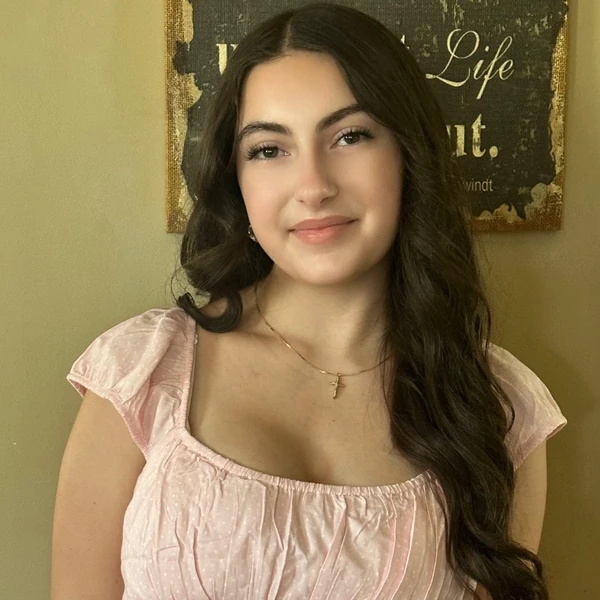
Mia Pignataro
1x
Nominee1x
FinalistMia Pignataro
1x
Nominee1x
FinalistBio
I am a first-generation student with big dreams and a strong determination to create a meaningful and impactful future for myself and my family. Growing up, I learned the value of hard work, resilience, and perseverance, and these qualities have shaped who I am today. I am funny, kind, and compassionate, which allows me to connect with others and bring positivity to every environment I am part of. My ultimate goal is to become a nurse, a career that combines my passion for helping others with my desire to make a tangible difference in people’s lives. I have worked hard to achieve academic success, take on leadership opportunities, and develop skills that will prepare me for this next step. Being a first-generation student drives me even more to succeed, break barriers, and set an example for those who follow. I am dedicated to growing personally and professionally, embracing challenges, and turning my dreams into reality while staying true to my values of kindness, empathy, and dedication. These scholarships would greatly help me and my family with our financial struggles.
Education
Fairfield Warde High School
High SchoolMiscellaneous
Desired degree level:
Bachelor's degree program
Majors of interest:
- Registered Nursing, Nursing Administration, Nursing Research and Clinical Nursing
- Practical Nursing, Vocational Nursing and Nursing Assistants
Career
Dream career field:
nurse
Dream career goals:
Sports
Track & Field
2022 – 20253 years
Public services
Advocacy
Center of Family Justice — I planned a food drive at my school for women and children who has experienced abuse.2024 – 2025Volunteering
Operation hope — I volunteered by contributing food to women and children that were in need2024 – 2024
Future Interests
Advocacy
Volunteering
Entrepreneurship
Big Picture Scholarship
“The saddest thing in life is wasted talent, and the choices you make will shape your life forever.” I first heard these words in A Bronx Tale, and they immediately stopped me in my tracks. I even chose them as my senior quote because they don’t just resonate—they reflect how I try to live my life. This movie has had the greatest impact on me because it taught me that every choice matters, and it showed me the importance of the bond between a parent and a child, especially in a world that doesn’t always make success easy.
A Bronx Tale follows Calogero, a boy growing up in the Bronx, torn between the influence of a local mob boss and the guidance of his hardworking father. What struck me most was his relationship with his dad. In one scene, Lorenzo warns Calogero, “There’s no honor, no trust … they do what they must … they’ll make you a pawn in their war.” That simple truth made me realize that the world isn’t always set up to help you succeed, and that guidance from parents, guardians, or our own conscience is what helps us make the right choices.
I see this clearly in my own life. Growing up, I noticed that some people looked down on my family because we speak Italian at home. Sometimes I felt judged or underestimated because of our culture or language. It reminded me of Calogero navigating a world full of pressures and temptations that could easily steer him off course. Like him, I’ve learned that guidance from my parents and the choices I make for myself are what define my path, not the opinions or biases of others.
High school is full of moments like that. Will you give in to peer pressure to vape, drink, or skip class? Will you cheat on a test or gossip about a friend for popularity? These pressures are often magnified by a world that doesn’t always reward good decisions or make success simple. Like Calogero, I’ve learned that courage often comes in the quiet moments—when no one is watching, when the easy path is tempting, and when integrity means standing up for yourself even if no one else understands. Guidance from parents or guardians, and the choices we make ourselves, are essential in helping us rise above these challenges.
What I love most about A Bronx Tale is its honesty. Calogero makes mistakes, but he learns from them, understanding that every action has consequences. This lesson has carried me through high school and continues to guide me as I prepare for college and adulthood. I’ve realized that my bond with my parents isn’t just about love—it’s about guidance, accountability, and learning how to navigate life thoughtfully and responsibly, even when society doesn’t make it easy.
Ultimately, A Bronx Tale taught me that life is a series of choices, and the courage to make the right ones shapes not only who we are, but the relationships we hold most dear. The movie reminded me to honor my parents’ wisdom, resist negative influences, and pursue my potential without wasting my talents, even when the world seems stacked against us.
Life often feels like just another Bronx tale—full of challenges, temptations, and crossroads—but this movie showed me that the choices I make, guided by the people who care about me, define the story I tell about myself. That is why A Bronx Tale will always be the movie that has had the greatest impact on my life.
Marcia Bick Scholarship
I have stared hardship in the face and refused to give in. I still remember one afternoon when my mom was working, and my brother, my grandfather, and I sat in an empty kitchen with no food in the fridge. I could see my grandfather growing thinner by the day, his health affected by our lack of resources. I reached into my wallet, counting every penny and quarter I could find. I felt the weight of responsibility and fear, but I didn’t let it show to my grandfather or brother—it wasn’t their fault, and I wouldn’t let them feel the burden.
We went to McDonald’s and shared a single meal. I’ll never forget my grandfather handing our few coins through the drive-thru window to a young woman, feeling both scared and vulnerable. She didn’t hesitate or count the change—she simply let us go. Relief washed over me, and for the first time that day, I felt hope. A few months later, my grandfather received approval from the VA for benefits from his service in Vietnam. That income meant food on the table, medical care, and the possibility of surgery for his leg. I remember feeling a deep gratitude—not just for the money, but for the hope it represented.
Moments like this taught me resilience, compassion, and determination. I have learned to stay hopeful even in vulnerable situations, to face challenges head-on, and to carry responsibility without losing sight of my dreams. These lessons have shaped my dedication to my education. I study diligently, push myself to excel, and strive to lift others up whenever I can.
Receiving a scholarship or grant would allow me to continue pursuing my goal of becoming a nurse without the constant weight of financial stress. Nursing is not just a career for me—it is a way to transform the struggles I have faced into care, empathy, and service for others. With this support, I can focus on my education, achieve my dreams, and help my family and community thrive.
Scholarships and grants are investments in determination, heart, and potential. I have shown all three, and with this opportunity, I will continue to turn vulnerability into strength, hardship into achievement, and hope into reality.
Arthur and Elana Panos Scholarship
My faith journey began my freshman year of high school, long before I understood how deeply it would shape my future. I grew up identifying as Catholic, but I never felt truly connected to my faith. I believed in God, yet my relationship with Him felt distant—more like something I was supposed to have than something I genuinely understood. Everything changed the day a friend invited me to their Christian church. I walked in expecting nothing different from a normal Sunday, but during worship, I became overwhelmed in a way I couldn’t explain. Tears fell before I even understood what I was feeling. Looking back, I believe that was the moment God reached for me and opened my heart in a way I had never allowed before.
For years, I carried anger toward God. I lost people I loved—my nonno, my grandma, my uncle—and each loss felt like another piece of my family disappeared. Our family fell apart, and instead of processing my grief, I blamed God. I questioned why He kept taking people from me and why I had to feel so much loss at such a young age. That anger became my shield, keeping me from facing what I was truly feeling: heartbreak.
But throughout high school, my anger slowly began to fade. The more I prayed, learned, and allowed myself to sit with my emotions, the more I realized that God wasn’t the cause of my pain—He was the one carrying me through it. What once felt like punishment, I began to see as preparation. God was shaping my heart, giving me compassion and strength through experiences I didn’t yet understand.
One moment that deeply confirmed this for me was when I came across a picture of a nurse caring for a patient, and behind her were Jesus’s hands resting gently on her shoulders—guiding her. I remember staring at it for a long time because something in my heart reacted instantly. I felt drawn to it, almost like God was speaking directly to me: This is where I want you. In that moment, I felt certain that nursing wasn’t just a job I was choosing—it was a calling He placed in me.
My losses taught me how important it is to have someone by your side in your most vulnerable moments. Thinking back to when my family was hurting, I realized how much it matters to have someone who shows compassion, patience, and presence. I want to be that person. I want to support others through the experiences that once broke me.
My faith will guide me throughout my nursing career. It will remind me to treat every patient with dignity, to stay patient and steady when situations are overwhelming, and to stay humble and grateful on the easy days. Most importantly, it will remind me why I chose this path: because God turned my pain into purpose.
I no longer see my story as one defined by loss. I see it as one shaped by direction, faith, and calling. Becoming a nurse is how I will honor the people I’ve lost and the God who carried me through it.
CollegeXpress No-Essay Scholarship
Bick First Generation Scholarship
To me, being a first-generation college student feels like standing at the edge of a bridge no one in my family has ever walked across. Behind me is everything I’ve lived through struggle, sacrifice, love,and in front of me is a future I’m still trying to imagine. Crossing that bridge is terrifying, but I’m doing it because my family worked too hard for me to stay on the same side.
I grew up watching my parents stretch every dollar, choosing which bills had to be paid first and hoping there would be enough left for groceries. Some nights there wasn’t. But even during the hardest times, they made sure I stayed in Fairfield schools because they wanted me to have a chance at something bigger. They are divorced, but they share the same dream for me: that my life will be easier than theirs. That dream pushes me forward every single day.
The hardest part of being first-gen is feeling like you have no map. I had no one to ask the big questions about college, money, or majors. I filled out forms without knowing if I was doing them right. I emailed my counselor constantly, nervous that I sounded clueless. I tried to act confident, but inside I felt like a small kid pretending to understand a world that wasn’t built for her. But I kept going because giving up was never an option.
My grandfather is my anchor. He lives with me and my mom, and he is the person whose pride feels like sunlight. He reminds me that our family has come so far, and that I am meant to keep going. When he tells me he’s proud, I feel stronger. I feel like I truly can become the first.
My dream is to become a nurse. I want to care for people with the same kindness that has kept my family together. Nursing feels like the place where everything my struggles, my heart, my determination fits.
This scholarship isn’t just financial help. It is a chance to breathe. A chance to study without fear. A chance to finally build the life my parents fought to give me. It would help me graduate without debt, something that would change not only my future, but the future of the family that raised me on hope.
Being first-generation means breaking cycles with courage I didn’t know I had. It means walking forward even when the path is dark. And I am ready, heart first, and with everything I’ve learned to build the future my family dreamed for me.
Breanna Coleman Memorial Nursing Scholarship
My inspiration to pursue nursing comes from the moments in my life when I learned what it truly means to support someone, even when you are hurting yourself. I grew up surrounded by examples of quiet strength, but the most powerful came from watching my mother grieve the loss of both her brother and her mother. Those losses shook our home in ways I had never felt before. My mother, who had always been the one to hold everyone together, suddenly could barely hold herself. Her grief came in waves—sometimes silent, sometimes overwhelming—and even though I was young and grieving too, I felt a responsibility to show up for her.
There were days when I didn’t know what to say or how to help, but I sat beside her anyway. I listened, I hugged her, and I made sure she wasn’t alone in her pain. Helping her through that time taught me that care isn’t always about solving someone’s problems; sometimes it’s simply being present. That experience shaped my understanding of compassion more than anything else. It taught me that offering support, even when you feel broken too, is one of the most meaningful things a person can do. That lesson is at the heart of why I want to become a nurse.
As I grew older, I began to notice how nurses embodied that same kind of strength. They are the steady ones in moments when families are falling apart. They sit with people in their fear, confusion, and heartache, offering a calm presence when everything else feels uncertain. Their ability to show up with both skill and kindness is something I deeply admire, and it reflects what I learned during my mother’s grief: that real care comes from empathy, patience, and understanding.
Nursing also inspires me because it allows me to be part of people’s lives in a meaningful way. Nurses don’t just treat symptoms—they connect, comfort, educate, and advocate. They build trust during times when patients often feel their most vulnerable. I want a career where I can use both my heart and my hands to make a difference, where showing up for people is part of my everyday purpose.
My dedication to caring for others is reflected in the work I already do within my community. At my school, I help run food drives for the Center for Family Justice in Bridgeport, which provides shelter and support for women and children escaping abuse. These families often arrive with very little and face overwhelming challenges. Through our food drives, we help meet their basic needs and offer a sense of stability during a frightening transition.
Organizing these drives has taught me the importance of service beyond words. When I’m collecting donations, sorting items, or encouraging classmates to contribute, I’m reminded that even small acts can bring real comfort to people who feel unseen. It mirrors the compassion I hope to bring into my future nursing career: consistent support, dignity, and kindness for those who need it most.
Showing up for my mother during her grief taught me the true meaning of care, and giving back to families in crisis has strengthened my commitment to serving others. Together, these experiences inspire me to pursue nursing—a profession built on compassion, resilience, and the belief that being there for someone can change their life.
Ed and Flora Pellegri Scholarship
The obstacles that have shaped my path toward nursing began early, long before I understood what healing truly meant. As a child, I believed that anything painful could not possibly be helpful. I remember hiding behind a doorframe as a nurse prepared a syringe for my grandmother, the quiet hum of the oxygen machine filling the room. The nurse noticed my fear and told me gently that the medicine would help her. But in my young mind, pain and healing could not coexist. That moment planted the first seeds of confusion—how could something that hurt someone also save them?
Over time, that childhood confusion turned into a deeper obstacle: learning to live with loss. My grandmother’s treatments, meant to keep her alive, eventually overwhelmed her liver. What once helped her ended up hurting her. When she passed away, I could not understand how the very tools of healing could also bring harm. That contradiction stayed with me, leaving me questioning medicine, care, and my own ability to trust either.
Loss returned when my grandfather later needed surgery. The same nurse who had cared for my grandmother walked into our home. I recognized her immediately, but this time, I didn’t hide. We talked about my grandmother, and when I told her I wanted to be a nurse one day, she smiled and said, “Your grandmother would be so proud of you.” That moment became a turning point. It was the first time I felt healing and grief meet without clashing. Instead of seeing pain and care as opposites, I began to understand how they were intertwined.
Another obstacle that shaped me was witnessing my mother’s grief. Losing her mother and brother shattered her in a way I had never seen. Her cries felt like they cracked open the walls of our home. Watching her pain taught me the raw truth that love and loss are inseparable, and that sometimes healing does not mean making the pain disappear—it means learning to stand up with it. Witnessing her grief forced me to confront emotions many people do not face until much later in life. Instead of turning me away from the world of illness and caregiving, it pulled me closer. I learned that healing is not always a cure; sometimes, it is a presence.
These experiences—early fear, confusion, loss, and the weight of watching others grieve—might have pushed someone else away from the medical field. For me, they did the opposite. They became the foundation of why I want to become a nurse, especially one who works with children. Children carry a kind of magic within them, a resilience adults often forget. Their belief in recovery, in possibility, inspires me. I know pediatric nursing will not always be filled with miracles, but in the moments when a child smiles again or their heartbeat steadies, the ache will be worth it.
The biggest obstacle I have overcome is learning to accept that pain and healing exist together—not as enemies, but as partners in the human experience. I no longer fear that contradiction. I understand it, I respect it, and I want to work within it. Nursing is not a career I romanticize. I know it will bring exhaustion, heartbreak, and loss. But I also know I can handle it—not because I am unafraid, but because I have lived alongside grief and still found purpose on the other side.
In choosing nursing, I am choosing to transform my obstacles into empathy, strength, and service. In wanting to heal others, I have discovered that I am also healing myself. This is
where I find my purpose.