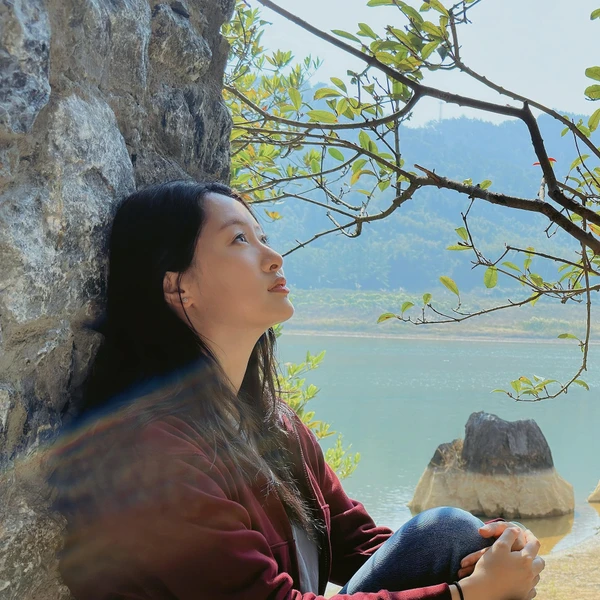
I grew up in Norcross, a small city in Gwinnett County, Georgia, where the streets felt familiar and full of quiet detail. I was the kind of kid who noticed everything—the curve of a sidewalk, the way light shifted through trees, the feeling of the air on a cloudy morning. Drawing became my favorite way to explore the world. One day at the local library, I found a manga. I didn’t even know what it was, but the sparkly eyes and expressive faces pulled me in. That was when I realized art wasn’t just something to look at. It could tell stories and hold feelings I didn’t yet have words for.
I didn’t grow up with extra lessons or expensive tools. I had printer paper, pencils from school, and a lot of curiosity. I’d draw in notebooks, on scraps, in the margins of my homework. I wasn’t trying to be perfect. I just needed a space where I could express something real. When things in life felt too loud or too uncertain, drawing gave me quiet. It gave me clarity. I didn’t have to explain myself; I could just make something that showed how I felt. That hasn’t changed much, honestly. Even now, as a college student, art is still where I go to feel grounded.
I want to be an artist because it’s always been the clearest way for me to exist, to process, and to speak without having to explain myself out loud. Growing up, art was how I made sense of things I didn’t know how to name yet: loneliness, confusion, dreams, emotions too big for words. I’d draw when I felt overwhelmed, when I was daydreaming, when I was trying to hold onto something soft in a world that often felt sharp. It didn’t start with a goal or a career plan. It started because I needed it. And over time, I realized that what helped me survive, these drawings, these made-up characters and emotional little worlds, could also help other people feel less alone. That’s what I want to keep doing. I don’t want to make art just to impress. I want to create things that comfort, that stay with people, that let someone pause and breathe. Being an artist means I get to take my experiences, my imagination, and all the quiet moments I’ve lived through and turn them into something beautiful and true. Something that gives softness and meaning back to the world.
I’m currently studying Drawing and Painting at Georgia State University, and this is the first time I’ve been able to take my work seriously, with guidance, structure, and the chance to develop technically. I’ve grown a lot. I’ve learned how to draw anatomy, how to work with different media, and how to think through a piece beyond the first idea. But more than anything, I’ve learned how to trust my voice. I’ve found that my work leans toward softness: emotional, sometimes whimsical, and always layered with meaning. I make art that’s gentle but deep. I want people to feel something when they look at my work, even if they don’t know exactly why.
I love combining different styles and traditions. One of my favorite personal pieces is a traditional Chinese brush painting I made of my pet brown anole, Crepe. I imagined him not just as a pet but as a quiet forest guardian. I painted him perched on a branch with soft washes of ink and careful brushstrokes, pulling from the same visual language I saw in the art passed down through Chinese tradition. Moments like that remind me that art can hold personal memory and cultural history at the same time. That blending of past and present, observation and imagination, is something I want to keep doing.
One of the pieces I’m most proud of is a stop-motion animation I created about human trafficking in Southeast Asia. That’s a tough subject, and I didn’t want the tone to be so heavy that people shut down. I wanted people, especially younger audiences, to be able to engage with it. So I used fruits and vegetables as characters, building the story through symbolism. It still carried the weight of the truth, but it felt accessible and emotional in a different way. That’s how I approach a lot of my work: serious stories told in soft, strange, creative forms. Not everyone is ready for confrontation, but most people are ready to feel. I want to open up difficult conversations through visuals that feel gentle enough to invite people in.
I’ve also had the honor of being published in Georgia State’s Underground Journal, which features student artwork. Seeing my work in print reminded me that even quiet, personal pieces can have a wider reach. It gave me the confidence to keep experimenting and refining my portfolio. It also made me realize that I want to share my work with more people. Whether through galleries, books, animation, or zines, I want my art to find its way into people’s lives in ways that feel intimate and meaningful.
I want to keep creating stories that feel like comfort, that invite people in without forcing them to explain themselves. I want to make art that feels like something you didn’t know you needed until you saw it: gentle, emotional, a little odd, and deeply human. That’s what I’ve always needed, and it’s what I hope I can give through my work.
Artist Statement:
Mersyna is an artist based in Atlanta, currently pursuing a BFA in Drawing and Painting at Georgia State University. Her work is rooted in the exploration of medium, form, and meaning, as she continues to refine her technical foundation while developing a distinct and evolving artistic voice.
Her practice is driven by curiosity. Rather than settling into a single subject or style, Mersyna values the freedom to experiment. From traditional figure studies to abstract mark-making, from digital media to Chinese brush painting, her work reflects a genuine interest in learning and a deep respect for the process of making. Each piece becomes a stepping stone, revealing something new about the material, mood, or herself.
Mersyna’s work has been featured in Georgia State’s undergraduate art journal, the Underground Journal. She continues to expand her portfolio with a focus on technical skill, thoughtful experimentation, and expressive storytelling. As she grows, so does her commitment to making honest, resonant work: art that reflects not just what she sees, but how she sees.