Hobbies and interests
Philanthropy
Reading
Academic
I read books daily
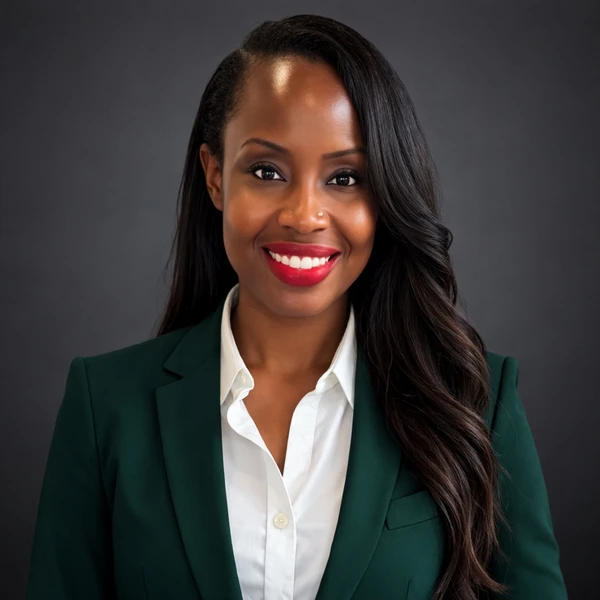
Mercy Otieno
1x
Finalist
Mercy Otieno
1x
FinalistBio
Mercy was born and raised in Nairobi, Kenya and moved to the USA at the age of 12 years old. She is a clinician (pediatric nurse practitioner) and specializes in pediatrics, has over 11 years’ experience and is currently pursuing a doctor of medicine degree. She completed her nursing doctoral degree from Rutgers University in Newark, NJ with the highest honors. She is passionate about child health and wellness as well as global health and serving the forgotten. She is the founder of the Mercy and Love Foundation and recently started doing medical, dental, and surgical missions to rural Kenya. The harsh realities that men, women, and especially children in resource poor countries face fills Mercy with deep compassion hence the birth of the organization. Dr. Mercy is determined to make a difference in the world and has a grand vision of building a state-of-the-art children's hospital in Kenya, then using the same framework to replicate to other African nations. She is a committed member and serves at Agape House of Worship in Roselle, NJ under the leadership of Pastor Jide Lawore.
Education
Ross University School of Medicine
Doctoral degree program (PhD, MD, JD, etc.)Majors:
- Medicine
Rutgers University-Newark
Master's degree programMajors:
- Registered Nursing, Nursing Administration, Nursing Research and Clinical Nursing
Miscellaneous
Desired degree level:
Doctoral degree program (PhD, MD, JD, etc.)
Graduate schools of interest:
Transfer schools of interest:
Majors of interest:
Career
Dream career field:
- Medicine
Dream career goals:
Pediatric NP
Optum2019 – 20256 yearsPediatric NP
Newark Community Health Center2015 – 20194 years
Sports
Track & Field
Junior Varsity2004 – 20062 years
Awards
- trophy
Research
Medicine
Rutgers University Newark — PI2018 – 2020
Public services
Volunteering
Mercy and Love Foundation Inc. — CEO/Founder2020 – Present
Future Interests
Advocacy
Volunteering
Philanthropy
Entrepreneurship
Women in Healthcare Scholarship
As a woman in healthcare, I hope to make a positive impact by building something that is bigger than myself. I want my work to go beyond individual patient care and contribute to lasting change. My goal is to help change systems and improve the overall trajectory of care, especially in pediatrics, across sub-Saharan Africa.
I plan to do this by building a state-of-the-art children’s hospital in rural Kenya that can serve as a center of excellence for pediatric and maternal/newborn care. It will not only provide high-quality treatment, but also serve as a training center for the next generation of pediatric specialists. I believe that investing in people is just as important as building infrastructure. By training doctors, nurses, and other healthcare professionals locally, the impact can continue to grow long after the hospital is established. The vision is to create a model that can be replicated in other parts of Africa, and to expand using the same framework to reach more countries and communities.
The need for this is significant. Sub-Saharan Africa has very few dedicated public children’s hospitals despite having a large pediatric population. Many general hospitals are not equipped to provide specialized pediatric care, and access to trained specialists is often limited. Because of this, children with treatable conditions often do not receive the care they need in time. Everyday, we continue to see alarming statistics of pediatric and maternal/newborn mortality rates in these areas. Where a mother gives birth or where a child is born should not be the determinant factor of whether they live or die.
I am committed to being part of bridging this gap. I want to help create spaces where children can receive the level of care they deserve, regardless of where they are born. This vision is important to me because it focuses on long-term impact. It is not just about what can be done today, but about building something that will continue to serve communities for generations. That's what makes me so determined and passionate about this work. Although it hasn't always been easy, I believe it will be very worth it. Every great achievement starts as an idea, brought to life by someone willing to take the first step.
Ultimately, I hope my work reflects both purpose and responsibility. I want to use my education not only to care for patients, but to build systems that improve access, raise the standard of care, and create opportunities for others in the field.
Ruthie Brown Scholarship
I am working to manage my current/future student loan debt in a practical and realistic way. My main goal is to reduce how much I need to borrow by actively applying for scholarships and grants. Support like this is very important to me because it helps lower the overall cost of my education and allows me to focus more on learning rather than worrying about finances.
I also plan to continue working at least part-time/per-diem while I am in school for as long as I can. I used to work full-time, but I have learned that it is not easy to balance full-time work with the demands of medical training. In addition to school, I also lead a nonprofit organization, which requires time and responsibility. Because of this, I made the decision to step away from full-time work and focus on a more balanced approach. Working part-time/per-diem allows me to still earn some income while making sure I can keep up with my studies and maintain my other commitments.
I understand that even with careful planning, some level of student loan debt may be unavoidable. I am pursuing a degree in medicine with the goal of becoming a pediatrician or pediatric surgeon. My long-term goal is to work in underserved areas, especially in sub-Saharan Africa, where there is a major shortage of trained specialists and where access to care is limited. This path is very important to me, but I am also aware that it may not come with the same financial opportunities as other career paths. That is why I am trying to be intentional now about keeping my debt as low as possible.
If I am not able to receive enough scholarship support, I may need to rely more on student loans and possibly increase my work hours where I can. Even so, I am doing everything I can at this stage to reduce that need. I am applying for as many funding opportunities as possible and being mindful of my expenses.
Overall, I am approaching my student loan situation with a sense of responsibility and long-term thinking. I want to complete my education while keeping my debt manageable, so that I am not limited in the kind of work I can do in the future. My goal is to serve in areas where the need is greatest, and managing my finances wisely now will help make that possible.
International Scholarship for Medical and Dental Mission Work
My experience with medical and dental missions has grown over time from simply wanting to serve to understanding what meaningful service actually requires. I have been involved in organizing and participating in missions to rural communities in Africa, where access to healthcare is limited and often delayed. Through Mercy and Love Foundation, an organization I founded in 2020, I have helped coordinate medical, dental, and surgical outreaches in collaboration with local hospitals and providers.
During these missions, I have been part of teams that provided care to hundreds of patients over a short period of time. We treated common conditions, performed basic procedures, and supported more complex surgical cases alongside local clinicians. Spiritual care was not neglected. While the volume of patients was significant, what stood out to me most were the individual interactions. Many patients had been living with conditions for months or even years, not because they did not want care, but because it was not easily accessible to them. Seeing that reality up close changed how I think about both medicine and service.
These experiences also taught me that mission work is not just about showing up and providing care for a few days. It requires preparation, humility, and a willingness to learn from the people you are serving alongside. Working with local providers helped me understand the importance of collaboration and continuity. It reinforced the idea that sustainable impact comes from strengthening existing systems rather than replacing them.
As I continue my education, I plan to build on these experiences in a more intentional and structured way. I want to deepen my clinical skills so that I can contribute more effectively in mission settings, especially in areas that require surgical and acute care. At the same time, I want to remain involved in efforts that focus on training and knowledge exchange, so that the impact extends beyond the duration of a single mission.
Looking ahead, I see mission work as an ongoing part of my career rather than something separate from it. I hope to use my education not only to treat patients, but also to help improve access to care in underserved communities. Whether that involves participating in missions, supporting local healthcare providers, or helping develop programs that expand services, my goal is to contribute in a way that is both practical and sustainable.
Ultimately, my past experiences have shown me both the need and the responsibility that comes with this work. They have shaped my understanding of what it means to serve, and they continue to guide how I plan to use my education in the future.
Future Nonprofit Leaders Award
I did not originally plan to work in the nonprofit sector. My interest in healthcare started with a simple goal: I wanted to help people and make a meaningful difference in their lives. As I gained more experience, I began to realize that many of the challenges patients face go beyond medicine. Access to care, cost, and limited resources often determine outcomes just as much as treatment itself.
Seeing this firsthand changed how I thought about my role. I understood that being a good clinician is important, but it is not always enough. There are many people who never reach a hospital or come in too late because of barriers outside of their control. That is what drew me to the nonprofit space. It allows me to reach people who might otherwise be left out and to help bridge some of those gaps in access.
This is what led me to start Mercy and Love Foundation. Through this work, we provide medical, dental, and surgical care to underserved communities in rural Africa. We partner with local facilities to offer care that is free or affordable, while also working alongside local healthcare providers. The goal is not just to help in the moment, but to support systems that can continue to serve the community long after we leave.
What I value most about this work is the opportunity to create impact that goes beyond a single patient. When people are able to access care earlier, outcomes improve. When local providers are supported, entire communities benefit. Even small efforts can have lasting effects.
In the future, I hope to continue building on this work in a way that is practical and sustainable. I want to provide quality care while also helping improve access for those who need it most. I am especially interested in working in areas where resources are limited, because that is where the need is often greatest.
I am drawn to the nonprofit sector because it gives me the ability to serve with purpose and intention. It allows me to focus on people who might otherwise be overlooked and to contribute in a way that is both meaningful and lasting. Nonprofit work is fulfilling because it is not just an episodic intervention, but an action which affects generations to come. Helping one person is equal to helping an entire generation, because the person that's been helped can now be a healthy, productive member of the society.
Pay It Forward Scholarship
I chose to pursue a career in healthcare because I wanted my work to be meaningful and to have a direct impact on the lives and well-being of others. From early on, I was drawn to the idea of being in a profession where what you do each day truly matters. At the same time, I have always been curious about the human body. The complexity of how it functions, how it heals, and how even small actions can make a significant difference is something I find both fascinating and motivating.
Over time, that initial interest developed into something deeper. I began to recognize that health is not experienced equally. While some people have immediate access to high-quality care, others face barriers that delay or completely prevent them from receiving even basic treatment. That realization shaped my perspective in a significant way. It was no longer enough for me to simply pursue healthcare as a profession. I felt a growing responsibility to be intentional about who I serve and where I choose to make an impact.
This sense of responsibility led me to start Mercy and Love Foundation, a nonprofit organization focused on bringing medical, dental, and surgical care to underserved communities in rural parts of Africa. Through this work, we partner with local facilities to provide free or highly subsidized care while also emphasizing collaboration and knowledge exchange. Our goal has not been just to provide short-term relief, but to contribute in a way that strengthens local systems and supports long-term improvements in care.
Being involved in this work has reinforced why I chose healthcare in the first place. I have seen firsthand how access, or the lack of it, can completely change outcomes. Conditions that are easily treatable in one setting can become life-threatening in another simply because care is delayed or unavailable. Experiences like these have made it clear to me that healthcare is not just about clinical knowledge, but also about equity, access, and understanding the broader context in which patients live.
Looking ahead, I hope to use my degree to continue bridging these gaps. I want to provide high-quality care while remaining engaged in efforts that expand access and improve how care is delivered in underserved settings. Whether that involves clinical work, training, or building programs that support local healthcare providers, my goal is to contribute in a way that is both practical and sustainable.
Ultimately, I chose this field because it allows me to combine my interests with a clear sense of purpose. It challenges me to grow, to stay grounded, and to serve others in a way that is both meaningful and impactful.
Issa Foundation HealthCare Scholarship
One experience that deeply challenged my assumptions about medicine happened during a clinical encounter with a young patient whose condition, on paper, was entirely treatable. Going into my training, I believed that medicine was largely about knowledge and execution and if you recognized the diagnosis and knew the right treatment, you could make a meaningful difference. That moment forced me to realize how incomplete that understanding was.
The patient presented with an illness that, under normal circumstances, could have been managed early with relatively simple intervention. Instead, they arrived much later than expected, and their condition had significantly worsened. I remember initially feeling a sense of frustration and confusion. I found myself wondering why they hadn’t come sooner, especially when the early signs would have been noticeable. A quiet assumption I didn’t realize I carried was that access to care, or at least the decision to seek it, was straightforward.
As I spent more time speaking with the patient and their family, that assumption quickly unraveled. The delay wasn’t due to negligence or indifference but it was shaped by barriers I had not fully appreciated before. There were financial constraints, transportation challenges, and a level of uncertainty about when symptoms were serious enough to justify the journey. What felt obvious to me as a trainee was far less clear within the context of their daily reality.
That encounter stayed with me. It made me realize that medicine is not practiced in a vacuum, and that clinical outcomes are often determined long before a patient ever enters a hospital. It also forced me to confront how easy it is to judge when you’re removed from someone else’s circumstances. I began to understand that being a good clinician is not just about diagnosing and treating disease, but about recognizing the systems, limitations, and lived experiences that shape a patient’s path to care.
Since then, I’ve become more intentional in how I approach patient interactions. I try to listen more carefully, ask better questions, and resist the urge to make quick assumptions. That experience has also influenced the direction I hope to take in medicine. I feel drawn to work in settings where access to care is limited, not just to treat illness, but to be part of building systems that make timely care possible.
Ultimately, that moment reshaped how I see both medicine and myself. It reminded me that knowledge alone is not enough. The kind of physician I am becoming is one who values empathy as much as expertise, and who understands that patient care extends far beyond the walls of a clinic or hospital.