Hobbies and interests
Writing
Playwriting
Songwriting
Reading
Singing
Walking
Public Speaking
Journalism
Reading
Literary Fiction
Realistic Fiction
Historical
I read books multiple times per month
Melody Rivas
Melody Rivas
Bio
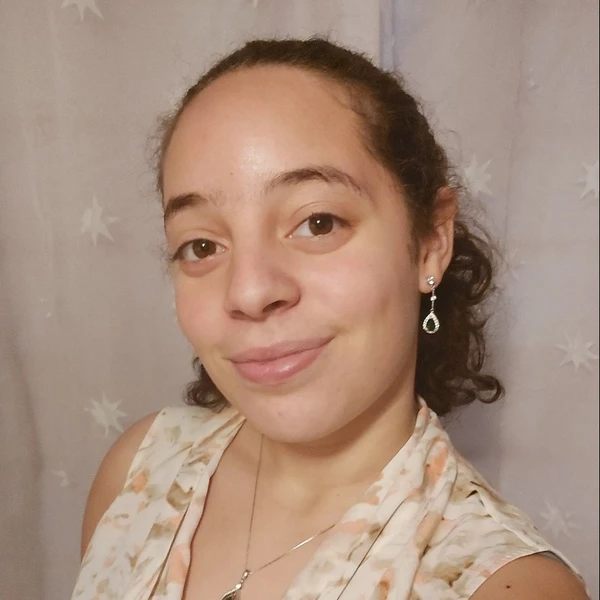
Hello! My name is Melody Rivas and I am currently enrolled in Emerson College as a rising Sophomore. I am majoring in Writing, Literature and Publishing with a Journalism minor and (hopefully!) will be a candidate for the 4+1 Master's Program.
I like to think of myself as practical minded, but the truth is, I'm pretty ambitious. I want to become a professional editor and, one day, publish books of my own. I know it'll take a lot of work to get there, but I'm excited to do it. Publishing ignites a passion in me, so I consider being involved in any part of the process an excellent opportunity.
Ultimately, I think what drives me is the ability to gather and share knowledge. Learning about new topics, new skills, and especially new people, has always been one of my greatest passions. Not only does it enrich my life, but it empowers me. The knowledge I gain from others gives me the confidence to put myself out there and explore the world.
Education
Emerson College
Bachelor's degree programMajors:
- Arts, Entertainment, and Media Management
- Rhetoric and Composition/Writing Studies
Minors:
- Journalism
Brockton High
High SchoolMiscellaneous
Desired degree level:
Bachelor's degree program
Graduate schools of interest:
Transfer schools of interest:
Majors of interest:
Test scores:
1330
SAT
Career
Dream career field:
Publishing
Dream career goals:
Editor
Sales Representative
Indochino2024 – Present2 yearsDrive Thru Cashier/Food Server
Taco Bell2023 – 20241 yearMentor
Rose Conservatory2021 – 20232 years
Sports
Soccer
Intramural2011 – 20209 years
Dancing
2010 – 202111 years
Awards
- 5 Year Dedication Award 10 Year Dedication Award
Arts
Brockton High School
ActingHello Dolly, Rumors by Neil Simon, The Big Eleven by Stephan LeConte, Murder Inn by Howard Voland and Keith McGregor2019 – 2023The Gold School
Dance2010 – 2021
Public services
Volunteering
Brockton Youth Soccer Association — Referee / Coach2021 – 2024Volunteering
Boston Common Homeless Coalition — Member2024 – PresentAdvocacy
Emerson Student Union — Board Member2024 – PresentVolunteering
SPARK Brockton — Vice President, Later President2020 – 2022
Future Interests
Advocacy
Volunteering
Star Farm Scholarship for LGBTQ+ Students
I often seek guidance in those who are older than me, especially as a member of the LGBTQ+ community. To be able to learn about the experiences of those who came before us, in fact, to even know that we as queer people are able to grow old and be at peace is incredibly valuable. But so many people in our community are struggling financially, living without homes or consistent income.
A lot of my experience working with the homeless community has been with middle-aged or older queer people. These people have so much love and knowledge to give, but they are forced to focus on mere survival. I live in Boston, so a lot of my mutual aid work is done on foot, going from Boston Common to Davis Square to hand out food, clothes, and sanitary products to those who need it most. It isn’t a fix for the problem, but to be able to provide respite and warmth to the people of the queer community who have been through so much, fills me with a sense of purpose.
It’s odd to see the juxtaposition of the active queer community in Boston and the homeless queer population. I’m very lucky that Boston is liberal city, as there are seemingly endless queer spaces to visit, from drag venues, to bookstores, to restaurants. These spaces are teeming with queer culture, and my life is enriched by meeting so many strangers living so freely. But all of these places are barred behind payment. This makes them largely inaccessible to not only the homeless community, but those who live paycheck to paycheck, or are paying off their loans. It’s a terrible bind, where so many are forced to choose between their communities and themselves.
I want to give back to the queer community more directly. There are lots of organizations in Boston that support the homeless, and many that support LGBTQ+ folks, but very few that target the overlap. I have been discussing with the organization I currently do distributions with, the Boston Common Homeless Coalition, about partnering with LGBTQ+ organizations, and giving support directly to those most at-risk in spaces where they are safe and comfortable. There are still a lot of logistics and capacity issues to work out, but my peers are endlessly supportive and I know that whatever happens, we won’t stop trying to make a difference.
The Coalition is currently based out of the school I attend, Emerson College, where I study Publishing. My major is an uncommon one, never featured in any drop-down menu options, but I’ve never regretted taking it. I’m learning so much about the business of publishing, all the specifics that go into making books, magazines, and journals real media and not just ideas in people’s minds.
My school recently raised tuition for the second time in two years and it’s taken its toll on my finances. It doesn’t help that I was out of work for about two months this year because of an injury, so I’m behind on making even the money to pay last year’s tuition. Receiving a scholarship would help tremendously to bridge this gap. I applied for the Star Farm Scholarship specifically because the support and love of the LGBTQ+ community has gotten me through the toughest times in my life so far, and I’m hoping my luck will hold.
Thank you for considering my application.
Greg Lockwood Scholarship
Stories are powerful. As a writer, of course, I'm biased, but I truly believe that stories have the power to affect real change in the world. That's why the change I'd most like to see in the world is more diverse stories being made and shared.
It seems like such a small thing, but stories do matter. Books like The Communist Manifesto and Common Sense were so influential, they inspired revolutions in their time. So, if books written about new government systems can make those systems a reality, what can telling diverse stories do?
For the answer to that we can turn to Harriet Beecher Stowe’s work, Uncle Tom’s Cabin. It was not only anti-slavery, but also pushed back on some widespread racist beliefs at the time. Her book had such a prominent impact on the abolitionist movement that it is still taught in schools today.
Now imagine that Harriet Beecher Stowe wrote a whole series of books. Imagine she started a literary movement of people exploring plantation life, and humanizing slaves. That is what I want for the modern world.
We've progressed so far in recent years, but we are still living in a society built to oppress us. The default character in media is always "straight cisgender white male" and every moderation you make to that "default" moves you further and further from marketability. Even when stories with queer leads or POC casts get made, they are often underfunded, and not well publicized.
But on the rare occasion that media like this does become popular, it explodes. Asian American communities online were-and in some cases still are-incredibly excited about the release of movies such as Everything Everywhere All at Once and Shang-Chi. Heartstopper has become a favorite show of many in the queer community. These pieces of media have incredible impacts on the people they represent. It makes them feel seen and understood.
Even outside of the communities, representation in media has affected people. Representing different cultures allows an outsider to empathize with that culture’s experience. It helps us, as humans, learn about each other’s struggles and become more compassionate.
I don’t know how many people are inspired to re-examine their racial biases after watching a person of color struggle. I’m not sure how many parents would think twice about the way they treat their queer children if they got a glimpse of how they were hurting. But if it’s even one, isn’t that enough?
Stories are not going to make the earth-shattering civil rights advancements we need. They are not going to enact climate legislation, fix homelessness, or do any other incredible things that were supposed to be the answer to this question.
But stories change minds. They educate. They inform. And the people they affect are the people who will be voting, the people who will be marching, the people who will be making real change.
Stories inspire. I believe people should be inspired to lead more diverse lives.
Your Health Journey Scholarship
When I was little, the only time I ever heard people talking about “healthy lifestyles” were for fad diets and weight loss goals. So, for the longest time being “healthy” was a daunting concept. I thought it was about starving yourself. I thought it was about becoming the skinniest girl in the room. And I didn’t want any of that. I didn’t want to change myself.
Then I got diagnosed with 3 different skin conditions during a single doctor’s visit. I had to change all the skincare products I was using, start some prescriptions, and not touch plants I couldn’t identify.
That was all I had to do to make my skin stop itching and hurting and swelling. I was so much healthier, outside and in. Plus, compared to the relief it brought me, these changes were practically imperceptible.
The moment I got treatment for my skin I realized how even small changes could affect me. So I started making more small choices, better choices, to lead me in the right direction.
I started walking first. To be honest, it began because I was bored more than anything. I would go around my block to get some fresh air. Then I would walk around my neighborhood. Eventually, I took off for periods of an hour or more. It was good not only for my physical health, but my mental health as well. Walking was a way for me to step away from people and devices and have my thoughts to myself. It became one of my primary coping mechanisms during quarantine.
After I built up a habit of walking, the rest came easy. I made green tea for myself in the mornings. I stretched for 10 minutes to start out my day. Pretty soon I had virtually gotten rid of my muscle aches and stiffness, and I felt more energized during the day.
Then I started working out when I went to watch TV or go on my phone. I would run on the treadmill or use the stationary bike. I was no CrossFit trainer, but it helped me stay moving. I loved the feeling of exercising, of working to get stronger. It made me feel productive in the best possible way.
It’s much harder to stay on top of workouts with school and college applications lording over my head. My weekly walks have turned into monthly ones. My stints on the treadmill have gotten considerably shorter and I don’t get to stretch as much as my muscles would like.
But being healthy no longer scares me like it used to. I see now that living a healthy lifestyle isn’t an obligation or constriction. It’s a method of self-care.
Taking medicine, stretching, drinking more water-all of these little things are a part of my health journey. And all of them, slowly but surely, have led me to a life where I am more comfortable, present, and energized.
Gabriel Martin Memorial Annual Scholarship
According to Google, Morphea is “a rare inflammatory skin condition”. But when I was younger I called it a fungus.
That’s the closest any pediatrician could give me on a answer to what it was. Seeing as it was the third time I had gotten a skin scrape I stopped looking for any other answers. I just accepted that the skin on my feet was firm and dark and weird looking.
I would wear sandals in the summer and kids would ask what the strange spots on my feet were. I’d have to tell them it was a fungus, and then when their face scrunched up I’d have to reassure them it wasn’t contagious. But their expression wouldn’t really change.
So I stopped wearing sandals in the summer.
My morphea continued to get worse. It was slow enough that I didn’t notice it as as a fourth grader, but my mom did. She saw my skin go from brown to black, saw the way my veins began to pop out of my skin.
But she didn’t know what to do about it. And since it never really hurt me it just became another part of my life.
Around 6th grade-the same time my morphea started to get really bad-I developed severe eczema on my right arm. My skin was flaky and white, unless I scratched at it, in which case it got angry and red. No amount of lotion made a difference. One day, I itched so much my arm started to bleed, and that was when my mom had had enough.
My pediatrician referred us to a dermatologist in Boston. Right away the dermatologist knew exactly what to do about my eczema. She prescribed me two different creams and told my mom when she could pick them up at the pharmacy.
Then I showed her my foot, not expecting that she would actually know anything about it. No one else had, after all. She took one look at it, asked me about some of my symptoms and then said “Yeah, this looks like morphea.”
She explained to me that it was an inflammatory condition, so it was important to get it treated. She told me that I could even use the same cream I used for my eczema to treat my morphea.
And that’s all it took. Just one trip to the dermatologist.
The medicine worked fantastically, both for my eczema and my morphea. I still have both conditions, but my eczema no longer itches and my morphea is a much healthier color.
Sometimes I’ll forget to put my medicine on for a few days, and it’s insane how quickly my morphea will regress, my skin darkening, my veins becoming more prominent. It’s scary to think I used to walk around like that all the time, and didn’t think anything of it.
But I wear sandals in the summer now.
I found that a lot of things in life are like my morphea: scary because they are unknown. People don’t like what they don’t understand, and they tend to look down on these things. I want to become a writer to represent people who go through the same things as I did.
I want to write about everything that’s overlooked; scaly skin and facial deformities and chronic conditions. I’m hoping that through my writing I can erase some of stigma I had to deal with.
Bold Learning and Changing Scholarship
I have a freind with ADHD and Anxiety. Before I met her, I had an very patronizing attitude about these kinds of things. I made broad assumptions and never really understood the experince of people with mental disorders. Through all the time we've spent together, my freind has taught me so much about mental health, and the struggles people go through. She's the one who sparked my interest in research of different mental disorders and the mental health crisis.
Since I met her I've dived into research about Depersonalization, Autism Spectrum Disorder, and several other mental illnesses. I have donated to the Trevor project and done my best to break the stigma around mental illness to those I'm close with.
I myself am not mentally ill, but I found my life has been enriched by this knowledge. I feel like I understand the world much better. I now know several people with mental disorders, and I'm able to include them and help them. I've even been able to better my own mental health because of this awareness
So I guess I should thank her. Without her inspiration I would be ignorant and uninformed.