Hobbies and interests
Agriculture
Art
Beekeeping
Birdwatching
Ceramics And Pottery
Photography and Photo Editing
Botany
Baking
Cooking
Woodworking
Volunteering
Printmaking
Reading
Art
Environment
Fantasy
Folklore
Historical
How-To
Humanities
Science
I read books daily
Melody Cobine
1x
Finalist1x
Winner
Melody Cobine
1x
Finalist1x
WinnerBio
I am hoping to pursue a career in Environmental Science with a focus in Conservation, Bio Diversity, and Land Management. I am an artist and printmaker, inspired by the great outdoors, and amateur bird watcher.
Education
The University of Tennessee-Chattanooga
Bachelor's degree programMajors:
- Biological and Physical Sciences
Minors:
- Agricultural Engineering
Bloomington High School North
High SchoolMiscellaneous
Desired degree level:
Master's degree program
Graduate schools of interest:
Transfer schools of interest:
Majors of interest:
- Environmental/Environmental Health Engineering
Career
Dream career field:
Environmental Services
Dream career goals:
Arts
Friendly Arctic
Printmaking2025 – Present
Public services
Volunteering
The Cumberland River Compact — Volunteer2024 – PresentVolunteering
The Land Trust for Tennessee — Volunteer2024 – Present
WCEJ Thornton Foundation Low-Income Scholarship
Higher education is not just a continuation of my academic journey—it is the foundation I need to build a more stable future and contribute meaningfully to the field of environmental science. I have had to balance financial responsibility with my educational and professional goals. Because of this, I see higher education as both an opportunity and a challenge: an opportunity to gain the knowledge and skills I need to grow in my field, and a challenge to navigate limited financial resources while continuing to pursue my ambitions.
I graduated high school during the COVID-19 pandemic, a time that brought significant uncertainty and disruption to my academic experience and future planning. Like many students, I was forced to adjust to remote learning and missed out on the traditional structure and guidance that often helps clarify career paths. Because of this, I chose to take a gap year after graduation to better understand my goals and determine the direction I wanted to take my education and career.
During that time, I reflected deeply on my interests and experiences, which ultimately led me to environmental science. I realized I was most drawn to understanding how ecosystems function and how human decisions shape those systems over time. The more I explored this field, the more I understood that environmental science is not only about studying the natural world, but also about actively working toward solutions that support both ecological health and human well-being. My perspective has been shaped by works such as Braiding Sweetgrass by Robin Wall Kimmerer, which emphasizes reciprocity between people and the natural world. This idea helped me see science not only as technical knowledge, but as responsibility and relationship. It reinforced my desire to pursue a field where observation, analysis, and care for the environment are deeply connected.
I have also strengthened my commitment to this path through volunteer work with the Land Trust for Tennessee and the Cumberland River Compact. These experiences allowed me to see environmental science applied in real and meaningful ways, from conservation efforts to protecting water systems. I learned that impactful change often begins at the local level, where individuals and organizations work together to protect the environments their communities depend on. This confirmed my desire to pursue a career where I can contribute directly to both environmental protection and community sustainability.
Attending higher education will allow me to fully develop the technical knowledge and skills necessary to contribute meaningfully to this field. It will open doors to opportunities such as research, internships, and field experiences that are essential for building a strong foundation in environmental science. However, as a financially independent student, continuing my education presents significant challenges. I must carefully balance basic living expenses with the cost of education, often limiting access to opportunities that are critical for academic and professional growth.
Despite these challenges, my path—from graduating during a global pandemic, to taking a gap year for clarity, to now returning with a focused direction—has strengthened my resilience and commitment to my goals. It has taught me how to adapt, reflect, and move forward with intention even in uncertain circumstances.
I hope to use my education to help build a more sustainable and equitable future. Higher education is not simply a step forward for me, it is a critical tool that will allow me to overcome financial barriers, expand my opportunities, and turn my ambition into meaningful impact for both people and the planet.
SigaLa Education Scholarship
I have chosen to study environmental science because it allows me to combine curiosity about the natural world with the ability to create tangible, meaningful impact. From an early point in my life, I found myself drawn to the natural world as inspiration for my creativity. The more I learned, the more I realized that environmental science is not just about studying the world as it is, but about actively shaping a more sustainable future. For me, this field represents the intersection of observation, problem-solving, and responsibility to both people and the planet. For a long time I was daunted by the idea of being or admitting that I could be a scientist, but I have come to understand that science is alive, accessible, and deeply connected to the world we move through.
My decision to pursue this field has also been shaped by works such as Braiding Sweetgrass by Robin Wall Kimmerer, which emphasizes reciprocity between people and the natural world. Alongside my volunteer experiences with the Land Trust for Tennessee and the Cumberland River Compact, I have seen how environmental science connects directly to real-world impact. Whether through conservation work or protecting water systems, I have learned that this field is most powerful when it is applied in ways that serve both communities and ecosystems.
As a woman entering a STEM field, I am aware that representation has not always been equal. Women are still underrepresented in many scientific and technical spaces, and that imbalance can make it harder for young women to see themselves as part of these fields. For me, this scholarship represents more than financial support, it reflects a commitment to changing that narrative.
This scholarship would be incredibly meaningful as I don't have financial support from my family. This scholarship would directly ease that burden, allowing me to focus more fully on my studies, hands-on learning opportunities, and continued involvement in environmental work. It would also provide access to opportunities such as field experiences and internships that are essential for building a strong foundation in this field but often financially out of reach.
I hope to contribute to environmental science not only through technical knowledge, but through perspective. I want to help build a field where environmental solutions are shaped by diverse experiences and where collaboration and communication are valued alongside data and analysis. I am particularly interested in environmental science that connects ecological research with community-based solutions, ensuring that sustainability is both effective and accessible.
Women in STEM Scholarship
I have chosen to pursue STEM because it allows me to combine curiosity about the natural world with the ability to create tangible, meaningful impact. For me, environmental science is not just about studying systems, it is about understanding relationships: between people, ecosystems, and the choices that shape both. As I have grown in my education and experiences, I have become increasingly aware of how important it is for those systems to be studied and guided by diverse perspectives, including women’s voices.
One of the most formative influences on my decision to pursue STEM has been my stepdad’s mother, Sabina, a wildlife biologist. She showed me that science can be a way of life. Sabina and her husband have built a nearly off-grid lifestyle rooted in sustainability, and she has dedicated her career to understanding and protecting ecosystems. I still remember going on a hike with her, where she named nearly every moss we passed, pausing often to share her excitement about the forest around us. Her knowledge was technical, but her curiosity and joy were what stayed with me most. That experience helped me see STEM not as something distant or intimidating, but as something alive, accessible, and deeply connected to the world we move through.
Sabina also helped build an ecology lab at a local school, creating opportunities for students to engage directly with environmental science. That commitment to education and access left a strong impression on me. It showed me that being a scientist can be joyful, it can be about sharing knowledge and making space for others to learn.
My perspective has also been shaped by works such as Braiding Sweetgrass by Robin Wall Kimmerer, which emphasizes reciprocity between people and the natural world. Together with my experiences volunteering with the Land Trust for Tennessee and the Cumberland River Compact, I have seen how environmental science connects directly to real-world impact. Whether through conservation work or protecting water systems, I have learned that STEM is most powerful when it is applied in ways that serve both communities and ecosystems.
I hope to contribute to building a space where environmental solutions are shaped by diverse experiences and where collaboration and communication are valued alongside data and analysis. As a woman entering a STEM field, I am aware that representation has not always been equal. Women are still underrepresented in many scientific and technical spaces, and that imbalance can make it harder for young women to see themselves as part of these fields. For me, this scholarship represents more than financial support, it reflects a commitment to changing that narrative. I am particularly interested in environmental science that connects ecological research with community-based solutions, ensuring that sustainability is both effective and accessible.
Ultimately, my goal is to use my education to help create a more sustainable and equitable relationship between people and the environment. I want to be part of a generation of women in STEM who are not only present in these fields, but actively shaping them—bringing curiosity, care, and innovation to the challenges ahead.
Dynamic Edge Women in STEM Scholarship
WinnerOne of the most unexpected influences on my decision to pursue a technical field has been my stepdad’s mother, Sabina, a wildlife biologist. I met her for the first time five years ago when we traveled with my stepdad to his parents home in British Colombia. She and her husband have built a life rooted in sustainability, living nearly off-grid and dedicating her career to understanding and protecting the natural world.
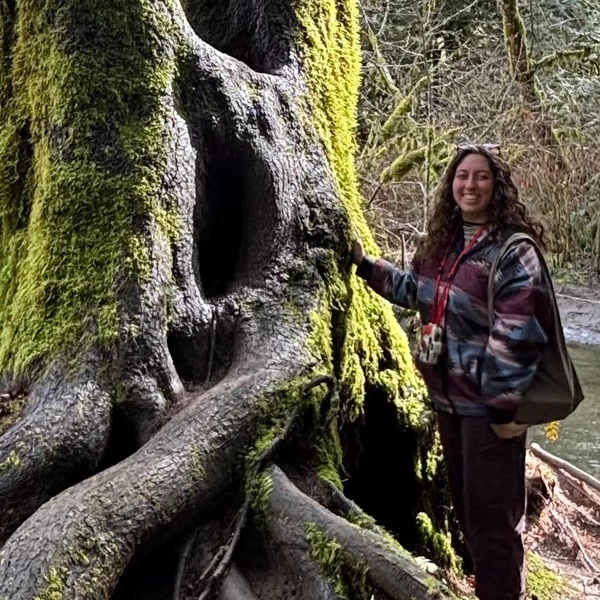
One of the most memorable experiences I have had with her was going on a hike together. As we walked through the woods, she named nearly every moss, fern, and tree we passed, explaining their roles in the ecosystem with genuine excitement. She would call hello to the Ravens, and chirp to the frogs. Her enthusiasm was absolutely contagious. What stood out to me was not just her knowledge, but the joy she took in sharing it. The woods were alive, and she was talking to them.
That experience changed how I understood what it means to work in STEM. Before knowing Sabina, I viewed environmental science as a daunting field, reserved for people working in labs or academic institutions. Sabina showed me something different. Her knowledge was not confined to research papers or classrooms; it was woven into how she lived, how she moved through the world, and how she connected with others.
Her impact extends beyond her personal life as well. Sabina played a key role in helping build an ecology lab at a local school on their island, creating opportunities for students to engage directly with environmental science. Seeing her invest in education and share her expertise with younger generations made a lasting impression on me. It demonstrated that STEM is not only about individual discovery, but also about mentorship, access, and empowering others to see themselves in scientific spaces.
I have been a fan of the writings by Robin Wall Kimmerer and Susan Simard for some time. Both of their writing reinforced many of the ideas I saw reflected in Sabina’s life. The interconnectedness of people and the natural world, and the idea that science can be rooted in respect and reciprocity. Together, these influences reshaped how I view environmental science. It is not simply about studying ecosystems, but about forming a relationship with them.
My ambition is to pursue a degree in environmental science with a focus on biodiversity, conservation, and resource management. I want to have the skills to apply technical knowledge to environmental challenges while also making that knowledge accessible to others. I am especially interested in work that bridges science and community engagement, ensuring that environmental solutions are not only effective but also inclusive. I want to contribute to a future where more people feel connected to and empowered by science.
I couldn't have expected how impactful meeting Sabina would be. She encouraged me to feel brave in my decision to pursue a higher education, and celebrated my excitement for the outdoors. Because of her, I am pursuing this path with a clearer sense of purpose: to use science not only to understand the world, but to care for it and to help others do the same.
HeySunday Green Minds Scholarship
Protecting the environment is not just a career path I hope to pursue, it is a responsibility that shapes how I understand the world and my place within it. Through both my academic interests and personal experiences, I have come to see environmental work as requiring empathy, reciprocity, and action.
My perspective has been shaped by reading the books of Robin Wall Kimmerer, Ben Goldfarb, and Susan Simard. I am captivated by the emphasis their writing has on interconnectedness between people, wildlife, and ecosystems, challenging the idea that humans exist separately from the natural world. In particular, Goldfarb's Crossings highlights how infrastructure shapes animal movement and survival, reinforcing how human decisions have far-reaching ecological consequences. These ideas have influenced how I think about sustainability beyond conservation, but as a relationship built on respect and responsibility. This understanding has motivated me to pursue a path in environmental science, where I can contribute to solutions that honor both ecosystems and the communities that depend on them.
In addition to my academic interests, I have actively engaged in environmental work within my community. Volunteering with the Land Trust for Tennessee and the Cumberland River Compact has given me the opportunity to contribute to conservation efforts firsthand. Through this work, I have supported the protection of natural spaces and the health of local waterways, gaining a deeper understanding of how environmental stewardship directly impacts both wildlife and surrounding communities. These experiences have reinforced my belief that meaningful change begins at the local level, where individuals and organizations work together to create lasting impact.
Looking ahead, I hope to expand my contributions by focusing on solutions that make sustainability more accessible and inclusive. Environmental challenges such as climate change, habitat loss, and declining water quality disproportionately affect vulnerable communities, and I am driven to be part of efforts that address these inequities. I am particularly interested in approaches that combine environmental science with community engagement, ensuring that sustainable practices are not only effective, but practical and widely accessible.
My ambition is to be part of a generation that redefines humanity’s relationship with the environment. I plan to continue my education in environmental science, building the knowledge and skills necessary to contribute to long-term, impactful solutions. Whether through conservation initiatives, policy development, or community-based programs, I am committed to work that supports both ecological health and human well-being.
A healthier world for future generations depends on the actions we take today. Through my studies, my service, and my future career, I intend to be part of helping to build a more sustainable, equitable, and resilient world.
Ethel Hayes Destigmatization of Mental Health Scholarship
I was diagnosed with PMDD earlier this year, after years of experiencing intense mood swings and heightened anxiety during my cycle. For a long time, I didn’t understand what was happening to me. My emotions felt unpredictable and overwhelming, and without an explanation, I began to question myself. I felt out of control. Receiving a diagnosis was more than just a medical answer, it was a moment of validation.
Before my diagnosis, my mental health challenges deeply impacted how I saw myself and the world around me. I believed that my struggles were a personal failure rather than something deserving of care and attention. This mindset affected my self-esteem and made it difficult to extend compassion to myself. However, through this journey, I have learned that mental health is not a reflection of weakness. Instead, it requires patience, self-awareness, and the courage to seek help.
During difficult periods, my depression and anxiety made it easy for me to shut down, even when I needed support the most. This created distance in my relationship and made communication feel overwhelming. Through these challenges, I’ve learned how essential honest communication is, even when it feels uncomfortable or difficult. I have learned that speaking up about how I feel isn't going to make the world implode. I am grateful to have a partner who has shown me patience and understanding, and this has taught me the value of extending that same empathy to others.
In terms of my aspirations, my journey with mental health has strengthened my resilience and reshaped how I approach my goals. There were times when I felt like the odds were stacked against me, making it difficult to stay consistent or motivated. Now, with proper diagnosis and treatment, I feel more equipped to move forward. I still have difficult days, but I no longer see them as defining my future. Instead, I’ve learned to take each day as it comes, focusing on progress rather than perfection.
Because of what I have experienced firsthand, I have developed a deep sense of empathy and patience knowing that everyone carries challenges that may not be visible. When I have the capacity to do so, I hold space and understanding for my peers. The world can be a bleak and scary place, but having a community makes everything a little less scary. I now know the importance of being a good friend, neighbor, and stranger.
While my journey is ongoing, I am committed to continuing to grow, advocate for myself, and support others in their own struggles. By sharing my story, I hope to contribute to breaking the stigma surrounding mental health and to remind others that they are not alone.