Hobbies and interests
Swimming
Piano
Saxophone
Weightlifting
Running
Hiking And Backpacking
Biking And Cycling
Exploring Nature And Being Outside
Drawing And Illustration
Driving
Reading
Ceramics And Pottery
Concerts
National Honor Society (NHS)
Environmental Science and Sustainability
Reading
Humor
Drama
Academic
Literary Fiction
Mystery
Politics
Philosophy
Romance
Social Issues
Young Adult
I read books multiple times per week
Melis Sahin
1x
FinalistMelis Sahin
1x
FinalistBio
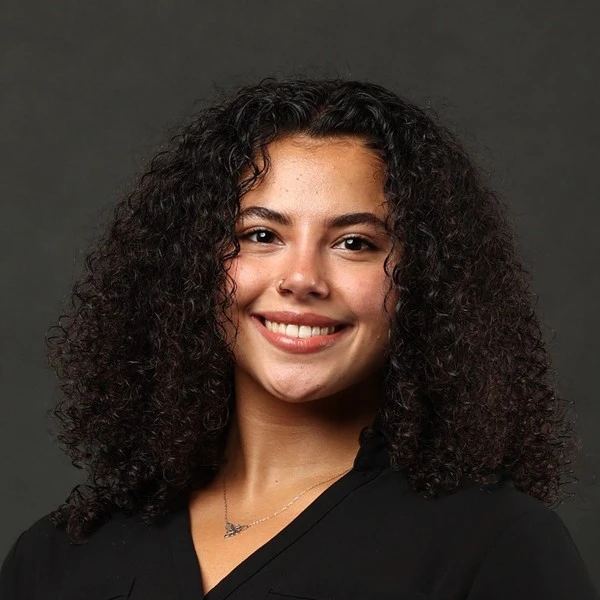
I am a senior undergraduate student pursuing Biomedical and Electrical Engineering at Case Western Reserve University, with minors in Spanish and Computer Science. My passion lies in exploring global healthcare disparities and developing sustainable and accessible engineering solutions. I am eager to engage in international experiences that broaden my perspective and contribute to innovative advancements in medical technology. I have a strong foundation in point-of-care and diagnostic device development, human-robot collaboration, and leadership in humanitarian engineering projects, and I want to drive impactful change in the medical devices industry.
Education
Pittsford Sutherland High School
High SchoolMiscellaneous
Desired degree level:
Bachelor's degree program
Majors of interest:
- Biomedical/Medical Engineering
Career
Dream career field:
Medical Devices
Dream career goals:
Develop Accessible Global Women's Health Technologies
Sports
Swimming
Varsity2017 – 20214 years
Swimming
Club2012 – Present14 years
Rowing
Varsity2018 – 20213 years
Arts
Preston Piano Studio
Music2014 – PresentJazz Ensemble
Music2015 – Present
Public services
Volunteering
Pediatric Urgent Care of Rochester — Intern2021 – 2021Volunteering
RoboCamp at RIT — K-5 Instructor2018 – 2020
Future Interests
Advocacy
Volunteering
Philanthropy
Entrepreneurship
Women in STEM and Community Service Scholarship
Millions of people die every year from preventable conditions simply because of where they were born. With an early childhood desire to become a clinician, I became aware of the stark difference between the medical technologies available in the US and the limited resources my family abroad in Turkey could access. What began as a frustration towards the inequitable global healthcare situation transformed into a lifelong mission to use engineering to bring medical advancements to the most vulnerable populations.
Pursuing biomedical and electrical engineering has allowed me to focus on the development of more accessible healthcare solutions. My first research project at university centered on the improvement of a microfluidic diagnostic device for Thalassemia detection -- a condition widespread in Turkey. This experience showed me the power of engineering to create tangible, low-cost solutions for those most in need. I found deep purpose in applying my technical knowledge toward a clear humanitarian goal.
The following summer, I worked on a paper-based platform for ABO blood type diagnosis design for rapid use in resource-limited environments. Later, I joined a project developing a point-of-care bladder pressure measurement device as a simpler, more affordable alternative to the invasive and costly Urodynamics Study. This time, our target focused on the improvement of patient care for the veteran population in the rural US. The experience opened my eyes to the healthcare inequities within my own country, reminding me that accessibility is also a local issue.
Beyond the lab, I joined and quickly fell in love with the Engineers Without Borders chapter at my university. The challenge of assessing the needs of a rural community in Malawi, without clouding our design with US-centered assumptions and perspectives, drew me in. I dedicated myself to the team, working on a solar-powered charging station for over 700 Malawians. As team lead, I implemented a business training for a group of ten influential and dedicated community members to utilize the solar charging station as a means of generating revenue and expanding the quality of life for the community. The growth of the business was astounding, with the leadership group using solar power to broadcast live soccer games, critical world news reports, educational programs for children, and even to play the latest music. By reinvesting the funds generated by the system's pay-to-charge model, the community was able to expand to include a hair salon and buy grain stocks to ensure no community member goes hungry. My passion for the responsibility of the privileged to utilize their advantages to empower those in different situations has led me to become the President and Vice President of Projects, and I have invested thousands of hours of work into the realization of these goals.
As I continue my studies, I plan to keep pursuing my work in global health innovation to empower underserved populations. I have found a career where I can lead projects to bridge the gap between scientific advancement and social responsibility.
This scholarship would allow me to continue building those bridges, using my education not just for personal achievement, but to create a world where quality healthcare and basic human needs are not determined by geography. Thank you for your consideration.
Bold Memories Scholarship
My dad didn't let me shift past first gear for three whole months. When I started learning to drive, I was extremely eager and convinced that I would be a great driver. Imagine my frustration when the fastest I could go was about 12 mph. No matter how many hours we spent in empty parking lots doing figure eights, the only pedal I was allowed to touch was the brake. I became increasingly bored, convinced that I had amassed the knowledge needed to drive for real.
One day, driving in a college campus parking lot, I took a wrong turn and found myself on a road with no shoulder space to pull over. A line of cars began forming behind me as I crept along 20 below the speed limit. When I finally found an escape, my knuckles were white on the wheel - but we were in one piece. My dad simply commented on the way my hands still needed to come off of the wheel when I did a smaller turn.
I sat in silence as I thought about what had just happened. My predictions were correct - when I could go faster than first gear, I was still a good driver. However, I now felt too scared to take us back, not because anything happened, but because of how panicked I was the first time.
I distanced myself from driving for a few days. Every time I got back in the car, I remembered the uncertainty and chaos. My dad never said I told you so. He didn't have to.
Since that day, I do not take the process of learning lightly. A slow-moving low-stress experience is far more beneficial than crammed high-stress learning, and I have brought this into almost every aspect of my life.
Bold Optimist Scholarship
For my sister's fifteenth birthday, one month after I got it, my nose piercing was ripped out. The stud caught my shirt as I changed, and before I processed anything, I felt a piercing pain and heard twinkling. My mind began racing - one of my worst fears was an infected nose or needing re-piercing, and I knew this debacle was step one in that process.
My mental clock ticking, I took a deep breath and began searching. Once found, I immediately disinfected the metal and steadied myself. I didn't know how, but I was going to put this piercing back in my nose. The stud had a corkscrew shape - ironically to keep it from falling - and I struggled with the re-entry. After the fifth failed attempt, I began to panic. Then, I thought of FaceTiming my only friend with a nose piercing. When he didn't pick up, I started spiraling again, until I calmed myself and looked up a YouTube tutorial. Looking in the mirror, I tried to follow the tutorial, but I became increasingly frustrated as nothing worked.
Knowing that assaulting my nose further would only irritate it, I soothed my fears of my hole closing up and waited for my dad. Finally, the door opened. I showed my dad the tutorial, then what I had been doing, and handed him the stud. In less than fifteen seconds, all my fears were assuaged and my nose was bedazzled once more. My dad laughingly stated that because of the mirror, I was doing everything backward.
Throughout this stress induced period, I failed many more times than I succeeded. However, after every failure, instead of dwelling, I changed my approach and re-attacked the problem. By staying optimistic and focused, I am able to push through most difficult situations.