Hobbies and interests
Animals
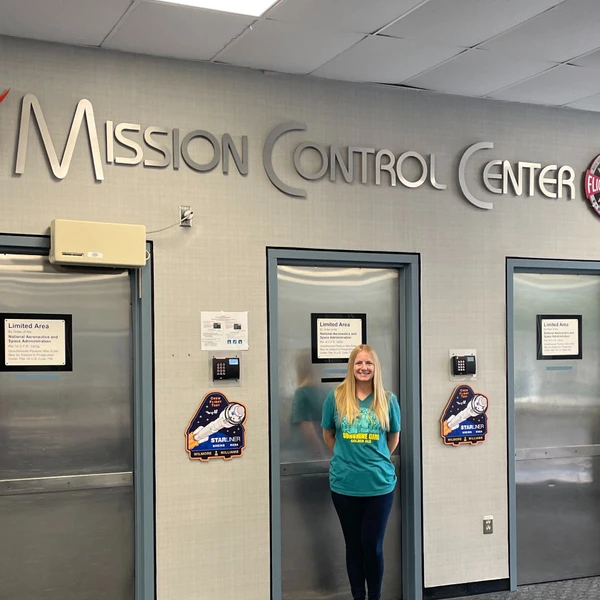
Aerospace
Baking
Biking And Cycling
Color Guard
Cooking
Education
Volleyball
Reading
Running
Drawing And Illustration
Fitness
Wakeboarding
Snowboarding
Reading
Mystery
Action
Book Club
Leadership
I read books multiple times per week
Meghan Leedy
1x
FinalistMeghan Leedy
1x
FinalistBio
I am a current on-campus intervention teacher aspiring to become a principal in the future. I have taught special education students for the past 8 years and have a Master's Degree in Special Education mild to moderate disabilities. I have a Master's degree in Education Applied Behavioral Analysis. I am trained in Restorative Practices, AVID strategies, PBIS/MTSS, and am a Google-certified educator. I am a proud teacher at a low-income middle school in Victorville, California. My students are my why for teaching. I love to inspire my students to believe that they can have a future and that they can be successful. I married to an incredible Husband who works for Space X and we have a Labrador named Apollo! We are big Space fans
Education
San Diego State University
Master's degree programMajors:
- Educational Administration and Supervision
Arizona State University Online
Master's degree programMajors:
- Behavioral Sciences
California Baptist University
Master's degree programMajors:
- Special Education and Teaching
University of California-Riverside
Bachelor's degree programMajors:
- Sociology
Miscellaneous
Desired degree level:
Doctoral degree program (PhD, MD, JD, etc.)
Graduate schools of interest:
Transfer schools of interest:
Majors of interest:
Career
Dream career field:
Education
Dream career goals:
Teacher
Victorvalley Union High School District2017 – Present9 years
Sports
Volleyball
Junior Varsity2006 – 20082 years
Future Interests
Advocacy
Philanthropy
Dr. Samuel Attoh Legacy Scholarship
Legacy, to me, means the lasting impact we leave behind—not just through accomplishments or material wealth, but through values, actions, and the way we shape the lives of others. It’s about the story people will tell about you when you’re no longer in the room, and ultimately, how you’ve lived your life in a way that inspires others to live theirs better. For me, legacy is rooted in integrity, resilience, and a strong sense of purpose—values that were instilled in me from a very young age.
My parents raised me with a strong work ethic and a deep understanding of personal responsibility. From the beginning, I was taught that nothing worth having comes easily. There were no handouts or shortcuts. If I wanted something—whether it was a new toy as a kid or an opportunity as I got older—I had to earn it. That lesson shaped my character. It taught me to push myself beyond comfort zones, to work harder when things got tough, and to never expect success to be handed to me. My parents didn’t just talk about hard work—they lived it, and by expecting the same from me, they gave me a lifelong gift.
Challenging myself has become a central part of who I am. Whether in academics, sports, or personal goals, I’ve always sought growth through effort. That mindset, planted by my parents, has become part of the legacy I hope to carry forward. I want to be known as someone who never backed down from a challenge, who set goals and worked tirelessly to meet them, and who encouraged others to do the same. To me, legacy is not about being perfect—it’s about striving, evolving, and leaving a trail of determination that others can follow.
Another major part of my upbringing—and something I deeply value—was travel. As a child, I was fortunate to see the world, to experience different cultures, and to understand life from multiple perspectives. Those experiences expanded my worldview and taught me empathy, curiosity, and open-mindedness. Travel showed me that legacy isn’t limited to one place or one set of people—it’s global, and the connections we make across borders can be just as meaningful as those close to home. I want to continue that spirit of exploration in my future, and eventually pass it down to others, just as my parents did for me.
Ultimately, legacy is about the values we live by and how we pass those values on. For me, that means staying grounded in hard work, embracing challenge, and maintaining a spirit of discovery. I want my legacy to reflect not just what I achieved, but how I achieved it—with grit, curiosity, and an unwavering belief that earning what you want is the most rewarding path you can take.
RonranGlee Special Needs Teacher Literary Scholarship
"I have learned that the purpose of teaching is to bring the student to his or her sense of his or her own presence." – Professor Harold Bloom, Possessed by Memory
This powerful quote by the late Professor Harold Bloom reflects a profound philosophy of education that goes beyond textbooks, tests, and standards. It speaks to the heart of what it means to educate: to help each student not just acquire knowledge, but awaken to their own being—their voice, their worth, their place in the world. In the context of special education, this mission becomes not only noble but essential. Special education is not merely about adapting lessons or meeting IEP goals; it is about recognizing, nurturing, and affirming the individual humanity of each student, regardless of ability.
As a passionate aspiring special education teacher, I embrace this mission wholeheartedly. Professor Bloom’s words challenge us to focus not on outcomes, but on presence—the experience of being fully alive, seen, and capable in one's own identity. For students with disabilities, who often face societal marginalization and low expectations, guiding them to a sense of their own presence means creating a space where their abilities, dreams, and voices matter. It means seeing them not through the lens of limitation, but potential.
To interpret Bloom’s quote, we must first understand what it means to have a “sense of one’s own presence.” This is not simply about self-awareness or confidence. Rather, it refers to a deep recognition of one’s identity, agency, and existence as valuable and purposeful. It is the moment when a student realizes, “I am here, and I matter. I have something to say. I belong.” It is about helping students feel empowered—not as a reflection of others’ standards, but in the authenticity of their own being.
For special education students, cultivating this presence means moving past the labels and diagnostics. It means recognizing that every child, regardless of disability, has a unique voice, a way of thinking and relating to the world, and a contribution to make. Their presence may not look the same as their peers', but it is no less real or valuable.
My passion for special education stems from a deep belief in equity, dignity, and the transformative power of connection. I have always been drawn to working with students who learn and experience the world differently. What others might view as challenges, I see as opportunities for creativity, empathy, and human growth.
Special education is not just about delivering modified instruction—it is about listening with compassion, advocating with determination, and seeing students holistically. It is about dismantling barriers, both academic and social, so that every student can reach their full potential. I am passionate about being part of that process—not as a rescuer or fixer, but as a facilitator of growth and self-discovery.
Every student I’ve encountered in this field has taught me something about resilience, courage, and authenticity. My passion is fueled by their stories—the student who learned to communicate using assistive technology, the child who smiled with pride after mastering a task they thought impossible, the teen who finally felt safe enough to share their ideas in a classroom discussion. These moments are sacred. They are the embodiment of a student stepping into their own presence.
To help special needs students experience a sense of their own presence, I approach teaching as a deeply human and relational endeavor. My mission rests on three foundational pillars: empowerment through individualized instruction, cultivation of emotional safety and belonging, and celebration of voice and self-expression.
1. Empowerment Through Individualized Instruction
Each student learns differently. In special education, a one-size-fits-all approach is not only ineffective—it is unjust. To guide students to their own presence, I commit to deeply understanding their cognitive, emotional, and behavioral profiles. This involves not just reading IEPs, but knowing the student beyond the paperwork—what excites them, what soothes them, how they process the world.
I believe in designing instruction that respects the student’s learning style while stretching them toward growth. This may mean using multisensory techniques, breaking tasks into manageable steps, or integrating interests like music or art into lessons. By providing tools that make learning accessible and meaningful, I help students discover that they are capable learners. Each moment of mastery, no matter how small, is a step toward presence.
Importantly, I do not define success solely by academic metrics. Success may be a student initiating a conversation for the first time, managing an emotional trigger, or navigating social play. These moments are just as educational—and transformative—as any test score.
2. Cultivation of Emotional Safety and Belonging
Presence cannot flourish in fear or shame. Many students with disabilities have experienced environments where they felt misunderstood, excluded, or undervalued. My classroom will be a space of psychological safety, where every student knows: “You are safe here. You are seen. You are celebrated.”
This involves explicitly teaching social-emotional skills, modeling empathy, and addressing behavioral challenges with compassion rather than punishment. It also means building trust through consistent, respectful relationships. When students feel safe and supported, they are more willing to take risks, express themselves, and engage with the world around them.
I also promote inclusive classroom practices that value diversity. Peer relationships matter deeply to students, so I actively foster a community where differences are embraced and every voice matters. Collaborative projects, buddy systems, and inclusive celebrations are some of the ways I affirm that every student belongs.
3. Celebration of Voice and Self-Expression
Finally, helping students discover their presence means helping them find and use their voice. For some, this may be verbal speech; for others, it may be sign language, a communication device, art, movement, or writing. I see communication not just as a skill, but as a right.
I create opportunities for students to share their thoughts, feelings, and ideas in ways that feel authentic to them. This may include journaling, classroom leadership roles, presentations, or simply space to express choice and preference. The goal is not to make students conform to a single standard, but to affirm that their way of communicating is valid and meaningful.
Moreover, I expose students to stories, role models, and narratives that reflect their own identities and experiences. Representation matters. When students see themselves reflected in the curriculum and classroom environment, they begin to internalize the belief: “I matter.”
To be a special education teacher is to believe in the sacred potential of every child. It is to be endlessly creative, patient, and determined in the face of challenge. It is to see beauty where others see difficulty, and to speak possibility into the lives of students who may have heard more about what they can’t do than what they can.
Reimagining Education Scholarship
In today’s rapidly evolving world, academic success alone is no longer sufficient to prepare young people for the realities of adulthood. While schools have traditionally emphasized subjects like mathematics, science, and literature, they often overlook practical life skills that are essential for daily living. Incorporating a dedicated life skills class—covering topics such as cooking, money management, paying bills, completing the FAFSA, and cleaning—into every student’s curriculum is a crucial step toward equipping them for long-term success and independence.
Many students graduate from high school with impressive academic credentials but limited understanding of how to function independently in the real world. This disconnect can lead to stress, confusion, and poor decision-making when they face everyday responsibilities. A life skills course would bridge this gap by providing hands-on, applicable knowledge that students can immediately use. Learning how to cook, for instance, promotes healthier eating habits and self-reliance, reducing the need to depend on fast food or costly takeout. Likewise, understanding how to properly clean and maintain a living space cultivates responsibility and hygiene, which are essential for both personal and shared living environments.
One of the most critical components of life skills education is financial literacy. Many young adults enter college or the workforce without any understanding of how to budget, save, or manage debt. Teaching students how to create a budget, use credit responsibly, and pay bills on time can help prevent common financial pitfalls such as overspending and accruing high-interest debt. Moreover, learning how to complete the Free Application for Federal Student Aid (FAFSA) is essential for students who plan to pursue higher education, as it can significantly affect their ability to access grants, scholarships, and loans. Demystifying this process ensures that students from all backgrounds have equal opportunities to afford college.
Life skills education is especially important for students from underserved communities, who may not have access to this knowledge at home. By making these lessons a part of the standard curriculum, schools can ensure all students—regardless of background—receive the same tools to succeed in life. This promotes equity and empowers students to take control of their futures with confidence and competence.
The long-term benefits of teaching life skills extend beyond the individual. When young people are equipped to manage their lives effectively, they are more likely to become responsible citizens, stable employees, and proactive community members. They are less likely to fall into cycles of debt, poor health, or homelessness. As a result, society as a whole benefits from a more capable, independent, and resilient population.
ncorporating life skills into every student’s education is not just a helpful addition—it is a necessity. By teaching students how to cook, clean, manage finances, and handle adult responsibilities, schools prepare them not just for tests and grades, but for life itself. Making this shift in education ensures that all students, regardless of their future paths, are equipped to face the challenges of adulthood with confidence and capability.