Hobbies and interests
Sewing
Embroidery And Cross Stitching
Volleyball
Crafting
Driving
Community Service And Volunteering
Volunteering
Writing
Reading
Fashion
Makeup and Beauty
Psychology
Marketing
Reading
Health
Self-Help
I read books multiple times per month
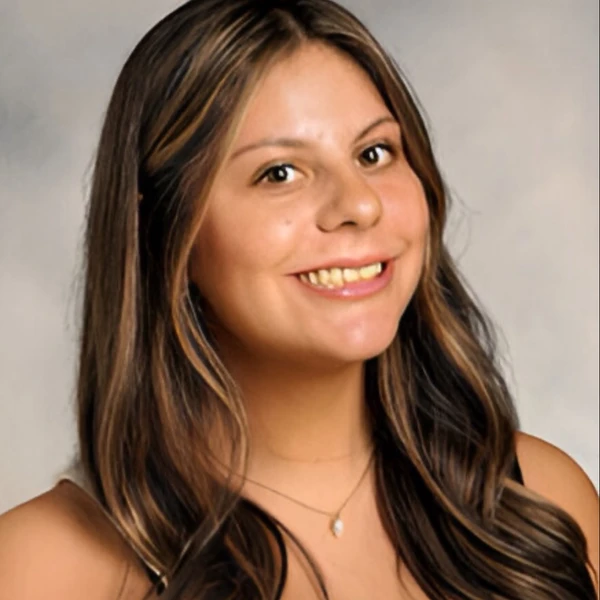
Maya Calabrese
1x
FinalistMaya Calabrese
1x
FinalistBio
My name is Maya Calabrese, and I’m a first-year Honors student at Loyola University Chicago majoring in Exercise Science. I plan to become a pediatric occupational therapist—a career rooted in service, healing, and empowerment. My passion for helping others stems from lived experience: navigating chronic health conditions has taught me not just how to survive, but how to advocate, uplift, and connect deeply with others.
I’m not just pursuing a degree—I’m pursuing a purpose. Throughout high school, I took on leadership roles as a peer mentor, tutor, and mediator, and served my community through National Honor Society, Key Club, and Interact Club. My dedication to volunteerism earned me the Star Volunteer recognition from Trish Glees multiple years in a row. These opportunities taught me how to lead with empathy and take initiative in both everyday moments and times of crisis.
Outside the classroom, I’ve worked at Trader Joe’s and Nordstrom Rack, where I developed professionalism, emotional intelligence, and people-first communication skills. I also find joy in creativity—restoring vintage items like my 1930s Singer sewing machine, designing custom merchandise, and planning events.
Everything I do is rooted in care—whether I’m supporting children, serving customers, or volunteering in my community. I don’t just want to succeed—I want to leave a mark. And with your support, I’ll continue building a life defined by service, compassion, and lasting impact.
Education
Harry D Jacobs High School
High SchoolMiscellaneous
Desired degree level:
Doctoral degree program (PhD, MD, JD, etc.)
Majors of interest:
- Behavioral Sciences
- Cognitive Science
- Health Professions and Related Clinical Sciences, Other
Career
Dream career field:
occupational therapy
Dream career goals:
Independent Childcare Provider
Private Families2014 – Present12 yearsCrew Member
Trader Joe's2023 – 20241 yearService Experience
Nordstrom Rack2024 – Present2 years
Sports
Volleyball
Club2023 – 20241 year
Awards
- All-Conference
Volleyball
Junior Varsity2021 – 20232 years
Awards
- Yes
- Team Captain
- Sportsmanship
Research
English Language and Literature, General
Harry D. Jacobs High School — Conducted academic research, synthesized sources, and composed analytical and argumentative essays using college-level writing and citation methods.2023 – 2024
Arts
Harry D. Jacobs High School
Graphic ArtDesigned materials used in school events, Participated in end-of-semester design showcases, Built a portfolio of completed works2021 – 2023
Public services
Advocacy
Harry D. Jacobs High School — advocate, combining volunteering with raising awareness and leading projects2024 – 2025Public Service (Politics)
Harry D. Jacobs High School — Volunteer2024 – 2025Public Service (Politics)
Harry D. Jacobs High School — organizing voluntter initatives and leading community services projects2023 – 2025Advocacy
Harry D. Jacobs High School — Peer Mediator2021 – 2025Advocacy
Harry D. Jacobs High School — Executive Peer Mentor2023 – 2025Volunteering
Community Closet — Contributed to a welcoming, respectful environment for all visitors, Assisted with day-to-day operations and supported donation-based services2018 – 2020Volunteering
American Foundation for Suicide Prevention — participant and advocate2021 – Present
Future Interests
Advocacy
Volunteering
Sloane Stephens Doc & Glo Scholarship
The sterile aroma of antiseptic and the rhythmic beeping of heart monitors will forever remind me of life’s fragility. Lying in a hospital bed, IV lines winding into my veins, I experienced fear, isolation, and awe at the dedication of nurses and medical staff who brought comfort amid bright lights and white walls. While classmates attended football games and navigated typical teenage life, I endured ambulance rides, hospital stays, and countless tests that revealed chronic pancreatitis, Graves’ disease, celiac disease, and an immunocompromised immune system. Mental health challenges intertwined with these medical realities, teaching me that recovery is a journey requiring resilience, patience, and empathy.
Friendships were difficult to maintain; every hospital visit or appointment disrupted budding connections. Yet I discovered ways to create meaning beyond my personal struggles. Service became a lifeline and source of empowerment. I served as a peer mentor, tutor, and mediator, volunteering through the National Honor Society, Key Club, and Interact Club. At the Community Closet, where I was honored as a Star Volunteer, I transformed the space into a welcoming environment where families could find items with dignity. Participating in the AFSP Chicagoland Walk, I supported mental health awareness and honored the resilience of my community. These experiences taught me leadership, empathy, and the importance of action—reinforcing that service can transform both the giver and the receiver.
These experiences, combined with my personal journey navigating chronic illness, inspired my ambition to become a pediatric occupational therapist. I want to help children regain independence, build confidence, and develop resilience, integrating creative therapies and hands-on strategies that make healing engaging and holistic. I plan to pursue a graduate degree in occupational therapy and work in hospitals, schools, or clinics, providing tailored, compassionate care. I hope to create environments where children feel seen, supported, and capable of achieving milestones they once thought unreachable.
High school strengthened my perseverance and adaptability. Despite chronic illness and hospitalizations, I maintained academic excellence and sought leadership opportunities. Every challenge—whether enduring treatments, managing anxiety and depression, or leading volunteer initiatives—sharpened my resilience and taught me to approach obstacles with patience and creativity. Ambition often emerges not just from opportunity, but from necessity—the need to rise above circumstances while holding on to hope and purpose.
Ultimately, my journey through medical and mental health challenges has not defined me solely by adversity, but by the compassion, drive, and determination it inspired. My passion for pediatric occupational therapy is rooted in these experiences, and my commitment to community service reflects my desire to give back, uplift, and create meaningful change. By turning my challenges into insight and my experiences into action, I aim to empower children and families to transform obstacles into strength and resilience.
Marsha Cottrell Memorial Scholarship for Future Art Therapists
My passion for healing through creativity stems from my own experiences with chronic illness and trauma. During numerous hospital stays, I was surrounded by cold, white walls that smelled faintly of antiseptic. The harsh, fluorescent lights hummed overhead, casting a glare on the pale linoleum floors. The constant, mechanical beeping of heart monitors, oxygen machines, and blood pressure cuffs echoed through the quiet room, a relentless reminder of my vulnerability and pain. I remember one night, the sharp beep of the oxygen alarm jolted me awake, flooding me with panic as I struggled to breathe. In those moments of fear and helplessness, art became my refuge—a way to express the fears, frustrations, and hopes that words couldn’t capture. Drawing gave me a rare sense of control and freedom amid the chaos.
Marsha Cottrell's story deeply resonates with me. Despite enduring unimaginable trauma—surviving domestic violence both as a child and an adult—and raising her first child as a single mother, she carried a quiet dream of becoming an art therapist. Her strength, compassion, and creativity fueled a lifelong commitment to helping others heal. She worked tirelessly to support people affected by harm, helping them take responsibility and begin to change their lives. Marsha’s belief in the transformative power of creativity, especially for trauma survivors, inspires me to continue her legacy. I am motivated to bring that same compassion and innovation to my own work, ensuring that art therapy becomes a beacon of hope and healing for those who need it most.
After college, I plan to pursue graduate studies in occupational therapy, focusing on pediatric care while also deepening my knowledge of art therapy techniques. I aspire to create integrated therapeutic environments—whether in hospitals, schools, or clinics—where creativity and care work hand in hand. My goal is to develop programs that make art therapy accessible to underserved populations, especially children who have experienced trauma. Beyond direct therapy, I want to advocate for the inclusion of creative approaches within occupational therapy, fostering holistic healing that addresses both mind and body. Ultimately, I hope to empower individuals to reclaim their lives, transform pain into strength, and build resilience—carrying forward Marsha’s compassionate vision into the future.
My journey through trauma has taught me that recovery demands patience, empathy, and innovation. By combining occupational therapy with art-based interventions, I want to empower individuals to transform pain into strength and regain control over their lives—continuing the compassionate path Marsha envisioned.
Uniball's Skilled Trades Scholarship
1. What trade are you pursuing, and why are you passionate about it?
I am pursuing a career in pediatric occupational therapy—a trade that requires hands-on expertise, technical skill, and a compassionate approach to helping others. Although occupational therapy is not a traditional skilled trade, like welding or plumbing, it shares many qualities: mastering practical techniques, solving problems, and working directly with people to rebuild independence and improve quality of life.
My passion is rooted in my own experiences navigating chronic health challenges from a young age. For example, I remember the overwhelming frustration of struggling with everyday tasks that most take for granted—the sharp sting of weakness when trying to hold a pencil, or the exhaustion after standing for just a few minutes. These moments taught me that healing is not just about medicine but about relearning how to live fully. The skilled, empathetic care I received fueled my desire to become someone who can guide children through their struggles, helping them find confidence and joy in their abilities.
2. What are your plans after your trade education?
After completing my undergraduate degree in Exercise Science, I plan to enroll in a graduate occupational therapy program specializing in pediatrics. I am eager to dive into rigorous academic work and seek clinical internships where I can develop the hands-on skills necessary for effective therapy.
I envision working in hospitals, schools, and/or a practice, providing tailored care that supports each child’s unique needs. Beyond direct therapy, I want to advocate for increased access to occupational therapy, especially for underserved communities. I am inspired by individuals like Dan "Uniball" Lansing, who recognized the importance of skilled trades and worked tirelessly to inspire the next generation. Similarly, I aim to help bridge gaps in healthcare access through community programs and outreach.
3. Describe a time in your life when you overcame adversity and how you worked through it.
During adolescence, I faced one of the most difficult chapters of my life—a prolonged hospital stay due to a severe flare-up of a chronic health condition. The sterile hospital room was filled with the faint scent of chlorfoam. The steady beep of monitors measured each fragile breath, and the weight of uncertainty hung heavily in the air. My body ached from immobility, and even the simplest tasks—brushing my hair—felt like insurmountable challenges.
The frustration and fear were overwhelming. I was terrified of losing my independence and uncertain of what the future held. But amid the pain and doubt, I found a quiet strength within myself. Each day, I set small goals: to feed myself, to sit upright, to walk a few steps. The compassionate care of therapists and the unwavering support of my family became my lifeline. Slowly, I reclaimed control over my body and my life.
This experience reshaped my perspective on adversity. It taught me that challenges, no matter how daunting, can become catalysts for growth and purpose. It inspired me to dedicate my life to helping others rebuild their lives—much like Dan "Uniball" Lansing, whose resilience and commitment to skilled trades left an enduring legacy. I am determined to master my trade with the same grit and passion, turning hardship into hope for those I will serve.
Richard (Dunk) Matthews II Scholarship
My name is Maya Calabrese, a first-year Honors student at Loyola University Chicago, majoring in Exercise Science. I am pursuing a career as a pediatric occupational therapist—a profession that demands hands-on expertise, precise skill, and a practical mindset akin to those found in traditional trades. This career requires mastering techniques that enhance daily function and independence, and I am committed to refining these skills through both academic study and practical experience.
My journey has been shaped by challenges that demanded resilience and adaptability. One of the most defining moments came during a prolonged hospital stay in my adolescence, when a severe flare-up of a chronic health condition left me physically debilitated and uncertain about my future independence. The sterile hospital room smelled faintly of antiseptic and medicine; the relentless beep of machines measured each fragile breath. My muscles ached from immobility, and the simple act of gripping a spoon felt like an impossible task. The frustration and helplessness were overwhelming—I felt trapped not only by my body but by fear and doubt. Yet amid that vulnerability, I experienced a profound clarity. I saw how compassionate and skilled caregivers, specifically occupational therapists, helped restore not just physical function, but also hope and confidence. I began to understand the vital importance of this hands-on care and how it could transform lives. It was there, in that quiet, difficult place, that I resolved to use my experiences to give back—to become someone who empowers children and families facing similar struggles.
Since then, I have actively served my community through leadership and volunteer work. One of my most meaningful commitments was with the Community Closet, where I was honored as a Star Volunteer. There, I didn’t just sort donations—I worked to create an organized, welcoming space where families could find what they truly needed with dignity and ease. This hands-on experience sharpened my attention to detail and taught me how the environment affects wellbeing—skills I will carry into my therapeutic practice.
Furthermore, by participating in the AFSP Chicagoland Walk, it has deepened my understanding of community healing. Walking alongside survivors and supporters, I witnessed the power of collective resilience and advocacy, reinforcing that healing extends beyond physical recovery to emotional and continued social support.
My jobs at Trader Joe’s and Nordstrom Rack also helped me develop interpersonal skills. I encountered people carrying what I call an “unbearable weight” of stress or loss and learned to respond with empathy and patience—skills essential for supporting people navigating difficult circumstances.
To master this trade, I have a clear and focused plan. I will continue my rigorous academic studies in Exercise Science and seek out internships and clinical experiences that provide hands-on therapeutic practice. After earning my undergraduate degree, I plan to enroll in a graduate occupational therapy program, where I will deepen my knowledge of anatomy, therapeutic techniques, and pediatric care. I am committed to lifelong learning—staying updated on the latest research and innovations to ensure the highest quality care for my future patients.
My perseverance through personal health challenges has equipped me with grit, empathy, and determination—the qualities necessary to excel in this demanding profession.
The principle of doing good when it is within one’s power guides every choice I make. I believe that service is a responsibility we carry—not something to withhold when we can help others. This scholarship would empower me to fully dedicate myself to mastering the skills and knowledge needed to serve children and families effectively. With your support, I will continue to turn my experiences into meaningful action, giving back to my community with compassion, skill, and determination.
Proverbs 3:27 Scholarship
The morning air was crisp, and the crowd at the AFSP Chicagoland Walk stretched in every direction—families holding photos, friends wearing shirts with loved ones’ names, survivors walking quietly but purposefully. I held a strand of honor beads in my hand, each color telling a story of loss, survival, or support. As I began volunteering, I felt the power of a community united not by circumstance alone, but by the shared belief that no one should face darkness alone. It brought to life the verse from Proverbs: “Do not withhold good from those who deserve it when it is in your power to act.”
My name is Maya Calabrese, and I am a first-year Honors student at Loyola University Chicago majoring in Exercise Science, with the goal of becoming a pediatric occupational therapist. My service work is deeply personal—rooted in both my experiences navigating chronic health conditions and in the example set by my mother, who has built her career around serving others with dignity and compassion.
In high school, I poured that conviction into action. As a peer mentor, tutor, and mediator, I helped create a supportive space for students to thrive both academically and individually. Through National Honor Society, Key Club, and Interact Club, I organized food drives, helped lead community clean-ups, and participated in events that met real, tangible needs. At the Community Closet, I earned the Star Volunteer award multiple years in a row for consistently showing up, organizing donations with care, and ensuring each family felt welcomed and respected.
Service has never been limited to school projects for me—it’s something I integrate into every environment I encounter. My jobs at Trader Joe’s and Nordstrom Rack, I witnessed the unbearable weight many customers silently carry, and I learned how small acts of kindness—like remembering a name or offering a listening ear—can make a profound difference.
The AFSP walk reminded me that service can also be presence—standing alongside people, holding space for their stories, and letting them know they are not alone. If awarded this scholarship, I would invest it into tuition, books, and professional development opportunities, allowing me to remain deeply involved in service work while advancing my education.
This verse from Proverbs is not just a call to action—it’s a way of living. I will forever carry it with me into every interaction, every project, and every community I am part of. With your support, I will continue to act when it is in my power, transforming both my experiences and my education into a lifetime of service, hope, and meaningful impact.
Somebody Cares About Science - Robert Stockwell Memorial Scholarship
My name is Maya, and I’m an incoming freshman at Loyola University Chicago, majoring in exercise science. I’ve lived most of my life managing chronic health conditions and mental health challenges, which has required a maturity and strength I never expected to develop so young. These experiences shaped more than my character—they shaped my calling. I found purpose in understanding how the body and mind heal, and I became deeply committed to supporting others through their own healing journeys. That’s why I’m pursuing a career in pediatric occupational therapy—where science meets compassion, and every small victory matters.
When I read about Robert Stockwell’s legacy, I felt an instant connection. Like Robert, I believe that science isn’t just a subject—it’s a tool for transformation. His passion for biology, exercise physiology, and personal growth mirrors my own. He believed that with curiosity, effort, and a willingness to learn, anyone could grow beyond their circumstances. That belief resonates deeply with me. It’s the mindset that carried me through personal adversity and now drives my mission to empower others—especially children—to rebuild, reimagine, and reclaim their lives through science-based, person-centered care.
My commitment to learning and growth extends far beyond the classroom. At school, I served as an executive peer mentor, helping students feel seen, supported, and understood. I also worked as a peer mediator, resolving conflicts and promoting empathy, and as a tutor, guiding peers through academic challenges. These leadership roles taught me the power of presence, patience, and trust—skills that will directly serve my future as a healthcare provider. Outside of school, I’ve been deeply involved in community service. I’ve volunteered with the American Foundation for Suicide Prevention and the Community Closet, two of the most impactful experiences among a wide range of service work. I was also active in Key Club and Interact, where I participated in local outreach efforts that strengthened my belief in service as a daily practice.
Majoring in exercise science is more than an academic choice—it’s the next step in a journey shaped by both struggle and hope. I want to take the knowledge I gain and use it to help children grow stronger—physically, emotionally, and mentally. Pediatric occupational therapy offers a career where I can merge personal experience with scientific expertise to make a real impact. Receiving this scholarship would not only lighten the financial burden of my education but would also affirm that the path I’m on—of resilience, growth, and service—is one worth honoring. Like Robert, I want to live a life that empowers others to believe in their potential, embrace learning, and never stop growing.
RonranGlee Literary Scholarship
“Behold! human beings living in an underground den, which has a mouth open towards the light and reaching all along the den; here they have been from their childhood, and have their legs and necks chained so that they cannot move, and can only see before them, being prevented by the chains from turning their heads around. Above and behind them a fire is blazing at a distance, and between the fire and the prisoners there is a raised way; and you will see, if you look, a low wall built along the way, like the screen which marionette players have in front of them, over which they show the puppets" (Plato’s Allegory of the Cave).
Plato’s passage from the Allegory of the Cave is a vivid metaphor that explores the limitations of human perception and the transformative journey toward true knowledge. At its core, this scene illustrates how individuals can be confined by ignorance, mistaking mere shadows for reality, until they engage in the difficult process of intellectual awakening. This concept resonates deeply with my academic journey in exercise science, where understanding the complex realities beneath surface appearances is essential to improving human health and performance.
The prisoners, chained from childhood and unable to move their heads, symbolize the ways in which people are bound by limited perspectives—both physically and intellectually. In the context of exercise science, this can be likened to the body’s own constraints or to common misconceptions about health and fitness. Just as the prisoners see only shadows cast by a distant fire, many individuals rely on superficial observations—like appearance or isolated symptoms—without understanding the underlying physiological processes or the holistic nature of well-being.
The “fire blazing at a distance” in the cave represents the misleading light of incomplete knowledge, while the shadows on the wall are illusions mistaken for truth. This metaphor aligns with the importance of scientific inquiry and critical thinking in exercise science. Surface-level assumptions, like fad diets or quick fixes, are akin to shadows—partial and distorted representations of health. True knowledge requires moving beyond these “shadows” to study the intricate workings of the human body, including anatomy, biomechanics, and nutrition, just as the prisoners must turn away from the shadows to see the fire and eventually the sun.
Furthermore, the chains that prevent the prisoners from turning their heads can be seen as analogous to the mental and cultural limitations that restrict our understanding of health. Overcoming these chains requires education, research, and an open mind—qualities essential to my field. Exercise science is not simply about physical activity; it demands a close and critical examination of evidence-based practices that challenge common myths and promote long-term wellness.
Plato’s allegory also highlights the difficulty and discomfort involved in gaining true knowledge. The prisoners’ journey out of the cave is painful and fraught with resistance, reflecting the challenges students like myself face when confronted with complex scientific concepts that overturn intuitive beliefs. However, this struggle is necessary for growth. In exercise science, progress comes from questioning assumptions, analyzing data critically, and applying knowledge thoughtfully to support individuals’ health in meaningful ways.
This passage reminds me that close reading and deep analysis are not only valuable in philosophy or literature but are vital tools in the sciences as well. Just as the prisoners must look beyond shadows to grasp reality, students in exercise science must look beyond surface symptoms and simplistic explanations to understand the interconnected systems of the human body. Close reading trains us to discern nuance, synthesize information, and develop informed approaches—skills essential to becoming a competent healthcare professional.
In sum, Plato’s Allegory of the Cave is a powerful reminder that true knowledge involves breaking free from ignorance and confronting deeper truths, even when it is uncomfortable. As I pursue my major in exercise science, I am inspired to adopt this mindset—not only in my academic studies but also in how I approach the complex challenge of promoting health and wellness. This passage encourages me to embrace curiosity, critical thinking, and the courage to question appearances, all of which are indispensable to my growth as a learner and future practitioner.
Stewart Family Legacy Scholarship
Leadership and science work hand in hand to shape the future. Science helps us discover new ways to solve problems—like developing better medicines, improving treatments, and creating healthier communities. Leadership guides those discoveries so they can truly benefit people’s lives. Without strong leadership, even the best scientific breakthroughs can fail to reach those who need them most. Without science, leaders wouldn’t have the knowledge needed to make informed decisions that improve our world.
My own experiences living with chronic illnesses have shown me the importance of both science and leadership. Managing ongoing health challenges means relying on medical advances to improve my quality of life, but it also means facing obstacles in accessing care and understanding. Through my health journey, I have learned how vital it is for leaders to advocate for patients and for science to keep pushing for new treatments and better support systems.
As an Executive Peer Mentor, I have helped other students navigate their own challenges, whether academic, emotional, or health-related. I’ve seen how strong leadership—listening with empathy, offering encouragement, and connecting people to resources—can inspire hope and resilience. These experiences have deepened my belief that leadership is not about authority but about lifting others up, especially those facing unseen struggles.
Science shapes our future every day. Medical research is constantly evolving, bringing new treatments and knowledge that can transform lives—like those living with chronic illnesses similar to mine. Through volunteering in mental health advocacy, I’ve also witnessed how greater understanding and education can reduce stigma and open doors for better care.
I am driven to grow as both a scientist and a leader, committed to ensuring that new discoveries are accessible and meaningful for all people, especially those with health challenges. This scholarship would help me continue my education, develop my skills, and prepare to make a real difference by combining scientific knowledge with compassionate leadership.
Together, leadership and science will build a future where progress is shared, challenges are met with understanding, and everyone has a chance to thrive.
Brian J Boley Memorial Scholarship
I am pursuing a degree in the mental health field because I intimately understand the weight of invisible struggles—the kind that don’t announce themselves but settle deeply into every moment of your life. Carrying mental health challenges often feels like carrying a heavy backpack filled with stones—each stone a painful memory, a moment of fear, or a day when the world felt unbearably overwhelming. Brian’s story resonates with me on a profound level because he too carried this weight—a young man whose brilliant life was tragically cut short by the intertwined forces of mental illness and addiction.
Like Brian, I have faced battles that many cannot see. For years, I struggled silently with self-harm and suicidal ideation, wrestling with feelings so dark it was hard to believe there could be a way forward. I know what it’s like to feel trapped in your own mind, to fight for breath in a world that often misunderstands or dismisses pain. But in my darkest moments, Mrs. Rebecca Oller, my high school social worker, was a beacon of light. She saw me—not just my struggles—and helped me carry the weight I thought I had to bear alone. Her compassionate, bold approach taught me that mental health care isn’t just about treatment—it’s about truly seeing people, listening deeply, and creating safe spaces for healing.
Mrs. Oller’s impact on my life inspired me to become an Executive Peer Mentor and mental health advocate, roles that allowed me to support others facing their own battles. I want to be the kind of professional who provides that same hope and understanding—a guiding presence for those who feel lost in the storm. I aspire to carry forward her legacy by dedicating my career to transforming mental health care into a system that integrates treatment for mental illness and addiction, reduces stigma, and centers empathy.
Brian’s life and loss fuel my ambition to be part of that change. I envision a future where mental health and addiction services work hand in hand, where no one slips through the cracks, and where healing is possible for everyone. This scholarship would provide essential support in my education and empower me to become the compassionate, bold, and effective mental health professional that our communities so desperately need.
Honoring Brian means fighting to ensure that no one else feels as unseen or unsupported as he did. With this scholarship, I will dedicate my life to being a beacon of hope—just as Mrs. Oller was for me—and to making a meaningful difference in the lives of those struggling with mental illness and addiction.
David Foster Memorial Scholarship
In high school, I didn’t just carry a backpack — I carried the weight of trauma, invisible illness, and a mind constantly in overdrive. Every day, I walked through the doors with more than textbooks on my shoulders. I carried severe PTSD, anxiety, PMDD, PCOS, and major depressive disorder — all managed under a 504 plan that never came close to capturing the full picture. Some days, just showing up felt like a radical act of resilience.
Then, I met Mrs. Rebecca Oller, our school social worker — someone who changed everything.
Mrs. Oller wasn’t just another staff member in the building. She was a beacon of understanding in a place that sometimes felt cold and overwhelming. From the moment I stepped into her office, she created an atmosphere where I could be vulnerable without fear of judgment. Unlike others who treated my conditions as obstacles or burdens, Mrs. Oller recognized the complexity of my experience and treated me as a whole person — not just a student with “issues.”
Her approach was bold. She challenged the school system’s usual way of “fixing” students by instead advocating for compassionate, trauma-informed care. She pushed for flexibility when I struggled with overwhelming anxiety or physical pain. She helped teachers understand that my behaviors were not willful disobedience but signs of someone fighting battles no one else could see.
More than anything, Mrs. Oller taught me to reframe my story. She didn’t minimize my pain or tell me to just “get over it.” Instead, she helped me see that my struggles were not weaknesses but sources of strength. She encouraged me to use my experiences to connect with others, to become a leader and advocate in my school and community.
Because of Mrs. Oller, I took on roles as an Executive Peer Mentor, Peer Mediator, and Peer Tutor, supporting peers who also felt unseen or overwhelmed. I found a voice when I helped organize mental health advocacy events and volunteered extensively, including being a Star Volunteer at the Community Closet in Dundee. I balanced these commitments with part-time jobs and academics, learning the power of perseverance and purpose.
Mrs. Oller’s impact went beyond support — she inspired transformation. She showed me that boldness is not just about grand gestures; sometimes, it’s about creating safe spaces, listening deeply, and standing up for what’s right, even when it’s uncomfortable. Her belief in me ignited my ambition to pursue a career as a pediatric occupational therapist, so I can provide children with the same care, respect, and empowerment she gave me.
This scholarship would ease the financial burden of my education, allowing me to focus on developing my skills and deepening my community involvement. But it would also honor the legacy of a woman who taught me that true education is about changing lives — not just delivering curriculum.
Mrs. Oller didn’t just help me carry my backpack — she helped me unpack it, understand its weight, and find purpose in every burden I bear. Because of her, I walk forward with ambition, courage, and a commitment to making an impact that lasts.
Aktipis Entrepreneurship Fellowship
From a young age, I have lived with challenges that most people don’t see. I face every day with chronic conditions including Graves’ disease, hypothyroidism, chronic pancreatitis, PCOS, PMDD, PTSD, and Generalized Anxiety Disorder. These diagnoses could have defined or derailed me—but instead, they ignited a fierce curiosity, drive, and commitment to impact.
Much like Stelios Aktipis, I am fueled by a passion for understanding the world and improving it through service, education, and innovation. As a student in Loyola University Chicago’s Honors Program, I major in Exercise Science with the goal of becoming a pediatric occupational therapist—a field where I can merge science with empathy to serve children facing adversity. I’m not just studying the human body—I’m seeking to understand the lived experience of those who suffer, and how systems can evolve to better support them.
My academic excellence has never come easily, especially while managing intense medical treatments, surgeries, and mental health challenges. I’ve had to advocate for myself through a 504 plan, push through hospitalizations while staying on top of deadlines, and ask hard questions that pushed both my doctors and myself toward solutions. My ability to adapt, learn, and apply knowledge creatively reflects that same entrepreneurial spirit and innovative thinking that Stelios brought to all his work.
In high school, I expanded my impact by becoming an Executive Peer Mentor, Peer Mediator, and Peer Tutor, roles that allowed me to support others emotionally and academically. I was a two-year graphic design student, co-led community initiatives, and volunteered at the Community Closet in Dundee, where I was named Star Volunteer multiple years in a row. I participated in AFSP Chicagoland Walks to advocate for mental health awareness and was actively involved in both Key Club and Interact Club, where I planned projects that directly benefited local families.
Outside the classroom, I worked at Trader Joe’s, Nordstrom Rack, and babysat for multiple families—learning the importance of adaptability, resourcefulness, and relationship-building. More recently, I’ve begun combining my creative skills and business interests by designing and producing original merchandise, shirts, and digital content—a growing small business that allows me to share messages of resilience and mental health advocacy while learning the fundamentals of entrepreneurship.
Like Stelios, I believe in the power of knowledge and curiosity to create change—and I bring this belief into everything I do, from mentoring a peer to researching how trauma impacts childhood development. This scholarship would allow me to continue my studies while reducing financial strain, giving me the chance to focus more deeply on academic and service-based initiatives that align with Stelios’s legacy.
I honor his memory not only by striving for excellence but by doing so in service of others—with the same courage, curiosity, and conviction that marked his life.
Individualized Education Pathway Scholarship
Living with a 504 Plan wasn’t about shortcuts—it was a survival strategy in a world that often overlooks the struggles of those with invisible illnesses. Throughout high school, I managed not only the mental health challenges of Generalized Anxiety Disorder, Major Depressive Disorder (MDD), Post-Traumatic Stress Disorder (PTSD), and Premenstrual Dysphoric Disorder (PMDD), but also the daily physical toll of Polycystic Ovarian Syndrome (PCOS), Graves’ disease, hyperthyroidism, hypothyroidism (after thyroidectomy), and chronic pancreatitis. These weren’t occasional setbacks—they were constant, relentless obstacles.
There were days I sat in class, fighting waves of nausea, body pain, or hormonal crashes while trying to absorb material through the fog of fatigue or emotional dysregulation. There were times I had to leave school for medical appointments, then return to take a test or lead a tutoring session. And still, I rose to the challenge—not because it was easy, but because I refused to let my diagnoses define my future.
In the midst of all this, I discovered my purpose: to turn pain into impact. I leaned into leadership and advocacy, becoming an Executive Peer Mentor, Peer Tutor, and Peer Mediator—supporting classmates facing academic, emotional, and personal struggles. I was someone others came to not just for help, but for hope, because I created safe spaces I never had when I was younger.
Beyond the classroom, I dedicated myself to volunteerism and service. I was honored multiple years as Star Volunteer by Trish Glees for my work with the Community Closet of Dundee, where I supported underserved families with clothing and essentials. I joined the AFSP Chicagoland Walks, driven by a personal connection to mental health advocacy and suicide prevention. I also played volleyball, held leadership positions in Key Club, Interact Club, and National Honor Society, and worked jobs at Trader Joe’s, Nordstrom Rack, and as a babysitter—all while maintaining academic excellence.
Despite everything I faced, I graduated with pride, resilience, and a clear goal: to become a pediatric occupational therapist. I’m now majoring in Exercise Science at Loyola University Chicago, with plans to earn my clinical doctorate. I want to serve children navigating medical trauma, neurodivergence, and chronic health conditions—not just as a therapist, but as someone who’s walked in their shoes. I want to be the kind of provider who sees beyond the diagnosis and offers real hope and healing.
My lived experience has taught me empathy, grit, and unshakable perseverance. I’ve fought through more in my teenage years than many face in a lifetime, and I carry that with me as fuel—not a burden. I believe in creating change through service, using every challenge as a stepping stone toward a life of purpose.
This scholarship would not only support my education—it would empower my mission. I am committed to building a life that uplifts others, particularly children who feel misunderstood, overlooked, or broken by their circumstances. I know what it means to live in the shadows of illness, and I am determined to be a light for others.
Kalia D. Davis Memorial Scholarship
My name is Maya Calabrese, and I am a first-year Honors student at Loyola University Chicago, majoring in Exercise Science with the goal of becoming a pediatric occupational therapist. Like Kalia, I live with deep intention—guided by compassion, purpose, and a fierce commitment to helping others rise, even when life feels heavy. My journey has not been easy, but it has shaped me into a resilient, driven young woman determined to transform my pain into purpose.
Throughout high school, I silently battled severe medical PTSD following years of complex health challenges, including a thyroidectomy where cancer was a real fear. Even now, I live with ongoing health conditions, and many in my family have endured or lost their lives to cancer—my uncle, my great uncle, my grandmother. These experiences didn’t just affect me physically; they shaped my worldview and ignited in me a calling to care, especially for children who are vulnerable, scared, and often misunderstood.
Despite everything, I poured my energy into helping others. I served as an Executive Peer Mentor, Peer Mediator, Peer Tutor, and an active member of National Honor Society, Key Club, and Interact Club. I mentored younger students, mediated conflict, and tutored peers struggling with academics and personal challenges—all while maintaining academic excellence and leading with empathy. I was someone others could depend on, even when I was quietly holding myself together.
My commitment to community service runs deep. I’ve volunteered for years at the Community Closet in Dundee under Trish Glees, earning the Star Volunteer award multiple years in a row for my dedication. I’ve also participated in advocacy events like the AFSP Chicagoland Walk, where I walked in honor of mental health and suicide prevention—causes close to my heart. I care deeply about the safety and well-being of youth, especially online and in school, and I’ve always advocated for kindness, inclusion, and trauma-informed awareness in every space I enter.
Financially, the path hasn’t been easy. My family has faced years of medical bills, and I’ve held jobs at Trader Joe’s, Nordstrom Rack, and taken on babysitting, all to support my education while managing my own health and responsibilities. I know what it means to push through—tired, hurting, but determined.
This scholarship would be more than financial aid. It would be a reminder that the challenges I’ve overcome, the nights I cried but still studied, and the moments I showed up for others despite my own pain, matter. That my journey—full of quiet strength and loud advocacy—is seen.
I aspire to live a life of impact, just as Kalia did. She reminds me that excellence doesn’t come from ease—it comes from resilience, service, and love. With this scholarship, I will continue her legacy by helping children find strength in their healing, advocating for those with invisible struggles, and showing up for my community with heart and purpose.
Charles Bowlus Memorial Scholarship
From the moment I faced the possibility that my thyroid condition could be cancerous, my life changed forever. The fear was sharp and immediate—an invisible shadow that followed me through every medical appointment, test, and procedure. Though the diagnosis was ultimately not cancer, the emotional scars it left are very real. I live with severe medical PTSD, where hospitals and clinics, meant to heal, sometimes become places of deep anxiety and trauma. This experience gave me an unfiltered look into the complex realities of illness—not just the physical pain, but the emotional battles that often go unseen.
My family’s story is woven with cancer’s presence—an unrelenting thread of loss and hope. I lost my uncle to cancer, a heartbreak that taught me about grief and the fragility of life. My great uncle fought brain cancer with a quiet bravery that inspired everyone around him, facing each day with determination despite immense challenges. My grandmother is currently living with skin cancer, confronting her own fears and strength in a daily battle. Watching their struggles—moments of hope, despair, resilience, and love—opened my eyes to the power of compassionate care and the critical need for emotional support alongside medical treatment.
These deeply personal experiences fuel my passion to become a pediatric occupational therapist. I want to be the person who stands beside children and families during their hardest moments, offering not only physical healing but emotional safety and unwavering support. I understand the fear of medical uncertainty, the exhaustion of treatments, and the weight of invisible wounds like trauma and anxiety. I want to help children reclaim their strength, their joy, and their confidence, even when faced with the toughest challenges.
Financial hardship has been another layer of complexity in my journey. My family has faced the heavy burden of medical expenses for years, which has made pursuing higher education a struggle. Working jobs at Trader Joe’s and Nordstrom Rack has taught me discipline and resilience, but the reality of tuition, housing, and school supplies remains daunting. Scholarships would lift a tremendous weight from my shoulders, allowing me to focus fully on my studies and my mission to serve others.
Living with medical PTSD has also made me a fierce advocate for mental health and trauma-informed care. Healing isn’t just about physical recovery—it’s about addressing the unseen scars that shape a person’s experience. In my future career, I’m committed to creating environments where children feel safe, understood, and empowered to heal holistically.
My journey—marked by fear, loss, resilience, and hope—has shaped who I am. It has fueled my determination to turn personal challenges into a source of strength and compassion. With the support of scholarships, I will transform my story into action, dedicating my life to helping children and families navigate their own health journeys with courage and care.
Matthew E. Minor Memorial Scholarship
My name is Maya Calabrese, and I’m a first-year Honors student at Loyola University Chicago majoring in Exercise Science, with plans to become a pediatric occupational therapist. My goal is to help children heal and grow—physically, emotionally, and socially—through compassionate, evidence-based care. This career path is personal to me. Growing up with chronic medical conditions and facing moments of vulnerability in healthcare settings taught me the importance of having someone in your corner. I want to be that person for children who feel overwhelmed, misunderstood, or overlooked.
My community involvement has always been an extension of that same desire to support and uplift others. Throughout high school, I served as a peer tutor, mentor, and mediator, helping students not just succeed academically but feel emotionally safe and empowered. I was deeply involved in Key Club, Interact Club, and National Honor Society, where service to others became part of my identity. I volunteered for several years at the Community Closet in Dundee, IL under the supervision of Trish Glees and was recognized multiple times as a Star Volunteer. I also participated in the AFSP Out of the Darkness Walk to support suicide prevention and mental health awareness. These experiences taught me that leadership isn’t always loud—it’s often found in the quiet consistency of showing up for people who need you.
As I enter college, financial need is a significant factor in my educational journey. My family carries the weight of long-term medical expenses, and I am working to contribute to my own costs wherever possible. I’ve held jobs at Trader Joe’s and Nordstrom Rack to support myself and gain independence, but tuition, housing, books, and other essentials still pose a substantial financial challenge. Receiving scholarship support would not only relieve that burden—it would allow me to focus more fully on my academics, service, and future career without the constant strain of financial instability.
One of the most important ways I’ve worked to keep children and youth safe—both in-person and online—is by creating spaces where they feel seen and protected. As a peer mentor and tutor, I’ve helped students navigate social stress, bullying, and online peer conflict by building trust and listening without judgment. I’ve encouraged open conversations about boundaries, kindness, and the long-term impact of online behavior. I believe prevention starts with connection—when a young person feels safe and supported, they are far more likely to speak up, seek help, and stand up for themselves and others. I want to continue being that source of guidance and protection in both community and clinical settings.
At the core of everything I do is a desire to serve. I’m not just pursuing a degree—I’m building a life rooted in advocacy, compassion, and action. With the support of scholarships, I’ll be one step closer to making that vision a reality and creating safer, stronger communities for children and families.