Hobbies and interests
Advocacy And Activism
Artificial Intelligence
Community Service And Volunteering
Exercise And Fitness
Medicine
Spanish
Volunteering
Reading
Business
Science Fiction
I read books multiple times per week
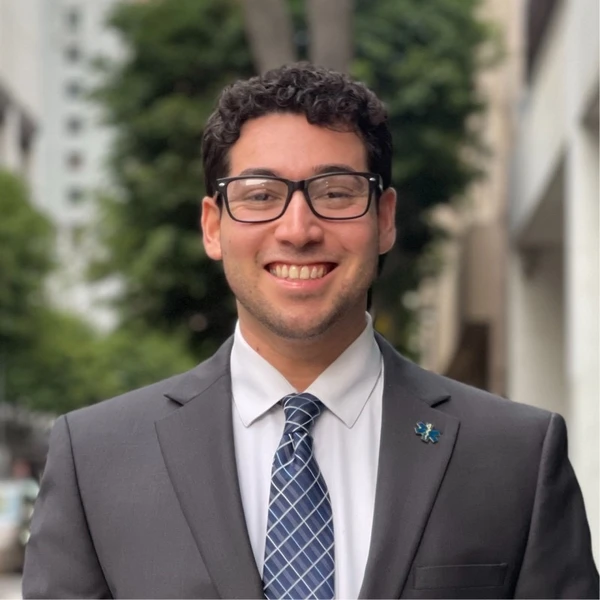
Mauricio Valdez Castellanos
1x
Finalist
Mauricio Valdez Castellanos
1x
FinalistBio
I am an emergency care professional with over four of experience across 911 response, ambulance operations, and the emergency department. I currently work as an Emergency Room and Trauma Technician at UCI Health Fountain Valley, where I serve one of Southern California’s most diverse patient populations.
As a recent green card recipient, born in Mexico with roots in Central California, I graduated from California State University, San Bernardino in 2023, achieving Cum Laude status while researching adversity effects in children and adolescents. This work strengthened my ability to deliver compassionate, developmentally appropriate care and reinforced the importance of communication, patience, and trust when caring for vulnerable populations.
While working in emergency medical services, I completed a Master’s in Healthcare Administration with an emphasis in Emergency Medical Services and Emergency Department management. My capstone project focused on developing a mental health-centered ambulance model that integrates Mental Health First Aid training for first responders to improve patient communication during crises.
My goal is to remain rooted in the emergency department as a future nurse and healthcare leader who combines frontline clinical skill with systems-level insight.
I have been fortunate to be accepted to Ivy League programs as a low-income student, and I hope that scholarships will help make my education financially accessible. I am committed to training at the highest level to provide the best culturally competent, patient-centered emergency care.
Education
Yale University
Master's degree programMajors:
- Registered Nursing, Nursing Administration, Nursing Research and Clinical Nursing
California State University-Long Beach
Master's degree programMajors:
- Health and Medical Administrative Services
Minors:
- Accounting and Computer Science
California State University-San Bernardino
Bachelor's degree programMajors:
- Psychology, General
College of the Sequoias
Associate's degree programMajors:
- Psychology, General
Miscellaneous
Desired degree level:
Master's degree program
Graduate schools of interest:
Transfer schools of interest:
Majors of interest:
- Registered Nursing, Nursing Administration, Nursing Research and Clinical Nursing
Career
Dream career field:
Hospital & Health Care
Dream career goals:
Emergency Department Nurse Practitioner
Emergency Medical/Trauma Technician
UCI Health2025 – Present1 yearCritical Care Transport- Emergency Medical Technician
Mission Ambulance (Now Advantage Ambulance)2022 – 20253 years911 Ambulance Emergency Medical Technician
American Medical Response2021 – 2021
Sports
Soccer
Intramural2023 – 20252 years
Research
Health Professions and Related Clinical Sciences, Other
CSU Long Beach — Author2024 – 2025Psychology, General
California State University San Bernardino — Clinical Field Researcher I2022 – 2023
Arts
CSU San Bernardino
Videography2023 – 2025
Public services
Volunteering
ACHE — Member2023 – 2025Volunteering
Puente Program — Member2016 – PresentAdvocacy
CHIIRLA — Member2018 – Present
Future Interests
Advocacy
Politics
Volunteering
Philanthropy
Entrepreneurship
Eric Maurice Brandon Memorial Scholarship
As a Mexican-born immigrant from California’s Central Valley, I moved to Southern California to pursue a career in healthcare after being accepted into California State University, San Bernardino in 2022. Months earlier, I had already relocated to the Inland Empire and begun training to become an EMT. I was motivated by a desire to serve diverse communities through culturally competent care, a concept I first explored during my junior college years. While working on ambulances, 911 calls placed me face-to-face with patients in crisis, and taught me that effective care depends just as much on cultural understanding and communication as on clinical skill. Cultural competence isn’t just a box you check off your care. It’s the foundation of effective care. I cannot count how many times my Spanish made a life-saving difference simply because nobody else on the scene could communicate with Spanish-speaking patients. Too often, I heard fellow clinicians express frustration: “How can these people live in this country for years and still not speak English?” But I believe that frustration is misplaced. Sometimes, the same clinicians making those comments have worked in the same community for just as long and still have not learned a single word of the languages spoken by the people they serve. Learning the languages of the community builds trust and empathy. Those moments of connection feel deeply human and remind me why I am drawn to becoming a nurse. I wanted to build on that foundation by gaining experience beyond the ambulance, so I became an Emergency Room Technician to strengthen my skills while working alongside nurses. The Ambulance showed me the impact of culturally competent care and solidified my commitment to pursuing nursing as a lifelong career.
When I transitioned from the field to UCI Health Fountain Valley’s Emergency Department, I noticed that this community was different from those in Riverside County. While many of our patients spoke Spanish, which I was already fluent in, a significant number also spoke Vietnamese. Our signage, both inside and outside the ER, is in Spanish and Vietnamese, reflecting the community’s primary languages. Yet too often, we struggled to communicate with our Vietnamese-speaking patients.
I took it upon myself to start learning Vietnamese while on the job, and I have made meaningful progress. I’m a quick learner, and as of now, I can speak Vietnamese well enough to ask medical questions and have basic conversations with Vietnamese patients. I always begin my interactions with “Chào bác, con tên là Mauricio. Con phụ y tá và bác sĩ. Hôm nay bác tới đây vì sao vậy?” which translates to “Hello sir/ma’am, my name is Mauricio. I help the nurses and doctors in the emergency department. What brings you in today?” You can only imagine the look on some patients’ faces when they see someone who looks as big and as Mexican as I do speaking their native Vietnamese. You can almost feel their relief knowing that someone understands them and can translate for the rest of the staff. I did not learn Vietnamese because I had to. I learned it because it’s part of the identity of the community I serve. Even at a conversational level, speaking with patients in their own language has helped me earn their trust, ease their fears, and ensure they feel seen and respected in their care. UCI Health operates in one of the most diverse regions in Southern California, and our Spanish and Vietnamese-speaking communities define much of who we serve. To care for them effectively, I recognized the need to go beyond presence alone by learning their language and culture.
Jase Davidsaver RN Memorial Scholarship
While working for multiple ambulance agencies in Riverside County, 911 calls placed me face-to-face with patients in crisis and taught me that effective care depends just as much on cultural understanding and communication as on clinical skill. Cultural competence is not a box to check; it is the foundation of effective nursing care. I cannot count how many times my Spanish made a life-saving difference simply because no one else on scene could communicate with Spanish-speaking patients. Too often, I heard fellow clinicians express frustration: “How can these people live in this country for years and still not speak English?” I believe that frustration is misplaced. Sometimes, many of those same clinicians had worked in the same communities for just as long without learning a single word of the languages spoken by the people they serve.
These experiences shaped how I approach patient care and how I intend to improve the nursing profession. Learning the language of a community builds trust, empathy, and safety, especially during moments of vulnerability. Those moments of connection feel deeply human and remind me why nursing is not just a profession, but a responsibility. To build on this foundation, I became an Emergency Room Technician, strengthening my clinical skills while working alongside nurses who modeled patient advocacy and compassion.
When I transitioned to the emergency department at UCI Health Fountain Valley, I encountered a new challenge. While many patients spoke Spanish, a significant number primarily spoke Vietnamese. Although our signage reflected this diversity, communication barriers persisted. Rather than accept these limitations, I began learning Vietnamese on the job. Within eight months, I gained enough proficiency to ask medical questions and hold basic conversations. You can only imagine the face on some people when they hear a big Mexican guy such as myself speaking Viet! I did not learn Vietnamese because I was required to, I learned it because language is part of the identity of the community I serve.
As a future Yale nurse, I will improve the profession by redefining cultural competence as an active, ongoing practice rather than a passive expectation. I will advocate for patient-centered communication, model linguistic humility, and encourage healthcare teams to meet patients where they are. By combining strong clinical skills with cultural and linguistic engagement, I aim to foster trust, improve patient outcomes, and elevate nursing as a profession grounded not only in science but in human connection.
New Beginnings Immigrant Scholarship
“What are some ideas you would recommend to increase patient satisfaction scores from Hospital A?” my healthcare administration graduate professor asked the class. Immediately, hands shot up. Many classmates offered textbook answers—reducing emergency room wait times or improving staff training—yet few had ever worked directly with patients. I remember thinking, How can someone improve patient outcomes without firsthand experience? That question stayed with me because I work on the front lines of healthcare, where true understanding is earned through direct patient contact.
I am a Mexican-born immigrant raised in California’s Central Valley, and I moved to Southern California to pursue a career in healthcare after being accepted to California State University, San Bernardino in 2022. Months earlier, I had already relocated to the Inland Empire and begun training as an Emergency Medical Technician. I was driven by a desire to serve diverse communities through culturally competent care, a concept I first encountered during my junior college years. Once I entered the field, I realized I had found my purpose.
Working 911 calls for multiple ambulance agencies in Riverside County placed me face-to-face with patients in crisis and taught me that effective care depends as much on communication and cultural understanding as on clinical skill. Cultural competence is not a box to check—it is the foundation of patient-centered care. My Spanish frequently became a life-saving tool when no one else on the scene could communicate with Spanish-speaking patients. Too often, I heard colleagues express frustration: “How can these people live in this country for years and still not speak English?” I believe that frustration is misplaced. Many of those same clinicians had served the community just as long without learning a single word of the languages spoken by their patients. Learning a community’s language builds trust, empathy, and dignity—especially in moments of fear and vulnerability.
Seeking to deepen my clinical skills, I transitioned from the ambulance to work as an Emergency Room Technician alongside nurses. Later, at UCI Health, Fountain Valley’s Emergency Department, I encountered a new patient population. While Spanish remained common, many patients primarily spoke Vietnamese. I took it upon myself to begin learning Vietnamese on the job. Within the year, I developed enough proficiency to ask medical questions and hold basic conversations. You can only imagine the faces on some people when they see a big Mexican guy such as myself speaking Vietnamese!
I was accepted this year to Yale University’s Graduate Entry Prespecialty in Nursing (GEPN) program, which is the ideal next step in my journey, allowing me to transition from Emergency Room Technician to Registered Nurse while advancing equitable, evidence-based care. I achieved possibly the hardest path an undocumented immigrant can take. From working in the swapmeets with my parents, to attending an Ivy League school. I promise to come back to my communities to help my people.
My goal is to remain rooted in emergency care as a nurse and future leader. Yale’s commitment to scholarship, clinical excellence, and service aligns with my belief that improving patient outcomes begins with understanding people in the context of their culture and community. At Yale, I will continue to grow into the kind of nurse who ensures every patient not only receives care but truly feels cared for.
Ethel Hayes Destigmatization of Mental Health Scholarship
My understanding of mental health was not shaped in a classroom or through a single defining moment. It was shaped in ambulances and in emergency department hallways, where fear, confusion, trauma, and vulnerability unfold in real time. You see, working on the front lines of emergency care has shown me that mental health is present in nearly every patient interaction, regardless of the presenting complaint. These experiences have shaped my goals, the way I build relationships, and how I understand suffering, resilience, and trust.
As a Mexican-born immigrant from California’s Central Valley, I learned early that mental well-being is closely tied to communication, belonging, and dignity. When I moved to Southern California to pursue healthcare and began training as an Emergency Medical Technician, I quickly realized that many emergencies are as psychological as they are physical. Patients often encounter emergency providers during the most frightening moments of their lives. For example, in my experience, panic attacks are often mistaken for cardiac events and altered mental status could sometimes be rooted in fear, substance use, or untreated mental illness. I've seen how frightened families of loved ones arrive at the emergency room unsure of what comes next. In those moments, how we speak and listen can either escalate distress or help restore a sense of calm.
While working for multiple ambulance agencies in Riverside County, I saw how mental health crises disproportionately affect underserved communities. Many patients did not distrust the healthcare system because they were unwilling to engage, but because past experiences left them feeling dismissed or misunderstood. My fluency in Spanish, for example, often became a form of emotional support. Being able to explain what was happening and what to expect gave non-English speaking patients a sense of control at a time when they felt powerless. I learned that language is not just a way to exchange information, but a way to reduce fear and affirm dignity.
These experiences also made me aware of how mentally demanding emergency care is for providers. Repeated exposure to trauma, suffering, and crisis requires emotional awareness and resilience. Mental health is not something only patients bring into the emergency department. It is something providers must actively protect within themselves. This understanding shaped how I relate to coworkers and patients alike. I learned to approach others with patience and empathy, knowing that everyone carries invisible emotional weight, even when it does not show on the surface.
When I transitioned into my role as an Emergency Room Technician at UCI Health Fountain Valley, the mental health dimensions of care became even more apparent. While many patients spoke Spanish, a significant portion of the community spoke Vietnamese. Despite multilingual signage, communication barriers often intensified anxiety for patients already in distress. Recognizing this, I began learning Vietnamese on my own. Being able to greet patients, ask why they came to the emergency department, and explain what would happen next often brought visible relief. Those moments reinforced my belief that culturally responsive communication is central to mental health care, especially in high-acuity environments.
My academic path developed alongside these experiences. During my undergraduate studies, I conducted research in the Chavez Clinical Psychology Lab examining how adversity shapes development in children and adolescents. That work deepened my understanding of how early trauma and chronic stress influence health across the lifespan. Children, in particular, require patience, reassurance, and communication tailored to their emotional state. These are the same skills I rely on daily in emergency care, whether I am calming a frightened child or supporting an overwhelmed parent.
My commitment to addressing mental health at a broader level led me to pursue a Master’s in Healthcare Administration with an emphasis in Emergency Medical Services and Emergency Room management. While continuing to work in emergency care, I completed a capstone project focused on developing a mental health–centered ambulance service. The project emphasized Mental Health First Aid training for first responders, with a focus on de-escalation, trauma-informed communication, and emotional awareness. This work reflected my belief that mental health support should begin the moment a patient enters the system, not after a crisis escalates.
Balancing emergency department work, graduate studies, and a healthcare finance internship further strengthened my understanding of emotional endurance. The work is mentally demanding, and there are days when the weight of what I witness follows me home. At the same time, these experiences have clarified my purpose. I am drawn to emergency nursing not despite its intensity, but because of it. I want to remain in environments where mental health care is constant, complex, and deeply human.
Mental health has reshaped how I see the world. I no longer view illness as an isolated clinical problem, but as experiences shaped by culture, trauma, communication, and trust. It has shaped my relationships by teaching me to listen carefully, respond with compassion, and avoid judgment. Most importantly, it has shaped my goal of becoming a nurse who understands that healing begins when patients feel safe, understood, and respected.
As I pursue advanced nursing education, I aim to develop further the clinical and emotional skills required to care for patients in high-acuity settings. Everything I have learned, from frontline emergency work to research and leadership training, has reinforced one truth. Improving outcomes, especially in mental health, begins with understanding people in the context of their lived experience. My goal is to ensure that every patient I serve not only receives care but truly feels cared for.
Taylor Swift Fan Scholarship
One of the most moving performances I have experienced is Taylor Swift’s performance of “All Too Well (10 Minute Version)” during The Eras Tour. Although I was not able to attend the concert in person due to financial constraints, I often close my eyes while watching recordings and listening to live audio, imagining what it must feel like to be there. Even from a distance, the emotional intimacy she creates in a stadium filled with tens of thousands of people feels deeply personal, as if she is telling a story meant for each listener individually.
When the lights dim and the opening notes begin, the atmosphere shifts immediately. The crowd falls into a quiet attentiveness that contrasts sharply with the energy of the rest of the show. Taylor stands alone on stage with minimal instrumentation, allowing the lyrics and her voice to carry the moment. As I watch and listen, I am struck by how deliberately she paces herself, letting certain lines linger while moving quickly through others, mirroring the way memory itself works. It feels less like a performance and more like a confession unfolding in real time.
What makes this moment especially powerful is how she commands silence in such a massive space. Tens of thousands of people sing along, yet there are moments when individual breaths, quiet sobs, and stillness are audible. Through videos, I see people holding hands, crying, or standing completely still, fully present. The shared emotional experience creates a sense of collective understanding, as if everyone is momentarily connected through the same feelings of reflection and loss.
From a performance standpoint, her ability to maintain emotional control while delivering such a raw narrative is remarkable. She does not rely on dramatic choreography or elaborate visuals. Instead, she trusts the strength of the songwriting and her connection with the audience. That restraint makes the performance feel honest and earned, reinforcing why her work resonates so deeply across generations.
For me personally, this performance is moving because it mirrors how growth often looks in real life. The song reflects hindsight, maturity, and the ability to look back without being consumed by the past. As someone who has navigated long academic and professional journeys, that theme resonates deeply. Even without being physically present, the performance reminds me that storytelling, whether through music or lived experience, has the power to validate emotions and bring people together.
Sabrina Carpenter Superfan Scholarship
I am a fan of Sabrina Carpenter because her career represents persistence, growth, and the courage to evolve when the challenge seems impossible. What resonates with me most is not just her success, but the path she took to get there. For example, she began her career at a young age and spent years working consistently, often in the background, before being widely recognized for her artistry. Rather than being defined by early expectations or limiting labels, she continued to refine her voice, take creative risks, and shape an identity that felt authentic to who she is now.
As someone pursuing a demanding career in healthcare, her journey has had a meaningful impact on how I view my own path. I work on the front lines of emergency medicine while continuing my education, and progress has often felt slow, incremental, and hard-earned. Sabrina Carpenter’s career reminds me that growth does not need to be immediate to be real. Her success reinforces the idea that commitment to improvement, even when recognition is delayed, ultimately leads to lasting impact. That perspective has helped me stay patient and focused during long nights in the emergency department and throughout years of academic training.
Another aspect of her career that has influenced me is how she has grown into confidence over time. Watching her step into her own as an artist has shown me that confidence is built through experience, resilience, and self-trust. In healthcare, especially in emergency settings, confidence is essential, but it must be grounded in humility and learning. Seeing her balance self-assurance with growth has encouraged me to trust my development while remaining open to feedback and improvement.
Her work also reminds me that success does not require following a single, linear path. She explored acting, music, and different creative styles before finding the sound and voice that resonated most with her. That flexibility has influenced how I approach my own career, blending clinical care, leadership training, and advocacy rather than limiting myself to one narrow definition of success.
Overall, I admire Sabrina Carpenter because her career reflects perseverance, adaptability, and authenticity. Her journey has reinforced my belief that meaningful careers are built through consistency, self-belief, and the willingness to evolve. Those lessons continue to shape how I approach my work in healthcare and my long-term goal of serving patients with both skill and humanity.