Hobbies and interests
Theater
Band
Fencing
Sewing
Board Games And Puzzles
Advocacy And Activism
Aerospace
Animals
Carpentry
Cosplay
Dungeons And Dragons
Mental Health
Mythology
Mentoring
Psychiatry
Psychology
Social Work
Special Effects and Stage Makeup
Reading
Fantasy
Science Fiction
Mathyis Hoover-Holthus
1x
Finalist1x
Winner
Mathyis Hoover-Holthus
1x
Finalist1x
WinnerBio
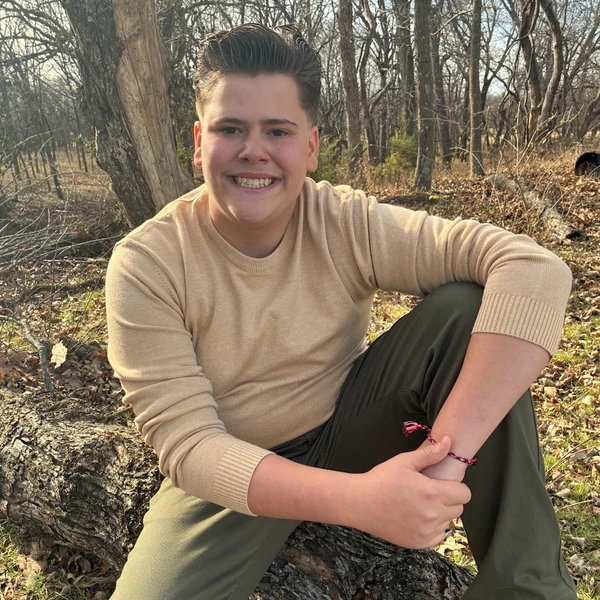
Hello, my name is Mathyis Hoover-Holthus and I'm a senior in Liberty, MO. I’m planning to pursue a career in behavioral mental health. I’ve faced a lot of hardship—emotional and mental trauma that included periods living on the streets and being bounced through the foster-care system. I was finally adopted when I was 12. That adoption gave me a real chance to heal and to grow. Now, I hope to follow my dream of helping others who’ve been through tough situations. I want to be a steady resource and a light for people coping with the impacts of mental illness and PTSD. My mission is offer understanding, hope, and practical support to children as they work toward recovery.
Education
Liberty Academy
High SchoolCarl Junction High School
High SchoolLiberty Academy
High SchoolLiberty North High School
High SchoolMiscellaneous
Desired degree level:
Bachelor's degree program
Majors of interest:
- Mental and Social Health Services and Allied Professions
- Social Work
- Special Education and Teaching
- Human Development, Family Studies, and Related Services
- Health Professions and Related Clinical Sciences, Other
Career
Dream career field:
Mental Health Care
Dream career goals:
Registered Behavioral Interventionist
Bagger/Stocker
Price Chopper Grocery Store2025 – 2025Production Assistant
Fishing Lion Theatre Company, LLC2018 – Present8 yearsPeanuts Character (Snoopy, Charlie Brown, Linus)
Cedar Fair Parks2021 – 20243 years
Sports
Pool
Club2025 – Present1 year
Pickleball
Intramural2024 – Present2 years
Fencing
Club2020 – Present6 years
Arts
Band
Music2022 – 2024Liberty North High School
Acting2024 – 2025Fishing Lion Theatre Company, LLC
Theatre2019 – Present
Public services
Volunteering
Wellington Senior Living — Group Leader2024 – Present
Future Interests
Advocacy
Volunteering
Philanthropy
Tawkify Meaningful Connections Scholarship
Option 1: Relationships & Impact
Describe a meaningful relationship in your life that has shaped who you are today. How has that relationship influenced the way you build connections with others?
When I was three, my birth mother was taken by the police for the first time. That moment began years of uncertainty, neglect, and heartbreak that taught me how to survive—but also how to carry deep, unshakable wounds. I moved through a string of temporary placements, each new home feeling like another small death of security. The abuses I endured—physical, emotional, and otherwise—left marks that changed how I saw people and how I learned to protect myself.
The relationship that reshaped me arrived unexpectedly after a period of homelessness. Two men—both teachers—took me in on an Easter Monday. That day felt like a personal resurrection for me. These men did not know the full measure of my pain, but they opened their home and their hearts, offering consistent safety for the first time in my life. They taught me to read confidently, supported my schooling, and patiently provided the emotional space and practical resources I needed to confront the scars I had carried for years. Their presence became an anchor: steady, reliable, and unconditional.
When adoption became real, I finally felt the belonging I had been denied. That belonging did not erase my trauma—I still manage Bipolar disorder, Reactive Attachment Disorder, and PTSD, and I continue structured work in treatment—but the dads’ steady support taught me a different way to relate to others. They modeled patience instead of punishment, listening instead of assuming, and presence instead of abandonment. From them I learned that safety and consistency create the conditions people need to heal and to risk trust.
That relationship changed not only who I am but how I connect. Where my early life taught me to brace for cruelty, my dads taught me to offer steadiness. I now prioritize presence: showing up even when it’s hard, offering predictable support, and believing in people before they believe in themselves. I practice empathy that is patient rather than performative, and I try to meet others’ behaviors as signals of unmet needs rather than evidence of failure. Because I know how destabilizing life can be, I work to make my interactions places where people feel seen, heard, and safe.
Their influence also turned my pain into purpose. The hope they gave me—proof that my past need not determine my future—became the backbone of my ambitions. I plan to pursue a career in behavioral mental health so I can be the steady presence I once needed: someone who listens, guides, and opens doors for children who feel hopeless. In treatment I am learning coping skills and emotional regulation; in service I will practice the same patient, consistent care my dads showed me.
Using the darkest stones of my past to build a brighter path for others has become my mission. That meaningful relationship taught me how resilience looks when it is nurtured and how love looks when it is steady. It shaped my approach to connection: I aim to be reliable, empathetic, and hopeful—so others can feel anchored enough to heal and to become who they want to be.
Aserina Hill Memorial Scholarship
Using the darkest stones of my past to build a brighter path for others has become my mission; adversity taught me how to transform pain into purpose.
When I was about three, my birth mother was taken by the police for the first time, and that moment began a long journey through uncertainty, neglect, and heartbreak. Over the years that followed, I learned more than how to survive—I learned the stubborn, quiet bravery of resilience and the slow work of repairing a life trauma had almost broken.
My childhood dissolved into a series of temporary placements. I was bounced from foster home to foster home and into other questionable living situations, and each move felt like another small death of security.
The turning point arrived unexpectedly. After a stretch of homelessness that included sleeping under my case worker’s desk for more than a week, I was placed with two men. They welcomed me without knowing the measure of my wounds or the weight of my past. They opened their home and their hearts. They offered me something I had not experienced in a long time: consistent safety. It was Easter Monday when they took me in—a symbolic new beginning that felt like a personal resurrection. For the first time, I allowed myself to imagine a new trajectory.
They offered shelter, stability, encouragement, and practical support. Both are teachers, and they helped me become a fluent, confident reader and a student who could thrive. Their guidance extended beyond academics; they patiently provided the resources and emotional space I needed to confront the scars left by my past. Together we weathered storms; their presence was my anchor. When adoption became real, I finally felt the full force of belonging.
Still, adoption did not erase my struggles. I still wrestle with my mental health and have begun serious, structured work on my Bipolar, Reactive Attachment Disorder, and PTSD. By addressing my sexual abuse, I have been able to be honest with myself about being part of the LGBTQ+ community. I am learning to love myself so that I may one day learn to love someone else. In treatment I am learning coping skills, building routines, and am beginning to understand how to regulate intense emotions and form healthier relationships.
Healing is ongoing. I still have days shadowed by past hurts, but the most profound gift my dads gave me is hope—the belief that my past does not have to determine my future. That hope has become the backbone of my ambitions. I plan to pursue a career in behavioral mental health so I can extend the same lifeline to children who feel hopeless today. I want to be the steady presence I once needed: someone who listens, guides, and opens doors.
In serving others, I will honor those who helped me survive and transform. My end goal would be to open a charity that supports LGBTQ+ youth in the foster system. They are underserved and abused at a higher rate. Not all foster homes are suitable or healthy for all kids. I will use the strength forged in hardship to teach resilience, model empathy, and hand hope back to those who have lost it. My story has been shaped by pain, but it will be defined by the hope I give to others.
Strength in Adversity Scholarship
Using the darkest stones of my past to build a brighter path for others has become my mission; adversity taught me how to transform pain into purpose.
When I was about three, my birth mother was taken by the police for the first time, and that moment began a long journey through uncertainty, neglect, and heartbreak. Over the years that followed, I learned more than how to survive—I learned the stubborn, quiet bravery of resilience and the slow work of repairing a life trauma had almost broken.
My childhood dissolved into a series of temporary placements. I was bounced from foster home to foster home and into other questionable living situations, and each move felt like another small death of security. In those years I encountered the worst sides of people. Cruelty eclipsed compassion. The abuses I endured—physical, emotional, and otherwise—left deep marks. They shaped my reactions, clouded my nights, and lodged themselves in my chest like stones that never fully settled. My trauma is not something I can simply close a chapter on; it is a part of my story that will echo through my life. Yet, even amid those echoes, I discovered the possibility of growth.
The turning point arrived unexpectedly. I have been in a lot of foster homes and most of them were horrible, full of abuse that added to my already distorted reality of what a home could be. After a stretch of homelessness that included sleeping under my case worker’s desk for more than a week, I was placed with two men. They welcomed me without knowing the measure of my wounds or the weight of my past. They opened their home and their hearts. They offered me something I had not experienced in a long time: consistent safety. It was Easter Monday when they took me in—a symbolic new beginning that felt like a personal resurrection. For the first time, I allowed myself to imagine a new trajectory.
They offered shelter, stability, encouragement, and practical support. Both are teachers, and they helped me become a fluent, confident reader and a student who could thrive. Their guidance extended beyond academics; they patiently provided the resources and emotional space I needed to confront the scars left by my past. Together we weathered storms; their presence was my anchor. When adoption became real, I finally felt the full force of belonging.
Still, adoption did not erase my struggles. I still wrestle with my mental health and have begun serious, structured work on my Bipolar, Reactive Attachment Disorder, and PTSD. I am learning to love myself so that I may one day learn to love someone else. In treatment I am learning coping skills, building routines, and am beginning to understand how to regulate intense emotions and form healthier relationships.
Healing is ongoing. I still have days shadowed by past hurts, but the most profound gift my dads gave me is hope—the belief that my past does not have to determine my future. That hope has become the backbone of my ambitions. I plan to pursue a career in behavioral mental health so I can extend the same lifeline to children who feel hopeless today. I want to be the steady presence I once needed: someone who listens, guides, and opens doors.
In serving others, I will honor those who helped me survive and transform. I will use the strength forged in hardship to teach resilience, model empathy, and hand hope back to those who have lost it. My story has been shaped by pain, but it will be defined by the hope I give to others.
Rick Levin Memorial Scholarship
Using the darkest stones of my past to build a brighter path for others has become my mission; adversity taught me how to transform pain into purpose.
When I was about three, my birth mother was taken by the police for the first time, and that moment began a long journey through uncertainty, neglect, and heartbreak. Over the years that followed, I learned more than how to survive—I learned the stubborn, quiet bravery of resilience and the slow work of repairing a life trauma had almost broken.
My childhood dissolved into a series of temporary placements. I was bounced from foster home to foster home and into other questionable living situations, and each move felt like another small death of security. In those years I encountered the worst sides of people. Cruelty eclipsed compassion. The abuses I endured—physical, emotional, and otherwise—left deep marks. They shaped my reactions, clouded my nights, and lodged themselves in my chest like stones that never fully settled. My trauma is not something I can simply close a chapter on; it is a part of my story that will echo through my life. Yet, even amid those echoes, I discovered the possibility of growth.
The turning point arrived unexpectedly. After a stretch of homelessness that included sleeping under my case worker’s desk for more than a week, I was placed with two men. They welcomed me without knowing the measure of my wounds or the weight of my past. They opened their home and their hearts. They offered me something I had not experienced in a long time: consistent safety. It was Easter Monday when they took me in—a symbolic new beginning that felt like a personal resurrection. For the first time, I allowed myself to imagine a new trajectory.
They offered shelter, stability, encouragement, and practical support. Both are teachers, and they helped me become a fluent, confident reader and a student who could thrive. They worked side by side my teachers to help me emotionally, socially, and academically. Their guidance extended beyond academics; they patiently provided the resources and emotional space I needed to confront the scars left by my past. Together we weathered storms; their presence was my anchor. When adoption became real, I finally felt the full force of belonging.
Still, adoption did not erase my struggles. I still wrestle with my mental health and have begun serious, structured work on my Bipolar, Reactive Attachment Disorder, and PTSD. In treatment I am learning coping skills, building routines, and am beginning to understand how to regulate intense emotions and form healthier relationships.
My parents advocated for me and navigated my IEP process in school. One of my dads is a Special Education teacher. He has helped create educational goals that allow me to thrive in my least restrictive environment while I deal with my emotions at school. Through my IEP, I have made meaningful advances in managing anger and processing difficult emotions. My teachers have consistently supported me with patience and practical tools—deep breathing, grounding exercises, brief breaks, and check-ins—that help me pause and choose healthier responses. They model calm problem-solving, give me language to name feelings, and provide quiet spaces and routine adjustments when needed. These supports, plus measurable IEP goals and regular team reviews, helped me track progress, celebrate small wins, and stay engaged academically while practicing new coping skills.
Being eligible under Emotional Disturbance connected me to counseling, behavioral interventions, and classroom accommodations tailored to my needs. My teachers helped me see learning as more than schoolwork: it’s a pathway to a brighter future and a way to break the cycle of abuse in my birth family. Their belief in me improved my motivation and self-worth and gave me practical strategies to stay regulated and succeed. With these combined supports, I’m better able to calm myself, process tough feelings, and move toward a safer, healthier life grounded in learning and resilience.
Healing is ongoing. I still have days shadowed by past hurts, but the most profound gift my dads gave me is hope—the belief that my past does not have to determine my future. That hope has become the backbone of my ambitions. I plan to pursue a career in behavioral mental health so I can extend the same lifeline to children who feel hopeless today. I want to be the steady presence I once needed: someone who listens, guides, and opens doors.
In serving others, I will honor those who helped me survive and transform. I will use the strength forged in hardship to teach resilience, model empathy, and hand hope back to those who have lost it. My story has been shaped by pain, but it will be defined by the hope I give to others.
Operation 11 Tyler Schaeffer Memorial Scholarship
Using the darkest stones of my past to build a brighter path for others has become my mission; adversity taught me how to transform pain into purpose.
When I was about three, my birth mother was taken by the police for the first time, and that moment began a long journey through uncertainty, neglect, and heartbreak. Over the years that followed, I learned more than how to survive—I learned the stubborn, quiet bravery of resilience and the slow work of repairing a life trauma had almost broken.
My childhood dissolved into a series of temporary placements. I was bounced from foster home to foster home and into other questionable living situations, and each move felt like another small death of security. In those years I encountered the worst sides of people. Cruelty eclipsed compassion. The abuses I endured—physical, emotional, and otherwise—left deep marks. They shaped my reactions, clouded my nights, and lodged themselves in my chest like stones that never fully settled. My trauma is not something I can simply close a chapter on; it is a part of my story that will echo through my life. Yet, even amid those echoes, I discovered the possibility of growth.
The turning point arrived unexpectedly. After a stretch of homelessness that included sleeping under my case worker’s desk for more than a week, I was placed with two men. They welcomed me without knowing the measure of my wounds or the weight of my past. They opened their home and their hearts. They offered me something I had not experienced in a long time: consistent safety. It was Easter Monday when they took me in—a symbolic new beginning that felt like a personal resurrection. For the first time, I allowed myself to imagine a new trajectory.
They offered shelter, stability, encouragement, and practical support. Both are teachers, and they helped me become a fluent, confident reader and a student who could thrive. Their guidance extended beyond academics; they patiently provided the resources and emotional space I needed to confront the scars left by my past. Together we weathered storms; their presence was my anchor. When adoption became real, I finally felt the full force of belonging.
Still, adoption did not erase my struggles. I still wrestle with my mental health and have begun serious, structured work on my Bipolar, Reactive Attachment Disorder, and PTSD. In treatment I am learning coping skills, building routines, and am beginning to understand how to regulate intense emotions and form healthier relationships.
Healing is ongoing. I still have days shadowed by past hurts, but the most profound gift my dads gave me is hope—the belief that my past does not have to determine my future. That hope has become the backbone of my ambitions. I plan to pursue a career in behavioral mental health so I can extend the same lifeline to children who feel hopeless today. I want to be the steady presence I once needed: someone who listens, guides, and opens doors.
In serving others, I will honor those who helped me survive and transform. I will use the strength forged in hardship to teach resilience, model empathy, and hand hope back to those who have lost it. My story has been shaped by pain, but it will be defined by the hope I give to others.
Wicked Fan Scholarship
When I was about three, my birth mother was taken by the police for the first time, and that moment began a long journey through uncertainty, neglect, and heartbreak. My childhood dissolved into a series of temporary placements — foster homes and other questionable living situations — and each move felt like another small death of security. The abuses I endured left deep marks: physical, emotional, and otherwise. Those stones of my past lodged themselves in my chest and clouded my nights. Trauma did not end my story, but it shaped how I learned to survive.
The turning point arrived unexpectedly after a stretch of homelessness that included sleeping under my case worker’s desk for more than a week. I was placed with two men who welcomed me without knowing the measure of my wounds. They are theatre teachers, and they opened their home and hearts, offering consistent safety and the patience I needed. Their guidance taught me to read confidently, to trust learning again, and to imagine a new trajectory. Adoption made belonging real, but it did not erase the past. I still struggle and continue structured work on my Bipolar disorder, Reactive Attachment Disorder, and PTSD. Healing became ongoing practice: coping skills, routines, and relearning how to form healthier relationships. I have also become to take pride in my inclusion in the LGBTQ+ community as a bisexual male.
Musical theatre — a presence in our household because my dads teach it — has been central to that healing. Even though I am more of a technical-theatre kid, the music and stories gave me hope when I needed it most. Shows by Stephen Schwartz, especially Wicked, Pippin, and Children of Eden, reached into places that therapy alone sometimes could not. I saw characters who struggled with identity, rejection, and moral complexity; I watched them confront fear and make choices that mattered. Elphaba’s fierce vulnerability and refusal to apologize for who she is taught me that being visible is an act of courage. Her arc gave me language for my own anger, isolation, and desire to be understood.
Wicked’s message about empathy and the danger of easy judgments reframed the loneliness I carried. Pippin’s search for meaning and Children of Eden’s themes of family, forgiveness, and renewal mirrored the work I was doing in treatment. When lyrics offered solace and staging embodied resilience, I learned how to translate performance into real-life tools: naming feelings, deciding actions, and finding a community that holds you. Musicals crystallized the idea that stories can model bravery; by following protagonists who defy gravity, I learned that I could too.
Using the darkest stones of my past to build a brighter path has become my mission. My dads showed me stability; musicals showed me that hope can be rehearsed and embodied. Together they shaped my ambition to pursue a career in behavioral mental health so I can extend the same lifeline to children who feel hopeless today. I want to be the steady presence I once needed: someone who listens, guides, and opens doors.
Adversity taught me how to transform pain into purpose. The resilience I cultivated — bolstered by classroom encouragement, backstage work, and songs that refused to let me stay small — is the foundation of the life I am building. If Elphaba’s example taught me anything, it is that compassion for ourselves and others makes courage possible. Through theatre and the love of two fathers who believed I could belong, I found the desire and passion to defy gravity and hand hope back to those who need it most.
Deanna Ellis Memorial Scholarship
Using the darkest stones of my past to build a brighter path for others has become my mission; adversity taught me how to transform pain into purpose.
When I was about three, my birth mother was taken by the police for the first time, and that moment began a long journey through uncertainty, neglect, and heartbreak. Over the years that followed, I learned more than how to survive—I learned the stubborn, quiet bravery of resilience and the slow work of repairing a life trauma had almost broken.
My childhood dissolved into a series of temporary placements. I was bounced from foster home to foster home and into other questionable living situations, and each move felt like another small death of security. In those years I encountered the worst sides of people. Cruelty eclipsed compassion. The abuses I endured—physical, emotional, and otherwise—left deep marks. They shaped my reactions, clouded my nights, and lodged themselves in my chest like stones that never fully settled. My trauma is not something I can simply close a chapter on; it is a part of my story that will echo through my life. Yet, even amid those echoes, I discovered the possibility of growth.
The turning point arrived unexpectedly. After a stretch of homelessness that included sleeping under my case worker’s desk for more than a week, I was placed with two men. They welcomed me without knowing the measure of my wounds or the weight of my past. They opened their home and their hearts. They offered me something I had not experienced in a long time: consistent safety. It was Easter Monday when they took me in—a symbolic new beginning that felt like a personal resurrection. For the first time, I allowed myself to imagine a new trajectory.
They offered shelter, stability, encouragement, and practical support. Both are teachers, and they helped me become a fluent, confident reader and a student who could thrive. Their guidance extended beyond academics; they patiently provided the resources and emotional space I needed to confront the scars left by my past. Together we weathered storms; their presence was my anchor. When adoption became real, I finally felt the full force of belonging.
Still, adoption did not erase my struggles. I wrestled with my mental health and, for a time, fell into the wrong crowd. I reverted to behaviors I had learned while living on the streets—using and selling drugs, a trade my mother had taught me to survive. That path led me into trouble and eventually to a long-term residential facility, where I faced the consequences and began serious, structured work on my Bipolar, Reactive Attachment Disorder, and PTSD. In treatment I learned coping skills, built routines, and began to understand how to regulate intense emotions and form healthier relationships.
Healing is ongoing. I still have days shadowed by past hurts, but the most profound gift my dads gave me is hope—the belief that my past does not have to determine my future. That hope has become the backbone of my ambitions. I plan to pursue a career in behavioral mental health so I can extend the same lifeline to children who feel hopeless today. I want to be the steady presence I once needed: someone who listens, guides, and opens doors.
In serving others, I will honor those who helped me survive and transform. I will use the strength forged in hardship to teach resilience, model empathy, and hand hope back to those who have lost it. My story has been shaped by pain, but it will be defined by the hope I give to others.
ADHDAdvisor Scholarship for Health Students
Using the darkest stones of my past to build a brighter path for others is my mission. Adversity taught me to turn pain into purpose.
At three, my birth mother was first taken by police, beginning years of uncertainty, neglect, and heartbreak. I survived a childhood of temporary placements, moving through foster homes and unsafe situations that eroded my sense of security. I endured physical and emotional abuses that left lasting marks—stones in my chest I could not simply close the book on. Yet within that pain I found resilience and the possibility of growth.
After a period of homelessness, I was placed with two men who welcomed me without knowing my wounds. They offered consistent safety, stability, encouragement, and practical support. Both teachers, they helped me become a confident reader and student and gave me the emotional space to confront my past. When they adopted me, I finally felt belonging.
Adoption didn’t erase my struggles. I continue structured treatment for ADHD, Bipolar disorder, Reactive Attachment Disorder, and PTSD, and I’m addressing past sexual abuse while embracing my identity in the LGBTQ+ community. Therapy has taught me coping skills, routines, and emotional regulation, and helped me begin building healthier relationships.
Healing is ongoing and some days remain shadowed by hurt. The greatest gift my dads gave me is hope—the belief that my past does not have to dictate my future. That hope drives my ambition to pursue a career in behavioral mental health so I can offer the same lifeline to children who feel hopeless. I want to be the steady presence I once needed: someone who listens, guides, and opens doors.
Currently, I am volunteering at a senior living facility and helping residents deal with loss whether that be loss of family members and friends, loss of memory, and loss of self-worth. I am leading art therapy workshops to try and bring joy and smiles back to people. At school, I am working with the counselors to help share my story of trauma and rebirth with other students who need support and guidance.
In serving others, I will honor those who helped me survive and transform. I will use the strength forged in hardship to teach resilience, model empathy, and hand hope back to those who have lost it. My story has been shaped by pain, but it will be defined by the hope I give to others.
Virginia Douglas Memorial Scholarship for Change
Using the darkest stones of my past to build a brighter path for others has become my mission; adversity taught me how to transform pain into purpose.
When I was about three, my birth mother was taken by the police for the first time, and that moment began a long journey through uncertainty, neglect, and heartbreak. Over the years that followed, I learned more than how to survive—I learned the stubborn, quiet bravery of resilience and the slow work of repairing a life trauma had almost broken.
My childhood dissolved into a series of temporary placements. I was bounced from foster home to foster home and into other questionable living situations, and each move felt like another small death of security. In those years I encountered the worst sides of people. Cruelty eclipsed compassion. The abuses I endured—physical, emotional, and otherwise—left deep marks. They shaped my reactions, clouded my nights, and lodged themselves in my chest like stones that never fully settled. My trauma is not something I can simply close a chapter on; it is a part of my story that will echo through my life. Yet, even amid those echoes, I discovered the possibility of growth.
The turning point arrived unexpectedly. After a stretch of homelessness that included sleeping under my case worker’s desk for more than a week, I was placed with two men. They welcomed me without knowing the measure of my wounds or the weight of my past. They opened their home and their hearts. They offered me something I had not experienced in a long time: consistent safety. It was Easter Monday when they took me in—a symbolic new beginning that felt like a personal resurrection. For the first time, I allowed myself to imagine a new trajectory.
They offered shelter, stability, encouragement, and practical support. Both are teachers in Liberty, MO, and they helped me become a fluent, confident reader and a student who could thrive. Their guidance extended beyond academics; they patiently provided the resources and emotional space I needed to confront the scars left by my past. Together we weathered storms; their presence was my anchor. When adoption became real, I finally felt the full force of belonging.
Still, adoption did not erase my struggles. I still wrestle with my mental health and have begun serious, structured work on my Bipolar, Reactive Attachment Disorder, and PTSD. By addressing my sexual abuse, I have been able to be honest with myself about being part of the LGBTQ+ community. I am learning to love myself so that I may one day learn to love someone else. In treatment I am learning coping skills, building routines, and am beginning to understand how to regulate intense emotions and form healthier relationships.
Healing is ongoing. I still have days shadowed by past hurts, but the most profound gift my dads gave me is hope—the belief that my past does not have to determine my future. That hope has become the backbone of my ambitions. I plan to pursue a career in social work and behavioral mental health so I can extend the same lifeline to children who feel hopeless today. I want to be the steady presence I once needed: someone who listens, guides, and opens doors.
In serving others, I will honor those who helped me survive and transform. I will use the strength forged in hardship to teach resilience, model empathy, and hand hope back to those who have lost it. My story has been shaped by pain, but it will be defined by the hope I give to others.
Robert F. Lawson Fund for Careers that Care
Using the darkest stones of my past to build a brighter path for others has become my mission; adversity taught me how to transform pain into purpose.
When I was about three, my birth mother was taken by the police for the first time, and that moment began a long journey through uncertainty, neglect, and heartbreak. Over the years that followed, I learned more than how to survive—I learned the stubborn, quiet bravery of resilience and the slow work of repairing a life trauma had almost broken.
My childhood dissolved into a series of temporary placements. I was bounced from foster home to foster home and into other questionable living situations, and each move felt like another small death of security. In those years I encountered the worst sides of people. Cruelty eclipsed compassion. The abuses I endured—physical, emotional, and otherwise—left deep marks. They shaped my reactions, clouded my nights, and lodged themselves in my chest like stones that never fully settled. My trauma is not something I can simply close a chapter on; it is a part of my story that will echo through my life. Yet, even amid those echoes, I discovered the possibility of growth.
The turning point arrived unexpectedly. After a stretch of homelessness that included sleeping under my case worker’s desk for more than a week, I was placed with two men. They welcomed me without knowing the measure of my wounds or the weight of my past. They opened their home and their hearts. They offered me something I had not experienced in a long time: consistent safety. It was Easter Monday when they took me in—a symbolic new beginning that felt like a personal resurrection. For the first time, I allowed myself to imagine a new trajectory.
They offered shelter, stability, encouragement, and practical support. Both are teachers, and they helped me become a fluent, confident reader and a student who could thrive. Their guidance extended beyond academics; they patiently provided the resources and emotional space I needed to confront the scars left by my past. Together we weathered storms; their presence was my anchor. When adoption became real, I finally felt the full force of belonging.
Still, adoption did not erase my struggles. I still wrestle with my mental health and have begun serious, structured work on my Bipolar, Reactive Attachment Disorder, and PTSD. In treatment I am learning coping skills, building routines, and am beginning to understand how to regulate intense emotions and form healthier relationships.
Healing is ongoing. I still have days shadowed by past hurts, but the most profound gift my dads gave me is hope—the belief that my past does not have to determine my future. That hope has become the backbone of my ambitions. I plan to pursue a career in behavioral mental health so I can extend the same lifeline to children who feel hopeless today. I want to be the steady presence I once needed: someone who listens, guides, and opens doors.
I want to give hope to other children who are currently hopeless. I want to be that person for others. I want to use the gifts and the lifeline I have been given to grant others a chance at growth and healing.
In serving others, I will honor those who helped me survive and transform. I will use the strength forged in hardship to teach resilience, model empathy, and hand hope back to those who have lost it. My story has been shaped by pain, but it will be defined by the hope I give to others.
Adam Montes Pride Scholarship
Using the darkest stones of my past to build a brighter path for others has become my mission; adversity taught me how to transform pain into purpose.
When I was about three, my birth mother was taken by the police for the first time, and that moment began a long journey through uncertainty, neglect, and heartbreak. Over the years that followed, I learned more than how to survive—I learned the stubborn, quiet bravery of resilience and the slow work of repairing a life trauma had almost broken.
My childhood dissolved into a series of temporary placements. I was bounced from foster home to foster home and into other questionable living situations, and each move felt like another small death of security. In those years I encountered the worst sides of people. Cruelty eclipsed compassion. The abuses I endured—physical, emotional, and otherwise—left deep marks. They shaped my reactions, clouded my nights, and lodged themselves in my chest like stones that never fully settled. My trauma is not something I can simply close a chapter on; it is a part of my story that will echo through my life. Yet, even amid those echoes, I discovered the possibility of growth.
The turning point arrived unexpectedly. After a stretch of homelessness that included sleeping under my case worker’s desk for more than a week, I was placed with two men. They welcomed me without knowing the measure of my wounds or the weight of my past. They opened their home and their hearts. They offered me something I had not experienced in a long time: consistent safety. It was Easter Monday when they took me in—a symbolic new beginning that felt like a personal resurrection. For the first time, I allowed myself to imagine a new trajectory.
They offered shelter, stability, encouragement, and practical support. Both are teachers, and they helped me become a fluent, confident reader and a student who could thrive. Their guidance extended beyond academics; they patiently provided the resources and emotional space I needed to confront the scars left by my past. Together we weathered storms; their presence was my anchor. When adoption became real, I finally felt the full force of belonging.
Still, adoption did not erase my struggles. I still wrestle with my mental health and have begun serious, structured work on my Bipolar, Reactive Attachment Disorder, and PTSD. By addressing my sexual abuse, I have been able to be honest with myself about being part of the LGBTQ+ community. I am proud to be a bisexual man. I am learning to authentically love myself so that I may one day learn to love someone else. In treatment, I am learning coping skills, building routines, and am beginning to understand how to regulate intense emotions and form healthier relationships.
Healing is ongoing. I still have days shadowed by past hurts, but the most profound gift my dads gave me is hope—the belief that my past does not have to determine my future. That hope has become the backbone of my ambitions. I plan to pursue a career in behavioral mental health so I can extend the same lifeline to children who feel hopeless today. I want to be the steady presence I once needed: someone who listens, guides, and opens doors.
In serving others, I will honor those who helped me survive and transform. I will use the strength forged in hardship to teach resilience, model empathy, and hand hope back to those who have lost it. My story has been shaped by pain, but it will be defined by the hope I give to others.
Learner Mental Health Empowerment for Health Students Scholarship
Using the darkest stones of my past to build a brighter path for others has become my mission; adversity taught me how to transform pain into purpose.
When I was about three, my birth mother was taken by the police for the first time, and that moment began a long journey through uncertainty, neglect, and heartbreak. Over the years that followed, I learned more than how to survive—I learned the stubborn, quiet bravery of resilience and the slow work of repairing a life trauma had almost broken.
My childhood dissolved into a series of temporary placements. I was bounced from foster home to foster home and into other questionable living situations, and each move felt like another small death of security. In those years I encountered the worst sides of people. Cruelty eclipsed compassion. The abuses I endured—physical, emotional, and otherwise—left deep marks. They shaped my reactions, clouded my nights, and lodged themselves in my chest like stones that never fully settled. My trauma is not something I can simply close a chapter on; it is a part of my story that will echo through my life. Yet, even amid those echoes, I discovered the possibility of growth.
The turning point arrived unexpectedly. After a stretch of homelessness that included sleeping under my case worker’s desk for more than a week, I was placed with two men. They welcomed me without knowing the measure of my wounds or the weight of my past. They opened their home and their hearts. They offered me something I had not experienced in a long time: consistent safety. It was Easter Monday when they took me in—a symbolic new beginning that felt like a personal resurrection. For the first time, I allowed myself to imagine a new trajectory.
They offered shelter, stability, encouragement, and practical support. Both are teachers, and they helped me become a fluent, confident reader and a student who could thrive. Their guidance extended beyond academics; they patiently provided the resources and emotional space I needed to confront the scars left by my past. Together we weathered storms; their presence was my anchor. When adoption became real, I finally felt the full force of belonging.
Still, adoption did not erase my struggles. I still wrestle with my mental health and have begun serious, structured work on my Bipolar, Reactive Attachment Disorder, and PTSD. By addressing my sexual abuse, I have been able to be honest with myself about being part of the LGBTQ+ community. I am learning to love myself so that I may one day learn to love someone else. In treatment I am learning coping skills, building routines, and am beginning to understand how to regulate intense emotions and form healthier relationships.
Healing is ongoing. I still have days shadowed by past hurts, but the most profound gift my dads gave me is hope—the belief that my past does not have to determine my future. That hope has become the backbone of my ambitions. I plan to pursue a career in behavioral mental health so I can extend the same lifeline to children who feel hopeless today. I want to be the steady presence I once needed: someone who listens, guides, and opens doors.
In serving others, I will honor those who helped me survive and transform. I will use the strength forged in hardship to teach resilience, model empathy, and hand hope back to those who have lost it. My story has been shaped by pain, but it will be defined by the hope I give to others.
Elijah's Helping Hand Scholarship Award
Using the darkest stones of my past to build a brighter path for others has become my mission; adversity taught me how to transform pain into purpose.
When I was about three, my birth mother was taken by the police for the first time, and that moment began a long journey through uncertainty, neglect, and heartbreak. Over the years that followed, I learned more than how to survive—I learned the stubborn, quiet bravery of resilience and the slow work of repairing a life trauma had almost broken.
My childhood dissolved into a series of temporary placements. I was bounced from foster home to foster home and into other questionable living situations, and each move felt like another small death of security. In those years I encountered the worst sides of people. Cruelty eclipsed compassion. The abuses I endured—physical, emotional, and otherwise—left deep marks. They shaped my reactions, clouded my nights, and lodged themselves in my chest like stones that never fully settled. My trauma is not something I can simply close a chapter on; it is a part of my story that will echo through my life. Yet, even amid those echoes, I discovered the possibility of growth.
The turning point arrived unexpectedly. After a stretch of homelessness that included sleeping under my case worker’s desk for more than a week, I was placed with two men. They welcomed me without knowing the measure of my wounds or the weight of my past. They opened their home and their hearts. They offered me something I had not experienced in a long time: consistent safety. It was Easter Monday when they took me in—a symbolic new beginning that felt like a personal resurrection. For the first time, I allowed myself to imagine a new trajectory.
They offered shelter, stability, encouragement, and practical support. Both are teachers, and they helped me become a fluent, confident reader and a student who could thrive. Their guidance extended beyond academics; they patiently provided the resources and emotional space I needed to confront the scars left by my past. Together we weathered storms; their presence was my anchor. When adoption became real, I finally felt the full force of belonging.
Still, adoption did not erase my struggles. I still wrestle with my mental health and have begun serious, structured work on my Bipolar, Reactive Attachment Disorder, and PTSD. By addressing my sexual abuse, I have been able to be honest with myself about being part of the LGBTQ+ community. I am learning to love myself so that I may one day learn to love someone else. In treatment I am learning coping skills, building routines, and am beginning to understand how to regulate intense emotions and form healthier relationships.
Healing is ongoing. I still have days shadowed by past hurts, but the most profound gift my dads gave me is hope—the belief that my past does not have to determine my future. That hope has become the backbone of my ambitions. I plan to pursue a career in behavioral mental health so I can extend the same lifeline to children who feel hopeless today. I want to be the steady presence I once needed: someone who listens, guides, and opens doors.
In serving others, I will honor those who helped me survive and transform. I will use the strength forged in hardship to teach resilience, model empathy, and hand hope back to those who have lost it. My story has been shaped by pain, but it will be defined by the hope I give to others.
Ethel Hayes Destigmatization of Mental Health Scholarship
Using the darkest stones of my past to build a brighter path for others has become my mission; adversity taught me how to transform pain into purpose.
When I was about three, my birth mother was taken by the police for the first time, and that moment began a long journey through uncertainty, neglect, and heartbreak. Over the years that followed, I learned more than how to survive—I learned the stubborn, quiet bravery of resilience and the slow work of repairing a life trauma had almost broken.
My childhood dissolved into a series of temporary placements. I was bounced from foster home to foster home and into other questionable living situations, and each move felt like another small death of security. In those years I encountered the worst sides of people. Cruelty eclipsed compassion. The abuses I endured—physical, emotional, and otherwise—left deep marks. They shaped my reactions, clouded my nights, and lodged themselves in my chest like stones that never fully settled. My trauma is not something I can simply close a chapter on; it is a part of my story that will echo through my life. Yet, even amid those echoes, I discovered the possibility of growth.
The turning point arrived unexpectedly. After a stretch of homelessness that included sleeping under my case worker’s desk for more than a week, I was placed with two men. They welcomed me without knowing the measure of my wounds or the weight of my past. They opened their home and their hearts. They offered me something I had not experienced in a long time: consistent safety. It was Easter Monday when they took me in—a symbolic new beginning that felt like a personal resurrection. For the first time, I allowed myself to imagine a new trajectory.
They offered shelter, stability, encouragement, and practical support. Both are teachers, and they helped me become a fluent, confident reader and a student who could thrive. Their guidance extended beyond academics; they patiently provided the resources and emotional space I needed to confront the scars left by my past. Together we weathered storms; their presence was my anchor. When adoption became real, I finally felt the full force of belonging.
Still, adoption did not erase my struggles. I wrestled with my mental health and, for a time, fell into the wrong crowd. I reverted to behaviors I had learned while living on the streets—using and selling drugs, a trade my mother had taught me to survive. That path led me into trouble and eventually to a long-term residential facility, where I faced the consequences and began serious, structured work on my Bipolar, Reactive Attachment Disorder, and PTSD.
Through PBL therapy, I have been able to address my sexual abuse and have been able to be honest with myself about being part of the LGBTQ+ community. I am learning to love who I authentically am so that I may one day learn to love someone else. In treatment, I am learning coping skills, building routines, and am beginning to understand how to regulate intense emotions and form healthier relationships.
Healing is ongoing. I still have days shadowed by past hurts, but the most profound gift my dads gave me is hope—the belief that my past does not have to determine my future. That hope has become the backbone of my ambitions. I plan to pursue a career in behavioral mental health so I can extend the same lifeline to children who feel hopeless today. I want to be the steady presence I once needed: someone who listens, guides, and opens doors.
I want to give hope to other children who are currently hopeless. I want to be that person for others. I want to act in similar ways to how my dads are; people who have always been there for me. I need to use the gifts and the lifeline I have been given to grant others hope. In the words of Harvey Milk, “Hope will never die. Hope will never be silent…Hope for a better world. Hope for a better tomorrow. Hope for a place to go to if the pressures at home are too great. Without hope [we] give up….You’ve got to give them hope.”
In serving others, I will honor those who helped me survive and transform. I will use the strength forged in hardship to teach resilience, model empathy, and hand hope back to those who have lost it. My story has been shaped by pain, but it will be defined by the hope I give to others.
Autumn Davis Memorial Scholarship
WinnerUsing the darkest stones of my past to build a brighter path for others has become my mission; adversity taught me how to transform pain into purpose.
When I was about three, my birth mother was taken by the police for the first time, and that moment began a long journey through uncertainty, neglect, and heartbreak. Over the years that followed, I learned more than how to survive—I learned the stubborn, quiet bravery of resilience and the slow work of repairing a life trauma had almost broken.
My childhood dissolved into a series of temporary placements. I was bounced from foster home to foster home and into other questionable living situations, and each move felt like another small death of security. In those years I encountered the worst sides of people. Cruelty eclipsed compassion. The abuses I endured—physical, emotional, and otherwise—left deep marks. They shaped my reactions, clouded my nights, and lodged themselves in my chest like stones that never fully settled. My trauma is not something I can simply close a chapter on; it is a part of my story that will echo through my life. Yet, even amid those echoes, I discovered the possibility of growth.
The turning point arrived unexpectedly. After a stretch of homelessness that included sleeping under my case worker’s desk for more than a week, I was placed with two men. They welcomed me without knowing the measure of my wounds or the weight of my past. They opened their home and their hearts. They offered me something I had not experienced in a long time: consistent safety. It was Easter Monday when they took me in—a symbolic new beginning that felt like a personal resurrection. For the first time, I allowed myself to imagine a new trajectory.
They offered shelter, stability, encouragement, and practical support. Both are teachers in Liberty, MO, and they helped me become a fluent, confident reader and a student who could thrive. Their guidance extended beyond academics; they patiently provided the resources and emotional space I needed to confront the scars left by my past. Together we weathered storms; their presence was my anchor. When adoption became real, I finally felt the full force of belonging.
Still, adoption did not erase my struggles. I still wrestle with my mental health and have begun serious, structured work on my Bipolar, Reactive Attachment Disorder, and PTSD. By addressing my sexual abuse, I have been able to be honest with myself about being part of the LGBTQ+ community. I am learning to love myself so that I may one day learn to love someone else. In treatment I am learning coping skills, building routines, and am beginning to understand how to regulate intense emotions and form healthier relationships.
Healing is ongoing. I still have days shadowed by past hurts, but the most profound gift my dads gave me is hope—the belief that my past does not have to determine my future. That hope has become the backbone of my ambitions. I plan to pursue a career in behavioral mental health so I can extend the same lifeline to children who feel hopeless today. I want to be the steady presence I once needed: someone who listens, guides, and opens doors.
In serving others, I will honor those who helped me survive and transform. I will use the strength forged in hardship to teach resilience, model empathy, and hand hope back to those who have lost it. My story has been shaped by pain, but it will be defined by the hope I give to others.
Greg Lockwood Scholarship
Using the darkest stones of my past to build a brighter path for others has become my mission; adversity taught me how to transform pain into purpose.
When I was about three, my birth mother was taken by the police for the first time, and that moment began a long journey through uncertainty, neglect, and heartbreak. Over the years that followed, I learned more than how to survive—I learned the stubborn, quiet bravery of resilience and the slow work of repairing a life trauma had almost broken.
My childhood dissolved into a series of temporary placements. I was bounced from foster home to foster home and into other questionable living situations, and each move felt like another small death of security. In those years I encountered the worst sides of people. Cruelty eclipsed compassion. The abuses I endured—physical, emotional, and otherwise—left deep marks. They shaped my reactions, clouded my nights, and lodged themselves in my chest like stones that never fully settled. My trauma is not something I can simply close a chapter on; it is a part of my story that will echo through my life. Yet, even amid those echoes, I discovered the possibility of growth.
The turning point arrived unexpectedly. After a stretch of homelessness that included sleeping under my case worker’s desk for more than a week, I was placed with two men. They welcomed me without knowing the measure of my wounds or the weight of my past. They opened their home and their hearts. They offered me something I had not experienced in a long time: consistent safety. It was Easter Monday when they took me in—a symbolic new beginning that felt like a personal resurrection. For the first time, I allowed myself to imagine a new trajectory.
They offered shelter, stability, encouragement, and practical support. Both are teachers, and they helped me become a fluent, confident reader and a student who could thrive. Their guidance extended beyond academics; they patiently provided the resources and emotional space I needed to confront the scars left by my past. Together we weathered storms; their presence was my anchor. When adoption became real, I finally felt the full force of belonging.
Still, adoption did not erase my struggles. I have wrestled with my mental health and have begun serious, structured work on my Bipolar, Reactive Attachment Disorder, and PTSD. By addressing my sexual abuse and being in the LGBTQ+ community, I have been able to accept my own sexuality as a bisexual man. I am learning to love myself first—the real me—so that someday I can love someone else. My dads have taught me what love can truly look like. I am learning coping skills, building routines, and beginning to understand how to regulate intense emotions and form healthier relationships.
Healing is ongoing. I still have days shadowed by past hurts, but the most profound gift my dads gave me is hope—the belief that my past does not have to determine my future. That hope has become the backbone of my ambitions. I plan to pursue a career in behavioral mental health so I can extend the same lifeline to children who feel hopeless today. I want to be the steady presence I once needed: someone who listens, guides, and opens doors.
In serving others, I will honor those who helped me survive and transform. I will use the strength forged in hardship to teach resilience, model empathy, and hand hope back to those who have lost it. My story has been shaped by pain, but it will be defined by the hope I give to others.
Raise Me Up to DO GOOD Scholarship
Using the darkest stones of my past to build a brighter path for others has become my mission; adversity taught me how to transform pain into purpose.
When I was about three, my birth mother was taken by the police for the first time, and that moment began a long journey through uncertainty, neglect, and heartbreak. Over the years that followed, I learned more than how to survive—I learned the stubborn, quiet bravery of resilience and the slow work of repairing a life trauma had almost broken.
My childhood dissolved into a series of temporary placements. I was bounced from foster home to foster home and into other questionable living situations, and each move felt like another small death of security. In those years I encountered the worst sides of people. Cruelty eclipsed compassion. The abuses I endured—physical, emotional, and otherwise—left deep marks. They shaped my reactions, clouded my nights, and lodged themselves in my chest like stones that never fully settled. My trauma is not something I can simply close a chapter on; it is a part of my story that will echo through my life. Yet, even amid those echoes, I discovered the possibility of growth.
The turning point arrived unexpectedly. After a stretch of homelessness that included sleeping under my case worker’s desk for more than a week, I was placed with two men. They welcomed me without knowing the measure of my wounds or the weight of my past. They opened their home and their hearts. They offered me something I had not experienced in a long time: consistent safety. It was Easter Monday when they took me in—a symbolic new beginning that felt like a personal resurrection. For the first time, I allowed myself to imagine a new trajectory.
They offered shelter, stability, encouragement, and practical support. Both are teachers, and they helped me become a fluent, confident reader and a student who could thrive. Their guidance extended beyond academics; they patiently provided the resources and emotional space I needed to confront the scars left by my past. Together we weathered storms; their presence was my anchor. When adoption became real, I finally felt the full force of belonging.
Still, adoption did not erase my struggles. I wrestled with my mental health and, for a time, fell into the wrong crowd. I reverted to behaviors I had learned while living on the streets—using and selling drugs, a trade my mother had taught me to survive. That path led me into trouble and eventually to a long-term residential facility, where I faced the consequences and began serious, structured work on my Bipolar, Reactive Attachment Disorder, and PTSD. In treatment I learned coping skills, built routines, and began to understand how to regulate intense emotions and form healthier relationships.
Healing is ongoing. I still have days shadowed by past hurts, but the most profound gift my dads gave me is hope—the belief that my past does not have to determine my future. That hope has become the backbone of my ambitions. I plan to pursue a career in behavioral mental health so I can extend the same lifeline to children who feel hopeless today. I want to be the steady presence I once needed: someone who listens, guides, and opens doors.
In serving others, I will honor those who helped me survive and transform. I will use the strength forged in hardship to teach resilience, model empathy, and hand hope back to those who have lost it. My story has been shaped by pain, but it will be defined by the hope I give to others.
Mikey Taylor Memorial Scholarship
Using the darkest stones of my past to build a brighter path for others has become my mission; adversity taught me how to transform pain into purpose.
When I was about three, my birth mother was taken by the police for the first time, and that moment began a long journey through uncertainty, neglect, and heartbreak. Over the years that followed, I learned more than how to survive—I learned the stubborn, quiet bravery of resilience and the slow work of repairing a life trauma had almost broken.
My childhood dissolved into a series of temporary placements. I was bounced from foster home to foster home and into other questionable living situations, and each move felt like another small death of security. In those years I encountered the worst sides of people. Cruelty eclipsed compassion. The abuses I endured—physical, emotional, and otherwise—left deep marks. They shaped my reactions, clouded my nights, and lodged themselves in my chest like stones that never fully settled. My trauma is not something I can simply close a chapter on; it is a part of my story that will echo through my life. Yet, even amid those echoes, I discovered the possibility of growth.
The turning point arrived unexpectedly. After a stretch of homelessness that included sleeping under my case worker’s desk for more than a week, I was placed with two men. They welcomed me without knowing the measure of my wounds or the weight of my past. They opened their home and their hearts. They offered me something I had not experienced in a long time: consistent safety. It was Easter Monday when they took me in—a symbolic new beginning that felt like a personal resurrection. For the first time, I allowed myself to imagine a new trajectory.
They offered shelter, stability, encouragement, and practical support. Both are teachers, and they helped me become a fluent, confident reader and a student who could thrive. Their guidance extended beyond academics; they patiently provided the resources and emotional space I needed to confront the scars left by my past. Together we weathered storms; their presence was my anchor. When adoption became real, I finally felt the full force of belonging.
Still, adoption did not erase my struggles. I wrestled with my mental health and, for a time, fell into the wrong crowd. I reverted to behaviors I had learned while living on the streets—using and selling drugs, a trade my mother had taught me to survive. That path led me into trouble and eventually to a long-term residential facility, where I faced the consequences and began serious, structured work on my Bipolar, Reactive Attachment Disorder, and PTSD. In treatment I learned coping skills, built routines, and began to understand how to regulate intense emotions and form healthier relationships.
Healing is ongoing. I still have days shadowed by past hurts, but the most profound gift my dads gave me is hope—the belief that my past does not have to determine my future. That hope has become the backbone of my ambitions. I plan to pursue a career in behavioral mental health so I can extend the same lifeline to children who feel hopeless today. I want to be the steady presence I once needed: someone who listens, guides, and opens doors.
In serving others, I will honor those who helped me survive and transform. I will use the strength forged in hardship to teach resilience, model empathy, and hand hope back to those who have lost it. My story has been shaped by pain, but it will be defined by the hope I give to others.
Mental Health Profession Scholarship
Using the darkest stones of my past to build a brighter path for others has become my mission; adversity taught me to transform pain into purpose.
When I was about three, my birth mother was taken by police for the first time, and that moment began a long journey through uncertainty, neglect, and heartbreak. Over the years that followed, I learned more than how to survive—I learned the stubborn, quiet bravery of resilience and the slow work of repairing a life trauma had almost broken.
After my mother’s arrests, my childhood dissolved into a series of temporary placements. I was bounced from foster home to foster home and into other questionable living situations; each move felt like another small death of security. In those years I encountered the worst sides of people I should have been able to trust. Cruelty eclipsed compassion. The abuses I endured—physical, emotional, and otherwise—left deep marks. They shaped my reactions, clouded my nights, and lodged themselves in my chest like stones that never fully settled. My trauma is not something I can simply close a chapter on; it is a part of my story that will echo through my life. Yet even amid those echoes, I discovered the possibility of growth.
The turning point arrived unexpectedly. Eight years ago, after a stretch of homelessness that included sleeping under my caseworker’s desk, I was placed with two men who would change my life. They welcomed me without knowing the measure of my wounds or the weight of my past. They opened their home and their hearts and offered something I had not experienced in a long time: consistent safety. It was Easter Monday when they took me in—a symbolic new beginning that felt like a personal resurrection. For the first time, I allowed myself to imagine a new trajectory.
They offered, shelter, stability, encouragement, and practical support. Both are teachers, and they helped me become a fluent, confident reader and a student who could thrive. Their guidance extended beyond academics; they patiently provided resources and the emotional space I needed to confront the scars. Together we weathered storms; their presence was my anchor. When adoption became real, I finally felt the full force of belonging.
Still, adoption did not erase my struggles. I wrestled with my mental health and fell into the wrong crowd. I reverted to behaviors I had learned while living on the streets—using and selling drugs, a trade my mother had taught me to survive. That path led me into trouble and eventually to a long-term residential facility, where I faced consequences and began serious, structured work on my Bipolar, Reactive Attachment Disorder, and PTSD. In treatment, I learned coping skills, built routines, and began to understand how to regulate intense emotions and form healthier relationships.
Healing is ongoing. I still have days shadowed by past hurts, but the most profound gift my dads gave me is hope—the belief that my past does not have to determine my future. That hope is the backbone of my ambitions. I plan to pursue a career in behavioral mental health so I can extend the same lifeline to children who feel hopeless today. I want to be the steady presence I once needed: someone who listens, guides, and opens doors.
In serving others, I will honor those who helped me survive and transform. I will use the strength forged in hardship to teach resilience, model empathy, and hand hope back to those who have lost it. My story has been shaped by pain, but it will be defined by the hope I give to others.
Second Chance Scholarship
Using the darkest stones of my past to build a brighter path for others has become my mission: adversity taught me to transform pain into purpose. My earliest memories are threaded with instability and fear. When I was about three, my birth mother was taken by police for the first time, and that moment began a long journey through uncertainty, neglect, and heartbreak. Over the years that followed, I learned more than how to survive—I learned the stubborn, quiet bravery of resilience and the slow work of repairing a life trauma had almost broken.
After my mother’s arrests, my childhood dissolved into a series of temporary placements. I was bounced from foster home to foster home and into other questionable living situations. Each move felt like another small death of security. In those years, I encountered the worst sides of people I should have been able to trust, people who let cruelty eclipse compassion. The abuses I endured—physical, emotional, and otherwise—left deep marks. They shaped my reactions, clouded my nights, and lodged themselves in my chest like stones that never fully settled. My trauma is not something I can simply close a chapter on; it is a part of my story that will echo through my life. Yet even amid those echoes, I discovered the possibility of growth.
The turning point arrived unexpectedly. Eight years ago, after a stretch of homelessness that included sleeping under my caseworker’s desk, I was placed with two men in who would change my life. They welcomed me without knowing the measure of my wounds or the weight of my past. They opened their home and their hearts and offered something I had not experienced in a long time: consistent safety. It was Easter Monday when they took me in—a symbolic new beginning that felt like a personal resurrection. For the first time, I allowed myself to imagine a new life.
My dads gave me more than shelter. They offered stability, encouragement, and practical support. Both are teachers, and they helped me become a fluent, confident reader and a student who could thrive. Their guidance extended beyond academics; they patiently provided resources and the emotional space I needed to confront the scars left by my past. Together we weathered storms and through it all, their presence was my anchor.
Still, adoption did not erase my struggles. I wrestled with my mental health and, for a time, fell into the wrong crowd. I reverted to behaviors I had learned while living on the streets—using and selling drugs, a trade my mother had taught me to survive. That path led me into trouble and eventually to a long-term residential facility, where I faced consequences and began serious, structured work on my Bipolar disorder, Reactive Attachment Disorder, and PTSD. In treatment I learned coping skills, built routines, and began to understand how to regulate intense emotions and form healthier relationships.
Healing is ongoing. I still have days shadowed by past hurts, but the most profound gift my dads gave me is hope—the belief that my past does not have to determine my future. That hope is the backbone of my ambitions. I plan to pursue a career in behavioral mental health so I can extend the same lifeline to children who feel hopeless today. I want to be the steady presence I once needed: someone who listens, guides, and opens doors.
My story has been shaped by pain, but it will be defined by the hope I give to others.
Dream BIG, Rise HIGHER Scholarship
Using the darkest stones of my past to build a brighter path for others has become my mission. Adversity taught me how to transform pain into purpose. My earliest memories are threaded with instability and fear. When I was about three, my life shifted irrevocably as my birth mother was taken by the police for the first time. That moment was only the beginning of a journey through uncertainty, neglect, and heartbreak. Over the years that followed, I learned more than how to survive—I learned the stubborn, quiet bravery of resilience and the slow work of repairing a life that trauma had almost broken.
After my mother’s arrests, my childhood dissolved into a series of temporary placements. I was bounced from foster home to foster home and into other questionable living situations, and each move felt like another small death of security. In those years I encountered the worst sides of people who let cruelty eclipse compassion. The abuses I endured—physical, emotional, and otherwise—left deep marks. They shaped my reactions, clouded my nights, and lodged themselves in my chest like stones that never fully settled. My trauma is not something I can simply close a chapter on; it is a part of my story that will echo through my life. Yet, even amid those echoes, I discovered the possibility of growth.
The turning point arrived unexpectedly. Eight years ago, after a stretch of homelessness that included sleeping under my case worker’s desk for more than a week, I was placed with two men who would change my life. They welcomed me without knowing the measure of my wounds or the weight of my past. They opened their home and their hearts, and in doing so they offered me something I had not experienced in a long time: consistent safety. It was Easter Monday when they took me in—a symbolic new beginning that felt like a personal resurrection. For the first time, I allowed myself to imagine a new life.
Those men—now my dads—gave me more than shelter. They offered stability, encouragement, and practical support. Both are teachers, and they helped me become a fluent, confident reader and a student who could thrive. Their guidance extended beyond academics; they patiently provided the resources and emotional space I needed to confront the scars left by my past. Together we weathered storms and through it all, their presence was my anchor. Two years after moving in, when adoption became real, I finally felt the full force of belonging. Their love shifted my trajectory from one marked by fear to one illuminated by possibility.
Healing is ongoing. I still carry PTSD and face daily mental health challenges that remind me of where I started. The work of self-repair requires time, therapy, and the kind of compassion I received from my dads. Yet the most profound gift they gave me is hope—the belief that my past does not have to determine my future. That hope has become the backbone of my ambitions. I plan to pursue a career in behavioral mental health so I can extend the same lifeline to children who feel hopeless today. I want to be the steady presence I once needed: someone who listens, guides, and opens doors. My dream is to work with children within the foster care system who are dealing with the aftermath of parental drug abuse, adult abandonment, physical/sexual abuse, mental turmoil, and educational neglect. I hope to use the skills I have ben taught to help others heal. I want to be able to assist with navigating a very broken and confusing system and to work with community partners to better assist the most vulnerable in society: kids.
In serving others, I will honor those who helped me survive and transform. I will use the strength forged in hardship to teach resilience, model empathy, and hand hope back to those who have lost it. I want to give hope to other children who are currently hopeless. I want to be that person for others. I want to be similar to how my dads who have always been there for me. I need to use the gifts and the lifeline I have been given to grant others hope. In the words of Harvey Milk, “Hope will never die. Hope will never be silent…Hope for a better world. Hope for a better tomorrow. Hope for a place to go to if the pressures at home are too great. Without hope [we] give up….You’ve got to give them hope.” My story has been shaped by pain, but it will be defined by the hope I give to others.
Valerie Rabb Academic Scholarship
Using the darkest stones of my past to build a brighter path for others has become my mission. Adversity taught me how to transform pain into purpose. My earliest memories are threaded with instability and fear. When I was about three, my life shifted irrevocably as my birth mother was taken by the police for the first time. That moment was only the beginning of a journey through uncertainty, neglect, and heartbreak. Over the years that followed, I learned more than how to survive—I learned the stubborn, quiet bravery of resilience and the slow work of repairing a life that trauma had almost broken.
After my mother’s arrests, my childhood dissolved into a series of temporary placements. I was bounced from foster home to foster home and into other questionable living situations, and each move felt like another small death of security. In those years I encountered the worst sides of people who let cruelty eclipse compassion. The abuses I endured—physical, emotional, and otherwise—left deep marks. They shaped my reactions, clouded my nights, and lodged themselves in my chest like stones that never fully settled. My trauma is not something I can simply close a chapter on; it is a part of my story that will echo through my life. Yet, even amid those echoes, I discovered the possibility of growth.
The turning point arrived unexpectedly. Eight years ago, after a stretch of homelessness that included sleeping under my case worker’s desk for more than a week, I was placed with two men who would change my life. They welcomed me without knowing the measure of my wounds or the weight of my past. They opened their home and their hearts, and in doing so they offered me something I had not experienced in a long time: consistent safety. It was Easter Monday when they took me in—a symbolic new beginning that felt like a personal resurrection. For the first time, I allowed myself to imagine a new life.
Those men—now my dads—gave me more than shelter. They offered stability, encouragement, and practical support. Both are teachers, and they helped me become a fluent, confident reader and a student who could thrive. Their guidance extended beyond academics; they patiently provided the resources and emotional space I needed to confront the scars left by my past. Together we weathered storms and through it all, their presence was my anchor. Two years after moving in, when adoption became real, I finally felt the full force of belonging. Their love shifted my trajectory from one marked by fear to one illuminated by possibility.
Healing is ongoing. I still carry PTSD and face daily mental health challenges that remind me of where I started. The work of self-repair requires time, therapy, and the kind of compassion I received from my dads. Yet the most profound gift they gave me is hope—the belief that my past does not have to determine my future. That hope has become the backbone of my ambitions. I plan to pursue a career in behavioral mental health so I can extend the same lifeline to children who feel hopeless today. I want to be the steady presence I once needed: someone who listens, guides, and opens doors.
In serving others, I will honor those who helped me survive and transform. I will use the strength forged in hardship to teach resilience, model empathy, and hand hope back to those who have lost it. My story has been shaped by pain, but it will be defined by the hope I give to others.