Hobbies and interests
Boy Scouts
Reading
Music
I read books multiple times per month
Mathew Harper
1x
Finalist1x
Winner
Mathew Harper
1x
Finalist1x
WinnerBio
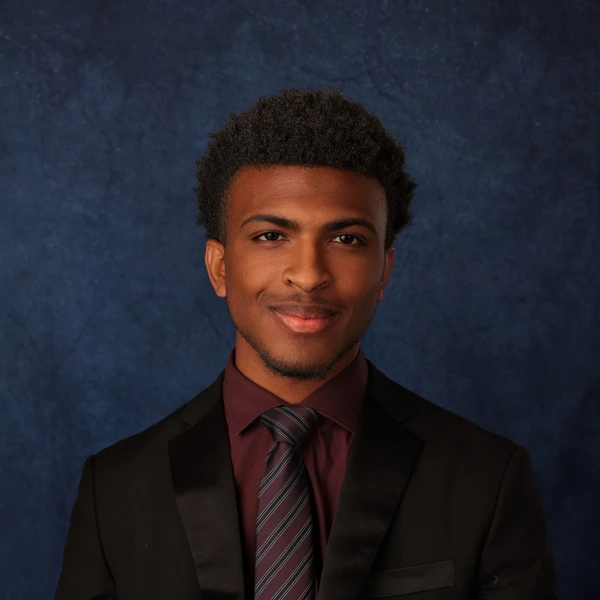
Hello - I’m Mathew Harper, a recent graduate of the A.W. Dreyfoos School of the Arts in West Palm Beach, FL where I earned a 3.8 GPA and 4.4 weighted GPA while pursuing my passion for music. I’m proud to be the 2026 First Place Pathfinder Winner in the Music-Instrumental category. This fall, I'll be attending the Manhattan School of Music to study Trumpet Performance, bringing my artistry to one of the nation's premier conservatories. Beyond music; academics, leadership and community service have shaped who I am. I am a 8-time Carson Scholar and a member of the National Honor Society. As an Eagle Scout, I learned the discipline, service, and character that mark scouting's highest honor. At age 7, I founded The LuvMat Homeless Project, an initiative that reflects my drive to turn compassion into action and help fellow community members in need. I'll be the first of my three younger siblings to attend college which is a milestone that carries both pride and responsibility as I chart a new path for my family. Choosing to pursue my musical calling in New York City means facing the reality of steep tuition and living costs, a challenge I'm determined to meet so I can fully commit to my training. With a rare combination of musical talent, leadership, and heart, I'm ready to make a lasting impact; both on stage and in my community. I appreciate your consideration and any financial assistance to help me achieve these next steps on my life journey.
Education
Alexander W Dreyfoos Junior School of the Arts
High SchoolMiscellaneous
Desired degree level:
Bachelor's degree program
Majors of interest:
- Music
Career
Dream career field:
- Music
Dream career goals:
Performer, composer, recording artist and producer
Orchestra - Trumpet Player
The Young Singers of the Palm Beaches2022 – 20264 years
Arts
National Youth Orchestra of America
Music2025 – 2025
Public services
Volunteering
Scouts of America — Patrol Leader, Eagle Scout2015 – Present
Future Interests
Advocacy
Politics
Volunteering
Philanthropy
Entrepreneurship
Joe Gilroy "Plan Your Work, Work Your Plan" Scholarship
Music has never been a hobby for me, it has always been a direction. From the moment I picked up the trumpet in fifth grade, I knew I was not simply learning an instrument. I was finding a language. Over the years, that conviction has only deepened, and this fall I will take the most significant step of my musical life by beginning my Bachelor of Music in Trumpet Performance at the Manhattan School of Music.
Choosing MSM was not a decision I made lightly. I researched programs across the country and kept coming back to one conclusion: there is no better place in the world to train as a classical brass performer. The faculty alone set the school apart. Studying under artists who perform with the country's leading orchestras and ensembles means I will be learning not just technique, but the lived reality of a professional career. The school's location in New York City adds another layer I cannot ignore as the most active classical music market in the nation will essentially be my extended classroom.
I chose trumpet performance as my major because I want to be honest about what I am training for. A performance degree is not a fallback, it is a commitment. It signals to the professional world, and to myself, that I intend to compete at the highest level. The curriculum at MSM reflects that seriousness: rigorous private study, chamber music, orchestral repertoire, music theory, and ear training all combine to develop musicians who can function in demanding professional environments from the day they graduate. This is the foundation I need.
My immediate educational goal is to become the strongest player I can be. That means showing up prepared for every lesson, taking advantage of master classes and auditioning for every ensemble opportunity available to me. Growth as a performer does not happen passively. I plan to seek out peer collaboration, participate in competitions, and record myself regularly to develop honest self-assessment, which is a skill that too many musicians overlook.
Beyond graduation, I see two paths that I hope will run parallel rather than compete. The first is orchestral performance. Earning a position in a professional orchestra is one of the most competitive outcomes in classical music. The second path involves teaching, something I expect to be part of my career in a meaningful way.
College will give me the training, the network, and the professional exposure to make any of those outcomes possible. I am facing roughly $86,000 per year in college expenses but I am ready to work for it. My confirmed funding is $35k scholarship + $20k parents gives me $55k, leaving a $31k annual gap. The goal of the plan is to attack that gap from multiple directions so I can graduate with little to no debt. The most important factor is seeking additional scholarships like this opportunity. I will also work on developing gig income. Year 1 will be slower as I am new to the city and still building a professional network. By Year 2–3, with a local union card and a reputation developing, NYC wedding and event work can realistically bring in $7,000–10,000 a year without interfering with my school schedule. The key is staying at or under 15 hours of work per week total so my playing doesn't suffer. By Year 4, by hitting my scholarship and gig targets, I could be down to a $3,000 annual gap which is the kind of number a good competition win or one solid semester of private teaching can close entirely. This is my attainable dream.
Arthur and Elana Panos Scholarship
Music and faith have never been separate things in my life. They have always been one language, taught to me by the same people, in the same pews, on the same Sunday mornings. I was raised in a family of musicians who served at church, and at the center of that legacy was my late grandmother, who played piano for congregations for decades. Long before I understood what faith meant, I understood it as sound. I always enjoyed the way my grandmother's hands moved over the keys like she was having a quiet conversation with God that the rest of us were invited to overhear.
Faith has helped me most in the moments when I doubted myself. I was often comparing myself to people who had been playing longer, singing better, leading with more confidence than I felt I had. There were times when I wanted to quit, but faith taught me that music was never really about being the best in the room but more about offering what I had.
My grandmother's passing was one of the hardest things I have walked through. Watching her play for so many years, and then losing her, made me understand that music is not just a talent. Music is a form of ministry, a way of caring for people in their joy and their grief. Faith gave me an understanding that her gift didn’t end with her. It was passed down and I now carry a piece of it forward every time I sit at a piano or lead worship myself.
As I move into a career in music, my faith will be the foundation everything else is built on. Music education and performance, done well, is not just about technique; it is about helping people find their voice, believe in what they have to offer, and understand that their contribution matters even when it isn't perfect. That is exactly what faith taught me first, in my own family, in my own church. I want to be the kind of performer and educator who creates that same space for an audience and students. My grandmother never set out to be a legacy. She simply served, faithfully, for years, without asking for recognition. My faith tells me that is the whole point. I hope to carry her example, and my faith, onto every stage, into every classroom and every congregation I am part of for the rest of my life.
Kay Sykes Arts Scholarship
Choosing music can be attributed largely to the following aspects of my life: My environment, education, and resources. From a young age, my musical environment molded me into who I am today, and this is evident in countless ways: The sacred sounds of the church organ and gospel choir developed my musical ear; the standard of excellence that comes from the numerous singers and musicians in my family; and the poise and elegance of my late grandmother’s piano playing are just a few of the aspects that have shaped me into the musician I am today. I have also been inspired each day by my peers, so I owe my development in music to the high-level musicians who are close to me in age.
The exceptional education I’ve received thus far in my musical journey has also propelled me forward. I took my first few trumpet lessons from my uncle at age 7 and in the 3rd grade began taking lessons with my current teacher, Veselin Bozhilov. In combination with my training at Bak Middle School of the Arts and Dreyfoos School of the Arts, my education and mentors have been invaluable to me. I realize the importance of having a mentor within the craft of music and one on one guidance is how I learn best. Having a mentor, and access to master classes, concerts, and workshops through the college mentorship program with the New World Symphony has further supplemented my thirst for knowledge.
Additionally, I was very grateful for resources that my elementary music teacher encouraged me to apply for. In elementary school, I earned the Legacy Foundation scholarship from the Palm Beach Pops to buy my own trumpet. The remaining funds were used to begin my trumpet lessons, which have tremendously improved my technique. This helped me achieve my goal and aspiration to perform for many audiences.
Over the years, I have learned that harmony mirrors life. I know that I cannot live my life waiting for the perfect cadence. My experiences thus far have taught me that I have to differentiate anxious ambition (which stems from selfishness) from peaceful ambition. Throughout each lesson and experience, I have gained the humility that will keep me open to learning from teachers, being inspired by and collaborating with my peers, and most importantly, seeking to serve the music instead of seeking to prove myself. Whether it is struggling with a challenging passage, finding difficulty balancing music in different performance ensembles, or reconciling with the mistakes I make along the way, music has provided me with the understanding that allows me to push past challenges by knowing that greatness is not marked by achievement, but by mastery over the process. I look forward to expanding this journey as I pursue further education in Classical Trumpet Performance at Manhattan School of Music this fall.
Pamela Branchini Memorial Scholarship
Wynton Marsalis’ idea that humility is a gateway to self-knowledge resonates with me. I have found humility by understanding that mastery is a process, not a destination. I have also discovered that collaboration is an important ingredient within the life process. My connection with humility and collaboration guided me during one of my most memorable musical experiences, my summer with NYO-USA. My self-knowledge did not come from a single performance or a musical event, but rather an understanding of my relationship with music and how it relates to the human experience.
In western harmony, the I (one) chord symbolizes home. I’ve spent much of my time searching for this “arrival” and living with the discomfort of imperfection as I’ve grown. At one time, I never felt like I saw enough growth in my trumpet playing.
Last summer, I had the opportunity to play in the National Youth Orchestra (NYO-USA), where, initially, I compared myself to other musicians. In my strive for versatility, I felt out of place as a jazz musician in classical settings, yet also as a classical musician in jazz settings. However, walking around Purchase College between rehearsals, I found a guiding comfort in listening to Michael Jackson’s “Human Nature,” and I wanted to know why: Jazz bassist Russell Hall encourages musicians to have a personal relationship with every note and chord, and it was through “Human Nature” that I truly uncovered this. “Human Nature” never truly resolves to its I chord. Rather than achieving its destination, the song remains at a saunter, with gentle harmonic motion centered around the IV chord. When the song feels like it's approaching a climax, Michael sings “I like living this way, I like loving this way,” hinting at an impending message about life; instead of a lyrical explanation, the track cuts to an instrumental break set to a ii-V cadence, which typically resolves with the I chord. Unexpectedly, the song returns to the IV chord and takes flight. The beauty of the song despite its lack of resolution led me to realize that music, nor life, is not about feeling complete. I learned that reaching my goals would not come from attempting to prove myself in one fell swoop, but from having the humility to recognize that prioritizing my growth matters more than rushing toward the “finish line.” Almost immediately, I turned from having anxiety before every rehearsal, to finding euphoria in every note I shared with my peers in NYO-USA. As my conductor at NYO, Gianandrea Noseda, echoed to me: music should “create a state of ecstasy, not a point of excitement.”
Harmony mirrors life. I know that I cannot live my life waiting for the perfect cadence. My experience at NYO taught me that I will need to differentiate anxious ambition from the peaceful ambition that I discovered while in NYO-USA. Humility will keep me open to learning from teachers, being inspired by and collaborating with my peers, and most importantly, seeking to serve the music instead of seeking to prove myself. The beauty of the IV chord reminds me that mastery over your personal growth and education is a destination of its own. Whether it is struggling with a challenging passage, finding difficulty balancing music in different performance ensembles, or reconciling with the mistakes I make along the way, my new understanding will allow me to push past challenges by knowing that greatness is not marked by achievement, but by mastery over the process. I look forward to expanding this journey as I pursue further education in Classical Trumpet Performance.
Lydia Fray Music Scholarship
Wynton Marsalis’ idea that humility is a gateway to self-knowledge resonates with me. I have found humility by understanding that mastery is a process, not a destination. My connection with humility guided me during one of my most memorable musical experiences, my summer with the National Youth Orchestra (NYO-USA). My self-knowledge did not come from a single performance or a musical event, but rather an understanding of my relationship with music and how it relates to human experience.
In western harmony, the I (one) chord symbolizes home. I’ve spent much of my time searching for this “arrival” and living with the discomfort of imperfection as I’ve grown. In concerts, I’ve stepped onstage seeking to prove myself rather than serve the music, often causing anxiety and disappointment. Although my immense passion has led to big accomplishments, my constant reach for ‘completion’ has held me back many times.
During my experience with the 2025 National Youth Orchestra, I initially compared myself to other musicians. In my strive for versatility, I felt out of place as a jazz musician in classical settings, yet also as a classical musician in jazz settings. However, walking around Purchase College between rehearsals, I found a guiding comfort in listening to Michael Jackson’s “Human Nature,” and I wanted to know why. Jazz bassist Russell Hall encourages musicians to have a personal relationship with every note and chord, and it was through “Human Nature” that I truly uncovered this. “Human Nature” never truly resolves to its I chord. Rather than achieving its destination, the song remains at a saunter, with gentle harmonic motion centered around the IV chord. When the song feels like it's approaching a climax, Michael sings “I like living this way, I like loving this way,” hinting at an impending message about life; instead of a lyrical explanation, the track cuts to an instrumental break set to a ii-V cadence, which typically resolves with the I chord. Unexpectedly, the song returns to the IV chord and takes flight. The beauty of the song despite its lack of resolution led me to realize that music, nor life, is not about feeling complete. I learned that reaching my goals won't come from attempting to prove myself, but from having the humility to recognize that prioritizing my growth matters more than rushing toward the “finish line.” Almost immediately, I turned from having anxiety before every rehearsal, to finding euphoria in every note I shared with my peers in NYO-USA. As my conductor at NYO, Gianandrea Noseda, echoed to me: music should “create a state of ecstasy, not a point of excitement.” “Human Nature” embodies that philosophy by highlighting the journey to excellence, not the arrival point.
Harmony mirrors life. I know that I cannot live my life waiting for the perfect cadence. In a collegiate setting where I am surrounded by excellence, humility will keep me open to learning from teachers, being inspired by and collaborating with my peers, and most importantly, seeking to serve the music instead of seeking to prove myself. The beauty of the IV chord reminds me that mastery over your personal growth and education is a destination of its own. Whether it is struggling with a challenging passage, finding difficulty balancing music in different performance ensembles, or reconciling with the mistakes I make along the way, my new understanding will allow me to push past challenges by knowing that greatness is not marked by achievement, but by mastery over the process. I look forward to expanding this journey as I pursue further education in Trumpet Performance.
Khalil Mack 52 Scholars Program
WinnerWynton Marsalis’ idea that humility is a gateway to self-knowledge resonates with me. I have found humility by understanding that mastery is a process, not a destination. My connection with humility guided me during one of my most memorable musical experiences, my summer with the National Youth Orchestra (NYO-USA). My self-knowledge did not come from a single performance or a musical event, but rather an understanding of my relationship with music and how it relates to human experience.
In western harmony, the I (one) chord symbolizes home. I’ve spent much of my time searching for this “arrival” and living with the discomfort of imperfection as I’ve grown. In concerts, I’ve stepped onstage seeking to prove myself rather than serve the music, often causing anxiety and disappointment. Although my immense passion has led to big accomplishments, my constant reach for ‘completion’ has held me back many times.
During my experience with the 2025 National Youth Orchestra, I initially compared myself to other musicians. In my strive for versatility, I felt out of place as a jazz musician in classical settings, yet also as a classical musician in jazz settings. However, walking around Purchase College between rehearsals, I found a guiding comfort in listening to Michael Jackson’s “Human Nature,” and I wanted to know why. Jazz bassist Russell Hall encourages musicians to have a personal relationship with every note and chord, and it was through “Human Nature” that I truly uncovered this. “Human Nature” never truly resolves to its I chord. Rather than achieving its destination, the song remains at a saunter, with gentle harmonic motion centered around the IV chord. When the song feels like it's approaching a climax, Michael sings “I like living this way, I like loving this way,” hinting at an impending message about life; instead of a lyrical explanation, the track cuts to an instrumental break set to a ii-V cadence, which typically resolves with the I chord. Unexpectedly, the song returns to the IV chord and takes flight. The beauty of the song despite its lack of resolution led me to realize that music, nor life, is not about feeling complete. I learned that reaching my goals won't come from attempting to prove myself, but from having the humility to recognize that prioritizing my growth matters more than rushing toward the “finish line.” Almost immediately, I turned from having anxiety before every rehearsal, to finding euphoria in every note I shared with my peers in NYO-USA. As my conductor at NYO, Gianandrea Noseda, echoed to me: music should “create a state of ecstasy, not a point of excitement.” “Human Nature” embodies that philosophy by highlighting the journey to excellence, not the arrival point.
Harmony mirrors life. I know that I cannot live my life waiting for the perfect cadence. In a collegiate setting where I am surrounded by excellence, humility will keep me open to learning from teachers, being inspired by and collaborating with my peers, and most importantly, seeking to serve the music instead of seeking to prove myself. The beauty of the IV chord reminds me that mastery over your personal growth and education is a destination of its own. Whether it is struggling with a challenging passage, finding difficulty balancing music in different performance ensembles, or reconciling with the mistakes I make along the way, my new understanding will allow me to push past challenges by knowing that greatness is not marked by achievement, but by mastery over the process. I look forward to expanding this journey as I pursue further education in Trumpet Performance.