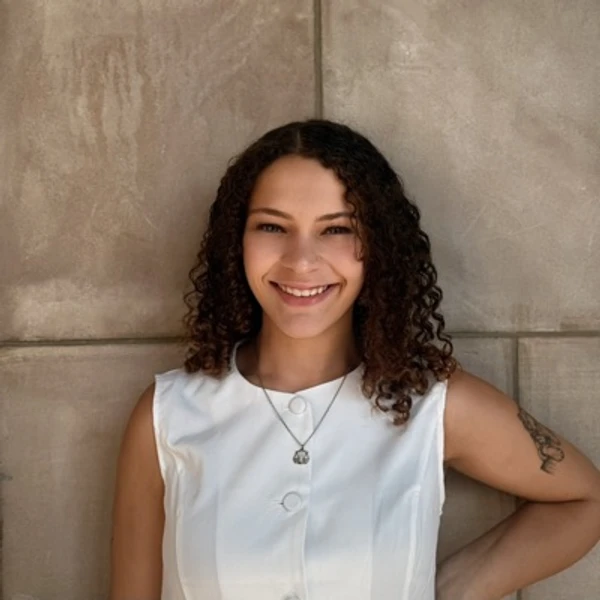
user profile avatar

mateja Weindorff

1x

Finalist

Bio

Hi! My name is Mateja, and I am a Legal Studies student at Purdue Global with plans to attend law school and build a career advocating for others. As a single mother raising my autistic son while working and attending school, I’ve learned how to balance responsibility, resilience, and determination in every aspect of my life. My passion for advocacy comes from personal experience. After losing my father to medical negligence while he was incarcerated, I became committed to understanding the legal system and working toward meaningful change. That experience strengthened my desire to pursue a legal career and use my education to help others navigate complex systems and seek justice. Outside of academics, I’m involved in disability advocacy, community outreach, and initiatives that support individuals and families facing challenges similar to my own. Whether I’m studying, working, parenting, or advocating for change, my goal remains the same: to create opportunities, make a positive impact, and build a future that allows me to serve others through the law. I believe education is one of the most powerful tools for change, and I’m committed to using mine to make a difference in the lives of others. Link to my advocacy efforts: https://nebraskapublicmedia.org/es/news/news-articles/her-father-died-at-a-nebraska-prison-she-wont-stop-fighting-until-the-legislature-acts-to-prevent-the-next-death/

Education

Purdue University Global

Bachelor's degree program
2024 - 2028
  • Majors:
    • Legal Support Services
  • GPA:
    3.9

Miscellaneous

  • Desired degree level:

    Doctoral degree program (PhD, MD, JD, etc.)

  • Graduate schools of interest:

    • The John Marshall Law School
    • University of Colorado Boulder
  • Transfer schools of interest:

  • Majors of interest:

  • Not planning to go to medical school
  • Career

    • Dream career field:

      • Legal Services
    • Dream career goals:

      Running my own law firm.

    • Cook/dietary aide

      Nursing homes
      2023 – Present3 years

    Sports

    Cheerleading

    Junior Varsity
    2021 – 20221 year

    Research

    • Legal Research and Advanced Professional Studies

      Weindorff Medical Act Initiative — Founder and policy researcher
      2022 – Present

    Arts

    • elm creek high school

      Acting
      2020 – 2021

    Public services

    • Advocacy

      Nebraska Legislature — Founder and Legislative advocate
      2026 – Present

    Future Interests

    Advocacy

    Politics

    Volunteering

    Entrepreneurship

    STLF Memorial Pay It Forward Scholarship
    The first time I walked into the Nebraska State Capitol, I was an elementary school student on a field trip. I remember looking around in awe, never imagining that years later I would return, not as a visitor, but as a young woman shaking those very walls with my own voice. I wasn’t there because I loved politics. I was there because my father died in prison after his diabetes went untreated, and I couldn’t accept that his story would end there, behind those walls, as another forgotten tragedy. Grief has a way of changing people, and mine became a mission. I spent years researching prison healthcare standards, weeks meeting with state senators, and months drafting what became LB 902, the Weindorff Medical Standards for Incarcerated Individuals Act. But writing a bill wasn’t enough to make change. I quickly learned that meaningful change doesn’t happen because one person speaks. It happens when a community decides to stand together. As the Judiciary Committee hearing approached, I organized a grassroots advocacy effort. I contacted families affected by inadequate prison healthcare, reached out to advocacy organizations, encouraged supporters to submit testimony, and coordinated attendance at the hearing. What began as my father’s story became a shared mission carried by families, advocates, and community members who believed no one should lose a loved one because of preventable medical neglect. The day I testified, I looked around the hearing room and realized something I hadn’t expected. My father’s story had become bigger than my family. Every person who showed up had volunteered their time because they believed someone’s life was worth fighting for. Watching those families stand beside me remains one of the proudest moments of my life. In that moment, I learned that leadership through service isn’t about standing in front of people, it’s about giving others a reason to stand beside you. Although LB 902 did not advance out of committee, I don’t consider the experience a failure. I wish the bill had become law, but I also know how difficult it is for an ordinary citizen with no political background to research legislation, organize community support, and earn a hearing before the Nebraska Legislature. Looking back, I’m proud of how far we made it. We connected families who once felt alone and showed that one person’s willingness to serve can inspire others to do the same. Leadership through service isn’t measured only by victories. It’s measured by the courage to take the first step, the willingness to invite others to join you, and the determination to continue serving even when the outcome isn’t what you hoped for. My father’s story changed the direction of my life. It led me toward a career in law, inspired me to advocate for people whose voices are often unheard, and taught me that one act of service can inspire countless others. When I walked through the Capitol as a little girl, I never imagined I would one day return to advocate for families like mine. Looking back now, I realize leadership through service isn’t about changing the world overnight. It’s about being willing to stand up, invite others to stand with you, and refuse to let those who can no longer speak be forgotten. I have also included a news article covering my advocacy efforts and testimony before the Nebraska Legislature, as well as the hearing transcript. https://nebraskapublicmedia.org/es/news/news-articles/her-father-died-at-a-nebraska-prison-she-wont-stop-fighting-until-the-legislature-acts-to-prevent-the-next-death/ https://nebraskalegislature.gov/FloorDocs/109/PDF/Transcripts/Judiciary/2026-01-23.pdf (Pages 21-38)
    Arin Kel Memorial Scholarship
    If I could start a business with my big brother Clayton, it would be CJ's Customs, a shop where we’d restore project cars, build custom vehicles, and spend our days doing something he genuinely loved. CJ was the kind of big brother every little sister deserves. He was funny, protective, and always knew how to make me laugh, even if he also loved giving me a hard time. One of my favorite memories is from church when we were kids. He would sneak me two extra cookies after service if I didn't talk, and when we got caught, he always took the blame. Looking back, that tiny moment says everything about who he was. He was always looking out for me. Cars were one of CJ’s biggest passions. He loved talking about them, working on them, and dreaming about the next project. I can picture us in the garage, arguing over paint colors, laughing when something didn’t go according to plan, and celebrating together when an old car finally fired up after weeks of work. We would have built more than cars, we would have built memories. I lost CJ when he was only 19 years old. Five days after his funeral, I gave birth to my son. In the middle of unimaginable grief, I also experienced the greatest joy of my life. That week changed me forever and taught me that love doesn’t end when someone is gone. It simply finds new ways to live on. That’s why I would start CJ's Customs. Every car we restored would represent a second chance, and every customer who walked through our doors would leave knowing the business was built in honor of someone whose kindness deserved to be remembered. I wouldn’t want people to know CJ only because of how he died. I’d want them to know him because he was the kind of person who protected the people he loved, made people laugh, and could always find joy in the things he loved. Although I never got the opportunity to build this dream with my brother, I can still carry it with me. Every goal I accomplish and every life I touch is another way his legacy continues. I can’t change the ending of his story, but I can choose how it’s remembered. To me, CJ will never just be the tragedy that took him. He will always be the big brother who saved me two extra cookies and dreamed about building fast cars.
    Sola Family Scholarship
    When I was growing up, my mom came home from work around 9:00 every night. She would cook dinner, make sure we ate, and then it was time for bed because she had to be back up at 6. That was our routine for years. Looking back, I realize she barely had a moment to herself. She spent so much of her life making sure her children had what they needed that there wasn’t much left for her. Being raised by a single mother wasn’t easy. We didn’t have family game nights or vacations. If an activity wasn’t free, I usually didn’t go. It wasn’t until I started spending the night at friends’ houses in elementary school that I realized our lives looked different. They had two parents at dinner, weekends filled with sports and extracurricular activities, and the kind of stability I thought everyone had. For a while, I wondered why our family couldn’t be like theirs. As I got older, I stopped comparing and started understanding. My mom wasn’t choosing to miss those moments. She was choosing to keep the lights on, food on the table, and a roof over our heads. She was exhausted, but she kept showing up every single day. Watching that shaped me more than I realized. I learned that responsibility isn’t something you wait for, it’s something you accept when people are counting on you. Today, when life becomes chaotic, I naturally step into the role that needs to be filled. Whether I’m advocating for my autistic son, balancing school and work, or leading my non-profit, my first instinct is to ask, “What needs to be done?” and then get to work. That mindset has become the foundation of the person I am and the attorney I hope to become. I want to build a career serving others through the law, advocating for people whose voices are often overlooked, and creating meaningful change that lasts beyond a single case. The determination that drives me didn’t come from an easy childhood. It came from watching one woman carry more than anyone should have to and refusing to let hardship become an excuse for giving up. More than anything, I hope one day my mom looks at the life I’ve built and realizes that every late night, every sacrifice, and every difficult decision was worth it. She showed her love through actions long before I understood what those actions meant. Everything I accomplish will be, in part, because she never stopped showing up for me, even when it was hard.
    Future Nonprofit Leaders Award
    When my father died in prison from complications of untreated diabetes, I was forced to confront a reality that many people never see. His death was not inevitable, it was the result of preventable failures in access to medical care while incarcerated. Losing him changed the course of my life and gave me a purpose I never expected to find. I am pursuing a degree in Legal Support and Services with plans to attend law school because I want to use the law as a tool for systemic change. While many people wait until after graduation to begin making an impact, I knew I couldn’t. I founded the Weindorff Medical Act Initiative, a nonprofit advocacy organization dedicated to improving healthcare standards in correctional facilities through legislation, public education, and family advocacy. Through this initiative, I drafted proposed legislation, met with Nebraska lawmakers, testified before the Legislature, and worked to raise public awareness about the need for stronger protections for incarcerated individuals. Although the bill did not become law during its first legislative session, the experience taught me something invaluable: meaningful change rarely happens overnight. Advocacy requires persistence, collaboration, and the willingness to keep fighting even when the outcome isn’t immediate. That lesson has only strengthened my commitment to this work. My goal is to grow the Weindorff Medical Act Initiative into a nonprofit organization that not only advocates for legislative reform but also supports families navigating the correctional system, educates the public about prison healthcare, and provides resources to help prevent other families from experiencing the same loss that mine did. I believe nonprofits have a unique ability to bridge the gap between communities and policymakers by turning personal stories into lasting solutions. As I continue my education and eventually become an attorney, I hope to combine legal advocacy with nonprofit leadership. My legal career will allow me to fight for justice in the courtroom, while my nonprofit work will focus on addressing the broader systemic issues that affect vulnerable populations. Together, those two paths will allow me to create meaningful, lasting change. This scholarship would help me continue pursuing both of those goals. More importantly, it would support a mission that is deeply personal to me. My father’s story cannot be changed, but I can honor his memory by working to ensure that others receive the care and dignity he deserved. Every piece of legislation drafted, every family supported, and every policy improved brings us one step closer to a system where preventable tragedies become far less common. That is the impact I hope to make throughout my career. Additional Information: https://nebraskapublicmedia.org/en/news/news-articles/her-father-died-at-a-nebraska-prison-she-wont-stop-fighting-until-the-legislature-acts-to-prevent-the-next-death/ Weindorff Medical Act Initiative Facebook Page: https://www.facebook.com/p/The-Weindorff-Medical-Act-Initiative-61584274427657/
    Cooper Congress Scholarship
    My interest in legislative and policy work began with a personal tragedy. When I was eighteen years old, my father died in a Nebraska prison due to medical neglect. Like many families searching for answers after an unexpected loss, I began researching the circumstances surrounding his death. What I did not expect was that my search for answers would introduce me to the world of public policy, legislation, and advocacy. As I reviewed correctional healthcare policies, legislative documents, and oversight reports, I realized that my father’s experience was not an isolated incident. I learned that meaningful change does not happen simply because a problem exists. Change requires people who are willing to understand how systems work and advocate for solutions. That realization inspired me to become involved in legislative reform efforts and ultimately led me to work alongside Nebraska lawmakers on LB902, the Medical Standards for Incarcerated Individuals Act. Although I am pursuing a degree in Legal Studies and plan to attend law school rather than seek elected office, I hope to continue serving at the state level through legal advocacy and policy reform. State government has a direct impact on people’s daily lives, from healthcare and education to criminal justice and public safety. My experience working on LB902 showed me that state legislation can create meaningful change for entire communities, and I hope to continue contributing to that work throughout my career. One policy issue I care deeply about is correctional healthcare accountability. Too often, incarcerated individuals and their families struggle to be heard when serious medical concerns arise. Through my advocacy efforts, I have learned that improving outcomes requires collaboration between lawmakers, correctional officials, healthcare professionals, advocates, and affected families. While these groups may not always agree on every issue, meaningful reform is only possible when all voices are willing to engage in productive dialogue. This experience taught me the importance of civil discourse in shaping public policy. Effective legislation cannot be built on division alone. It requires listening, understanding competing perspectives, and finding common ground. During my work on LB902, I learned that even people with different viewpoints often share the same underlying goal: creating systems that are safer, more effective, and more accountable. Civil discourse allows those shared goals to become the foundation for meaningful change. My goal is to use my legal education to continue advocating for individuals and families who feel overlooked by the systems that affect their lives. Whether through legislative reform, legal representation, or public policy work, I want to ensure that people have a voice and that their concerns are taken seriously. What began as a daughter’s search for answers has become a lifelong commitment to justice, accountability, and service. The legislative process showed me that one voice can make a difference. My education will help me ensure that more voices are heard.
    7023 Minority Scholarship
    My name is Mateja Weindorff, and I am a Legal Studies student, a mother, and an advocate. While each of these roles has shaped who I am, my commitment to service began when I learned firsthand how deeply systems can impact people’s lives. When I was eighteen years old, my father died in prison as a result of medical neglect. In the months that followed, I searched for answers. What began as a daughter’s attempt to understand what happened soon became a passion for advocacy. As I researched correctional healthcare policies and spoke with others affected by the system, I realized that my father’s experience was not an isolated incident. Rather than accepting that reality, I chose to take action. One of the causes I actively support is correctional healthcare reform. My advocacy efforts led me to work alongside Nebraska lawmakers on LB902, the Medical Standards for Incarcerated Individuals Act. Through research, community outreach, and legislative advocacy, I learned how policy changes can directly impact the lives of individuals and families. Although no law can bring my father back, I believe meaningful reform can help prevent similar tragedies from happening to others. I am also passionate about disability advocacy. As the mother of an autistic son, I have spent years navigating educational, medical, and support systems on his behalf. These experiences have shown me how important it is for families to have access to information, resources, and advocates who understand their challenges. I have worked to support not only my son but also other families who are navigating similar circumstances. Both of these causes share a common theme: ensuring that people are treated with dignity and that their voices are heard. Whether advocating for incarcerated individuals, people with disabilities, or families struggling to navigate complex systems, I believe every person deserves access to fair treatment and meaningful support. My chosen major, Legal Studies, is helping me develop the knowledge and skills necessary to continue this work. I plan to attend law school and use my legal education to advocate for individuals and communities that are often overlooked. Through law, policy, and public service, I hope to create meaningful change and help people access the justice and support they deserve. Addie James Hamerter believed in the power of service and the importance of creating opportunities for others. I hope to honor those same values by using my education not only to build a career, but to continue serving my community and advocating for those whose voices too often go unheard.
    GD Sandeford Memorial Scholarship
    When my father died in prison from medical neglect, I was eighteen years old. Like many families who lose someone unexpectedly, I wanted answers. What I did not expect was how difficult those answers would be to find. As I began looking into the circumstances surrounding his death, I found myself reading policies, medical standards, legislative documents, and correctional regulations that I had never paid attention to before. What started as a daughter trying to understand what happened to her father became something much larger. I learned that my father’s experience was not unique. As I researched correctional healthcare and spoke with others impacted by the system, I realized there were gaps in accountability and oversight that affected countless incarcerated individuals and their families. I could have accepted that reality and moved on. Instead, I decided to do something about it. That decision eventually led me to the Nebraska Legislature, where I worked alongside Senator George Dungan and other advocates on LB902, the Medical Standards for Incarcerated Individuals Act. I never imagined that grief would lead me to legislative advocacy. I certainly never imagined that I would spend my time researching statutes, reviewing policy proposals, meeting with lawmakers, and advocating for reform. Yet there I was, sitting in committee hearings and legislative meetings because I believed that what happened to my father mattered. The experience changed me. It showed me that meaningful change does not happen simply because people care. It happens when people understand how systems work and are willing to do the difficult work of changing them. It taught me that passion without knowledge can only go so far, and that is one of the reasons I chose to pursue a degree in Legal Studies. Many people see a law degree as a pathway to a career. I see it as a tool. My education is giving me the knowledge and skills to continue the work I have already begun. It is helping me understand the laws, policies, and institutions that shape people’s lives. More importantly, it is helping me become a stronger advocate for people whose voices are often overlooked. I do not plan to use my degree to pursue politics. I plan to use it to pursue justice. Whether that means advocating for legislative reform, representing clients, or helping families navigate complex legal systems, my goal remains the same: to create meaningful change for the people who need it most. My father will never benefit from the work I am doing. That reality is painful, and it always will be. But if my education allows me to help prevent another family from experiencing the same loss and frustration that my family experienced, then I will know that something meaningful came from that tragedy. That is how I plan to use my degree to help my community. Not by waiting until I graduate, but by continuing the work that began when I started searching for answers about my father’s death. What started as a daughter’s grief became a commitment to advocacy, accountability, and justice, and that commitment will continue long after I earn my degree. Additional information regarding LB902 and my advocacy efforts is available through Nebraska Public Media: https://nebraskapublicmedia.org/es/news/news-articles/her-father-died-at-a-nebraska-prison-she-wont-stop-fighting-until-the-legislature-acts-to-prevent-the-next-death/