Hobbies and interests
Community Service And Volunteering
Fashion
Advertising
Advocacy And Activism
Marketing
Social Media
digital art
Videography
Video Editing and Production
Writing
Animals
Costume Design
Directing
Photography and Photo Editing
Sustainability
Marylu Valle
1x
Finalist
Marylu Valle
1x
FinalistBio
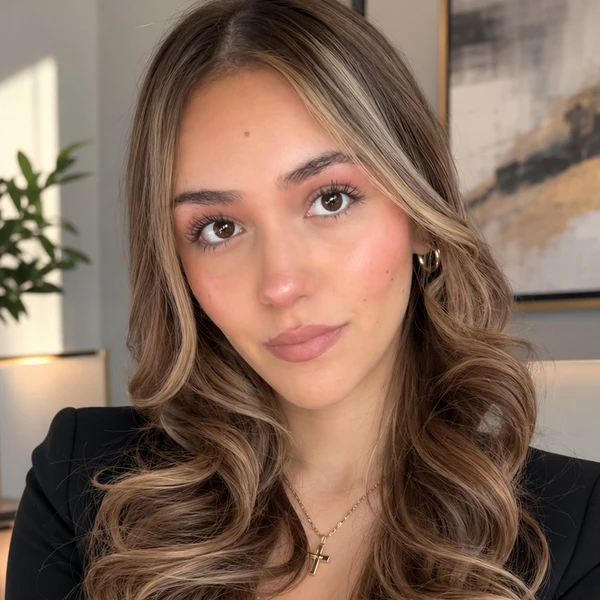
I am a first generation Latina student pursuing fashion marketing and creative direction. Fashion is more than clothing to me, it is freedom, identity, and storytelling. I grew up in a low income household where practicality came first, but I’ve learned to value creativity as well. Fashion has given me confidence and a way to express myself beyond my circumstances. My journey includes challenges such as depression, anxiety, financial instability, and shifting from pre-med to fashion. At home, I support my mother, who is disabled and does not speak English, while navigating life with an absent father. These experiences shaped my resilience and independence. At the University of San Diego, I am involved in the American Marketing Association, Fashion Forward, and the Scott MacDonald Scholarship program, and I am a federal work-study student in Environmental and Ocean Sciences. Outside of school, I run a Depop resale business, work at Victoria’s Secret, and develop styling and photography projects. My goal is to become a creative director and build a future for myself and my family through fashion.
Education
University of San Diego
Bachelor's degree programMajors:
- Marketing
Miscellaneous
Desired degree level:
Master's degree program
Graduate schools of interest:
- Fashion Institute of Technology
Transfer schools of interest:
Majors of interest:
- Marketing
Career
Dream career field:
- Marketing and Advertising
Dream career goals:
Sports
Tennis
Varsity2022 – 2022
Future Interests
Advocacy
Volunteering
Philanthropy
Entrepreneurship
Harry & Mary Sheaffer Scholarship
I am a first generation Mexican Salvadoran Latina and the oldest daughter in my family, raised between two languages, two cultures, and two sets of expectations that I had to learn to navigate from a very young age. Growing up, I often found myself translating not just words, but experiences between my parents and teachers, between home and school, and eventually between my own internal world and the external pressures placed on me. That experience shaped one of my strongest skills: the ability to understand people deeply, even when their circumstances are complex or unseen. As a child, I was pulled out of class to interpret conversations I barely had the vocabulary for, while also trying to keep up academically. At home, I carried responsibilities beyond my years as the only daughter among three boys, often taking on emotional and practical roles that required me to mature quickly. These experiences taught me how to read people, listen beyond words, and recognize when someone is struggling even if they don’t say it directly. They also taught me how often people suffer quietly because systems, families, or environments do not always make space for their voices. Over time, I began to understand that what I once saw as pressure was also the development of empathy. Being placed between languages and cultures gave me a unique perspective: I learned that misunderstandings are not always intentional, and that many conflicts come from a lack of translation, cultural, emotional, or verbal. This awareness has shaped how I interact with others. I try to create clarity where there is confusion and understanding where there is silence.
In the future, I plan to use my skills in communication, storytelling, and creative direction, particularly within fashion marketing and media, to build spaces that feel more inclusive and human. Fashion and media are global languages, and I want to use them to highlight stories that are often overlooked, especially those of first-generation students, immigrant families, and people balancing multiple identities. I want my work to reflect real people, not just idealized images, and to show that identity is layered, not simple. Beyond creative work, I also want to contribute through mentorship and advocacy. I know what it feels like to navigate education without a clear guide, to translate systems while still learning them yourself, and to feel unseen in spaces where you are working the hardest. I want to be the kind of voice that makes those spaces feel less isolating for others. Sometimes empathy is not about having the perfect answer, it is about making someone feel understood while they are still figuring things out. Ultimately, I plan to use my experiences not as something I overcame and left behind, but as something I carry forward into every space I enter. My goal is to help build a global community where people feel seen across language, culture, and circumstance, where understanding is not an exception, but the standard.
José Ventura and Margarita Melendez Mexican-American Scholarship Fund
I am a first generation Mexican Salvadoran Latina and the oldest daughter in my family, raised in a household where education was not just something I pursued, but something I carried for everyone around me. My academic journey began early, not with ease, but with responsibility. At five years old, I was being pulled out of kindergarten classrooms to translate between English and Spanish, still learning both languages myself, while trying to bridge communication between my parents and a school system that often did not have the resources to support families like mine. Even at that age, I learned what it meant to hold pressure far beyond my years. At home, I grew up in a space shaped by financial strain, cultural expectations, and emotional weight that often fell on me as the only daughter among three boys. My mother worked long hours to keep our household stable, while my father’s long workdays and emotional absence often turned into stress that filled the home. As the oldest daughter, I was expected to clean, help, translate, and take care of my siblings. I became responsible not only for myself, but for things I was too young to fully understand. Over time, I started to believe that my value depended on how much I could handle without breaking. School was not an escape from that pressure, it reflected it in a different form. In the classroom, I often felt overwhelmed and disconnected, struggling with anxiety that built quietly over years. I remember being pulled out of class repeatedly for academic conversations I barely understood, feeling the fear of falling behind while trying to decode both language and expectation. At the same time, I carried the silence of not always being able to ask for help at home, because my parents did not have the academic tools to guide me. I translated report cards I barely understood myself, hoping to protect them from disappointment while also trying to understand my own performance. Despite these challenges, I kept going. I learned to navigate school while carrying responsibilities at home, even when it felt like I was constantly balancing two worlds that did not fully see me. There were moments of recognition, awards, achievements, but they were often mixed with absence or misunderstanding, which made me question my place even more. Still, over time, I began to understand that my experiences were not proof of inadequacy, but proof of resilience shaped under pressure. As I grew older, I started to see my story differently. I am not just someone who struggled to keep up; I am someone who learned how to persist in environments that were not built with me in mind. My identity as a Mexican Salvadoran first-generation student has shaped my perspective deeply. It has taught me how to adapt, how to advocate for myself, and how to find strength in both cultures I come from. Now, I plan to pursue higher education in marketing and creative fields, with a focus on fashion marketing and creative direction. More importantly, I want to use my voice to support other first-generation students who feel invisible in academic spaces. I want them to know that their responsibilities, their language barriers, and their home lives do not make them less capable, they make them resilient in ways that deserve recognition. I carry my story with me not as something that holds me back, but as something that allows me to move forward with purpose.
First Generation Scholarship For Underprivileged Students
I am a first generation Mexican Salvadoran Latina and the oldest daughter in my family, raised in a household where education was not just something I pursued, but something I carried for everyone around me. My academic journey began early, not with ease, but with responsibility. At five years old, I was being pulled out of kindergarten classrooms to translate between English and Spanish, still learning both languages myself, while trying to bridge communication between my parents and a school system that often did not have the resources to support families like mine. Even at that age, I learned what it meant to hold pressure far beyond my years. At home, I grew up in a space shaped by financial strain, cultural expectations, and emotional weight that often fell on me as the only daughter among three boys. My mother worked long hours at two fast food jobs to keep our household stable, while my father’s long workdays landscaping and emotional absence often turned into stress that filled the home. As the oldest daughter, I was expected to clean, help, translate, and take care of my siblings. I became responsible not only for myself, but for things I was too young to fully understand. Over time, I started to believe that my value depended on how much I could handle without breaking. School was not an escape from that pressure, it reflected it in a different form. In the classroom, I often felt overwhelmed and disconnected, struggling with anxiety that built quietly over years. I remember being pulled out of class repeatedly for academic conversations I barely understood, feeling the fear of falling behind while trying to decode both language and expectation. At the same time, I carried the silence of not always being able to ask for help at home, because my parents did not have the academic tools to guide me. I translated report cards I barely understood myself, hoping to protect them from disappointment while also trying to understand my own performance. Despite these challenges, I kept going. I learned to navigate school while carrying responsibilities at home, even when it felt like I was constantly balancing two worlds that did not fully see me. There were moments of recognition awards, achievements, but they were often mixed with absence or misunderstanding, which made me question my place even more. Still, over time, I began to understand that my experiences were not proof of inadequacy, but proof of resilience shaped under pressure. As I grew older, I started to see my story differently. I am not just someone who struggled to keep up, I am someone who learned how to persist in environments that were not built with me in mind. My identity as a first generation student has shaped my perspective deeply. It has taught me how to adapt, how to advocate for myself, and how to find strength in both cultures I come from. Now, I plan to pursue higher education in marketing and creative fields, with a focus on fashion marketing and creative direction. More importantly, I want to use my voice to support other first generation students who feel invisible in academic spaces. I want them to know that their responsibilities, their language barriers, and their home lives do not make them less capable, they make them resilient in ways that deserve recognition. I carry my story with me not as something that holds me back, but as something that allows me to move forward with purpose.