
Hobbies and interests
Basketball
Volleyball
Tutoring
Teaching
Mathematics
Business And Entrepreneurship
Track and Field
Mental Health
Counseling And Therapy
Education
Reading
Education
Self-Help
I read books multiple times per week
Marissa Jaskulski
1x
Finalist
Marissa Jaskulski
1x
FinalistBio
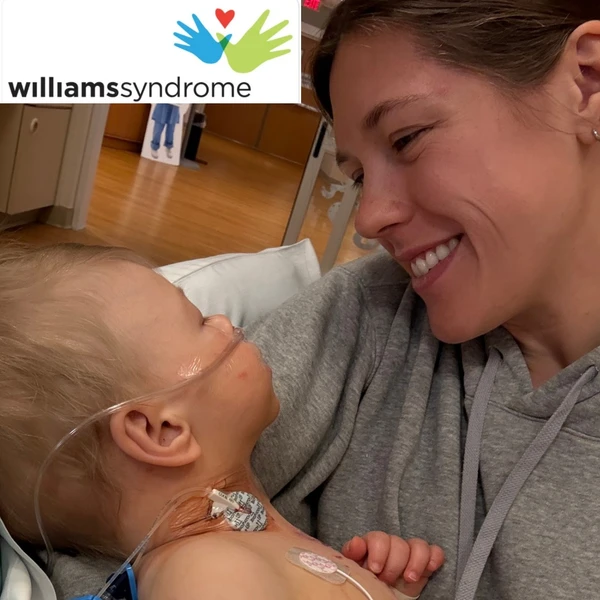
I spent 6 years teaching high school mathematics at Madison East before my son was born and diagnosed with Williams Syndrome—a rare genetic disorder caused by the deletion on chromosome 7 and associated with heart disease. I now dedicate my time to my brave boy and his medical and emotional needs. I'm interested in helping others like me thrive with a special needs child through mental health counseling. I'm hoping to pursue my master's degree and become a licensed professional counselor.
Education
University of Wisconsin-Superior
Master's degree programMajors:
- Clinical, Counseling and Applied Psychology
Edgewood College
Bachelor's degree programMajors:
- Education, General
- Mathematics
Vel Phillips Memorial High School
High SchoolMiscellaneous
Desired degree level:
Master's degree program
Graduate schools of interest:
Transfer schools of interest:
Majors of interest:
- Clinical, Counseling and Applied Psychology
Career
Dream career field:
Mental Health Care
Dream career goals:
Basketball Coach
Madison East High Schhol2018 – 20191 yearProgram Leader
Madison School and Community Recreation2010 – 20188 yearsMathematics Educator
Madison East High School2018 – 20246 years
Sports
Volleyball
Varsity2009 – 20134 years
Awards
- Team captain
Track & Field
Varsity2009 – 20134 years
Awards
- 200m Conference Champion Team captain
Rowing
Junior Varsity2013 – 20141 year
Awards
- Big Ten Conference Champions
Basketball
Varsity2009 – 20178 years
Awards
- Team Captain
Arts
Edgewood College
Music2014 – 2015
Public services
Volunteering
Kids Fun Run — Volunteer2014 – 2017Volunteering
Blackhawk Church — Sunday School Teacher2015 – 2016
Future Interests
Advocacy
Volunteering
Philanthropy
Entrepreneurship
K-POP Fan No-Essay Scholarship
Tawkify Meaningful Connections Scholarship
Relationships have played a central role in shaping my personal and professional goals, showing me how connection creates safety during difficult times. For six years, I taught high school math at Madison East. Students often came to class tired from anxiety, depression, or tough situations at home, making it hard to focus on algebra. I’d stay after school to listen when they wanted to talk. One student gave me a letter about drugs and abuse in her home. She wrote that my listening helped her get through those years. “You’re the first teacher who made me feel seen,” she said. That experience made me realize how much relationships matter in helping people through hardship, which is why I’m now interested in counseling.
Then my son Thomas was born in May 2024. His first two weeks were spent in the NICU because of serious heart problems. The doctors said he might need surgery at any time and he was too small to have it done in Madison, so they were preparing to fly him to Stanford. He grew just enough that we could do the first surgery here in March 2025. But in December 2025, everything changed. A cardiac catheterization showed a 90% blockage in his coronary artery. They told us he needed emergency surgery the very next morning. Those were terrifying days—waiting through every monitor beep, not knowing if he’d make it, watching his tiny chest struggle to breathe.
Through all of this, my husband Alex was there for me. When the fear got to be too much and I started crying, he’d hold me in the hospital hallway. “I’m right here,” he’d say quietly. He didn’t try to fix anything—he was just there, which helped me keep going. Whether it was the first surgery wait or that sudden December emergency, having him by my side made each crisis feel manageable.
Friends and family stepped up too. My parents drove through snowstorms and slept in waiting room chairs so we could take turns with Thomas. Friends brought lasagna, soup, and casseroles when we were too exhausted to cook. My father-in-law would come to the hospital and sit with Thomas so I could take a shower. A local Williams syndrome family who had used the same surgeon brought us food and explained what recovery would look like. They had been through the exact same heart surgery experience. All these people helped turn what felt like a lonely fight into something we were facing together.
These relationships are why I’m pursuing a master’s degree in clinical mental health counseling at UW-Superior. I want to help other people the way I was helped. Caregivers dealing with medical challenges, students struggling with things at home or school, families with disabled children—they all need someone who will listen and support them. That student needed someone to hear about her home life. I needed Alex holding me during those hospital nights. Other families need support through their own crises.
From teaching, I learned how to really listen to someone’s story. From Alex, I learned how one person’s steady presence can help you face anything. From friends and family, I learned that even small things like bringing food or sitting in a waiting room can make a big difference. These experiences have convinced me that relationships are the most important part of mental health care.
My plans include creating support groups where caregivers can share practical advice and celebrate small victories. I want to work with schools to train teachers on noticing when students need help. I also want to connect with doctors’ offices so families get mental health support along with their medical care. Each of these ideas comes directly from what helped my family get through Thomas’s surgeries and diagnosis.
The Tawkify Meaningful Connections Scholarship would help pay for graduate school costs in our single-income household. This support would let me focus more on my studies and less on financial stress, so I can become the kind of counselor who helps people build the relationships that help them through hard times. When people support each other through medical emergencies, family challenges, and daily struggles, they don’t just get by—they can actually thrive.
Josh Gibson MD Grant
Josh Gibson MD Scholarship
Ethel Hayes Destigmatization of Mental Health Scholarship
Mental health has been a constant, often unspoken, presence in my family, shaping my relationships, worldview, and career aspirations in ways I couldn’t have anticipated. Growing up, I watched my mother navigate bipolar disorder, a diagnosis that came later in life after years of unexplained mood swings and emotional turbulence. My older brother has battled ADHD, anxiety, and depression, enduring two severe mental health breakdowns involving suicidal ideation that required hospitalization. My father, too, has grappled with anxiety and depression in his later years. These experiences taught me early that mental illness doesn’t discriminate by age or role—it can strike the strongest among us. Yet stigma kept conversations hushed, leaving us to manage in isolation.
Postpartum depression after my son Thomas’s birth in 2024, compounded by his Williams syndrome diagnosis and subsequent two heart surgeries, brought these struggles into sharp focus for me. The relentless medical appointments, therapies, and uncertainty triggered deep sadness and fear, making me question my capacity as a mother and person. I felt shame for struggling when I “should” have been grateful. But confronting this postpartum depression—through therapy and honest talks with my husband—shifted everything. I learned that vulnerability isn’t weakness; it’s the first step toward healing.
These experiences profoundly reshaped my relationships. Family gatherings once avoided mental health topics now include open check-ins: “How are you really feeling?” My brother and I share strategies for anxiety management, turning sibling rivalry into mutual support. With my parents, I’ve advocated for their care, modeling the self-compassion I wish they’d had sooner. As a former math teacher, I now prioritize emotional check-ins with my son, recognizing how his developmental challenges intersect with mental well-being.
My understanding of the world expanded to see mental health as a universal thread, not a personal failing. Stigma thrives in silence, but destigmatization starts with stories like ours—messy, human, and hopeful. This realization drove my career pivot: I’m pursuing a master’s in clinical mental health counseling at UW-Superior to become a licensed counselor specializing in families facing disability, chronic illness, and intergenerational mental health challenges like bipolar, ADHD, depression, and suicidal ideation.
My goals are clear: create safe spaces for open dialogue, especially in underserved Wisconsin communities where access to care is limited. I’ll support caregivers through postpartum struggles, help siblings process family trauma, and guide parents toward early intervention for their children. Drawing from my teaching background, I’ll develop practical tools—like workshops on recognizing suicidal ideation or building resilience amid diagnosis shocks. Ultimately, I want to normalize mental health as part of physical health, reducing the isolation my family endured.
Ethel Hayes’ story reminds us that silence compounds suffering. My family’s journey—from hidden bipolar to hospitalized breakdowns to my own postpartum battle—has equipped me to bring light to others. By pursuing counseling, I honor that legacy, fostering relationships built on honesty and a world where mental health conversations save lives.
Joshua’s Light: Suicide Awareness & Resilience Scholarship by Solace Mind®
The quiet strength it takes to keep asking for help when every part of you feels broken is something I’ve learned through the mental health challenges woven into my life as a caregiver and former educator. While I have not personally experienced suicidal ideation or suicide loss, the relentless emotional weight of caring for my son Thomas, born in 2024 with Williams syndrome, has brought me face-to-face with the despair, isolation, and hopelessness that can lead to suicidal thoughts—especially among caregivers and families facing chronic illness and disability. Witnessing how mental health crises can emerge from prolonged stress, fragmented support systems, and the fear of an uncertain future profoundly influenced my decision to pursue a master’s degree in clinical mental health counseling at UW-Superior.
Thomas’s diagnosis thrust our family into a world of two heart surgeries, endless medical appointments, and intensive therapies just to help him thrive. The constant advocacy—navigating insurance denials, coordinating specialists, and managing my own anxiety about his prognosis—often left me feeling utterly depleted. There were dark nights when the exhaustion felt unbearable, and I understood viscerally how thin the line can be between resilience and crisis. These experiences showed me that mental health support must be proactive, accessible, and stigma-free, particularly for those in high-stress caregiving roles where suicidal ideation can arise from cumulative trauma.
Self-advocacy has become my lifeline. I’ve learned to set boundaries, like saying no to extra commitments when I’m overwhelmed, and to seek therapy for myself despite the guilt of “taking time away” from Thomas. I practice open conversations with my husband about burnout and emotional load, and I’ve connected with local Williams syndrome support groups to share resources and normalize these struggles. For suicide awareness, I focus on prevention through early intervention: educating myself on warning signs in caregivers, promoting peer support networks, and advocating for integrated mental health screenings in pediatric and disability clinics. I believe reducing isolation is key—simple acts like checking in on a fellow parent can interrupt the spiral toward despair.
In my future work as a counselor, I plan to serve underrepresented communities in Wisconsin, including rural families, low-income caregivers, and those affected by disability who often face barriers to mental health care. Drawing from my teaching background, I’ll create accessible, practical tools for self-advocacy, like workshops on recognizing suicidal ideation in high-stress roles and building resilience through community. I want to partner with hospitals and schools to embed suicide prevention into routine care, ensuring that families like mine get support before a crisis hits. My lived experience as a woman balancing caregiving and graduate studies positions me to empathize with and empower those who feel their struggles are invisible.
Joshua’s Light honors the courage to seek help amid darkness, and this scholarship would lighten the financial load of my education, allowing me to focus on becoming the kind of mental health professional who carries that light forward—for every parent, patient, and community member fighting to keep going.
WayUp “Unlock Your Potential” Scholarship
Women in Healthcare Scholarship
I never expected healthcare to become the center of my life. I began my career as a high school math teacher after earning my bachelor’s degree in mathematics education, passionate about helping students understand difficult concepts and gain confidence in themselves. Over time, though, I began to notice something deeper: my students’ ability to learn was directly tied to their mental and emotional well-being. Anxiety, depression, trauma, and family stress often mattered more than any lesson plan I brought to class. Those experiences planted the first seeds of my interest in mental health and healthcare.
Everything shifted in 2024 when my son, Thomas, was born and later diagnosed with Williams syndrome, a rare genetic condition that often involves medical complications, developmental delays, and unique behavioral and emotional needs. His early years have included two heart surgeries, constant specialist appointments, and a full schedule of therapies to help him thrive. I left my teaching position to become his full-time caregiver and care coordinator, navigating hospital systems, insurance, and early intervention services. In the process, healthcare stopped being abstract—it became the lens through which I understood nearly every decision our family made.
Through this journey, I saw clearly how mental health is deeply intertwined with physical health for both patients and caregivers. I experienced firsthand the anxiety of waiting for test results, the emotional toll of advocating in complex systems, and the isolation that caregivers often feel. I also witnessed how compassionate providers—those who took time to explain, listen, and validate—could transform fear into empowerment. These experiences are what led me to pursue a graduate degree in clinical mental health counseling, a vital part of the broader healthcare field.
As a woman in healthcare, I plan to specialize in working with families navigating disability, chronic illness, and developmental differences. My goal is to support both caregivers and individuals with disabilities as they cope with anxiety, grief, identity shifts, and burnout. I want to create therapeutic spaces where parents can be honest about their fears without judgment, and where disabled and neurodivergent individuals are seen as whole people with strengths, not just diagnoses. My background as a teacher will help me break down complex information into manageable steps, while my lived experience as a caregiver gives me a deep well of empathy and practical understanding.
In the long term, I hope to collaborate with schools, pediatric practices, and community organizations to improve how we support families like mine. This might look like caregiver support groups, integrated mental health services in pediatric clinics, or training for teachers on trauma-informed and disability-aware practices. I want to use my voice and training to advocate for systems that recognize the mental health needs of both patients and those who love them.
Pursuing a degree in mental health counseling is my way of turning a challenging personal journey into a source of healing for others. As a woman in healthcare, I want to help build a world where families facing medical and developmental challenges feel less alone, more understood, and more hopeful about their futures. The Women in Healthcare Scholarship would ease the financial strain of graduate school and help me step fully into this work, transforming my experiences into meaningful, compassionate care for others.
Elijah's Helping Hand Scholarship Award
Life rarely unfolds as planned. I earned my bachelor’s in mathematics education, became a high school teacher, and thought I’d mapped out success. But mental health challenges—my students’, my son’s, and my own—rewrote that story.
As a teacher, I saw how anxiety, depression, and trauma kept students from even opening a notebook. I spent hours listening after class, walking them to counseling, and helping them catch up when their minds were overwhelmed. Those moments showed me how invisible mental health struggles are often dismissed as laziness. “Just try harder” doesn’t work—and can do real harm.
My relationship with mental health became deeply personal when my son, Thomas, was born in 2024 and diagnosed with Williams syndrome. Suddenly, my days filled with appointments, therapies, and high-stakes decisions. I left teaching to become his full-time caregiver, coordinating care and being present for his needs. I love him fiercely, but the constant fear of his future, advocacy exhaustion, and worry about “doing enough” took a serious toll on my mental health.
I had to confront my belief that I needed to be the strong one who kept everything together. Admitting I was overwhelmed felt like failure. But ignoring my mental health made it harder to show up for Thomas. I started talking openly with my husband about burnout, leaning on friends, and giving myself permission to rest. Therapy showed me how powerful it is to have someone hold space for your story without judgment.
These experiences reshaped my future. I’m now pursuing a master’s in clinical mental health counseling to support families navigating disability, caregiving, and mental health challenges like mine. As both an educator and a caregiver, I understand how mental health touches school, work, relationships, and identity. I want to be the counselor who listens deeply, validates experiences, and helps people find practical ways to cope and heal.
Mental health isn’t a single event in my life—it’s the ongoing thread shaping my choices, relationships, and career. It’s taught me strength can look like crying in the car after an appointment and then walking back in anyway, or saying, “I’m not okay.” Elijah’s Helping Hand Scholarship honors someone whose life was impacted by mental health, reminding us how high the stakes are. This award would help me continue my education and build a career standing beside others in their hardest moments, helping them feel seen, heard, and less alone while allowing time for me to be there for my son.
Redefining Victory Scholarship
Autumn Davis Memorial Scholarship
Growing up, I thought “strength” meant fixing problems quickly and quietly. Only when mental health wove itself into nearly every part of my life did I start to see strength as something softer: staying, listening, and asking for help even when it feels uncomfortable. My journey as an educator, a mother to a medically complex child, and a future clinical mental health counselor has been shaped by that shift in belief.
I earned my bachelor’s degree in mathematics education and became a high school math teacher because I loved helping students work through problems that initially seemed impossible. In the classroom, I quickly realized that the real barriers to learning were rarely just about equations. Students carried anxiety, depression, trauma, and family stress, and those invisible weights made focusing on algebra or geometry incredibly hard. I spent as much time building trust, checking in on their well-being, and connecting them to support as I did teaching content. Those experiences planted the belief that mental health is not a side issue; it is the foundation for everything else.
My understanding deepened in a personal way when my son, Thomas, was born in 2024 and later diagnosed with Williams syndrome. His diagnosis brought a new world of medical appointments, therapies, and constant decisions. I chose to leave my teaching position and become a stay-at-home mom so I could be fully present for his needs. That transition reshaped my beliefs about mental health. I experienced how chronic stress, uncertainty, and caregiving responsibilities can take a toll on a parent’s emotional well-being, even when there is deep love and gratitude. I also saw how my ability to show up for my son depended on acknowledging my limits, seeking support, and letting go of the idea that I had to “do it all” alone.
This caregiving journey has transformed my relationships. My marriage now relies on more intentional conversations about mental load, burnout, and emotional needs. With extended family, I’ve had to advocate for my son and explain that disability and mental health are not topics to whisper about, but realities that deserve openness and compassion. I’ve become more patient with others’ struggles and more aware that many people carry invisible battles similar to my own. Instead of offering quick fixes, I’ve learned to sit with people in their pain, to listen without judgment, and to validate their experiences.
These experiences have shaped my career aspirations. I am now pursuing a master’s degree in clinical mental health counseling, with the goal of supporting individuals and families navigating disability, chronic illness, and mental health challenges. My background as a teacher helps me explain complex ideas clearly and create structured, goal-oriented plans with clients. My life as a caregiver gives me deeper empathy for parents balancing appointments, finances, relationships, and their own mental health while caring for a child with special needs.
Because my son will likely require ongoing support, flexibility is crucial in my future career. Counseling offers the chance to build a schedule that allows me to remain an actively involved parent while still contributing meaningfully to my community. I hope to specialize in working with caregivers, parents of neurodivergent and medically complex children, and individuals managing anxiety, grief, and major life transitions.
Through my personal and professional experiences, I’ve come to believe that talking openly about mental health is an act of courage that can change lives. The Autumn Davis Memorial Scholarship would ease the financial burden of graduate school for my family and help me move closer to a career dedicated to honoring Autumn’s legacy.
Shop Home Med Scholarship
On May 23rd, 2024, my beautiful baby boy, Thomas, was born. The next day the pediatrician came into our room and performed a routine examination; she found a grade 4 heart murmur. The hospital staff immediately took him from my arms to the NICU. There was a near certainty that he will need open heart surgery. We were so scared and spent the next 10 days in the NICU helplessly waiting for them to tell us whether or not he would be rushed off to the operating room.
Our medical journey continued as we received a diagnosis of Williams syndrome, a rare genetic disorder due to a deletion on chromosome 7, often associated with heart disease and developmental delays. Our genetics team suggested we visit an array of specialties, including cardiology, gastroenterology, nephrology, neurology, ophthalmology, urology, and surgery. The surgeons at the University of Wisconsin–Madison were not confident in performing an operation when he was so little and referred us to Stanford, California. Both hospitals feared he could go into cardiac arrest, but surgery remained too risky. They told us to bring him home and “not let him get worked up” as we all wait for him to grow. I never left his side and tried everything in my power to soothe him. My whole world became keeping this little boy alive and getting him all the care he needs to thrive. I was getting little to no sleep, and I was bringing Thomas to a medical appointment almost every day. Balancing a full-time job seemed impossible, so I left my math teaching position at Madison East High School.
I don't think anyone would truly understand my journey unless they experienced it. One moment you are so excited about raising your child, and the next you feel like this future was ripped out from under you. It was like I was grieving my child even though I was holding him in my arms. I love my Thomas so much, and it took some time for me to accept his diagnosis. Once I did, the joy I once felt when he was born started flooding back into my heart. There are still moments I catch myself thinking about the future I once dreamed of, but I am so grateful for my brave boy.
This emotional journey was and is so difficult, and I felt like I was dealing with it alone. I had loving family members there to support me, but I needed someone who had lived through my experience to tell me it was going to be okay. This feeling has pushed me to start pursuing a license in mental health counseling. Not only can I be there for families as they journey through the emotions of having a special needs child, but I can also be there for my child in a way that other career paths would not allow me. Having the flexibility to create my own schedule allows me to go to Thomas's many doctor appointments and continue my career of serving others.
Thomas has undergone two open heart surgeries, overcome a feeding tube, and is thriving in all his therapies (speech, occupational, feeding, physical, and music). There are many unknowns in Thomas’s future, but I will always be right by his side to support him. He has shown me how to have patience, courage, resilience, and joy. Every day Thomas has a beautiful smile on his face despite facing many hardships, and I strive to do the same.