Hobbies and interests
Drawing And Illustration
Gaming
Anime
3D Modeling
Animation
Fashion
Reading
Romance
Action
Design
Historical
Folklore
Fantasy
I read books multiple times per month
Marin Shiba
1x
Finalist1x
Winner
Marin Shiba
1x
Finalist1x
WinnerBio
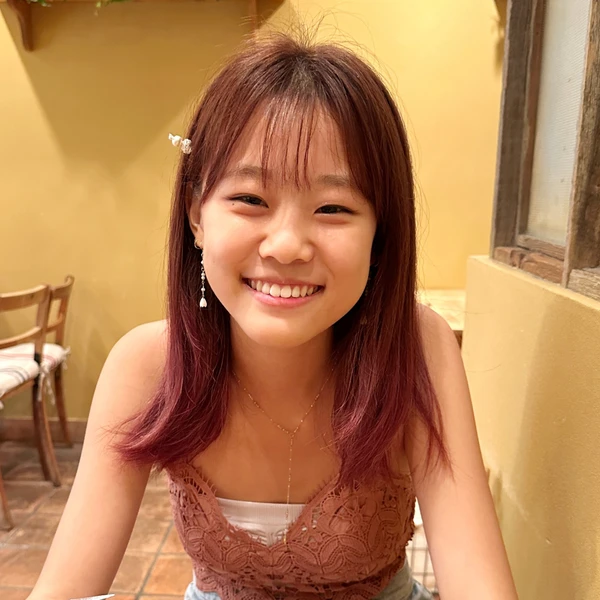
Creativity has always been an integral part of my daily life. Growing up, I watched my mother develop her own design business from our home, which gave me an early understanding of the dedication, resilience, and imagination required to turn ideas into reality. Her ability to navigate challenges and bring her visions to life inspired me to pursue my own creative path.
As a student at The New School, I am honing my skills as a designer while exploring the power of visual storytelling and creative problem-solving. I am motivated by the belief that design can do more than communicate; it can connect people, spark curiosity, and create meaningful experiences. Each project represents an opportunity for me to learn, experiment, and grow.
I aspire to build a career that combines creativity with purpose, creating work that has a positive impact on others. Scholarships play a crucial role in making this journey possible by allowing me to focus on learning, creating, and seizing opportunities that will shape both my future and the communities I hope to serve.
Education
The New School's Parsons School of Design
Bachelor's degree programMajors:
- Fine and Studio Arts
GPA:
3.9
Kalani High School
High SchoolGPA:
4
Miscellaneous
Desired degree level:
Bachelor's degree program
Graduate schools of interest:
Transfer schools of interest:
Majors of interest:
- Fine and Studio Arts
Career
Dream career field:
Arts
Dream career goals:
Illustrator
Product Design and Sales Assistant
Mana La Hawaii2023 – Present3 yearsStudent Worker at Mailroom
The New School2024 – 20251 yearStudent Worker
The New School University Center Library2025 – 20261 year
Sports
Dancing
Club2011 – 20143 years
Dancing
Club2013 – 20174 years
Arts
Mana La Hawaii
IllustrationSticker2021 – 2021
Public services
Volunteering
Surfrider Foundation — I did a solo volunteering and started to record them on the Surfrider Foundation website in 2023.2023 – 2024
Future Interests
Volunteering
Pamela Branchini Memorial Scholarship
A collaborative experience that inspired me was the process of giving and receiving critiques from teachers and classmates. As I began my academic journey at Parsons School of Design, many of my days were filled with critiques at every stage, from brainstorming and production to the final presentation. However, this was not my first experience with creative feedback.
Growing up, my mother, a freelance product designer, often asked for my opinions on her work throughout the design process. Whether discussing colors, aesthetics, or functionality, I learned that creative projects are rarely developed alone. Later, when I started taking art classes in high school, I began receiving critiques from my teachers, classmates, and my mother. At first, there were frustrating moments when I struggled to communicate my idea or fully understand the feedback I received. Over time, however, as I became more comfortable with critiques, I learned the importance of receiving and providing thoughtful feedback to others. Listening to my classmates' creative decisions exposed me to different perspectives and approaches to problem-solving. By discussing our work, we were able to help one another identify areas for improvement while encouraging each other’s strengths.
At Parsons School of Design, I had the opportunity to take a concept art class that closely aligned with the field of character design I hope to pursue. Throughout the semester, we developed an original world by designing characters, environments, and props. Almost every week, we presented our progress and received feedback from our professor and classmates. Hearing different perspectives often revealed possibilities I had not considered and helped strengthen my designs. There were many times when their suggestions helped me rethink aspects of a character’s appearance, personality, or role within the world I was creating. Additionally, my professor discussed the work environments of these careers and helped shape my understanding of collaboration in character design. I learned that character designers work closely with writers, directors, animators, 3D artists, and other artists to ensure that the character supports the story, fits the visual world, and connects with the audience. Since each team member contributes to a different area of expertise, successful projects rely on communication that transforms the character design into a fully developed character that can exist within a larger story.
To me, collaboration means combining different perspectives, skills, and ideas to create stronger and more meaningful work than one could produce alone. My experience with critiques has taught me the importance of openness, communication, and willingness to learn from others. As I pursue a career in character design, I hope to continue developing these collaborative skills and contribute to creative teams that bring compelling stories and characters to life.
G.A. Johnston Memorial Scholarship
It wasn’t until high school that I discovered my love for watercolor painting. I was introduced to the medium by my art teacher, who encouraged students to experiment with a variety of materials and techniques. At first, I struggled with watercolor’s unpredictability, which seemed impossible to control compared to other media. However, through practice and experimentation, I started to enjoy the spontaneity and fluidity. Watching how the paints bloom and blend became one of my favorite parts of the creative process.
The two paintings I have submitted were created for my AP 2D Studio Art class, in which I explored Japanese motifs and turned them into visual artworks. The first painting is called Kachoufugetsu (花鳥風月). Kachoufugetsu is comprised of the kanji for flower, bird, wind, and moon. This motto means the beauty of nature. During the Muromachi Period (1336-1573), Zeami Motokiyo, an actor and playwright, wrote Fushi Kaden, a treatise on Noh. This is one of the earliest written sources to use the term kachofugetsu, which, at the time, meant grace or elegance. To interpret this concept, I depicted a Japanese woman surrounded by those elements that symbolize harmony and beauty found in the world.
The second multimedia painting, Wisdom, was inspired by the Japanese motto ”三人寄れば文殊の知恵.” This motto suggests that even ordinary people can attain wisdom like that of Manjushri, a bodhisattva, if three people cooperate. Manjushri represents wisdom and is often depicted with a lion, representing the Buddhist power to overcome obstacles. I illustrated my parents and me forming a star to represent cooperation and the idea that collective effort can create something meaningful.
As a student at Parsons School of Design, I hope to further experiment with watercolor and create more artworks that bring joy and curiosity, just as watercolor has inspired me to see beauty in both intention and spontaneity.
Bulkthreads.com's "Let's Aim Higher" Scholarship
I aspire to “build” imaginary narratives filled with characters, creatures, kingdoms, and relationships that inspire wonder, creativity, and comfort, especially for younger audiences.
Growing up, I watched my mom leave on business trips multiple times a year, but she made sure I never felt lonely by encouraging me to be creative. As a designer, she always had art supplies around the house, and I experimented with them all, but what stayed with me most as a kid were dolls and stuffed animals. During my childhood, I spent hours creating stories for them, imagining different realms filled with adventures, friendships, magical creatures, and endless possibilities. My dad also helped shape my imagination by introducing me to animation and games that showed me fantastical worlds, inspiring me to create my own narratives. These experiences made imaginative worlds a source of joy, comfort, and inspiration throughout my childhood.
During those years, I also became aware that not every child had the same experience. I remember my mother's friends would occasionally ask my mom to babysit their children while they worked. I also recall staying after school to stay with friends, and I watched many stay until late evenings waiting for their parents to pick them up after work. Something that stuck with me is hearing friends express their loneliness of not being able to spend more time with their parents. I also overheard conversations among parents who felt sad about not being able to stay home as often as they wanted and missing their children's school events due to work. At the time, I did not fully understand those feelings, but looking back, I realize how fortunate I was to have a parent who nurtured my creativity and helped me find comfort through imagination.
As I entered high school, my passion for art grew even stronger after I met a supportive art teacher who encouraged my mom and me to apply to art school. Today, as I continue to develop my skills at Parsons School of Design, I am working toward a future in character design for games and animation. I hope to "build" many fantastical worlds filled with memorable characters and creatures that help young people feel more connected to their own imagination. Just as creativity gave me joy during childhood, I want my worlds to offer those same feelings to others.
Wendy Alders Cartland Visual Arts Scholarship
When I was two months old, my parents brought me to Hawaii, where I grew up surrounded by diverse cultures. One of my favorite childhood memories is helping kindergarteners at my elementary school with my friends, playing with them until their parents arrived to pick them up. I vividly remember some children waiting until the evening, long after most others had gone. These moments have stayed with me and shaped my understanding of others’ experiences.
As a child of a freelance designer mother, I had the privilege of flexibility, being able to stay if I wanted to be with my friends or come home immediately after school if I wanted. I also often hosted sleepovers with friends whose parents worked late, and my mom usually made delicious food for us. However, as I got older, I began to understand the sacrifices of those parents who worked late to provide for their families. This realization deepened during my summers in Japan. I often spent time with the children of my mother’s friends, many of whom were in similar circumstances. One of her friends had started a cafe and worked long hours to run the cafe, while another worked as a nurse with demanding shifts.
Now, living in New York City for college, I’ve continued to observe these cases. My mother’s friend frequently asks me to babysit her young daughter, sometimes as late as 7 p.m., due to her work schedule. I’ve seen how much it pains her to miss her daughter’s events, like school performances, moments she cherishes but sacrifices to ensure her family’s well-being. Each experience has reinforced my empathy for these hardworking parents and their children, inspiring me to think about how to contribute meaningfully to their lives through my art.
Although my mother’s freelance work allowed her to work from home during my early childhood, it eventually required frequent business trips that sometimes lasted a week or even a month. As an only child, my house felt silent when my parents weren’t home, and I thought I would feel lonely while I waited. However, my mom prioritized spending quality time with me when she was home, creating a strong bond and sense of security that made those quieter times more manageable. When she was away, I turned to anime and manga, and had the house all to myself to enjoy. During these times, I also spent a lot of time drawing, being inspired by these fascinating stories and characters, which deepened my passion for illustration.
These experiences have shaped my dream of creating stories that provide comfort and inspiration, especially for children. I want to craft imaginative worlds where they feel understood and encouraged to dream beyond their circumstances. Through visual storytelling, I hope to offer them the same connection and comfort that anime and manga gave me as a child. This scholarship would allow me to continue my education at Parsons School of Design, refine my artistic skills, and learn new techniques to bring these worlds to life, inspiring a new generation to dream big.
Natalie Jude Women in the Arts Scholarship
One of my favorite creations is Jyuunin Toiro, a digital illustration from my AP 2D Art portfolio. The title, which translates to "ten people, ten colors," reflects the idea that everyone has unique preferences and perspectives. Inspired by this Japanese motto, I created a visual story celebrating individuality, equality, and acceptance.
The piece depicts a museum where each artwork symbolizes a person with a distinct career, with their uniqueness emphasized through complementary colors. At the center, I included myself as a painter holding a vibrant palette, representing the beauty of embracing diversity. For example, I depicted a man feeding a baby to challenge the stereotype that child-rearing is only a woman’s responsibility. I also portrayed a person of color as a prima ballerina, breaking conventional norms. The setting embodies my dream museum, where people can relax on the tatami mat and appreciate the displayed artworks.
“Jyuunin Toiro” originated from I Am a Cat by Natsume Sōseki. Inspired by the novel’s title, I wrote Wagahai wa neko dearu in the sky, as glowing stars. Additionally, because the narrator of this story is a cat that observes the human world from a unique perspective, I added a curious cat peeking into the museum from above.
This piece resonates with me because it embodies my artistic values of creating imaginative worlds that celebrate individuality. Receiving the Natalie Jude Women in the Arts Scholarship will enable me to explore meaningful storytelling in my illustrations further and refine my skills at Parsons School of Design.
WCEJ Thornton Foundation Music & Art Scholarship
WinnerArt has always had a special place in my heart, becoming a way to express my feelings and connect with others. Growing up, I watched my mother transform ideas into creations that brought joy to others, sparking my belief in the power of art to make a difference. As a designer, she often spoke about her desire to help people by creating designs that spread the culture of hawaii or developing beauty products for sensitive skin like hers. Her dedication inspired me to see creativity as a tool to impact the world positively.
Following in her footsteps, I developed a passion for 2D illustration. My art focuses on spreading messages of hope and acceptance. One of my favorite pieces, "United in Diversity," embodies this vision. The artwork features five figures, each with a head of a dish representing a different culture, walking together in harmony. This piece symbolizes how food, a universal experience, can serve as a bridge between cultures, celebrating the beauty of our differences.
Additionally, I have created multiple pieces inspired by Japanese mottos. One of these works, titled “Customer is God,” illustrates various gods eating and drinking together, conveying a message of accepting different religions. Another piece, “Jyuunin Toiro,” reflects the idea that everyone has unique preferences and perspectives. To represent this, I drew multiple people from diverse careers using complementary colors, showing how various personalities color the world.
My ultimate goal is to create illustrations that resonate with people and inspire them to embrace diversity and kindness. Just as my mother uses her creativity to bring smiles and comfort to others, I aim to use my illustrations to spark empathy and unity.
With this scholarship's support, I can continue my education at Parsons School of Design, refine my craft, and create art that leaves a positive message to the world.
Isaac Yunhu Lee Memorial Arts Scholarship
Even though I'm not a bookworm, I was influenced by the Japanese author Haruki Murakami. When I took dual enrollment for English 100, one of my assignments was to write a literary analysis about “The Second Bakery Attack " by Murakami. This assignment puzzled me initially, but my professor told me there was no standard for determining whether this essay was right or wrong and that taking whatever message I took from the story was okay. When I spoke to my professor privately, she advised me that since Murakami is Japanese, writing an essay that takes advantage of your Japanese identity might be interesting.
I interpreted this story as conveying the need for people to understand and be honest about their feelings through the story of a newlywed couple attacking a bakery. And I got the message that we can ultimately work toward a common goal by understanding and accepting each other's differences.
When I thought of his Japanese identity, elements like the clear water and the volcano felt like they significantly impacted the message. In the analysis, I stated that the volcano represents the frustration of hiding their secrets from their partner. For the husband, he was hiding his hunger to satisfy his wish, while the wife was hiding her dark past. I described that the clear water symbolized zen because Japanese people tend to suppress or hide their emotions and don't aggressively express their feelings. Before becoming emotional, they calm their minds like clear water and analyze it. Therefore, the experience of interpreting what the elements of a story meant sparked the idea for my AP art project. I decided to do a sustained investigation of transforming Japanese moto into visual art with messages.
For one of my projects, I chose “Customer is God.” This motto is said to be made from a conversation between an Enka singer, Minami Haruo, and a stand-up comedian, Miyao Takashi, and it was created by wanting to make the customers happy with the songs and performances. I drew Buddha and Jesus drinking together and Zeus and Amaterasu drinking together and having fun. I wanted to show that people accept and respect other religions in modern Japanese culture. I also chose to show Zeus pouring sake for Amaterasu, the goddess of the sun in Japan, and I wanted to illustrate gender equality because, in Japan, women were usually expected to pour for men in the past, but to show that it is a new generation, I switched it up. Lastly, I also expressed the meaninglessness of discriminating against people based on skin color by illustrating the red and blue demons in Japanese folklore.
In this way, my art contains messages about social issues and systems that make an effort to cause change, but my art is open to interpretation. For example, I drew a red and a blue demon, and some may interpret this as saying that even two people with opposite personalities can form a wonderful friendship. I would like to think of various ways for people to use their imagination and have fun with my art.
Lewis Hollins Memorial Art Scholarship
Even though I'm not a bookworm, I was influenced by the Japanese author Haruki Murakami. When I took dual enrollment for English 100, one of my assignments was to write a literary analysis about “The Second Bakery Attack " by Murakami. This assignment puzzled me initially, but my professor told me there was no standard for determining whether this essay was right or wrong and that taking whatever message I took from the story was okay. When I spoke to my professor privately, she advised me that since Haruki is Japanese, writing an essay that takes advantage of your Japanese identity might be interesting.
I interpreted this story as conveying the need for people to understand and be honest about their feelings through the story of a newlywed couple attacking a bakery. And I got the message that we can ultimately work toward a common goal by understanding and accepting each other's differences.
When I thought of his Japanese identity, elements like the clear water and the volcano felt like they significantly impacted the message. In the analysis, I stated that the volcano represents the frustration of hiding their secrets from their partner. For the husband, he was hiding his hunger to satisfy his wish, while the wife was hiding her dark past. I described that the clear water symbolized zen because Japanese people tend to suppress or hide their emotions and don't aggressively express their feelings. Before becoming emotional, they calm their minds like clear water and analyze it. Therefore, the experience of analyzing what the elements of a story meant sparked the idea for my AP art project. I decided to do a sustained investigation of transforming Japanese moto into visual art with messages.
For one of my projects, I chose “Customer is God.” This motto was created by the feeling of wanting to make the customers happy with the songs and performances. I drew Buddha, Jesus, Zeus, and Amaterasu, drinking and having fun together. I wanted to show that people accept and respect other religions in modern Japanese culture. I also chose to show Zeus pouring sake for Amaterasu, the goddess of the sun in Japan, and I wanted to illustrate gender equality because, in Japan, women were usually expected to pour for men in the past. Lastly, I also expressed the meaninglessness of discriminating against people based on skin color by illustrating the red and blue demons in Japanese folklore.
In this way, my art contains messages about social issues and systems that make an effort to cause change, but my art is open to interpretation. For example, I drew a red and a blue demon, and some may interpret this as saying that even two people with opposite personalities can form a wonderful friendship. I would like to explore various ideas for people to use their imagination and have fun with my art.
Persephone Scholarship in Memory of Kirstie Campbell
Even though I'm not a bookworm, I was influenced by the Japanese author Haruki Murakami. When I took dual enrollment for English 100, one of my assignments was to write a literary analysis about “The Second Bakery Attack " by Murakami. This assignment puzzled me initially, but my professor told me there was no standard for determining whether this essay was right or wrong and that taking whatever message I took from the story was okay. When I spoke to my professor privately, she advised me that since Haruki is Japanese, writing an essay that takes advantage of your Japanese identity might be interesting.
I interpreted this story as conveying the need for people to understand and be honest about their feelings through the story of a newlywed couple attacking a bakery. And I got the message that we can ultimately work toward a common goal by understanding and accepting each other's differences.
When I thought of his Japanese identity, elements like the clear water and the volcano felt like they significantly impacted the message. In the analysis, I stated that the volcano represents the frustration of hiding their secrets from their partner. For the husband, he was hiding his hunger to satisfy his wish, while the wife was hiding her dark past. I described that the clear water symbolized zen because Japanese people tend to suppress or hide their emotions and don't aggressively express their feelings. Before becoming emotional, they calm their minds like clear water and analyze it. Therefore, the experience of analyzing what the elements of a story meant sparked the idea for my AP art project. I decided to do a sustained investigation of transforming Japanese moto into visual art with messages.
For one of my projects, I chose “Customer is God.” This motto was created by the feeling of wanting to make the customers happy with the songs and performances. I drew Buddha, Jesus, Zeus, and Amaterasu, drinking and having fun together. I wanted to show that people accept and respect other religions in modern Japanese culture. I also chose to show Zeus pouring sake for Amaterasu, the goddess of the sun in Japan, and I wanted to illustrate gender equality because, in Japan, women were usually expected to pour for men in the past. Lastly, I also expressed the meaninglessness of discriminating against people based on skin color by illustrating the red and blue demons in Japanese folklore.
In this way, my art contains messages about social issues and systems that attempt to cause change but are open to interpretation. For example, I drew a red and a blue demon, and some may interpret this as saying that even two people with opposite personalities can form a wonderful friendship. I would like to explore various ideas so people can use their imagination and enjoy my art.
Heather Rylie Memorial Scholarship
My legs feel like jelly as my week of working from 10 a.m. to 8 p.m. daily is finally over. This was my second time, and even though I was determined never to experience such exhausting work again, I ended up coming to this place again this summer. It's like an unstoppable love.
At 9:30 a.m., my work starts by cleaning the booth. This booth is a pop-up shop opened by my boss (mom), the owner and designer of a Hawaiian brand, at the Hawaii Fair held at Hankyu Umeda, a Japanese department store. This popular fair attracts huge waves of customers. My boss's most selling products were her bags, and for the customers to enjoy, we had a table with rows of Hawaiian fabric ribbons that they could match the bags with. Although I had to run around the booth, attending waves of customers, I felt proud of working at a crowded booth.
However, this wave of customers changes, getting bigger and smaller. When the wave gets smaller, that is, when I can no longer see the customers around us, I become anxious.
I couldn't help but whisper, “It’s not selling at all.”
Then, my boss firmly said, “When the wave of customers is receding, use this time to prepare for the next big wave. We need to improve the booth layout and demonstrate how to attach Hawaiian fabric handle ribbons to bags. This will bring back even bigger waves of customers.”
And it happened. The wave of customers reached our booth again. My boss used to say that tough times bring opportunity, and this experience was the first time I truly understood what that meant.
However, although this was a good learning experience, I wouldn't have come here again if that was all it was.
To be honest, I was wondering why my boss kept trying even though international shipping is expensive and challenging to make a profit, but I finally understood why. With the fair almost over and tiredness at peak, they came. They were like a sun between the clouds after a storm. Misaki was a shy girl who came to our booth last year. Misaki's mother told me that Misaki admired my Hawaiian-style clothes the previous year, so she bought similar clothes. She also told me she dreams of going to Hawaii with those clothes and the bags they bought at our booth when Misaki’s heart surgery succeeds. This experience taught me that Hawaiian culture and design in my daily life can become hopes and dreams.
Somewhere in my heart, I believed only talented people could become artists. And the pressure of always making a fascinating design was eating me. However, I learned that I need to step toward my dream before giving up and getting my thoughts clouded by negativity. That is why I chose to take my first step by applying to art college, learning more techniques, and broadening my perspective to create my unique art.