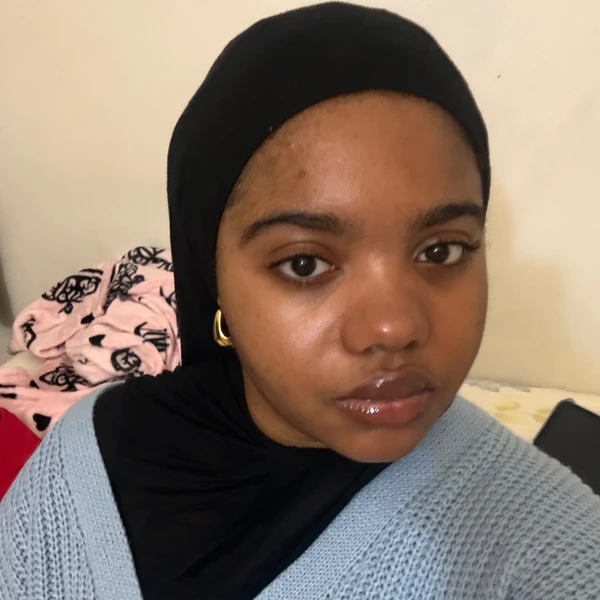
Bronx, NY
Hobbies and interests
Art
Drawing And Illustration
Badminton
Computer Science
Journaling
Aerospace
Reading
Science Fiction
Cultural
Literature
I read books multiple times per month
Mariama Bah
1x
FinalistMariama Bah
1x
FinalistBio
Hi, my name is Mariama, I’m a Senior at Manhattan Center for Science and Mathematics and a DDC member. I have a strong passion for STEM, problem-solving, and social impact. I am hoping to get a bachelors in Computer Science. I love using programming and coding to explore creative ideas by collaborating with others, building small projects, or learning new languages. Aside from STEM, I care about raising awareness and advocating for important causes. I am very motivated and I’m seeking more opportunities to make a meaningful impact.
Education
Manhattan Center For Science & Mathematics
High SchoolMiscellaneous
Desired degree level:
Bachelor's degree program
Majors of interest:
- Computer Science
- Aerospace, Aeronautical, and Astronautical/Space Engineering
- Finance and Financial Management Services
Career
Dream career field:
Computer Software
Dream career goals:
Software Engineer
Volunteer: Sent digitally made cards to victims of domestic violence sexual assault, and other forms of violence by writing positive messages and adding uplifting images.
Greetings for Healing2023 – Present3 yearsArabic Tutor: Served as an Arabic mentor for students ranging from ages 4-10. Managed lessons to support student outcomes in Quran activities.
Masjid Ibadour Ar-Rahman2022 – 20242 yearsCoded and Constructed AR/VR Projects, building 3D Models; Networked with women professionals in aerospace to learn about career pathways
Intrepid Museum2024 – 2024Student/Member: Engaged in a 5-week academic enrichment program, focused on reading, writing, and STEM research skills, gaining an immersive college campus experience
Columbia University Double Discovery Program2023 – Present3 yearsCoder/Member: Completed the entire first course of the Game Academy program,2D Game Development, within six weeks.
Urban Arts Game Academy2025 – Present1 year
Sports
Badminton
Club2022 – Present4 years
Public services
Volunteering
Greetings for Healing — Volunteer2023 – Present
Future Interests
Advocacy
Volunteering
Entrepreneurship
Dr. Michal Lomask Memorial Scholarship
My motivation to pursue higher education comes from my desire to support my parents and create a stable future for myself and my family. My parents have worked tirelessly to provide for me, often putting their own needs aside so that I can have better opportunities. Seeing their sacrifices has inspired me to aim higher and use education as a way to repay them. I am determined to take advantage of an opportunity to build a better life for us.
I want to earn a degree in Computer Science because I see it as a bridge from instability to security. Technology has power to connect communities, and create solutions where none existed. My dream is to become a software engineer who not only transforms my own circumstances but helps build systems and tools that empower people, and eventually help countless families who struggle quietly in the background, like my own.
Every morning, my dad sits at the kitchen table with a small black case containing a blood pressure monitor. He has high cholesterol, and this daily ritual of checking his blood levels and pressure has become routine. I used to think of science as equations on whiteboards and experiments in laboratories. Then I started paying attention to what my dad was doing each morning. The small beep of the monitor. The way he'd pause, studying the numbers before writing them down. The quiet relief when the readings fell within a safe range. Science, I realized, wasn't just happening in distant labs. It was happening at our kitchen table, keeping my father healthy and alive.
This awakened a different kind of curiosity in me. I began asking questions I'd never thought to ask before. How does cholesterol actually affect the body? What makes blood pressure rise and fall? How do his medications work at a molecular level? Each answer led to more questions, and science became something I needed to understand because someone I loved depended on it.
What struck me most was how decades of research had been distilled into a device my dad could use at home. Behind those numbers on the monitor screen were generations of scientists who had worked to understand the human body and create life-saving interventions.
This experience has shaped the kind of scientist I hope to become. I want to work on questions that matter in tangible ways, where answers show up in people's daily lives. I've learned that the most meaningful science meets people where they are, solving real problems for real people. That morning routine showed me that the most profound scientific questions don’t begin in laboratories, but in the lives of the people we love.
Byte into STEM Scholarship
My motivation to pursue higher education comes from my desire to support my parents and create a stable future for myself and my family. My parents have worked tirelessly to provide for me, often putting their own needs aside so that I can have better opportunities. Seeing their sacrifices has inspired me to aim higher and use education as a way to repay them. I am determined to take advantage of an opportunity to build a better life for us.
Every morning, my dad sits at the kitchen table with a small black case containing a blood pressure monitor. He has high cholesterol, and this daily ritual of checking his blood levels and pressure has become routine. I used to think of science as equations on whiteboards and experiments in laboratories. Then I started paying attention to what my dad was doing each morning. The small beep of the monitor. The way he'd pause, studying the numbers before writing them down. The quiet relief when the readings fell within a safe range. Science, I realized, wasn't just happening in distant labs. It was happening at our kitchen table, keeping my father healthy and alive.
This awakened a different kind of curiosity in me. I began asking questions I'd never thought to ask before. How does cholesterol actually affect the body? What makes blood pressure rise and fall? How do his medications work at a molecular level? Each answer led to more questions, and science became something I needed to understand because someone I loved depended on it.
What struck me most was how decades of research had been distilled into a device my dad could use at home. Behind those numbers on the monitor screen were generations of scientists who had worked to understand the human body and create life-saving interventions.
This experience has shaped the kind of scientist I hope to become. I want to work on questions that matter in tangible ways, where answers show up in people's daily lives. I've learned that the most meaningful science meets people where they are, solving real problems for real people. That morning routine showed me that the most profound scientific questions don’t begin in laboratories, but in the lives of the people we love.
I want to earn a degree in Biomedical Engineering because technology has the power to help, and create solutions where none existed. My dream is to create tools, that help countless people like my dad. A Biomedical Engineer who not only transforms my own circumstances, but helps build systems and tools that empower people, and eventually help countless families who struggle quietly in the background, like my own.
Abigail O. Adewunmi Memorial Scholarship
My motivation to pursue higher education comes from my desire to support my parents and create a stable future for myself and my family. My parents have worked tirelessly to provide for me, often putting their own needs aside so that I can have better opportunities. Seeing their sacrifices has inspired me to aim higher and use education as a way to repay them. I am determined to take advantage of an opportunity to build a better life for us.
I want to earn a degree in Computer Science because I see it as a bridge from instability to security. Technology has power to connect communities, and create solutions where none existed. My dream is to become a software engineer who not only transforms my own circumstances but helps build systems and tools that empower people, and eventually help countless families who struggle quietly in the background, like my own.
In October 2023, as I watched news coverage of conflicts erupting across different countries and communities torn apart by violence, I felt overwhelmed by all of the global suffering. I was in tenth grade, and while I couldn't stop wars or solve international crises, I knew I had to do something, to help ease someone's pain. That's when I discovered Greetings for Healings, an organization dedicated to creating digital cards for victims of abuse, sexual assault, and other traumatic experiences. Without hesitation, I joined, hoping that even a small gesture of compassion could make a difference in someone's darkest moment.
What motivated me wasn't just the troubling headlines; it was the realization that behind every statistic about violence and suffering was a real person desperately needing to know that someone cared. These victims often felt isolated, forgotten, and alone in their pain. Through Greetings for Healings, I could reach across distances and circumstances to send a simple but powerful message: you matter, you're not forgotten, and there's hope ahead.
Making these digital cards proved more challenging than I initially anticipated. Each card required genuine thought and sensitivity, I couldn't rely on generic messages or touch on a sensitive topic. I had to consider the recipient's emotional state, choosing words that would comfort without mentioning their trauma, that would encourage without dismissing their pain.
There were moments when I struggled to find the right balance, staring at my screen wondering if my words were adequate for someone enduring such profound suffering. I also faced the emotional weight of acknowledging these harsh realities; it was difficult to confront the prevalence of abuse and assault in our world, especially knowing that many victims were my own age or younger.
While I couldn't end global conflicts or eradicate abuse, I could offer comfort to individuals navigating their healing journeys. I discovered that empathy requires active effort, it meant educating myself about trauma, understanding the language that empowers rather than diminishes, and recognizing that sometimes the smallest gestures carry the greatest weight. Most importantly, I learned that compassion is a skill we must continuously develop, and that making a difference doesn't require grand gestures; it requires consistency, sincerity, and showing up.
Now in twelfth grade, I feel proud knowing that my cards may have brightened someone's difficult day or reminded a survivor that their pain is seen and valid. As I look toward the future, I'm committed to continuing this work beyond high school. I plan to expand my involvement with Greetings for Healings and explore additional ways to support survivors in my local community, whether through volunteering at crisis centers or advocating for better support systems.
Gregory Flowers Memorial Scholarship
In October 2023, as I watched news coverage of conflicts erupting across different countries and communities torn apart by violence, I felt overwhelmed by all of the global suffering. I was in tenth grade, and while I couldn't stop wars or solve international crises, I knew I had to do something, to help ease someone's pain. That's when I discovered Greetings for Healings, an organization dedicated to creating digital cards for victims of abuse, sexual assault, and other traumatic experiences. Without hesitation, I joined, hoping that even a small gesture of compassion could make a difference in someone's darkest moment.
What motivated me wasn't just the troubling headlines; it was the realization that behind every statistic about violence and suffering was a real person desperately needing to know that someone cared. These victims often felt isolated, forgotten, and alone in their pain. Through Greetings for Healings, I could reach across distances and circumstances to send a simple but powerful message: you matter, you're not forgotten, and there's hope ahead.
Making these digital cards proved more challenging than I initially anticipated. Each card required genuine thought and sensitivity, I couldn't rely on generic messages or touch on a sensitive topic. I had to consider the recipient's emotional state, choosing words that would comfort without mentioning their trauma, that would encourage without dismissing their pain. There were moments when I struggled to find the right balance, staring at my screen wondering if my words were adequate for someone enduring such profound suffering. I also faced the emotional weight of acknowledging these harsh realities; it was difficult to confront the prevalence of abuse and assault in our world, especially knowing that many victims were my own age or younger.
While I couldn't end global conflicts or eradicate abuse, I could offer comfort to individuals navigating their healing journeys. I discovered that empathy requires active effort, it meant educating myself about trauma, understanding the language that empowers rather than diminishes, and recognizing that sometimes the smallest gestures carry the greatest weight. Most importantly, I learned that compassion is a skill we must continuously develop, and that making a difference doesn't require grand gestures; it requires consistency, sincerity, and showing up.
Now in twelfth grade, I feel proud knowing that my cards may have brightened someone's difficult day or reminded a survivor that their pain is seen and valid. As I look toward the future, I'm committed to continuing this work beyond high school. I plan to expand my involvement with Greetings for Healings and explore additional ways to support survivors in my local community, whether through volunteering at crisis centers or advocating for better support systems. This experience has taught me that contributing to your community isn't about having all the answers or resources, it's about recognizing a need and doing what you can with what you have. Those digital cards were my way of saying that even in a world filled with conflict and pain, kindness still matters.
Koehler Family Trades and Engineering Scholarship
Every morning, my dad sits at the kitchen table with a small black case containing a blood pressure monitor. He has high cholesterol, and this daily ritual of checking his blood levels and pressure has become routine. I used to think of science as equations on whiteboards and experiments in laboratories. Then I started paying attention to what my dad was doing each morning. The small beep of the monitor. The way he'd pause, studying the numbers before writing them down. The quiet relief when the readings fell within a safe range. Science, I realized, wasn't just happening in distant labs. It was happening at our kitchen table, keeping my father healthy and alive.
This awakened a different kind of curiosity in me. I began asking questions I'd never thought to ask before. How does cholesterol actually affect the body? What makes blood pressure rise and fall? How do his medications work at a molecular level? Each answer led to more questions, and science became something I needed to understand because someone I loved depended on it.
What struck me most was how decades of research had been distilled into a device my dad could use at home. Behind those numbers on the monitor screen were generations of scientists who had worked to understand the human body and create life-saving interventions.
This experience has shaped the kind of scientist I hope to become. I want to work on questions that matter in tangible ways, where answers show up in people's daily lives. I've learned that the most meaningful science meets people where they are, solving real problems for real people. That morning routine showed me that the most profound scientific questions don’t begin in laboratories, but in the lives of the people we love.
I want to earn a degree in Biomedical Engineering because technology has the power to help, and create solutions where none existed. My dream is to create and build systems and tools, that help countless people like my dad.
My motivation to pursue higher education comes from my desire to support my parents and create a stable future for myself and my family. My father has worked tirelessly to provide for me, often putting their own needs aside so that I can have better opportunities. Seeing their sacrifices has inspired me to aim higher and use education as a way to repay them. I want to earn a degree that will allow me to find a stable and fulfilling career, one that not only provides financial security but also gives me the ability to help my family in the long run. I am determined to take advantage of an opportunity to build a better life for us.
William T. Sullivan Memorial Scholarship
In October 2023, as I watched news coverage of conflicts erupting across different countries and communities torn apart by violence, I felt overwhelmed by all of the global suffering. I was in tenth grade, and while I couldn't stop wars or solve international crises, I knew I had to do something, to help ease someone's pain. That's when I discovered Greetings for Healings, an organization dedicated to creating digital cards for victims of abuse, sexual assault, and other traumatic experiences. Without hesitation, I joined, hoping that even a small gesture of compassion could make a difference in someone's darkest moment.
What motivated me wasn't just the troubling headlines; it was the realization that behind every statistic about violence and suffering was a real person desperately needing to know that someone cared. These victims often felt isolated, forgotten, and alone in their pain. Through Greetings for Healings, I could reach across distances and circumstances to send a simple but powerful message: you matter, you're not forgotten, and there's hope ahead.
Making these digital cards proved more challenging than I initially anticipated. Each card required genuine thought and sensitivity, I couldn't rely on generic messages or touch on a sensitive topic. I had to consider the recipient's emotional state, choosing words that would comfort without mentioning their trauma, that would encourage without dismissing their pain. There were moments when I struggled to find the right balance, staring at my screen wondering if my words were adequate for someone enduring such profound suffering. I also faced the emotional weight of acknowledging these harsh realities; it was difficult to confront the prevalence of abuse and assault in our world, especially knowing that many victims were my own age or younger.
While I couldn't end global conflicts or eradicate abuse, I could offer comfort to individuals navigating their healing journeys. I discovered that empathy requires active effort, it meant educating myself about trauma, understanding the language that empowers rather than diminishes, and recognizing that sometimes the smallest gestures carry the greatest weight. Most importantly, I learned that compassion is a skill we must continuously develop, and that making a difference doesn't require grand gestures; it requires consistency, sincerity, and showing up.
Now in twelfth grade, I feel proud knowing that my cards may have brightened someone's difficult day or reminded a survivor that their pain is seen and valid. As I look toward the future, I'm committed to continuing this work beyond high school. I plan to expand my involvement with Greetings for Healings and explore additional ways to support survivors in my local community, whether through volunteering at crisis centers or advocating for better support systems. This experience has taught me that contributing to your community isn't about having all the answers or resources, it's about recognizing a need and doing what you can with what you have. Those digital cards were my way of saying that even in a world filled with conflict and pain, kindness still matters.
Marcia Bick Scholarship
My motivation to pursue higher education comes from my desire to support my parents and build a stable future for me and my family. My parents have worked tirelessly for years, often putting their own needs aside so that I could have opportunities they never did. Watching their sacrifices, quiet, constant, and sometimes painful, has shaped me to be the woman I am today. Their determination has inspired me to aim higher, to use every chance I’m given not just for myself, but as a way to repay the love and resilience they’ve shown me.
Throughout high school, my family faced several financial challenges that affected nearly every part of my academic life. I hated coming home to find my mom slumped on the couch during another depressive episode, weighed down by stress she tried so hard to hide. I remember my little sisters asking why there was only rice and stew in the fridge again, or why we couldn’t try something “new” like their friends did. And I remember my dad handing me a few dollars every morning, money I knew he needed far more than I did, but still offering it with a smile he hoped I wouldn’t see through.
My friends never fully understood why I always had to rush home after school, why I rarely hung out, or why I avoided conversations about weekend plans. But the truth was simple: my family needed me, and I needed to make sure I didn’t make things harder for them. These experiences sharpend me. They made my path clearer. I want to earn a degree in Computer Science because I see it as a bridge: a bridge from instability to security, from surviving to thriving, and eventually, from receiving help to giving it. Technology can connect communities, and create solutions where none existed. My dream is to become a software engineer who not only transforms my own circumstances but helps build systems and tools that empower people, and the countless families who struggle quietly in the background.
This dream feels big, sometimes almost out of reach because it requires more than talent; it requires stability, focus, and opportunities that my family has always struggled to afford. This scholarship would relieve a burden that has followed me for years. Instead of worrying about tuition, textbooks, or whether I can afford basic necessities, I could focus on learning, growing, and pushing myself toward the future I want so badly. To get there, I will continue working hard academically, seek internships that challenge me, build projects that matter, and surround myself with mentors and peers who believe in thinking boldly.
I know my dream is ambitious, but so were the dreams of my parents when they chose to build a life from scarcity and hope. Their courage fuels mine. And with support like this scholarship, I believe I can turn what feels just out of reach into something real, something that lifts not only me, but the community that raised me.
Bick NYC Public School Graduate Scholarship
My motivation to pursue higher education comes from my desire to support my parents and build a stable future for me and my family. My parents have worked tirelessly for years, often putting their own needs aside so that I could have opportunities they never did. Watching their sacrifices, quiet, constant, and sometimes painful, has shaped me to be the woman I am today. Their determination has inspired me to aim higher, to use every chance I’m given not just for myself, but as a way to repay the love and resilience they’ve shown me.
Throughout high school, my family faced several financial challenges that affected nearly every part of my academic life. I hated coming home to find my mom slumped on the couch during another depressive episode, weighed down by stress she tried so hard to hide. I remember my little sisters asking why there was only rice and stew in the fridge again, or why we couldn’t try something “new” like their friends did. And I remember my dad handing me a few dollars every morning, money I knew he needed far more than I did, but still offering it with a smile he hoped I wouldn’t see through.
My friends never fully understood why I always had to rush home after school, why I rarely hung out, or why I avoided conversations about weekend plans. But the truth was simple: my family needed me, and I needed to make sure I didn’t make things harder for them.
These experiences sharpend me. They made my path clearer. I want to earn a degree in Computer Science because I see it as a bridge: a bridge from instability to security, from surviving to thriving, and eventually, from receiving help to giving it. Technology is power connect communities, and create solutions where none existed. My dream is to become a software engineer who not only transforms my own circumstances but helps build systems and tools that empower people, and the countless families who struggle quietly in the background.
This dream feels big, sometimes almost out of reach because it requires more than talent; it requires stability, focus, and opportunities that my family has always struggled to afford. This scholarship would relieve a burden that has followed me for years. Instead of worrying about tuition, textbooks, or whether I can afford basic necessities, I could focus on learning, growing, and pushing myself toward the future I want so badly. To get there, I will continue working hard academically, seek internships that challenge me, build projects that matter, and surround myself with mentors and peers who believe in thinking boldly.
I know my dream is ambitious, but so were the dreams of my parents when they chose to build a life from scarcity and hope. Their courage fuels mine. And with support like this scholarship, I believe I can turn what feels just out of reach into something real, something that lifts not only me, but the community that raised me.
Second Chance Scholarship
The fork trembles in my right hand. Rice scatters across the plate as I scoop, missing; I try again. My left hand sits idle in my lap, the capable one, the natural one, but somehow wrong for this moment. At the dinner table, I’m right-handed by necessity, not talent. My mother watches the grains fall onto the placemat and smiles. "At least you’re not eating with Iblis (Satan)," she says, invoking the devil’s left hand from our tradition. This belief has always been subtle yet lingered, shaping my actions in small ways. As a child, I wondered if choosing the dominant hand meant choosing between good and evil in our daily rituals. The idea expressed itself in family gatherings, as my uncles and aunties scold, “Use your right hand, you will curse your food”. I laugh at my mother’s comment, but my right hand still shakes.
Blue ink smudges across my pinky. Then the side of my palm as my hand drags through the sentence I just wrote. The metal coil bit into my wrist, leaving angry red tracks in my skin. The notebook righties use has the spiral on the left side. They start their notebooks from the front page to the back. I flip my notebook so my spiral is on the right side.
During an exam, my arm knocks into my neighbor’s, and they jerk their paper away. A few minutes later, another nudge, as I mutter, “Sorry.” I’ve learned the choreography by now: arrive early, scan the room, claim the left seat, and angle my body. Sometimes I choose to sit alone, not because I want to, but because it’s easier than the constant apologizing for taking up room. I’ve learned to notice the same hesitations in others: the person who hovers before sitting down, unsure where they fit; the one who keeps their hands folded so they don’t get in the way. I move my notebook over, angle my chair, and offer the open side of the table. Little gestures, but they feel like a way of saying, “you belong here, too”. I remembered how it felt to shrink myself to fit. During group work, I asked who hadn’t spoken yet, who might need a little more time. It’s the same choreography, just widened: noticing who’s left hovering at the edge and making room.
I’ve started to realize that all these small adjustments, have been rehearsals for a larger change I want to make in my life. I don’t want to move through the world simply trying not to inconvenience people; I want to move with intention. Empathy is a choice to shift. The more I practiced this in classrooms and group projects, the more I understood that I could reshape the environments Im in. Left-handedness taught me the cost of being overlooked, and empathy is how I plan to make that change.
“You’re left-handed!?” The question always carries the same inflection, surprise turning into fascination, as I’ve revealed something unusual about myself. Yes, I smudge every handwritten birthday card I make. I’ve never used a can opener correctly in my life. I still struggle to use scissors (yes, I passed kindergarten). Yet, somewhere in the constant recalibration, I’ve learned to flip perspectives the way I once flipped spiral notebooks, to see possibilities hiding in what looks backwards or upside down. What started as an awkward dance with right-handed tools has become something steadier, a way of thinking that finds rhythm. I learned that being the odd one out just means being fluent in two worlds instead of one.
Nabi Nicole Grant Memorial Scholarship
The fork trembles in my right hand. Rice scatters across the plate as I scoop, missing; I try again. My left hand sits idle in my lap, the capable one, the natural one, but somehow wrong for this moment. At the dinner table, I’m right-handed by necessity, not talent. My mother watches the grains fall onto the placemat and smiles. "At least you’re not eating with Iblis (Satan)," she says, invoking the devil’s left hand from our tradition. This belief has always been subtle yet lingered, shaping my actions in small ways. As a child, I wondered if choosing the dominant hand meant choosing between good and evil in our daily rituals. The idea expressed itself in family gatherings, as my uncles and aunties scold, “Use your right hand, you will curse your food”. I laugh at my mother’s comment, but my right hand still shakes.
Growing up left-handed has always set me apart. In many cultures, including mine, the left hand carries certain connotations — it’s seen as less proper or even inappropriate for certain actions. Simple things like eating with others or greeting someone could make me feel self-conscious. I often found myself trying to hide the fact that I was left-handed, switching hands just to fit in or to avoid being corrected.
At times, it felt like something was wrong with me. I wondered why Allah had made me this way when the world around me seemed to favor the right hand. But as I grew in my understanding of Islam, I realized that every challenge is also a test, an opportunity to strengthen one’s faith. The Qur’an teaches that Allah creates each person with purpose and wisdom, even in the details that others might overlook.
Instead of feeling ashamed, I began to view my left-handedness as part of my unique identity , something given to me by Allah. Islam emphasizes intention (niyyah) above all else; what matters is not which hand I use, but the sincerity of my actions and the respect I show to others. When I perform daily tasks, I remind myself that faith is not about perfection, but about striving to do what is right with the best of intentions. Through this perspective, what once felt like a challenge became a reminder of patience, acceptance, and gratitude. My left-handedness no longer defines a limitation , it reflects my journey of learning to embrace who I am, with faith as my guide