
Hobbies and interests
Reading
Anime
Board Games And Puzzles
Combat Sports
Collecting
Cooking
Crafting
Exploring Nature And Being Outside
Learning
Martial Arts
Nutrition and Health
Mental Health
Taekwondo
Sports
Reading
Fantasy
Adult Fiction
Adventure
Cookbooks
I read books multiple times per week
Margo Ibarbia-Atkinson
1x
Finalist
Margo Ibarbia-Atkinson
1x
FinalistBio
Hi! My name is Margo and I am looking to continue my online education in the field of Human Nutrition and Dietetics so that I can be a better healthcare provider.
I am pursuing my MS in Nutritional Sciences so that I can dive deeper into the study of the human body and food.
I am passionate about nutrition and the role food plays in every single persons life. I am eager to continue my education and begin my career as a Registered Dietitian to help those struggling in their relationships with food.
Education
University of Kentucky
Master's degree programMajors:
- Dietetics and Clinical Nutrition Services
- Nutrition Sciences
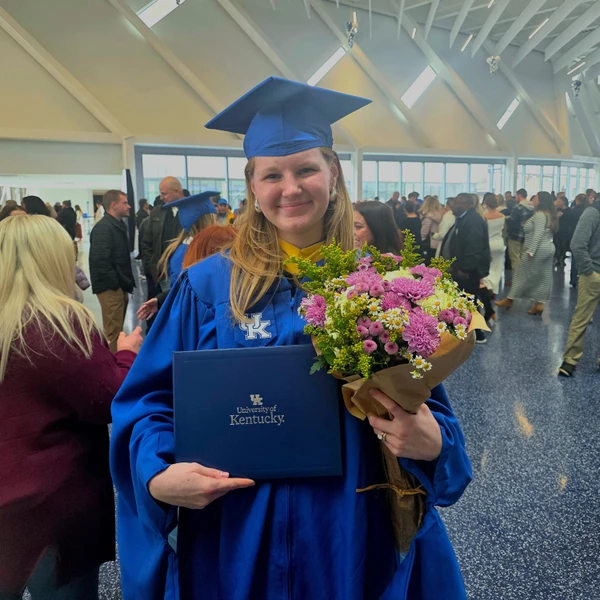
University of Kentucky
Master's degree programMajors:
- Foods, Nutrition, and Related Services
University of Kentucky
Bachelor's degree programMajors:
- Dietetics and Clinical Nutrition Services
Career
Dream career field:
Dietitian
Dream career goals:
Sports Dietitian Intern
United States Naval Academy2024 – 20251 year
Sports
Taekwondo
Club2005 – 201914 years
Research
Dietetics and Clinical Nutrition Services
University of Kentucky — MS Thesis Research2025 – 2025
Public services
Volunteering
University of Kentucky Athletics — Sports Nutrition Student Volunteer2019 – 2022
Learner Online Learning Innovator Scholarship for Veterans
Online learning has played a major role in my educational journey by giving me the flexibility, structure, and access to resources I need to stay committed to my goals while balancing the realities of everyday life. As someone pursuing a degree in healthcare, I have found that online tools are not just convenient, they are essential in helping me stay consistent, deepen my understanding, and apply what I am learning in meaningful ways.
One of the biggest advantages of online education for me has been accessibility. Platforms like online course modules, recorded lectures, and digital textbooks allow me to revisit material as many times as I need until I fully understand it. In subjects that require a strong foundation, such as anatomy, nutrition science, and biology, being able to pause, review, and break down complex information at my own pace has made a significant difference in my learning. Instead of feeling rushed in a traditional classroom setting, I am able to fully process and retain information.
I also regularly use online resources such as academic databases, instructional videos, and study platforms that offer visual and interactive explanations of difficult concepts. Sometimes hearing information explained in a different way or seeing it applied in real-world examples is what makes it click for me. These tools have helped me move beyond memorization and toward true understanding, which is especially important in a field like healthcare where knowledge directly impacts people’s lives.
Another important part of my online learning experience has been virtual collaboration. Discussion boards, group projects, and communication tools have allowed me to engage with peers and instructors even when we are not physically in the same space. This has taught me how to communicate more clearly and professionally in a digital environment, which is increasingly important in modern healthcare settings where telehealth and electronic communication are becoming standard.
Online learning has also helped me apply my knowledge outside of the classroom. When studying topics like nutrition or public health, I am able to immediately connect what I am learning to real-life situations, whether that is understanding food choices, analyzing health information online, or discussing wellness topics with others in my community. Having access to reliable digital resources helps me separate evidence-based information from misinformation, which is a critical skill in today’s world.
Most importantly, online education has taught me discipline and adaptability. Learning in a digital environment requires self-motivation, time management, and accountability. I have had to learn how to stay organized, set goals, and remain consistent without always having a structured classroom environment. These are skills I know will continue to serve me throughout my academic and professional career.
Overall, online tools and technology have not only supported my education, they have strengthened it. They have allowed me to learn in a way that fits my life while still pushing me to grow academically and professionally. As I continue my studies in healthcare, I am grateful for the flexibility and accessibility that online learning provides, and I plan to continue using these tools to expand my knowledge and better serve others in the future.
Women in STEM Scholarship
I chose to pursue a STEM path because I have always been curious about how things work and how small, intentional actions can lead to meaningful change in people’s lives. Over time, that curiosity grew into a deeper interest in healthcare and nutrition, where science is directly connected to everyday well-being. I was drawn to the idea that STEM is not just about numbers, research, or data, it is about using knowledge to solve real human problems and improve quality of life.
As I learned more about health and nutrition, I began to understand how deeply science impacts everything from disease prevention to mental health to long-term wellness. That realization made me want to be part of a field where evidence-based knowledge is used to help people make informed decisions about their health. STEM gives me the opportunity to combine curiosity with purpose, turning what I learn into something practical and impactful.
As a woman entering a STEM field, I am also aware of the barriers that have historically existed around representation and opportunity. Even though progress has been made, women are still often underrepresented in many areas of science and technology. Because of that, I understand how important it is not only to succeed in the field, but also to help create space for others who come after me. I want to contribute to a culture where women are seen as equally capable, innovative, and essential to scientific progress.
I hope to make a difference by bringing both compassion and communication into STEM. Science is powerful, but it becomes even more impactful when it is accessible and understandable. I want to help bridge the gap between complex scientific information and the people it is meant to serve. Whether through patient education, community outreach, or one-on-one guidance, I hope to use my STEM education to make health knowledge more approachable and less intimidating.
I also hope to be someone who encourages other women to pursue STEM without feeling like they have to question whether they belong. Representation matters. Seeing women succeed in science creates a ripple effect that helps others feel more confident stepping into those spaces. I want to be part of that ripple effect, not just by achieving my own goals, but by supporting and uplifting others along the way.
Ultimately, I see STEM as a field where curiosity, problem-solving, and compassion can come together. My goal is to contribute to that space in a meaningful way, using my education to improve lives while also helping to expand opportunities for women in science. I want to be part of a generation of women who are not only present in STEM, but actively shaping its future.
Learner Mental Health Empowerment for Health Students Scholarship
Mental health is important to me as a student because it affects everything I do, how I learn, how I connect with others, and how I show up in my daily life. I have learned firsthand that academic success is not just about intelligence or effort, but also about emotional well-being. When mental health is struggling, even simple tasks like focusing in class, completing assignments, or participating in conversations can feel overwhelming. For a long time, I didn’t fully understand that connection, and I often pushed myself without recognizing that I was struggling internally.
Over time, I began to realize that mental health is just as important as physical health, even though it is not always treated that way. Stress, anxiety, and emotional burnout can quietly build up and affect students in ways that are not always visible from the outside. I’ve experienced periods where I appeared fine to others, but internally I was dealing with anxiety and overthinking that made it difficult to stay present and focused. Those experiences taught me that many students are silently carrying similar struggles while trying to keep up with school, responsibilities, and expectations.
Because of this, mental health has become something I care deeply about, not only personally, but also within my community. I try to advocate for mental health in small but meaningful ways. In my school and social environment, I make an effort to be someone who listens without judgment. Sometimes advocacy is not about big public actions it is about being present for someone when they are overwhelmed, checking in on friends who seem distant, or simply creating space for honest conversations.
At home and in my relationships, I also try to challenge the idea that people have to “tough it out” alone. I’ve learned that many people minimize their own mental health struggles because they feel like they are not serious enough or because they are afraid of being misunderstood. I try to remind others that struggling does not make someone weak, and that asking for help is a form of strength, not failure.
As a student, I also advocate for mental health by prioritizing it in my own life. I have learned that burnout is real, and that rest, boundaries, and self-awareness are necessary for long-term success. Taking care of my mental health has helped me become more focused, more balanced, and more capable of supporting others in a healthy way.
Overall, mental health matters to me because I understand what it feels like to struggle quietly while still trying to keep up with life. It has shaped the way I see others and made me more compassionate and patient. My goal is to continue creating spaces, whether in school, friendships, or future professional environments, where people feel safe, supported, and understood. I believe that when mental health is prioritized, students are not only more successful academically, but also more confident, connected, and resilient in every part of their lives.
Bulkthreads.com's "Let's Aim Higher" Scholarship
When I think about something I want to build, I do not immediately think of a physical object or business. I think about building a life rooted in stability, compassion, and purpose, something I of those things came easily to me growing up. I want to build a future where I can help people feel healthier, supported, and understood while also creating the kind of security and community I longed for myself.
One of the biggest things I hope to build is a career in Nutrition and Dietetics that focuses not only on physical health, but also on emotional well-being and education. Over time, I have realized how connected mental health, stress, and nutrition truly are. Many people struggle silently with their health because they lack access to reliable information, support, or encouragement. I want to become someone who helps others make realistic, sustainable changes without shame or judgment.
For me, building this future is personal. I have faced my own struggles with anxiety, depression, and OCD, many of which went undiagnosed until adulthood because mental health was not openly acknowledged in my household. Those experiences taught me how important support systems and education can be. They also showed me how deeply people need compassion, even when their struggles are not visible on the surface. Because of this, I want my future career to focus on helping people feel empowered rather than criticized when it comes to their health.
I also want to build stronger connections within my community by creating spaces where people feel safe asking questions and seeking help. So many people feel overwhelmed by health advice, diet culture, or financial barriers that make healthy living seem impossible. I hope to use my education to advocate for accessible nutrition education and encourage healthier lifestyles in a realistic and compassionate way.
Beyond my career, I want to build a life defined by resilience and growth. There have been moments in my life where it felt easier to stay stuck in fear, self-doubt, or survival mode. Pursuing higher education is part of me choosing something different for myself. It is me building confidence, opportunity, and a future that reflects the person I am becoming rather than the hardships I have faced.
I believe the most meaningful things we build are often invisible at first. Trust, stability, compassion, and community take time and effort to create, but they can have a lasting impact on people’s lives. Through my education and future career, I hope to build not only a better future for myself, but also a positive impact on the people and communities around me.
Ethel Hayes Destigmatization of Mental Health Scholarship
Growing up, mental health was never something openly discussed in my household. My parents did not believe in mental health conditions or diagnoses, so struggles like anxiety, depression, and OCD were often dismissed as overreacting, weakness, or something that could simply be “pushed through.” Because of that, I spent most of my childhood and early adulthood believing that the constant anxiety in my mind, the intrusive thoughts, emotional exhaustion, and overwhelming need for control were personal failures rather than symptoms of real mental health conditions.
I was not officially diagnosed with anxiety, depression, and OCD until I was 23 years old. Receiving those diagnoses was both emotional and life-changing because, for the first time, I understood that I was not simply “too sensitive” or incapable of handling life. There was a reason I had struggled for so long. Looking back, I realize how much of my life was shaped by trying to survive silently without the language or support to understand what I was experiencing.
As a child and teenager, I became very skilled at hiding my emotions. Anxiety made my mind feel constantly busy and restless, as if I could never fully relax. OCD caused repetitive thoughts and patterns that were exhausting and difficult to explain to anyone else. Depression often left me feeling emotionally disconnected and drained, even during periods when I appeared fine on the outside. Because mental health was not acknowledged in my home, I learned to internalize everything instead of asking for help.
Living that way affected my relationships and my understanding of myself for many years. I often felt isolated because it seemed like other people handled life more easily than I did. I struggled with guilt for not being able to “just get over” things the way I had been told to. At the same time, these experiences made me deeply empathetic toward others. I know firsthand how invisible mental health struggles can be and how painful it feels to suffer in silence while believing no one will understand.
When I was finally diagnosed at 23, it changed the way I viewed mental health completely. Instead of seeing my struggles as weaknesses, I began to see them as experiences that deserved compassion, treatment, and understanding. Seeking help taught me that healing is not something to be ashamed of. It also taught me how damaging stigma surrounding mental health can be, especially in families or communities where these conversations are avoided altogether.
My journey with mental health has shaped my goals and aspirations because I want to help create a world where people feel safe talking about what they are going through. Too many people delay seeking help because they fear judgment, dismissal, or rejection. I understand that fear deeply. Because of my own experiences, I want to encourage more open conversations about mental health and remind others that struggling does not make them weak or broken.
I have also learned the importance of compassion and patience, both with others and with myself. Mental health recovery is not linear, and there are still difficult days, but I no longer believe I have to carry those struggles alone. My experiences have made me more understanding, more self-aware, and more committed to supporting others who may feel unseen or misunderstood.
The message behind the Ethel Hayes Destigmatization of Mental Health Scholarship resonates with me because silence surrounding mental health can be incredibly harmful. Open dialogue has the power to change lives. Sharing our stories helps others feel less alone and reminds people that healing begins when we stop treating mental health as something shameful to hide.
Women in Healthcare Scholarship
I decided to pursue a degree in healthcare because I have always been drawn to work that allows me to directly improve people’s lives. Over time, I realized that healthcare is not only about treating illness, it is about supporting people during some of the most vulnerable and difficult moments of their lives. The ability to educate, advocate for, and care for others in a meaningful way is what inspired me to pursue a career in Nutrition and Dietetics.
My interest in healthcare grew through personal experiences and observing how closely physical health, mental well-being, and everyday life are connected. I have seen how stress, emotional hardship, and lack of access to proper health education can affect individuals and families. I became especially interested in nutrition because it is one of the few areas of healthcare that impacts every stage of life. Food is not just fuel; it is connected to disease prevention, mental health, chronic illness management, and overall quality of life.
What motivates me most is the opportunity to help people feel empowered rather than judged. Many people struggle with their health silently, often feeling overwhelmed by misinformation, unrealistic standards, or limited resources. I want to become a healthcare professional who approaches people with compassion, understanding, and practical guidance. I believe healthcare works best when patients feel heard and respected, not criticized or dismissed.
As a woman pursuing healthcare, I hope to make a positive impact by helping create a more empathetic and inclusive environment for patients. Women bring valuable perspectives to healthcare because many of us understand what it feels like to balance caregiving responsibilities, emotional labor, financial stress, and personal challenges while still trying to care for ourselves and others. Those experiences can strengthen our ability to connect with patients on a human level.
I also hope to serve as an advocate for education and preventative care. Many chronic illnesses that affect communities today, such as diabetes, heart disease, and obesity, are closely tied to nutrition and lifestyle habits. I want to help individuals understand that improving their health does not require perfection. Small, sustainable changes and access to reliable information can make a life-changing difference. Through nutrition counseling and patient education, I hope to help people build healthier relationships with food and with their bodies.
In addition, I want to contribute to making healthcare more accessible and less intimidating. Many people avoid seeking help because they fear judgment or feel misunderstood. As a woman in healthcare, I hope to create spaces where patients feel safe asking questions, expressing concerns, and participating actively in their care. Compassion and communication are just as important as clinical knowledge.
Pursuing a degree in healthcare is important to me because it combines science, service, and human connection. It is a field where learning never stops and where even small actions can have a lasting impact on someone’s life. I am proud to pursue a career in a field that is constantly evolving and improving the lives of individuals and communities every day.
Ultimately, I hope to make a difference by helping people feel healthier, more informed, and more supported. As a woman in healthcare, I want to be part of a future where compassionate, inclusive care is accessible to everyone and where patients feel valued not only as cases or diagnoses, but as people.
Tawkify Meaningful Connections Scholarship
Option 1: Relationships & Impact
One of the most meaningful relationships in my life has also been one of the most complicated: my relationship with my parents. Growing up, I often felt caught between emotional extremes. My mother leaned heavily on me for emotional support, often treating me more like a confidant than a child, while my father remained emotionally distant and largely unavailable. Those experiences shaped the way I understand relationships, communication, and human connection more than anything else in my life and is something I am still seeking therapy for to this day.
As a child, I became very aware of other people’s emotions. I learned how to read a room quickly, anticipate conflict, and make myself emotionally available to others even when I did not fully understand my own needs. I wanted to be helpful, dependable, and someone people could rely on because I believed that was how love was earned. At the same time, my father’s emotional absence left me constantly seeking reassurance and connection. There were moments where I felt invisible, even in my own home.
For a long time, those experiences made relationships difficult for me. I struggled with boundaries because I had been taught, directly and indirectly, that my role was to take care of everyone else emotionally. I also became afraid of vulnerability because I grew up without consistent emotional safety or openness. However, as I’ve gotten older, I’ve realized that difficult relationships can still teach valuable lessons about empathy, self-awareness, and the kind of person you want to become.
One of the most important things I learned is how deeply people need to feel seen and heard. Because I know what emotional loneliness feels like, I try to be intentional in the wayI connect with others. Friends often describe me as someone who listens without judgment and creates a safe space for honest conversations. I think my childhood taught me to notice emotions that other people might overlook, and while that sensitivity was difficult for me growing up, it has also become one of my greatest strengths.
My experiences have also taught me the importance of healthy boundaries and mutual support within relationships. I now understand that strong connections should not leave one person carrying all the emotional weight while the other remains disconnected. Healthy relationships require communication, respect, accountability, and emotional presence from both people. Learning that has changed the way I build friendships, family relationships, and future goals for my life.
In a world where many people feel disconnected despite constant communication through technology, I believe authentic human connection matters more than ever. Real relationships are built through honesty, empathy, and emotional availability. People want to feel understood, accepted, and valued for who they truly are.
Although my relationship with my parents is complicated, it shaped me into someone who deeply values emotional connection and compassion. It taught me not only what kind of relationships can hurt people, but also what kind of relationships can heal them. Moving forward, I hope to continue building meaningful connections with others and creating spaces where people feel safe, supported, and genuinely cared for, something every person deserves to experience.
Attached is a photo of my husband and my dad supporting me while I pursued my experience in sports nutrition as an intern at the United States Naval Academy!
Bryent Smothermon PTSD Awareness Scholarship
Loving someone who carries the invisible wounds of war has changed the way I see strength, sacrifice, and service. As a military spouse, I have learned that PTSD does not only affect the service member, it ripples through entire families. My husband’s deployments to the Middle East and Asia changed him in ways neither of us fully understood at first. The man who came home was still the person I loved deeply, but he also carried anxiety, sleepless nights, and emotional burdens that followed him long after the deployments ended.
There were moments where our home felt heavy with silence. Crowded places became overwhelming. Some nights he does not sleep, exhausted and distant, while I sat beside him feeling helpless because I could not take those memories away. As a spouse, it is difficult to watch someone you love struggle internally while trying to continue living a normal life on the outside. PTSD affected our marriage, our communication, and even simple daily routines. It taught me that healing is not linear and that resilience often looks much quieter than people imagine.
At first, I believed being “strong” meant hiding my own emotions so I could support him. Over time, I realized that strength also means learning when to ask for help, educating yourself, and creating safe spaces for honest conversations. Through counseling, support groups, and connecting with other military families, I learned that we were not alone. That sense of community became life-changing for me. Military families often carry these struggles silently because they feel pressure to appear resilient at all times. I have learned how important it is to normalize conversations surrounding mental health and PTSD, especially within the military community.
One of the greatest lessons I have learned is the importance of compassion. PTSD can make people feel isolated, misunderstood, or ashamed, but patience and empathy can make an enormous difference. I have also learned that healing happens through connection. Sometimes the most meaningful support is simply showing up, listening without judgment, and reminding someone they do not have to carry their burdens alone.
Bryent’s story deeply resonates with me because it reflects the kind of loyalty, humor, and selflessness so many service members carry. People like Bryent dedicate themselves to protecting others, yet too often they struggle to find support for themselves. His legacy reminds me why PTSD awareness matters and why these conversations are so important.
Because of my experiences, I hope to become a better advocate for veterans and military families struggling with PTSD. I want to use my voice to encourage open discussions about mental health and reduce the stigma that prevents many veterans from seeking help. Whether through volunteering with veteran organizations, supporting military spouses, or simply being someone who listens, I want others to know they are seen and valued.
Living alongside service-related PTSD has taught me that courage is found in surviving another difficult day, asking for support, or choosing to keep going despite invisible wounds. I hope to use what I have learned to help other veterans and families feel less alone in their journey toward healing.
Amber D. Hudson Memorial Scholarship
Nutrition is one of the most powerful tooks we have to improve health, yet many patients and families are never taught how deeply food choices can impact thier quality of life. As reseach continues to reveal strong connections between nutrition and conditions such as heart disease, diabetes, cancer, and autoimmune disorders, I believe healthcare professionals have a responsibility to not only treat illness, but also educate and empower people to make sustainable lifestyle changes. If awarded this scholarship, I would use my education and future career to help patients understand that healthy living is not about perfection or restriction, it is about creating realistic habits that support both physical and emotional well-being.
One of the most important lessons I have learned is that education must come from a place of compassion. Many individuals facing chronic illness already feel overwhelmed, discouraged, or judged. Telling someone to “eat healthier” without understanding their financial situation, cultural background, stress levels, or access to nutritious food is ineffective. I want to meet patients where they are and provide guidance that feels achievable rather than intimidating.
If given the opportunity, I would focus on educating patients and families in practical and relatable ways. This could include teaching them how to prepare affordable nutrient-dense meals, understand food labels, and make healthier substitutions without completely changing the foods they love. I would also emphasize the importance of balance, hydration, sleep, and stress management, because true wellness extends beyond diet alone.
I am especially passionate about involving families in the process. Research shows that long-term lifestyle changes are often more successful when there is support at home. When an entire family learns healthier habits together, it creates an environment where positive choices become easier and more sustainable. Whether helping parents create healthier meals for their children or supporting caregivers of patients with chronic disease, I would strive to make nutrition education collaborative and encouraging rather than overwhelming.
In addition to education, I want to advocate for prevention. Too often, healthcare focuses on treating disease after it develops instead of addressing the root causes early. By promoting nutritional awareness and preventative care, I hope to help reduce the burden of chronic illness and improve patients’ long-term quality of life. Even small changes, such as increasing water intake, cooking meals at home more often, or incorporating more whole foods, can have meaningful effects over time.
Most importantly, I want patients to feel hopeful. Lifestyle changes can be difficult, especially when people are dealing with illness, financial hardship, or emotional stress. I would aim to encourage progress instead of perfection and remind patients that every healthy choice matters. My goal is to help people feel empowered, informed, and supported as they take steps toward healthier lives.
Receiving this scholarship would help me continue pursuing an education and career dedicated to improving the well-being of others. I hope to use my knowledge not only to care for patients, but also to inspire lasting changes that improve both the quantity and quality of their lives.