user profile avatar

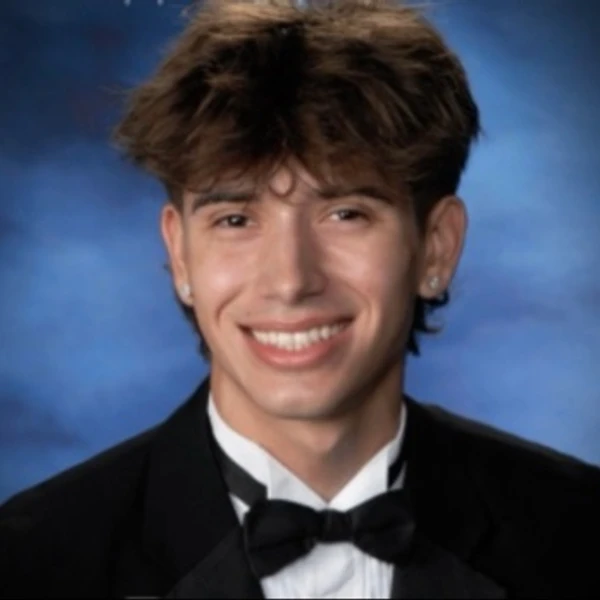
Marcelo Burton

1x

Finalist

Bio

I'm an incoming cybersecurity student at Rochester Institute of Technology, on the accelerated track to earn my bachelor's and master's in five years. I got into technology through video games, the same competitive drive that later made me teach myself Python, Java, and Linux and build real tools, including an AI-powered phishing detector that flags scam emails and explains why they're dangerous. I'm a first-generation college student. My dad grew up poor in Chile, selling fruit as a kid before building a career as a jockey on the racetrack, and that example of relentless effort is the standard I hold myself to. In high school I ranked third in my class of 375 while playing varsity and club volleyball as a team captain, serving as my orchestra's concertmaster, leading several clubs, working a part-time job, and taking dual-enrollment college courses, all while my family navigated serious medical and financial challenges, including both of my parents' battles with cancer. I want a career protecting people from cyber threats, eventually in federal cybersecurity, and to use what I build to protect the people most often overlooked. I don't take any opportunity for granted, because I've watched my parents sacrifice to give me this one.

Education

Rochester Institute of Technology

Bachelor's degree program
2026 - 2030
  • Majors:
    • Computer Science
  • Minors:
    • Public Policy Analysis

Central Dauphin East High School

High School
2022 - 2026

Miscellaneous

  • Desired degree level:

    Master's degree program

  • Majors of interest:

    • Computer Science
    • Computer Systems Networking and Telecommunications
    • Security Science and Technology
    • Computer/Information Technology Administration and Management
    • Science, Technology and Society
  • Not planning to go to medical school
  • Career

    • Dream career field:

      Computer & Network Security

    • Dream career goals:

      My long-term goal is to build a career in cybersecurity where I can make a meaningful impact protecting organizations from evolving threats. I plan to earn my bachelor's and accelerated master's degree in cybersecurity at Rochester Institute of Technology while pursuing a minor in public policy and gaining hands-on experience through internships and co-ops. After graduation, I hope to work in the federal government in a defensive cybersecurity role focused on areas like vulnerability management, cloud security, and identity and access management, where I can continue developing my technical skills and earn a security clearance. As I gain experience and grow professionally, my goal is to eventually launch my own cybersecurity consulting and contracting firm, helping organizations strengthen their security while building a career that gives me the flexibility to provide for my family and make a lasting impact.

    • Girls' Volleyball Team Manager

      Central Dauphin East High School
      2025 – 2025
    • Security Officer 1 (Part-Time, On-Call)

      Commonwealth of Pennsylvania – Pennsylvania Farm Show Complex & Expo Center
      2026 – Present7 months

    Sports

    Volleyball

    Club
    2023 – 20263 years

    Awards

    • 2x Prevail Volleyball Club National Team
    • 1x Prevail Volleyball Club Regional Team
    • Team Captain of Regional Team

    Volleyball

    Varsity
    2023 – 20263 years

    Awards

    • Varsity Team Captain
    • Broke the school record for kills
    • Led the team to the first District Playoffs in over 50 years
    • Only volleyball player to ever start on varsity after being cut the prior year

    Research

    • Security Science and Technology

      Harrisburg Area Community College — Student Researcher
      2026 – 2026

    Arts

    • Dauphin County Music Educators Association

      Performance Art
      Dauphin County Honors Orchestra Annual Concert
      2024 – 2026

    Public services

    • Volunteering

      Tri-M Music Honor Society — Volunteer Member
      2024 – 2026
    • Volunteering

      American Red Cross — Blood Drive Volunteer
      2025 – 2025
    • Volunteering

      South Side Elementary School — Field Day Chaperone
      2025 – 2025
    • Volunteering

      Central Dauphin East High School Music Boosters — Event Volunteer
      2022 – 2026
    • Volunteering

      Special Olympics Pennsylvania — Athlete Buddy
      2025 – 2025
    • Volunteering

      Susquehanna Service Dogs — Kennel Helper Volunteer
      2024 – 2024

    Future Interests

    Advocacy

    Politics

    Volunteering

    Philanthropy

    Entrepreneurship

    J&Y Law Yahouda Yahoudai Service Scholarship
    The best thing I did for my community started because nobody else had started it. My school's Mini-THON, which raises money for childhood cancer research, was counting on a silent auction to hit its fundraising goal. But the auction had stalled. At every meeting, people talked about reaching out to local businesses for donations, and no one actually did it. It's a tedious job, contacting dozens of businesses one at a time, and everyone kept letting it slide. I decided to solve it instead of complaining about it. As the club's Fundraising Committee Head and Community Outreach Officer, I built a Python program that automated the outreach. It sorted businesses by category, used email templates I wrote for each type, and let me contact more than thirty businesses in under an hour. The donations started coming back, and across the school year that outreach filled our silent auction and raised real money for the cause. My club adviser had quietly assumed the auction wasn't going to happen, so when I showed up with the donations, she was relieved. I had taken the first step on the thing everyone agreed needed doing but no one had begun. That's the kind of community work I care about most, the unglamorous part that actually moves a goal forward. I also helped organize Fall Fest, a Mini-THON fundraising event, where my job was to bring in the food trucks that would draw people out and turn it into something the whole community wanted to attend. I reached out to local vendors, pitched them on the cause, and coordinated to get several of them there on the day. When you're running a fundraiser, the turnout is the fundraiser, and getting those trucks there was part of why it worked. Not all of my service was about fundraising, though, and the part that stuck with me most had nothing to do with money. I was a buddy at my school district's Special Olympics, paired with an athlete named Tyrell. We spent the day repeatedly riding hay rides, I cheered until my voice cracked during his track events, and we ended the day sharing a pizza together. My only real job was to stay by his side, and by the end I understood that being genuinely present for one person is its own kind of service. I also volunteered about twenty-five hours with Susquehanna Service Dogs, an organization that raises and trains dogs to help people with disabilities. That work is slow and mostly invisible to the person who eventually benefits, because you'll likely never meet the veteran or child who gets the finished dog. You do it anyway. Beyond those, I worked food banks and blood drives through Key Club and the Red Cross, wrote letters to hospital patients and veterans, and helped at elementary school events. None of it was flashy. Nobody remembers who handed them a meal at a food bank. But I came to believe that consistent, quiet help matters more than the occasional grand gesture, and that the people who actually hold a community together are usually the ones doing the work no one claps for. That's the good I've tried to do, and it's the kind I want to keep doing. Whether it's building a tool to bring in donations or sitting beside a kid at a track meet, the goal is the same: use what I'm good at to make things a little better for the people around me.
    Learner Tutoring Innovators of Color in STEM Scholarship
    I chose STEM because of a question I couldn't stop asking: how does this actually work. It started with video games. When I cared about a game, I didn't just play it. I researched, watched people better than me, and tried to understand the systems underneath. At some point the curiosity turned from how do I win to how was this built, and that question pulled me toward computing and eventually toward cybersecurity, the field I'm starting at Rochester Institute of Technology this fall. What made it real was building things myself. I taught myself Python, Java, Linux, and networking, not for a class, but because I wanted to make something instead of just reading about it. The project I'm proudest of is an AI-powered phishing detector that scans an inbox, flags scam emails by risk level, and explains why each one is dangerous. I designed it to be cheap and simple enough that a small organization without a security team could actually use it. The first time it caught something a person might have clicked on, I understood exactly why I chose this field. I wasn't writing code for a grade. I'd built a tool that could keep someone from getting robbed. The reason I'm certain about STEM is that it rewards exactly the kind of person I am. Cybersecurity never stops changing, and success in it comes directly from how much you're willing to keep learning. I've always been someone who gets good at things through study and repetition, whether teaching myself to code, working back from being cut from my volleyball team to becoming captain, or spending years on violin to become concertmaster. STEM is where that mindset pays off most, because the work never lets you stop growing. As for the difference I want to make as a person of color, it starts with a gap I lived. I'm Hispanic and a first-generation college student. My dad grew up poor in Chile and built a life through pure effort, and no one in my family could explain technology as a career to me. I had to find my own way into this field, teaching myself everything because there was no one at home to ask. A lot of students who look like me never seriously consider a field like cybersecurity, not because they can't do it, but because they've never seen someone from their background do it. That absence is exactly what I want to help close. So the impact I hope to have is twofold. In my work, I want to build security tools that protect people who are usually overlooked, including the communities that get targeted most and defended least. And beyond the technical side, I want to be visible and reachable, proof to the next first-generation Hispanic kid that this field is open to them too. I plan to mentor students like me trying to break into cybersecurity, walking them through the path I had to figure out alone. Representation in tech isn't abstract to me. It's the difference between a kid assuming a field isn't for them and a kid seeing that it is. STEM gave me a way to build things and solve problems. Being a person of color in it gives me a reason to make sure the door I had to find on my own is easier for the ones coming after me to walk through.
    Learner Calculus Scholarship
    Calculus is the math of change, and almost everything worth understanding in STEM is something that's changing. That's the simplest way I can explain why it matters. Algebra can tell you what something is at a fixed moment. Calculus tells you how it's moving, how fast, in what direction, and what it's heading toward. Once you see that, you start noticing that nearly every interesting problem in science and technology is a problem about change, which means it's a problem calculus was built to handle. I took AP Calculus AB after scoring a 5 on the AP Pre-Calculus exam, and math has always been the subject I trust most, because it gives you certainty in a world where most things are up for debate. What calculus added was a way to describe motion and rates, not just static values. The unit I remember most was related rates, where you track multiple quantities changing at once and figure out how they affect each other. At first it felt abstract. Then I realized that's just a description of how the real world works. Things rarely change in isolation. They change in relation to each other, and calculus is the tool that lets you model that relationship precisely instead of guessing at it. That matters across every STEM field, but I see it most clearly in the one I'm entering, which is cybersecurity. People assume security is all coding, but underneath it is constant analysis of things that change over time. Network traffic rises and falls. Attack attempts spike. Systems generate data at varying rates, and the difference between normal behavior and an attack is often a question of rate, how quickly something is happening compared to what's expected. Detecting an intrusion can come down to recognizing an abnormal change in a pattern, which is fundamentally calculus-style thinking. Cryptography, machine learning models that flag threats, and the algorithms that decide what's suspicious all rest on mathematics where calculus plays a role. The field rewards people who can reason about how systems behave and change, and calculus is where that reasoning gets trained. Beyond my own field, calculus is the backbone of huge parts of STEM. Physics is built on it, because describing motion, force, and energy requires derivatives and integrals. Engineering depends on it for everything from designing structures to optimizing systems. Medicine uses it to model how a drug's concentration rises and falls in the body so a dose is effective without being toxic. Data science and weather prediction rely on it to model change over time. The common thread is that any field trying to understand or predict a changing system eventually runs into calculus, because no simpler math can capture it. There's one more reason I think calculus matters, and it's less about the math itself. Calculus is hard, and learning it teaches you that you can handle hard things. It forces you to slow down, break a complex problem into pieces, and reason carefully through each one. That skill, the ability to take something overwhelming and make it solvable, is the real heart of every STEM field. Whether or not someone uses derivatives in their job, the way of thinking calculus builds, precise, patient, and unafraid of complexity, is exactly what STEM work demands. That's why it's important, and why I'm glad I learned it.
    Dr. Junior Gentles Memorial Scholarship
    I taught myself an entire field before anyone ever taught me a class in it. Before I'll set foot in a college cybersecurity course this fall, I'd already learned Python, Java, Linux, and networking on my own, and built real tools with them, because I wanted to understand how things worked and nobody was going to hand me that understanding. That's the truest thing about me. I don't wait to be taught. When something interests me, I go learn it. That self-driven approach to learning is exactly why education means so much to me. I'm a first-generation college student, and the first in my family who will earn a degree. My dad grew up poor in Chile, selling fruit as a kid before building a career as a jockey, and my mom has spent hers connecting families to resources. Neither had college as an option. Watching them build a life without that opportunity taught me not to take it for granted. To me, education isn't just a requirement to check off. It's the door my parents never got to walk through, and the tool that lets me build something they couldn't. My passion for learning has shown up in everything I've done. I graduated third in my class of 375 with a 4.0 in college courses I took through dual enrollment while still in high school, taking the hardest classes available because I wanted the challenge, not because I had to. But the learning I'm proudest of happened outside the classroom. The project that means the most to me is an AI-powered phishing detector I built on my own. It scans an inbox, flags scam emails by risk level, and explains why each one is dangerous, and I designed it to be cheap and simple enough that a small organization without a security team could actually use it. I started it with basic keyword matching, found it too clumsy, and rebuilt it to use AI to read the intent of a message. Teaching myself how to do that, through trial and error, was the most rewarding part. My goals for the future build on that. This fall I'm starting at Rochester Institute of Technology, majoring in cybersecurity on an accelerated track to earn both my bachelor's and master's in five years. After graduation, I want to work in federal cybersecurity, protecting the public systems millions of people rely on without thinking about them, and eventually start my own security firm that makes strong protection affordable for the organizations that usually can't get it. Behind every breach is a real person who got hurt, and I want to spend my career standing between people and threats they can't handle alone. This scholarship would help me get there. My family has no college savings, and with my dad's recent cancer diagnosis limiting his ability to work, most of the cost of RIT falls on me. I'm trying to get through a five-year program with as little debt as possible, and every award directly reduces what I have to borrow and lets me focus on learning instead of constantly calculating whether I can afford to stay. Like Dr. Gentles, I believe education has the power to change a life, because I've watched what its absence cost my parents and I'm determined to give my family the future it makes possible. I just need a little help to get there.
    Stephan L. Wolley Memorial Scholarship
    My name is Marcelo Burton, and the clearest way to understand me is through a team I almost didn't make. I got cut from my volleyball team freshman year while every one of my friends made it. I could have quit. Instead I spent the entire offseason training, made varsity the next year, and went on to become a two-year captain, break my school's record for kills, and help lead our program to its first District Playoff appearance in over fifty years. That's the core of who I am. I respond to being knocked down by working until I've earned my way back. My family taught me that long before volleyball did. My dad grew up poor in Chile, selling fruit as a kid to help feed a large family, started racing horses at sixteen, and earned a contract that brought him to the United States, where he built a career as a jockey and still works at the racetrack today, even at seventy-four. He did it all through sheer effort, with no degree and no one ahead of him. My mom has spent her career helping connect families to resources, and she has carried our household through more than her share. She fought breast cancer and later kidney cancer, going through around twelve surgeries, and she still worked overnight shifts through all of it. This past June, my dad was diagnosed with Stage 4A prostate cancer. My family's dynamic is built on quiet, relentless perseverance, two parents who never had much handed to them and never used that as an excuse. Watching them is the reason I push myself the way I do. My schooling reflects that same drive. I graduated third in my class of 375 with a 4.0 in dual-enrollment college courses I took while still in high school. I challenged myself with the hardest classes available, including AP Calculus and AP Computer Science, while balancing varsity and club volleyball, violin, leadership roles, a job, and volunteering. I also taught myself to code outside of school, building real cybersecurity tools because I wanted to, not because a class required it. Keeping everything at a high level at once took the same discipline the court demanded, showing up prepared, every day, whether or not anyone was watching. My future plans are built on cybersecurity. This fall I'm starting at Rochester Institute of Technology, majoring in it on an accelerated track to earn both my bachelor's and master's in five years. After graduation, I want to work in federal cybersecurity, protecting the public systems millions of people rely on, and eventually start my own security firm. Behind every scam or breach is a real person who got hurt, and I want to spend my career standing between people and the threats they can't handle alone. I'm a first-generation college student, so this degree also means changing my family's trajectory and reaching a point where I can support my parents the way they sacrificed for me. Competition shaped me, family grounded me, and both taught me the same lesson Stephan Wolley seemed to live by: that you give everything you have and you don't make excuses. I got cut once and decided it wouldn't define me. That decision is the one I've kept making in everything since, and it's the one I'm carrying into college and the rest of my life.
    First Generation Scholarship For Underprivileged Students
    I'm a first-generation college student, and the first person in my family who will earn a degree. My dad grew up poor in Chile, selling fruit as a kid to help feed a large family, started racing horses at sixteen, rode in Mexico at eighteen, and earned a contract that brought him to the United States, where he built a career as a jockey and still works at the racetrack today. He did all of it without a degree and without anyone showing him the way. This fall I start at Rochester Institute of Technology, majoring in cybersecurity on an accelerated track to earn both my bachelor's and master's in five years, and I'm carrying his climb with me when I go. Being first-generation meant figuring out everything alone. No one at home could explain what AP classes were, why the SAT mattered, or how to fill out a financial aid form. I taught myself the rules while already living the consequences of not knowing them, missing things, learning late, and catching up by sheer effort. It's harder than people realize, and it's exactly why I want to make it easier for the students coming after me. Here's how I actually plan to do that, because I don't think inspiring other first-generation students happens through speeches. It happens through showing up with specific help. The single biggest thing that holds first-gen students back isn't ability. It's information, the unspoken rules nobody tells you. So the most useful thing I can do is be the person who explains those rules plainly. I want to mentor younger first-generation students directly, walking them through the things I had to learn the hard way: how financial aid actually works, what dual enrollment is and why it's worth doing, how to find and apply for scholarships, and how to navigate a college application when your parents can't help. Concrete, practical guidance, the kind I wish someone had given me. I also think representation matters more than people admit. A lot of first-generation and Latino students never seriously consider college, or a field like cybersecurity, because they've never seen someone from their background do it. Simply being visible, being a first-gen Hispanic student who made it into a demanding STEM program and a career in tech, tells the next kid that it's possible for them too. I want to be proof, especially in my own field, where students who look like me are underrepresented and often assume tech isn't for them. I plan to mentor first-gen students specifically trying to break into cybersecurity, a field no one at home could explain to me either. And I want to lead by doing it myself first. The most motivating thing isn't telling someone they can succeed. It's showing them you did, and then reaching back to pull them forward. When I'm established in my career, I want to support first-generation students the way I wish someone had supported me, with real advice, real encouragement, and the honest message that the lack of a roadmap doesn't have to stop you. My dad changed his family's trajectory through pure effort, with no one ahead of him to follow. I get to do it with an education behind me. The least I can do is make sure the students coming up behind me don't have to figure it out as alone as I did.
    Chris Jackson Computer Science Education Scholarship
    I got into computer science by trying to get better at video games. When I cared about a game, I didn't just play it. I researched, watched people better than me, and tried to understand why their decisions worked. At some point the curiosity shifted from how do I win to how does this actually work, how was the thing in front of me built. That question is what pulled me toward computing, and I've been chasing it ever since. What turned curiosity into certainty was building things myself. I taught myself Python, Java, and the basics of Linux and networking, not for a class, but because I wanted to make something real. The project I'm proudest of is an AI-powered phishing detector that scans an inbox, flags scam emails by risk level, and explains why each one is dangerous. I designed it to be cheap and simple enough that a small organization without a security team could actually run it. The first time it caught a message a person might have clicked on, I understood exactly what I wanted to do with my life. I wasn't writing code for a grade. I'd built something that could keep someone from getting robbed. My dream job is to work in federal cybersecurity, protecting the public systems millions of people rely on without ever thinking about them, in defensive roles like vulnerability management and cloud security. Longer term, I want to start my own cybersecurity firm that makes strong protection affordable for the smaller organizations that usually can't get it. This fall I start at Rochester Institute of Technology, majoring in cybersecurity on an accelerated track to earn both my bachelor's and master's in five years. I think I'm a strong candidate for this scholarship because, like Chris Jackson, I know what it means to fight to afford an education. I'm a first-generation college student. My dad climbed out of poverty in Chile and built a life through sheer effort, my family has no college savings, and with my dad's recent cancer diagnosis limiting his ability to work, most of the cost of college falls on me. I'm not pursuing this degree casually. I'm pursuing it knowing exactly what it costs my family and exactly what it could change for us. The passion was there before the money problem, and the money problem is why this scholarship would matter so much. I intend to turn this degree into a career that protects people and finally puts my family on stable ground, and that's the kind of impact I'd be honored to make in Chris's memory.
    Zelaya Creativity Scholarship
    Incomparable Donovan said the word like he was closing a case. "They're incomparable." We were sitting in his basement, controllers down, the argument already twenty minutes deep. The conflict was this: which game was better, Mount and Blade: Warband or its sequel, Bannerlord. To anyone walking past, it was two teenagers arguing about medieval battle simulators. To us, it was a matter of principle. "Warband," I said, for maybe the fifth time. "It's not close." Donovan pulled out his phone and started scrolling, because Donovan never argues with feelings when he can argue with evidence. "Better graphics. Bigger map. More features. A bigger community that's still active." He turned the screen toward me with each point like he was laying down cards. "You're telling me none of that matters?" "It doesn't," I said, and I believed it. What I didn't say, because I didn't fully understand it yet, was why. Warband wasn't a better game to me because of anything on Donovan's list. It was better because of the hours I'd put into it. Late nights after dinner, time slipping away with every swing of the sword, sieges that felt so real I'd look up and realize it was past midnight. Warband wasn't a game to me. It was a few hundred memories wearing the shape of a game. And that made it impossible for me to see anything else clearly. "Just try Bannerlord," Donovan said. "Actually try it. Not for ten minutes." I told him I had. That was a lie of omission. I'd played it just long enough to confirm I didn't like it, which is a very different thing from playing it. He must have known, because he handed me his controller and loaded it up. "Siege. Right now. I'll watch." So I played. And here's the part I didn't want to admit out loud: it was good. The swordplay was smoother than I remembered. The castle I was assaulting was genuinely beautiful, light coming through the smoke, soldiers pouring over the walls. I tried a tactic I never would have bothered with in Warband, splitting my forces, and it worked, and something in me quietly went oh. "You're smiling," Donovan said. "I'm not." "You're absolutely smiling." I wasn't going to give him the full victory, so I shrugged and said it was fine. But we both knew the shrug meant something. For twenty minutes I'd been defending Warband not because it was better, but because admitting Bannerlord had anything going for it felt like betraying all those nights I'd spent in the first game. Here's the thing nobody tells you about a trivial argument. Sometimes it's a stand-in for a much less trivial one. Donovan wasn't really trying to win a debate about video games. He was trying to get me to see past what I was comfortable with, and I'd been fighting him because comfort is hard to argue with. I still like Warband better. I'll probably always like Warband better, and I'm fine with that. But I left Donovan's basement understanding something I hadn't walked in with: that being attached to one thing can quietly blind you to everything around it, and that you don't have to change your mind to let yourself actually look. Donovan, of course, took the shrug as a full surrender. He's still bringing it up. I let him, because on the thing that actually mattered, he was right.
    Dr. Christine Lawther First in the Family Scholarship
    My dad started with nothing and built a life with his hands. He grew up poor in Chile, selling fruit as a kid to help feed a large family, started racing horses at sixteen, rode in Mexico at eighteen, and earned a contract that brought him to the United States, where he built a career as a jockey and still works at the racetrack today. He did all of it without a degree and without anyone clearing a path ahead of him. So when I start at Rochester Institute of Technology this fall as the first person in my family to go to college, I'm not just starting school. I'm continuing something he began, and taking it somewhere he never had the chance to. That's what being first-generation means to me. It isn't only that I'm the first to attend college. It's that I'm the first in my family who gets to build a future through education instead of pure physical labor. My parents never had that option, so I refuse to treat it like something I'm owed. I treat it like something I'm carrying on their behalf. It also means doing it without a map. I had to teach myself what AP classes and dual enrollment were, how the SAT mattered, and how to navigate financial aid forms my parents couldn't help me with, learning the rules while already living the consequences. That's harder than people realize, but it's also made me more independent and more determined than I would have been if the path had been laid out for me. What I want to pursue in college is cybersecurity. I'm majoring in it at RIT on an accelerated track to earn both my bachelor's and master's in five years. I chose it because it's where my strengths meet something I genuinely believe in. I taught myself Python, Java, and the basics of Linux and networking in high school, and I built real tools with them, including an AI-powered phishing detector designed to be affordable enough for small organizations to actually use. The more I built, the more certain I became that this is the right field, one that never stops changing and rewards exactly the kind of person I am, someone who improves through study, repetition, and a refusal to settle. My long-term goals build outward from there. After graduation, I want to work in federal cybersecurity, protecting the public systems that millions of people rely on without ever thinking about them, in defensive roles like vulnerability management and cloud security. Eventually, I want to start my own cybersecurity consulting firm, helping organizations, especially smaller ones that can't afford strong security, defend themselves. But underneath the career goals is the real one. I want to change my family's trajectory, to reach a point where I can support my parents the way they sacrificed to support me, and to break the pattern of starting from zero that my dad has lived his entire life. That's what this degree represents to me. My dad climbed out of poverty through sheer effort and built something from nothing. I get to keep climbing with an education behind me, and I intend to use it to lift my family and open doors for whoever in it comes next.
    Chadwick D. McNab Memorial Scholarship
    I built a program that reads my email and tells me which messages are trying to scam me. It connects to an inbox, scans each message for the signs of a phishing attempt, suspicious links, urgent pressure, senders pretending to be someone they're not, and sorts every email into low, medium, or high risk, with an explanation of why it flagged each one. It's the project I'm proudest of, and building it is a big part of why I'm certain cybersecurity is what I want to do. It didn't start out good. The first version ran on simple keyword matching, just scanning for words that tend to show up in scams. It worked, technically, but it was clumsy. It missed anything cleverly worded and flagged plenty of harmless emails. So I rebuilt it. Instead of hunting for keywords, I integrated AI to actually evaluate the intent of a message, which is closer to how a real person decides whether something feels off. That version was far better, and getting there meant a lot of testing, breaking things, and adjusting, which honestly was the part I enjoyed most. What I cared about wasn't just making it work. It was making it useful. I deliberately designed it to stay low-cost and simple enough that a small organization without a security team could realistically run it, because those are exactly the people who get hit hardest by phishing and have the least protection against it. I also built it to explain its reasoning rather than just blocking things, because someone who understands why an email is dangerous learns to spot the next one themselves. The first time it correctly caught a message a person might actually have clicked on, something clicked for me too. I wasn't writing code for a grade or a demo. I'd built a tool that could genuinely keep someone from getting robbed. That's the thing that inspires me about working in technology. The gap between an idea and something real that helps people can be just a few weeks of learning and effort. I taught myself Python, Java, Linux, and networking on my own, not for a class, but because I wanted to build things, and that detector is proof of what that self-teaching can turn into. Technology rewards exactly the kind of person I've always been, someone who improves through research, repetition, and a refusal to settle for the first version. The field never stops moving, and in cybersecurity especially, success comes directly from how much you're willing to keep learning, because the threats keep changing and so do the defenses. But the deeper reason it inspires me is the purpose underneath the technical work. Behind every scam and every breach is a real person who lost money they couldn't spare or had their private life exposed. Cybersecurity is where my love of building meets something I actually believe in, protecting people who can't always protect themselves. That phishing detector was a small version of the work I want to spend my career doing, and the fact that I could build something protective out of curiosity and a few hundred lines of code is exactly why I find this field so worth pursuing. This fall I'm starting at Rochester Institute of Technology to study cybersecurity, and projects like that one are the reason I know I'm in the right place.
    Kyle Lam Hacker Scholarship
    My club adviser thought we were going to have nothing to sell. Our Mini-THON's silent auction was supposed to be a real chunk of how we hit our fundraising goal for childhood cancer research, but with the year moving fast, it had stalled. At every meeting, people talked about reaching out to local businesses for donations. Nobody actually did it. It's a tedious job, contacting dozens of businesses one at a time, and everyone, including the other officers, kept letting it slide because no one had the hours to spare. My adviser had quietly started to assume the auction wasn't going to happen. What she didn't know was that I'd been working on it without telling anyone. The reason the outreach kept stalling was that doing it by hand was miserable, so instead of grinding through it manually, I decided to solve the actual problem. I wrote a Python program to automate the whole thing. It organized the businesses by category, used email templates I'd written for each type, and sent personalized outreach in bulk. What would have taken hours of copying, pasting, and retyping, the program did in a fraction of the time. In one session, it reached more than thirty businesses in under an hour. I counted, because I wanted to know exactly how much time it was saving. Then the responses started coming back, and so did the donations. The moment I remember is showing up with those donations in hand. My adviser was genuinely relieved, the kind of relief that comes from watching a problem you'd written off quietly get solved. She hadn't known I was building anything, so the donations seemed to appear out of nowhere, and she really appreciated that someone had taken the first step instead of just talking about it. When I told the other officers how it happened, they were surprised too, and glad, because they knew how much work the outreach was and that none of them had been able to fit it into their schedules. I'd taken the initiative on the thing everyone agreed needed doing but no one had started, and the relief on my adviser's face made the whole project worth it. What made me happiest wasn't the code itself. It was that something I built quietly, on my own, ended up helping my whole team hit a goal that actually mattered, raising money for kids with cancer. That was the first time I really felt what it's like when tinkering turns into something useful for other people, not just a project for myself. I haven't stopped since. The same instinct, see a tedious or broken process and build something to fix it, led me to my favorite project, an AI-powered phishing email detector that scans an inbox, flags scam messages by risk level, and explains why each one is dangerous. I built it to be simple and cheap enough that a small organization without a security team could actually use it, because those are the people who get hit hardest by scams. It's the same hacker spirit that drove the Mini-THON tool, just pointed at a bigger problem. That's what I love about building things. A few hours, some curiosity, and a willingness to solve a problem nobody else wanted to tackle can turn into something that genuinely helps the people around you. That's the feeling I keep chasing.
    STLF Memorial Pay It Forward Scholarship
    For my school's Mini-THON, I helped organize Fall Fest, a community fundraising event we ran to raise money for childhood cancer research. As the club's Fundraising Committee Head and Community Outreach Officer, my job was to bring in the food trucks that would draw people to the event and turn it into something the whole community wanted to show up for. That meant reaching out to local food vendors, pitching them on the cause, and coordinating to get several of them to commit and show up on the day. When you're running a fundraiser, the turnout is the fundraiser, and getting those trucks there was a real piece of why the event worked. The part I'm proudest of came from a separate piece of my role, raising donations for the club's silent auction over the course of the school year. Contacting businesses one by one is slow, and as someone going into cybersecurity, I'd rather solve a problem than grind through it. So I built a Python program that automated the outreach. It organized businesses by type, used templates I wrote for each category, and sent the emails efficiently. With it, I contacted over thirty businesses in under an hour, and I counted, because I wanted to know exactly how much time it saved. Across the year, that outreach brought in a steady stream of donated items that filled out our silent auction and raised real money for the cause. It was the first time I saw something I built with code directly support a goal I cared about, and it made the technical work feel like service instead of just a project. My volunteering didn't stop with Mini-THON. One of the experiences that stuck with me most was being a buddy at my school district's Special Olympics, where I spent time with my buddy, Tyrell. We ate lunch together, talked, and just enjoyed the day, and what I took from it was simple: sometimes the most valuable thing you can give someone is your presence and your attention. Beyond that, I volunteered with Susquehanna Service Dogs, worked food banks and blood drives through Key Club and Red Cross, and helped at elementary school events. None of it was flashy. But I came to believe that consistent, quiet help matters more than the occasional grand gesture. I believe leadership through service matters because service is where leadership actually gets tested. It's easy to lead when there's a title attached. It's harder when the only thing driving people is whether they believe in the cause and whether you've given them a reason to show up. Organizing Fall Fest and the silent auction taught me how to communicate a "why" to people, coordinate volunteers and vendors, and take responsibility for whether something actually came together. A leader in service doesn't just ask others to help. They do the unglamorous work first, set the tone, and make it easier for everyone else to contribute. That's the kind of leader I want to keep being. Whether I'm coordinating food trucks for a cancer fundraiser, building a tool to bring in donations, or supporting my buddy at Special Olympics, the goal is the same: use whatever I'm good at to make things a little better for the people around me. Service is where leadership stops being a word and starts being something you prove.
    Adrin Ohaekwe Memorial Scholarship
    When I started playing chess, I blundered and lost a lot. I'd either hang my queen after a few moves, or make a move that felt fine and realize three turns later I'd walked into something I never saw coming. What kept me at the board wasn't natural talent, because I didn't have much. It was the same thing that's gotten me good at everything else in my life: I studied it. So I did with chess what I've always done. I researched openings, watched players far better than me, and paid attention to why their moves worked instead of just copying them. I found openings I liked and learned them deeply. My favorite is the London System, partly because it clicked for me faster than anything else and partly because it fit how I think, solid, consistent, the same reliable setup I could build from every game while I learned the harder ideas underneath. Slowly, the losses turned into wins. Not because chess suddenly made sense, but because I'd put in the hours to make it make sense. That's the real thing chess taught me, and it's the thing I've built my whole life on. Getting good at something is almost never an accident. It comes from effort, repetition, and the willingness to keep learning from people who are ahead of you. I learned that same lesson getting cut from my volleyball team as a freshman and training my way back to varsity captain. I learned it spending years on violin until I became my orchestra's concertmaster. And I learned it teaching myself to code. Chess just taught it to me in the clearest form, sit down, study, lose, adjust, and come back better. My career goal is to work in cybersecurity, which I'm starting to study at Rochester Institute of Technology this fall on an accelerated track to earn my bachelor's and master's in five years. After that, I want to work in federal cybersecurity, defending the systems people rely on every day, and eventually build my own security firm. Cybersecurity is a field that rewards exactly what chess trained in me. The threats change constantly, and the people who succeed are the ones who never stop studying, who watch what attackers do and learn from it, and who think a few moves ahead instead of just reacting. A breach, like a bad position on the board, usually comes from a move someone didn't see coming. My job is to see it first. Chess also taught me to sit with a hard problem instead of rushing it. The instinct to make a quick move is usually the instinct that loses. You have to slow down, look at what's actually in front of you, and consider what happens next. That patience is the same one that makes me check my work carefully, plan before I act, and stay calm when something isn't going right, all of which matter in a field where a careless decision can expose real people's information. I'm not a chess master, and I won't pretend to be. But the way I got from losing every game to genuinely understanding the board is the same way I've approached everything worth doing: study it, learn from people better than you, and keep coming back until you've earned it. That's the skill I'm taking into my career, and it's the one I trust most.
    Redefining Victory Scholarship
    Learner Mental Health Empowerment for Health Students Scholarship
    People think mental health is something made up. I know it isn't, because I've watched it shape the lives of the people I love most, and because I've carried my own quietly for years. For most of high school, I dealt with a depression I kept to myself. From the outside, I looked like a student who had it together, top of his class, captain of his team, leading clubs, playing violin. What people didn't see was the weight underneath all of it. A lot of that weight came from home. My mom has fought cancer twice, first breast cancer and later kidney cancer, and across those years she went through twelve surgeries. What stuck with me most wasn't the surgeries themselves. It was watching her come home from one, sleep off the day, rest the next, and then go straight back to working overnight shifts to support our family. Seeing someone you love persevere through that much pain is its own kind of mental burden, the kind you carry silently because complaining about your own struggles feels selfish next to theirs. This past June, my dad was diagnosed with Stage 4A prostate cancer at 74. As I get ready to leave for college four hours away, I carry a constant, low feeling in my gut that something could happen while I'm gone. Part of me doesn't want to go, because I want to be home having breakfast with him at our diner the way we have so many times before. Balancing that fear against my own goals has been one of the hardest mental challenges I've faced, and it's taught me that mental health isn't separate from everything else in your life. It sits underneath all of it. Living with that is exactly why mental health matters to me as a student. I know firsthand that you can be high-achieving and struggling at the same time, and that the two aren't contradictions. I've seen how the mind can become a roadblock no amount of talent can simply push past. Someone very close to me, my girlfriend since eighth grade, was one of the top students in her class and nearly didn't make it through a year of high school because her mental health hit her that hard. Watching how real and how disabling that was, for someone so capable, permanently changed how I think about it. The main way I advocate is in how I show up for the people around me. For years, I've been the person my girlfriend could lean on through her hardest stretches, learning to listen without judgment, to take her struggles seriously, and to be steady when she needed it. I've tried to be that for friends too. I don't treat mental health as something shameful or invisible, because I've lived on both sides of it, struggling myself and supporting someone I love through it. Sometimes advocacy isn't a campaign. It's being the one person who takes someone seriously when they finally say they're not okay. Going forward, I want to keep being that kind of presence, and to be more open about my own experience so the people around me know they're not alone in theirs. Mental health affects far more people than anyone realizes, because most who struggle never show it. I want to be someone who makes it a little safer to admit it, because I know how much it matters to feel like even one person understands.
    Arthur and Elana Panos Scholarship
    My faith has never been loud. I grew up going to Sunday school, and I was confirmed, but for most of my childhood it was something I did rather than something I felt. I didn't have a dramatic conversion or a single verse I built my life around. For a long time, faith sat in the background of my life, present but quiet. That changed at the lowest point I'd hit so far. I got cut from my volleyball team my freshman year, and while that might sound small from the outside, it landed hard. I had wanted it badly, and not making it left me feeling like I'd failed at something I cared deeply about. In that stretch, when I felt lost and unsure of myself, my faith was what steadied me. It wasn't a voice or a sign. It was quieter than that. It was a sense that I had a purpose, that this setback wasn't the end of my story, and that I was meant to keep going even when I couldn't see where it led. That quiet reassurance was enough to get me moving again. What I did with that was work. I trained through the entire offseason, made varsity as a sophomore, and went on to captain the team my junior and senior years, earning All-Division recognition and a Player of the Week honor along the way. But I've come to see that volleyball was just the first thing. The same steadiness carried into everything after it. I became one of the top students in my class, took college courses while still in high school, led several clubs, stayed with violin until I became my orchestra's concertmaster, and taught myself the foundations of the cybersecurity field I'm about to study in college. None of that happened because of one loud moment of faith. It happened because, at a point when I could have given up, something quiet told me I had a reason not to, and I kept building from there. That's the honest shape of my faith. It isn't dramatic, and I won't pretend it is. It works less like a spotlight and more like a small, steady light, the kind that doesn't fill the whole room but shows you the next step. It gave me a sense of purpose when I had lost mine, and that sense of purpose became the foundation for the discipline and direction that have defined me since. I think that same faith will steady me in my career. I'm going into cybersecurity, a field built on protecting people from real harm, and I want to do that work with integrity, the kind that holds up whether or not anyone is watching. There will be hard stretches, pressure, and moments of doubt, the way there are in any career worth pursuing. I don't expect a dramatic sign to carry me through them. I expect the same quiet sense of purpose that got me off the ground after my freshman year, the belief that my work is meant to help people and that staying steady and honest is worth it even when it's hard. My faith is quiet. But quiet things can hold a lot of weight, and mine has held up everything I've built.
    Learner Math Lover Scholarship
    In my AP Pre-Calculus class, I checked every answer with an actual check mark. Not just on tests, on daily assignments too, every single question. My teacher noticed before I ever said a word about it. I didn't do it to look careful. I did it because math is the one subject where you can know, with certainty, that you got it right, and I couldn't leave a problem until I'd proven I had. That's what I love about math. In a world where most things are blurry and up for debate, math gives you a definite answer and a way to be sure of it. Two plus two doesn't depend on opinion. A proof either holds or it doesn't. There's something deeply satisfying about the idea that if you think clearly enough and check your work honestly, you can arrive at something true and stand on it. I've been drawn to that since I was young. Growing up, I was the math kid, the quiet one who was weirdly good with numbers, and it became part of who I am. What kept me there wasn't just being good at it. It was the feeling of working a hard problem, getting stuck, trying another approach, and finally watching it resolve into a clean answer. That moment never gets old. It's the same whether it's a calculus problem or a line of code that finally runs right. That habit of pushing until I understood something paid off. I earned a 5 on the AP Pre-Calculus exam, and the math classes were always the ones I looked forward to most, where effort turned into results. The harder the problem, the more satisfying it was to break down until it made sense. That's not a coincidence. My love of math is what pulled me toward cybersecurity, which I'm studying at Rochester Institute of Technology this fall. Behind every program, every encryption method, every security system is math, logic, patterns, and precise reasoning. The same instinct that made me check every answer in pre-calc is the one that makes me want to find the flaw in a system before someone else does. Math taught me to think in a way I use everywhere: be logical, be precise, and never trust an answer until you've checked it. That habit started with a check mark on a worksheet, and it's shaped how I approach everything since.
    Justin Moeller Memorial Scholarship
    I got into technology the way a lot of kids do, through video games. But for me it was never just playing. When I cared about a game, I wanted to get better at it, so I researched, watched people who were better than me, practiced, and figured out what actually worked. Somewhere in that I started asking how the systems behind the games worked, and that curiosity, the urge to take something apart and understand it, is what eventually pulled me toward computing and then toward cybersecurity. My background shaped how seriously I take this path. I'm Hispanic and the first person in my family who will go to college. My dad grew up poor in Chile, selling fruit as a kid before building a career as a jockey on the racetrack, and my mom has spent hers helping connect families to resources. Neither had college as an option, and there was no one at home who could explain technology as a career to me. So I taught myself. That's been the pattern for me in tech from the start: nobody handed me the path, so I went and built it. What draws me to the technology field, and to cybersecurity specifically, is that it never stops moving and it rewards exactly the kind of person I am. There's always a new attack, a new defense, a new tool, a new way people get tricked. Success in it comes directly from how much you're willing to keep learning, which fits how I already operate. But the part I care about most is that it protects people. Behind every scam or data breach is a real person who lost money they couldn't spare or had their private information exposed, and I want to spend my career standing between people and threats they can't always see coming. My experience is where the curiosity turned into real work. I taught myself Python, Java, and the basics of Linux and networking, and I built things with them instead of just learning the syntax. The first was a Python program that automated fundraising outreach for my school's Mini-THON, where I needed to contact dozens of local businesses for donations. It organized businesses by type, used templates I wrote for each category, and let me reach over thirty businesses in under an hour. The project I'm proudest of is a phishing detector I built that scans an inbox, flags suspicious emails as low, medium, or high risk, and explains why each one is dangerous. I started it with simple keyword matching and later rebuilt it to use AI to actually evaluate the messages. I made it because I wanted to solve a real security problem instead of a practice exercise, and it's the clearest example of the work I want to do. This summer, before college even starts, I'm working through the Google Cybersecurity Professional Certificate to get ahead, studying Linux, SQL, networking, and incident response, and I'm using it to prepare for the CompTIA Security+ certification, the standard baseline credential for getting into the field. This fall I start at Rochester Institute of Technology, majoring in cybersecurity on an accelerated track to earn my bachelor's and master's in five years. I'm entering this field as someone who didn't have a single mentor in it, and one day I want to be that mentor for the next kid like me. The curiosity started with a video game. I intend to turn it into a career that protects people and opens a door I had to find on my own.
    Christian Fitness Association General Scholarship
    When I was a kid, I was the math kid. Quiet, a little awkward, and weirdly good at numbers. I tell you that because almost everything I've accomplished since came from a decision I made over and over: to take whatever I was good at or curious about and push it as far as I could, even when it was uncomfortable. That habit is the real reason I think I'm worth considering, and it shows up across everything I've done. Academically, it made me one of the top students in my class. I graduated from Central Dauphin East High School ranked third out of 375, with a 4.0 in the college classes I took through dual enrollment at HACC while still in high school. I scored a 1410 on the SAT. I took the hardest courses available to me, including AP Calculus, AP Statistics, AP Computer Science, and AP Psychology through the University of Pittsburgh, and I did it while carrying a schedule that left very little room to breathe. I had a forty-minute commute each way, played two levels of volleyball, played violin, worked a job, and led several clubs. Keeping my grades at the top of my class through all of that took real discipline, and it taught me how to manage my time under pressure, which is a skill I'll lean on heavily in college. The accomplishment I'm proudest of is the direction I've built toward, which is cybersecurity. I'm starting at Rochester Institute of Technology this fall, majoring in cybersecurity on an accelerated track to earn both my bachelor's and master's in five years. I didn't wait for college to start learning it. I taught myself Python, Java, and the basics of Linux and networking, and I built real tools with them. One is a program that automated fundraising emails for my school's Mini-THON, which I created when I was contacting dozens of local businesses for donations. Another is a phishing detector that scans an inbox, flags suspicious messages as low, medium, or high risk, and explains why each one is dangerous. I built that one because I wanted to solve a real problem instead of a practice exercise, and it's the kind of work I want to do for a career: protecting people from threats they can't always see coming. This summer, before college even begins, I'm working through the Google Cybersecurity Professional Certificate to get ahead. Athletics taught me a different lesson, and it came from failure first. I got cut from the volleyball team my freshman year. Instead of quitting, I trained through the entire offseason, made varsity as a sophomore, and went on to captain the team my junior and senior years. I also played club volleyball as an outside hitter, earned Commonwealth Second-Team All-Division recognition, and was named a Boys High School Player of the Week for the Northeast Region. But the recognition matters less to me than what the cut taught me, which is that being told no doesn't have to be the end of something if you respond to it correctly. That lesson has carried into everything else I do. Music has been the longest commitment of my life. I started violin in fourth grade and stayed with it until I became concertmaster and section leader of my school's select orchestra, along with being inducted into the Tri-M Music Honor Society. Violin taught me the quiet version of discipline, the kind that happens through years of repetition with no audience, and it taught me how to lead by being prepared so the people around me can rely on me. Being concertmaster was never about being the best player in the room. It was about setting a tone and showing up ready so the whole section could follow. Leadership tied all of it together. I was Vice President of the Robotics Club, where I helped raise $1,500 for our first robot. I was a captain of the Quiz Bowl team, treasurer for Key Club, Red Cross Club, and FBLA, and I served as Community Outreach Officer and Fundraising Committee Head for Mini-THON, where my email automation project came directly out of the work. Alongside that, I volunteered wherever I could, with Susquehanna Service Dogs, Special Olympics, food banks, and blood drives, because I've always found that helping people is the part that actually sticks with me. Here's why this scholarship would matter. I'm the first person in my family who will earn a college degree. My dad grew up poor in Chile, selling fruit as a kid before building a career as a jockey on the racetrack, and my mom has spent hers helping connect families to resources. They never had college as an option, and they have no savings set aside for mine. On top of that, my family has faced serious medical costs in recent years, including my dad's recent cancer diagnosis. Most of the cost of RIT falls on me, and I'm trying to get through five years with as little debt as possible. This scholarship would directly reduce what I have to borrow and let me focus on doing the work instead of constantly calculating whether I can afford to stay. I'm not asking to be considered because I checked a lot of boxes. I'm asking because behind every one of those boxes is the same person, the quiet math kid who decided, again and again, to work for more than he was handed.
    Hines Scholarship
    My dad started with nothing. He grew up poor in Chile, one of a large family, selling oranges and bananas as a kid to help put food on the table. He started racing horses at sixteen, rode in Mexico at eighteen, and earned a contract that brought him to the United States, where he built a career on the racetrack and still works today. He did all of that without a degree, without family money, and without anyone clearing the path ahead of him. When I start at Rochester Institute of Technology this fall, I'll be the first person in my family to go to college, and I'll be carrying his climb with me. That's what going to college means to me. It isn't only a degree. It's the next step in a story my dad started when he left poverty behind, and the first time anyone in my family gets to build a future through education instead of pure physical labor. My parents never had that option. For me, college is the door they never got to walk through, and I refuse to treat it like something I'm owed. I treat it like something I have to earn on behalf of the people who couldn't. I'm Hispanic and first-generation, and my family doesn't have generational wealth to fall back on. That reality has shaped how seriously I take this. During high school my mom kept having surgeries, including reconstruction from an earlier breast cancer battle and then kidney cancer in 2025, and this past June my dad was diagnosed with Stage 4A prostate cancer. Medical costs and limited savings are the backdrop of my college decision, and they're a big part of why a degree feels less like a personal achievement and more like a responsibility, a way to put my family on more stable ground than it has ever been on. What I'm trying to accomplish is built on cybersecurity, which I'm majoring in at RIT on an accelerated track to earn my bachelor's and master's in five years. I chose it because it's where my strengths meet something that genuinely helps people. Behind every scam or data breach is a real person who lost money they couldn't spare or had their private information exposed, and I want to spend my career protecting people and the systems they depend on. I've already started, teaching myself Python and Linux and building tools like a program that flags phishing emails before someone clicks on them. But the accomplishment I care about most is longer-term. I want to use this degree to change my family's trajectory, to reach a point where I can support my parents the way they sacrificed to support me, and to break the pattern of starting from zero that my dad has lived his whole life. After that, I want to help students like me, first-generation and minority students trying to enter a field no one at home can explain to them, find their way in. College is how the story changes. My dad climbed out of poverty with his hands and his will. I get to keep climbing with an education, and I intend to use it to lift my family and the people who come after me.
    Charles B. Brazelton Memorial Scholarship
    My awkward thing is a contradiction: I'm not actually an outgoing person, but I've spent my whole life acting like one on purpose. Growing up, I was the quiet kid. The one who didn't say much, was a little awkward, and was mostly known for being weirdly good at math. In elementary and middle school, "the math kid" was basically my entire identity. I wasn't the loud one or the popular one. I was the one in the corner who lit up over a worksheet, which is not exactly a fast track to a big friend group. Here's the part that makes it strange. By default, I should have stayed in that corner. I'm an introvert. Walking up to someone new and starting a conversation has never felt natural to me, and it still doesn't. But somewhere early on, I made a decision I've been making ever since: I was going to go out and make friends anyway, even though it felt uncomfortable every single time. So that's what I did, over and over, for years. I introduced myself to people when everything in me wanted to stay quiet. I sat with new groups. I made myself be friendly and kind and put myself out there, not because it came easily, but specifically because it didn't. I treated being social like something I had to practice instead of something I was supposed to be born with. The strange result is that today, most people at my school know who I am, and I'm friends with people across all kinds of groups. If you met me now, you might assume I'm just a naturally outgoing guy. I'm not. Every one of those friendships started with me overriding the quiet, awkward kid who would rather not. The friendly version of me isn't fake. It's just earned. I had to build it. What I didn't expect is how much being that quiet kid would shape the way I treat people. Because I know exactly what it feels like to be the awkward one on the outside, I go out of my way to be the person who pulls others in. I notice the kid standing alone, because I used to be him. Reaching out stopped being only about making my own friends and became about making sure other people don't feel as invisible as I sometimes did. I think that's what makes me a little different. A lot of people are outgoing because that's simply who they are. I'm outgoing because I decided to be, every day, against my own wiring. The shy math kid never actually left. I just taught him to walk across the room and say hi, and it turns out that choice, made enough times, can quietly change your whole life.
    Michael Rudometkin Memorial Scholarship
    The dogs don't know they're being trained to change someone's life. They just want to get it right and be told they did well. I spent about twenty-five hours volunteering with Susquehanna Service Dogs, an organization that raises and trains dogs to assist people with disabilities, and that work taught me what selflessness actually looks like. It is slow, unglamorous, and mostly invisible to the person who eventually benefits from it. You put in the effort knowing you will likely never meet the veteran or the child who gets the finished dog. You do it anyway, because the point was never you. That idea, doing work that helps someone you may never meet, runs through everything I care about. With Susquehanna Service Dogs I helped however I was needed, knowing each small task was one piece of a process that would eventually give a stranger more independence, more safety, and more freedom in their own life. There is something humbling about being a small part of something that matters that much to someone you will never know. It reframed service for me. It stopped being about how it looked and started being about whether it actually helped. My volunteering didn't stop there, and the rest taught me the same lesson in different forms. As a buddy at Special Olympics, I learned that showing up and being present for someone is its own kind of help. Through Key Club and Red Cross, I worked food banks and blood drives, wrote letters to hospital patients and veterans, and helped at elementary school events. None of it was impressive on its own. Nobody remembers who handed them a meal at a food bank. But I came to believe that consistent, quiet help matters more than the occasional grand gesture, and that the people who actually change a community are usually the ones doing the unglamorous work nobody claps for. I also learned that selflessness takes perseverance, because helping people is rarely convenient. I did most of this service while carrying a heavy academic load, varsity and club volleyball, violin, and a job, often giving up time I did not really have. There were easier choices available to me every week. I kept choosing service because I had seen what it does, both for the people on the receiving end and for who it was making me. That same instinct is the reason I am going into cybersecurity at Rochester Institute of Technology this fall. It might seem far from training service dogs or working a blood drive, but to me it is the same impulse pointed at a different problem. Behind every scam and data breach is a real person who lost money they could not spare or had their private life exposed, and many of them, like the people service dogs are trained to help, do not have anyone to protect them. I want to spend my career standing between people and the threats they cannot handle alone, and eventually build tools that protect the people most often overlooked, like older adults who lose more to online scams than anyone else. Selflessness, for me, is not a single act. It is a habit of doing the quiet work that helps someone else, whether that is raising a dog you will give away or protecting data for people you will never meet. That is the legacy I want to keep building.
    Joe Gilroy "Plan Your Work, Work Your Plan" Scholarship
    Joe Gilroy kept his to-do list in his shirt pocket. Mine lives in a spreadsheet, and right now it is a five-year budget. This fall I start at Rochester Institute of Technology in an accelerated program that earns a bachelor's and master's in cybersecurity by 2031. My goal is to finish with as little debt as possible and step into a federal cybersecurity job. Here is the plan, with the numbers. Year one first. My RIT offer, after an appeal this spring that added $2,000 a year in grant aid, sets my total direct cost for 2026-27 at $82,408 for tuition, fees, housing, and food. RIT grants and scholarships cover $54,800 of that, including a $30,000 Presidential Scholarship I keep each year by holding my GPA. That leaves $27,608 in net cost. Federal Direct Loans of $5,500 would drop what I owe to about $22,200, but a loan is money I repay with interest, not aid, so I treat it as a backstop and aim to cover as much as I can without it. I do not assume the number holds flat. Tuition climbs 3 to 5 percent a year, so I budget my net cost rising about 4 percent annually, putting my four undergraduate years near $117,000. My merit scholarship is a fixed amount, so as tuition rises and that award does not, my real gap grows even faster. Then comes the fifth year, the master's year, and its size surprised me when I ran it. Even with RIT's 40 percent Combined Pathways tuition scholarship, the math is heavy. Projecting tuition forward at 4 percent, graduate tuition that year lands near $76,000. The 40 percent scholarship removes about $30,000, leaving roughly $46,000 in tuition, and adding housing and food brings that single year to about $66,000. The scholarship helps enormously, but it does not come close to covering the year. Across all five years, even after my RIT awards and that graduate scholarship, my costs total more than $180,000. So I close the gap from four directions, not one. First, the appeal, already done, which cut my cost before I spent a dollar. Second, scholarships, which I treat like a summer job, targeting $5,000 to $8,000 this year and reapplying each fall when pools thin out. Third, earned income: a job with Target I plan to transfer to a store near campus, which with my work-study can bring in $8,000 to $9,000 a year without sinking my grades. Fourth, and specific to RIT, co-op. The program builds paid co-op terms into the degree, cybersecurity co-ops pay well, and from junior year on, co-op becomes my largest funding source, applied to tuition. Over all of it sits my highest-leverage move: the federal CyberCorps Scholarship for Service, which I plan to apply for as a sophomore. It covers tuition and pays a stipend in exchange for federal service after graduation. But it is competitive and not guaranteed, and a single year that costs $66,000 even after its scholarship is exactly why outside scholarship aid is not optional for me. I cannot plan only for the best case. The timeline is simple. Year one, I cover the gap with the appeal, scholarships, and work. Years two through five, co-op income carries the load while I compete for CyberCorps and protect my GPA to keep my aid. I do not have a college fund or a guaranteed path. What I have is a budget with real numbers, four funding sources, a backstop I am trying not to use, and the discipline to work it. Plan your work, work your plan.
    Bright Lights Scholarship
    I am the first person in my family who will earn a college degree. My dad grew up poor in Chile, selling oranges and bananas as a kid to help feed a large family, started racing horses at sixteen, rode in Mexico at eighteen, and from there earned the contract that brought him to the United States, where he raced for years before becoming a jockey valet. My mom has spent her career helping connect families to resources they need. College was never an option for either of them, so when I start at Rochester Institute of Technology this fall, I'm doing something no one at home has done before, without anyone who can tell me how it's supposed to go. My plan for the future is built around one field: cybersecurity. I'm majoring in it at RIT and I was invited into an accelerated track to earn both my bachelor's and master's in five years. I chose it because it sits exactly where my interests meet something useful. Behind every hacked account or online scam is a real person who lost money or had their private life exposed, and I want to spend my career standing between people and those threats. I've already started, teaching myself Python and Linux, working through cybersecurity coursework, and building tools like a program that scans emails and flags phishing attempts before someone clicks. Long term, I want to work in government cybersecurity, protecting the public systems that everyday life quietly depends on. Getting here hasn't been simple. During high school my mom fought through breast cancer and twelve surgeries, and this past June my dad was diagnosed with Stage 4A prostate cancer. I helped at home where I could while keeping up with a heavy course load, varsity and club volleyball, violin, work, and college classes I took through dual enrollment. I won't pretend it was the hardest road anyone has walked, but it taught me how quickly a family's stability can change, and how much weight my parents have carried to give me this chance. That's the reason I work the way I do. This scholarship would make a real difference. My family doesn't have college savings, and with my dad's diagnosis affecting his ability to work, most of the cost of RIT falls on me. The price of a five-year program is the thing that keeps me up at night, and I'm trying to get through it with as little debt as possible. This award would directly reduce what I have to borrow and let me focus on my education and the co-op opportunities that will launch my career, instead of constantly doing math about whether I can afford to stay. But I don't only want this for myself. Once I'm established in cybersecurity, I want to mentor other students trying to break into the field, especially first-generation students who, like me, didn't have anyone at home who could show them the way in. I know how much it would have meant to have someone explain the path. I also want to use my skills for people who are usually overlooked, like older adults who lose more to online scams than any other group, by building tools simple and affordable enough to actually protect them. I'm the first in my family to do this. I intend to make it count, for them and for the people I'll be able to help because of it.
    Bick First Generation Scholarship
    I am the first person in my family who will earn a college degree. My dad grew up poor in Chile, selling fruit as a kid to help feed a large family, started racing horses at sixteen, rode in Mexico at eighteen, and earned the contract that brought him to the United States, where he raced before becoming a jockey valet. My mom has spent her career connecting families to resources they need. College was never an option for either of them, so when I start at RIT this fall, I am doing something no one at home has done before. Being first-generation has meant figuring out the parts no one warns you about. I taught myself what AP classes and dual enrollment were, how the SAT mattered, and how to navigate financial aid forms my parents could not help me with. I learned it the way Ilahi, one of your past winners, described it, by learning the rules while already living the consequences. The challenges were not only paperwork. My mom had breast cancer in 2020, with reconstructive surgeries after, then kidney cancer in 2025 that cost her a kidney, twelve surgeries in all. This past June my dad was diagnosed with Stage 4A prostate cancer. Through all of it I carried a heavy course load, volleyball, violin, a job, and dual-enrollment classes where I kept a 4.0. I will not claim my road was the hardest anyone walked, but it taught me how fast a family's stability can change, and why I refuse to waste the chance my parents worked for. My dream is built on cybersecurity, which I am majoring in at RIT on an accelerated track to earn my bachelor's and master's in five years. I have always been drawn to quantitative problem-solving, and cybersecurity is where that meets something that matters. Behind every scam or breach is a real person who lost money or had their private life exposed, and I want to spend my career standing between people and those threats. I have already started, teaching myself Python and Linux and building tools like a program that scans emails and flags phishing attempts before someone clicks. Long term, I want to protect the public systems everyday life depends on, and mentor first-generation students entering a field no one at home could explain. This scholarship would change what my next five years look like. My family has no college savings, and with my dad's diagnosis limiting his ability to work, most of the cost of RIT falls on me. The price of a five-year program keeps me up at night. This award would directly reduce what I have to borrow and let me focus on my education and the co-ops that launch a cybersecurity career, instead of constantly calculating whether I can afford to stay. I do not lack ambition. Like many first-generation students, I am carrying ambition and burden at the same time, and I intend to turn both into something that lasts.
    Sloane Stephens Doc & Glo Scholarship
    My dad spent his life on a racetrack, and he earned every piece of it. He grew up poor in Chile, one of a large family, selling oranges and bananas as a kid to help put food on the table. He started racing horses at sixteen, moved to Mexico at eighteen to keep riding, and from there earned a contract that brought him to the United States. He rode in West Virginia, Florida, and other states before retiring as a jockey in 1999, and didn't leave the track even then. He became a jockey valet, prepping a rider's gear and keeping everything race-ready, and still does it today. I grew up around that world, the early mornings, the discipline, the way a person who makes a living on horses cannot afford an off day. Long before I understood what he did, I understood how he did it: with relentless effort and no excuses. That is the example I measure myself against, and it shaped everything I want to do. Sports became my own version of that. I'm a volleyball player, varsity and club captain, and I got cut my freshman year before working my way back to a starting spot. The court taught me what my dad's career showed me from the outside: that you improve through repetition, that pressure reveals who you are, and that leading a team means showing up prepared so others can rely on you. Those lessons matter more to me than any single win, and they're the ones I want to pass on. The impact I want to make runs through cybersecurity, which I'm studying at Rochester Institute of Technology this fall on an accelerated track to earn my bachelor's and master's in five years. It might not sound connected to a racetrack or a volleyball court, but the throughline is the same: protecting people. Behind every scam or breach is a real person who lost money they couldn't spare or had their privacy exposed. I've already started building tools to stop that, including a program that scans emails and flags phishing attempts before someone clicks. I want to spend my career standing between people and threats they can't see coming, especially those who can't afford a security team of their own. The people who inspire me are the ones who carried weight quietly. My dad, for the career he built through sheer will. My mom, who held our family together through breast cancer in 2020 and kidney cancer in 2025 while still working to support us, and who is the reason I know what resilience actually looks like up close. They didn't get to go to college. I'm the first in my family who will, and that fact sits behind every goal I set. The change I'm determined to create is twofold. In my work, I want to build security tools that protect people who are usually overlooked, like older adults, who lose more to online scams than any other group, often because no one's there to warn them before they click. And I want to mentor first-generation students entering cybersecurity, a field no one at home could explain to me, the way no one could explain college to my parents. I know how much it would have meant to have someone show me the way in, so I want to be that person for the kid who comes after me. My dad made a life out of discipline and showing up. I plan to do the same, aimed at protecting people and opening doors for the ones figuring it out without a map.
    Our Destiny Our Future Scholarship
    I learned what it means to protect someone by watching my family need protecting. My mom fought through breast cancer and twelve surgeries during my high school years, and this June my dad was diagnosed with Stage 4A prostate cancer. I spent a lot of those years helping where I could and watching how much a family can carry when one thing goes wrong. That's the lens I see the world through now, and it's why the impact I want to make comes down to one idea: standing between people and the things that can hurt them. The most direct way I plan to do that is through cybersecurity, which is the field I'm studying at Rochester Institute of Technology this fall. It might not sound like compassion at first, but it is. Behind every hacked account or scam is a real person who lost money they couldn't afford to lose, or had their private information taken. I've already started building tools to stop that, including a program that scans emails and flags phishing attempts before someone clicks. I want to spend my career protecting the people and systems that everyday life depends on, especially the people who don't have the resources to protect themselves. But I don't think impact only happens through a career, and the volunteering I've done has shaped me as much as anything. Through Key Club, Red Cross, and Mini-THON, I've worked food banks, blood drives, and fundraising drives, and I spent time with Susquehanna Service Dogs and as a buddy at Special Olympics. What those hours taught me wasn't that I was doing something impressive. It was that showing up consistently for people, even in small ways, is what actually helps. Nobody at a blood drive remembers a speech. They remember that someone was there. The way I want to make an impact going forward combines both of those things. In the short term, I want to keep serving the community I'm in, the way I have been, because I've seen that steady, unglamorous help matters more than occasional grand gestures. In the long term, I want to use my cybersecurity skills for people who are usually overlooked. Older adults lose more money to online scams than any other group, often because they have no one to ask before they click a fake message. I'd like to build tools that quietly protect them, simple enough to actually use and free enough that cost is never the reason someone goes unprotected. That's where my technical goals and my reason for having them meet. I don't expect to change the whole world. What I've learned from my family is more grounded than that. You help the person in front of you, and you build things that protect the people you'll never meet. My mom beating cancer and my dad fighting his now taught me that life can turn on one hard moment, and that the people who get you through it are the ones who show up and the ones who built the safety nets you didn't know were there. I want to be both kinds of person, in my community and in my work, for as long as I'm able.
    Richard Neumann Scholarship
    When I got tired of seeing phishing emails slip into inboxes and fool people, I built something to catch them. It started as a tool that used Gmail's IMAP to pull in emails and scan them for the usual warning signs, suspicious links, urgent language, addresses pretending to be someone they're not. At first it ran on simple keyword matching. That worked, but it was clumsy and missed anything cleverly worded, so I rebuilt it to use AI to actually evaluate the message. The upgraded version sorts emails into low, medium, or high risk and explains why each one got flagged, instead of just guessing. I'm going into cybersecurity, so this wasn't a school assignment. It was a real problem I wanted to solve. What I liked most was that it didn't just block things, it told you the reasoning, which is what people actually need if they're going to learn to spot a scam themselves. I built it to stay low-cost and simple enough that a small organization could realistically run it, because the people getting hit hardest by phishing usually don't have a security team. That project taught me that the best tools don't just stop a threat. They make the person using them a little harder to fool next time. If I had real money and resources, I'd take that same idea and build it for the people who need it most: the elderly. Older adults lose more money to online scams than any other group, often because a phishing email or a fake "your account is locked" message looks just real enough, and they have no one to ask before they click. I'd build a simple early-warning tool designed specifically for them. Here's how it would work. It would connect to a person's email and texts and quietly watch for the patterns that signal a scam, a sudden urgent request for money, a link to a spoofed login page, a sender pretending to be a bank or a family member. When something high-risk came in, it wouldn't just flag it for the user, who might not understand the warning. It would send a plain-language alert to a trusted family member they chose ahead of time, something like, "Your mom just received a message pretending to be her bank. Check in before she responds." A second set of eyes, automatically, at the exact moment it matters. With funding, I'd hire people who actually study how scammers target older adults, so the detection stays current as the scams evolve, since that's the part that changes constantly. I'd run it on AI to read intent instead of just keywords, keep it free or close to it so cost is never the reason someone goes unprotected, and design the interface to be readable for someone who isn't comfortable with technology. The goal isn't to make seniors into security experts. It's to put a quiet, trustworthy guard between them and the people trying to rob them, before the money is gone instead of after.
    Love Island Fan Scholarship
    Red Flag On the road for club volleyball tournaments, my family kills time in the hotel the same way every trip: playing Mafia and The Resistance until someone gets caught in a lie. I take it too seriously. Cybersecurity is my major, and it's the reason I once built a program for fun that scans your inbox and flags the phishing emails secretly trying to scam you. They don't hide. They look like a normal message from someone you trust, and the only way to catch one is to read the intent behind it. Somewhere between those two things I realized they're the same game, and it's the one Love Island already plays. So I turned it into a week-long challenge. I call it Red Flag. At the start of the week, every Islander secretly draws a card. Most say Loyal. A few say Red Flag. Only you know your own card. A Loyal is just there to play. A Red Flag has a secret mission: by the end of the week, make someone who isn't their partner catch real feelings. Everyone kisses out in the open. The kissing isn't the secret. The motive behind it is, and nobody knows how many Red Flags are hiding in the villa. Every night, the Red Flags quietly pick one coupled-up Islander and pull them aside for a kiss in the dark. The next morning, the villa is told who got kissed, but never by whom. Someone's partner just got kissed by a stranger in the dark, and the hunt starts over breakfast. Every day brings a mini-challenge built to leak a clue. One day the Islanders wear heart rate monitors and kiss down the line, and the screen shows whose pulse jumps for the wrong person. Another day is a lie detector round, where you answer who you'd really pick while your partner watches the needle. Each game narrows the suspect pool a little, and every night the whole villa argues about who the Red Flag is. The paranoia builds, because a wrong read means a Red Flag is still loose and getting closer to their target. Then, right when people think they've cracked it, the bombshells walk in. Two new Islanders arrive late in the week, and at least one of them is secretly a Red Flag. That resets all the math overnight. They start stealing kisses immediately, every couple that felt safe suddenly isn't, and the alliances built all week fall apart in a day. At the end of the week, the whole villa votes to send one person home as the Red Flag. The card flips on their way out. If the villa nailed it, the Loyals expose a Red Flag and win immunity from the next recoupling. If they got it wrong and dumped a Loyal, the surviving Red Flags win the whole challenge, take a date with whoever they want, and the Loyal who got betrayed sends their accuser to the fire pit on the way out the door. That's why Red Flag is mine. It runs on the two things I do most: the deduction games my family plays on every road trip, and the cybersecurity instinct to catch the fake before it burns you. Love Island is already that game with people instead of inboxes. Red Flag just stretches it across a week, lets the bombshells detonate, and turns every kiss into bait that forces someone to finally show who they really are.
    RonranGlee Literary Scholarship
    Freedom in defeat: valor and villainy in Macbeth's final speech For several days during my junior year of high school, my front yard became the set of a Macbeth film. Three classmates and I bought costumes, props, and weapons, fought our scenes, and ran through hundreds of takes to capture a few minutes of the play's final act. I played Macbeth. Repeating his last speech across take after take, I noticed a response I had not anticipated toward a character I knew to be a murderer: admiration. That discomfort sent me back to the text to understand it. This essay argues that Macbeth's final speech is the one moment in the play where he acts as a genuinely free man. Stripped of the prophecies that had guaranteed his safety, he chooses to die fighting rather than submit, and in that choice he recovers the martial courage that first defined him in Act 1. The passage's underlying meaning is that Shakespeare refuses to separate valor from villainy: the same defiance an audience would honor in a just man becomes monstrous in a tyrant, and the speech compels both responses at once. The passage: "I will not yield To kiss the ground before young Malcolm's feet, And to be baited with the rabble's curse. Though Birnam wood be come to Dunsinane, And thou, opposed, being of no woman born, Yet I will try the last. Before my body I throw my warlike shield. Lay on, Macduff, And damned be him that first cries, 'Hold, enough!'" Macbeth delivers these lines immediately after Macduff reveals that he was "from his mother's womb untimely ripped," a disclosure that dissolves the final prophecy shielding him. Macduff demands surrender; the speech is Macbeth's reply. It begins with a refusal that defines precisely what he cannot accept. "I will not yield / To kiss the ground before young Malcolm's feet, / And to be baited with the rabble's curse." The object of his dread is not death but humiliation, the image of himself prostrate and "baited" like a chained beast before a jeering crowd. The threat is concrete, drawn from Macduff's words a moment earlier, that Macbeth would be exhibited "painted on a pole" beneath the placard "Here may you see the tyrant." What he most fears is reduction to spectacle, an object displayed and reviled, emptied of agency. To accept combat is to remain a man who acts rather than a thing put on view. Read closely, the refusal is a defense of selfhood against exhibition. The next two lines confront the full scope of the deception. "Though Birnam wood be come to Dunsinane, / And thou, opposed, being of no woman born." In a single breath Macbeth names both equivocations, the advancing forest and the man not born of woman, and the conjunction "Though" bears the syntactic weight of the sentence. It concedes everything. He is not deceived about his situation. He grasps that the witches had crafted prophecies true in their wording and false in their promise, the same recognition he voices moments earlier when he condemns the "juggling fiends" who "palter with us in a double sense." Equivocation has governed the play from its opening scenes, and here its victim sees the mechanism plainly. Most figures would treat that clarity as grounds for surrender. Macbeth treats it as a fact to register and then move past. The close reading exposes what the action has approached for five acts: comprehension of one's doom does not compel submission to it. From concession the speech pivots to resolve. "Yet I will try the last. Before my body / I throw my warlike shield." The phrase "try the last" carries a soldier's economy: make the final attempt, test fate once more. The adjective "warlike" returns the play to its origin. Macbeth enters the drama in Act 1 as "brave Macbeth," the captain whom the wounded sergeant calls "valour's minion" for cutting his way through rebels. That martial identity, praised and rewarded by the same kingdom now arrayed against him, resurfaces in his final minutes. Here lies the hinge of Shakespeare's argument. The courage Scotland honored in Act 1 is, as a physical act, indistinguishable from the defiance of a tyrant in Act 5. Shakespeare grants Macbeth no diminished, villain's version of bravery; he grants him the genuine article. Lifting our shield and saying "Lay on, Macduff" for the tenth time on a given afternoon, I felt the pull of that nerve in my own chest before I could account for it, which is exactly the difficulty the speech imposes on its audience. The final couplet concentrates the point in two opposed imperatives. "Lay on, Macduff, / And damned be him that first cries, 'Hold, enough!'" "Lay on" commands the strike and opens the duel; "Hold, enough" is its contrary, the cry that halts a fight and signals surrender. From the contrast Macbeth constructs a severe private code: cursed be whoever quits first. The irony is considerable, since he has just learned that the fiends "palter," which leaves him almost certainly damned already. To stake damnation when one is likely damned should be hollow. Instead it reads as defiance. If he cannot escape his fate, he can still dictate the terms on which he meets it. He composes his death as a duel between equals rather than an execution administered to him. The line restores the one possession the prophecies had seized: authorship of his own end. Taken together, the passage stages a paradox the play declines to resolve. For five acts prophecy directed Macbeth's every move; the witches spoke and he acted. The instant those prophecies are revealed as worthless, he becomes, for the first time, genuinely free, and his first unforced choice is to fight a battle he knows is lost. The speech locates meaning not in victory but in the posture a man assumes toward an unavoidable defeat. Shakespeare engineers the entire tragedy to arrive at this position. Macbeth closes as he opened, a man defined by his sword, and the equivocations that flattered him toward murder are the same that now strip him bare. That circular design is why the scene resists being read as the simple execution of a villain. It is Shakespeare's insistence that courage and guilt can inhabit one body and one act, and that an honest audience will hold admiration and judgment together, neither cancelling the other. Reading the speech this closely altered my understanding of it. Standing in my yard in a bought costume, running the lines for the twentieth time in a day, I felt the magnetism of Macbeth's defiance before I possessed the language to explain it. Close reading supplied the language. The admiration was not an error to be corrected; it was the precise effect Shakespeare designed, and learning to hold it beside the knowledge that Macbeth is a murderer taught me more about how literature operates than any summary of the plot could. Our film is finished, but my English teacher kept it to show future classes as the model of what the assignment should be, evidence that four students with prop swords had reached something real in the text.
    Emerging Leaders in STEM Scholarship
    I've always believed that the most rewarding goals are the ones without a finish line. That's exactly why I fell in love with cybersecurity. When I first started exploring different careers in technology, nothing seemed to fit. I knew I wanted to work with computers because I've been fascinated by technology for as long as I can remember, but software engineering, web development, and other technical fields never completely clicked with me. Then I discovered cybersecurity, and everything changed. What drew me in wasn't just the technology—it was the fact that success in cybersecurity is directly tied to your willingness to keep learning. New threats emerge every day, technology constantly evolves, and there's always another challenge waiting to be solved. I loved knowing that the harder I worked to improve myself, the better I could become. That mindset is what has shaped my journey. Throughout high school, I've challenged myself both inside and outside the classroom by taking AP and dual-enrollment courses, leading student organizations, playing varsity and club volleyball, volunteering in my community, and building programming projects outside of school. The project I'm most proud of is an AI-powered phishing email detector that analyzes emails for signs of phishing while remaining inexpensive enough that organizations could realistically implement it. I enjoyed every stage of building it, from planning the design to solving problems along the way. More importantly, it reinforced why I chose cybersecurity in the first place. I wasn't just creating software—I was building something that could help protect people and organizations from real threats. The biggest challenge I've faced hasn't been a single obstacle but learning to persevere through setbacks while continuing to move forward. My family has faced significant medical and financial challenges, including my father's recent Stage 4A prostate cancer diagnosis while I was preparing to leave for college. Like many moments in my life, it reminded me that difficult situations aren't something we get to choose, but how we respond to them is. Rather than allowing those challenges to discourage me, they've strengthened my determination to build a future where I can provide for my family while helping protect others through my work. This fall, I'll begin studying cybersecurity at Rochester Institute of Technology, where I plan to earn both my bachelor's and accelerated master's degree while gaining experience through internships and co-ops. After graduation, I hope to work in federal cybersecurity, focusing on areas like vulnerability management, cloud security, and identity and access management. I've always been fascinated by the opportunity to protect our country's critical systems while earning the experience and security clearance that come with public service. One day, I hope to build my own cybersecurity consulting firm, helping organizations strengthen their security and mentoring future professionals entering the field. Receiving the Emerging Leaders in STEM Scholarship would help make those goals more attainable, but more importantly, it would remind me that hard work and perseverance truly create opportunities. STEM has given me more than a career path—it has given me a purpose. I want to spend my life solving meaningful problems, protecting others, and continuing to learn, because I believe the moment we stop learning is the moment we stop growing.
    Treye Knorr Memorial Scholarship
    I still remember sitting in a folding chair outside my high school's gym as my two volleyball coaches looked at me and told me I hadn't made the team. Not varsity. Not junior varsity. Every one of my friends had earned a spot except me. Walking out of that gym felt like leaving a part of myself behind. Volleyball wasn't just another activity I enjoyed—it was my passion. I'd spent the entire summer playing with my friends at a local park, practicing for hours on the sand courts because I believed that if I worked hard enough, I'd earn my place. When I didn't, I questioned everything. For weeks, I struggled with disappointment and self-doubt, wondering if I simply wasn't good enough. My coaches encouraged me to come back the following year, but at the time, their words were hard to believe. Eventually, though, I realized I had two choices: let that moment define me or let it develop me. My faith became my foundation during that season of my life. Instead of asking why I had been cut, I started asking what I could do differently. That change in mindset shaped the person I am today. I went back to the basics. I started taking volleyball lessons at my local YMCA, where I rebuilt the fundamentals I had been missing. I joined their league, attended every open gym I could find, and eventually tried out for Prevail Volleyball Club. I was originally placed on the club's regional team, but a few weeks into the season, an unexpected opportunity came my way. A player on the national team had left the roster, and the coaches of that team, Coach Kenny and Coach Brie, invited me to move up after noticing my work ethic and progress. At first, I thought simply making the national team meant I had accomplished my goal. Then one day, Coach Brie pulled me aside after practice and said something I'll never forget: "I need to see more from you." She wasn't trying to discourage me. She believed I was capable of more than I was showing. That conversation changed the way I approached not only volleyball but every challenge in my life. I began arriving early to practices, studying film, asking questions, and treating every practice as an opportunity to improve instead of simply proving I belonged. The following year, I returned to my high school as a completely different player. I earned a starting varsity position, eventually became a two-year team captain, broke my school's record for kills, and helped lead our volleyball program to its first District Playoff appearance in more than fifty years. Looking back, none of those accomplishments started with success—they started with failure and a decision to keep moving forward anyway. That lesson now guides every part of my life. It has shaped the way I approach my education, leadership roles, volunteer work, and my decision to pursue an accelerated bachelor's and master's degree in cybersecurity at Rochester Institute of Technology. My goal is to begin my career protecting organizations through government cybersecurity before eventually starting my own consulting firm, where I hope to help businesses strengthen their security while mentoring the next generation of professionals entering the field. As a first-generation college student, earning a degree represents far more than a diploma. It's an opportunity to create a future where I can support my family, serve my community, and make a meaningful difference through my work. My family's recent medical challenges have also reminded me that education is an investment that requires sacrifice, and every scholarship helps make that investment more attainable. Receiving the Treye Knorr Memorial Scholarship would help ease that financial burden, but more importantly, it would allow me to continue pursuing the values this scholarship celebrates: determination, faith, perseverance, and service to others. The young man who walked out of that gym believing his dream was over could never have imagined where that setback would eventually lead. Today, I'm grateful it happened because it taught me that the moments that test us the most often become the moments that shape us for the rest of our lives.
    David G. Sutton Memorial Scholarship
    "I need to see more from you." I'll never forget hearing those words from Coach Brie. At first, I thought making Prevail Volleyball Club's national team meant I had finally made it. Just a few months earlier, I had been cut from my high school volleyball team as a freshman. I was devastated. For a while, I questioned whether I was good enough to keep playing at all. I started over at my local YMCA, learning the fundamentals I had been missing and slowly rebuilding both my confidence and my love for the game. That work eventually earned me a spot on Prevail's regional team. A few weeks later, Coach Kenny and Coach Brie approached me after practice with an opportunity I never expected—they wanted me to move up to the national team after a roster spot opened. I was overwhelmed with excitement. After everything that had happened, it felt like proof that all the hours I had put into improving were finally paying off. Then reality hit. I was surrounded by players who were bigger, faster, and more experienced than I was. I gave everything I had at every practice, but it still felt like I was falling behind. One day, just before tournament season began, Coach Brie pulled me aside and simply said, "I need to see more from you." She wasn't criticizing me. She wasn't trying to discourage me. She saw something in me that I hadn't seen in myself yet. That conversation changed everything. Instead of being satisfied with just making the team, I started arriving an hour early to every practice to train on my own. I watched films of players I wanted to emulate, asked more questions, and stopped treating improvement as something that would happen naturally. Coach Brie taught me that growth begins the moment you stop getting comfortable. Over the course of that season, I became stronger, smarter, and more confident. My vertical jump improved dramatically, my decision-making became more intentional, and I earned more playing time because I had finally started matching my effort with purpose. More importantly, I developed a mindset that followed me long after club season ended. The next year, I returned to my high school program—not as the player who had been cut, but as someone prepared to earn every opportunity. I made varsity, eventually became a two-year team captain, broke my school's record for kills, and helped lead our team to its first District Playoff appearance in more than fifty years. None of that happens without Coach Brie and Coach Kenny believing I was capable of more before I believed it myself. David Sutton was remembered for pushing athletes to become the best versions of themselves while caring deeply about them as people. That's the kind of coach Coach Brie was. She was honest, supportive, and never allowed me to settle for less than my potential. Today, I try to carry those same qualities into every team I'm part of. Whether it's encouraging a teammate after a rough practice, leading by example as a captain, or helping someone who is struggling with confidence, I want to be the person Coach Brie was for me. Sometimes the greatest gift a coach can give isn't praise—it's believing you're capable of more and refusing to let you settle until you believe it too.
    Tony Alviani Memorial Scholarship
    Every time I think of my dad, I don't think about horse racing or the incredible life he's lived. I think about breakfast. Since I was little, we've gone to the same place—the Colonial Park Diner. No matter where we've lived or how busy life has gotten, we always seem to find our way back there. We'd sit across from each other, eat breakfast, laugh, and talk for hours. Those mornings became our tradition. Every breakfast taught me something new about him, and looking back, they taught me just as much about the kind of person I want to become. My dad's story began in Santiago, Chile, where he grew up in poverty and started working as a young child to help support his family. At sixteen, he became a jockey, and at eighteen, he made the difficult decision to leave everything he knew behind for the United States. He barely spoke English, knew almost no one, and started from the bottom. He swept floors, helped other jockeys with their equipment, and earned respect by treating everyone with kindness, even the people who looked down on him because he was new, foreign, and struggling to learn the language. That kindness changed his life. One of the top jockeys noticed the way my dad carried himself and recommended him for an opportunity to ride one of the best horses at the track. He won that race, and from that moment forward, his career took off. My dad always tells me that you never know which small act of kindness will change your future, and even though he never sat me down to teach that lesson, I've watched him live it every single day. After retiring from racing, he became a jockey valet, a job he's held for more than twenty-five years. Even now, at seventy-four years old, he's usually the first person to arrive at the Penn National Race Course. His shift might start in the afternoon, but he's there hours early, making sure everything is ready. He even brings food and drinks for the jockeys because, in his mind, taking care of other people has always been part of the job. This year, my dad was diagnosed with Stage 4A prostate cancer. Hearing those words changed the way I looked at everything. For the first time, I realized that the breakfasts I'd always assumed would be there forever are moments I should never take for granted. As I prepare to leave for Rochester Institute of Technology, I already know those breakfasts won't end. Whenever I'm home, that's where we'll be, sitting in the same booth, talking about life like we always have. I've never actually told my dad this, but he is my "why." Every goal I chase, every obstacle I push through, and every opportunity I work for is inspired by the example he has set. His determination, humility, kindness, and unwavering devotion to our family are qualities I hope to carry with me for the rest of my life. Even now, whenever we go to the Colonial Park Diner, he still insists on paying the bill. I've argued with him more than once, but he always smiles, waves me off, and reaches for it before I can. One day, I hope I'll finally beat him to it—not because I owe him breakfast, but because I hope I've become the kind of man he spent his entire life raising me to be.