user profile avatar

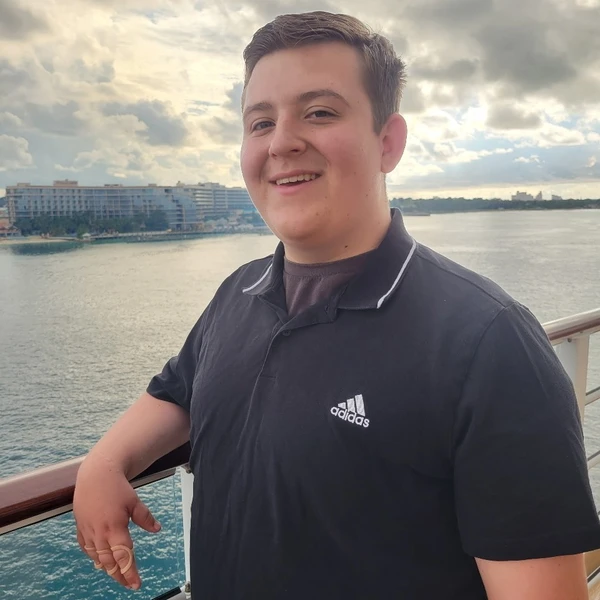
marc kemprowski

18x

Nominee

1x

Finalist

1x

Winner

Bio

As I begin my college journey, I look forward to earning a degree in Business Administration. I am a dedicated and hardworking student, and I am confident that with persistence and determination, this goal will become a reality. My ambition is not only to succeed personally, but also to give back to my community in the same way others have generously supported and encouraged me. Living with a disability has given me a unique perspective and a deep sense of empathy for the challenges others may face. Because of this, I feel strongly called to make a positive difference in the lives of those around me. My long-term goal is to start and run my own business with a mission to hire individuals of all abilities and create opportunities for people who may otherwise be overlooked.

Education

Calvary Academy

High School
2020 - 2026

Calvary Academy

High School
2020 - 2026

Miscellaneous

  • Desired degree level:

    Bachelor's degree program

  • Majors of interest:

    • Business, Management, Marketing, and Related Support Services, Other
    • Business/Managerial Economics
    • Business/Corporate Communications
    • Bible/Biblical Studies
    • Law
    • Legal Professions and Studies, Other
    • Business/Commerce, General
    • Religion/Religious Studies
    • Theology and Religious Vocations, Other
    • Theological and Ministerial Studies
    • Drama/Theatre Arts and Stagecraft
  • Not planning to go to medical school
  • Career

    • Dream career field:

      Individual & Family Services

    • Dream career goals:

      I would like to operate Christ centered businesses.

      Sports

      Bowling

      Club
      2021 – 20254 years

      Arts

      • Jackson Arts Ministry

        Theatre
        2018 – Present

      Public services

      • Volunteering

        Tutoring — Tutor
        2025 – Present
      • Volunteering

        vacation bible school — volunteer/group leader
        2018 – Present
      • Volunteering

        key club — founding member and president
        2024 – Present

      Future Interests

      Advocacy

      Politics

      Volunteering

      Philanthropy

      Entrepreneurship

      Bick New Jersey Scholarship
      For me, growing up in New Jersey has never been about landmarks or beaches. It has been about the people who show up. My grandmother, who lives nearby, has always been one of the most important people in my life. She never let anything stop her from being present. When her car broke down, she would drive her lawn mower just to see me. For every milestone—graduation, surgery, or achievement—she showed her love with cupcakes. That memory captures what New Jersey has meant to me: people who show up when it matters most. I think about my dad, a union worker who commutes into New York City every day, and the teachers, mentors, church leaders, and doctors who believed in me. I have never been treated as just a patient or a number. I have always been seen as a person. I was born at 26 weeks. After my birth, I suffered a stroke and later developed cerebral-palsy affecting my right side. Doctors were unsure I would survive and warned my parents I might never be fully independent. Growing up, I learned that many things would take more effort for me than for others. Simple tasks required patience and determination. There were moments I felt different, especially when I could not participate like my classmates. But what stayed with me was support. People made space for me in ways that reminded me I belonged. I have had an incredible team beside me since birth. My physical therapists are the reason I can walk today. One person who has shaped me deeply is Mr. Lawall, who makes my leg braces. He is more than someone who provides medical equipment. He is a steady example of integrity and strength. Even through his own struggles, he has treated me with patience and encouragement, making sure my braces fit and delivering them to my home when needed. A few years ago, I broke my foot. For most, that would be temporary. For me, it meant dependence I was not used to. What stayed with me was not the limitation but the response. My community stepped in immediately, supporting me and my family through recovery. I am at the top of my class, serve as president of Key Club, and have volunteered at Vacation Bible School for years. I plan to study Business Administration at Cairn University and hope to create faith-based residential homes for elderly individuals and people with disabilities. I want to build places where people are valued, seen, and never overlooked. This scholarship would help me continue my education and carry forward what New Jersey has taught me through my grandmother, my family, my mentors, and my doctors. Showing up for people has shaped who I am and how I want to live. I hope to give others the same love and presence my grandmother and community have given me, so that the hum of an old lawn mower and the sweetness of a cupcake become symbols of care I pass on.
      Frank and Patty Skerl Educational Scholarship for the Physically Disabled
      Living with a disability has shaped how I understand inclusion, effort, and belonging in everyday life. I was born nearly four months prematurely, and shortly after birth I suffered a stroke that led to cerebral palsy on the right side of my body. I wear a brace on my right foot, and my right arm has limited strength and coordination. From the beginning, my life has been shaped by medical uncertainty and constant adaptation, but also by persistence. Cerebral palsy affects how I move through the world in practical ways. Simple tasks like writing, carrying objects, or navigating crowded spaces require more planning and effort than they do for others. Growing up, I learned I would not experience life the same way as most of my peers. That was frustrating at times, especially when I wanted to participate in everything without limits. Over time, I stopped comparing myself to others and focused on improving within my own abilities, learning that progress still matters even when it looks different. One of the clearest examples of inclusion and exclusion in my life came during school field days. I was usually chosen to be the anchor in tug of war because it was considered the safest role for me, which meant I often watched others take part in events I could not fully join. One year, a teacher made sure I could participate in everything, even if it meant modifying each activity. I still remember slowly completing an obstacle course while my classmates cheered me on. I was not the fastest or strongest, but I finished everything. That moment stayed with me because it showed me how powerful inclusion becomes when someone intentionally makes space for you to belong. Moments like that made me more aware of barriers outside of school. I notice buildings without accessible routes, spaces that are difficult to navigate, and situations where people with disabilities are unintentionally left out. Living with a disability has trained me to recognize these barriers quickly, even when others may not see them at all. Academically, I am currently ranked first in my class, which reflects consistency and determination over time. Beyond academics, service has become a central part of my life. I helped start my school’s Key Club and now serve as president, where I organize service projects and encourage student involvement. I have also volunteered at Vacation Bible School, helping create environments where younger children feel included, supported, and valued. My experiences have shaped my ambition for the future. I plan to study Business Administration and eventually open Christ-centered homes for elderly individuals and people with disabilities. I want these spaces to feel like family, where residents are known personally and treated with dignity. I also want them to be fully accessible and intentionally inclusive, because I understand what it feels like when they are not. My goal is to build environments where people of all abilities are given real opportunities to contribute and belong. Being part of the disability community has taught me to look for possibility instead of limitation. It has shaped my drive to lead, serve, and build spaces where people are not only accommodated but genuinely included in daily life. This scholarship would support my education and help me move closer to that goal. More importantly, it would recognize the value of lived experience in shaping leadership and service. I intend to use everything I have learned through my disability to build something that reflects inclusion in action, not just in principle, and to ensure the people I serve know they matter.
      Treye Knorr Memorial Scholarship
      I was born nearly four months prematurely, and my life has been shaped by challenges I did not choose but have learned to live with. Shortly after birth, I suffered a stroke that resulted in cerebral palsy on the right side of my body. I can walk, but I wear a brace on my right foot, and my right arm is limited in strength and coordination. I have also lived with epilepsy, though cerebral palsy affects my daily life most. Growing up, I learned early that simple tasks are not always simple for me. Writing, carrying things, and moving through crowded spaces take extra effort and planning. My right side is weaker, but I have learned to keep going even when things take more effort than they do for others. Over time, I realized persistence matters more than ease. One experience that stayed with me was a school field day. I was usually only chosen to be the anchor in tug of war because teachers thought it was the safest role for me. A teacher made sure I could participate in every event, even if I had to go more slowly or modify activities. I still remember finishing each station and hearing classmates cheer me on, not because I was the fastest, but because I finished. It was not about winning, but about being included and following through. That moment stayed with me because it showed me that inclusion is not just participation, but being given the chance to complete what you start. Two years ago, I broke my foot, which gave me a new understanding of accessibility. Because of my cerebral palsy, I could not really use crutches and relied on a knee scooter instead. Even then, moving through school was extremely difficult. My school has ramps, but I still struggled to use them and often had to rely on others for help in ways I was not used to. That experience made accessibility feel less like an idea and more like something you physically navigate every day, especially when systems are not designed with different abilities in mind. Over time, I have found real purpose in serving others. I am president of Key Club at my school, where I help organize service projects and encourage students to get involved. I have also volunteered for several years at Vacation Bible School and in nursing homes. These experiences have shaped how I view leadership. It is not about doing everything easily or perfectly. It is about showing up, staying consistent, and caring for people in real ways. My faith grounds me and shapes how I approach challenges, giving me direction and a reminder that my life is meant to serve something bigger than myself, especially in moments when things feel uncertain or difficult. Because of my cerebral palsy, I have recognized that some career paths requiring fine motor precision would be difficult. Instead of focusing on limitations, I have built on strengths in leadership, communication, and service. That is why I want to create Christ-centered homes for elderly individuals and people with disabilities. I want to build environments where people are known, respected, and cared for consistently. Volunteering in nursing homes has shown me how powerful even small moments of kindness can be in someone’s daily life, and how much dignity matters in everyday care. This fall, I will begin studying Business Administration at Cairn University. As my twin sister and I start college together, my family faces significant financial responsibility, along with ongoing medical costs related to my condition. This scholarship would ease that burden and allow me to focus more fully on my education and long-term goals. This scholarship honors a young man remembered for character, determination, and faith. I try to live with those same values through faithfulness, perseverance through challenges, and a commitment to serving others consistently. If I am chosen, it would not only support my education but strengthen my ability to pursue a life of service. My journey has not been easy, but it has given me clarity. I want to use what I have been given to build something meaningful where people are valued, supported, and cared for in a lasting way.
      Robert and Suzi DeGennaro Scholarship for Disabled Students
      I was born prematurely at 26 weeks, and doctors were not sure I would survive. My parents were told that if I survived, I would likely need long-term care and may never be fully independent because of complications from my early birth. I later developed cerebral palsy on my right side, which affects my movement and coordination. Growing up, I learned early that I would do things differently than other people. Simple tasks like writing, running, or carrying objects often took more effort, which was frustrating when I could not take part in things the same way as classmates. Over time, I stopped trying to match everyone else and focused on adapting instead, learning that progress still counts even when it looks different. That mindset carried into school, where I learned to stay consistent even when things took longer. I am currently ranked first in my class and on track to graduate as valedictorian. That matters to me not just because of the outcome, but because of everything it took to get there. My disability has also changed how I look at everyday situations. I remember during field day I was often picked as the anchor in tug of war because adults thought it was risky. At the time, I didn’t question it much, but looking back, I see how easily certain roles get assigned when people assume limitations. It made me more aware that inclusion is not always automatic in practice. Recently I started working toward my driver’s license and noticed how much physical design matters. Because my right side is affected by cerebral palsy, many vehicle setups do not fit my needs, especially control placement. Even with adaptations, I realized how many everyday systems are not designed with different abilities in mind. Two years ago, I broke my foot, which gave me a new perspective on accessibility. Even using a knee scooter or crutches was extremely difficult because of my cerebral palsy. My school has ramps, but I found it nearly impossible to pull myself up them on a scooter. I had to rely on others for help in ways I was not used to. That experience made accessibility feel much more real to me. As I prepare for college, I have been thinking about accessibility in spaces. My college is renovating dorm housing, and while I have been given an accessible room, it is farther from campus. The route has a gradual incline, and I know weather like rain or snow could make it harder to get around. I am hopeful adjustments will make that easier, because accessibility is not just about accommodations, but about how spaces are designed and used. Outside of school, I have grown through leadership and service. I am president of Key Club and have volunteered at Vacation Bible School since fifth grade, mostly working with younger kids. Those experiences have taught me consistency and responsibility. Looking ahead, I plan to study Business Administration at Cairn University. My long-term goal is to create faith-based residential homes for elderly individuals and people with disabilities. Volunteering in nursing homes has shown me how much small moments matter, and I want to build spaces where people feel cared for, not just accommodated. Financial assistance from this scholarship would ease the cost of college for my family, especially with my twin sister also starting at the same time. It would allow me to focus on school and the opportunities ahead without added financial pressure. With that support, I would continue working toward creating more accessible spaces because I know what it feels like when they are not.
      TRAM Resilience Scholarship
      I was born prematurely at 26 weeks, and doctors were not sure I would survive. At the time, they also told my parents that if I did survive, I would likely need significant long-term care and might not be fully independent because of complications from my early birth and the stroke that followed. I later developed cerebral palsy on my right side, which has affected my movement and coordination. Growing up, I learned quickly that my life would involve doing many things differently than other people. Simple tasks like writing, running, or carrying objects were harder for me. When I was younger, that was frustrating, especially when I noticed I could not always participate in the same way as my classmates. Over time, I started to see my disability differently. It didn’t just make things harder. It also shaped how I approached challenges when things took more effort than expected. Living with cerebral palsy taught me patience and persistence. I learned that progress is not always fast, and success often comes from continuing to work at something even when it takes longer than it does for others. Those lessons carried into school. I pushed myself academically not because everything was easy, but because I had learned how to keep going through difficulty. Today, I am ranked first in my class and on track to graduate as valedictorian. That achievement means a lot to me, not just because of the result, but because of the persistence it took to get there. My disability has also shaped how I see other people. I remember a field day when I could not participate in the same way as other students. Instead of being left out, a teacher made sure I had a role, and my classmates included me and supported me. I still remember that moment because it made me feel like I belonged. That experience has stayed with me and influences how I try to treat others. I understand what it feels like to be different in a visible way, and I try to make sure others feel included and respected. Outside of academics, I have also grown through leadership and service. As president of Key Club, I have helped organize service projects and encourage other students to get involved. I have volunteered at Vacation Bible School since fifth grade, which has taught me responsibility and patience. These experiences have shown me that success is not only about personal achievement, but also about how you contribute to others. Looking ahead, I plan to study Business Administration at Cairn University. My experiences with disability have taught me persistence, discipline, and adaptability, and I know those qualities will help me in college and beyond. My long-term goal is to create faith-based residential homes for elderly individuals and people with disabilities. Through volunteering in nursing homes, I have seen how much small moments like conversation and kindness can matter. I want to build places where people are treated with dignity and care in every part of life, not just physically but emotionally and spiritually as well. My disability has shaped who I am, but it hasn’t limited what I hope to do. It has taught me how to keep going, how to work through challenges, and how to treat others with understanding. Those lessons continue to guide who I am and what I hope to accomplish.
      Project Prosperity Scholarship
      I thought running a business would be easy. It wasn't. In middle school, I took a business class where students ran small businesses in a classroom marketplace. I sold solar dancers and operated a small snack bar. At first, I assumed that if I had a good product, people would buy it and everything would work out. I quickly learned otherwise. Some items sold out because I priced them too low, while others barely sold. One day, I made a batch of Rice Krispie treats to increase sales. A classmate bought every single one and then resold them for twice the price. Watching that happen made me realize I had underestimated what people were willing to pay. It wasn’t just about having a good product. It was about understanding value, pricing, and decision making. By the end of the project, I earned the highest profit in the class and was recognized as Best Entrepreneur, but the lessons I learned from my mistakes were more valuable than the award itself. That experience shaped my belief that financial literacy should be taught much earlier and in a more practical way. Too many students graduate without understanding budgeting, taxes, credit, loans, or investing. These are skills that affect nearly every major decision people make as adults, yet many young people are expected to learn them on their own after high school. I believe financial education should begin in elementary school with basic concepts such as saving, spending, and distinguishing needs from wants. As students grow older, lessons should become more applied and experience based. Middle school students could explore entrepreneurship and budgeting, while high school students should practice creating budgets, understanding credit scores, and learning how taxes work. My own high school Personal Finance and Life Skills classes showed me how valuable financial education can be when it connects directly to real decisions students will face in adulthood. I have also seen some of the same pricing challenges with my younger brother as he ran his own classroom business, which reminded me how quickly people run into real financial decisions even at a young age and how little guidance they often get. I plan to study Business Administration at Cairn University and eventually create Christ centered homes for elderly individuals and people with disabilities. Achieving that goal will require strong financial knowledge and responsible leadership. Understanding how to manage resources effectively will help me build organizations that serve others well and remain sustainable over time. I also want to be part of improving financial education for younger students. Because I learned some of my most important financial lessons by making mistakes, I want younger students to have opportunities to build those skills before they face real financial decisions. In the future, I hope to work with teachers and community organizations to create classroom marketplaces, budgeting simulations, and entrepreneurship projects. Students often learn best by doing, and experiences like the one that taught me about pricing and value can leave a lasting impact. Financial literacy has the power to change lives. By introducing it earlier and teaching it through real experiences, we can help young people gain confidence, avoid preventable mistakes, and build stronger futures. That is the change I hope to see, and the one I want to help build in my own community.
      Tawkify Meaningful Connections Scholarship
      One of the most meaningful relationships in my life started as a simple teacher-student connection with Mr. Milone—but it grew into something much more. Mr. Milone teaches politics, coaches speech and debate, and also serves as my school’s guidance counselor. He also started a local program called Politics in Action, which teaches students how the political and constitutional system actually works in a hands-on way. But what stands out to me isn’t his titles—it’s how he connects with students as people. I started to understand that more during a difficult time in my life. About two years ago, I broke my foot, and because I have cerebral palsy, I couldn’t walk at all. I was stuck at home and dependent on others. Mr. Milone made sure I stayed connected to school and didn’t fall behind. That meant a lot, because it made me feel like I was still part of things even when I physically wasn’t there. Eventually, I came back to school using a knee scooter while I finished healing. Around that same time, Mr. Milone injured his ankle. In a kind of ironic twist, he ended up borrowing my scooter, and I tried to help him the same way he had helped me. It wasn’t anything big, but it stuck with me—it showed me that real relationships go both ways. It made it feel less like “helping” and more like mutual respect. He also makes me feel important in a very real, grounded way. I’m involved in both my school and local theater programs, and he shows up to my performances when he can. Seeing him in the audience means a lot to me because it shows he cares about what I do outside the classroom. That connection has also extended to my family. He and his wife have come to family barbecues, and he fits right in—it never feels forced, just natural, like he’s part of the community around me. That eventually carried into speech and debate. Mr. Milone encouraged me to take the class, even though I wasn’t sure about it at first. I’ve always been pretty shy, and speaking in front of people or thinking quickly under pressure wasn’t something I felt confident doing. But I trusted him and gave it a shot. And honestly, that changed things for me. Debate is fast—you have to really listen, respond in the moment, and trust yourself. It pushed me to stop overthinking and just speak up. Over time, I started feeling more comfortable using my voice instead of avoiding it. I haven’t lost a debate since, but what matters more is that I’m no longer afraid to speak up and engage with people directly. Through Mr. Milone, I also joined Politics in Action, where I met students and people with very different perspectives. That experience taught me something simple but important: connection doesn’t require agreement. You can still understand someone even when you don’t see things the same way. That carried into my leadership roles. I’m now a founding member and president of my school’s Key Club, where we built a service club from nothing. I also serve as vice president of my school’s National Honor Society chapter. In both, I’ve learned to focus less on titles and more on making sure people feel included, heard, and involved. It also shaped how I plan to approach college, where I’ll be majoring in business administration, and his example and encouragement have definitely helped guide me toward that path and how I want to lead in the future. At the end of the day, Mr. Milone didn’t just teach me debate or politics. He showed me how to actually connect with people, even in hard situations. That’s something I’ve picked up through all of this, and something I’ll carry into every relationship I build in the future.
      Dan Leahy Scholarship Fund
      One person I really admire is my speech and debate teacher, Mr. Milone. He teaches politics, coaches speech and debate, and also works as the school’s guidance counselor. He also started a local program called Politics in Action, which teaches students how the political and constitutional system actually works in a hands-on way. More than anything, he’s been a mentor to me—someone I really look up to and try to learn from. What I respect most about him isn’t just what he does now, but how he got there. I met him when he was 22, right as he started teaching high school. While teaching full time, he was also working on his master’s degree. What stands out most is how he balanced everything without losing focus on his students. He was also there for me during one of the hardest moments I’ve had. About two years ago, I broke my foot, and because of my cerebral palsy, I couldn’t walk at all. I was stuck at home, relying on others for everything. Mr. Milone helped me stay connected to school and catch up once I returned. Eventually, I came back to school using a knee scooter while I finished healing. Around that same time, Mr. Milone injured his ankle. He ended up borrowing my scooter, and I tried to help him the same way he had helped me. It was a small moment, but it showed the kind of relationship he builds with his students. Mr. Milone has given me a lot of good advice, and one of the biggest things I listened to was his suggestion to take speech and debate. I’ve always been pretty shy, and speaking in front of people or thinking quickly under pressure wasn’t something I felt confident doing. I wasn’t sure about it at first, but I gave it a shot. And honestly, that changed everything for me. Once I started competing, I liked it more than I expected. Debate is fast—you have to think quickly, respond clearly, and stand your ground. It pushed me to stop overthinking and trust myself. I found out I was good at it too—I haven’t lost a debate since. More importantly, it changed how I see myself. I stopped thinking of myself as someone who stays quiet and started seeing myself as someone who can speak up and be heard. Through Mr. Milone, I also got involved in Politics in Action, which deepened my understanding of government beyond the classroom. What stood out to me is that he doesn’t just teach—he pushes students to grow using his own experiences. That’s part of why I stepped into leadership roles. I’m now a founding member and president of Key Club at my school, where we built the club from the ground up. I also ran for and was elected vice president of my school’s National Honor Society chapter. Speech and debate didn’t just help me communicate—it gave me the confidence to lead. Mr. Milone is a big reason I’m serious about college. He showed me that where you start doesn’t decide where you end up. Watching him balance teaching while earning his master’s degree showed me what it looks like to push yourself without putting your goals on hold. It made me believe I can do the same. At the end of the day, he didn’t just teach me how to debate—he helped me find my voice. He’s given me courage and helped me find direction in life, and shown me what I’m capable of when I push myself. That’s something I’ll carry with me long after high school.
      Kalia D. Davis Memorial Scholarship
      I am living proof of what God can do. My parents had prayed for a child for a long time, and when they found out they were expecting twins, they were overjoyed. But at 22 weeks, my mom’s water broke. The doctors said we probably wouldn’t survive. I’ll never forget how scared my parents were. By God’s grace, my mom held on for another month, and we were born at 26 weeks on Christmas morning, just big enough to survive. Because I was so tiny, I suffered a brain bleed and was diagnosed with cerebral palsy at six months. Even though cerebral palsy has brought challenges, it has never stopped me from dreaming or working hard. I’ve learned resilience and determination, surviving a seizure that almost killed me, learning to walk with a brace, and facing obstacles most kids my age can’t imagine. I remember the day I first walked across the room with my brace—I felt like I had conquered the world. Seeing others in therapy who were struggling even more than I was taught me empathy and inspired me to try to make the lives of others a little brighter. Volunteering has been a huge part of my life. I’ve worked with kids at Vacation Bible Schools in my community since fifth grade, helping with activities, assisting teachers, and trying to make it a fun and welcoming place. It’s rewarding to see their excitement and laughter, and it has taught me patience and the joy that comes from giving time to others. I also helped start Key Club at my school, and now as president, I organize service projects and events that help people in our community. It’s amazing to see other students get involved, and I love knowing that even small acts of service add up to make a difference. These experiences have shaped my dream for the future. I plan to study business administration in college so I can create Christ-centered, family-style communal living homes for the elderly and disabled. I want these homes to be small enough that everyone feels loved, valued, and supported in their faith. I also hope to employ people of all abilities, giving everyone the chance to use their gifts and feel like they belong. This isn’t just a career goal—it’s a calling. My life experiences have prepared me for it, and I trust that God will guide me along the way. This scholarship would help me take the next step toward that dream. It would allow me to focus on my education, gain the skills I need to make a meaningful impact, and continue my work of service and faith. Everything I’ve experienced—the challenges, the victories, and the opportunities to serve—has prepared me to live a life of purpose. With God’s guidance and the support of this scholarship, I am ready to grow, to serve, and to make a difference in ways that matter.