user profile avatar

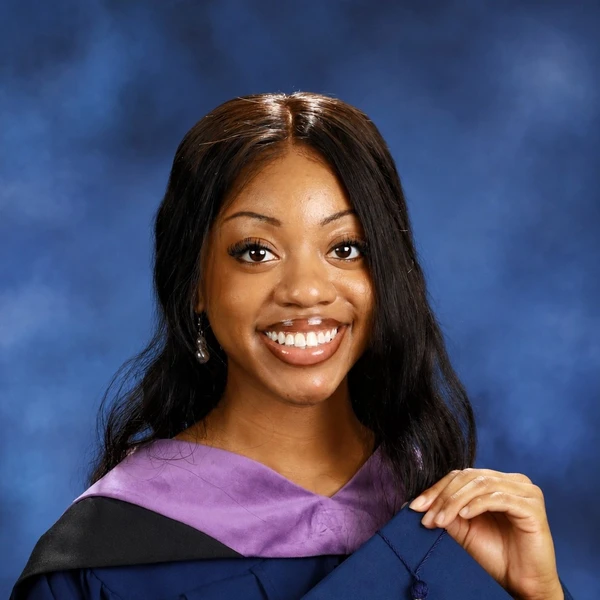
Manda Hamilton

1x

Finalist

1x

Winner

Bio

I recently graduated from Howard University with a degree in Architecture and will begin pursuing a Master of Science in Sustainability Science at Columbia University this fall. My passion lies at the intersection of the built and natural environment, where thoughtful design, scientific research, and sustainable innovation can work together to create healthier, more resilient communities. I've always been driven by curiosity and a desire to understand how systems connect. Whether studying architecture, exploring environmental challenges, or collaborating with others, I'm motivated by the opportunity to develop solutions that balance human needs with environmental stewardship. I believe our cities should not only serve the people who live in them but also coexist with and restore the ecosystems that support them. My long-term goal is to help shape a future where the built environment works in harmony with the natural world. Through research, interdisciplinary collaboration, and community-centered solutions, I hope to create lasting, positive change for both people and the planet.

Education

Columbia University in the City of New York

Master's degree program
2026 - 2027
  • Majors:
    • Sustainability Studies

Howard University

Master's degree program
2025 - 2026
  • Majors:
    • Architecture and Related Services, Other

Howard University

Bachelor's degree program
2021 - 2025
  • Majors:
    • Architecture and Related Services, Other

Miscellaneous

  • Desired degree level:

    Master's degree program

  • Graduate schools of interest:

  • Transfer schools of interest:

  • Majors of interest:

    • Sustainability Studies
  • Not planning to go to medical school
  • Career

    • Dream career field:

      Architecture & Planning

    • Dream career goals:

      Licensed Architect and Entrepreneur

    • Residential Designer

      Freelance
      2025 – 20261 year
    • Architecture Intern 2

      KGD Architecture
      2024 – 2024
    • Architecture Intern 1

      KGD Architecture
      2023 – 2023

    Sports

    Track & Field

    Club
    2016 – 20171 year

    Research

    • Architecture and Related Services, Other

      Howard University — Thesis Prep Student
      2024 – 2026

    Arts

    • HU College of Engineering and Architecture Student Council: Annual Gala

      Performance Art
      2023 – 2023
    • HU Department of Architecture in collaboration with IOM and USAID

      Design
      2024 – 2024

    Public services

    • Volunteering

      Quayle United Methodist Church — I played piano for church services (especially throughout summer while in college), performed in the Christmas plays, and maintain an active presence in youth ministries.
      2019 – 2024
    • Volunteering

      HU Circle K International — Participant
      2024 – 2024
    • Volunteering

      HU Circle K International — Participant
      2024 – 2024
    • Volunteering

      HU Circle K International — Treasurer
      2024 – 2025
    • Volunteering

      HU Circle K International — Participant (Treasurer and Social Media Graphic Designer)
      2024 – 2024
    • Volunteering

      HU Circle K International — Participant (Treasurer and Social Media Graphic Designer)
      2024 – 2024
    • Volunteering

      HU Circle K International — Participant
      2024 – 2024
    • Volunteering

      Alpha Kappa Alpha Sorority, Incorporated — Event Co-chair (and Sorority member)
      2025 – 2025

    Future Interests

    Volunteering

    Philanthropy

    Entrepreneurship

    Charles B. Brazelton Memorial Scholarship
    My “awkward” thing is that I was a grammar critic before I was old enough to understand the power of my own words. As a child, I had an unusually strong understanding of English grammar. I found patterns in language that most people my age had not yet noticed, and I could not help but point them out. I would correct adults when they phrased things incorrectly, which was often met with laughter and surprise. There was something amusing about a small child confidently explaining grammar rules to people much older than me. At the time, I thought I was simply helping. If something was incorrect, I believed the best thing to do was fix it. I loved the clarity and structure of language, and that attention to detail stayed with me as I grew older. It eventually helped me earn a 32 on the English section of the ACT and strengthened my appreciation for the importance of communication. However, I learned that communication is about much more than correctness. As I matured, I began to understand that constantly correcting people could unintentionally make them feel judged or hesitant to express themselves, even within my own family. I had to learn that sometimes the most important part of a conversation is not identifying what is wrong, but understanding the person speaking. That realization became one of my earliest lessons in empathy. I learned that every person communicates from a different place shaped by their experiences, challenges, and perspectives. If I wanted to build meaningful relationships, I needed to make people feel comfortable sharing their thoughts rather than worrying about whether every word they used was perfect. That lesson changed how I approach others. I became more intentional about listening before responding and understanding before evaluating. I began to see that my attention to detail was not just a tool for finding mistakes. It was also a tool for noticing needs, recognizing different perspectives, and helping people feel valued. This shift has shaped how I approach my education, my collaborations, and my goals for the future. Whether I am working with classmates, designing solutions for communities, or engaging with people whose experiences differ from my own, I strive to use my curiosity and attention to detail to build rather than criticize. I believe meaningful change begins when people feel heard and respected. My awkward childhood habit taught me that words have power. They can correct, but they can also connect. They can create distance, or they can create understanding. As we work toward creating a safer and more compassionate world, listening is one of the most important things we can do. Communities become stronger when people trust that their voices matter.
    Yaa Asantewaa Scholarship
    Submitted via a video link
    Learner Calculus Scholarship
    Architecture taught me that meaningful design exists at the intersection of creativity, science, and systems thinking. A building is never simply a structure. It is a dynamic relationship between form, material, environment, and human experience. Throughout my architectural education, calculus became one of the tools that allowed me to better understand these relationships and expand the possibilities of what could be designed. This is why I believe calculus is an essential foundation in STEM. My first exposure to calculus began in high school and continued during my freshman year of college, where it became especially valuable in my architectural studies. During my early design education, when much of my work involved manual drafting, calculus gave me a deeper understanding of geometry, proportion, and spatial relationships. It allowed me to approach abstract forms with greater confidence because I could better understand the mathematical principles behind curves, surfaces, and complex shapes. Rather than limiting creativity, calculus gave me greater freedom to explore new forms and translate ideas into designs that were both imaginative and achievable. Beyond architecture, calculus provides STEM fields with a framework for understanding change, relationships, and complex systems. At its core, calculus allows us to analyze how variables interact and evolve over time. This ability is essential because many of the challenges addressed through STEM, from engineering and physics to environmental science, are not static. They require professionals to understand patterns, predict outcomes, and develop solutions that respond to changing conditions. As I prepare to begin my Master of Science in Sustainability Science, I am increasingly aware of how important this way of thinking will be. Sustainability challenges exist within interconnected systems where environmental, social, and physical factors continuously influence one another. Climate patterns shift, ecosystems adapt, resources fluctuate, and human decisions create impacts across multiple scales. Addressing these challenges requires the ability to model relationships, analyze trends, and understand how changes within one part of a system can affect the whole. For example, sustainability scientists use mathematical models to study climate patterns, ecosystem dynamics, resource availability, and environmental risks. Calculus provides the foundation for understanding rates of change and interactions within these systems, helping researchers evaluate potential solutions and make informed decisions. Similar to how an architect considers how a building will perform over time, sustainability professionals must consider how environmental systems will respond to interventions over time. Beyond its technical applications, calculus teaches a mindset that is fundamental to STEM. It encourages curiosity, precision, and the ability to approach complex problems by identifying relationships and patterns. These skills are especially important as scientific and environmental challenges become increasingly interconnected. Ultimately, calculus is important in STEM because it transforms observations into understanding and understanding into action. My experience in architecture has shown me that creativity and analytical thinking are not separate. They strengthen one another. As I continue my education in sustainability science, I hope to build upon this foundation by using both creative and mathematical approaches to develop solutions that support resilient communities and a healthier planet.
    Rosie Walks Human–Wildlife Coexistence Scholarship
    Every building we create is a statement about how we choose to exist within the natural world, and the most urgent challenge in wildlife conservation is ensuring that human development does not come at the expense of the ecosystems we depend on. As our cities continue to expand, the question is no longer whether humans and wildlife will share space. It is whether we will design that shared space responsibly. My interest in this issue comes from an uncommon intersection of disciplines. Studying architecture taught me how profoundly the built environment shapes the way people live, move, and interact with one another. Yet the deeper I studied, the more I found myself asking questions that extended beyond buildings. I began to wonder how the spaces we design reshape ecosystems, alter wildlife behavior, fragment habitats, and influence the delicate balance between human development and the natural world. Those questions ultimately led me to pursue a Master of Science in Sustainability Science, not because I was leaving architecture behind, but because I wanted to understand the larger systems within which architecture exists. That realization changed the way I think about conservation. Buildings are essential to human life, but they also represent one of our greatest interventions in nature. Every new development has the potential to affect the species that once occupied that land. Too often, wildlife is considered only after construction is complete, when coexistence should instead be a guiding principle from the very beginning of the design process. The encouraging reality is that our built environment can become part of the solution. Bird-safe glass and facade treatments can reduce millions of bird collisions each year. Green roofs and native landscapes can create habitat for pollinators and urban wildlife. Wildlife crossings reconnect habitats divided by roads and development. Sustainable stormwater systems protect streams and aquatic ecosystems, while responsible lighting strategies reduce disruption to nocturnal species. These may seem like individual design choices, but together they demonstrate how thoughtful planning can transform our relationship with the natural world. What makes human-wildlife coexistence especially urgent is that ecological systems are interconnected. When habitats are fragmented or species decline, the effects extend far beyond wildlife alone. They ripple through food webs, biodiversity, water quality, climate resilience, and ultimately the health of our own communities. The well-being of people and the well-being of nature are inseparable. As I begin my graduate studies in sustainability science, I hope to bridge the gap between architecture and ecological stewardship. My goal is to help shape buildings and communities that not only minimize environmental harm but actively support biodiversity and resilience. To me, the future of conservation is not about choosing between human progress and the natural world. It is about designing a future where both can thrive together. That is the kind of coexistence I hope to spend my career advancing.
    Byte into STEM Scholarship
    My academic path has been shaped by a growing curiosity about how the environments we create influence the way people live. Studying architecture first introduced me to this relationship. Through studio work, research, and collaboration, I learned to see the built environment not simply as physical structures, but as part of a larger system shaped by environmental conditions, infrastructure, and human behavior. The more I studied design, the more I found myself asking questions about the forces operating beyond the walls of a building. Those questions gradually led me toward sustainability science. I became increasingly interested in understanding the environmental processes that influence the spaces we design and the long-term performance of the systems that support them. Rather than viewing architecture as an isolated discipline, I began to see it as one component within a broader network of environmental and social systems. This perspective encouraged me to look deeper into how resource use, ecological change, and infrastructure decisions shape the resilience of communities over time. My thesis research allowed me to explore these ideas more closely. Through studying urban agriculture and community-centered infrastructure, I examined how design interventions can support both environmental performance and human well-being. This process strengthened my understanding that meaningful solutions require more than creativity alone. They require careful analysis, curiosity, and a willingness to investigate the underlying systems that influence the success or failure of an intervention. Collaboration and mentorship have also played an important role in shaping who I am. Architecture studio culture requires students to constantly share ideas, critique one another’s work, and refine solutions collectively. Through these experiences, I developed an appreciation for dialogue and intellectual exchange. I value environments where people feel comfortable asking difficult questions and exploring new perspectives, because thoughtful solutions rarely emerge without curiosity and open discussion. Pursuing a degree in Sustainability Science will allow me to deepen the analytical foundation behind my work. I want to strengthen my ability to interpret environmental data, evaluate long-term impacts, and understand how complex systems interact over time. These tools will help me approach design and planning decisions with greater clarity and responsibility. Rather than separating design from environmental analysis, I hope to integrate the two so that sustainability considerations become embedded in how projects are conceived from the beginning. In my future career, I hope to work at the intersection of the built environment and environmental systems. I want to contribute to projects that improve the spaces where people live while responding thoughtfully to ecological realities. My goal is to approach each project with a mindset grounded in inquiry, collaboration, and long-term thinking. Education has given me the opportunity to ask better questions about the systems shaping our world. By continuing my studies in sustainability science, I hope to turn those questions into informed action and contribute to solutions that create lasting positive impact.
    Dr. Jade Education Scholarship
    Winner
    In the life of my dreams, I am living each day in alignment with my highest purpose, designing spaces that do more than provide shelter; they heal, empower, and inspire. Architecture, to me, is a catalyst for transformation. It is a discipline that shapes experiences, nurtures resilience, and creates opportunities for equity. Every project I lead addresses housing insecurity, environmental challenges, and social inequities through innovative, sustainable, and culturally responsive design. I work at the intersection of design, justice, and community impact. Each space I create is grounded in a deep respect for its context and the people it serves. My buildings integrate sustainable technologies, celebrate local culture, and foster connection between individuals and their environment. The work is not only functional but also aspirational, offering places where people feel safe, valued, and inspired to thrive. My role extends beyond the drawing board. I collaborate with community leaders, policymakers, engineers, and artists to ensure that every project reflects a holistic vision for the future. I lead initiatives that transform vacant lots into vibrant public spaces, reimagine underutilized buildings as community hubs, and design housing that is affordable, dignified, and environmentally responsible. These projects are living examples of what it means to design with both creativity and conscience. Mentorship is an essential part of my vision. I actively guide emerging designers, particularly those from underrepresented backgrounds, so they have the knowledge, tools, and confidence to shape the profession in their own right. In this way, my work creates a ripple effect, empowering others to lead, innovate, and push the boundaries of what architecture can accomplish. In this life, success is measured not only by the quality of the spaces I create but by the quality of life they foster. It is reflected in families finding stability in well-designed homes, in neighborhoods revitalized through thoughtful planning, and in public spaces that bring people together. It is evident in sustainable solutions that reduce environmental impact while improving daily life for generations to come. Every day is guided by a commitment to excellence, integrity, and purpose. I wake up knowing that the work I do contributes to a larger legacy, one that values human potential, honors the planet, and challenges the status quo. The spaces I design are not just physical structures; they are platforms for connection, opportunity, and hope. Ultimately, my dream life is defined by impact. Through architecture, I build more than walls and roofs; I build pathways to possibility. I create environments where people can envision brighter futures, where communities feel empowered, and where design becomes a force for justice, beauty, and lasting change.