Hobbies and interests
3D Modeling
African American Studies
Art
Babysitting And Childcare
Bible Study
Drawing And Illustration
Malik Rodgers
1x
Finalist
Malik Rodgers
1x
FinalistBio
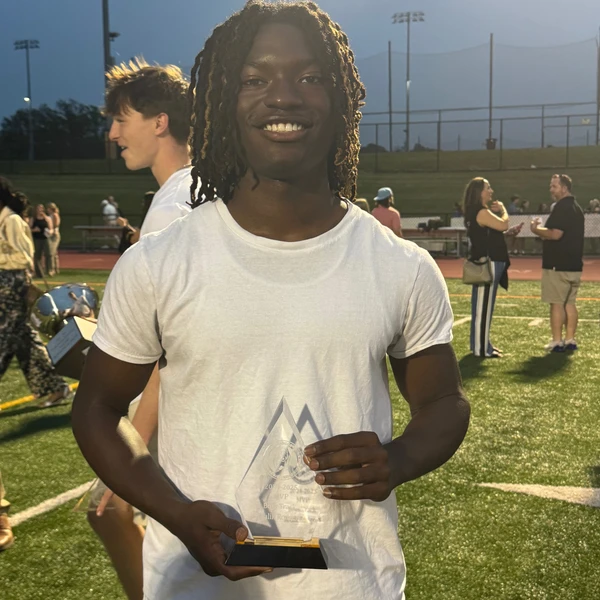
Resilience has defined my journey. As the youngest child of a single mother, I learned early the value of discipline, perseverance, and accountability. Throughout high school, I balanced rigorous academics with demanding responsibilities, maintaining a 95+ average and a 3.8 unweighted GPA while working two jobs and competing as a full-time athlete.
Track and field has shaped my character and mindset. As Captain of my Indoor Track Team, I lead by example, supporting teammates and embracing challenges with focus and determination. Earning a state medal in the 400-meter dash at the Pennsylvania Indoor Track & Field Championships reflects years of dedication and mental toughness.
Service and integrity are central to who I am. Through Key Club, I completed over 100 community service hours and maintained a completely clean disciplinary record. Despite personal hardships, including the loss of my father and multiple family losses, these experiences strengthened my resilience and drive.
I plan to pursue Biomedical Engineering or Cybersecurity, fields that align with my passion for innovation and meaningful impact. I am seeking not only financial support, but the opportunity to continue striving, growing, and contributing with purpose.
Education
Upper Moreland High School
High SchoolMiscellaneous
Desired degree level:
Bachelor's degree program
Majors of interest:
- Biochemical Engineering
- Computational Science
Career
Dream career field:
Building Prosthetics
Dream career goals:
Sports
Track & Field
Varsity2022 – 20264 years
Awards
- Second team all league
- Team MVP
- First team all state
Track & Field
Varsity2022 – Present4 years
Awards
- Second team all league
- Team Mvp
- first team all state
Football
Varsity2022 – 20253 years
Awards
- second team all league
Brian J. O'Hara Memorial Scholarship
I can’t remember the exact moment football first became part of my life, but I know it shaped me long before I understood how. I grew up surrounded by loss my father taken by gun violence when I was two, my great aunt passing when I was eight, and more family members gone as the years went on. Through all of that, football became the one place where I could put down what I was carrying and learn who I was becoming.
Football didn’t just give me a sport it gave me structure. It taught me discipline at a time when my life felt unpredictable. While grief made me grow up fast, football taught me how to grow up well. Early morning practices, long workouts, and the pressure to perform taught me responsibility. I learned that showing up matters, even on the days when everything in me wanted to stay home. Football taught me consistency, something I didn’t always have in my life.
As I got older, the lessons deepened. Football taught me how to lead. Not the loud kind of leadership, but the kind built on example working hard, staying focused, and lifting up the people around me. I learned how to communicate, how to trust my teammates, and how to be someone others could rely on. When life felt heavy, football reminded me that I didn’t have to carry everything alone.
There were moments when the weight of my losses made football feel like a routine instead of a passion. But even then, the game shaped my character. It taught me resilience how to push through exhaustion, how to keep going when my mind was somewhere else, and how to turn pain into fuel instead of letting it break me. When my Aunt Ki passed, when my grandmother died of brain cancer, and when my baby cousin was killed by gun violence, football became the place where I learned how to stand back up.
Football also changed the way I connect with people. On a team, you learn quickly that everyone is fighting a battle you can’t always see. That made me more patient, more understanding, and more willing to support others. I learned how to listen, how to encourage, and how to be the kind of teammate and person who makes others feel seen. Football taught me empathy in a way nothing else could.
Most importantly, football helped me find purpose. It gave me a reason to keep pushing, a reason to stay focused, and a reason to believe in myself. It shaped me into someone who doesn’t quit, someone who works for what he wants, and someone who knows how to turn hardship into strength.
Football didn’t just improve my character it built it. It taught me discipline, leadership, resilience, and compassion. It helped me grow from a boy carrying grief into a young man with direction, purpose, and the determination to keep moving forward.
Tawkify Meaningful Connections Scholarship
I can’t recall the exact moment when grief first took my hand, but I know he hasn’t let go since. At just two years old, I asked, “Where’s Daddy?” without understanding that gun violence had taken him from me. My mother’s silence answered before her words ever could. Six years later, grief returned and pulled my great aunt away too.
Over time, grief became the most persistent relationship in my life. People called me “wise beyond my years,” not realizing that the wisdom they admired was carved out by loss. While other kids grew up surrounded by laughter, I grew up learning how to navigate absence. Grief dimmed my childhood light, but in doing so, he taught me how to shine for others. He taught me to listen closely, to speak gently, and to recognize the quiet pain people carry but rarely name.
For years, I played the role everyone expected the strong one, the achiever, the “Golden Child.” Behind the medals and certificates was a boy who felt responsible for holding everything together. I smiled through the silence, carrying the weight of generations while trying to stand on my own.
By high school, the cracks began to show. Football, once my passion, became routine. Then came the moment that reshaped me. My mom sat me and my brother down to tell us that my Aunt Ki the woman who truly saw me was in the hospital. When I walked into her room, she couldn’t speak, so she held my hand and squeezed once for yes, twice for no. In that silence, I made promises I still keep. When she passed, I didn’t yet understand how deeply her loss would guide me.
More loss followed. My grandmother died of brain cancer on Christmas Day of my junior year. Before I could grieve, my baby cousin was killed by gun violence. The next day at indoor states, I carried all of them with me to the podium. At some point, I stopped asking when grief would leave. I realized he wouldn’t and that acceptance changed me.
This lifelong relationship with grief has shaped the way I connect with others. I don’t shy away from people’s pain; I move toward it. I know what it feels like to break quietly, so I try to be someone who listens without judgment and supports without being asked. Grief taught me empathy that isn’t performative it’s lived. It taught me to honor people while they’re here and to carry them forward when they’re not.
I learned that what matters isn’t how long we live, but how we honor those who can’t. That’s why I run for Aunt Ki, for my grandmother, for my cousin. Track became my tribute, my way of turning pain into purpose.
I am no longer just the “Golden Child.” I am someone shaped by hardship and strengthened by love. Someone who stands even when the weight feels unbearable. And someone who builds connections rooted in understanding, compassion, and the belief that even the deepest grief can make room for the strongest love.