
Hobbies and interests
Volleyball
Reading
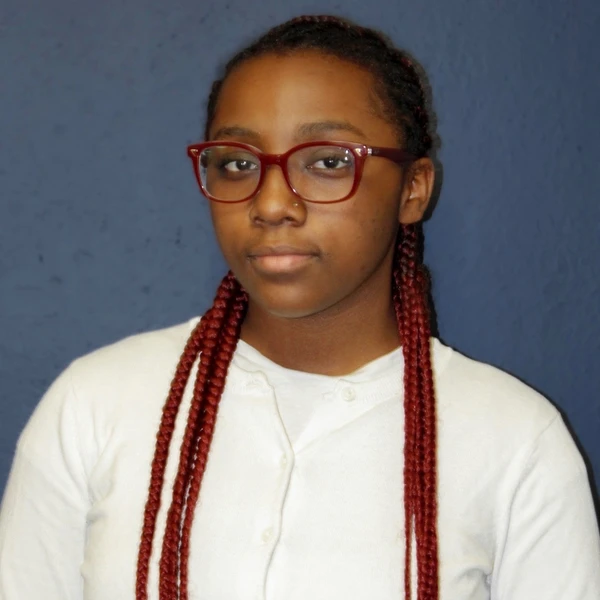
Makaela Samuels
1x
Finalist
Makaela Samuels
1x
FinalistBio
I am currently a first generation student attending high school as a senior in a small community in Michigan. I look forward to attending college, tackling debt and eventually being a fully fledged orthodontist. To prepare for my future, I have utilized programs such as Big Future Ambassadors, Minority Advisory Panel, DAPCEP, and Wolverine Pathways.
Education
University of Michigan-Ann Arbor
Bachelor's degree programMajors:
- Biological and Biomedical Sciences, Other
University High School Academy
High SchoolMiscellaneous
Desired degree level:
Doctoral degree program (PhD, MD, JD, etc.)
Graduate schools of interest:
Transfer schools of interest:
Majors of interest:
- Biological and Biomedical Sciences, Other
Career
Dream career field:
- Dentistry
Dream career goals:
Server
Olgas Kitchen2024 – 20251 year
Sports
Volleyball
Varsity2022 – 20264 years
Awards
- OAA MVP Award
Public services
Volunteering
Minority Advisory Panel — Occasional Volunteer2022 – Present
Go Blue Crew Scholarship
As I looked into the orthodontic mirror, I saw more than just my reflection I saw my future self. My bright red glasses were still there, but my braces had been replaced by a retainer. In that moment, I saw the result of years of discipline, patience, and curiosity. I saw the future I have been working toward, becoming an orthodontist.
My fascination with dentistry began when I was six years old. While many children feared dental visits, I was captivated by the instruments, procedures, and care involved. I remember proudly telling my parents after one appointment, “I want to be a dentist.” What started as a childhood dream has become a lifelong goal.
Growing up in a lower income household taught me to value hard work and perseverance. As a first-generation college student with 3 older brothers currently in college, I have seen the sacrifices my parents make to provide us with opportunities they never had. Their determination motivates me to excel academically and pursue a career that will allow me to give back to both my family and my community.
During my freshman year of high school, I began orthodontic treatment and met a young Black woman orthodontist who became my role model. Seeing someone who looked like me succeed in a STEM profession made my dream feel attainable. When I later shadowed her, I observed not only her precision but also the compassion she showed every patient. Before I left, she handed me an indirect mirror and let me assist with a simple task. That small act of trust strengthened my confidence and affirmed that I belonged in the field.
Throughout high school, I have challenged myself with rigorous courses, including AP Biology and AP Pre-Calculus, while serving as a varsity volleyball captain. Balancing academics and athletics has strengthened my leadership, discipline, and resilience—qualities that will help me succeed in college and beyond.
My goal is to become an orthodontist who not only transforms smiles but also inspires others. As an African American woman, I hope to increase representation in dentistry and encourage young students from backgrounds like mine to pursue careers in STEM. I want to show them that their dreams are achievable, even when financial obstacles make the path more difficult.
Receiving this scholarship would ease the financial burden on my family and allow me to focus on my education rather than the cost of it. More importantly, it would be an investment in someone who is committed to using her education to improve lives, expand representation in healthcare, and create opportunities for the next generation. Here I am, Makaela Ann Samuels, the literal product of the names Malik Samuels and Angela Rolack.
Hodge Legacy Community Service Scholarship
Community service, to me, is about responsibility, connection, and making sure opportunities are not limited by circumstance. My experiences in student leadership and service—through Student Council, the Minority Advisory Panel, and Junior Optimist—have shown me that giving back is not just about organized events, but about listening to others, identifying needs, and taking action to create change.
As a member of Student Council, I have helped plan school events and represent the voices of my peers. This role taught me that leadership is not about speaking the loudest, but about making sure others feel heard. Whether helping organize school activities or discussing student concerns, I learned how important it is to create an environment where everyone feels included. These experiences strengthened my communication skills and showed me the value of teamwork in building a positive school community.
Through the Minority Advisory Panel, I have been able to engage in more meaningful conversations about equity, representation, and student experiences. Being part of this group has given me a space to speak about challenges that students from underrepresented backgrounds may face and to help think of ways to improve school culture. It has also helped me understand how important it is to have diverse voices involved in decision-making. I learned that real change happens when people with different perspectives come together with a shared goal of improvement.
As a member of Junior Optimist, I have participated in service projects that focus on kindness, leadership, and community involvement. This organization has helped me understand that even small acts of service can have a lasting impact. Whether volunteering at events or contributing to school and community initiatives, I have seen how service can bring people together and create a sense of unity and purpose.
These experiences have shaped my belief that giving back is essential because it creates a cycle of support and opportunity. I have benefited from mentors, teachers, and leaders who invested their time in me, and I feel a responsibility to do the same for others. Service is a way of paying forward the encouragement and opportunities I have received. It ensures that someone else can have access to guidance, support, and inspiration that may help them reach their goals.
I also believe community service is important because it builds empathy. When you take the time to understand the needs and experiences of others, you become more aware of the challenges people face beyond your own life. This understanding has helped me grow not only as a student and leader, but as a person who values compassion and inclusion.
In the future, I hope to continue serving my community as an orthodontist by providing care, education, and mentorship. My goal is to give back in a way that goes beyond the dental chair by helping young people see themselves in STEM careers and encouraging them to pursue their dreams. The leadership experiences I have had through Student Council, the Minority Advisory Panel, and Junior Optimist have prepared me to continue this work on a larger scale.
Ultimately, service has taught me that even small actions can create meaningful change. By giving back, I am not only helping others but also building a stronger, more connected community. I plan to continue paying it forward throughout my life, using every opportunity I have to uplift and support others just as others have done for me.
Sloane Stephens Doc & Glo Scholarship
The impact I hope to make begins with representation, access, and creating opportunities for the next generation. As an aspiring orthodontist, I want to use my education not only to improve patients' oral health but also to increase exposure to dentistry for young Black students who rarely see themselves represented in the field.
Growing up, I had very little exposure to careers in dentistry beyond my own appointments. There were few programs, mentorship opportunities, or resources specifically designed to introduce young Black students to dental professions. Because of this lack of representation and access, many talented students never have the chance to consider dentistry as a realistic career path. It is difficult to pursue a dream when you have never seen someone who looks like you achieve it.
That changed during my freshman year when I met a young Black woman orthodontist while receiving orthodontic treatment. Seeing someone who shared my background succeed in a profession I admired transformed the way I viewed my future. For the first time, I could picture myself in a white coat, helping patients and making a difference in my community. When I later had the opportunity to shadow her, she showed me the importance of mentorship and representation. Her willingness to invest in me inspired me to do the same for others.
Through my education, I hope to create opportunities that I wish had been available to me. I want to organize mentorship programs, career workshops, and shadowing opportunities that introduce young Black students to dentistry at an early age. I want students to have access to role models who can answer their questions, share their experiences, and help them navigate a path toward healthcare careers. Representation alone can be powerful, but combining representation with opportunity can change lives.
I also hope to address disparities in oral healthcare within underserved communities. Many families face barriers to receiving quality dental and orthodontic care, which can affect both health and confidence. As an orthodontist, I want to provide compassionate care while advocating for greater access to dental services and education.
My vision is a future where more Black students see dentistry as an attainable goal rather than an unfamiliar profession. I want to help build a pipeline of future dentists, orthodontists, and healthcare professionals who will continue serving and uplifting their communities. By earning an education and pursuing my dream, I hope to create lasting change—not only through the patients I treat but through the students I inspire to follow a similar path.
Bick First Generation Scholarship
As I looked into the oral mirror, I saw more than just my reflection, I saw my future. My bright red glasses were still there, but my braces had been replaced by a retainer. In that moment, I saw the result of years of discipline, patience, and curiosity. I saw a future orthodontist.
My fascination with dentistry began at six years old. While many children feared dental visits, I was intrigued by the tools, procedures, and care involved. I remember feeling proud when the dentist praised me for having no cavities. That curiosity quickly turned into certainty when I told my parents, “I want to be a dentist.” What began as a childhood dream grew into a clear academic and professional goal.
As a first-generation college student, pursuing that goal has required determination and self-advocacy. My parents have always encouraged me to succeed, but navigating college admissions, financial aid, and higher education has often felt like entering unfamiliar territory. Without a roadmap, I have learned to seek resources, ask questions, and take initiative in building my future.
During my freshman year, I began orthodontic treatment and met a young Black woman orthodontist who became my role model. Seeing someone who looked like me succeed in a STEM profession made my dream feel attainable. When I later had the opportunity to shadow her, I observed her precision, patience, and compassion. She even allowed me to use an indirect mirror—a small moment that made a lasting impact. For the first time, I could truly picture myself in her position.
My journey has not been without challenges. Growing up in a household with strict expectations while managing mental health struggles often left me battling self-doubt. Even now, I sometimes experience imposter syndrome and question whether I belong in the academic and professional spaces I aspire to enter. However, those experiences have taught me resilience. Rather than allowing obstacles to define me, I have used them as motivation to work harder and remain focused on my goals.
Throughout high school, I have challenged myself through rigorous coursework, including AP Biology and AP Pre-Calculus, while also developing leadership skills as a varsity volleyball captain. These experiences have strengthened my discipline, perseverance, and ability to succeed under pressure.
My goal is to become an orthodontist and serve as a role model for others, especially young African American students who may not see themselves represented in healthcare. I want to help patients gain confidence through their smiles while inspiring future generations to pursue careers in STEM.
This scholarship would help ease the financial burden of higher education and allow me to focus on achieving my academic and professional goals. More than financial assistance, it would represent an investment in my potential and bring me one step closer to becoming the orthodontist I have dreamed of being since childhood.
Ethel Hayes Destigmatization of Mental Health Scholarship
Growing up as a young Black girl in a household with strict parents and four brothers shaped me in ways I am still learning to understand. While my family always wanted the best for me, living in an environment with high expectations often made it difficult to express my emotions. As the only girl, I felt pressure to be responsible, respectful, and resilient at all times. I learned early that showing vulnerability was not always welcomed, so I became skilled at hiding my struggles behind a smile.
Throughout my childhood and teenage years, I quietly battled mental health challenges. There were days when anxiety made me overthink every decision I made and moments when sadness felt overwhelming. While others saw a hardworking student, they did not see the constant internal battle taking place in my mind. I often felt alone, unsure of how to explain what I was experiencing. In many communities, especially within Black families, conversations about mental health are not always easy to have. Because of this, I spent years trying to handle everything on my own.
Being surrounded by four brothers was both a blessing and a challenge. They taught me toughness, independence, and perseverance. However, there were times when I felt overlooked or misunderstood. As the only daughter, I often felt caught between trying to meet my parents' expectations and trying to discover my own identity. I struggled to find my voice while balancing family responsibilities, academic expectations, and my personal battles.
One of the most difficult challenges I continue to face is imposter syndrome. No matter how hard I work or how much I achieve, there are times when I question whether I truly belong in the spaces I aspire to enter. As someone who dreams of becoming an orthodontist, I often feel pressure to excel academically and professionally. When I compare myself to others, I sometimes find myself wondering if I am smart enough, capable enough, or deserving enough to achieve my goals. These thoughts can be discouraging, but they have also taught me the importance of self-belief and perseverance.
My interest in orthodontics comes from my desire to make a positive impact on people's lives. Orthodontists do more than straighten teeth; they help individuals gain confidence in their smiles and improve their overall well-being. I am drawn to a career that combines science, problem-solving, and patient care. More importantly, I want to serve as an example for young Black girls who may not often see themselves represented in healthcare professions. I want them to know that their dreams are valid and achievable, regardless of the obstacles they face.
Despite the challenges I have encountered, I have never allowed them to define me. Instead, I have used them as motivation to keep moving forward. My experiences with mental health have taught me empathy, resilience, and the importance of seeking support when needed. Growing up in a strict household taught me discipline and accountability. Navigating life as the only girl among four brothers taught me strength and adaptability. Facing imposter syndrome has taught me that courage is not the absence of self-doubt but the decision to continue despite it.
Today, I am still growing, learning, and working toward my goals. My journey has not been easy, but it has made me stronger and more determined. Every challenge I have faced has contributed to the person I am becoming. As I pursue my dream of becoming an orthodontist, I carry with me the lessons of resilience, compassion, and perseverance. I know there will be obstacles ahead, but I also know that my experiences have prepared me to overcome them. My story is not just about struggle—it is about growth, hope, and the belief that no matter where you come from, you can create the future you envision for yourself.
Dynamic Edge Women in STEM Scholarship
An unexpected person that influenced me to go into STEM was my orthodontist as she was a very important person for girls who looked like me, and this essay will be abt my story and my struggle.
As I looked into the oral mirror, I was struck with an image of me, only a bit older. The girl, now a woman's face was adorned with the bright red glasses that have stuck with her since childhood only now the braces that had shaped her future were now replaced with a retainer that worked daily to provide her stability. From a girl to a woman, from career lost to goal oriented, she would have never gotten here if she didn't prioritize opportunity.
My first realization that I wanted to be a dentist came at the ripe age of 6. Trips to and from the dentists office where they would applaud me and shower me with praise for having no cavities.
Even now, I can still taste the Crest bubblegum toothpaste; something that had become reflective of my love for the dentist's office. I told my parents "I want to be a dentist when I grow up" and they supported it. They listened to me talk about my love for the field as young as 6 when I barely knew what I was talking about.
The second time I thought about a different career field was my freshman year of high school. In freshman year, we all begin to feel that time is moving too fast for us to catch and that we should figure out our lives in the span of a 50 minute history class. That was exactly what I attempted to do. Though, you'll find that figuring out what you want to do in life at the age of 14 with 50 minutes on the clock will prove to be faulty. I settled at least the knowledge of my career. Dentistry stuck with me, but I had just got my braces and was beginning to fall in love with orthodontics due to my orthodontist. She was a young black woman who had gone to the schools I was planning on going to who would eventually become my role model and mentor.
A pivotal moment in my life is when I was blessed with an opportunity to shadow my orthodontist.
The only way to network is to take opportunities and slide into those cracks that may feel like they're too small to fit in. Like a kid catching fireflies, I was adamant on contacting the office to get my shadowing time down so that I would seize this opportunity. The first time I shadowed her, I was robotic almost; a figure looming over her, scanning her movements to copy down the art of orthodontics. The second time I shadowed her, she gifted me the key to my future: a plastic indirect mirror, one you would give to teens for travel cases. I practiced indirect vision repeatedly until | could write my name perfectly and when I looked down into it, I saw a reflection of what I would be and that's when I decided, this is the field for me. Now imagine, if I didn't take that opportunity. Would I have fallen out of love with dentistry in search of other careers? Would I have followed my second mind and pursued education because of my weariness when it comes to schooling? Don't let yourself starve from the opportunities that have been or are heading your way.
Immigrant Daughters in STEM Scholarship
I am the granddaughter of two immigrants and the daughter of a first-generation father. When my grandparents moved here from Jamaica, they were basically flying blind. They didn’t know anything about how America worked, and my dad was pretty much thrown into a pack of wolves because of it. Since they couldn't find their footing, my dad’s childhood was a blur of moving around. He hopped between Michigan, New York, Pennsylvania, and back to Jamaica. That financial instability was a huge hurdle, something so big that even an olympian wouldn’t be able to jump over it.
Without me even knowing it, that struggle became a generational burden. I was born into poverty, growing up in small apartments or tiny houses with a family of seven. But, my parents were experts at hiding it. They made sure there was always a hot meal on the table, clothes for us to wear, and a bed to sleep in. They worked crazy hours, which meant they weren't always home to raise us, so my siblings and I basically started raising each other.
Our poverty didn't look like the kind you see on TV. We would show up to school in new clothes, but behind the scenes, the rent was way past due or the bathroom sink was broken because my parents couldn't afford to fix it. Looking back now, I’m actually grateful for their struggle. They worked so hard to protect me that I didn’t even know what the word "struggle" meant back then.
Once I hit my teenage years, it finally clicked. I realized just how much freedom, money, and time my parents gave up just so I could have a life. I wanted to pay them back the only way I knew how, by taking care of myself and helping out. I went out and got a job at a pizza spot near my house. That was my first job, and I’ve had three more since then. Working taught me the real meaning of money and how to work with a team. The best part is it lets me buy my parents gifts to show them I appreciate everything they did.
Financial instability is like a curse that tried to kidnap my future, but I can feel that weight finally lifting off my chest. Even though my parents tried to hide their struggles, seeing their work ethic made me a better student. I don’t look at things like tuition or school costs as just numbers anymore see them as the actual hours of hard work they represent. I’m using my resources to make sure that the cycle of instability ends with me.
Brenda Baker Legacy Scholarship
Activism has always mattered to me, ever since I was young enough to even know what that word meant. While most kids were playing games, I could already tell you who Malcolm X was, what Rosa Parks’ childhood was like, and the ideas behind Fred Hampton and the Black Panther movement. I was only ten years old, but I was already privy to learning the truth. Back then, my school didn't have a strict agenda, and we were allowed to read whatever books we wanted. By fifth grade, I was learning about young black men being wrongfully killed, like Tamir Rice, Rodney King, and George Floyd. Learning about these things so young allowed me to grow and progress because I could actually explain these situations to my brothers and the rest of my community. As we grow into young adults, it is so important for us to know our history so we don't go through life blind.
When I got to high school, I took AP African American Studies. That class gave me a full breakdown of history from a student's point of view, and it pushed me to do my own research. I got really interested in studying Black men and the idea of masculinity and even ended up doing my AP project on it. I studied back to the slavery era as this was very important to me since I have 4 black brothers. There were times when I was struggling with my own identity as a Black woman, and I've had to see young black women quickly labeled as “fast” or “jezebels” But because I had studied my history, I was able to see where those names really came from. I learned that these negative ideas about our sexuality come from a deep, slave-like mindset that society still carries.
Black history basically taught me how to be a resilient young woman who is always eager to find the truth behind things. I’m also lucky because I have parents who never skipped out on the "uncomfortable" conversations. They hated the idea of their kids being ignorant, so they did everything they could to make sure we were educated about where we came from. This is why I know about people like Claudette Colvin. She isn't always the main person talked about in the Civil Rights movement, but she showed an incredible amount of bravery at a very young age.
The person who influenced me the most, though, has to be Fred Hampton. I first saw his story in the movie Judas and the Black Messiah with my dad, and then I went and did my own research. To me, Fred Hampton is the definition of black empowerment. He didn’t just talk but he actually uplifted people, pushed for cultural clarity, and tried to fix the economy in his own neighborhood.
All of this knowledge is going to help me so much in college. Since I already understand how the system works and I know the history behind the people I am surrounding myself with, I feel way more comfortable stepping onto a campus. I am going to an HBCU because I want to be in a place that was built for me. Knowing my history means I’m not just going there to study, I’m going there with a purpose.
This scholarship will support me economically as my parents are currently taking care of 5 kids. It will allow me to matriculate easily as a college student without a heavy financial burden and move through grad school to become an orthodontist. I will do anything I can to alleviate pressure off of my parents backs, knowing that they are trying their hardest and that they would give me their last.