user profile avatar

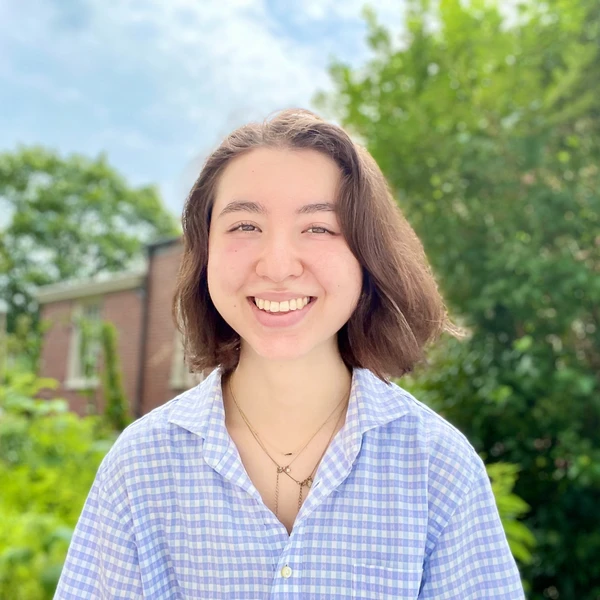
Maiah Newell

1x

Finalist

Bio

I'm an Education Fellow at a high school supporting students with learning disabilities in grades 9-12. I'm dedicated to igniting curiosity and confidence in my students, crafting experiences that don't just educate, but inspire a lifelong love of learning. I have a bachelors degree in Neuroscience and love learning about how people learn. This coming year, I'll pursue an M.Ed. in 5th-8th Grade Science at Harvard Graduate School of Education. I can't wait to bring what I learn this year into my future science classrooms, serving middle schoolers in underserved communities and inspiring the thinkers and dreamers of tomorrow.

Education

Harvard Graduate School Of Education

Master's degree program
2026 - 2027
  • Majors:
    • Education, Other

Dartmouth College

Bachelor's degree program
2020 - 2024
  • Majors:
    • Neurobiology and Neurosciences

Miscellaneous

  • Desired degree level:

    Doctoral degree program (PhD, MD, JD, etc.)

  • Graduate schools of interest:

  • Transfer schools of interest:

  • Majors of interest:

  • Not planning to go to medical school
  • Career

    • Dream career field:

      • Education
    • Dream career goals:

      To both widen and deepen access to inspired science education in underserved communities through classroom teaching and innovation, administrative work, and volunteering. This goal is fueled by a deep belief in science education as a form of preventative medicine and an enduring source of wonderment.

    • Education Fellow to Learning Specialist

      Buckingham Brown and Nichols
      2025 – 20261 year

    Research

    • Public Health

      Boston Childrens Hospital — Research Assistant and Co-Author
      2024 – 2024

    Public services

    • Volunteering

      826 Boston — Intern in Holland Tech Writers' Room
      2025 – 2025

    Future Interests

    Politics

    Volunteering

    New Beginnings Immigrant Scholarship
    I grew up in a linguistic haze. I was born in Tokyo to a Chinese mother and an American father. My godmother is Rwandan and lives in Spain. My godfather is Romanian and lives in Hungary. When I was four, we moved to Boston, where I grew up in a community of first-generation Americans and immigrants. My best friends spoke Korean, Arabic, and Telugu with their parents. Life has always been in translation. Since I was a child, I have marveled at how a thought in one person’s mind can flow through one, two, three different languages to lap up onto the shore of someone else’s. But I have also watched how easily this can go wrong. The thought may arrive waterlogged, warped. Or it may never arrive at all — lost at sea. Translation slips into mistranslation, and two people standing only a few feet apart suddenly seem separated by oceans. I know how hard this can make the most mundane things — buying groceries, getting on a bus — and how nearly impossible it can make the more important ones: classroom learning, parent-teacher conferences, doctor’s appointments, the kind of conversations that determine the shape of someone’s life. Growing up between languages means familiarity with their limitations. It also means familiarity with their unique powers. I studied Mandarin formally at Dartmouth, deepening a relationship with a language I’d known since childhood. That study revealed something I couldn’t have articulated before: language is not a vessel that carries meaning. Language is meaning. The way Mandarin encodes time, relationship, and respect is not the same as the way English does. To speak both is to hold two different maps of the world, and to understand that neither is complete on its own. My multilingualism has shaped the way I listen, the way I think, and — now — the way I teach. It brought me into the classroom. As an intern at the Dr. Albert D. Holland High School of Technology, I worked alongside students doing exactly what I had once done — learning in a language that wasn’t their first, carrying the weight and the gift of that in-between space. I remember the moment a Kreyòl-speaking student looked up and said, “Miss, I’m not bad at math!” — and I understood in my bones what had shifted for her. Not her ability. Her access. That is why I am pursuing my M.Ed. in 5–8 Science at the Harvard Graduate School of Education. I want to build public science classrooms where every student — including those who speak languages other than English — encounters those moments of understanding, when meaning and whatever treasures it carries reach the shores of their mind. Where no student is made to feel that the language they arrived with is a barrier rather than a bridge. I grew up between oceans. I intend to spend my life helping others navigate them.
    Ethel Hayes Destigmatization of Mental Health Scholarship
    I have lived with anxiety and OCD for as long as I can remember. As a child, they were quiet companions — manageable, mostly invisible, folded into the rhythms of daily life. But when I started college in 2020, quarantine stripped away every coping mechanism I had built without knowing I'd built them: the hallway conversations, the classroom energy, the steadying presence of other people. In their absence, my anxiety and OCD grew into something unrecognizable. An eating disorder took hold. And eventually, my body registered what my mind could not fully articulate — I lost my period entirely, a condition called amenorrhea, my nervous system's way of saying that something had gone seriously wrong. For a long time, I didn't have language for any of it. And even when I began to, shame kept me quiet. I knew resources existed — but shame had drawn a circle around me and told me I was the only one inside it. That whatever light existed out there wasn't quite meant to reach this far. In my freshman year at Dartmouth, three of my classmates died by suicide. I still wonder: did they know they were not alone? There were times when I wasn't sure I knew it either. The circle kept light from reaching me, but it also kept me from reaching out. But light always comes in, slowly and imperfectly. Some multi-faith experiences in college had left me curious. After graduating, I followed that curiosity into faith communities — Bahá'í services, a Christian congregation. What I found there, for the first time, was persistent connection. People who didn't flinch at the hard stuff. Who sat with me in the darkness without rushing me toward the light. People who let me know them in the same way that they knew me. What I learned there shattered something in me: I was not alone. Not in spite of my struggles, but through them and alongside them. I belonged. And the circle began to blur. That unlocked everything else. Without the barrier of shame, I sought help. I started to believe that the light out there might reach me after all. I think about those three classmates often. I think about what might have been different if shame had loosened its grip a little sooner — if the culture around them had made it easier to say I am not okay and be met with connection instead of silence. I cannot know what was happening inside each of them. But I know what shame can do. I know how it can make every outstretched hand feel like it isn't meant for you. That is what I want to change. And that is why I am pursuing my Master's in Education. I want to build classrooms where students know — not just intellectually, but in their bones — that they are seen. The light and the dark. That they belong. And that they have the remarkable, human power of making others feel that they belong too.
    Tawkify Meaningful Connections Scholarship
    I've always loved learning. Reading books. Doing science experiments. Learning languages. In all of it, there is this feeling that I chase. It's almost like something sliding into place in my brain. Click. Then a hum, as understanding ripples through the rest of my mind, like wind filling a sail. And suddenly, the oceans between me and the rest of the world seem a little smaller. I believe that feeling has a name: connection. Connection to an idea, to the world, and to the people around you. Science, at its core, is a pursuit of that connection — an endless, humbling attempt to understand the forces and phenomena that bind us to everything else. Every time a student grasps why the seasons change, or how a single cell becomes a human being, or what keeps the planets in their paths, they are not just learning a fact. They are finding their place in something vast and astonishing. That is why I want to teach science. And that is why I believe every child deserves access to that experience. I've always loved school, too. For the longest time, I thought this was simply because I was a nerd who loved learning. But COVID changed this. I graduated high school and started college in 2020 — a year that divided the world into a Before and an After. My Before was full of rushed hallway chats and lingering classroom discussions, full of wonder, warmth, and laughter. My After was Zoom School: turned-off cameras, muted microphones, and a silence where connection used to be. School became a cold, solitary endeavor. And it stopped feeling like school. That experience forced a question I hadn't thought to ask before: with the internet, anyone can learn anything, anytime, anywhere — alone. So what, then, is the point of school? My answer: school is learning through people. It is the knowledge that passes not just through textbooks, but through human connection — through a teacher who pauses mid-Latin lesson to tell you about the boat he bought on a Grecian isle in the eighties, or the classmate whose question cracks open something you didn't know you were confused about. We are made for connection. And it is through connection that we learn best. The path that brought me to teaching required perseverance. Like many students in 2020, I struggled in ways I didn't have language for, at a school that didn't have the resources to meet me where I was. I learned firsthand what it feels like to need support that isn't there. What carried me through was a sense of purpose that kept clarifying itself: I wanted to be someone who fosters the kind of connection I had needed. This desire led me into the classroom. As an intern last year at the Dr. Albert D. Holland High School of Technology, I aided classes where many students spoke languages other than English. I remember one forty-five-minute session: a Kreyol-speaking student's eyes lit up: "Miss, I'm not bad at math!" In an English class, a Vietnamese-speaking student who rarely spoke started to find her voice through a "Where I'm From" poem. At the end of that week of writing, she left a flock of origami cranes on my desk. These moments confirmed what I believe: the click of learning is something beyond language. It is a hunger wired into all of us — to understand, to connect, to belong to a world larger than ourselves. Today I tend that spark as an Education Fellow in Buckingham Browne and Nichols' Student Support Department, where I support students with neurodiverse needs. Together, my mentor and I designed "Cram Jams" — reimagined collaborative study sessions — and "Statements of Understanding" — a tool that helps students ask teachers for specific support. We are teaching students that asking for help is not a weakness. It is how connections sprout and grow. I am pursuing my M.Ed. in 5–8 Science at Harvard Graduate School of Education because I want to build classrooms where every student encounters that click — where science is taught not as a cold accumulation of facts, but as a living act of wonder at the world we share. Where curiosity is met with a hand outstretched, and no student is left to feel alone. That is the impact I intend to make. And this scholarship would bring me one step closer to making it.
    Special Needs Advocacy Inc. Kathleen Lehman Memorial Scholarship
    I’ve always loved learning. There is this feeling that I chase. It’s almost like something sliding into place in my brain. Click. Then a hum, as understanding ripples through the rest of my mind, like wind filling a sail. And suddenly, the oceans between me and the rest of the world seem a little smaller. At the helm of that great vessel of education has always stood a teacher—someone who had weathered a few more storms and could guide me through uncharted seas. Because my teachers helped me fall in love with the world, I want to be that guide for other young humans. My journey toward that position began at the Dr. Albert D. Holland High School of Technology, as an intern in their 826 Boston Writers’ Room. Though I was there for writing, I was soon pulled into algebra and physics classes where many students spoke languages other than English. With time and patience, I watched as language barriers slowly melted away. After forty-five minutes of equations, a Kreyol-speaking student’s eyes lit up: “Miss, I’m not bad at math!” In another class, a student from Vietnam gradually found her voice through a "Where I’m From" poem; when we finished, she left a flock of origami cranes on my desk. These moments taught me that the "click" of learning is something beyond language—a joy programmed into our very cells. I carried this realization to Andover Summer, where I helped teach a neuropsychology course. Suddenly, I had my own office hours where students buzzed with questions: How does the gut talk to the brain? Why does serotonin do so many things? Seeing that spark of curiosity in their eyes lit me up, and it is a spark I continue to tend today as an Education Fellow in Buckingham Browne and Nichol’s Student Support Department. Under the mentorship of a learning specialist, I support students in the Academic Center with neurodiverse needs likd ADHD, ASD, and Anxiety. This has been a masterclass in the "science of learning." I’ve learned to deconstruct lessons and units, then rebuild them to better integrate with how my students understand the world. The learning specialist and I have worked to take this reverse-engineering approach beyond the Academic Center to the greater student body. Through our novel "Cram Jams"—reimagined study sessions—and "Statements of Understanding"—a tool to help students ask teachers for targeted support—we’re teaching students how to stand at the helm of their own education. How to steer into the unknown, and not be afraid to ask for help. I want to keep pushing for these cultural shifts, working toward a future where collaboration is the norm and good questions are valued just as much as correct answers. Beyond the Academic Center, I shadow eighth-grade chemistry, teach neuroscience modules in Upper School Psychology, and cover Biology classes. Working in these science classrooms has made me realize two things: I am an aspiring science teacher, and I am forever a science student. I vividly remember the "click" in my own first neuroscience class—visualizing the receptor cells that allow me to feel and the tiny bones in my ears that allow me to hear. In that moment, science became alive, exciting, and—crucially—something I felt capable of doing. I want to replicate that experience of awe and accessibility for my students so they see themselves not just as consumers of facts, but as insatiable scientists who never stop asking questions. Now I have the opportunity to take what I have I've learned further develop it at the Harvard Graduate School of Education. This scholarship would help me do so.
    Philip and Jacqueline Benincasa Education Scholarship
    I’ve always loved learning. There is this feeling that I chase. It’s almost like something sliding into place in my brain. Click. Then a hum, as understanding ripples through the rest of my mind, like wind filling a sail. And suddenly, the oceans between me and the rest of the world seem a little smaller. At the helm of that great vessel of education has always stood a teacher—someone who had weathered a few more storms and could guide me through uncharted seas. Because my teachers helped me fall in love with the world, I want to be that guide for other young humans. My journey toward that position began at the Dr. Albert D. Holland High School of Technology, as an intern in their 826 Boston Writers’ Room. Though I was there for writing, I was soon pulled into algebra and physics classes where many students spoke languages other than English. With time and patience, I watched as language barriers slowly melted away. After forty-five minutes of equations, a Kreyol-speaking student’s eyes lit up: “Miss, I’m not bad at math!” In another class, a student from Vietnam gradually found her voice through a "Where I’m From" poem; when we finished, she left a flock of origami cranes on my desk. These moments taught me that the "click" of learning is something beyond language—a joy programmed into our very cells. I carried this realization to Andover Summer, where I helped teach a neuropsychology course. Suddenly, I had my own office hours where students buzzed with questions: How does the gut talk to the brain? Why does serotonin do so many things? Seeing that spark of curiosity in their eyes lit me up, and it is a spark I continue to tend today as an Education Fellow in Buckingham Browne and Nichol’s Student Support Department. Under the mentorship of a learning specialist, I support students in the Academic Center with neurodiverse needs likd ADHD, ASD, and Anxiety. This has been a masterclass in the "science of learning." I’ve learned to deconstruct lessons and units, then rebuild them to better integrate with how my students understand the world. The learning specialist and I have worked to take this reverse-engineering approach beyond the Academic Center to the greater student body. Through our novel "Cram Jams"—reimagined study sessions—and "Statements of Understanding"—a tool to help students ask teachers for targeted support—we’re teaching students how to stand at the helm of their own education. How to steer into the unknown, and not be afraid to ask for help. I want to keep pushing for these cultural shifts, working toward a future where collaboration is the norm and good questions are valued just as much as correct answers. Beyond the Academic Center, I shadow eighth-grade chemistry, teach neuroscience modules in Upper School Psychology, and cover Biology classes. Working in these science classrooms has made me realize two things: I am an aspiring science teacher, and I am forever a science student. I vividly remember the "click" in my own first neuroscience class—visualizing the receptor cells that allow me to feel and the tiny bones in my ears that allow me to hear. In that moment, science became alive, exciting, and—crucially—something I felt capable of doing. I want to replicate that experience of awe and accessibility for my students so they see themselves not just as consumers of facts, but as insatiable scientists who never stop asking questions. Now I have the opportunity to take what I have I've learned further develop it at the Harvard Graduate School of Education. This scholarship would help me do so.