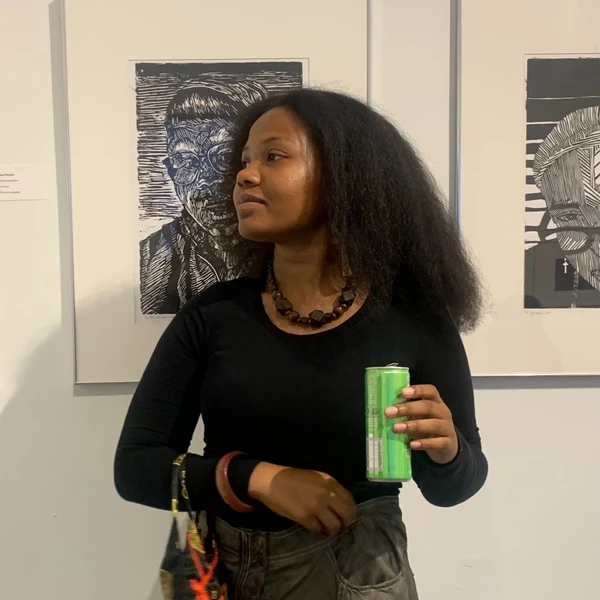
Madison Moore
1x
Finalist
Madison Moore
1x
FinalistBio
I am a second-year Computer Science major at Florida A&M University, an HBCU where I’ve developed a strong foundation in software development, problem-solving, and leadership. As a first-generation college student and proud Black woman in STEM, I’m committed to using technology to create solutions that uplift underserved communities. I’m actively involved in student organizations that promote diversity in tech and strive to inspire more women of color to enter the field. My long-term goal is to become a software engineer focused on cybersecurity and social impact.
Education
Florida Agricultural and Mechanical University
Bachelor's degree programMajors:
- Computer Science
Career
Dream career field:
Computer Software
Dream career goals:
Instructor
Stem2Hub2022 – Present4 years
Sports
Wrestling
Club2024 – Present2 years
Wrestling
Club2024 – Present2 years
Arts
Douglas Anderson School of the Arts
TheatreBlack Art2021 – 2022
ESOF Academic Scholarship
Education has always represented more than a degree to me—it represents opportunity, responsibility, and the ability to create meaningful change. As a Computer Science student at Florida A&M University, a proud Historically Black College and University, I am preparing for a career that combines technology, leadership, and public service. My educational goal is to graduate with a bachelor's degree in Computer Science and continue developing the technical and leadership skills necessary to serve in cybersecurity and national defense. Professionally, I aspire to become a military officer specializing in technology and cybersecurity, protecting the systems and infrastructure that millions of Americans rely on every day.
Choosing to attend an HBCU has been one of the most meaningful decisions of my educational journey. Florida A&M University has provided an environment where I am challenged academically while being surrounded by faculty and peers who believe in my potential. As an African American woman pursuing a degree in a STEM field where people who look like me remain underrepresented, attending an HBCU has reinforced the importance of representation, excellence, and community. It has strengthened my confidence and reminded me that success is not only about personal achievement but also about creating opportunities for others.
Throughout my education, I have intentionally sought experiences that prepare me for my future career. My coursework has strengthened my knowledge of programming, software development, computer systems, and ethical decision-making in technology. Beyond the classroom, I have learned that technical ability alone is not enough. Effective leaders must communicate, solve problems under pressure, and remain committed to serving others. These lessons have shaped both my academic and professional goals.
One of the most rewarding ways I have served my community has been through teaching robotics to K–12 students. Working with young learners allowed me to introduce them to engineering, programming, and problem-solving while helping them build confidence in their own abilities. Many students entered the classroom believing STEM was too difficult or that it was not meant for them. Watching them overcome those doubts and proudly demonstrate the robots they built reminded me that exposure and encouragement can change the trajectory of a young person's future. Those experiences strengthened my belief that investing in young people is one of the most meaningful forms of public service.
My commitment to service extends beyond education. I am pursuing a commission as an officer in the United States Coast Guard because I want my career to have a direct impact on protecting others. Preparing for military service has required discipline, resilience, and a willingness to challenge myself physically, mentally, and academically. Balancing demanding coursework with preparing for officer selection has taught me perseverance and effective time management while reinforcing the importance of accountability and leadership. Whether serving my community through education or serving my country through military leadership, I am motivated by the opportunity to make a difference.
My long-term goal is to combine my computer science education with public service by working in cybersecurity and national defense. As cyber threats continue to grow in complexity, our nation's digital infrastructure requires skilled professionals who can defend critical systems while adapting to rapidly changing technology. I hope to lead teams that protect sensitive information, strengthen national security, and develop innovative solutions to emerging cyber challenges. At the same time, I want to continue mentoring students, particularly young African Americans interested in STEM, because I understand the importance of seeing successful professionals who share similar backgrounds and experiences.
Receiving this scholarship would help ease the financial burden of completing my education and allow me to focus on preparing for a career dedicated to service. More importantly, it would represent an investment in someone committed to using education as a tool to improve the lives of others. I recognize that my success is connected to the support I have received from my family, educators, mentors, and community. As I continue my journey, I intend to pay that investment forward through leadership, mentorship, and public service.
The values of scholarship, leadership, and service have shaped my educational journey and will continue to guide my future. My goal is not simply to build a successful career but to build one that leaves a lasting impact. Through technology, military service, and community engagement, I hope to honor the legacy of those who opened doors before me while creating new opportunities for those who will follow.
Teria Onwuaduegbo Black Women in STEM Scholarship
As a Black woman pursuing a degree in Computer Science, I understand the importance of representation in STEM. Throughout my educational journey, I have often found myself in spaces where few people look like me. Rather than viewing that as a barrier, I have chosen to see it as motivation. My career goal is to work in cybersecurity and technology leadership while serving my country as a military officer, using my technical skills to protect critical systems and create opportunities for future generations of young women in STEM.
My interest in technology began with a curiosity about how computers and software solve real-world problems. That curiosity grew into a passion, leading me to earn my Associate of Arts degree and transfer to Florida A&M University to pursue a bachelor's degree in Computer Science. Through coursework in programming, computer systems, software development, and information technology, I have built a strong technical foundation that continues to prepare me for a career in cybersecurity and national defense.
While academic success is important, I believe achievement is measured by how we use our knowledge to help others. For several years, I worked with K-12 students through robotics education programs. Teaching students how to build and program robots allowed me to share my love of STEM while helping young learners develop confidence in their own abilities. Many students entered the classroom believing technology was too difficult for them, but by the end of the program they were solving problems, working as teams, and proudly demonstrating their creations. Seeing that transformation reinforced my belief that representation matters. When students see someone who looks like them succeeding in STEM, they begin to believe they can succeed as well.
In addition to my academic and community involvement, I have taken steps toward a career of service by pursuing a commission as an officer in the United States Coast Guard. Preparing for this opportunity has required discipline, perseverance, and a commitment to continuous improvement. Balancing a demanding computer science curriculum while preparing physically and mentally for military service has strengthened my leadership skills and taught me how to perform under pressure. These experiences have prepared me to lead others and tackle difficult challenges both in technology and in public service.
My long-term goal is to combine my computer science education with a career dedicated to cybersecurity and national security. As our society becomes increasingly dependent on technology, protecting digital infrastructure has never been more important. I hope to contribute to that mission while serving as a role model for other young Black women who aspire to enter STEM fields.
Teria Onwuaduegbo's legacy reminds us that our impact is not measured only by what we accomplish for ourselves, but also by the doors we open for others. Through my education, service, and commitment to STEM, I hope to honor that legacy by creating opportunities, inspiring future innovators, and making a meaningful difference in my community and beyond.
William A. Lewis Scholarship
One of the greatest obstacles I have faced in pursuing higher education has been learning how to continue moving forward while carrying the responsibility of funding my own education. As a Computer Science student at Florida A&M University, I have worked toward building a future in a challenging and constantly evolving field while also navigating the financial pressures that come with earning a college degree. There have been moments when balancing academic responsibilities with financial uncertainty made the path toward graduation feel overwhelming, but those challenges have strengthened my determination and commitment to my goals.
One of the hardest parts of this journey has been realizing that pursuing higher education requires more than academic ability. It requires persistence, discipline, and the willingness to find solutions when resources are limited. While I have been fortunate to have the support and encouragement of people who believe in me, I have also learned the importance of becoming my own advocate. I have had to seek opportunities, apply for scholarships, manage my expenses carefully, and stay focused on completing my degree despite financial challenges.
My mother has been one of the people who has helped me overcome this obstacle. Although she has not been able to fully fund my education, her encouragement and belief in my ability to succeed have motivated me to keep going. She has always reminded me of the importance of education and the opportunities that come with earning a degree. Her support has helped me maintain the mindset that temporary challenges should not determine my future.
I have also been helped by the community I have built at Florida A&M University. My professors, classmates, and mentors have shown me the value of having people around me who encourage growth and perseverance. Through my experiences in Computer Science, I have learned from others, challenged myself academically, and developed skills that will prepare me for a career where I can create solutions through technology.
Overcoming financial obstacles has taught me responsibility, resilience, and the importance of continuing to pursue my goals even when the path is difficult. Instead of allowing financial challenges to discourage me, I have used them as motivation to work harder and appreciate every opportunity I receive. As I approach my final year at Florida A&M University, my goal is not only to complete my degree but also to use my education to make a positive impact through technology.
Receiving this scholarship would provide meaningful support as I complete my education and continue preparing for my future career. More importantly, it would represent an investment in a student who has demonstrated perseverance and a commitment to success. I am determined to finish what I started, and I hope to one day provide the same encouragement and support to others who are working to achieve their educational goals.
Chadwick D. McNab Memorial Scholarship
The first time I built a tech solution that could help someone other than myself, I knew I had found my calling.
During my sophomore year at Florida A&M University, I participated in a campus hackathon where we were challenged to solve a real-world problem in 48 hours. My team chose to focus on a growing issue in our community: the lack of mental health resources accessible to Black college students. Inspired by my own experiences navigating stress, anxiety, and the generational stigma around therapy, I helped develop a prototype for a mobile app called “SafeSpace.”
The goal of SafeSpace was simple: provide culturally competent mental health support, peer-to-peer chatrooms, and immediate access to virtual counseling tailored specifically to HBCU students. I focused on the front-end development and user experience design, making sure the interface felt welcoming, easy to navigate, and emotionally safe. I even consulted with psychology majors and campus counselors to ensure the resources we recommended were credible and appropriate.
That project lit a fire in me. It was the first time I saw how my coding skills could go beyond assignments and grades — they could touch lives. It also showed me that tech isn’t just about innovation; it’s about intention. And when technology is designed with empathy, it becomes a tool for healing, connection, and change.
Working in technology inspires me because it's one of the few fields where creativity, problem-solving, and social impact can all exist in the same space. I love how a single idea — imagined at 2 a.m. with nothing but a laptop and a vision — can grow into an app, a platform, or even a movement. Every time I write code, I feel like I’m building the future. And as a young Black woman in computer science, I’m determined to make sure that future is inclusive, accessible, and empowering.
Beyond technical skills, tech has taught me confidence. It’s taught me how to fail fast, try again, and collaborate with others who bring different strengths to the table. It’s also given me a voice in spaces where people who look like me are often underrepresented. And every time I take up space in a tech room, whether it’s a classroom or a pitch meeting, I know I’m making it a little easier for the next Black girl who dreams of coding something that matters.
Today, I’m continuing to expand SafeSpace into a real application with the help of peers and mentors, and I hope to launch it campus-wide by graduation. My dream is to keep building tools that don’t just solve problems, but solve people’s problems — the kind that impact lives, families, and futures.
Technology has given me more than a career path — it’s given me a way to serve. And that’s what drives me every day: knowing that with the right lines of code and a strong sense of purpose, I can turn ideas into impact and passion into progress.
Gladys Ruth Legacy “Service“ Memorial Scholarship
I know I’m different the moment I walk into a computer science lecture and realize I’m the only Black woman in the room.
Some people might shrink in that moment. I stand a little taller.
I’m different because I’ve learned to lead without always being the loudest. I’ve learned to thrive in spaces that weren’t built with me in mind. I’m a first-generation college student, a third-year computer science major at Florida A&M University, and a young Black woman breaking into a field where we make up less than 3% of the workforce. But instead of letting that statistic discourage me, I wear it like armor.
What makes me different isn’t just the color of my skin or my chosen major — it’s how I use my difference to quietly challenge expectations and inspire others who might be too afraid to speak up, ask questions, or even dream big in public.
A few months ago, a freshman student I had never spoken to stopped me after class. She said, “I saw you answer the professor’s question, and I realized I could speak up too.” That one sentence reminded me: someone is always watching. And that’s exactly why I keep showing up — even when I’m tired, even when imposter syndrome creeps in, even when I feel alone. Because I know I might be the reason someone else keeps going.
I don’t lead with a spotlight; I lead by example. Whether it's tutoring classmates late at night before a final, organizing coding workshops for high school girls of color, or just being the one to say, “You’ve got this,” to someone doubting themselves — I know these small moments can ripple in powerful ways.
My uniqueness allows me to connect with people who might not feel seen. I speak their language — not just technically, but emotionally. I understand what it’s like to be underestimated, overlooked, and expected to give up. So I make it my quiet mission to be what I didn’t always have: someone who keeps going anyway.
At FAMU, I’m not just earning a degree. I’m building a legacy of representation, one classroom at a time. And whether it’s the shy girl in the back of the room or the high school student scrolling through my LinkedIn one day, I know that how I carry myself — my presence, my persistence — might be the permission someone else needs to believe in their own power.
Being different doesn’t isolate me. It motivates me. Because I’ve realized my uniqueness isn’t a limitation — it’s a spotlight. And I use that spotlight not to shine on myself, but to light the path for the ones coming behind me.
Even if I never meet them, I hope they see me and think, “If she can do it, maybe I can too.” That’s the difference I want to make.
Linda Hicks Memorial Scholarship
I was eight years old the first time I realized love could hurt.
My mother had tried to leave my stepfather more than once, but every time she did, the fear of “what if” pulled her back — what if he found her? What if she couldn’t afford rent alone? What if no one believed her story? Watching her endure years of emotional abuse and financial control shaped my childhood in ways I’m still unpacking as an adult. There were days when the silence in our home was louder than shouting. Days when I had to be the adult — making sure my younger siblings ate while my mom stayed locked in her room, emotionally paralyzed.
Domestic violence didn’t just scar her — it reshaped all of us. And like many African American women, my mother suffered quietly. There were no police reports. No counseling. Just survival.
This experience is why I chose to attend Florida A&M University and pursue a degree in computer science. It might not seem like the obvious path to help women like my mother, but I see technology as one of the most powerful tools we have to change lives — especially in the Black community.
African American women are often underserved, misunderstood, and overlooked when it comes to domestic violence and substance abuse resources. They’re less likely to have access to culturally competent support, and more likely to face stigma when seeking help. I want to use my education in computer science to bridge that gap.
My goal is to build digital platforms and apps that make it easier for Black women to get connected to safe resources — anonymously, securely, and immediately. Imagine a mobile app that uses encrypted chat to connect women to counselors of color. Or a resource finder tailored to their zip code that avoids judgment and offers support in plain, accessible language. Imagine if my mother had that.
But I don’t want to stop at just creating tools — I want to lead conversations in tech spaces about trauma-informed design, especially when working with vulnerable populations. I believe care coordination starts at the code level — when we design with empathy and cultural awareness, we don’t just build better products, we build better futures.
At FAMU, I’ve already begun building this foundation. I’ve collaborated on tech projects focused on community health, and I’m part of organizations that amplify Black women in STEM. I’ve also volunteered with shelters and youth programs, listening to the stories of girls growing up in homes like mine — girls who need more than a hotline number on a flyer.
Higher education has given me the skills and confidence to take my pain and turn it into purpose. With each line of code I write, I carry the voices of women like my mother. My mission is to change outcomes for them — not just with compassion, but with action.
This scholarship would help me continue that mission. It would support not only my education, but my commitment to rewriting what safety, healing, and empowerment can look like for African American women impacted by abuse.
HBCU STEM Scholarship
The day I taught my grandmother how to use her smartphone changed my life.
She had always avoided technology, calling it "too complicated," but when I showed her how to send voice messages to my aunt across the country, the joy in her eyes was unforgettable. It was in that moment I realized: technology isn't just about code — it's about connection. That moment planted the seed for my journey to college and my pursuit of a degree in Computer Science at Florida A&M University.
Going to college is important to me because it’s the bridge between the world I come from and the world I want to help build. I’m a first-generation college student, raised in a working-class Black household where grit was a given and opportunity had to be earned. College is more than just a degree for me — it’s a chance to break generational cycles, uplift my family, and create real change through innovation.
My major in computer science is challenging, but it empowers me. I’m not just learning to write algorithms or debug code — I’m learning how to solve real-world problems. I want to be part of the next wave of Black women in tech who bring cultural perspective, community focus, and creativity into spaces where we are underrepresented. Attending an HBCU like FAMU amplifies that mission. I’m surrounded by professors and peers who look like me, believe in me, and push me to lead.
From my college experience, I want more than knowledge — I want impact. I plan to use my education to develop accessible tech tools for underserved communities, particularly in areas like cybersecurity, education access, and digital literacy. Whether it’s building safer apps for teens or creating platforms for small Black-owned businesses, I want my work to be meaningful and rooted in equity.
I also want college to shape me as a leader. I’ve already taken initiative by joining tech-centered organizations on campus, participating in mentorship programs, and helping younger students navigate their own academic challenges. I want to continue growing in those roles — and one day, mentor the next generation of Black girls in tech who never thought they belonged in this field until they saw someone who looked like them thriving in it.
At its core, my college journey is not just about me — it’s about the people I represent, the barriers I hope to break, and the legacy I want to leave behind. Earning a degree in computer science isn’t just my dream — it’s my launchpad to create something greater than myself. That’s why I’m here. That’s what I want to get out of college.
And that’s why this scholarship would mean everything to me — not just as financial support, but as a reminder that someone believes in what I’m trying to build.