Hobbies and interests
Cheerleading
Soccer
Photography and Photo Editing
Reading
Fantasy
Young Adult
Thriller
Suspense
True Story
Christianity
Christian Fiction
I read books multiple times per week
Madison Vinsant
1x
FinalistMadison Vinsant
1x
FinalistBio
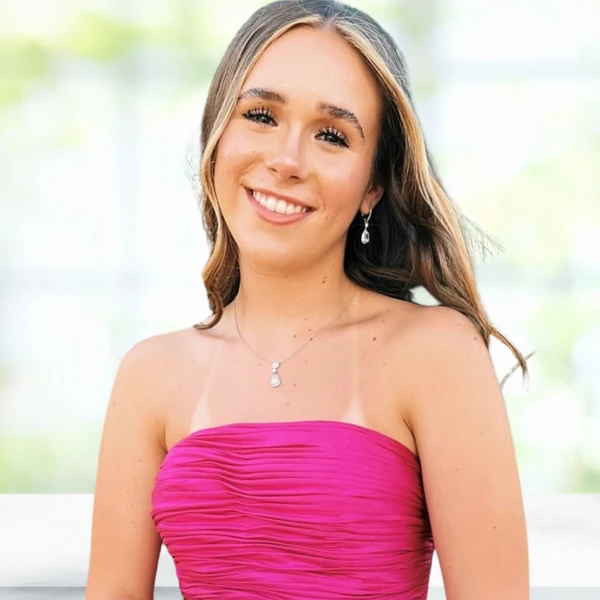
Maddie is a dedicated student-athlete who cheers for both varsity football and varsity basketball and plays on her school’s varsity soccer team. As a proud new aunt to her premature nephew, she’s even more inspired to pursue her dream of becoming a pediatric or NICU nurse so she can care for children and newborns with compassion and strength. Her heart for others, both on and off the field, shows in everything she does, from mentoring younger teammates to volunteering with kids in her community. 🏆 Maddie is also a Topical Winner for the JUST POETRY!!! Summer 2025 Anthology. Published in national poetry collection for high school students (Top 2% of submissions).🏆
Education
Calvary Christian School
High SchoolMiscellaneous
Desired degree level:
Bachelor's degree program
Majors of interest:
- Registered Nursing, Nursing Administration, Nursing Research and Clinical Nursing
Career
Dream career field:
Hospital & Health Care
Dream career goals:
To become a compassionate and skilled pediatric or NICU nurse, providing specialized care for infants and children while supporting families through some of their most vulnerable moments. I am passionate about making a lasting impact in the lives of young patients through both clinical excellence and heartfelt care.
Front of House
Chic Fil A2025 – Present1 year
Sports
Cheerleading
Varsity2022 – Present4 years
Soccer
Varsity2024 – Present2 years
Research
Registered Nursing, Nursing Administration, Nursing Research and Clinical Nursing
Independent Research — Diagnosed with ADHD at a young age, I independently researched its impact on learning and emotional regulation. This journey deepened my understanding and fueled my passion for advocating for neurodiverse individuals.2020 – PresentRegistered Nursing, Nursing Administration, Nursing Research and Clinical Nursing
Independent Research — Inspired by my nephew’s NICU stay, I researched neonatal nursing, infant care, and family support. This experience sparked my passion for helping NICU families and motivated my long-term goal of starting a nonprofit to support them through their journey.2025 – Present
Arts
Independent / Self-Directed
Photography2023 – Present
Public services
Volunteering
Calvary Christian School — Student Volunteer2022 – PresentVolunteering
Fox Elementary School — Student Mentor – Fox Elementary School2024 – 2024Volunteering
Valley Rescue Mission — Volunteer2024 – 2024Volunteering
Samaritan's Purse International Relief — Disaster Response Specialist2024 – 2024
Future Interests
Advocacy
Volunteering
Philanthropy
Children of Divorce: Lend Your Voices Scholarship
I’ve never met my biological father, but he changed everything about my life.
He left and divorced my mom the moment he found out my mom was pregnant with me. No slow fade. No phone call. No explanation. Just gone. Before I ever took a breath, he decided I wasn’t worth staying for.
Growing up, I lived in the silence he left behind. I’d ask questions my mom couldn’t always answer, and I’d watch her eyes fill with tears when she tried. She never said a bad word about him. She didn’t have to. The absence spoke louder than any bitterness ever could.
I didn’t always understand the weight I carried. But I felt it. In the moments I stared too long at families with dads cheering on the sidelines. In the Father’s Day art projects I quietly handed to my mom. In the birthdays he never called. The truth is, the first man who was supposed to love me… didn’t.
But I did have someone. My stepdad came into my life when I was little, and while our relationship isn’t perfect, he showed up. He sat through dance recitals. He prayed with me at dinner. He did the ordinary things that, to a kid like me, felt extraordinary. But even as I felt loved, there was a part of me that always wondered why the man who helped create me never even wanted to know me.
As I got older, that ache turned into determination. I reached out. More than once. Through messages. Through mutual contacts. Through hope. And I never heard back. Not once. Not even to say no. That silence was its own kind of answer, one that hurt just as much as it always had.
You’d think by now I’d be numb. But I’m not. I’ve just learned how to carry it differently.
His choice, that decision to walk away before I ever had a chance to say “dad”, shaped my childhood in ways I’m still discovering. It made me question my worth. It made me overthink every goodbye. It made me crave stability, reassurance, and love with a kind of hunger that’s hard to explain.
But it also gave me grit.
I watched my mom cry through exhaustion to give me everything she could. I saw how she sacrificed and stayed strong when it would’ve been easier to fall apart. That woman raised me to believe in showing up, even when it’s hard. Especially when it’s hard. And if my father’s absence taught me anything, it’s that I never want to be someone who walks away from the people who need me.
That’s part of why I want to be a nurse, to be present in people’s hardest moments. To show up when things are messy and real and painful. I want to be the kind of person who runs toward the need, not from it.
My father may have left a blank space where a relationship should’ve been. But I’ve filled it with resilience, purpose, and a fire to prove that his absence doesn’t define me, I do.
So, how did his decision to leave impact my life? It hurt. Deeply. But it also carved a space for strength. It gave me a reason to rise. And every time I hold on to my dreams, every time I show up when it would be easier not to, I win. I take back a piece of what he tried to take from me.
He left before he even knew me.
But I’m still here, becoming someone worth knowing.
Learner Mental Health Empowerment for Health Students Scholarship
They say you can’t see a mental wound, but I’ve felt mine scream loud enough to drown out everything else.
As a student living with ADHD and bipolar II, mental health isn’t just important, it’s essential. It determines whether I can focus in class, manage my emotions, or even get out of bed some mornings. For years, I thought I was just “too sensitive” or “not trying hard enough.” I didn’t know why my moods felt like rollercoasters or why concentrating in a quiet classroom felt like being underwater with no air. It wasn’t until I got older, and finally diagnosed, that I realized I wasn’t broken. I was struggling with something real.
That realization shifted everything. It’s one thing to try to survive school while your brain feels like it’s working against you. It’s another to understand what’s happening and start to reclaim power over your mind. But the truth is, support doesn’t always come easy. Mental health is still something people whisper about, joke about, or dismiss, especially in school settings. And that silence can feel more isolating than the diagnosis itself.
So, I decided to stop being silent.
In my school community, I’ve learned to be a quiet kind of advocate, the kind who listens when a classmate is overwhelmed, who shares my story when I know someone else is silently struggling, and who reminds others (and myself) that asking for help is a form of strength. Whether it’s gently encouraging a friend to talk to a counselor, or speaking up when I hear someone call someone “crazy” or “dramatic,” I try to create space for mental health to be talked about with respect and compassion.
At home, I’ve helped my parents understand what my diagnoses mean and how to support me better. It hasn’t always been easy, especially since I was a late-in-life baby and my parents are getting ready to retire. Our generations often view mental health differently, but having open conversations, even when they’re hard, has brought us closer. I’ve learned how to advocate for myself while helping the people I love learn how to show up for me, too.
Mental health is also something I carry with me into my future goals. I plan to pursue a degree in nursing, with hopes of working in pediatric or NICU care, a decision deeply shaped by watching my nephew, Knox, fight for his life in the NICU. Supporting families through the hardest moments of their lives requires more than clinical skill; it requires empathy, patience, and mental resilience. I want to be the kind of nurse who doesn’t just treat patients, but truly sees them, especially the ones who are quietly battling invisible struggles, just like I was.
If I’ve learned anything, it’s that your brain might not always be kind to you. But you can still learn how to be kind to yourself. You can still chase goals, build community, and make space for healing, one conversation, one breath, one brave step at a time.
Because mental health isn’t just important to me as a student. It’s the reason I’m still here. Still fighting. Still dreaming.
And still rising.
David Foster Memorial Scholarship
I used to think Language Arts was where my confidence went to die.
While I excelled in other subjects, reading and writing always felt like a brick wall I couldn’t scale. I dreaded book reports, barely survived essays, and counted the minutes in every English class, until my junior year. Until Mrs. Shannon Probst.
Mrs. Probst didn’t just teach literature, she lived it. Her classroom was filled with warmth, twinkle lights, and stories that seemed to breathe on their own. From the very first day, there was something different about her. She didn’t treat struggling students like problems to fix. She treated us like people worth reaching. And for the first time in my academic life, I felt seen in a Language Arts classroom.
She never gave up on me, even when I stumbled over sentence structure or misunderstood a reading. Instead of red-pen corrections that stung, she offered encouragement that stuck. She would write notes on my papers like, “This idea is powerful, develop it!” or “You’re on to something big here.” Where other teachers saw what I lacked, she saw what I could become. That belief changed everything.
Under her guidance, I stopped being afraid of words. I started writing with intention. I started reading with curiosity. And more than that, I started to believe that my voice mattered, that I had something worth saying, even if it didn’t come out perfectly the first time.
Her passion for literature was contagious, but it was her belief in her students that was truly life-changing. I remember one day in particular, when she pulled me aside after class. She said, “Madison, you’re a writer, you just don’t know it yet.” No teacher had ever said something like that to me before. I walked out of that room feeling taller, stronger, like maybe I wasn’t a failure in this subject after all.
She didn’t just make me love Language Arts. She made me love learning again.
Mrs. Probst didn’t just influence my academic performance, she influenced my self-worth. She showed me that being good at something doesn’t always come naturally, and that’s okay. Growth is still growth, even if it starts in the hard places. Her encouragement helped me realize that my challenges with ADHD and learning differences didn’t make me incapable, they just meant I’d have to take a different route. And that route, though harder, has made me resilient, determined, and proud of the progress I’ve made.
As I move forward toward college and a career in healthcare, I carry the confidence she helped build. I write more clearly, read more willingly, and express myself more fully. But more than that, I carry her example, of what it means to lift others up, to teach with kindness, and to see the best in people before they see it in themselves.
If every student had a Mrs. Probst, the world would be filled with more writers, more readers, more dreamers, and more students who finally believe they can.
Individualized Education Pathway Scholarship
I used to stare at my homework like it was written in a foreign language, one that everyone else seemed to understand except for me.
From elementary school onward, I knew I wasn’t like the "other kids". While my classmates flew through reading assignments or solved math problems with ease, I stayed behind during recess trying to decode sentences that wouldn’t click or finish problems that I couldn't wrap my brain around. I wasn’t lazy. I wasn’t uninterested. But I was misunderstood, even by myself.
Eventually, my teacher put me in a classroom with a few other kids that were having difficulties keeping up. It was supposed to be a solution, but at first, it felt more like a spotlight. Suddenly I was the one who had to leave class for extra help, the one who took tests in different rooms, the one with “special accommodations.” Kids don’t always know how to be kind about difference, and I learned early on how to smile through humiliation. I can't begin to tell you how many kids laughed at me and whispered to their neighbor that I was "slow". I became an expert at pretending I wasn’t embarrassed. But inside, I carried the ache of constantly feeling less than.
The hardest part wasn’t the meetings or the tutoring sessions. It was the way I started to believe the limits others placed on me. I internalized the labels. I stopped raising my hand. I stopped trying as hard. I thought, "If the world sees me as broken, maybe I am".
But pain has a strange way of turning into fuel.
One day, I got tired of feeling small. I was tired of letting my learning disability define the way I saw myself. I started asking questions, not just in class, but about my brain. I learned how ADHD works, how my brain struggles to stay organized, remember things, and focus when it matters most, and how bipolar II adds another layer of intensity to it all. But most importantly, I learned that I was not broken. I was wired differently. I needed different tools, not a different brain.
I became my own advocate. I asked for clarification when I didn’t understand. I broke assignments into smaller pieces. I rewrote notes in words that I could understand. I started using apps, color-coded planners, and timers to manage my focus. It didn’t always go smoothly, but it was a start. Slowly, I began to prove to myself what I had always hoped was true. I could do hard things. I could succeed, not despite my ADHD, but by learning how to work with it.
What motivates me to keep going? Honestly, it’s remembering the younger version of myself. The one who cried in the bathroom during spelling tests. The one who thought she wasn’t smart enough for college. I fight for her every time I turn in an assignment, advocate for an accommodation, or write another scholarship essay. And I keep going because I want to be the adult I needed back then, someone who sees potential where others only see problems.
I’ve learned that success doesn’t always come in the form of straight A’s or perfect transcripts. Sometimes, it comes in the form of resilience, the kind you earn by climbing out of a hole others told you was permanent.
I walk this path for the girl who once doubted her worth, so she’ll always know just how far she’s come.
Kylee Govoni Memorial Scholarship
There’s a moment forever etched in my heart: standing in the NICU, eyes fixed on my newborn nephew Knox, born a month and a week early, covered in wires and tubes, his tiny chest rising and falling with labored effort. I had never felt so powerless and yet so fiercely determined. In those days, filled with uncertainty, beeping monitors, and whispered prayers, I discovered a strength in myself I didn’t know I had. I also discovered something else: a calling.
Watching Knox fight for every breath changed me. I remember asking questions constantly, researching every term the doctors used, and holding back tears while trying to stay strong for my family. My sister in law and brother were exhausted and overwhelmed, and I wanted to be the calm in the chaos. I sat beside them, taking notes, asking nurses for explanations, trying to learn everything I could to be helpful. But the more I learned, the more I realized I didn’t just want to be helpful for Knox, I wanted to be helpful for every child fighting like him, and for every family holding onto hope beside their hospital bed.
While the NICU is a specialized field, my experience there opened my heart to pediatric nursing more broadly. I saw firsthand how crucial compassion, patience, and clarity are when caring for both children and their families. Kids don’t always have the words to explain what they’re feeling, and parents are often juggling fear with a thousand unspoken questions. Pediatric nurses don’t just care for the physical needs of their patients, they become translators of medical language, emotional support systems, and sources of light during some of the darkest moments.
I want to be that light. I want to walk into hospital rooms and bring reassurance, not because I have all the answers, but because I know what it’s like to sit in that chair, desperate for kindness and honesty. I want to be the nurse who notices the scared sibling in the corner, who holds a hand a little longer, who explains treatment plans in ways that comfort rather than confuse.
Strength and determination aren’t always loud. Sometimes they look like holding your breath while a baby’s monitor dips, or staying up late to research terminology so your sister in law doesn’t have to. Sometimes it’s showing up every day with hope, even when you’re scared. I’ve lived those moments. And I know they prepared me for this path.
Becoming a pediatric nurse isn’t just my career goal, it’s the most honest expression of who I am. It’s the way I turn pain into purpose. It’s how I honor Knox’s fight, by helping other children fight too, and by being a source of calm, compassion, and courage for the families who love them.
GUTS- Olivia Rodrigo Fan Scholarship
“I’m playin’ the victim so well in my head, but it’s me who’s been makin’ the bed.”
When I first heard that line in Olivia Rodrigo’s “Making the Bed,” I had to pause the song and sit in silence for a second. I’ve replayed that lyric so many times, not because it hurts, but because it speaks. It speaks to the part of me that’s had to navigate the complexities of growing up with ADHD, and later, being diagnosed with Bipolar II disorder. It speaks to the part of me that has struggled to separate my own chaos from the chaos around me.
Adolescence is messy for everyone, but for me, it’s felt like trying to swim in open water without knowing where the waves will come from. I spent a long time wondering why I was different, why I couldn’t focus like my classmates, why my emotions felt so big, why some days I was on fire with ideas and other days I couldn’t get out of bed. For a while, I thought I was just broken. I even blamed others, or imagined scenarios where I was always the misunderstood one. That’s why that lyric hit so hard. Because growing up has been about realizing that I do have power over my life, even when it feels like I don’t.
Olivia’s words capture that fragile turning point in adolescence when you start taking responsibility, not in a shameful way, but in a way that gives you back your self worth. That lyric helped me understand that while I can acknowledge the challenges life has handed me (an absent biological father, navigating mental health, the pressure of taking on my future with limited financial help), I can also acknowledge the choices I make in response. I’ve learned to “make the bed” with intention instead of helplessness.
My diagnosis didn’t define me. It gave me language. It helped me understand why my brain works the way it does and how to live in harmony with it. Instead of fighting myself, I’ve learned to advocate for myself, to create systems, to reach out for help, and to be patient when things aren’t perfect. That lyric reminds me that we often imagine ourselves as characters in other people’s stories. But we’re the ones writing our own story.
Music like Olivia Rodrigo’s has been a mirror to my own teenage experience; confusing, passionate, lonely, and loud. But it’s also helped me reflect. I’m not just surviving my adolescence anymore. I’m shaping who I want to be: someone who’s honest, someone who’s resilient, and someone who lifts others the way I’ve been lifted.
Growing up hasn’t been perfect, but it’s been real. And just like Olivia, I’ve learned that claiming your story; flaws, heartbreaks, and all, is the bravest thing you can do.
Beacon of Light Scholarship
Tiny wires. Monitors beeping. My nephew fighting to breathe. That’s when I knew I wanted to be a nurse.
When my nephew Knox was born prematurely, one month and one week early, everything changed. What was supposed to be a joyful, ordinary day became an urgent medical situation. My sister-in-law’s blood pressure was spiking and dropping at alarming rates, and doctors made the quick decision to deliver Knox early for the safety of them both. None of us were prepared, and certainly not for what followed: his immediate transfer to the Neonatal Intensive Care Unit (NICU).
I’ll never forget the feeling in that hospital room, both the panic and the stillness. Knox was so small, his chest rising and falling with visible effort. But more than anything, I remember the nurses. They didn’t just save his life, they gave our family comfort, strength, and hope in a moment that felt completely out of control. Their voices were calm, their hands steady, and their presence reassuring. Watching them care for my nephew like he was their own child planted something deep in me: a calling.
That experience was the moment I knew I wanted to become a nurse.
Healthcare is not just about knowledge and charts and machines, it’s about showing up when families are afraid, when life is uncertain, and when every second counts. In those early days of Knox’s life, it was the nurses who reminded us to breathe. They became our heroes, our guides, and our emotional anchors. That’s exactly the kind of nurse I want to be.
My goal is to earn a degree in nursing and specialize in neonatal care so I can work in the NICU, just like the women and men who cared for Knox. I want to be the person who walks into the room and instantly brings a sense of calm. I want to help babies fight for their first breaths and support families as they hold their newborns for the first time, sometimes through wires and monitors. I want to be a light in the darkest moments, because I know firsthand how much that light matters.
This scholarship would help me pursue that dream. With my parents nearing retirement, I know that the responsibility of funding my education is mine. I’m ready to work hard, to study, to dedicate myself fully to this field, because this isn’t just a career path to me. It’s a calling rooted in family, compassion, and a very real, very personal experience that forever shaped my future.
Knox is thriving now, but the impact of those early days in the NICU hasn’t faded for me. If anything, it’s only made my passion grow stronger. I want to be a nurse who helps other families walk through what we did, with care, with confidence, and with compassion. Because every tiny heartbeat deserves to be cradled by hope from the very first breath.
NYT Connections Fan Scholarship
Some people use puzzles to pass the time. I use them to piece myself together.
Living with ADHD and bipolar disorder means my mind is often moving faster than my body, jumping from idea to idea, emotion to emotion. Some days I feel like sixteen thoughts are bouncing around my head at once, loud, tangled, and impossible to name. But puzzles, especially ones like Connections, offer a rare gift: the chance to bring clarity to chaos. To sort, to name, to understand.
So I built a puzzle, not just of words, but of myself.
The Grid:
Impulsive, Distracted, Hyper, Restless
Joy, Rage, Numb, Despair
Medication, Therapy, Sleep, Routine
Creative, Resilient, Empathetic, Intuitive
From the outside, they may look like random words. But to me, they are a mirror. A reflection of a mind that doesn't always play by the rules, but still has a rhythm, one I’ve spent years learning to live with and listen to.
Category 1: Symptoms
Impulsive, Distracted, Hyper, Restless
This is the noise. The racing thoughts, the forgetfulness, the way I’ll talk too fast or switch topics mid-sentence without realizing it. ADHD isn’t just about being “easily distracted”, it’s about feeling like your brain is a browser with 37 tabs open, and a few playing music you can’t find. This is the part people notice. But it’s not the whole story.
Category 2: Emotions
Joy, Rage, Numb, Despair
This is the rollercoaster, the bipolar side. There are days when I feel invincible, like the world is mine. Then there are days when I disappear into myself and can barely speak. And sometimes, I just feel nothing. The extremes are exhausting, and the in-betweens are often misunderstood. But naming these emotions helps me honor them. They are real, even when they change quickly.
Category 3: Management
Medication, Therapy, Sleep, Routine
This is the part I fight for every day. Stability doesn’t happen by accident, it’s something I build, carefully and intentionally. Medication helps regulate the chemistry, therapy gives me tools, sleep resets my system, and routine… well, routine is the backbone. I never thought something as simple as getting up at the same time or writing a to-do list could make such a difference, but it does.
Category 4: Strengths
Creative, Resilient, Empathetic, Intuitive
This is the part people don’t always see, but I know it’s there. My mind might be loud, but it’s also imaginative. My lows have made me resilient. My chaos has made me empathetic. And my ability to read the room, to feel the shift in energy before anyone else, is something I’ve come to see as a gift. These aren’t just silver linings, they’re survival skills turned superpowers.
This puzzle is more than a word game. It’s a way of telling my story, not as a diagnosis, but as a person. Someone who has bad days, brilliant ideas, unpredictable moods, and a deep desire to understand herself. Living with ADHD and bipolar disorder can feel like trying to solve a puzzle that keeps changing. But with time, effort, and care, the pieces start to fit.
And when they do, I don’t just see a list of symptoms or struggles.
I see a whole person. I see me.
Learner SAT Tutoring Scholarship
More Than a Test: Why the SAT Matters to Me
To many students, the SAT is just another standardized test, one more hoop to jump through on the way to college. But to me, it’s much more than that. It’s a turning point. It’s an opportunity to open doors that have never been opened before. This test has the power to influence not just where I go to college, but how I get there and what kind of opportunities I’ll have once I arrive. I see the SAT not as an obstacle, but as a bridge, one that leads directly to my dream of becoming a nurse.
Nursing has always felt like a calling. It’s more than just a career choice, it’s something I feel pulled toward with my whole heart. I’ve seen how powerful compassion and knowledge can be when someone is in pain, scared, or uncertain. I want to be the kind of nurse who offers comfort and strength in those moments. I know that becoming that person starts with my education, and that education starts with doing everything I can to succeed on the SAT.
That’s why I’ve built a consistent study routine and stuck with it. Every evening, I dedicate at least an hour to SAT prep. I give myself a 15-minute break somewhere in the middle to recharge, but I always stay focused. I’m using Khan Academy for personalized practice, working through my Princeton Review SAT book to build strategy, and regularly taking full-length practice tests from the College Board. These tools help me stay sharp and track my progress, but they’re only part of the equation. The real challenge is mental; staying motivated, managing my time, and holding myself accountable day after day.
It hasn’t been easy. There are times when I’m tired or feel overwhelmed, but then I remind myself what I’m working toward. A good SAT score could mean scholarship opportunities, acceptance into strong nursing programs, and the chance to ease some of the financial pressure of college. Most importantly, it brings me one step closer to the career I’ve dreamed about for years.
Preparing for the SAT has taught me more than just math and reading skills. It’s taught me discipline, time management, and the value of hard work. These are the same qualities that great nurses possess, and I’m working to build them now. I want to walk into the test room knowing that I’ve done everything I could to prepare.
This isn’t just about filling in the right bubbles. It’s about proving to myself that I can take control of my future. The SAT is more than a test, it’s the start of something bigger. And I’m ready for it.
Ethel Hayes Destigmatization of Mental Health Scholarship
How My Experience With Mental Health Has Shaped My Goals, Relationships, and Understanding of the World
I was born into a situation that, from the outside, looked complicated. My biological father left before I was born, and he never looked back. As I grew older and started forming my own thoughts, I reached out, more than once. I wasn’t looking for money or apologies. I just wanted to understand. I wanted to know why someone wouldn’t want to know their own child. Each time, I hoped for a different response, and each time I was met with silence. The emotional weight of that kind of rejection can be hard to put into words. It doesn’t hit all at once, it shows up in the quiet moments, in the self-doubt, and in the ache of unanswered questions.
Thankfully, my story doesn’t end there. My stepfather came into my life and became the parent I never knew I needed. He’s in his 70s now and has been one of the most consistent and loving presences in my world. Alongside my mom, who had me later in life and raised me as a single mother for many years, they gave me a foundation of stability and care. But even with that love, the absence of my biological father created a hole I’ve carried with me for as long as I can remember.
Throughout my childhood, I struggled with ADHD. I often felt like I was fighting my own brain just to do the things that seemed to come easily to others like staying focused in class, sitting still, and organizing my thoughts. It wasn’t that I didn’t care or wasn’t trying, I was trying so hard, every single day. But when your mind moves at lightning speed in a hundred directions at once, even basic tasks can feel like mountains. Teachers sometimes misunderstood me, friends didn’t always get me, and I often felt like I was falling short in a world that demanded neatness and control.
The fight with my own mind didn’t end there. As I got older, new challenges emerged, more intense, more confusing. Eventually, I was diagnosed with Bipolar II disorder. It was scary at first. The mood swings, the energy crashes, the emotional intensity, it felt like I was losing control of my life. But at the same time, it was also a relief. It gave me answers, a name for the chaos I had silently battled for years. With the right support, therapy, and tools, I began to understand myself better, not as someone broken, but as someone learning to manage a different kind of normal.
Mental health has shaped every part of who I am. It has taught me the value of patience, with others and with myself. It’s taught me that healing isn’t a straight line, and that strength doesn’t always look like having it all together. Sometimes strength is just getting out of bed and trying again. Sometimes it’s saying, “I need help.” And sometimes it’s just letting yourself feel what you feel without shame.
My experiences have also impacted the way I view relationships. I understand now that some people, like my biological father, may never be able to give me what I needed from them. And that’s hard. But I’ve also learned how to build meaningful, healthy relationships built on openness and trust. I’ve learned how to forgive, even without apologies. And more importantly, I’ve learned how to protect my peace and advocate for myself.
My calling to become a nurse, specifically in the NICU, is deeply rooted in all of this. When my nephew Knox was born prematurely, one month and one week early, he had to spend time in the NICU. My sister-in-law’s blood pressure had been dangerously unstable, and things were terrifying for a while. Watching the nurses care for Knox, watching how they supported our family during such a vulnerable time, sparked something in me. I want to be that presence for other families, to offer not just medical care, but empathy, patience, and hope.
Living with ADHD and Bipolar II has made me a better listener. A more compassionate person. A more driven student. I know what it feels like to be overlooked, misunderstood, and stigmatized. And I want to use those experiences to make others feel seen and supported. I don’t just want to be a nurse. I want to be the kind of nurse who notices the quiet pain, who understands that health isn’t just physical, and who shows up for people in the ways they need most.
Mental health is still a journey for me. There are still tough days. But I’ve stopped seeing my diagnoses as something to be ashamed of. They’re part of me, but they don’t define me. They’ve taught me resilience, empathy, and how to fight for my future even when it feels uncertain.
When I think about my goals now; college, nursing school, the NICU, I think about how far I’ve come, and how deeply personal my mission is. I want to turn everything I’ve been through into something meaningful. And I know I will.
Snap EmpowHER Scholarship
My Dream to Care, Empower, and Uplift Women Through Nursing
Hi, I’m Madison Vinsant, and I dream of becoming a nurse. I don't want to be just any nurse, but the kind of nurse who fiercely advocates for women, comforts them during their most vulnerable moments, and celebrates with them during their victories. I chose nursing because I believe in the power of women supporting women, and I’ve seen firsthand how critical compassionate, knowledgeable care is, especially when it comes to women’s health.
My inspiration began close to home: with my sister-in-law. Her journey to motherhood was anything but easy. She battled PCOS (polycystic ovary syndrome), a condition that so many women suffer from in silence. It affected her hormones, her emotions, and her fertility. I watched her go through doctors' appointments, treatments, tears, and heartbreak. I also watched her fight with everything she had for what she wanted, a family. Then, after she finally became pregnant, she was diagnosed with pre-eclampsia, a serious and life-threatening condition. Every day felt like a question mark. The fear was real, and the stakes were high for both her and the baby. I remember watching the nurses and how much their presence mattered. They were more than medical professionals, they were lifelines. That’s when I knew, this is what I want to do. I want to be that person for someone else.
What excites me about nursing is the combination of science, empathy, and empowerment. It’s a career where you’re constantly learning, constantly connecting, and constantly making a difference, sometimes in ways you don’t even realize in the moment. I want to specialize in women’s health or labor and delivery because I know how incredibly strong, yet vulnerable, women can be during pregnancy and postpartum. I want to be there to say, “You’ve got this,” when someone feels like they don’t. I want to be a familiar face in a sea of stress. I want women to feel seen, not just as patients, but as people.
Women’s empowerment isn’t a side passion for me, it’s part of who I am. I believe in hyping each other up, checking in on our girls, and creating space for every woman to be heard. I'm the friend who shows up with snacks and open arms. I make it a point to pour into the women around me. In my future career, I plan to advocate for better healthcare education, access to resources, and mental health support for women, especially those in underserved communities.
Being a nurse isn’t just about taking blood pressure or checking vitals, it’s about heart. It’s about connection. And most importantly, it’s about showing up for women, every single day, the way my sister-in-law’s nurses did for her. If I can help even one woman feel safe, strong, and supported, then I’ll know I’ve chosen the right path.