user profile avatar

Madelyn Stuart

1x

Finalist

General information

Hobbies & Interests

  • Field Hockey
  • Walking
  • Weightlifting
  • Coffee
  • Reading
  • Cooking
  • Babysitting And Childcare
  • Child Development
  • Advocacy And Activism
  • Research

Reading

  • Romance
  • Mystery

I read books daily.

Bio

I want to make a difference in the lives of people who do not have a voice. As a future speech-language pathologist, I am fortunate that my career and passion align with this goal. I hope to help individuals communicate their thoughts, needs, feelings, and ideas while empowering them to participate more fully in the world around them. I have a strong desire to work with individuals across the lifespan, from infants to older adults, because I believe everyone deserves the opportunity to be heard and understood. My experiences working in different environments have taught me patience, adaptability, responsibility, and the importance of connecting with others. Throughout my education, I have worked in maintenance, restaurants, and a coffee shop, as well as babysitting and tutoring. Although these jobs differ from my future career, each has helped me develop skills I will carry into my profession. Working with customers taught me effective communication and patience under pressure, while babysitting and tutoring taught me to adapt my communication style to meet individual needs. My educational journey is especially meaningful because I come from a single-mother household and am the first person in my immediate family to earn a bachelor's degree and pursue a master's degree.

Education

Misericordia University

Master's degree program

2026 – 2027

Majors:
  • Health Professions and Related Clinical Sciences, Other
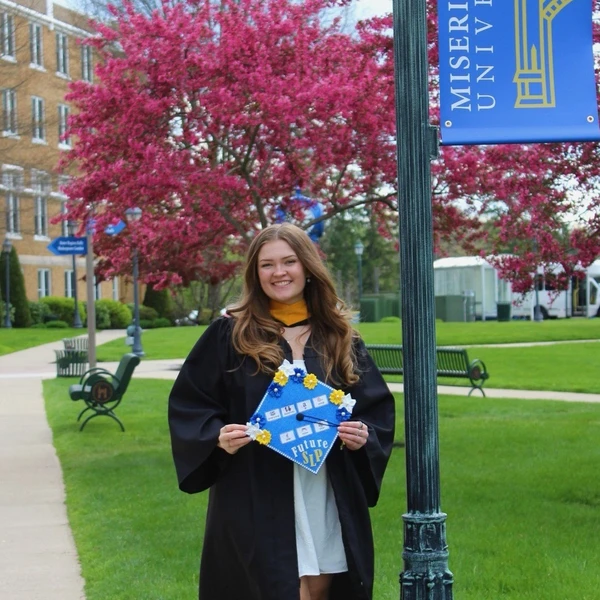
Misericordia University

Bachelor's degree program

2021 – 2026

Majors:
  • Health Professions and Related Clinical Sciences, Other

Miscellaneous

Desired degree level:
Doctoral degree program (PhD, MD, JD, etc.)
Medical school interest:
Yes

Career

Miscellaneous

Dream career goals:
company founder
Has nursing license:
No

Future Interests

  • Advocacy
  • Volunteering
  • Entrepreneurship
Bulkthreads.com's "Let's Aim Higher" Scholarship
My passion in life is helping people find their voices. As a future speech-language pathologist, I want to build a community where people who may feel unheard, overlooked, or unable to communicate are supported and empowered. I believe that everyone deserves the opportunity to express themselves, share their thoughts, communicate their needs, and feel understood. For me, becoming an SLP is about much more than treating speech or language difficulties. It is about creating meaningful connections and helping people participate more fully in the world around them. Some individuals may struggle to communicate through spoken language, while others may need additional support to express their thoughts and emotions. I want to meet each person where they are and help them discover the communication methods that work best for them. Supporting people's communication needs is something I look forward to doing every single day. I want to be someone who listens without judgment and recognizes that communication looks different for everyone. Whether someone communicates through speech, sign language, an augmentative and alternative communication device, gestures, or another method, their voice deserves to be valued. I also hope to build a community where individuals and their families feel supported rather than isolated. Communication challenges can sometimes make people feel as though they are separated from the world around them. I want to help change that by creating an environment where people know they belong and where their voices are respected. My future career as an SLP will give me the opportunity to advocate for people who may not always have the ability or confidence to advocate for themselves. I want to use my education, compassion, and dedication to help others communicate their wants, needs, dreams, and identities. Ultimately, I do not simply want to help people speak. I want to help people be heard. Building a community where every person has a way to communicate and feels that their voice matters is the purpose I hope to carry with me throughout my career.
Olivia Rodrigo Fan Scholarship
In Olivia Rodrigo’s song “the grudge,” the lyric, “you have everything and you still want more,” can be interpreted as more than just a statement about a personal relationship. It can also represent the behavior of people who hold positions of power and influence. These individuals may already have wealth, status, authority, opportunities, and connections, yet they continue to seek more. Instead of being satisfied with what they have, they use their power to take advantage of people who have far less. This idea can be seen throughout society. There are people who seem to have the world at their fingertips while others are struggling just to get by. Someone with enormous wealth may continue looking for ways to increase their fortune, even when they already have more money than they could realistically spend in a lifetime. Someone with authority may use that position to control or intimidate people beneath them. Someone with social influence may continue using that influence to silence or undermine people who do not have the same platform. In these situations, the desire for “more” can become harmful when it comes at the expense of people with less power. The lyric becomes especially meaningful when considering the imbalance between the powerful and the powerless. A person in a position of authority has more resources and opportunities to protect themselves from consequences. Meanwhile, the people beneath them may have very little ability to fight back. Both people may technically be involved in a conflict, but the harm they experience is not necessarily equal. The more powerful individual may be able to walk away without significant consequences, while the less powerful person may be left struggling with financial, emotional, or social consequences. This makes the contrast between “everything” and “more” particularly powerful. One person already possesses an enormous amount, while another may be “scraping by” just trying to maintain a basic sense of stability. The powerful person’s desire for more can therefore feel especially cruel because they are taking from people who cannot afford to lose anything else. Ultimately, this lyric can be viewed as a criticism of unchecked power and greed. It raises the question of how much is ever enough for someone who already has more than most people could imagine. When people with enormous advantages continue to reach downward and take from those with fewer resources, the problem is no longer simply ambition. It becomes an abuse of power. In this interpretation, Olivia Rodrigo’s lyric captures a much larger social frustration: some people are constantly gaining more while others are struggling simply to survive.
Joe Gilroy "Plan Your Work, Work Your Plan" Scholarship
While reading the scholarship description, the quote, “Plan Your Work, Work Your Plan,” immediately stood out to me. As someone who has always been a planner, I felt an instant connection to those words. This way of lifestyle is how I choose to live throughout my graduate education and reflects how I approach both my responsibilities and my goals. I am an avid planner. Every morning, I like to know what needs to be accomplished from the moment my feet hit the ground until my head hits the pillow at night. I plan my schedule, organize my responsibilities, and think ahead about what I need to accomplish. Planning has always helped me feel organized, prepared, and confident in what lies ahead. Throughout my master’s program, it has also helped me manage the many demands of graduate school and reduce some of the anxiety that comes with balancing academics, clinical responsibilities, work, and my personal life. Pursuing my master’s degree has required me to be intentional not only about my education, but also about how I finance it. I am doing everything I can to minimize the financial burden of graduate school. I am working toward managing my student loans, working part-time while completing my degree, and consistently applying for scholarships and other opportunities for financial assistance. I am also incredibly grateful for the support of my single mother, who has helped me along the way despite the financial limitations of our family. At the same time, I am completing my required clinical fieldwork, which requires 40 hours each week as an unpaid placement. Balancing an unpaid full-time clinical commitment with part-time employment, coursework, and the responsibilities of completing a master’s degree has been challenging. There are many days when I have to carefully plan my time and finances to make everything work. My commitment to managing this financial responsibility will not end when I graduate. Once I earn my master’s degree and begin working as a speech-language pathologist, I plan to work full-time while also taking on per diem opportunities when possible. My goal is to use that additional income to aggressively pay down my student loans and take control of my financial future. I know that paying off my education will take time, but I am prepared to put in the work. I have learned that pursuing a dream does not mean the path will be easy. It means being willing to work for that dream, even when circumstances are difficult. I am proud that I continue to show up each day—whether that means completing my clinical placement, working my part-time job, completing coursework, applying for another scholarship, or making another payment toward my education. Receiving this scholarship would provide meaningful financial relief. It would allow me to pay a portion of my current tuition expenses and reduce the amount of debt I will carry with me after graduation. More than that, it would be an investment in the future I am working so hard to build. I am determined to complete my master’s degree, become a speech-language pathologist, and responsibly manage the financial commitment I have made to pursue this career. This scholarship would help me take another important step toward that goal.
Sabrina Carpenter Superfan Scholarship
I have been a fan of Sabrina Carpenter since her days on Girl Meets World. Over the years, I have continued to follow her career, listen to her music, and watch her grow as an artist. What started as simply enjoying a television show and an artist’s music became something much more meaningful to me as I grew older. Throughout different stages of my life, Sabrina’s music has been an outlet for me. Her songs have been there during moments of happiness, uncertainty, change, and growth. As I have grown and experienced different challenges of my own, I have found comfort in having music that I can relate to and turn to. In many ways, I have been able to grow alongside her career. What I appreciate most is the way music can give people a place to feel understood. As someone pursuing a career in speech-language pathology, I have come to understand how powerful it is to feel heard and represented. Music can provide that same sense of connection, even when we may not have the words to express exactly what we are feeling ourselves. For me, Sabrina’s music has been an outlet, a source of comfort, and a reminder that growing into who you are is a process. Following her journey has reminded me that growth does not happen overnight. It happens gradually, through experiences, challenges, and the courage to continue becoming the person you want to be. Her music has helped me through many moments when I needed that reminder, and there is one feeling I hope to carry with me: that after everything I have overcome and everything still ahead of me, I can take a breath, look forward, and feel alright—ready to take on the world.
Learner Math Lover Scholarship
At first glance, math may not seem like an important part of speech-language pathology. However, while it may not always be outwardly visible, I use math throughout my clinical work to measure progress, track outcomes, and celebrate my patients’ successes. Percentages, data collection, and progress monitoring allow me to objectively evaluate how a patient is improving over time. One of my favorite parts of using data in therapy is being able to share that progress with my patients. Sometimes, progress can feel difficult to recognize when you are working toward a long-term goal. A patient may not realize how much they have improved simply because they are focused on what they still find difficult. Being able to show them that they have increased their accuracy from 50% to 75%, for example, can turn an abstract feeling of progress into something they can actually see. This has taught me that math is more than numbers. In speech-language pathology, numbers can represent hard work, perseverance, and success. They can show a patient that their efforts are making a difference and remind them of how far they have come. I love being able to use math as a tool to help my patients recognize their own progress and feel proud of their accomplishments. Ultimately, the numbers are not what matter most—the confidence and hope they can give a person are.
Lost Dreams Awaken Scholarship
Recovery is about overcoming your own personal challenges and finding a way to see through to the other side. Every day can bring its own battle, regardless of the struggle or the circumstances that brought you there. But recovery begins when you choose yourself. It is found in the decision to keep going, to recognize your own worth, and to find meaning in your life even when the path forward is difficult. A former field hockey coach of mine always reminded us to be “1% better every day.” That lesson has stayed with me far beyond the field. It taught me that growth is not about becoming 100% better overnight. It is about making small, intentional choices each day. When you continue to gain that 1%, eventually those small steps add up to something much greater. Some days, progress may look like taking a major step forward, while on other days, simply choosing to keep going may be that 1%. You may not see the full 100% immediately, but if you continue to choose yourself and become 1% better each day, eventually you will look back and realize just how far you have come.
Sloane Stephens Doc & Glo Scholarship
IWhen I graduate with my master’s degree in Speech-Language Pathology this spring, I hope to begin my career in Early Intervention, helping young children develop the communication skills they need to express themselves and find their voices. I have always been drawn to working with children who may be misunderstood by their classmates, teachers, and others around them. Advocacy has been one of the most meaningful parts of becoming a speech-language pathologist, and I hope to carry that passion with me throughout my career. Although my dream is to work with young children, my clinical experiences have opened my eyes to the impact a speech-language pathologist can have across the lifespan. During a recent clinical rotation, I had the opportunity to work with older adults experiencing cognitive-communication impairments. This experience introduced me to another side of our profession: supporting individuals who have lost communication abilities they once relied on. Watching these individuals navigate changes in their ability to communicate reminded me that having a voice is about so much more than simply speaking. It is about being able to express your needs, share your thoughts, connect with others, and maintain a sense of independence and identity. This experience strengthened my desire to be an advocate for every individual I serve, regardless of age or diagnosis. Whether I am helping a young child develop their first meaningful forms of communication or supporting an older adult who is adjusting to a loss of previously acquired abilities, I want my clients and their families to know that their voices matter. My clinical experiences have shown me that communication can profoundly shape a person's ability to participate in the world around them, and I hope to help ensure that no individual feels overlooked or misunderstood. This scholarship would mean the world to me as I work to complete my education. I am currently funding my degree through a combination of out-of-pocket expenses and federal student loans. I come from a single-mother household and am the first person in my immediate family to earn a bachelor’s degree and pursue a master’s degree. While completing my clinical fieldwork, I am also working part-time to help cover the remaining cost of my tuition. My clinical placement requires 40 hours each week as an unpaid commitment, making the financial demands of completing my degree especially challenging. Receiving this scholarship would ease the financial burden of completing my education and allow me to focus more fully on becoming the best speech-language pathologist and advocate I can be. Most importantly, it would help me continue pursuing the work I am passionate about: helping individuals communicate, connect, and be understood. Thank you for considering my application and for taking the time to read my story. Your support would not only help me complete my master’s degree, but would also help me pursue a career dedicated to advocating for children, adults, and families whose voices deserve to be heard.
Bick First Generation Scholarship
Being a first-generation student is all about grit. It means figuring out which university is the right fit, which program will provide the education and opportunities you are looking for, how to finance your education, and how to make important decisions about your future without having someone who has already walked that path to turn to for guidance. My mother is my number one supporter and biggest cheerleader. She would drop everything if I had a question about how to change my oil, cook a recipe, or hang a mirror on the wall. For most of my life, I have been able to turn to her and ask, “How should I do this?” and she has always found a way to help me. At the same time, she has taught me how to become an independent young woman by encouraging me to learn how to do these things for myself. College, however, was something she had never experienced. When it came to choosing a university, navigating graduate school, understanding financial aid, and making decisions about my education, I could not turn to the person I had always relied on and ask, “How should I do this?” Instead, I had to skip that step and figure it out on my own. I had to learn how to navigate an unfamiliar system, make decisions about my future, and advocate for myself without having a roadmap to follow. Learning to move forward even when I do not know exactly where the path will lead is something that I have learned throughout the years. And I say again with confidence: being a first-generation student is all about grit. My dream in life is to provide people with a voice. I am currently studying to become a speech-language pathologist, with the goal of working in Early Intervention and helping nonspeaking children find meaningful ways to communicate. I want to advocate for children who may be misunderstood and help them make sure their thoughts, needs, and personalities are heard. I currently work part-time while completing 40 hours of unpaid clinical fieldwork each week as a requirement for my degree. I have worked on maintenance and grounds teams at universities, served at restaurants, worked as a barista, babysat, and served as a tutor and mentor to my peers. Balancing work, graduate school, fieldwork, and the financial responsibility of earning my degree has not been easy. However, this has strengthened my work ethic and taught me the value of showing up, even when things are difficult. This scholarship would help me support my dreams—not because I lack the grit to complete my degree, but because even the most determined people sometimes need someone to believe in them and lend a helping hand. I have learned how to find my own answers, overcome challenges, and keep going when things become difficult. Now, I hope to take that same determination into my career and use it to help children find their voices.
Rebecca Lynn Seto Memorial Scholarship
Being nonspeaking does not take away a person’s voice. As a future speech-language pathologist, I would have loved the opportunity to help Becky express her powerful voice and communicate in ways that were meaningful to her. This bright young woman would have brought so much joy and personality to every speech session. I would have introduced her and her family to Augmentative and Alternative Communication (AAC) as a way to support her communication. AAC would not replace her other forms of communication, such as her bright smile, gestures, or vocalizations. Instead, it would complement these modalities by providing additional opportunities for her to express herself through speech generated by an AAC device. Throughout my education, I have had the pleasure of working with multiple nonspeaking clients, and I have seen firsthand how AAC can provide individuals with greater opportunities to be heard and understood. I think Becky and her family would have especially enjoyed using AAC during meaningful activities, such as singing “Happy Birthday,” allowing her to actively participate and share the experience with her loved ones. Non-speaking does not mean non-thinking, and I believe Becky would be a powerful example of this. Her story could help educate people who may be unfamiliar with the field of speech-language pathology and demonstrate how AAC can provide individuals with meaningful opportunities to express their thoughts, needs, and personalities. AAC can help give a voice to those whose speech does not fully reflect everything they have to say. I also value the importance of involving family members in speech-language therapy. Having a family member participate in sessions can create opportunities for more meaningful and functional communication while also allowing family members to learn and practice the strategies being used by the SLP. In Becky’s case, involving her family could have helped ensure that her communication skills and AAC system were supported not only during therapy sessions, but also in the everyday moments outside of the therapy room that mattered most to her. When I graduate from my master’s program this spring, I hope to work in Early Intervention and help young children find the voice they are searching for. I want to make a difference in the lives of children who may be misunderstood by their classmates, teachers, and others around them. Being an advocate for my clients has always been one of the most important parts of becoming a speech-language pathologist, and I hope to carry that passion with me throughout my career. This scholarship would mean the world to me. I am currently working to pay for school through a combination of out-of-pocket expenses and federal student loans. I come from a single-mother household and am the first person in my immediate family to earn a bachelor’s degree and pursue a master’s degree. I am currently working part-time while completing my clinical fieldwork, which requires 40 hours each week as an unpaid placement, in order to help cover the remaining cost of my tuition. Receiving this scholarship would ease the financial burden of completing my degree and allow me to focus on becoming the best SLP and advocate I can be. Most importantly, it would help me continue pursuing the work I am so passionate about: advocating for children whose voices may not always be understood. Thank you for considering my application and for taking the time to read my story. This scholarship would not only support my education, but would also help me continue advocating for the children and families I hope to serve throughout my career.
Madelyn Stuart Student Profile | Bold.org