Hobbies and interests
Advocacy And Activism
Reading
Fantasy
I read books multiple times per week
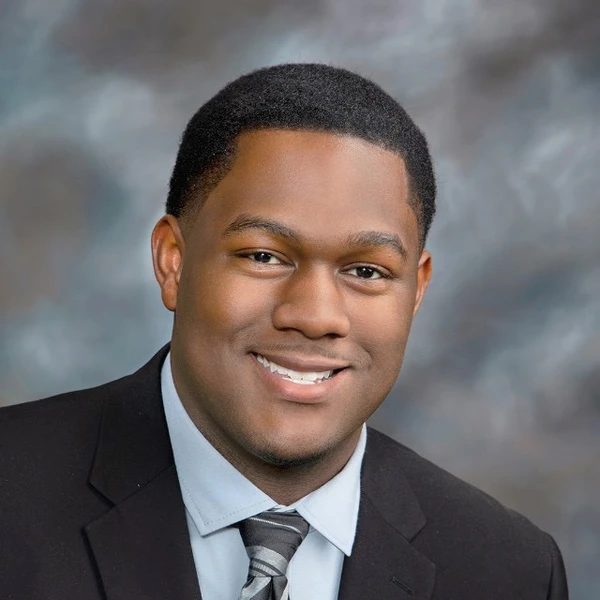
Melvin Jackson
1x
Finalist
Melvin Jackson
1x
FinalistBio
I am a first-generation college student from California committed to attending Georgetown University, where I plan to study political science and pursue a future in law. Growing up in a low-income household taught me resilience, discipline, and the importance of advocating for others. Those experiences inspired my passion for leadership, public policy, and creating opportunities for underserved communities.
Throughout high school, I maintained a 4.13 weighted GPA while pursuing programs focused on law, government, and civic engagement. I participated in the Center for Advanced Research and Technology (CART) Law and Policy Lab, a career-technical education program where students work on real-world issues through research, collaboration, and public policy analysis. As a CART Ambassador, I represented the program through leadership, communication, and outreach efforts while helping connect students with educational opportunities.
Beyond academics, I have advocated for homeless veterans and worked to use my voice to support people whose struggles are often overlooked. These experiences strengthened my commitment to pursuing a career in law and public service. My long-term goal is to become an attorney who uses the legal system to create meaningful change, expand access to opportunity, and represent communities that are too often unheard.
Education
Herbert Hoover High School
High SchoolMiscellaneous
Desired degree level:
Bachelor's degree program
Majors of interest:
- Political Science and Government
- Legal Professions and Studies, Other
Career
Dream career field:
Law Practice
Dream career goals:
Peer Mentor
Fresno Unified School District2025 – 20261 year
Public services
Advocacy
Center for Advanced Research and Technology — Founding Member2024 – 2025
Future Interests
Advocacy
Volunteering
Philanthropy
Williams Foundation Trailblazer Scholarship
One of the most meaningful self-initiated projects I have ever undertaken is the Forgotten Heroes Project, an initiative I created to recognize and uplift homeless veterans who are often overlooked by the very society they served. I noticed a jarring contradiction in American life. While veterans are frequently honored in speeches and celebrated on holidays with grand gestures, many of them still struggle with housing insecurity, mental health challenges, and a lack of consistent resources. I did not want their sacrifices to be reduced to mere symbolism while their real-life needs remained unseen on our streets.
The project began with a simple but vital goal. I wanted to bring visibility to their stories as real people rather than cold statistics. I focused on listening to their journeys and sharing their voices in a way that emphasized dignity rather than pity. My intention was to actively shift the narrative from forgotten to recognized, making sure their humanity was always centered first.
What made this project innovative was that I did not approach it as a traditional assignment or an organization-led initiative. I built it from the ground up with the mindset of advocacy through narrative awareness. I combined research with raw storytelling, using what I learned from my involvement in the Center for Advanced Research and Technology (CART) Law and Policy Lab to analyze how policy and systemic failures affect marginalized groups. This academic background helped me think critically about why homelessness among veterans persists and how public perception influences whether people receive support or remain invisible.
As I developed the project, I used it as a tool to engage others in challenging conversations. I shared what I learned with my peers, encouraging them to dismantle their preconceptions about homelessness and service. Many people do not realize how easily someone who defended our country can end up without stable housing. I wanted to challenge that societal disconnect and replace it with genuine understanding.
The Forgotten Heroes Project taught me that advocacy does not require a massive platform to be deeply meaningful. Often, it begins with the simple decision to pay attention when others choose to look away. It also showed me that storytelling is one of the most powerful tools for systemic change, especially when it centers individuals who are ignored or misunderstood.
As I prepare to attend Georgetown University and pursue a career in law, I plan to carry this exact mindset forward. I want to continue using advocacy, thorough research, and communication to highlight underserved populations and push for more equitable legal systems. My goal is to ensure that the people who carry the heaviest burdens in our society are not only remembered, but actively supported.