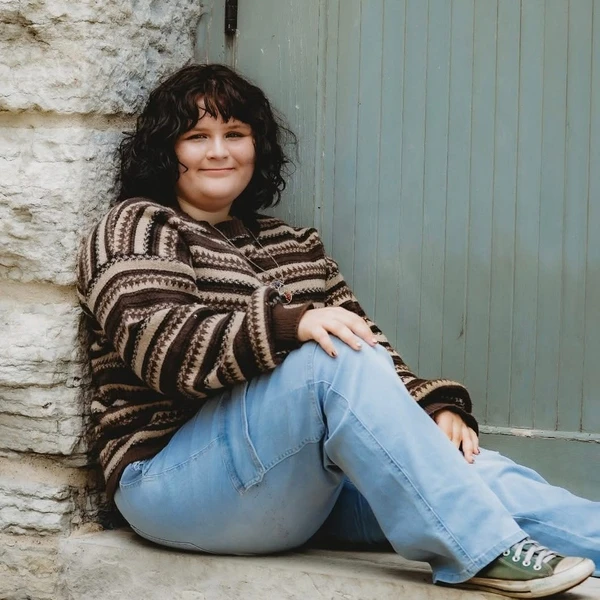
Age
17
Gender
Female
Ethnicity
Caucasian
Religion
Agnostic
Hobbies and interests
Acting And Theater
Writing
True Crime
Social Justice
Psychology
Reading
Young Adult
I read books multiple times per week
US CITIZENSHIP
US Citizen
LOW INCOME STUDENT
Yes
FIRST GENERATION STUDENT
No
Molly Willis
1x
Finalist
Molly Willis
1x
FinalistBio
Hi, I am Molly Willis, I am currently a Senior in high school. I have big dreams of becoming a Psychiatrist for adolescent people experiencing mental health crisis in hospital.
Education
Sauk Rapids-Rice Senior High
High SchoolGPA:
4
Miscellaneous
Desired degree level:
Doctoral degree program (PhD, MD, JD, etc.)
Majors of interest:
- Registered Nursing, Nursing Administration, Nursing Research and Clinical Nursing
Career
Dream career field:
Mental Health Care
Dream career goals:
To own my own therapy center for adolescents with Autism
Shift Lead
Papa Murphys2022 – Present4 yearsHome Health Aid
Country Manor2024 – 20251 year
Sports
Swimming
Club2016 – 20204 years
Arts
School
TheatreCharlie And The Chocolate Factory, The Lion King, Zombie Prom2017 – 2021
Public services
Volunteering
Big Brother Big Sister — Big Sister2024 – PresentVolunteering
Centra Care — Junior volunteer2022 – Present
Future Interests
Advocacy
Volunteering
Women in Healthcare Scholarship
“If you could choose anyone, dead or alive, who would you want at your dinner party?”
When asked this question, I usually give a light-hearted, cliché answer: “The Zodiac Killer—so I can finally find out who he was.” But if I'm being honest, I would invite Mr. Craig Bruan.
Mr. Bruan was my seventh-grade science teacher and my advisory teacher throughout middle school. More than that, he was the first adult outside my family who truly saw me—not just as a student who turned in her homework late or smiled quietly from the back row, but as a kid who was struggling to hold herself together. He noticed the things most people didn’t.
I remember returning to school after spending two months living in a domestic violence shelter. I felt like an outsider, like everyone could somehow sense the chaos that had filled my life. On my first day back, I took a body systems test. As I'd anticipated, I failed. I didn’t even feel disappointed—failure had become familiar. But Mr. Bruan didn’t let that moment define me. He didn’t scold or pity me. Instead, he looked me in the eyes and said, “You’re better than this, Molly. Let’s try again.” He made me retake the test twice until I earned at least a C. And I did.
That small moment, so minor on the surface, shifted something deep inside twelve-year-old me. It was the first time I realized that despite everything—despite the trauma, the instability, and the shame—I still had a chance to rise above it all. For the first time in a long time, I felt like I was worth someone’s effort.
Back then, I wore the same black leggings and hoodie every day, trying to hide my bruises and insecurities. One morning, I came to school with a black eye and a bruise on my forehead, the result of a fight with my dad the night before. I had cut my bangs that night, hoping they would hide the damage and the truth. Most teachers looked past me, maybe afraid to ask questions they didn’t want answers to—but not Mr. Bruan. He gently asked me to stay after class. In his calm, steady voice, he asked what had happened. I lied. I said I had fallen. But the fact that he asked—that he noticed and cared—meant more than I could say.
At the time, I didn’t understand how someone could care when my own family often didn’t. But now I do. He was showing me what compassion looks like, even when you don’t have all the answers.
Every time I see my report card, every time I reflect on my 3.9 GPA, and every time I work a shift as a home health aide or volunteer with vulnerable youth, I think of Mr. Bruan. That one retest pushed me to chase academic success. That one simple question—“Are you okay?”—planted the seed for my dream: to become an adolescent mental health nurse.
I've been hospitalized multiple times for my mental health, including twice in seventh grade alone. I know what it’s like to feel broken and invisible. But I also know the life-changing impact one kind, honest, and patient adult can have on a young person’s life.
So, if I could invite anyone, dead or alive, to dinner, I would invite Mr. Craig Bruan. Not just to thank him—though I would—but to show him the person I've become because he believed in the person I could be. I’d want him to see that the girl in the black hoodie made it—that his kindness helped her find her strength.
Kyla Jo Burridge Memorial Scholarship for Brain Cancer Awareness and Support
My connection to brain cancer is deeply personal and has affected my family for nearly two decades. My grandma was diagnosed with brain cancer on Mother’s Day, the day after my prom, and since then, she has undergone multiple surgeries, some of which resulted in strokes on the operating table, leaving her to cope with the lasting effects of the disease. Witnessing her struggle has been emotionally overwhelming, but it has also shown me how much strength, resilience, and support are needed for both patients and their families. This struggle is not new to our family; my grandma’s youngest sister passed away from the same type of brain cancer in 2006, demonstrating how devastating and persistent this disease can be across generations. Experiencing these losses firsthand has shaped my perspective on illness, family, and care. Brain cancer affects more than just the patient—it affects everyone who loves them. These experiences have motivated me to pursue a career where I can help patients and families cope with the emotional and psychological challenges of serious illness.
Inspired by my family’s experiences, I have dedicated myself to supporting others facing serious health challenges. I volunteer at a local hospital, where I provide comfort and guidance to patients and families navigating difficult days. In my role as Secretary of our school’s Minnesota Honor Society, I have helped organize awareness campaigns and fundraisers for local health organizations. Additionally, as a mentor in Upward Bound and Big Brothers Big Sisters, I encourage younger students to speak openly about mental health, resilience, and coping strategies. These experiences have taught me that emotional support is as critical as medical care. Even small acts—listening, sharing resources, or simply being present—can make a profound difference. They have strengthened my empathy, patience, and determination to provide comprehensive mental health care for families affected by serious illnesses like brain cancer.
After high school, I plan to pursue an MD and specialize in psychiatry, focusing on mental health intervention for patients and families coping with life-altering illnesses. My goal is to provide care that addresses both the psychological and emotional impacts of diseases like brain cancer, helping families navigate fear, grief, and uncertainty. Receiving this scholarship would allow me to continue my education without the burden of financial stress, enabling me to focus on research, volunteer work, and clinical experiences that will prepare me to make a meaningful difference. In the future, I hope to establish a nonprofit or clinic that provides free mental health resources for children and families affected by brain cancer, ensuring they have the support and guidance my own family has so desperately needed.
The experiences of my grandma and her sister have shaped my purpose and fueled my determination. While I cannot change their diagnoses, I can dedicate my life to helping others face these challenges with hope, understanding, and care. Brain cancer has taken so much from my family, but it has also given me the clarity of purpose and compassion that I will carry into my future career.
Marcia Bick Scholarship
Growing up in poverty has shaped every part of who I am. Despite my mother earning her master’s degree, financial stability was something we never achieved. Watching her work tirelessly, only to continue struggling under the weight of student loan debt, taught me that education—while essential—can also come at a steep cost. I’ve learned firsthand that poverty is a cycle, and unless someone takes deliberate steps to break it, it repeats. My goal is to be the one who breaks that cycle for my family.
From a young age, I understood that the only way to change my circumstances was through hard work and persistence. I’ve worked to make the most of every opportunity, knowing that my success isn’t guaranteed—it’s earned. I currently hold a 3.98 GPA, serve as secretary of my school’s Honor Society, and have volunteered over 700 hours at my local hospital. Through these experiences, I’ve learned not only academic discipline but also compassion and responsibility. Every shift at the hospital reminds me why I want to pursue higher education: to make a tangible difference in people’s lives, just as others have made in mine.
Balancing academics, leadership roles, and extensive volunteer work hasn’t always been easy. There have been times I had to let go of being a kid, because I knew I had to work full time to help my mother pay rent. Yet, each setback only strengthened my determination to push forward. Poverty has taught me resilience—it’s the quiet kind that pushes you to keep studying when you’re exhausted, to keep showing up when things feel impossible, and to keep believing that your hard work will pay off.
What I’ve learned through these challenges is that motivation alone isn’t enough; access matters. No student should have to choose between pursuing their dreams and inheriting a lifetime of debt. My mother’s experience has been a constant reminder of the sacrifices that come with trying to move ahead without support. I don’t want to spend the rest of my life paying for the chance to make a difference. I want to spend it actually making that difference.
Receiving this grant would mean more than financial relief—it would be an investment in the future I’ve worked so hard to build. It would allow me to focus on my education and community involvement without being weighed down by financial fear. Most importantly, it would give me the opportunity to one day provide a different life for my own children, proving that the cycle of poverty can, in fact, be broken.
I am determined to continue working hard, giving back, and striving toward excellence in everything I do. With the support of this grant, I can take the next step in turning my ambition into impact—showing that where you start does not have to determine where you end up.
Evan James Vaillancourt Memorial Scholarship
When people ask why I want to be a nurse, my mind immediately goes back to seventh grade and to my science teacher, Mr. Craig Bruan. He wasn’t just a teacher—he was the first adult outside my family who truly saw me, not as a quiet student, but as a struggling kid trying to make sense of a chaotic world.
That year, I returned to school after spending two months living in a domestic violence shelter. On my first day back, I took a body systems test and failed miserably. I expected my teacher to be disappointed, but instead, Mr. Bruan encouraged me to try again. He made me retake the test—not once, but twice—until I earned a passing grade. It was a small moment, but it meant everything. For the first time, someone believed that I was capable of more than just surviving.
There were other moments like that, ones that stuck with me even more deeply. I used to wear the same black leggings and hoodie every day to hide bruises and insecurities. One morning, I came to school with a black eye and a bruise on my forehead. I had cut my bangs the night before, hoping they’d hide both the damage and the truth. Most teachers ignored it, but Mr. Bruan noticed. After class, he quietly asked me to stay behind. “Are you okay?” he asked softly. I told him I was fine—but that one question, that simple moment of care, stayed with me long after.
At twelve years old, I didn’t understand how someone could care when my own family often didn’t. But now I do. His kindness taught me what empathy looks like in action. It showed me that noticing someone’s pain—even when they’re trying to hide it—can change the course of their life.
Over the years, I’ve faced my own struggles with mental health and have been hospitalized several times, including twice in seventh grade. Those experiences gave me a deep understanding of what it feels like to be scared, broken, and invisible. But they also showed me the extraordinary impact that compassionate healthcare professionals can have. Nurses, especially, have a gift for seeing people at their lowest and reminding them that they still matter.
That’s why I want to become an adolescent mental health nurse. I want to be that steady, kind presence for young people who feel unseen. I want to help them recognize their strength and rebuild their confidence, just like Mr. Bruan helped me. Every report card I earn, every shift I work as a home health aide, every hour I volunteer with vulnerable youth—all of it connects back to that one question that changed everything: “Are you okay?”
Nursing, to me, is more than a career. It’s a calling to notice the unnoticed, to care without judgment, and to help others rise above their circumstances. I want to dedicate my life to making sure that no one feels as invisible as I once did.
Community Health Ambassador Scholarship for Nursing Students
When people ask why I want to be a nurse, my mind immediately goes back to seventh grade and to my science teacher, Mr. Craig Bruan. He wasn’t just a teacher—he was the first adult outside my family who truly saw me, not as a quiet student, but as a struggling kid trying to make sense of a chaotic world.
That year, I returned to school after spending two months living in a domestic violence shelter. On my first day back, I took a body systems test and failed miserably. I expected my teacher to be disappointed, but instead, Mr. Bruan encouraged me to try again. He made me retake the test—not once, but twice—until I earned a passing grade. It was a small moment, but it meant everything. For the first time, someone believed that I was capable of more than just surviving.
There were other moments like that, ones that stuck with me even more deeply. I used to wear the same black leggings and hoodie every day to hide bruises and insecurities. One morning, I came to school with a black eye and a bruise on my forehead. I had cut my bangs the night before, hoping they’d hide both the damage and the truth. Most teachers ignored it, but Mr. Bruan noticed. After class, he quietly asked me to stay behind. “Are you okay?” he asked softly. I told him I was fine—but that one question, that simple moment of care, stayed with me long after.
At twelve years old, I didn’t understand how someone could care when my own family often didn’t. But now I do. His kindness taught me what empathy looks like in action. It showed me that noticing someone’s pain—even when they’re trying to hide it—can change the course of their life.
Over the years, I’ve faced my own struggles with mental health and have been hospitalized several times, including twice in seventh grade. Those experiences gave me a deep understanding of what it feels like to be scared, broken, and invisible. But they also showed me the extraordinary impact that compassionate healthcare professionals can have. Nurses, especially, have a gift for seeing people at their lowest and reminding them that they still matter.
That’s why I want to become an adolescent mental health nurse. I want to be that steady, kind presence for young people who feel unseen. I want to help them recognize their strength and rebuild their confidence, just like Mr. Bruan helped me. Every report card I earn, every shift I work as a home health aide, every hour I volunteer with vulnerable youth—all of it connects back to that one question that changed everything: “Are you okay?”
Nursing, to me, is more than a career. It’s a calling to notice the unnoticed, to care without judgment, and to help others rise above their circumstances. I want to dedicate my life to making sure that no one feels as invisible as I once did.
Matthew E. Minor Memorial Scholarship
I'm Molly Willis, and my personal belief has been that creating a world that is kinder and safer starts by showing up for other humans. Through volunteer work, mentoring, and anti-bullying writing, I've taken it as my mission to be an ally and cheerleader for the people in my life both online and in person. My exposure has inspired me to be a physician with a specialization towards helping young people during their most challenging stage in life.
I currently volunteer at the hospital in my area supporting youth who wish to pursue a career in healthcare. I walk them through the acquisition of patient care, communication, and responsibility in taking care of others through this program. I have seen how these experiences create passion in youths who would otherwise not have considered a career in medicine. Hospital volunteering for me has reaffirmed my own personal dedication to a medical career. It has demonstrated to me that medicine is just as much a science, but far more about knowing, patience, and compassion. Outside of the hospital setting, I am a mentor for the Big Brothers Big Sisters organization. As a mentor, I mentor and assist younger students through the school issues as well as school life and after-school issues. I focus on the discussion of kindness, respect, and emotional awareness. Some of the children that I mentor are having difficulty with social stress, bullying, and negativity on the internet. Together, we learn healthy conflict resolution, build confidence, and stay safe when we are on the internet. I help them understand that what they say and do can make a difference, and being nice to others will have an effect that lasts.
Safety of children and youths from bullying and cyberbullying is a campaign that I am highly dedicated to. I actively promote online safety and kindness by letting others know how to recognize hurtful behavior, set boundaries on social media, and report suspicious activity. Safety online starts with knowing and empathy in my view. When youths feel that their feelings and voices matter, they are more likely to stand up for themselves and others.
As I step into my life of advanced studies, I plan on getting my MD and specializing in emergency adolescent psychiatry. I wish to work with teens in crisis who are in psychiatric emergencies and give them the care, compassion, and understanding they deserve so they can heal. Mental health treatment of adolescents usually gets shortchanged, but it's likely to be one of the most critical aspects of bringing them to become well-adjusted adults. My aspiration is to utilize my medical degree to make a difference in the life of voiceless or invisible children.
Financially, it won't be easy for me. My family does not have much money, and fees, tuition, and daily expenses will be hard to find. I have always tried to donate where I can, but school comes at a price. Having this scholarship awarded to me would be a gift in relieving me of that burden and allow me to study even more thoroughly on my education, volunteerism, and community service.
I have discovered that being both consistent and compassionate to change begins within me.There are no teenagers who need not feel safe, supported, and valued. In my medical future career, I hope to continue building that kind of world, that world in which every teenager and child knows that they are never alone.
David Foster Memorial Scholarship
“If you could choose anyone, dead or alive, who would you want at your dinner party?”
When asked this question, I usually give a light-hearted, cliché answer: “The Zodiac Killer—so I can finally find out who he was.” But if I’m being honest, I’d invite Craig Bruan.
Mr. Bruan was my seventh-grade science teacher and my advisory teacher throughout middle school. More than that, he was the first adult outside my family who saw me, not just as a student, but as a struggling kid behind a quiet smile.
I remember returning to school after spending two months living in a domestic violence shelter. On my first day back, I took a body systems test. As I had anticipated, I failed. But Mr. Bruan didn’t let that define me. He saw potential beneath the missed questions and blank stares. He made me retake the test twice until I earned at least a C. And I did.
That small moment, so minor on the surface, shifted something in twelve-year-old me. It was the first time I realized that despite everything—despite the trauma, the instability, and the shame—I still had a chance to rise above it all.
Back then, I wore the same black leggings and hoodie every day, trying to hide my bruises and insecurities. One morning, I came to school with a black eye and a bruise on my forehead, the result of a fight with my dad the night before. I had cut my bangs that night, hoping they’d hide the damage and the truth. Most teachers looked past me, but not Mr. Bruan. He gently asked me to stay after class. Gently, he asked what had happened. I lied. But the fact that he asked—that he noticed and cared—meant more than I could say.
At the time, I didn’t understand how someone could care when my own family often didn’t. But now I do.
Every time I see my report card, every time I reflect on my 3.9 GPA, every time I work a shift as a home health aide or volunteer with vulnerable youth, I think of Mr. Bruan. That one retest pushed me to chase academic success. That one simple question—“Are you okay?”—planted the seed for my dream: to become an adolescent mental health nurse.
I’ve been hospitalized multiple times for my mental health, including twice in seventh grade alone. I know what it’s like to feel broken and invisible. But I also know the life-changing impact one kind, honest, and patient adult can have.
So, if I could invite anyone, dead or alive, to dinner, I’d invite Mr. Craig Bruan. Not to thank him—though I would—but to show him the person I’ve become because he believed in the person I could be.
Redefining Victory Scholarship
Individualized Education Pathway Scholarship
Having grown up in a family that could not provide neuropsychological tests and did not have any belief in mental health, it was truly challenging. It was especially tough for the young girl who never got diagnosed as being autistic.That little girl was me. I spent the first sixteen years of my life unaware that I am on the autism spectrum. That caused a lot of confusion, self-blaming, and questioning why I was different from people around me.
I realized when I was a child that I was not like the other children. I would see other kids easily talking and laughing together, and I would be on the outside trying to figure out how to be a part of it. I blamed myself, figuring that the problem was with me, that I was not trying hard enough, or I was weird. I succeeded in school, hiding a lot of my struggle. My teachers once considered having me skip third and fourth grade and proceeding straight to fifth grade following second grade because of my academic excellence. My mom, however, would not allow it. Although I resented her for this action in the past, today I know she was protecting me. She understood socially I was already struggling to keep up.
School wasn't easy despite the good grades. I was able to memorize and pass tests, but group projects, socializing, and even a slight variance in schedule overwhelmed me. I was always anxious and rigid in my thoughts. A slight variation from normal would send me off, and a score lower than 93% was a failure to me. Despite all these signs, I was never offered an IEP or 504 plan. Because the teachers believed my grades were so perfect, they didn't think that I needed help. They did not realize that I was doing double the work of what everyone else was doing, re-doing problems, psyching myself up because of panic attacks, practicing all night for social interactions or re-doing homework repeatedly so that it was perfect.
As time went on, I was able to overcome my challenges by myself. I established routines and routines that provided a sense of control over myself. I employed visual schedules, reminders, and timers every day to schedule myself. I did grounding to cope with overstimulation and anxiety. Self-advocacy was most vital to learn, which wasn't so easy for me. I learned to seek assistance, assert what I require, and comprehend that it does not weaken me to require assistance. I didn't learn that; I learned it through action and learning about myself.
My diagnosis freed and changed me. It explained what occurred in the past and gave me language for what I always knew but couldn't quite articulate. It also provided me with the courage to utilize my sufferings to impact others. I would love to spend my career helping people like me, specifically neurodivergent and overlooked teenagers. I will become a psychiatrist of adolescent and neurodivergent groups. I want to be the kind of physician who not only understands her patients clinically but also connects with them emotionally.
Every challenge I’ve faced has shaped the person I’m becoming. They’ve taught me patience, resilience, and the importance of compassion. Continuing my education isn’t just about earning a degree; it’s about honoring the younger version of myself who felt unseen and ensuring that future kids don’t have to feel the same way. I’m motivated every day by the hope of creating a world where neurodivergent individuals are understood, supported, and empowered to thrive.
Ethel Hayes Destigmatization of Mental Health Scholarship
In the 5th grade I started to struggle with my mental health. I had always been an anxious insecure kid, but this is when it got bad. I started to develop an eating disorder, obsessive compulsive disorder, generalized anxiety disorder, major depressive disorder, and in less than two years I would get to add post traumatic stress disorder to that list.
Watching myself struggle the way I had seen my mother struggle for so long was scary. I did not want to hurt the way she did. And I hated myself for feeling this way. I went on to try to end my life multiple time. I started partaking in risky, self destructive behaviors, and got myself into unhealthy relationships.
I started to see the world in a new dark light...for a long time. I had to dig my way out, and sometimes I would fall down again. Right now I am still digging every day to achieve my goals and dreams. I did loose the relationships and friendships i had at the time, but i can not complain as they were unhealthy.
My struggling has shaped my life goals immensely. I now want to go into the mental health career felid more than anything else. Everything I do in life is now to achieve that point. I want to help other young teenagers with their struggles the way I wished someone would have helped me.
VonDerek Casteel Being There Counts Scholarship
I grew up in a home of two social workers, who honestly did not have enough empathy for the job. Two social workers who could not notice others struggling, but not their own child. Both my mom and dad have their masters in social work, and have worked in the field ever since. I wanted to be a person who can help all struggling kids and teenagers I come across my path in life. I want to be a safe space; one I never received.
I want to be a social worker or therapist for youth. I plan on majoring in psychology or social work. I decided this in the 6th grade. I've jumped between majors and careers, but they have always stayed in the same field. Mental health and social work. Forensic phycology, child protective services, therapy, and social work have all been thoughts. I just have always known I want to save lives. As a kid I wanted to be a doctor. I knew I wanted to help people, but not put my life at risk like police or military. But I no longer want to help people physically feel better, yet I want them to help them want to feel physically okay and want to live.
I currently volunteer at my local hospital and community center, maintain A honor rolls, and have a part time job. I try my best at everything I do and try to do. I just hope to be able to try my best at helping others in a career. Even if my efforts can save one kid from committing a tragedy, I want to help them.
Receiving this scholarship will incredibly help me get to my college and career goals. Although I did have two social work parents, I was left with one. My mom, but she does not have the funds or means to put me, my brother, and sister through college programs.
It would mean an absolute world to me if I were able to receive a scholarship for college, so I could help others the way I wanted to be helped. I want to help kids through tough home situations, grief, bullying, and mental health struggles. Mental health has always been a subject I have cared for deeply. Mental health issues are genetic in my family, and I know they are for others. I want to help the future generation from feeling isolated and alone the way I did for many years. I want to be their safe space; the person who they know will always try their best to understand and listen.
Your Dream Music Scholarship
DNA by Lia Marie Johnson holds the most important message for me in life currently. Lia sings about all the trauma she holds from her alcoholic father and the fear of ending up like him. She says she won't end up like her father knowing she's fighting the truth, because she can't stop the DNA of the alcoholism gene.
She discusses how her father doesn't look the same when he's drunk as she watches him be arrested. I’ve personally felt this many times, my dad is a violent alcoholic. She knows her father has left her for alcohol, but he only shows up once to twice a year. Both me and Lia feel abandoned by our fathers and their alcoholism.
Lia openly talks about her fear of becoming an alcoholic like her father due to her DNA, but tries to fight it. I heavily hold this fear because I come from two long lines where almost every male is an alcoholic. DNA by Lia Marie Johnson will always hold a special place in my heart, it feels like someone genuinely understands my childhood.