user profile avatar

Luke Brown

1x

Finalist

Bio

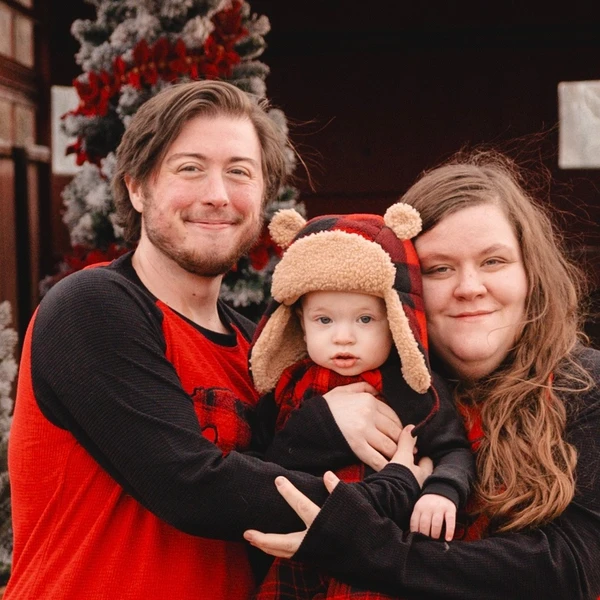
I’m Luke Brown, a disabled U.S. Air Force veteran, caregiver, and student at Eastern Washington University pursuing a double major in Criminal Justice and Gender, Women & Sexuality Studies. I live in Spokane, Washington with my wife, Kris, and our one-year-old son, Weston. I served as a mental health technician in the Air Force before being medically retired due to service-connected disabilities. After leaving the military, my life shifted again when my mom suffered multiple strokes and I became her primary caregiver. Coordinating her medical care, managing medications, and supporting rehabilitation taught me how quickly life can change and how much it matters when someone shows up consistently with patience, calm leadership, and practical structure in the middle of crisis. I learned that helping people isn’t about perfect conditions; it’s about building workable systems and taking the next right step when someone is overwhelmed. Those experiences shaped my commitment to public service and my goal of working in law enforcement or a related community-facing role. I’m drawn to work that combines physical readiness with disciplined thinking, trauma-informed response, de-escalation, accountability, and connecting people to resources with dignity. As a student and parent, I balance coursework with raising a toddler while managing chronic pain and PTSD. I’m funding my education through veteran benefits and scholarships, and I approach challenges systematically: assess, adapt, and keep moving forward.

Education

Eastern Washington University

Bachelor's degree program
2025 - 2029
  • Majors:
    • Criminal Justice and Corrections, General
    • Sociology
  • GPA:
    3.8

Clear Springs High School

High School
2012 - 2016
  • GPA:
    3.6

Miscellaneous

  • Desired degree level:

    Bachelor's degree program

  • Graduate schools of interest:

  • Transfer schools of interest:

  • Majors of interest:

  • Not planning to go to medical school
  • Career

    • Dream career field:

      Law Enforcement

    • Dream career goals:

    • Mental Health Technician

      Air Force
      2017 – 20214 years

    Public services

    • Volunteering

      Spokanimal — Volunteer
      2019 – 2024
    • Volunteering

      League City Animal Shelter — Volunteer
      2012 – 2016

    Future Interests

    Advocacy

    Volunteering

    J. L. Lund Memorial Scholarship
    The event that changed my trajectory happened when I lost my little brother to suicide. We lost our dad the same way when we were kids, and losing my brother, after I'd been medically retired from the Air Force and was managing my own disabilities and PTSD, broke me. The medical retirement had already been a huge loss to my identity, and then losing my brother made me realize how much I wished I'd been able to show up for him better. It made me determined to show up for other people going forward. Not long after, my mom suffered multiple strokes, and I became her primary caregiver. I needed to coordinate medical care, organize her recovery, and build systems that gave her structure during rehabilitation, all while managing my own service-connected disabilities. Some days, my pain was so severe that I could barely stand, but she still needed to reach appointments. I learned to ask better questions, take detailed notes, and create tools, medication charts, appointment calendars, and therapy checklists that turned chaos into manageable steps. That season taught me something I couldn't ignore: helping people isn't about being perfect or having all the answers. It's about showing up consistently, working through limitations, and finding solutions. It's about being present when it matters, even when you're struggling yourself. That realization led me to pursue Criminal Justice and Gender, Women & Sexuality Studies at Eastern Washington University. My goal is to build a career in public service, specifically, law enforcement, where I can serve people during crises and vulnerable moments. I'm drawn to roles that combine physical readiness, crisis intervention, and community engagement because that's where I can make the most impact. I served as a mental health technician in the Air Force and saw firsthand how much reaching out and being present made a difference. What appeals to me about this work is what Jore Lund seemed to understand: meaningful change requires equal parts physical labor and intellectual effort. Good policing isn't just about enforcement, it's about de-escalation, resource connection, trauma-informed response, and treating people with dignity. That requires studying legal systems, understanding social dynamics, recognizing mental health crises, and being trained well enough to make situations better rather than worse. I've already spent years working through pain, managing complex logistics, and solving problems with limited resources. I know what it means to be a team player even when the plan seems flawed. I know how to chase progress instead of perfection. I've learned that failure isn't the opposite of success but it's part of the process if you're willing to keep moving forward. The chain reaction started with devastating loss that taught me the importance of showing up. It moved through hands-on caregiving that taught me resilience and systems-thinking. And it's leading me toward a career where I can be present for people during their hardest moments where I can use both my mind and my hands to make things better, one situation at a time.
    Curtis Holloway Memorial Scholarship
    My educational journey hasn’t been easy, but it’s been built in the aftermath of loss, held together by the people who refused to let me give up on myself. The strongest support in my life has come from my mom and my wife, Kris. Their steadiness has shaped who I am as a student, a father, and a person. I lost my dad to suicide while I was in high school. Not long after, my family became a single-parent household: my mom carried everything, grief, finances, and the job of keeping my two little brothers and my world from falling apart. That kind of loss changes you. It teaches you that life can shift in a single phone call, and it also teaches you what perseverance looks like when you watch someone face the day anyway. My mom models that perseverance. She values education not as a trophy, but as a tool, something you use to build stability, options, and a future that isn’t dictated by tragedy. Then, after I was medically retired from the Air Force, I lost my little brother to suicide, too, only one year before my mom suffered multiple strokes as a COVID-related complication. For a while, we weren’t sure if we would lose her as well. When she pulled through, I became her caregiver during the hardest six months of her recovery. I watched a brilliant woman, someone with a master’s degree in special education, struggle with basic tasks, and I also watched her fight her way back through rehab with a grit I didn’t know was possible. That season taught me what “support” really means: showing up consistently, even when you’re exhausted, even when it hurts, even when the outcome isn’t guaranteed. It also reminded me that learning isn’t limited to classrooms. It can be physical therapy exercises at a kitchen table. It can be practicing speech, patience, and hope, one day at a time. Kris has been the other anchor in my education. We’re raising our son, Weston, who is now 16 months old. During the first year of his life, he was in physical therapy multiple times a week. That schedule shaped (and still shapes) everything: our sleep, our finances, our time, and my ability to focus. Kris’s support wasn’t a single big gesture; it was daily teamwork. It was taking the handoffs, helping me protect study time, and reminding me that my goals are still valid even when life is heavy. Because of her, I’ve learned how to pursue ambition without sacrificing the people I love. I honor my mom and Kris by doing what they’ve helped me believe is possible: staying enrolled, finishing my degree, and building a stable, safe life for my family. I want my education to translate into service, a type of work that protects people, improves systems, and treats mental health with the seriousness it deserves. I carry my dad and brother with me, too. Their absence is part of my motivation to succeed, not out of pressure, but out of purpose. I can’t change what I lost, but I can choose what I build. Support has been instrumental for me because I’ve lived the reality behind the scholarship prompt: when a parent is gone, you don’t just lose a person, you lose a safety net. The people who supported me helped replace that net with something stronger: belief, structure, and the insistence that my story isn’t over. Now I’m building on that support by finishing my education, showing my son what resilience looks like, and turning hardship into a life defined by progress.