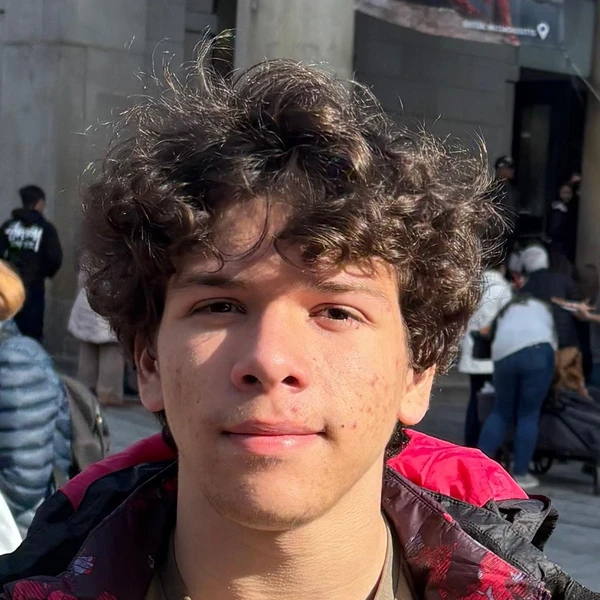
I met Dr. Brubeck in the fall of freshman year, during the big crossroads that is starting high school. I signed up as a violin player for the chamber music group he leads. I'd been playing since a young age, but he was the first teacher who turned practicing from a chore into something fun. He improved my phrasing and helped me make notes on a page come alive, but his contribution to my life has extended far beyond music.
The way Dr. Brubeck teaches is something that has helped me become closer with the people around me. When he corrects, he never accuses. Recently, there was a section of a piece I played that had an odd combination of notes. Instead of pointing at me, he asked everyone to check their C-sharps and F-naturals. I quickly realized the problem was me and corrected myself. Through this method, he manages to admonish without bringing shame. This method of teaching, which accuses the error but not the person, has helped me form really good connections in formal settings, whether academic or work related. In group projects, this way has brought me closer to colleagues by helping the group solve problems at hand in a more objective way instead of turning to finger-pointing. At my former job at Code Ninjas, an after-school program where I taught younger kids how to code, this approach helped me bond with the kids. By removing the focus from the number of times they failed to do an exercise and instead putting it on the problem at hand, the child was often able to solve the problem more objectively. The kid felt like I was on their side against the problem, not on the side of the problem against them. Dr. Brubeck's example is an objective approach that addresses the problem, not the person.
Patience is something I think is really essential to strong and healthy relationships. Because we are human, I believe we need the other person to understand our weak points and bear them. Dr. Brubeck has given me an example of enormous patience in the manner in which he treats people. For example, a certain girl would always interrupt the start of class with wacky, nonsensical stories about others — i.e., her mom got eaten by a tiger shark, her dad is under a volcano, etc. Every time, Dr. Brubeck listened to the child's story in full without cutting her off, and then proceeded to the lesson. In the same manner in which Dr. Brubeck bore the girl's oddness, I was inspired to pursue a better relationship with my siblings by bearing theirs. Oftentimes, I had found my siblings' ways a little weird. For example, my sister used to separate the chocolate chips one by one from the granola grains in a granola bar before eating the chocolate chips SEPARATE from the grains. Every time I saw her do it, it infuriated me and I moved to another table. However, with this example, I was motivated to bear this and try to accept that my sister was going to do some things differently. In the long run, this has allowed my sister and me to become a little closer.
Recently, I began to follow more and more people that are going to my college through the class page on Instagram. Scrolling through the profiles of all the new people in my class excites me because of the possibility of meeting some of them. In fact, I have really enjoyed some of the conversations I have already had with some of my classmates online. I’ve found a lot of classmates who have similar interests, like track and guitar, and we plan to join similar organizations together at the start of the school year. I believe that with the relationship skills I have learned from Dr. Brubeck, many of the conversations that I have recently had will become long-lasting friendships.