user profile avatar

Lucas Campbell

1x

Finalist

Bio

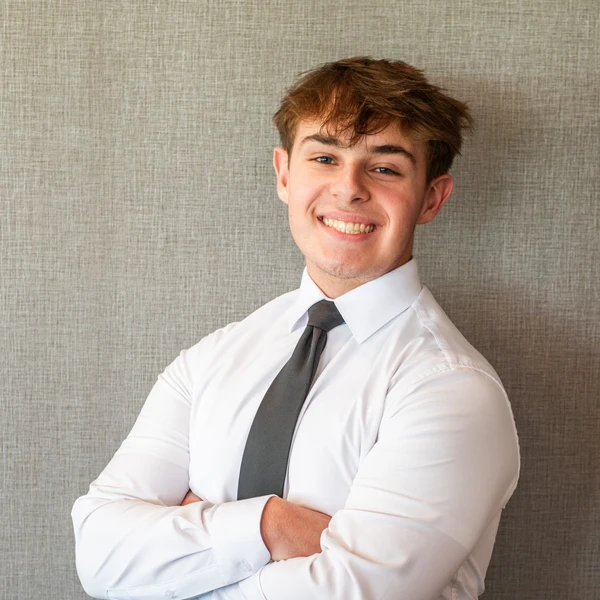
I'm Lucas! I am a passionate high school senior and hope to serve as a diplomat one day. I am completely deaf, but utilize two cochlear implants to hear and speak well! I have earned the Pennsylvania Seal of Biliteracy in Spanish, demonstrating an advanced low level of proficiency. I am also conversational in American Sign Language. I recently earned my Eagle Scout award and I work as a supervising lifeguard at Hersheypark in addition to teaching swimming lessons at my local rec center. I swim for our high school swim team and participated on the golf team this year. A 4-year member of the marching band's drumline, I am also an accomplished pianist. A member of National Honor Society, I also participate in 6 other other societies (Social Studies, English, math, science, Spanish and music), serving as president of Rho Kappa Social Studies Honor Society and vice-president of Sociedad Honoraria Hispánica. I am an active member of the Interact Club and my church youth group, volunteering many hours around my school and community. I just finished my Eagle Scout Project, having planned and overseen the building of a memorial garden at my church. In my freetime I like to golf, swim, lift weights and travel internationally.

Education

Manheim Central High School

High School
2022 - 2026

Miscellaneous

  • Desired degree level:

    Bachelor's degree program

  • Majors of interest:

    • International/Globalization Studies
    • International Business
    • Romance Languages, Literatures, and Linguistics, General
    • History and Political Science
    • Political Science and Government
  • Not planning to go to medical school
  • Career

    • Dream career field:

      International Affairs

    • Dream career goals:

      US Ambassador

    • lead lifeguard

      Hersheypark
      2023 – Present3 years

    Sports

    Golf

    Varsity
    2025 – Present1 year

    Track & Field

    Varsity
    2023 – 20241 year

    Swimming

    Varsity
    2023 – Present3 years

    Arts

    • Tri-M Honor Society

      Music
      2025 – Present

    Public services

    • Volunteering

      Interact Club — member
      2022 – Present

    Future Interests

    Advocacy

    Politics

    Volunteering

    Philanthropy

    Students with Congenital Heart Defects Scholarship
    Striking piano keys, pounding drums, and recognizing songs in seconds were not abilities I was promised at birth. Growing up in a small town in central Pennsylvania with profound hearing loss shaped my early experiences, but it was my congenital heart defect that most directly defined the challenges I would face. Born with a bicuspid aortic valve, I learned early that my life would include limits, uncertainty, and resilience. I underwent my first aortic valve replacement at age nine. While I recovered quickly at first, the weeks that followed tested me in ways I did not expect. I broke my tibia and fibula, requiring a wheelchair while my sternum healed, and shortly thereafter broke my wrist in a biking accident. These setbacks forced me to slow down and rely on others, something that did not come naturally to me. At a young age, I began to understand that my body required patience and care in ways that others did not. During the spring of my junior year, my cardiologist told me I would need open-heart surgery again. Hearing that I would face a second surgery before even graduating high school was overwhelming. In March 2025, I stepped away from school and activities for several weeks. After a week in the hospital and two more recovering at home, I returned to a demanding workload of college-level classes. Catching up on weeks of missed work while keeping pace with new material tested my discipline and mental endurance. There were moments when the outcome felt out of reach, but I learned how to manage stress, prioritize my responsibilities, and ask for help when I needed it. By the time AP exams arrived, I was prepared, and I finished the year strong. Living with a congenital heart defect has also meant accepting limitations. My cardiologist advised against sports requiring intense strain, such as football or heavy weightlifting. These restrictions were difficult to accept, especially watching peers participate freely. Over time, however, I began to see these limits not as barriers, but as guidance toward what I could do rather than what I could not. Swimming became that outlet. It was not just a sport I was allowed to pursue—it became essential to my recovery and sense of control. After each surgery, returning to the pool marked a turning point. In the water, I rebuilt my strength, regained confidence, and found a sense of normalcy that my condition often disrupted. Swimming gave me a space where my limitations felt less defining. That space eventually led to leadership opportunities. At fifteen, I became a lifeguard, working at my local recreation center and at Hersheypark. I now teach swim lessons and serve as a lead lifeguard, where I am responsible for supervising others and ensuring safety. These roles have strengthened my communication, patience, and ability to stay calm under pressure; skills shaped directly by my experiences managing my own health. Living with a congenital heart defect has taught me that progress is not always linear and that strength is often built in moments of uncertainty. Facing two open-heart surgeries before adulthood forced me to develop resilience, discipline, and perspective earlier than most. As I pursue my goal of becoming a foreign diplomat, I carry these lessons with me. My condition has not defined my limits; it has shaped how I respond to them, and how I move forward despite them.
    Individualized Education Pathway Scholarship
    Striking the keys of a piano, pounding the head of a drum, and identifying a song within seconds were never promised to me at birth. Growing up in a small town in central Pennsylvania with a profound hearing loss has shaped both my identity and my academic journey. Few people in my community fully understand the challenges of navigating a world designed primarily for hearing individuals. Fortunately, I was born during an era of rapid technological advancement and qualified for cochlear implants. In 2008, after surgery at the Children’s Hospital of Philadelphia, I became one of the 100,000 people worldwide at that time to receive a cochlear implant. A few years later, I received a second implant on my left side. While these devices allow me access to sound, they do not eliminate the educational challenges I face as a deaf student. From age one through seven, I attended intensive speech therapy sessions to learn how to listen and speak. These years required patience, discipline, and persistence, but they helped me develop strong communication skills and confidence. Throughout elementary, middle and high school, I was supported by an Individualized Education Program (IEP) designed to address my hearing loss. Although I understood the importance of accommodations, I often hesitated to use them because I did not want to be perceived as different. I feared being labeled as “the deaf kid,” so I worked to adapt seamlessly into the hearing world. In hindsight, I recognize that minimizing my differences made learning more difficult and limited my academic potential. Although my speech and cochlear implants may suggest that I hear well, the reality is that I do not hear perfectly. In classrooms and social settings, especially those with background noise. Through my IEP, I receive accommodations such as preferential seating and written instructions to supplement verbal directions. Before learning to advocate for myself, I often missed important information and felt frustrated or discouraged. Over time, I have learned that self-advocacy is not a weakness, but an essential academic skill. Embracing my accommodations has allowed me to take ownership of my education and succeed despite barriers. The summer before my junior year, I was accepted into a national leadership program for oral deaf and hard of hearing high school students. This experience was transformative. For the first time, I connected with peers who understood the challenge of navigating both the deaf and hearing worlds without fully belonging to either. Being surrounded by students with similar experiences reinforced the importance of confidence, resilience, and advocacy in academic environments. The program strengthened my leadership skills and empowered me to fully utilize my IEP accommodations without hesitation. These experiences motivate me to continue my education. Education provides me with the tools to advocate for myself and others with disabilities whose voices are often overlooked. Each academic challenge I overcome reinforces that my hearing loss does not limit my ability to achieve excellence. I am motivated by the opportunity to demonstrate that accessibility and academic success can coexist, and that students with disabilities belong in rigorous academic and leadership spaces. Today, I consider myself a confident deaf individual who embraces both challenges and strengths. I aspire to serve as a diplomat, increasing representation for people with disabilities in government and public service. Hearing loss is only one part of my story; it does not define my potential. I am proud to be deaf, and I know that people like me can achieve anything someone with typical hearing can, except hear naturally. My disability motivates me to persist, to lead, and to pursue higher education with purpose and determination.
    Dream BIG, Rise HIGHER Scholarship
    Striking the keys of a piano, pounding the head of a drum, and possessing an uncanny ability to identify a song within just seconds are all activities that were never promised to me from birth. Growing up in a small town in central Pennsylvania with a profound hearing loss has made me one of a kind. Very few people in my community can truly understand the challenges that I face as I navigate life in a hearing world. Being born deaf in an era of booming technological advancements, I fortunately qualified for cochlear implants. In 2008, after my surgery at the Children’s Hospital of Philadelphia, I became one of the 100,000 people in the world (at that time) to have a cochlear implant. A few years later, I received a second implant on my left side. These implants give me independence to hear sound and experience the world in a traditional way, as opposed to solely relying upon sign language or an interpreter to access the world around me. From my implantation at age one, to age seven, I attended intensive speech therapy sessions to learn to listen and speak. Thanks to this speech therapy, I developed confidence to speak well. Throughout my elementary school years, I did not want my peers to see me as the deaf kid, so I learned to confidently explain what "those things on my head” were and to adapt naturally into the world of sound. I have been taught the importance of self-advocacy throughout my schooling; even though in elementary school, I did not speak up for myself out of fear. Reflecting on this experience now, I see that there is nothing wrong with being different – our individual differences make each of us unique. While my speech and implants give the impression that I hear well, the reality is that I do not hear perfectly. When in social situations, especially loud environments, I have difficulty hearing and often ask people to repeat themselves. Occasionally, people seem hesitant to restate what they said, and I am left wondering what I have missed. I have come to understand that some people may simply not understand my needs as a deaf individual and that I should not take it personally. At my current age, I have learned to advocate for myself. I explain my condition and seek the help that I need, especially in the classroom – such as preferential seating towards the front of the room and requesting that teachers provide written instructions. The summer before my junior year, I was accepted into a leadership program for oral deaf and hard of hearing high school students from across the country. This experience allowed me to connect with other students with whom I share the same deaf experience: straddling both the deaf and hearing worlds, but not integrating entirely into either. Spending time with people similar to me has shown me that I am not alone, even if I interact with very few oral deaf people regularly. This experience drastically increased my confidence in social settings. I know what actions are necessary for my success, and my school, family, and community have seen me effectively advocate for my needs. I have overcome many challenges in my seventeen years. Despite my hearing loss, I have achieved the Pennsylvania Seal of Biliteracy in Spanish. This skill will contribute to my goals to serve as a diplomat in a Spanish-speaking country. I also have had two open-heart surgeries to replace my aortic valve. Those experiences taught me about persistence and perseverance, as they set my back both physically for an extended time, but also academically for a short time. Keeping up with my studies was challenging, but I still took four Advanced Placement tests just two months after surgery and scored three 4s and a 5. These additional life experiences will undoubtedly attribute to my future societal contributions. I have reached the point in my life where I consider myself a confident deaf individual. I aspire to be an inspiration to people in the world that face what I experience. Ultimately, I will serve as a diplomat one day; representation of people like me in government is limited, and I shall be an example for demonstrating that hearing loss is only part of one’s story. It makes me truly proud to say I am a deaf individual and that those similar to me are able to do anything that someone with typical hearing can, except naturally hear. My deafness does not define me – it makes me remarkable and will not stop me from achieving my goals.