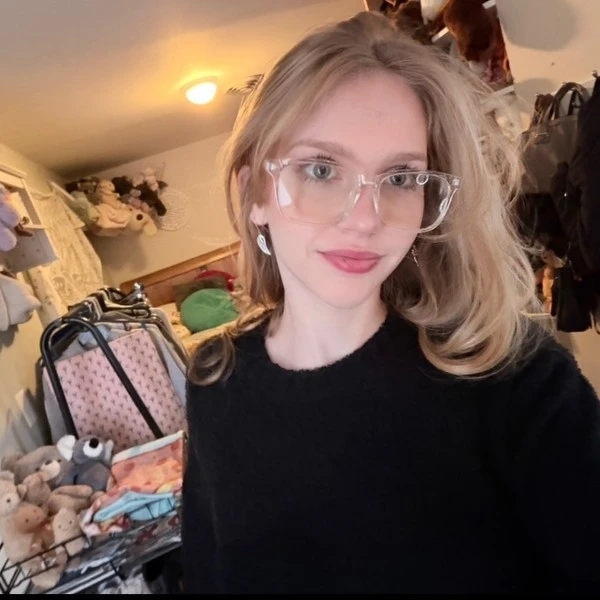
Hobbies and interests
Reading
Modeling
Hair Styling
Driving
English
Public Policy
Poetry
Advocacy And Activism
Child Development
Running
Scrapbooking
Gender Studies
Reading
Women's Fiction
Speculative Fiction
Mystery
I read books multiple times per week
lorelei griffin
1x
Finalist
lorelei griffin
1x
FinalistBio
Hello, my name is Lorelei and I am currently a senior at Gov. Thomas Johnson High School.
I am planning to major in political science and minor in studies of women and gender. After college, I hope to either pursue a career in local politics—eventually founding my own nonprofit organization to advocate for women experiencing domestic violence—or serve as a Marine to give back to my community and country.
Overcoming agoraphobia has profoundly shaped who I am. It taught me that no opportunity is too big to pursue and that growth often begins where fear once lived. Most importantly, it showed me that supporting others through their struggles is not just something I value—it is my purpose.
Education
Gov. Thomas Johnson High
High SchoolMiscellaneous
Desired degree level:
Bachelor's degree program
Majors of interest:
- Political Science and Government
- Social Work
- Area, Ethnic, Cultural, Gender, and Group Studies, Other
- Anthropology
Career
Dream career field:
Civic & Social Organization
Dream career goals:
Start a non profit
Sports
Artistic Gymnastics
Club2013 – 20207 years
Future Interests
Advocacy
Politics
Philanthropy
Finance Your Education No-Essay Scholarship
Wicked Fan No-Essay Scholarship
Lady Gaga Fan No-Essay Scholarship
K-POP Fan No-Essay Scholarship
Scorenavigator Financial Literacy Scholarship
My parents never really discussed money; it was a shushed topic in my house. It didn’t bother me as much as it confused me. I didn’t think we were poor or anything—we certainly didn’t live lavishly, but no one seemed too stressed about it. Therefore, neither was I.
With this lack of communication about finances, I grew up with little knowledge on the subject of money. How much is too little? How much is a lot? As I entered this new era of my life—the era of working part-time washing dishes to save up for college, paying for a car, and covering gas expenses—I felt deeply unprepared. It was eye-opening. Everything seemed to come so fast once I started my senior year.
Yes, I’ve had some help here and there, and for that, I’m deeply grateful. But I often find myself envious of the kids at school who seem to have everything handed to them on a silver platter. Of course, no shade to those kids—it’s great that their parents worked hard to put them in a good position—but that’s just not me. At some point this year, I realized that no one was going to swoop in and carry me through college. I’d have to take initiative and educate myself on how to manage money.
I took a financial algebra course to better understand how people handle their finances. I never really knew what a 401(k) was, how investing works, or why someone would want to invest—and I learned about the terrors of student debt. I imagine myself ten years from now: secure and at ease. I’ve been investing in the stock market since I was 20, slowly but steadily. I own an Airbnb and use that income to continue investing in my future. I’ve helped my parents pay their bills, and they’ve finally been able to retire.
Who knows how much I'll make in the future, but I know no mattter my income, I have the set knowledge of how to wisley budget and invest my money. The amount of knowledge I´ve gained over the last few months have made me feel so much more confident in my finances. I think it's so important that everyone, but especially people my age, know how to handle their money. Ive seen it first hand, where generational wealth disipates rather than grows because of, not just carelessness, but lack of confidence, and knowledge on how to maintain and expand money. So ill ask as many questions as I can, take the classes, download the cute little finance apps, and overall stay informed on my finances.
Dream BIG, Rise HIGHER Scholarship
I, like many others, have always enjoyed learning, maintaining a steady A or B average throughout elementary and middle school. My family and I were under the impression that this would never change; for the most part, it didn’t—until 2020. That year was difficult for so many people, but especially for children like me, who thrive on face-to-face, hands-on learning. Staring at a 6x12 screen for 5 hours a day did absolutely nothing for my development. In fact, I think it stunted my ability to learn, focus, and enjoy classes. Everything felt distant and disconnected, which made it hard to stay motivated. It wasn’t just about grades anymore—it was about my overall mental and emotional well-being.
But COVID-19 didn’t just affect my learning; it also impacted my mental health in unexpected ways. After returning to in-person school for a couple of years, I suddenly developed agoraphobia—the extreme or irrational fear of leaving one’s home or entering open or crowded places. I couldn’t go to school. I wouldn’t leave the house—correction, I couldn’t. The thought of stepping outside, or even just being around people, triggered intense anxiety.
This lasted for years. So, how did I not fail high school? I attended Home and Hospital Learning (HHT), an online program with two Zoom meetings a week to assign work, then left to complete it on my own. This is not how I learn. I thrive in face-to-face environments, engaging with peers and teachers in real-time. The lack of structure and social interaction made it impossible for me to thrive. I honestly couldn’t tell you a single thing I learned in sophomore year, let alone what classes I took.
While I’m disappointed in myself for not trying harder and doing the assignments, I try to be kind to my younger self. Maybe I’ve forgotten how isolating it was, having zero friends and staring at a screen for hours. It felt like a teenager’s worst nightmare. There were days when even getting out of bed felt monumental.
A year later, I enrolled in Frederick County Virtual School (FCVS), and for the first time, I took a biology class. I discovered my love for cells—cell division, mutations, DNA, ATP. Biology class reignited my passion for learning and reminded me that learning can be fun. Despite the ongoing struggle with anxiety, I finally felt a spark of motivation again.
However, the real turning point came in October 2024. I received an email saying I had to come to school to take midterms. Panic set in. I hadn’t been to school in years, and the last time I went, I had a full-blown anxiety attack. It took me a month to find the courage to walk into the building and take the tests. Surprisingly, it didn’t take me longer. The second I stepped into the school, a wave of relief and nostalgia washed over me. It felt like I was coming home.
The people in the hallways shuffling through, the teachers’ lounge oozing the scent of coffee and hot printer paper, classrooms full of people—old friends who no longer spoke to me. Even the malodorous scent of weed and B.O. I loved it all. Despite the chaos, I realized how lucky everyone else was to be there casually, not realizing how much I had longed to be in their shoes. Every time I hesitate to go to school or complain about traffic or early mornings, I remember that feeling and where I would be without it. It’s a reminder of how much I cherish the opportunity to learn in person.
As I move forward in my life, I always keep in mind what I’ve been through—and more importantly, what others are going through. You never know what someone is struggling with, even if they appear fine on the outside. Right now, my goal for my future career is simple: I want to help people—not to make money, live lavishly, or own a big company. I want to help those with less—whether it’s less money, fewer opportunities, fewer friends, or less hope. In my own selfish way, helping others brings me immense happiness in life. And I think as long as I do that, when I’m old and gray, I’ll be satisfied with what I’ve accomplished.
If I can make a difference in someone’s life, if I can provide a hand to those struggling with similar fears and anxieties, I know I’ll have lived a life worth remembering. Whether through a future career in political science or creating a nonprofit for people battling agoraphobia, I want to ensure that no one has to face their struggles alone. That’s my goal for the future—and it’s what drives me now.
Ryan T. Herich Memorial Scholarship
Hi, my name is Lorelei! I’m a political science major and something I'm very passionate about that drove me towards this major is gender inequality- let me tell you a bit about it!
Feminism has been a prominent part of my life since the second grade.
"Let's have the strong boys move the chairs."
"Men are statistically smarter than women."
"Boys are going to behave the way they do."
"He only bullies you because he’s got a little crush on you!"
These are things I heard in elementary school alone. The way women perceive their place in the world starts earlier than we’d like to believe. I think many people—not just women, but society in general—don’t see how normalizations such as these: “harmless jokes, stigmas, and expectations” feed the patriarchy and set feminism back significantly. The idea that men and women should be equal seems simple and agreeable enough. I’m sure if you asked anyone, they would agree that men and women should be equal—but maybe, like many other systemic problems, it’s not that simple. Many contribute to the patriarchy without even realizing it—even women!
"You throw like a girl."
"You run like a girl."
The fact that we address cops as “policemen” and firefighters as “firemen” may seem harmless, but it reinforces gendered assumptions. Mentioning this often draws confused looks or subtle nods. Everywhere you look, there are obvious examples of misogyny and patriarchal standards:
"Make me a sandwich."
"It must be that time of the month."
"Well, what was she wearing?"
In a Law and Society class I took last semester, we covered the topic of sexual assault and rape being overlooked and ignored in the legal system. My amazing teacher told us that a way to help this issue, as citizens, is to de-normalize it. This problem shouldn’t be so normalized that we have to speak on it! We can de-normalize issues by listening to others’ experiences without conflict or argument, refraining from making jokes about them, and calling out others who do.
This class taught me so much about the normalization of systemic problems in society: racism, abuse, gender inequality, and misogyny. I think this approach is appropriate for something as deep and complex as gender inequality because, while there are larger structural aspects—such as laws, equal pay, and equal rights—in many countries, as a society (especially among younger generations), we must leave stigmas, stereotypes, and the shaming of women in the past, where they belong.
I’ve struggled with deciding my career and major for quite a while, but it occurred to me that fighting for what I believe in has given me purpose. Utilizing my right to express my opinions—while so many women cannot—is meaningful to me. I believe pursuing a Political Science major with a minor in Women’s History could allow me to advocate for minorities while pursuing my passions.
Sammy Meckley Memorial Scholarship
Before the COVID-19 pandemic, I was actively involved in a variety of extracurricular activities: gymnastics, track, theater club, and Girls on the Run. Being so engaged in these activities, especially in such a small community like Lewistown, Frederick, kept me not only content but truly thriving. I felt connected, energetic, and excited about the world around me.
However, after the onset of the pandemic, it was as if my ambition to participate in anything outside of school evaporated. I quit gymnastics, stopped running, theater club was shut down, and everything I had once looked forward to came to an abrupt halt. This drastic shift in my life had a profound impact on me. I became depressed, isolated, and overwhelmed with a sense of hopelessness.
As a 13-year-old, this period of my life was an eye-opening experience. It highlighted, perhaps more clearly than ever, the importance of extracurriculars—especially for youth in our communities. Being part of a team or club fosters a sense of belonging and trust, both of which are crucial for our mental and emotional well-being. These activities are not only about developing skills; they create connections that keep us ambitious, hopeful, and motivated to continue growing.
The depressive period I endured, which lasted through my freshman year of high school, definitely changed my perspective. I realized that extracurriculars are far more than just fun activities to pass the time or resume boosters. They form the foundation of many people's lives. These experiences shape who we are, providing not just a break from academics but also helping us develop essential social skills, confidence, and a sense of purpose.
Over the course of my high school years, I’ve joined and left several clubs and sports, and I’ve come to embrace that it's okay. Not everyone knows exactly what they're passionate about right away, and it's perfectly fine to explore different things. I personally love trying new activities and expanding my horizons. Currently, I'm a member of the National English Honor Society because of my love for reading and language. Through this club, I hope to read to those who may not have the opportunity themselves—like Pre-K children, the elderly, or those with special needs.
As I move forward into college, I’m determined to remain as active in extracurriculars as possible—whether it’s volunteering, participating in community projects, or joining clubs. It’s definitely a bit intimidating, knowing that the workload may increase and that I'll be balancing part-time work, but I’m hopeful that I can achieve my goals. I believe that when it comes to being active in things you're passionate about, that's what truly matters.
Operation 11 Tyler Schaeffer Memorial Scholarship
Feminism has been a prominent part of my life since the second grade.
"Let's have the strong boys move the chairs."
"Men are statistically smarter than women."
"Boys are going to behave the way they do."
"He only bullies you because he’s got a little crush on you!"
These are things I heard in elementary school alone. The way women perceive their place in the world starts earlier than we’d like to believe. I think many people—not just women, but society in general—don’t see how normalizations such as these: “harmless jokes, stigmas, and expectations” feed the patriarchy and set feminism back significantly. The idea that men and women should be equal seems simple and agreeable enough. I’m sure if you asked anyone, they would agree that men and women should be equal—but maybe, like many other systemic problems, it’s not that simple. Many contribute to the patriarchy without even realizing it—even women!
"You throw like a girl."
"You run like a girl."
The fact that we address cops as “policemen” and firefighters as “firemen” may seem harmless, but it reinforces gendered assumptions. Mentioning this often draws confused looks or subtle nods. Everywhere you look, there are obvious examples of misogyny and patriarchal standards:
"Make me a sandwich."
"Must be that time of the month."
"Well, what was she wearing?"
In a Law and Society class I took last semester, we covered the topic of sexual assault and rape being overlooked and ignored in the legal system. My amazing teacher told us that a way to help this issue, as citizens, is to de-normalize it. This problem shouldn’t be so normalized that we have to speak on it! We can de-normalize issues by listening to others’ experiences without conflict or argument, refraining from making jokes about them, and calling out others who do.
This class taught me so much about the normalization of systemic problems in society: racism, abuse, gender inequality, and misogyny. I think this approach is appropriate for something as deep and complex as gender inequality because, while there are larger structural aspects—such as laws, equal pay, and equal rights—in many countries, as a society (especially among younger generations), we must leave stigmas, stereotypes, and the shaming of women in the past, where they belong.
I’ve struggled with deciding my career and major for quite a while, but it occurred to me that fighting for what I believe in has given me purpose. Utilizing my right to express my opinions—while so many women cannot—is meaningful to me. I believe pursuing a Political Science major with a minor in Women’s History could allow me to advocate for minorities while pursuing my passions.
Marlene Manning Scholarship
The last three months starting this year have felt foreboding. I keep hearing the same words from those around me: “If you want to go to college, you have to pay your own way, so start working hard.” Working minimum wage three times a week has given me just enough stability to buy books, maybe a laptop ...and pay for gas. It’s not glamorous, but it’s something.
Coming into senior year, I had little intention of seriously applying to a four-year college — or any college for that matter. But halfway through the year, maybe mid-November, it hit me that I was sailing toward the Atlantic without a compass. I was moving forward, but without direction, without certainty, and without a clear sense of what I actually wanted.
So I started thinking about my passions, my past career dreams, my ambitions, and my morals. I’m passionate about advocacy, feminism, and fighting injustice. I care deeply about learning — about corruption, capitalism, and government systems. I enjoy biology; I love learning about cells and cell mutation. I love writing, language, rhetoric, and analysis. I love understanding how words shape the world.
I used to want to be a police officer, but that no longer interests me in the slightest. I once wanted to be a physical therapist, but the risks that come with going into a pre-degree program at a college that requires dorming, without stable funds, make me uneasy. I also wanted to be a cosmetologist at one point, but that path doesn’t excite me anymore either.
So what do I want to do?
Maybe I don’t know. Maybe that’s okay.
Choosing political science as a major feels like leaving doors open. I try to remind myself that not everything is unchangeable. While that flexibility is just as frightening as it is comforting, it also reminds me of the smart and resilient people in my life — those without degrees who are successful, and those with master’s degrees who chose entirely different careers than they planned.
Ultimately, I want to do something that fulfills me as an individual and contributes to causes that matter to my community. Paying for college on my own is demanding, unstable, and challenging. But within that hardship are opportunities — to grow, to become more independent, and to learn more about myself.
Writing this for a scholarship has put a lot into perspective. Maybe my career doesn’t need to be found by me. Maybe, in time, my career will find me.
Ethel Hayes Destigmatization of Mental Health Scholarship
Everyone knows the dreadful feeling of nausea. No one enjoys it; you push through and move on. For me, it was never that simple. The fear of throwing up—emetophobia—has lived in my mind for as long as I can remember. Six-year-old me noticed that other kids didn’t flinch at the word “vomit” or panic when someone casually said, “My stomach hurts.” But I did. The mere thought sent a wave of trepidation through my body.
So I did what any child would do—I told my mom. “Well, no one likes throwing up, Lorelei.” I knew that. But this felt bigger than dislike. I confided in my best friend, and for years we bonded over how much it bothered us. It felt good to be understood. But as we grew older, she outgrew the fear. I didn’t.
Through middle school, the fear persisted but felt manageable. It was the middle of COVID, and no one was getting sick at school anymore. Unlike elementary school—where strawberry milk and stuffed crust pizza before recess often ended badly—there were no daily reminders of my fear. It felt domesticated. I got comfortable. Football games, roaming the halls, skipping class with friends. I loved them, though their influence shifted my focus. I stopped caring about academics and drifted away from sports, theater, and writing. Fun became my priority.
Then, late sophomore year, something changed. In first block, a sudden wave of nausea would rush through me. It started in my spine and climbed to my throat. I wasn’t actually sick—but I needed air. I needed to go home. I remembered a similar moment in elementary school when I left early and felt instantly better. Now the pattern returned. If I went home, the feeling disappeared. If I stayed, it lingered.
Soon, leaving became a habit. Then it became avoidance. Some weeks, I didn’t go at all. For nearly a month, I couldn’t get out of bed despite my mom’s desperate attempts to pull me up each morning. The “anxiety attacks” continued. Strangely, I could still attend football games or hang out with friends. School was the trigger.
My family, doctors, and therapist searched for reasons—bullying, bad teachers, social problems. I tried to explain that it was my fear of being sick, but it sounded irrational. Even I knew that. Still, the fear was slowly arrogating my life—my academics, relationships, ambitions.
By the second half of sophomore year, I gave in and enrolled in online school. It was devastating. I had always loved school—the friends, the teachers, even the drama. At first, I felt relief. I was safe at home. But safety turned into isolation. My aversion to school became an aversion to leaving the house at all.
Agoraphobia is defined as an extreme fear of leaving home or being in places where escape feels difficult. That definition fit too well. Dentist appointments became battles. Trips were canceled. My relationship with my mother deteriorated under the weight of missed obligations and constant tension. Looking back, I understand how exhausting it must have been to live with someone whose world was shrinking.
Junior year was the hardest year of my life. I had to relearn how to do simple things—sit in waiting rooms, walk into buildings, exist outside my comfort zone. Progress required blood, sweat, and tears. Slowly, I began reclaiming my independence.
But recovery had consequences. My GPA had dropped. Friendships faded. I didn’t have my license or a job. I felt behind—slow, inferior, like everyone else had kept moving while I stood still.
Now, as a senior, I am rebuilding. I’m forming new friendships, improving my grades, planning my future. Every day, I push myself beyond what feels comfortable. Losing so much taught me not to take anything for granted. Life is not immutable; it shifts, and so can we.
Perseverance can pull you from the deepest pit of despair. And if there’s one thing my journey has taught me, it’s this: if you can’t fight the fear, do it scared.
Robert F. Lawson Fund for Careers that Care
In 2016, Zootopia came out, and eight-year-old me was completely captivated. I loved the characters, the colors, the humor—but even then, I sensed something deeper. Beneath the animated world was a story about prejudice, about being underestimated, about fighting for a place where you’re told you don’t belong. The main character, a small bunny determined to become a police officer, faced constant doubt simply because of who she was. I didn’t have the vocabulary for it yet, but I felt the weight of that message. I decided I wanted to be just like her.
For years, I was certain I would become a cop. I dressed as one for Halloween and proudly told teachers and relatives about my future career. It felt bold and honorable. I liked the idea of protecting people, of being dependable, of standing up for what was right. But by fifth grade, my understanding of the world had grown more complicated. I began learning about the controversies surrounding law enforcement—about racial injustice, corruption, and systemic prejudice. The more I learned, the more conflicted I felt. The job that once seemed purely heroic now felt morally heavy. Slowly, that dream drifted lower on my list. It never disappeared entirely, but it no longer felt simple.
What never changed, though, was my desire to help people. I’ve always found purpose in being dependable. I feel most like myself when I’m defending someone who’s being mistreated or offering support when someone feels small. That trait followed me as I cycled through possible careers. Over the years, I’ve imagined myself as a physical therapist, a respiratory therapist, a hair stylist, a marine, a microbiologist, even a pathologist. Each option felt right for a moment, like trying on identities in a fitting room.
I’ve talked to the adults in my family about their own paths, hoping their stories would bring clarity. Instead, they often brought anxiety. Some earned degrees they never used. Some joined the military and climbed the ranks only to lose everything. Others have respectable careers but are drowning in debt, exhausted and unhappy. Their experiences made the future feel unpredictable—less like a straight road and more like shifting sand.
Meanwhile, my friends seem so sure. They talk about out-of-state schools, engineering degrees, marine biology programs. Their parents are covering tuition. Their plans sound polished and confident. When they speak about the future, it feels like they’re reading from a script they’ve memorized for years. And I sit quietly, wondering what my script is supposed to be.
I love literature. I love reading, analyzing, expanding my vocabulary. But what would I do with that degree? I know I don’t want to teach. I also love science—the precision of cells and their intricate patterns. But biology feels intimidating. The smartest people I know struggle in those classes, and even if I succeeded, how would I afford graduate school? Every path seems to come with a warning label.
It feels like I’m taking a test no one told me to study for. How am I supposed to decide what I want to do for the rest of my life at seventeen?
In a few months, I’ll walk across a stage and accept my diploma, proud of the twelve years that brought me there. After that, I’ll step into college feeling small and uncertain. Still, I know I’m not alone.
So I’m choosing to move forward anyway. I’ll enter college as a political science major—not because I have everything figured out, but because I know I want to help people. And even if I feel unsure, I’ll do it scared.
Overcoming Adversity - Jack Terry Memorial Scholarship
Everyone knows the dreadful feeling of nausea. No one enjoys it; you push through and move on. For me, it was never that simple. The fear of throwing up—emetophobia—has lingered in my psyche for as long as I can remember. Six-year-old me noticed that other kids didn’t freeze at the word “vomit” or panic when someone said, “My stomach hurts.” The mere thought sent a surge of dread through me. I told my mom. “Well, no one likes throwing up, Lorelei.” I knew that—but this felt different. I told my best friend, and she understood. For years we bonded over how much it bothered us. But as we grew older, she outgrew the fear. I didn’t.
In middle school, during COVID, my fear felt quieter. No one was getting sick at school anymore. I grew comfortable—football games, hallway laughs, skipping class with friends. I loved them, but I drifted from the girl who once cared deeply about academics, sports, theater, and writing. My focus became fun.
Then, late sophomore year, something shifted. In first block, a wave of nausea would rise from my spine to my throat. I didn’t actually feel sick—I felt trapped. I needed air. I needed home. This had happened once in elementary school: I left early, got home, and felt instantly fine. Now the pattern returned. If I stayed, the feeling lingered. If I went home, it disappeared. Soon, I was leaving often. Then I stopped going altogether.
For a month, I couldn’t get out of bed. My mom tried everything. The “anxiety attacks” kept coming. Strangely, I could still attend football games or hang out with friends. School was the trigger. My family, doctors, and therapist searched for reasons—bullying, bad teachers, social drama. I tried to explain that it was the fear of being sick, but it sounded irrational, even to me. Still, it was consuming my life.
By the second half of sophomore year, I gave in and enrolled in online school. It was devastating. I had always loved school—the noise, the community, even the chaos. At first, I felt relief. I was safe. But safety became isolation. My aversion to school turned into avoidance of the outside world entirely.
Agoraphobia is defined as an extreme fear of leaving home or being in places where escape feels difficult. That definition fit too well. Dentist appointments were battles. Trips were canceled. My mother and I clashed constantly. Looking back, I understand her frustration. Living with someone whose world keeps shrinking is exhausting.
Junior year was the hardest of my life. I had to relearn how to do simple things—sit in waiting rooms, walk into buildings, exist outside my comfort zone. Progress came through blood, sweat, and tears. Slowly, I began reclaiming pieces of my life.
But recovery had consequences. My GPA had dropped. Friendships had faded. I didn’t have my license or a job. I felt behind—like everyone else had kept running while I stood still.
Now, as a senior, I am rebuilding. I’m earning better grades, forming new relationships, and planning my future. I push myself daily to step beyond what feels safe. Losing everything taught me not to take anything for granted. Life is not immutable; it shifts and bends. So can we.
Perseverance pulled me from the deepest pit of despair. And if I’ve learned anything, it’s this: If you can’t fight the fear—do it scared.