user profile avatar

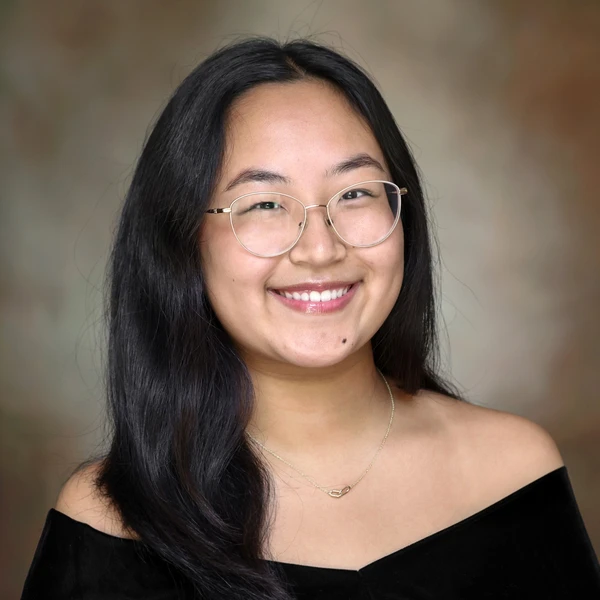
Lin Zheng

1x

Finalist

Bio

I am an incoming freshman at Yale University with a commitment to understanding and addressing addiction through both science and public service. My academic interests lie at the intersection of neuroscience, psychiatry, and molecular biology, where I hope to investigate the biological mechanisms that make individuals, especially women, more vulnerable to addiction. At the same time, I am equally passionate about the social factors of this issue, looking at how stigma, inequity, and gaps in care prevent people from receiving the help they need. My long term goal is to bridge research and advocacy, using science to inform more effective systems for addiction treatment and support. I have conducted research resulting in two published papers in the Journal of Clinical Investigation, and I was honored to be named a 2026 Regeneron Science Talent Search Top 300 Scholar and the 2025 Tennessee Junior Science and Humanities Symposium first-place winner. As a National Merit Finalist, I have consistently pursued academic excellence while seeking opportunities to apply my knowledge in meaningful ways. Beyond research, I am dedicated to the arts and volunteering in the community. In school, I am the leader of our Science Olympiad team, and am involved in organizing full school events, such as new student orientations and community outreach. I am a strong candidate because of my purpose. I am driven to confront addiction as both a scientific challenge and a human one, and I plan on continuing this purpose through my time at Yale and beyond.

Education

Yale University

Bachelor's degree program
2026 - 2026
  • Majors:
    • Neurobiology and Neurosciences

University School Of Nashville

High School
2017 - 2026

Miscellaneous

  • Desired degree level:

    Doctoral degree program (PhD, MD, JD, etc.)

  • Graduate schools of interest:

  • Transfer schools of interest:

  • Majors of interest:

    • Neurobiology and Neurosciences
  • Planning to go to medical school
  • Career

    • Dream career field:

      Medicine

    • Dream career goals:

      Neurosurgeon

    • Lifeguard Manager

      Swim Club Management Group
      2024 – Present2 years

    Sports

    Swimming

    Varsity
    2018 – 20257 years

    Awards

    • 7x Regional Qualifier

    Research

    • Neurobiology and Neurosciences

      Vanderbilt University — Researcher
      2024 – Present

    Arts

    • Private

      Visual Arts
      Scholastic Art and Writing Awards, 2x Gold Key, 4x Honorable Mention
      2018 – Present

    Public services

    • Advocacy

      Nashville Courthouse — Program Director
      2024 – 2025
    • Volunteering

      Frist Art Museum — Art Instructor
      2023 – Present

    Future Interests

    Advocacy

    Volunteering

    Philanthropy

    Julie Adams Memorial Scholarship – Women in STEM
    During my first week of my Nashville courtroom internship with Judge Kimbrough-Hayes, I saw a father convicted of his third DUI; behind him sat his wife and seven young children. The judge noticed that one girl had a large lump on her neck, and her mom explained they couldn’t afford healthcare due to legal fees. I realized then that the impact of addiction was far-reaching. It touched the children sitting on the benches, watching their dad in an orange jumpsuit. As I spent more time at the courthouse, I saw numerous cases involving addiction. It was easy to lose sight of the people inside them, to let their humanity blur behind case numbers and criminal charges. This empty feeling led me to the Healing Arts Project Inc., a nonprofit that provides art supplies and classes to those recovering from addiction. For months, I worked with the Healing Arts Project and organized for the artwork of those in recovery to be displayed in courtrooms around Nashville. I coordinated with the director and courthouse staff, and every week, the artwork was rotated to a new courtroom, along with labels sharing the artists’ stories. For the artists, my hope was that having their work featured affirmed them on their path to recovery. For those entering the courtroom facing incarceration, I wanted them to feel the power of art: the way it addresses the viewer, gives them the chance to feel emotion, and in doing so, recognizes their worth. It could have been easy to let those struggling with addiction remain invisible in court, to assume that they didn’t want help, or to think no effort would be worthwhile. Displaying their artwork was my way of refusing to look the other way. It was a small act of defiance against the stereotype that they were nothing more than their addiction. Witnessing addiction’s impact in the courtroom also brought on a deeper question: what causes addiction to occur and why is it so difficult to break away from the cycle? To answer this, I joined Dr. Erin Calipari’s lab at Vanderbilt University. For the past two years, I have investigated sex differences in how drugs alter dopamine pathways and reshape the brain, overriding rational decision-making. My first project specifically focused on the addictive effects of ADHD medications and stimulant drugs, while my most recent project looked at the mechanism underlying cocaine use disorder, with cocaine being one of the most widely used and addictive drugs worldwide. If clinicians had a deeper understanding of how drugs could affect individual brains differently, they could design more effective rehabilitation strategies and medication plans that are tailored to each sex. My research has shown me that addiction is not a uniform condition, and it manifests differently across sex, environment, and neurobiology, yet is often treated as if it were the same. By viewing addiction as a disruption of unique biological systems, there could be improved more equitable care provided for those struggling. This fall, I will join Yale University as a neuroscience major, where I hope to continue investigating the neurobiological mechanisms that underlie addiction and its sex-specific effects. In college and beyond, I plan to pursue a career in addiction research with the goal of translating our scientific discoveries into real world treatments. My work is driven by the idea that when we strive to understand the brain more deeply, we can replace judgment and ultimately, expand access to recovery and provide a brighter future for those undergoing addiction.