Hobbies and interests
Acting And Theater
Advocacy And Activism
American Sign Language (ASL)
Art
Anime
Babysitting And Childcare
Counseling And Therapy
Exploring Nature And Being Outside
Reading
Fantasy
I read books daily
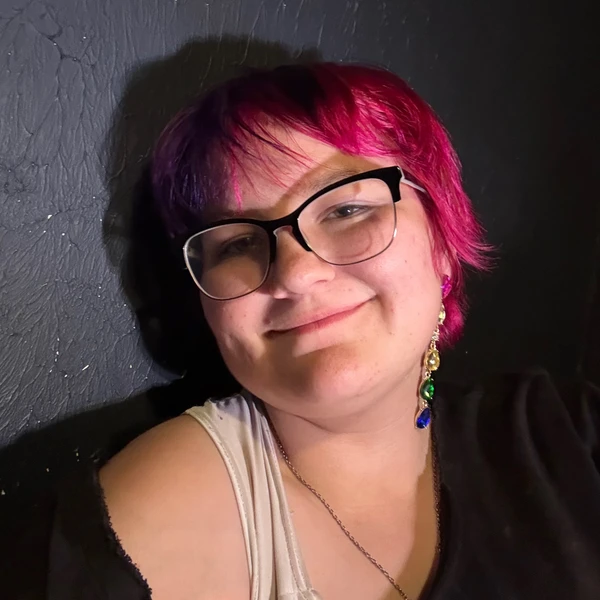
Lin Summers
1x
FinalistLin Summers
1x
FinalistBio
Lin loves psychology, they always have. From being the therapist friend to being in therapy, Lin has always strive to understand their own and others minds. Part of understanding how the brain works is understanding what makes it healthy, so Lin has also dedicated their youth to supporting their community through volunteering at events, such as local pride festivals, and charities like the food bank. Lin is dedicated to learning everything they can about the human mind so that they can make a positive difference in society‘s mental health.
Education
Cedaredge High School
High SchoolMiscellaneous
Desired degree level:
Bachelor's degree program
Majors of interest:
- Psychology, General
Career
Dream career field:
Mental Health Care
Dream career goals:
Climbing lead
The nature connection2022 – 20242 years
Sports
Soccer
Varsity2014 – 202410 years
Research
Environmental/Environmental Health Engineering
International climate health — Essay writer2023 – 2023
Arts
School yearbook
Graphic Art2024 – 2025Cedaredge Theatre
Acting2016 – Present
Public services
Volunteering
Bruin Hood — Active volunteer2019 – 2024
Ethel Hayes Destigmatization of Mental Health Scholarship
Depression isn't something that can be easily explained. I still remember trying to tell my parents what was wrong, I wanted them to understand why I was so angry, why I was so empty, why I kept hurting myself, because I couldn't, I didn't have the words. When I was diagnosed with depression, everything started making a little more sense. The first step to recovery was identifying what was wrong, and realizing that it wasn't my fault. To this day I still struggle with depression, in fact, I've collected a few more mental illnesses over the years, but through years of therapy and support from my inner circle, I've been able to reach a place where I'm not just surviving but truly living.
I still have depressive episodes and anxiety attacks, but I've found ways to get me through the pain of feeling both empty and overfull. I'm able to identify when my mental health is starting to get worse, and I've developed the tools needed to function. That's why I want to be a therapist, to help people like me learn not only to live with their struggles, but to accept them and thrive.
I realized pretty early that I had an interest in psychology. There are many different ways our brains can be affected, and I've always been drawn to understanding them. Being mentally ill and neurodivergent myself drove me to understand the psychology of mental disorders particularly. This grew into an interest in becoming a therapist, being able to not only understand what was wrong in someone's brain but also be able to help them.
My therapist, Hannah, strongly encouraged and inspired my love for mental health. She's helped me through years of trauma and pain, and showed me just how rewarding it is to help those around you. Because of her, I started looking into the logistics of how to be a therapist, and from there I was set. From taking every psychology course I could find, to getting opportunities to speak at mental health conferences, I was driven to put in the work to make my dream a reality.
I got my first taste of therapy through helping my friends. Between petty relationship drama to complex custody battles, I quickly became the shoulder for everyone to lean on to vent to or for advice. Similarly, a lot of people leaned on me for information about mental health and disorders. Obviously, I wasn't, and still I'm not, licensed to give clinical mental health advice, but I can be there for my friends and help them however I can.
That's really what a career and mental health boils down to for me, being able to help people. Life is complicated and there are so many ways that it can hurt us, and as much as I seek to understand the brain on paper, there's nothing more rewarding than understanding and helping the person sitting in front of you. I am dedicated to keep working towards this goal, so that one day I can be the kind of support that I've spent my entire life needing.
Andrea Worden Scholarship for Tenacity and Timeless Grace
When asked to write about myself and my life for a scholarship, my first instinct is to write about my accomplishments, the things that prove I'm smart, charitable, and driven enough to deserve a scholarship. But for this—the Andrea Worden Scholarship—I was specifically instructed not to write about that, but about who I am as a person, what my life looks like, and everything that's real. In my many previous attempts to write this essay, I struggled to concisely describe my life, probably because I wasn't being completely honest. I’m an impressive person who has done a lot of stuff that's worth bragging about, but who I am is more than my success. My story isn't beautiful or clean, there are plenty of parts I would prefer to edit out. But my story is my story, both the golden accomplishments, and the dirty secrets. So…
My name is Lin (or Angel) Summers, and I'm a non-binary high school senior who plans to attend Aberdeen University in Scotland for Psychology and Philosophy. I've always loved psychology, both in the sense that I want to be a therapist who helps people with severe mental health struggles, and in the sense that I like psychoanalyzing everyone around to figure out how they tick. My story is one of generational struggle, resilience, and most of all hope.
Part of the prompt asks how I'm an unconventional student, and while I could talk about being on the AP track, my frankly exhausting list of extracurriculars, or any of the other things that make me an ‘advanced student’, none of that actually speaks to how my organic experience is different from average. So instead, I'll talk about growing up dirt poor in a family known for addiction, and a household known for conflict.
I grew up on food stamps and hand-me-downs in a small trailer with four half-siblings and parents who spent more time arguing than raising their children. Since before I was born my family has struggled with instability and drug abuse. Neither of my parents graduated, my mom didn't even finish middle school, they met on crack after they both already had kids from failed toxic relationships. My aunt died of an overdose when I was 15, and my grandpa has lived in the same run-down house with a rotating door of criminals and bums since I can remember. My earliest memories are of my brother drunkenly fighting with my parents—both physically and verbally, quickly followed by my parents engaging in a screaming match until my older siblings finally took me out of the house.
The struggles of my home life have affected me and my schooling for longer than I can remember. I've missed school because my parents were too hungover to drive me in the morning, I developed an addiction to alcohol at a young age, and I've spent my childhood struggling with a host of mental health issues. But despite all of this, I'm still here, testing in the 90th percentile, soon to graduate with a diploma and a thousand stories. I'm going to get my master's in psychology one day and become a great therapist and psychological researcher. A major reason I've been able to push through everything, is because of my aunt. She taught me that if reality is dull, then you should learn to see magic in the mundane.
On the first day of my sophomore year of high school, my aunt died. My parents will tell you she died of an aneurysm, which is mostly true. But the aneurysm was largely affected by the amount of non-prescription drugs she had taken a couple of hours prior. Losing my aunt meant losing a part of myself, and gaining acceptance of part of my reality.
I lost my ability to believe in magic. I never wished I had religion more than when I had to face the reality that the crazy, fearless woman who taught me to believe in fairies was gone. Fairies aren't real, she wasn't a witch, and as much as I've tried to, I can't believe that she still exists in any meaningful way. Since losing her I've had to rebuild my sense of wonder, a skill she taught me.
But I also gained something from her death. My aunt could create a weekend getaway out of five dollars, she was good at hiding the family issues and making everything seem like sparkles and rainbows. Her death, the dark reality that caused it, taught me that the world I live in isn't perfect. I have a family history of addiction and grew up dirt poor. And as much as I miss that child-like innocence that protected me from these realities, I'm also glad that I can see the world for what it is, that I love and accept where it came from, and still push forward for something better.
I will always miss my aunt, it's heartbreaking to know that she will never get to see me graduate. She won't get to see the life I built, and I don't get to see what she could've built with more time. To her, I will always be 14, and to me, she will always be the crazy woman who lived in a crack house with mountains of financial and mental problems. But most of all she will always be my aunt, she will always be with me in the ashes I carry around my neck. And she will always be there to remind me that no matter how hard reality gets, with enough elbow grease and imagination you can turn it into a fantasy.
So that's my story, I'm a kid with a history of pain, but a legacy of hope. My parents overcame addiction, created their own businesses despite everything, and gave their kids a chance to believe. To believe in magic, to believe in the future, and to believe in themselves. It's not necessarily pretty, but it's real, and it's me.
Bright Lights Scholarship
Depression isn't something that can be easily explained. I still remember trying to tell my parents what was wrong, I wanted them to understand why I was so angry, why I was so empty, why I kept hurting myself, because I couldn't, I didn't have the words. When I was diagnosed with depression, everything started making a little more sense. The first step to recovery was identifying what was wrong, and realizing that it wasn't my fault. To this day I still struggle with depression, in fact, I've collected a few more mental illnesses over the years, but through years of therapy and support from my inner circle, I've been able to reach a place where I'm not just surviving but truly living.
I still have depressive episodes and anxiety attacks, but I've found ways to get me through the pain of feeling both empty and overfull. I'm able to identify when my mental health is starting to get worse, and I've developed the tools needed to function. That's why I want to be a therapist, to help people like me learn not only to live with their struggles, but to accept them and thrive.
I realized pretty early that I had an interest in psychology. There are many different ways our brains can be affected, and I've always been drawn to understanding them. Being mentally ill and neurodivergent myself drove me to understand the psychology of mental disorders particularly. This grew into an interest in becoming a therapist, being able to not only understand what was wrong in someone's brain but also be able to help them.
My therapist, Hannah, strongly encouraged and inspired my love for mental health. She's helped me through years of trauma and pain, and showed me just how rewarding it is to help those around you. Because of her, I started looking into the logistics of how to be a therapist, and from there I was set. From taking every psychology course I could find, to getting opportunities to speak at mental health conferences, I was driven to put in the work to make my dream a reality.
I got my first taste of therapy through helping my friends. Between petty relationship drama to complex custody battles, I quickly became the shoulder for everyone to lean on to vent to or for advice. Similarly, a lot of people leaned on me for information about mental health and disorders. Obviously, I wasn't, and still I'm not, licensed to give clinical mental health advice, but I can be there for my friends and help them however I can.
That's really what a career and mental health boils down to for me, being able to help people. Life is complicated and there are so many ways that it can hurt us, and as much as I seek to understand the brain on paper, there's nothing more rewarding than understanding and helping the person sitting in front of you. I am dedicated to keep working towards this goal, so that one day I can be the kind of support that I've spent my entire life needing.
Phoenix Opportunity Award
Trailer trash. A term that I am far too accustomed to hearing. It's true though, I live in a trailer in a small town in Colorado, I grew up on food stamps with two parents who worked full-time. I used to be ashamed of where I came from, but over the years I've learned to take pride in who I am, and what my background looks like. Because yeah, I'm trailer trash, which only makes it all the more impressive that I've succeeded as much as I have.
My parents grew up dirt poor, and have a long history of adverse experiences and struggles, including ones they were still dealing with when I came into this world. But that didn't stop them, from getting over addiction, to starting two different successful companies. My parents proved that in a world that doesn't want you to succeed, you don't ask for permission to sit at the table, you build your own chair.
I know that anyone, regardless of their background, deserves support because they are hard-working and dedicated. My mom was homeless as a child who never graduated middle school, my dad is a felon who didn't get his GED until a decade after he dropped out, the world didn't give them much, so they built everything they have. My parents built their lives and businesses from nothing, so I can only imagine what they could have achieved if they had gone to college.
That's the thing about being a first generation student though, my parents didn't have the opportunities I do. That's why I work so hard to take advantage of everything I have. I am so thankful for the life my parents have given me, and the only way I know to honor them is by making sure my kids get an even better one.
I am trailer trash, I grew up in a trailer in a small town at the base of the Grand Mesa. I don't have a trust fund, I'm not a legacy at any school, but I have something far more important. I have the same fight that got my parents to crawl themselves into a better life. I've determination and grit, and the stubbornness to keep fighting even when the fight is rigged against me. I'm trailer trash and I'm proud, because it means I earned everything I have.
Brooks Martin Memorial Scholarship
I don't remember much about my first day of sophomore year. I remember arriving at school on the back of my dad's motorcycle. I remember seeing my friends and talking about summer. I remember getting in my dad's truck after school and telling him about the day, but most of all I remember what he said to me when I finally stopped talking. I remember the feeling of your reality shattering.
On my first day of sophomore year, five days before my birthday, my aunt died. Most people wouldn't consider an aunt an immediate family member, but most people didn't have the family structure I did. My aunt was somebody who lived with me for years, having only recently started living with my grandpa again. She's the person who taught me that it was OK to be weird, how to get by with barely any money, and most importantly how to enjoy life to the fullest even when everything around you kind of sucks.
My parents will tell you she died of an aneurysm, which is mostly true. But the aneurysm was largely affected by the amount of non-prescription drugs she had taken a couple of hours prior. Losing my aunt meant losing a part of myself, and gaining acceptance of part of my reality.
I lost my ability to believe in magic. I never wished I had religion more than when I had to face the reality that the crazy fearless woman who taught me to believe in fairies didn't exist anymore. Fairies aren't real, she wasn't a witch, and as much as I've tried to, I can't believe that she exists in an afterlife. Since losing her I've had to rebuild my sense of wonder, and I'm still in the process of doing that with some success.
But I also gained something from her death. My aunt could create a weekend getaway out of five dollars, she was good at hiding the family issues and making everything seem like sparkles and rainbows. Her death, the dark reality that caused it, taught me that the world I live in isn't perfect. I have a family history of addiction and grew up dirt poor. And as much as I miss that child-like innocence that protected me from these realities, I'm also glad that I can see the world for what it is, that I love and accept where it came from, and still push forward for something better.
I will always miss my aunt, it's heartbreaking to know that she will never get to see me graduate. She won't get to see the life I built, and I don't get to see what she could've built with more time. To her, I will always be 14, and to me, she will always be the crazy woman who lived in a crack house with mountains of financial and mental problems. But most of all she will always be my aunt, she will always be with me in the ashes I carry around my neck. And she will always be there to remind me that no matter how hard reality gets, with enough elbow grease and imagination you can turn it into a fantasy.
Transgender Future Scholarship
One word. All it takes is one word and I can feel my heart beating, my mind going fuzzy, everything falling apart around me. One word. One name. A deadname is so much more than a sound I associate with anymore, it's a chain wrapping itself around my neck and keeping me a prisoner to the girl everyone thinks I was. It might be nothing more than a two-syllable word, but it feels like a curse, muttered by the very witches that spelled me into the wrong body, the wrong reality.
Being trans comes with a host of struggles, from the deeply personal war of dysphoria, to the literal war of societal oppression. Education can be particularly challenging, I've been bullied, called slurs, and harassed by students and teachers alike. There was a significant amount of time when I considered going fully homeschooled, which would have harmed my education but benefited my mental health. In retrospect, I can't decide if staying in public school was the best decision, but I'm fortunate that everything has kind of worked out.
I'm lucky, I have a family that supports me and a decent number of trusted adults at my school to keep me safe. My school counselor helped me change my name on the attendance sheet and my student ID., I can always talk to my speech and debate coach when things get too much, and my civics teacher is always a safe place. The biggest thing that helped me survive high school was my therapist, which is why I want to go into psychology.
I've spent my life feeling like I'm fighting a pointless battle against the rest of the world. Psychology matters to me because it's my opportunity to be the person little me needed. To be the person in a therapy office who calls you by the right name and reminds you of why life is worth it. To be the person in a lab coat letting you know that there is a reason you feel the way you do, and that you are valid. I want to be the person standing in an office, fighting for a little kid to use the bathroom that feels right to them, because I needed somebody to do that for me.
I've known I was Non-Binary since middle school, earlier actually, I just didn't have the language to describe what I was feeling. Ever since I've been fighting not to be part of the 12% of queer youth who drop out, or the 60% of trans people who never go to college, or worst of all the 16% of trans youth who attempt suicide. I've done everything to avoid becoming one of these statistics, now I want to help change them. That's why an education in psychology matters to me, because I, like so many of my trans siblings, grew up knowing my odds were slim, and that shouldn't be a reality we just accept. Trans kids should have the same opportunities and chances as everyone else, and I'm hell-bent on making that happen.
Mental Health Profession Scholarship
Depression isn't something that can be easily explained. I still remember trying to tell my parents what was wrong, I wanted them to understand why I was so angry, why I was so empty, why I kept hurting myself, because I couldn't, I didn't have the words. When I was diagnosed with depression, everything started making a little more sense. The first step to recovery was identifying what was wrong, and realizing that it wasn't my fault. To this day I still struggle with depression, in fact, I've collected a few more mental illnesses over the years, but through years of therapy and support from my inner circle, I've been able to reach a place where I'm not just surviving but truly living.
I still have depressive episodes and anxiety attacks, but I've found ways to get me through the pain of feeling both empty and overfull. I'm able to identify when my mental health is starting to get worse, and I've developed tools to be still able to function. That's why I want to be a therapist, to help people like me learn not only to live with their struggles, but to accept them and thrive.
I realized pretty early that I had an interest in psychology. There are many different ways our brains can be affected, and I've always been drawn to understanding them. Being mentally ill and neurodivergent myself drove me to understand the psychology of mental disorders particularly. This grew into an interest in becoming a therapist, being able to not only understand what was wrong in someone's brain but also be able to help them.
My therapist, Hannah, strongly encouraged and inspired my love for mental health. She's helped me through years of trauma and pain, and showed me just how rewarding it is to help those around you. Because of her, I started looking into the logistics of how to be a therapist, and from there I was set. From taking every psychology course I could find, to getting opportunities to speak at mental health conferences, I was driven to put in the work to make my dream a reality.
I got my first taste of therapy through helping my friends. Between petty relationship drama to complex custody battles, I quickly became the shoulder for everyone to lean on to vent to or for advice. Similarly, a lot of people leaned on me for information about mental health and disorders. Obviously, I wasn't, and still I'm not, licensed to give clinical mental health advice, but I can be there for my friends and help them however I can.
That's really what a career and mental health boils down to for me, being able to help people. Life is complicated and there are so many ways that it can hurt us, and as much as I seek to understand the brain on paper, there's nothing more rewarding than understanding and helping the person sitting in front of you. I am dedicated to keep working towards this goal, so that one day I can be the kind of support that I've spent my entire life needing.
Raise Me Up to DO GOOD Scholarship
Trailer trash. A term that I am far too accustomed to hearing. It's true though, I live in a trailer in a small town in Colorado, and I grew up eating on food stamps and EBT cards with two parents who worked full-time. I used to be ashamed of where I came from, but over the years I've slowly learned to take pride in who I am, and what my background looks like. Because yeah, I'm trailer trash, I was born into life on hard mode, which only makes it all the more impressive that I've succeeded as much as I have.
At first I didn't think my family counted as 'blended’ because I've grown up with my parents and siblings. But then I remembered that all of my siblings are half siblings and I have at least three ex step parents, I'm just not in contact with them. I think that's a testament to the amount of love and support in my family. Family is family regardless of blood.
I can't talk about my own accomplishments and goals without talking about the people who raised me to dream big. My parents grew up dirt poor, and have a long history of adverse experiences and struggles, including ones they were still dealing with when I came into this world. But that didn't stop them, from getting over addiction, to starting two different successful companies. My parents proved that in a world that doesn't want you to succeed, you don't ask for permission to sit at the table, you build your own chair.
I know that anyone, regardless of their background, deserves support because they are hard-working and dedicated. My mom was homeless as a child, my dad spent time in juvie, the world didn't give them much, so they built everything they have. My parents built their lives and businesses from nothing, so I can only imagine what they could have achieved if they had 30 grand for college.
I am trailer trash, I grew up in a trailer in a small town at the base of the Grand Mesa. I don't have a trust fund, I'm not a legacy at any school, but I have something far more important. I have the same fight that got my parents to crawl themselves into a better life. I've determination and grit, and the stubbornness to keep fighting even when the fight is rigged against me. I'm trailer trash and I'm proud, because it means I earned everything I have.
Bick First Generation Scholarship
Trailer trash. A term that I am far too accustomed to hearing. It's true though, I live in a trailer in a small town in Colorado, and I grew up eating on food stamps and EBT cards with two parents who worked full-time. I used to be ashamed of where I came from, but over the years I've slowly learned to take pride in who I am, and what my background looks like. Because yeah, I'm trailer trash, I was born into life on hard mode, which only makes it all the more impressive that I've succeeded as much as I have.
My work ethic, and I can't talk about my own accomplishments and goals without talking about the people who raised me to dream big. My parents grew up dirt poor, and have a long history of adverse experiences and struggles, including ones they were still dealing with when I came into this world. But that didn't stop them, from getting over addiction, to starting two different successful companies. My parents proved that in a world that doesn't want you to succeed, you don't ask for permission to sit at the table, you build your own chair.
I've been playing soccer for over a decade. When I first started I was small, slow, and really bad. Now I'm proud to say that I'm still small, but I also have the medals to prove that I'm good at what I do. When you grow up with nothing you learn how to fight for everything, you learn that you don't stop when things get difficult you try harder. I'd like to think that over 10,000 hours of volunteering prove that I don't stop when things get difficult. I fought through dyslexia and depression to do well in school, I turned my passion into a career, and earned my own money to give myself opportunities.
I know that anyone, regardless of their background, deserves support because they are hard-working and dedicated. My mom was homeless as a child, my dad spent time in juvie, the world didn't give them much, so they built everything they have. My parents built their lives and businesses from nothing, so I can only imagine what they could have achieved if they had 30 grand for college.
I am trailer trash, I grew up in a trailer in a small town at the base of the Grand Mesa. I don't have a trust fund, I'm not a legacy at any school, but I have something far more important. I have the same fight that got my parents to crawl themselves into a better life. I've determination and grit, and the stubbornness to keep fighting even when the fight is rigged against me. I'm trailer trash and I'm proud, because it means I earned everything I have.
Big Picture Scholarship
I consider myself a bit of a cinephile, I love movies religiously, so trying to think of ‘the’ movie that had the greatest impact on me is difficult. I could go with one of my long-term favorites ‘The Half of it’ that balances experimental cinematography with richly developed characters and an emotional story about the complexities of the human condition. Or I could gush about the genius of something like ‘The Princess Bride’ as a master class in timeless writing. Moreover, I could talk about the countless animated films that revolutionized the cinematic world. There are a lot of possibilities.
But instead of going with a great movie, I'm going to go with an ok one that I like but by itself didn't change my life. That movie is The Goonies, a story about brotherhood and cheap humor. Not because it's a perfect movie with a message that made me a better person but because it was both the first and the last movie I ever got to watch with my aunt.
The Goonies is a tale of action and adventure as a group of kids try and save their child at home from being torn down by a property development company, and end up on a quest fighting Pirates in a secret cavern for a hidden treasure. It's a crazy movie that gives testament to the capabilities of pre-CGI special effects and the effectiveness of inappropriate humor. I probably shouldn't have been watching it at 6 or even 13, but my aunt loved it.
The Goonies had the greatest effect on me because watching it in my hometown Drive-In movie theater was one of the last things I got to do with my aunt, and thus one of the last times she got to teach me magic. My aunt was wild, the ‘she managed to put together an incredible weekend trip with only five dollars and a couple mental illnesses’ kind of wild, and she taught me to see the magic in reality, no matter how dark or plain reality seemed.
The Goonies is crude, senseless, and far from perfect, just like my family and my life. The Goonies created a power fantasy out of a movie that started with a phallic joke, with limited resources. My aunt created a happy life filled with wonder and opportunity for her kids, despite coming from a place of deep trauma and having nothing to her name but a drug addiction. The metaphor almost feels scripted, but it's real.
I love The Goonies because it is the perfect example of creating something wonderful and exciting out of something plain and crappy. It's a constant reminder of my aunt and her belief that anything can be magic with enough imagination and elbow grease. So while I wouldn't consider the Goonies a cinematic masterpiece, or even one in my top 10 favorite movies, it is the film that continues to affect my life daily, and that makes it pretty important.
Chi Changemaker Scholarship
In late February of my sophomore year of high school, I found out about an Instagram account that I nicknamed my fan page. This account was dedicated to posting pictures of me, usually with my at the time girlfriend, with captions that were both sexual and usually implied that I was a zoophile, although the inaccurate term furry was more commonly used. Despite the grotesque nature of a page like this, I can't say that I was surprised by its existence, as my friends and I had been getting bullied by individuals who perceived us as furries for years. What was new was the technological aspect, and while the account was removed after many of my friends reported it, I tended to make light of it, hence why I referred to it as my fan page. In retrospect, I wish I had taken cyberbullying more seriously, because it happened to my friend the next year, and it wasn't as harmless.
My best friend started getting cyber bullied though Snapchat, and I realized that it was real harm. I've always been vocal at my school about bullying and problems in and out of class, culminating in my affirmationed essay about the sexual and racial abuse and bullying that was rampant during my junior year. I expected to be reprimanded for this essay as it directly shamed my school's administration for their lack of action, but instead, I was given the opportunity to work with a vice principal and a school counselor to make a plan to make things better.
We made plans to deter cyber harassment and prevent physical escalation, including a new school policy that made it so online bullies faced just as many consequences for their actions as in-person bullies. Furthermore, I convinced our school to partner with a local organization that provided information about mental health and teen suicide, and how it relates to bullying. By doing this we were able to help educate students on the tangible harm their actions have.
My school still has bullying problems, and cyberbullying is only becoming a more prevalent issue, but these actions have had positive effects, including reducing both in-person and cyberbullying rates. Cyberbullying will probably still be a problem when I die, but hopefully it won't be as bad, and hopefully my peers and I successfully lay the foundation for future generations to keep combating this harmful plague.
Aserina Hill Memorial Scholarship
I always find it difficult to 'describe myself’ in essays. There are so many parts of me to understand to know me, how can I fit all of it in a 500-word essay? I can't, but seeing as this is made in memory of an incredible charitable woman, I can talk about who I am in terms of charity and activism.
Growing up dirt poor on food stamps and hand-me-downs, It's always been important to me to honor where I come from and fight for something better. It's also important to me to fight for the freedom and liberty of everyone, because I know what it is to suffer, and yet countless people suffer so much more than I ever will. This has driven me to always be outspoken and involved in the world, talking about current events and the harsh realities people are living in, speaking out against oppressive systems, and attending and organizing protests and rallies to fight for human rights.
Still, I find myself wishing I could do more. At the end of the day, it doesn't matter how much I talk about world issues or how much I raise for people living in horrid situations, I'm still a kid who's relatively safe in a decent part of a decent country, while other people are starving, dying of disease, and being shot down in the streets. Any positive impact is good but I've always wished there was a way people could do more, which is how I came up with the idea for ‘the button’ organization.
The concept is simple, you go to a website and pick a digital button, all labeled with different charities and world issues that need funding. Every time you click the button the banner ad changes, and that advertiser pays one dollar to the fund of your support. It would be financially backed by advertisers and those with the means to be sponsors. There are tons of other details and logistics that I'm still working on and don't have time to talk about, but that's the basic idea.
Obviously just having this as an option isn't going to do much, not if there isn't an incentive for people to click the button. That's where myself and other partners are, promoting merch, events, and various rewards that would be accessible for free to people who click the buttons enough times. Funded and supported by my acting and therapy career after college. Imagine how much we could raise if instead of paying hundreds of dollars to go see your favorite band, people started donating hundreds of dollars to those in need with the reward of seeing that band. We could host large-scale events and promote specific funds in times of crisis, and ideally make a real impact on the world.
The world has a lot of problems, and the only way to solve them is to leverage the power of the masses and the means of wealthy corporations. That's what the button is, it's my way of providing that we can fix the world, with just the click of the button, if we stay dedicated to clicking that button and helping however we can. It's my way of honoring where it came from and fighting for a better future.
Student Referee Scholarship
Being a recreational soccer referee has led me to experience several—let's say colorful experiences. I've been cursed at by the audience, called a useless moron by coaches, and even got threatened and harassed by a drunk parent. I've dealt with all of that and more while trying to keep track of time, score, safety, and who's going what way—which is especially difficult when the players themselves don't know either. All to say, because a ref is hard, and I still love it.
Despite the constant chaos and stress, I truly enjoy my job. I primarily work with U6 kids, and there is nothing better than when a small child says they recognize you by your hair, or better yet when you're getting ready for a U8 game and this kid on the brink of moving to U10 runs up to and hugs you because, and you hug back because you were this kids first referee and they were one of your first players.
I don't think I could ever pick just one favorite memory, I've been doing it for almost five years, and every game holds a fond place in my heart. Whether my first game or my worst game, regardless of whether the day was exciting or terrifying, from U6 to U10 I'm so grateful for every minute I've spent in uniform. Because I'll take on a hundred rude parents if it means getting to see one happy kid.
I played soccer as a little kid and it was some of the most fun I've ever had, so getting to be part of that for so many other kids is a dream come true. Not to mention the skills I've developed being a referee. Keeping track of up to almost 20 players and a ball, and all the rules, and the time, and making sure there isn't a baby on the field, makes you pretty good at multitasking and spatial awareness. Interacting with parents and coaches in high-energy situations forces you to develop conflict de-escalation skills and better confidence. Running around for a few hours improves your endurance and physical health. And most of all the feeling of accomplishment and importance at being part of so many success stories is invaluable. There are a lot of benefits to be gained from refereeing and I'll miss it.
Next season will be my last season, at least in the US. I'm going to university in Scotland next year, and won't be able to see my kids, work with all of the incredible people I've become friends with, or even see the fields I've been playing on since I was four again. I still wanna be a referee, one of the first things I plan on doing once I'm set up in Scotland is get my British football officiant certification, European football not American. This job carried me through high school, and hopefully it'll help carry me through university.
600 words are not enough to convey all the good being a ref has done for me. I never want to give it up, it's a part of who I am. It's not just a way to make money, it's a series of experiences that teach you the beauty of sports and teamwork, and the power of being a keystone part of so many great moments. Some people feel embarrassed by their first job, I don't. I'm so proud of everything I've been able to do as a referee.
Mikey Taylor Memorial Scholarship
Depression isn't something that can be easily explained. I still remember trying to tell my parents what was wrong, I wanted them to understand why I was so angry, why I was so empty, why I kept hurting myself, because I couldn't, I didn't have the words. When I was diagnosed with depression, everything started making a little more sense. The first step to recovery was identifying what was wrong, and realizing that it wasn't my fault. Years later I still struggle with depression, in fact, I collected a few more mental illnesses over the years, but through years of therapy and support from my inner circle, I've been able to reach a place where I'm not just surviving but truly living.
I realized pretty early that I had an interest in psychology. There are so many different ways our brains can be messed up, and I've always been drawn to understanding that. Being mentally ill and neurodivergent myself drove me to understand the psychology of mental disorders particularly. This grew into an interest in becoming a therapist, being able to not only understand what was wrong in someone's brain but also be able to help them.
My therapist Hannah strongly encouraged and inspired my love for mental health. She's helped me through years of trauma and pain, and showed me just how rewarding it is to help those around you. Because of her, I started looking into the logistics of how to be a therapist, and from there I was set. From taking every psychology course I could find, to getting opportunities to speak at mental health conferences, I was driven to put in the work to make my dream a reality.
I got my first taste of therapy through helping my friends. Between petty relationship drama to complex custody battles, I quickly became the shoulder for everyone to lean on to vent to or for advice. Similarly, a lot of people leaned on me for information about mental health and disorders. Obviously, I wasn't, and still I'm not, licensed to give clinical mental health advice, but I can be there for my friends and help them however I can.
That's really what a career and mental health boils down to for me, being able to help people. Life is complicated and there are so many ways that it can hurt us, and as much as I seek to understand the brain on paper, there's nothing more rewarding than understanding and helping the person sitting in front of you. I am dedicated to keep working towards this goal, so that one day I can be the kind of support that I've spent my entire life needing.
Eden Alaine Memorial Scholarship
I don't remember much about my first day of sophomore year. I remember arriving at school on the back of my dad's motorcycle. I remember seeing my friends and talking about summer. I remember getting in my dad's truck after school and telling him about the day, but most of all I remember what he said to me when I finally stopped talking. I remember the feeling of your reality shattering.
On my first day of sophomore year, five days before my birthday, my aunt died. Most people wouldn't consider an aunt an immediate family member, but most people didn't have the family structure I did. My aunt was somebody who lived with me for years, having only recently started living with my grandpa again. She's the person who taught me that it was OK to be weird, how to get by with barely any money, and most importantly how to enjoy life to the fullest even when everything around you kind of sucks.
My parents will tell you she died of an aneurysm, which is mostly true. But the aneurysm was largely affected by the amount of non-prescription drugs she had taken a couple of hours prior. Losing my aunt meant losing a part of myself, and gaining acceptance of part of my reality.
I lost my ability to believe in magic. I never wished I had religion more than when I had to face the reality that the crazy fearless woman who taught me to believe in fairies didn't exist anymore. Fairies aren't real, she wasn't a witch, and as much as I've tried to, I can't believe that she exists in an afterlife. Since losing her I've had to rebuild my sense of wonder, and I'm still in the process of doing that with some success.
But I also gained something from her death. My aunt could create a weekend getaway out of five dollars, she was good at hiding the family issues and making everything seem like sparkles and rainbows. Her death, the dark reality that caused it, taught me that the world I live in isn't perfect. I have a family history of addiction and grew up dirt poor. And as much as I miss that child-like innocence that protected me from these realities, I'm also glad that I can see the world for what it is, that I love and accept where it came from, and still push forward for something better.
I will always miss my aunt, it's heartbreaking to know that she will never get to see me graduate. She won't get to see the life I built, and I don't get to see what she could've built with more time. To her, I will always be 14, and to me, she will always be the crazy woman who lived in a crack house with mountains of financial and mental problems. But most of all she will always be my aunt, she will always be with me in the ashes I carry around my neck. And she will always be there to remind me that no matter how hard reality gets, with enough elbow grease and imagination you can turn it into a fantasy.
Joieful Connections Scholarship
I have countless positive memories from my junior year of high school—the time I broke down crying in the bathroom because my principal told me that I was abusing my headphone accommodation, isn't one of them. I was angry, hurt, and scared, but most of all I was confused. I got my 504 plan finalized a few months before, and I thought things would finally be better. I was wrong.
Getting a 504 was difficult to say the least. I qualified for an autism diagnosis when I was first tested in elementary school. Still, I wasn't given one because the counselor didn't think someone with an above-average IQ could be autistic. This sparked years of silent struggle, especially when I started showing signs of ADHD, dyslexia, and dysgraphia.
By the time I reached Middle School, most teachers had given up on trying to improve my handwriting and spelling. I was quickly labeled as a problem child who was too blunt and energetic, I couldn't focus in class and would correct my teachers on matters they deemed irrelevant. Despite all of this they still refused to consider me neurodivergent.
When I was finally tested for dyslexia and dysgraphia the psychologist found that not only did I have those disorders, but likely autism and ADHD as well. And yet I was still holding back tears during my 504 meeting trying to explain to people who didn't care to listen that these accommodations weren't about my intellect, they were about my comfort and ability to exist in school.
To this day I am fighting for the accommodations I need to reach my full potential. To this day my struggles are still compared to the white male standard of neurodivergents as a way to discredit them. To this day I am an autistic person with ADHD dyslexia and dysgraphia, regardless of my IQ.
I want to get a degree in psychology because I've spent my life feeling like an anomaly, and actually understanding what was happening in my brain made me realize I'm not a stupid alien. I want to understand the brain more, especially when it comes to psychological disabilities. I want other people to understand that they aren't just lazy or dumb or weird.
Most of all I want to help eradicate the stereotypes that plague this world and make it harder for people like me to get the help they need. I want to make the world understand that disability has nothing to do with intelligence. I want to fix the diagnostic standards of neurodivergents so women and people of color stop being underdiagnosed. I want to help people living with learning disabilities realize how smart they are, and teach those around them how to support that intelligence.
I've spent my life feeling like I'm fighting a pointless battle against the rest of the world. Psychology matters to me because it's my opportunity to be the person little me needed. To be the person in a therapy office who doesn't judge you for being blunt. To be the person in a lab coat letting you know that there is a reason you feel different, and there are ways to work with it. I want to be the person standing in an office, fighting for a little kid to use their noise-canceling headphones, because I needed somebody to do that for me.
Rainbow Futures Scholarship
I never understood when people said they could remember the first time they experienced some form of hatred, because I can't. I can't remember the first time I was called the F, T, or D slur and I've lost count of how many times I've been called them since. I don't remember the first time I was called fat, I was probably too young to. I don't remember the first time somebody hated me because of who I was. Instead of remembering dates or names, I remember feelings. I remember feeling worthless, disgusting, and broken. I don't remember when the world started hating me, but I remember when I started hating myself. I remember the first time I tried to take my life, and every time after that. I remember every day I thought survival wasn't worth it. I remember the first time I cut myself, even though I was too young to know what self-harm meant. I remember every moment of hating myself for who I am. But more importantly, I remember the first time I chose to put the knife down. I remember the first time I asked myself why I was doing this. I remember when I realized that my self-hatred was taught to me by a hateful world.
I don't remember when the hate started, and maybe that's because it's always been there, but I remember every time I rose above it, every person who helped me fight it, because it's not worth remembering hate, it's worth remembering love. As queer people we live in a world that wants us dead, and we spend every day fighting just to survive. That's why I need scholarships, so I can go to university and not only survive but thrive, and help others do the same. It's hard being queer, which is why I want to go to school for psychology, maybe even get my doctorate in it, so I can be a therapist and help other queer people survive in a world that's trying to kill them, because we all deserve to remember love. More than 30% of queer youth reported being suicidal last year, so many of us don't survive adolescence. I survived because of the people who supported me, especially my therapist, and I want nothing more than to give back and help other queer people survive and know love. We deserve to live, all of us, and if all I do is help my siblings survive, then my life will be complete.
Marcia Bick Scholarship
Trailer trash. A term that I am far too accustomed to hearing. It's true though, I live in a trailer in a small town in Colorado, and I grew up eating on food stamps and EBT cards with two parents who worked full-time. I used to be ashamed of where I came from, but over the years I've slowly learned to take pride in who I am, and what my background looks like. Because yeah, I'm trailer trash, I was born into life on hard mode, which only makes it all the more impressive that I've succeeded as much as I have.
My work ethic, and I can't talk about my own accomplishments and goals without talking about the people who raised me to dream big. My parents grew up dirt poor, and have a long history of adverse experiences and struggles, including ones they were still dealing with when I came into this world. But that didn't stop them, from getting over addiction, to starting two different successful companies. My parents proved that in a world that doesn't want you to succeed, you don't ask for permission to sit at the table, you build your own chair.
I've been playing soccer for over a decade. When I first started I was small, slow, and really bad. Now I'm proud to say that I'm still small, but I also have the medals to prove that I'm good at what I do. When you grow up with nothing you learn how to fight for everything, you learn that you don't stop when things get difficult you try harder. I'd like to think that over 10,000 hours of volunteering prove that I don't stop when things get difficult. I fought through dyslexia and depression to do well in school, I turned my passion into a career, and earned my own money to give myself opportunities.
I know that anyone, regardless of their background, deserves support because they are hard-working and dedicated. My mom was homeless as a child, my dad spent time in juvie, the world didn't give them much, so they built everything they have. My parents built their lives and businesses from nothing, so I can only imagine what they could have achieved if they had 30 grand for college.
I am trailer trash, I grew up in a trailer in a small town at the base of the Grand Mesa. I don't have a trust fund, I'm not a legacy at any school, but I have something far more important. I have the same fight that got my parents to crawl themselves into a better life. I've determination and grit, and the stubbornness to keep fighting even when the fight is rigged against me. I'm trailer trash and I'm proud, because it means I earned everything I have.
Brian J Boley Memorial Scholarship
Depression isn't something that can be easily explained. I still remember trying to tell my parents what was wrong, I wanted them to understand why I was so angry, why I was so empty, why I kept hurting myself, because I couldn't, I didn't have the words. When I was diagnosed with depression, everything started making a little more sense. The first step to recovery was identifying what was wrong, and realizing that it wasn't my fault. Years later I still struggle with depression, in fact, I collected a few more mental illnesses over the years, but through years of therapy and support from my inner circle, I've been able to reach a place where I'm not just surviving but truly living.
I realized pretty early that I had an interest in psychology. There are so many different ways our brains can be messed up, and I've always been drawn to understanding that. Being mentally ill and neurodivergent myself drove me to understand the psychology of mental disorders particularly. This grew into an interest in becoming a therapist, being able to not only understand what was wrong in someone's brain but also be able to help them.
My therapist Hannah strongly encouraged and inspired my love for mental health. She's helped me through years of trauma and pain, and showed me just how rewarding it is to help those around you. Because of her, I started looking into the logistics of how to be a therapist, and from there I was set. From taking every psychology course I could find, to getting opportunities to speak at mental health conferences, I was driven to put in the work to make my dream a reality.
I got my first taste of therapy through helping my friends. Between petty relationship drama to complex custody battles, I quickly became the shoulder for everyone to lean on to vent to or for advice. Similarly, a lot of people leaned on me for information about mental health and disorders. Obviously, I wasn't, and still I'm not, licensed to give clinical mental health advice, but I can be there for my friends and help them however I can.
That's really what a career and mental health boils down to for me, being able to help people. Life is complicated and there are so many ways that it can hurt us, and as much as I seek to understand the brain on paper, there's nothing more rewarding than understanding and helping the person sitting in front of you. I am dedicated to keep working towards this goal, so that one day I can be the kind of support that I've spent my entire life needing.
J.Terry Tindall Memorial Scholarship
Stop trying to do something you're incapable of. I'll never forget those words, spoken by my third-grade English teacher. I always enjoyed writing, or rather I enjoyed putting together speeches and essays, I was never particularly fond of physically putting pencil to paper. I entered my first-ever essay competition when I was in third grade. My spelling was the worst in the class and I got dead last, I felt disappointed, but my parents, the people who went from living off food stamps to founding their own businesses, taught me to never give up, so I tried again. And again. And again. And again.
There is something to be said about having the audacity to be persistently bad at something. But I've always been stubborn and I wanted to be good at writing, so I kept trying. Even when the person who was supposed to be teaching me to be better told me to stop trying, I refused to give up. I won my first essay contest in fifth grade. Looking back at it, I probably didn't deserve the win, but I did, after years of effort I proved that I was good at something.
Now I'm at a point in my life where writing essays and speeches is second nature. I am a high-scoring speech and debate competitor, and have won countless essay speech contests both statewide and internationally. But when I started I was really bad at it. I didn't understand grammar, and have no experience in academic writing, not to mention my still appalling spelling and handwriting skills. But the important part isn't where I started, nor is it where I am now, it was the process of getting from one to the other.
I hesitate to mention Thomas Edison as his only real accomplishment was managing to convince the world that he accomplished anything, seeing as almost every invention attributed to him he merely took credit for. However, perhaps he failed to take credit for another's work at first and kept working until he was finally a successful charlatan. If that is the case perhaps that is the true story behind the popular quote “I did not fail, I found 10,000 ways that don't work.” Despite the overwhelming falsehood surrounding its originator, this quote is incredibly true. You do not learn from success, you learn from failure. I am not a good writer because I've won competitions, I'm a good writer because I spent years losing competitions.
Tindall was the kind of guy to keep trying no matter what, and that mindset is one we can all learn from. Failure is an opportunity to learn and try again, something this incredible man understood very well. I'm a firm believer that anyone with enough worth ethic and willingness to fail has everything they need to succeed. That's why I kept trying even when I repeatedly failed, because that's where real success comes from.
Individualized Education Pathway Scholarship
One of my least favorite memories from my junior year is me breaking down crying in the bathroom after a conversation with my principal. I was angry and hurt and scared, but most of all I was confused. I got my 504 plan finalized a few months before, and I thought that things would finally be better. I was wrong.
Getting a 504 was difficult to say the least, despite having already qualified for autism when I was in elementary school, I never got an official diagnosis because those responsible for my test thought that it didn't make sense for me to be autistic if I had a genius IQ. This sparked years of silent struggling, struggling that was made worse as my dyslexia and ADHD became more and more apparent. Sure, I'm smart, I can understand math and English just fine, but that doesn't mean I was fine.
In middle school I started having blackout panic attacks, sometimes it was because of bullying or stress, but more often it was over something seemingly trivial like the lights being too bright. By the time I realized that I was probably neurodivergent I was a nervous wreck that could barely get through a single day of school without breaking down. My school counselor did what she could, and I slowly learned how to hide my struggles. By the time I got to high school though, it was pretty clear that I needed help.
Dyslexia was the kicker, I couldn't spell, I couldn't read properly, and my handwriting was horrible. It affected my academics enough for me to finally be tested for and diagnosed with both dyslexia and dysgraphia, at the same time getting my results proving that I was highly likely to be autistic and have ADHD. Finally, I qualified for a 504, finally, I could have the tools I needed to succeed without needlessly suffering.
During my 504 meeting, I was fighting back tears as my parents and school counselor desperately tried to explain to the third-party expert and principal that I did need these accommodations. But it was the same story, the same arguments about me being too smart, too good at school, too seemingly fine to have a learning disability. Luckily I had a strong support system that did not back down, and I got my 504 plan.
But the problems didn't stop as I was repeatedly called into the office, getting in trouble for using the accommodations I qualified for. I still remember my principal yelling at me for using my headphones during free reading, saying that I was abusing my 504 plan and that multiple students had complained that I was able to use technology and headphones when they weren't. As soon as the conversation was over I practically ran to the bathroom in tears.
Invisible disabilities are difficult because if you look fine everyone assumes you're fine. I've gotten to a place where I'm able to comfortably use the tools I need to succeed in the same capacity as everybody else, but it took a lot of pain and work to get here. That's why I want to study psychology, that's why I want to be a therapist so I can help people like me with invisible struggles realize that what they're going through is real invalid, and be somebody in their corner fighting for them, because unfortunately I know from experience a lot of people will be fighting against them.
Kalia D. Davis Memorial Scholarship
Trailer trash. A term that I am far too accustomed to hearing. It's true though, I live in a trailer in a small town in Colorado, I grew up eating on food stamps and EBT cards with two parents who worked full-time. I used to be ashamed of where I came from, but over the years I've slowly learned to take pride in who I am, and what my background looks like. Because yeah, I'm trailer trash, I was born into life on hard mode, which only makes it all the more impressive that I've succeeded as much as I have.
A strong work ethic is part of my genetics, and I can't talk about my own accomplishments and goals without talking about the people who raised me to dream big. My parents grew up dirt poor, and have a long history of adverse experiences and struggles, including ones they were still dealing with when I came into this world. But that didn't stop them, from getting over addiction, to starting two different successful companies. My parents proved that in a world that doesn't want you to succeed, you don't ask for permission to sit at the table, you build your own chair.
$1000 isn't much to a lot of people, but it is to me. It's a life-changing amount of money that makes my goals easier to reach. I spent my whole life fighting for my future, and I have no intention of slowing down now. From sports to academics I've always been somebody to approach everything with a determination that I deserve success and will prove it.
I've been playing soccer for over a decade. When I first started I was small, slow, and really bad. Now I'm proud to say that I'm still small, but I also have the metals to prove that I'm good at what I do. When you grow up with nothing you learn how to fight for everything, you learn that you don't stop when things get difficult you try harder. I'd like to think that over 10,000 hours of volunteering proves that I don't stop when things get difficult. I fought through dyslexia and depression to do well in school, I turned my passion into a career and earned my own money to give myself opportunities.
I am trailer trash, I grew up in a trailer in a small town at the base of the grand Mesa. I don't have a trust fund, I'm not a legacy at any school, but I have something far more important. I have the same fight that got my parents to crawl themselves into a better life. I've determination and grit, and the stubbornness to keep fighting even when the fight is rigged against me. I'm trailer trash and I'm proud, because it means I earned everything I have.
Allison Thomas Swanberg Memorial Scholarship
“From each according to his ability, to each according to his needs” Is seen as a bit of a controversial quote as it was used by Karl Marx and is often associated with socialist beliefs. However taking economic and political views out of it, the quote accurately describes the value of community service at its best. An ideal world is a world where everybody gives what they can and receives what they need, and community service is all about giving what you can to those who need it.
Community service is a large part of my life, and I've been on both sides. With over 10,000 logged hours of charitable and communal volunteering, I know what it is to put in the work. From packaging and distributing food at my local food bank, to helping teach kids about nature and empathy, to feeding and hanging out with furry friends at the animal shelter, I've always enjoyed volunteering. There's no better feeling than the sense of accomplishment you get when you help somebody. Being able to say that I've had a positive impact on people's lives is better than any accomplishment I can brag about. But more than the fulfillment of helping, I enjoy volunteering because it's an opportunity to give back to the community that has helped me in so many ways.
I grew up on food stamps, and wouldn't be able to eat if it weren't for the charity of those around me, so now I take pride in being able to give the same opportunities to others. Growing up I was given opportunities to be outside and do extreme sports, which eventually helped me get hired at a nonprofit that taught kids about our world and how to get outside. But the beautiful cycle of getting help when you need it and giving help when you can is what has kept my little town at the base of the grand Mesa rolling.
As I go into my senior year, I have every intention to continue giving back in the ways I have been, but I'm also thinking ahead. When I graduate I want to move to Scotland and attend school there for psychology. My ultimate goal is to be a therapist, because out of all the help I've received, therapy has been the most needed and beneficial. I still want to volunteer, I still want to help kids learn, and give people and animals opportunities to thrive even if life has beaten them down, but more than anything I want to help people who struggled like I have.
For me community service is about more than doing my part, it's about continuing a cycle of kindness that has kept me on my feet. I wouldn't be where I am today if it weren't for the countless people who put in the effort to help a stranger. I've worked hard to be that for other people, and there's nothing I want more in life than to be able to know that I made as big an impact on somebody as my wonderful therapist Hannah has made on me. So I will give according to my ability, as I have received according to my need.
David Foster Memorial Scholarship
I will never forget the horror I felt when I made the grave mistake of asking my AP social studies and theater teacher the utterly unforgivable question of; May I use the restroom? Nicholas Parsons is the kind of teacher who manages to be both incredibly intelligent and insightful, while also being a painfully relatable ADHD nightmare. If it were not for Mr. Parsons, I don't think I would be as academically successful as I have been, because his engaging and understanding teaching approach taught me to value practical learning over something as arbitrary as a grade.
My freshman year I had Mr. Parsons for AP world history and theater. The AP world curriculum required a lot of reading, a task that my dyslexia makes incredibly difficult, but Mr. Parsons not only encouraged me not to drop the class, he helped me get an audiobook version of the textbook, and even introduced me to the resources to get an official dyslexia diagnosis, and the accessibility that came with it. From day one he's the kind of teacher who cares about his students, acknowledging the stress of high school to the point where he was complaining with us about the unfair greeting system and prison-like conditions.
Mr. Parsons did something that I had never seen a teacher do, he ignored grades. He didn't care about a number or a percentage, he cared about teaching his students in a way that would help them. I learned a lot about world history from him, and this year I'm sure I'll learn a lot about government and economics, but more than that he taught me problem-solving skills, time management skills, and most valuably, he taught me to prioritize myself and fight for my needs and comfort. When I think of things I've done because of Parsons, I don't think of grades or test scores. I think about the quote “When the world is unfair, break the rules, take the punishment, and start writing- Nicholas Parsons.” And how it inspired me to address our school's poor execution of its no-bullying policy.
Mr. Parsons did more than teach though, he improved lives by simply existing. At least once a week I spend my lunch period in his classroom, talking about anything from the definition of love, to whether or not socialism could ever really work. We don't agree on everything, in fact, we have extremely different views. However, his ability to engage in insightful and respectful conversation not only makes talking to him enjoyable but also practical and beneficial for both of us. His ability to balance humor, high expectations, and genuine care and support means he's helped me through the hardest of days without even knowing it.
And of course, we have the fabled bathroom policy. As this incredible teacher will tell you it is insane and torturous to try and control a student's bladder. Because of this, you do not have to ask to use the bathroom in Mr. Parsons’ class, you simply sign your name on the board and go when you need to go. And as I mentioned before, if you forget about this policy and dare to ask him for permission to take care of your own bodily necessities, he will give you an earful. This just shows how much Person believes in student autonomy and building an environment where learners can thrive, which unfortunately isn't standard. Because of this Mr. Parsons is an exceptional teacher who deeply cares about and supports his students in every way.
Matthew E. Minor Memorial Scholarship
In late February of my sophomore year of high school, I found out about an Instagram account that I nicknamed my fan page. This account was dedicated to posting pictures of me, usually with my at the time girlfriend, with captions that were both sexual and usually implied that I was a zoophile, although the inaccurate term furry was more commonly used. Despite the grotesque nature of a page like this, I can't say that I was surprised by its existence, as my friends and I had been getting bullied by individuals who perceived us as furries for years. What was new was the technological aspect, and while the account was removed after many of my friends reported it, I tended to make light of it, hence why I referred to it as my fan page. In retrospect, I wish I had taken cyberbullying more seriously, because it happened to my friend the next year, and it wasn't as harmless.
My name is Lin Summers, I'm from a small town in Colorado, and I've always done my best to help improve my community. From volunteering at the animal shelter and food bank to writing an essay to my administration about the disgusting conduct of my classmates, I've always believed that intentional action is required for change. Because of this, I've tried to stay involved in my community, participating in and volunteering for pride events, community festivals, and over half a dozen extracurricular activities. Despite my considerable resume of advocacy, I'm ashamed to admit that I didn't take cyberbullying seriously at first. I knew it was a thing, I experienced it, but I didn't think it was a big deal. That was until a series of Snapchat posts making fun of my best friends eventually escalated into a school fight. That's when I realized that bullying is just as harmful when it's behind a screen, if not more so.
After seeing my friend's mental health and confidence deteriorate from the amount of cyber harassment she was receiving last year, and watching another girl get repeatedly harassed by her sexual abuser online, I realized something had to be done. I've always been vocal at my school about bullying and problems in and out of class, culminating in my affirmationed essay about the sexual and racial abuse and bullying that was rampant during my junior year. I expected to be reprimanded for this essay as it directly shamed my school's administration for their lack of action, but instead, I was given the opportunity to work with a vice principal and a school counselor to make a plan to make things better.
We made plans to deter cyber harassment and prevent physical escalation, including a new school policy that made it so online bullies faced just as many consequences for their actions as in-person bullies. Furthermore, I convinced our school to partner with a local organization that provided information about mental health and teen suicide, and how it relates to bullying. By doing this we were able to help educate students on the tangible harm their actions have.
My school still has bullying problems, and cyberbullying is only becoming a more prevalent issue, but these actions have had positive effects, including reducing both in-person and cyberbullying rates. There's a long road ahead of us, and it's going to be difficult and treacherous. Cyberbullying will probably still be a problem when I die, but hopefully it won't be as bad, and hopefully my peers and I successfully lay the foundation for future generations to keep combating this harmful plague.
Abbey's Bakery Scholarship
School is supposed to teach us lessons, both in the classroom and outside of it. From how to solve an equation to how to deal with heartbreak, school is a time for us to learn about the world and ourselves. And among this sea of lessons, one has always stood out to me. Everyone is dealing with something. Mental health struggles are rampant and everyone, from the quiet kid in the corner to the funny king of the school, has something going on that you don't know about.
My name is Lin Summers, and I'm a student from Colorado with a history of mental health struggles, including severe depression with self-harming tendencies and debilitating anxiety. I've been in therapy for years, and while working through my struggles I realized I love learning about the brain, and all the different ways the world we live in can hurt it. That's why I want to study psychology, so that I can understand the brain better and one day become a therapist, and help people the way I needed help.
A large part of psychology and mental health studies is learning to be an empathetic person. At the recommendation of my therapist and psychology teacher, I put a lot of effort into understanding the people around me on a psychological level. Going into this practice I had a similar view to most high schoolers, a kind of us-versus-them mentality that was heightened by my queer identity and experience with bullying. I hated people, people whom I only saw for an hour every day became the bane of my existence. But then I took a step back, and took myself out of it and what I realized was that nobody is the villain in their own story.
One of my closest friends is someone I used to hate. During my sophomore year of high school, he moved to my tiny town at the base of the Grand Mesa, and we did not get along. He started dating one of my close friends and quickly established himself as somebody who was close-minded, judgmental, and emotionally volatile. Because of this, I resented him, especially after he ended up calling me a slur in a group chat with a number of my friends including his girlfriend. I hated him, endearing the aggressive and violent argument that ensued, I recommended he take his own life. I would later find out that he was living in an unsafe home environment and was raised by abusive parents. I would later find out that he had previously made an attempt on his life, and often considered trying again. We're close now, and have worked through both of our issues including the taught hatred that caused me to despise him in the first place. But I still regret what I said, and I know he regrets what he said to me.
It wasn't just that I learned to have empathy, I learned that everyone is hurting. I used to see somebody who was hateful and hate them back, thinking my reaction was justified by their bigotry. Now I understand that hatred is a learned behavior, and that those who seem the most aggressive on the outside are hurting the most intentionally. This doesn't mean I let people hurt me, but it does mean I approach conflict with an understanding that we're both suffering, and this has made me a better person and I hope one day it'll make me a great therapist. So to answer the first question, I learned that everyone is struggling, and a little empathy matters a lot.