Hobbies and interests
Acting And Theater
Advocacy And Activism
Clinical Psychology
Cooking
Criminology
English
Ethics
Forensics
Human Rights
Photography and Photo Editing
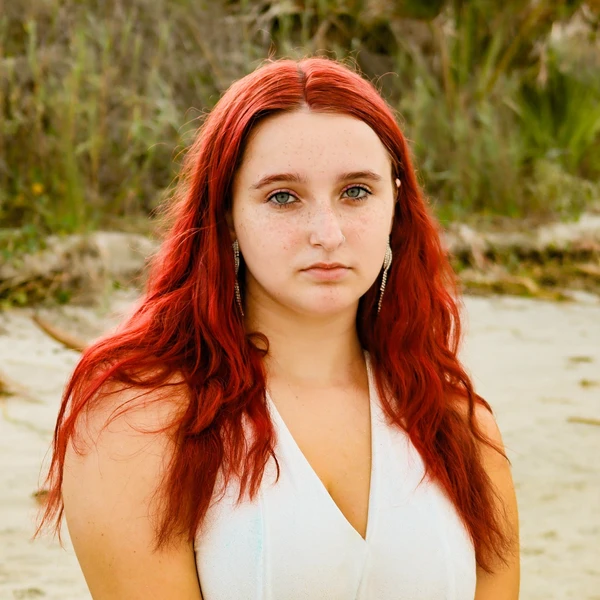
Lily Howard
1x
Finalist
Lily Howard
1x
FinalistBio
As a first‑generation honors student, I’ve learned to balance ambition with humility and perseverance with compassion. I’m passionate about learning, driven by the sacrifices my family has made, and committed to becoming a leader who opens doors for others. My journey hasn’t been simple, but it’s taught me resilience, purpose, and the importance of showing up fully for my goals. I’m working toward a future where I can make a meaningful impact academically, professionally, and personally.
Education
Summerville High School
High SchoolMiscellaneous
Desired degree level:
Doctoral degree program (PhD, MD, JD, etc.)
Majors of interest:
- Clinical, Counseling and Applied Psychology
Career
Dream career field:
Clinical Mental Health Counseling
Dream career goals:
Cares Team Member
AutoMaxx2025 – Present1 yearSandwich Artist
Subway2024 – 20251 yearCrew Member
Checkers2024 – 2024
Arts
Summerville High School
TheatreLittle Shop of Horrors, Much Ado About Nothing, Our Town, Guys and Dolls2024 – 2025
Ella's Gift
Growing up, mental health and substance abuse were not abstract concepts to me, they were part of my daily reality. My father’s struggle with addiction shaped my childhood in ways I didn’t fully understand until much later. His absence, unpredictability, and the emotional weight that came with loving someone who wasn’t able to show up consistently created a foundation of anxiety and sadness that followed me from early childhood into my teenage years. By the time I was seven, I was already experiencing symptoms of depression and anxiety, though I didn’t have the language to describe what I was feeling. I just knew that something inside me felt heavy, and that I often felt alone even when I wasn’t.
For years, I tried to manage those feelings quietly. I didn’t want to burden anyone, and I didn’t want to admit that I was struggling. As I got older, the pressure of carrying those emotions without support became overwhelming. I felt like I was constantly trying to hold myself together while navigating school, friendships, and the normal challenges of growing up. My father’s addiction created instability that made it difficult to feel safe or grounded, and that instability seeped into every part of my life.
My turning point came when I finally reached out for help. After years of trying to cope on my own, I began therapy and eventually started medication. Getting help didn’t erase the pain I had carried for so long, but it gave me tools I had never had before. It allowed me to understand my emotions instead of being controlled by them. It helped me recognize that what I had experienced was not my fault, and that healing was possible. Most importantly, it showed me that asking for help is not a sign of weakness, it’s a sign of strength and self‑respect.
This journey has shaped my personal growth in profound ways. I’ve learned to be patient with myself, to acknowledge my progress, and to recognize that healing is not linear. I’ve learned to set boundaries, to prioritize my mental health, and to surround myself with people who support my growth. I’ve also learned to see others with more compassion. When you’ve lived through emotional pain, you become more aware of the invisible struggles others may be carrying. That awareness has made me more empathetic, more understanding, and more committed to helping others feel seen and supported.
These experiences are the foundation of my educational and career goals. I want to become a therapist so I can support young people who are navigating challenges similar to the ones I faced. I want to create a safe space for those who feel overwhelmed, misunderstood, or alone. I want to help break the stigma around mental health and show people, especially children and teens, that their feelings matter and that healing is possible. My goal is to use my education to uplift others, to advocate for mental health resources, and to be the kind of support I once needed.
Continuing to manage my own recovery is an essential part of that journey. I know that taking care of my mental health is not something I can ever take for granted. My plan includes staying consistent with therapy, maintaining my medication under professional guidance, and continuing to build healthy routines that support my emotional well‑being. I’ve learned the importance of balance, making time for rest, connection, and activities that bring me joy. I also plan to stay connected to supportive communities and mentors who can help me stay grounded as I move through college and into my career.
Recovery, for me, is not about “getting over” what happened, it’s about learning to live fully and intentionally despite the challenges I’ve faced. It’s about choosing growth, choosing healing, and choosing to build a future that reflects the strength I’ve gained along the way. My experiences have shaped me, but they do not define me. What defines me is my determination to turn my pain into purpose and to use my education to help others do the same.
This scholarship would not only support my academic goals, but it would also support my commitment to healing, growth, and service. It would help me continue on a path that honors where I’ve come from while building the future I’ve worked so hard to reach.
Matthew E. Minor Memorial Scholarship
I’ve grown up in a community where people look out for one another, and that has shaped who I am and the kind of impact I want to make. Much of my involvement has centered around supporting younger kids, whether through mentoring, volunteering, or simply being someone they can trust. Because of my own experiences with instability and mental health challenges, I’ve always felt a responsibility to create the kind of safe, encouraging environment I once needed.
As I enter higher education, financial need is one of the biggest barriers I face. Coming from a household with limited resources and a history of instability, paying for college is something I cannot manage on my own. I’ve worked hard academically and personally to get to this point, but tuition, books, housing, and basic expenses create a level of stress that can easily overshadow the excitement of pursuing my goals. Receiving support would allow me to focus on my studies and my future career in mental health rather than constantly worrying about how to afford the next semester.
One of the most meaningful ways I give back is by helping keep children and teens safe, both in person and online. I’ve seen firsthand how bullying and cyberbullying can affect a young person’s mental health, confidence, and sense of belonging. Because of that, I make it a priority to be a positive role model and advocate. When I work with kids, I focus on teaching them how to communicate respectfully, how to set boundaries, and how to ask for help when something feels wrong. I also talk openly about mental health so they know they’re not alone and that their feelings matter.
Online, I help younger students understand how to protect themselves, things like not sharing personal information, recognizing harmful behavior, and knowing when to block, report, or reach out to a trusted adult. I also encourage them to think about the impact of their own words and actions. Many kids don’t realize how quickly online comments can escalate or how deeply they can hurt someone. By creating open conversations, I try to build awareness, empathy, and confidence.
My long‑term goal is to become a therapist, and everything I do now is a step toward that future. I want to dedicate my career to helping young people navigate the challenges I once faced, whether that’s anxiety, depression, family instability, or the pressures of growing up in a digital world. I want to be someone who listens, supports, and empowers them to heal and grow.
This scholarship would not only ease my financial burden, it would help me continue the work I’m already doing and move closer to a career centered on protecting, supporting, and uplifting the next generation.
Overcoming Adversity - Jack Terry Memorial Scholarship
Jack Terry’s story inspires me because it shows what is possible when someone refuses to let trauma define the limits of their future. He survived unimaginable loss, came to a new country with almost nothing, and still built a life rooted in purpose, service, and healing. What moves me most is not just his resilience, but the way he chose to use his experiences to help others, turning his pain into a source of strength for the world around him. His life is a reminder that adversity can shape you, but it doesn’t have to break you.
The adversity I’ve faced is different from Jack’s, but his story helps me understand my own in a deeper way. Growing up, my father’s drug use and absence created a constant sense of instability. From a young age, I carried the emotional weight of confusion, fear, and loneliness. I battled depression and anxiety from ages seven to seventeen, trying to make sense of a world that didn’t feel safe. For years, I felt like I was fighting invisible battles with no roadmap and no language to explain what I was going through.
Getting help through therapy, support, and eventually medication changed the direction of my life. It didn’t erase the pain, but it gave me the tools to understand it. It taught me that healing is possible, that asking for help is an act of courage, and that mental health struggles do not make someone weak. Those lessons became the foundation of who I am today.
What I’ve learned from my adversity is that people often carry wounds you cannot see. I’ve learned empathy, patience, and the importance of showing up for others in ways I once needed someone to show up for me. I’ve learned that resilience is not about pretending to be strong, it’s about continuing to grow even when life feels overwhelming. Most importantly, I’ve learned that my experiences can have meaning if I use them to help someone else feel less alone.
That is why I want to become a therapist. I want to take everything I’ve lived through, every challenge, every breakthrough, every moment I thought I wouldn’t make it, and turn it into something that helps others heal. I want to work with people who feel lost or unseen, especially young people who are navigating trauma, family instability, or mental health struggles. My goal is to create the kind of safe, supportive space I once needed so badly.
This scholarship would help me continue my education and move closer to becoming the therapist I aspire to be. Jack Terry used his life to spread hope, knowledge, and healing. I want to honor that legacy by doing the same, by turning my adversity into purpose and using my studies to give back to a world that needs more compassion, understanding, and mental health support.
Ethel Hayes Destigmatization of Mental Health Scholarship
Growing up with a father who struggled with drug use and was often absent shaped my mental health long before I understood what depression or anxiety even were. From the time I was seven, I carried a weight I didn’t have the words for: constant worry, sadness that felt too heavy for a child, and a sense of instability that made the world feel unpredictable. For years, I tried to manage those feelings on my own, believing I had to be strong or quiet or “fine” for everyone else. It wasn’t until much later that I realized what I was experiencing wasn’t weakness, it was the impact of circumstances no child should have to navigate alone.
Living with depression and anxiety through my childhood and early teenage years shaped the way I see myself and the world. It taught me empathy in a way nothing else could. When you’ve spent years fighting battles no one can see, you learn to recognize that same struggle in others. You learn to listen more carefully, to be patient, and to understand that people’s reactions often come from pain you may never know about. My relationships became deeper because of that understanding. I learned to value honesty, emotional safety, and people who show up consistently, qualities I didn’t always have growing up.
Getting medicated after battling these issues from ages 7 to 17 was a turning point. It wasn’t a magic fix, but it gave me the stability I needed to finally breathe, focus, and grow. It allowed me to see my future more clearly, not through the fog of constant fear or sadness. It helped me realize that asking for help is not a sign of failure, it’s a sign of strength and self-respect.
These experiences have shaped my goals in powerful ways. I want a future defined by stability, purpose, and compassion, things I had to learn to build for myself. I’m driven to break cycles, to create a life where emotional health is valued, and to be someone younger me would have felt safe with. My mental health journey taught me resilience, but it also taught me that resilience shouldn’t be the only tool someone has to survive. That’s part of why I work so hard now: I want to create opportunities, security, and a sense of control over my own life that I didn’t always have.
Most of all, my experiences changed how I understand the world. I no longer see people as simply “strong” or “weak.” I see the complexity behind every person’s story. I see how circumstances shape us, how healing takes time, and how important it is to build a life where you can thrive, not just endure.
My mental health journey hasn’t been easy, but it has shaped me into someone who is determined, self-aware, and deeply committed to creating a better future for myself and those around me.
James T. Godwin Memorial Scholarship
One of my favorite stories about my grandfather, who served in the Navy during the Vietnam War, isn’t about combat or danger, it’s about the way he carried himself long after he came home. He didn’t talk much about the difficult parts of his service, but he loved sharing the small, human moments that shaped him.
He used to tell me about the long nights on the ship, when the ocean was so dark it felt like the world had disappeared. He said the only thing you could hear was the steady hum of the engines and the quiet conversations between sailors trying to stay awake. One night, during a long shift, a young sailor accidentally dropped an entire tray of tools overboard. Everyone froze, expecting the officer in charge to explode. Instead, my grandfather just laughed and said, “Well, I hope the fish know how to fix things.” The whole crew burst out laughing, and the tension disappeared instantly. He always said that moment taught him how powerful a little humor can be when people are stressed or scared.
Growing up, I saw that same calmness in him. Whenever something went wrong, whether it was a flat tire, a broken appliance, or a stressful day, he never panicked. He’d just take a breath, shrug, and say, “We’ll figure it out.” It sounds simple, but it became one of the most important lessons he ever taught me. Life will always throw challenges your way, but how you respond is what defines you.
He also taught me a lot about discipline and pride in your work. He’d tell me stories about how every sailor had a job that mattered, no matter how small it seemed. “If one person slacked off,” he’d say, “the whole ship felt it.” That idea stuck with me. It made me want to show up fully in everything I do; school, work, and even the way I treat people.
But my favorite memory is from when I was little. He’d sit on the porch with me, point to the sky, and tell me how the stars looked from the middle of the ocean. He said they were so bright they made you feel both tiny and important at the same time. Even now, whenever I look up at the night sky, I think about him on that ship, young, far from home, doing his best for something bigger than himself.
My grandfather’s service shaped him, and in many ways, it shaped me too. He taught me resilience, humility, and the importance of finding light, even in dark places. Those lessons are part of who I am today.
Marcia Bick Scholarship
Students from disadvantaged backgrounds often grow up learning how to persevere long before they ever step into a classroom. When financial hardship, family responsibilities, or limited resources shape your daily life, success isn’t something that comes easily, it’s something you fight for. That’s why motivated, high‑achieving students from these backgrounds deserve opportunities like scholarships and grants. We aren’t asking for a shortcut. We’re asking for a chance to keep going, to turn potential into possibility, and to break cycles that have existed for generations.
Growing up, I learned early what it meant to work hard without guarantees. Financial challenges meant I had to be resourceful, finding ways to balance school with responsibilities at home, managing stress, and learning to advocate for myself academically. There were times when the path forward felt uncertain, especially when I didn’t have the same support systems or guidance that many of my peers relied on. But those obstacles pushed me to become more disciplined, more determined, and more focused on my goals.
Instead of letting my circumstances limit me, I used them as motivation. I committed myself to my education, taking on rigorous coursework, seeking out mentors, and staying involved in opportunities that helped me grow. I learned to navigate challenges with resilience, whether that meant staying up late to finish assignments after helping at home or finding creative ways to stay engaged academically when resources were limited. These experiences didn’t just shape my work ethic; they shaped my character.
Support through this grant would make a meaningful difference in my journey. Financial stress is one of the biggest barriers I continue to face. Every semester brings uncertainty about how I will cover tuition, books, and basic academic needs. Receiving this grant would allow me to focus more fully on my studies and long‑term goals instead of constantly worrying about how to afford the next step. It would give me the stability to continue pursuing opportunities that strengthen my education and future career.
More importantly, this support would represent something deeper: recognition that students like me, students who work hard despite the odds, deserve the chance to succeed. It would affirm that my effort, discipline, and determination matter. I’m committed to using my education not only to build a better future for myself, but also to uplift others who face similar challenges. I want to show younger students in my community that their circumstances don’t define their potential.
I’ve learned that success isn’t about having an easy path, it’s about refusing to give up on your goals even when the path is difficult. With the support of this grant, I can continue moving forward with purpose, turning the challenges I’ve faced into the foundation for a future I’m determined to build.
Bick First Generation Scholarship
Being a first‑generation college student means stepping into a world my family has always dreamed about but never had the chance to enter. It means learning how to navigate higher education without a blueprint, while also carrying the hopes of the people who raised me. To me, being first‑gen isn’t just a label, it’s a reminder of how far my family has come and how far I want to go.
The challenges have been real and sometimes intimidating. I’ve had to figure out financial aid, course planning, and academic expectations mostly on my own. There were moments when I felt out of place, or when I questioned whether I was capable enough to be here. But each challenge pushed me to grow. I learned to ask for help, to seek out mentors, and to trust my ability to adapt. Those experiences didn’t just make me more resilient; they made me more confident in my purpose.
As an honors student, I hold myself to a high standard, not because anyone expects perfection from me, but because I want to prove to myself that I belong in these spaces. I’ve learned to balance ambition with humility, and discipline with compassion for myself. I’m proud of the work I’ve done, but I’m even more proud of the mindset I’ve built along the way.
My dreams go beyond earning a degree. I want to build a career that allows me to support my family and uplift others who feel like they’re starting from scratch. I want to show younger students, especially those who don’t see themselves represented in college classrooms, that their goals are valid and achievable. What drives me most is the idea that my success can open doors for someone else.
This scholarship would make a meaningful difference in my journey. Financial stress is one of the biggest obstacles I face and reducing that burden would allow me to focus more fully on my studies, research, and opportunities that help me grow. It would give me the stability to keep pushing forward without constantly worrying about how to afford the next step. More than that, it would be a reminder that others believe in my potential and the work I’m striving to do.
I’m not perfect, and my path hasn’t been perfect, but I’m determined. Being a first‑generation student has shaped me into someone who works hard, asks questions, and keeps going even when the way forward isn’t obvious. This scholarship would help me continue that journey and continue rewriting what’s possible for myself and for the people who come after me.