user profile avatar

Lillian McBee

1x

Finalist

1x

Winner

General information

Hobbies & Interests

  • Bodybuilding
  • Finance
  • Mental Health
  • Nutrition and Health
  • Foreign Languages
  • Spending Time With Friends and Family
  • Reading
  • Learning
  • Artificial Intelligence
  • International Relations
  • Theology and Religious Studies

Reading

  • Adult Fiction
  • Adventure
  • Fantasy
  • Self-Help

I read books daily.

Bio

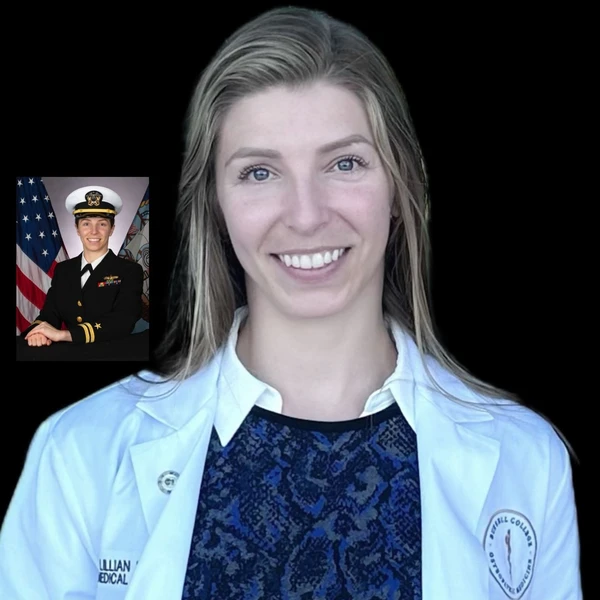
Energetic Naval Surface Warfare Officer transitioning to Doctor of Osteopathy in the Navy's Medical Corps. Organized and driven with an excellent educational record and a passion for health. Currently, I am an OMS-III level Medical student attending Burrell College of Osteopathic Medicine in Melbourne, Florida. Upon graduation in June 2028, I will continue to serve my country as a Medical Officer in the US Navy!

Education

Burrell College of Osteopathic Medicine

Doctoral degree program (PhD, MD, JD, etc.)

2024 – 2028
Stanford University

Bachelor's degree program

2010 – 2014

Majors:
  • Biological and Biomedical Sciences, Other

Miscellaneous

Desired degree level:
Doctoral degree program (PhD, MD, JD, etc.)
Graduate schools of interest:
Burrell College of Osteopathic Medicine
Majors of interest:
Medicine
Desired degree modality:
Full-Time
Medical school interest:
Yes

Career

  • Surface Warfare Officer

    Military · US Navy

    Jan 2014 – Jan 2024

  • Repair Division/Disaster Response Officer

    Military · USS DEWEY (DDG 105)

    Jan 2014 – Jan 2017

  • Training and Readiness Officer/Surface and Subsurface Warfare Area Lead

    Military · USS THEODORE ROOSEVELT (CVN 71)/Destroyer Squadron 23 (DESRON 23)

    Jan 2017 – Jan 2020

  • Executive Officer and Patrol Officer of MKVI Squadron

    Military · Maritime Security Squadron 4 (MSRON 4)/Riverine Squadron 4 (RIVRON 4)

    Jan 2020 – Jan 2022

  • Assistant Operations Officer

    Military · Surface Division TWO ONE (CSD-21)/Littoral Combat Squadron TWO (LCSRON-2)

    Jan 2022 – Present

  • Fitness and Nutrition Coach

    Health, Wellness, and Fitness · Team FFlex

    Jan 2022 – Present

Miscellaneous

Dream career field:
Medicine
Dream career goals:
Family Medicine Doctor in US Navy (after: Rural Area in Florida)
Work experience:
10+ years
Has nursing license:
No

Military

Branch of interest:
Navy

Future Interests

  • Advocacy
  • Volunteering
  • Philanthropy
  • Entrepreneurship
Sloane Stephens Doc & Glo Scholarship
The woman wrapped her arms around me and whispered, “gracias a todos.” We were in Honduras during the USNS COMFORT's 2022 humanitarian mission, and she had just received free medical care and a supply of medicine. I was exhausted, sweaty, and probably covered in things I did not want identified. Yet, standing there with tears in my eyes, I knew exactly what I wanted the next chapter of my life to be . . . I wanted to become a physician. My path to medicine was intentionally unconventional. After graduating from Stanford, I spent nearly ten years as a Naval Surface Warfare Officer. I deployed across four oceans, visited more than forty countries, and served alongside thousands of Sailors from backgrounds very different from my own. Before becoming a military physician, I wanted to understand the people I hoped to someday treat. Those Sailors became some of my greatest teachers and inspirations. They taught me that caring for someone requires understanding the world they return to after leaving your office. I watched Sailors work through exhaustion, family separation, financial hardship, trauma, and mental health struggles while still reporting for duty the next morning. I also lost Sailors and friends to suicide. Those experiences fundamentally changed how I understand health and strengthened my desire to practice medicine that treats the whole person rather than simply the disease. Today, I am an osteopathic medical student and remain on active duty through the Navy's Health Services Collegiate Program (HSCP). After graduation, I plan to complete a Navy Family Medicine residency and return to the operational community, this time carrying a stethoscope instead of driving and fighting ships. The impact I hope to make is both ambitious and remarkably simple: I want people to feel genuinely cared for. As a Family Medicine physician, I hope to care for military members, veterans, and their families throughout every stage of life. I want to integrate preventive medicine, mental healthcare, fitness, and osteopathic principles into everyday primary care. My years at sea also taught me the importance of resourcefulness, so I hope to serve in operational and resource-limited environments where physicians must do the most good with what they have. My commitment to community does not begin after graduation. During medical school, I have sought continued my volunteer work as a Disaster Action Team responder with the Red Cross and established a free health clinic with a local doctor for those who cannot afford health insurance. I have also continued learning languages because I have experienced how profoundly a few familiar words can change a patient's expression. Whether speaking Spanish, Portuguese, or Creole with a patient, I want the message to be the same: you are seen, and I am trying to understand you. Ultimately, the people who inspire me are not famous. They are the Sailors who trusted me to lead them, the mentors who invested their precious time in me, the patients who allowed me to learn from them . . . like the woman in Honduras who hugged a tired Naval Officer and unknowingly helped confirm her future. My education will allow me to repay those investments. I spent my first career serving alongside my future patients. I hope to spend my second caring for them, advocating for them, and training the physicians and Sailors who come after me. That is the future I am determined to help create: one where service continues to inspire service, and kindness is never wasted.
TRAM Panacea Scholarship
The silence was deafening. As a Naval Surface Warfare Officer, I spent nearly a decade preparing for emergencies. I trained for missile attacks, engineering casualties, man-overboard recoveries, fires, flooding, and combat operations. There were procedures, checklists, alarms, and entire teams dedicated to responding when something went wrong. Yet, the most devastating emergencies I encountered came without warning. One call came shortly after midnight. A Sailor had taken his own life. He was intelligent, hardworking, and well-liked. Less than a month earlier, he had been standing watch alongside the rest of us. Now, he was gone. Unfortunately, that was not the last time I would witness the impact of mental health struggles in the military. Over the years, I watched a Petty Officer struggle after experiencing a traumatic assault. I saw the emotional toll that an eleven-month deployment took on one of our Chaplains. I lost a friend, a fellow naval officer and aspiring physician, to suicide. Each event reinforced the same lesson: some of the most serious health threats facing our nation are the ones we cannot see. Mental health and suicide prevention are the health issues about which I am most passionate because I have seen firsthand how invisible wounds can be just as deadly as physical injuries. The military has made significant progress in recent years by increasing access to behavioral health resources and reducing stigma surrounding mental health treatment. However, barriers still exist. Many service members fear appearing weak, harming their careers, or burdening others with their struggles. Too often, individuals suffer in silence until a crisis occurs. As I transitioned from military service to medical school, those experiences became one of the primary reasons I chose to pursue medicine. I realized that while I could lead Sailors through operational crises as an officer, I wanted the skills to address the underlying physical and mental health challenges affecting their lives long before those crises developed. Today, as an osteopathic medical student, I am learning that effective healthcare requires more than diagnosing disease. It requires understanding the whole person. Stress, financial hardship, family separation, trauma, and social isolation all influence health outcomes. This holistic perspective is one of the reasons I was drawn to osteopathic medicine and why I hope to become a Family Medicine physician serving military members, veterans, and their families. Mental health challenges will never be solved by physicians alone. They require communities that encourage connection, leaders willing to have difficult conversations, and healthcare professionals who treat psychological health with the same urgency as physical health. Nevertheless, physicians have an important role to play in identifying risk factors, building trust, and ensuring that patients receive compassionate, evidence-based care. The individuals I lost during my military career continue to influence the physician I hope to become. Their stories remind me that healing is not limited to treating injuries or prescribing medications. Sometimes it begins by recognizing suffering that others cannot see. That is why mental health and suicide prevention are not simply issues I care about. They are the reason I chose this path.
Safak Paker-Leggs Science Education Scholarship
Lifeless bodies, seemingly frozen in their desperate attempt to seek refuge, hung like ornaments on the gate of the U.S. Embassy in Havana. “They were shot from behind during their attempt to flee,” my grandfather, Abuelo Martín, told me quietly. After Fidel Castro seized control of Cuba, my mother’s family escaped by boat and were granted sanctuary in the United States. They arrived with nothing but the clothes on their backs. In Miami, they rebuilt life from scratch—sharing food with other refugees, changing their names to sound more American, and working long hours to survive. My mother, once “María Enriqueta Gurri,” became “Henrietta Marie,” saved every dollar, and paid her way through college to become a civil engineer. On my father’s side, my grandfather, “Papa Kirby,” orphaned before age ten, ran away at sixteen to join the U.S. Navy. When he returned home, he built a house by hand and raised a family in Bartow, Florida. My father became the first in his family to graduate college, later meeting my mother at Florida Power & Light. From both lineages I inherited two legacies: survival and service. That sense of duty led me to my own commission as a U.S. Navy Surface Warfare Officer, but being a female officer came with battles my grandparents never could have imagined. Women make up less than 20% of the active-duty force and only about 8% of senior officers. Leadership as a woman meant walking a tightrope—firm enough to command respect, but not so firm as to be labeled “abrasive.” During my first deployment, a senior male colleague offered me a coveted qualification in exchange for sex. I froze, realizing the opportunity I’d earned through months of work was being reduced to a transaction. I tactfully declined, but the incident left an indelible mark. It reminded me that courage in uniform sometimes meant not charging into battle. The silence was deafening the night I received the call: a Sailor—bright, promising, yet deeply struggling—had taken his own life. Aboard an aircraft carrier housing more than 10,000 souls and billions in weapons, I was trained to respond to every imaginable crisis: missile strikes, fires, floods. But there was no drill for this—no alarms, no flashing lights, only the quiet weight of failure I could not quantify. Over the years, that silence became hauntingly familiar. My Petty Officer 1st Class veered his car into a light pole after a date rape. My Chaplain was pulled from the ship’s edge after attempting to jump overboard. A fellow officer and medical-school applicant ended his life with a gun. Each tragedy left me more determined to confront the invisible wounds of service. I began volunteering in mental-health outreach, working alongside medical officers and chaplains to connect Sailors with care before crisis struck. I realized then that while commanding ships gave me purpose, healing those aboard them gave me meaning. My journey in science began not in a laboratory but in the human stories behind suffering and resilience. In medicine, I found a discipline that merges my family’s legacy of endurance with my own drive to serve others—not through command, but through compassion. Though I am not a first-generation immigrant, I am the child of refugees and warriors, forged by both flight and fight. My family’s survival taught me that life’s value lies in service to others; the Navy taught me that leadership without empathy is hollow. From the ashes of war and exile to the bridge of a carrier and, one day, to the bedside of a patient—every generation before me survived so that I could heal.
Lance Gillingham Memorial Scholarship
Winner
On patient survey #200 in Guatemala, I marked the time—1830. Strange how 12 hours could fly by. It was the same in Peru, Colombia, Haiti, Honduras, Cuba, and the Dominican Republic—wherever I went. As long as I was assisting patients, my fatigue was subdued by joy as I interacted with them and saw their smiles. These moments, caring for people with limited resources, helped me understand something the Navy first awakened in me: my purpose runs deeper than duty—it’s about human connection. For ten years, I served as a Surface Warfare Officer (SWO) in the United States Navy. I navigated billion-dollar warships through peaceful and hostile waters, led combat operations, and managed intricate administrative systems. But beneath the tactics and machinery, what shaped me most was caring for my Sailors. Their physical and emotional well-being became my deepest responsibility. I remember one day vividly: as another six-foot wave struck our 74-foot patrol boat, I lost the remainder of my breakfast to the Eastern Pacific. That day, my team and I rotated through watch stations, provided security escorts, and battled unrelenting seasickness—but despite the brutal conditions, our search and rescue mission remained our priority. We persevered through illness, dehydration, and exhaustion because we had no choice. Yet, as miserable as we felt, I took pride in ensuring my Sailors had what they needed to push forward. My greatest responsibility as a Naval Officer was and always will be to protect and prepare my team, but I learned early that true readiness is not just physical; true readiness is more holistic and requires a deep understanding of each individual’s mind, body, and spirit. That shift in self-perception—from strategist to caregiver—laid the foundation for who I am today. The military didn’t just give me skills; it reshaped my identity. It taught me that leadership isn’t about barking orders from the bridge—it’s about showing up in people’s lives when it matters most, and that realization is what pushed me to pursue medicine. Now, as a medical student studying osteopathic medicine, I’ve found a path that blends my Navy values with clinical compassion. Osteopathic manipulative treatment (OMT)—a hands-on, drug-free approach to healing—resonates deeply with my military experience, especially the reality of caring for people in austere, resource-limited environments. I hope to bring this training back to the fleet, where physicians are often the only lifeline for Sailors far from home. Serving in uniform also transformed how I view my country. I’ve seen its strength—but also its gaps. I’ve treated U.S. citizens who couldn’t afford health care, worked with Sailors who couldn’t afford off-base treatments, and volunteered in underserved communities within the USA like the Rosebud Indian Reservation, where families live hours from medical attention. I’ve supported veterans with Parkinson’s disease and consoled disaster victims in my Florida community as a Red Cross volunteer. These experiences have taught me that patriotism isn't blind allegiance—it’s a commitment to keep improving the country we serve. The military gave me pride in our nation’s ideals but also the humility to recognize where we fall short and the responsibility to make it better. The transition from SWO to DO has not been easy. Navigating VA bureaucracy, struggling with delays in benefits, and facing the financial weight of medical school have tested me. But they’ve also reinforced the very lessons the military taught me: resilience, purpose, and service. I no longer see myself as just a former officer or a future doctor—I see myself as someone molded by both worlds, driven to serve the people behind the mission.
Manny and Sylvia Weiner Medical Scholarship
As another six-foot wave struck our 74-foot patrol boat, I lost the remainder of my breakfast to the Eastern Pacific. That day, my team and I rotated through watch stations, provided security escorts, and battled unrelenting seasickness—but despite the brutal conditions, our search and rescue mission remained our priority. We persevered through illness, dehydration, and exhaustion because we had no choice. Yet, as miserable as we felt, I took pride in ensuring my Sailors had what they needed to push forward. My greatest responsibility as a Naval Officer was and always will be to protect and prepare my team, but I learned early that true readiness is not just physical; true readiness is more holistic and requires a deep understanding of each individual’s mind, body, and spirit. This philosophy is what drew me to osteopathic medicine. Whether leading Sailors in high-risk operations or coaching clients as a certified personal trainer, my approach has always been holistic and all-encompassing. I strive to understand what drives a person, what hinders them, and how I can help them perform at their best. However, I have repeatedly encountered frustrating limitations in my previous career paths that made me realize becoming a DO was the next step! For instance, as a Surface Warfare Officer, I have escorted Sailors to medical providers, wanting to advocate for them but lacking the credentials to do so. As a fitness coach and corrective exercise specialist, I have guided clients through physical transformations and hands-off corrective treatments but have been bound by legal constraints concerning hands-on treatment. I knew something was missing! My first exposure to osteopathic medicine was during my 2017-2018 deployment aboard the USS THEODORE ROOSEVELT, where I shadowed the ship’s medical team. I saw how DOs seamlessly integrated physical structure with medical treatment, embodying the holistic approach I had unconsciously applied throughout my career. Later, during my humanitarian deployment on the USNS COMFORT, I assisted in patient assessments across five countries, witnessing how osteopathic principles could bridge cultural and socioeconomic healthcare gaps. These experiences solidified my belief that osteopathic medicine is not just a profession but a calling—one that perfectly aligns with my lifelong mission to care for others beyond just their physical health. Now, as a medical student and future medical officer, I continue to embody the core tenets of osteopathic medicine. For example, in my leadership role within the Student American Academy of Osteopathy, I advocate for holistic patient care, the practice of osteopathic manipulative techniques, and community engagement. Through my work with Rock Steady Parkinson’s, I assist patients in movement-based rehabilitation, reaffirming my belief in the body’s innate ability to heal when given the right support. Just as I have always strived to know my Sailors beyond their rank and uniform, I will strive to know my patients beyond their symptoms and diagnoses. Becoming an osteopathic physician is the natural evolution of my purpose—to serve, heal, and lead by treating each individual as a whole person.
Lillian McBee Student Profile | Bold.org