Hobbies and interests
Advocacy And Activism
Music
Music Composition
Music Theory
Clinical Psychology
Psychiatry
Social Work
Social Justice
Babysitting And Childcare
Choir
Crocheting
Origami
Community Service And Volunteering
Reading
Classics
Criticism
Drama
Fantasy
Historical
Horror
Mystery
Realistic Fiction
Short Stories
Social Issues
Women's Fiction
I read books multiple times per week
Lilith Dowd
1x
FinalistLilith Dowd
1x
FinalistBio
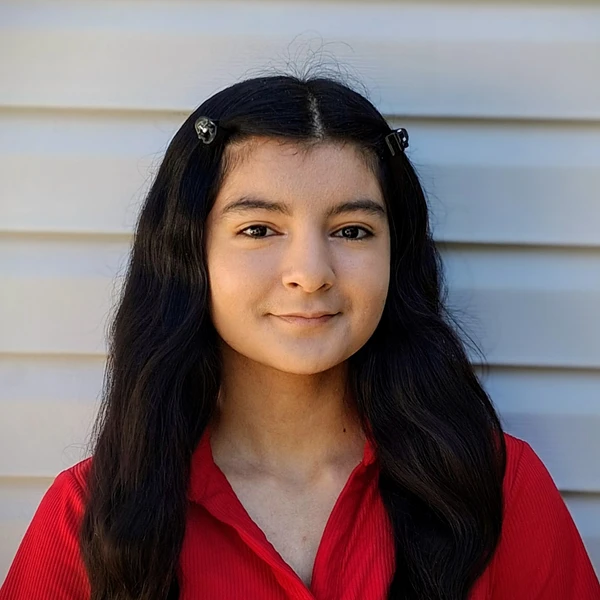
Hello there! I am Lilith, an undergraduate student majoring in Social Work with a passion for justice and community. As a first-generation college student who grew up facing poverty and housing insecurity, I've experienced the systemic barriers that perpetuate injustice. These challenges have fueled my motivation to become a social worker who not only supports individuals but also works towards dismantling inequities within our institutions.
On campus, I stay engaged in a variety of clubs that reflect both my interests and my identity, including book clubs, the campus literary magazine, Hispanic/Latinx cultural groups, and the LBGTQ+ Spectrum Alliance. In high school and beyond, I've also been active in vocal performance, participating in multiple honor choir programs that strengthened my discipline and my creativity. Outside of academics, I love small creative hobbies such as coloring and origami, which help me balance my studies with moments of calm self-care, and provide me with the opportunity to use my creativity for volunteering efforts. I enjoy attending campus events where students create colorful cards, pictures, and letters to send to volunteer organizations that work with the elderly and cancer survivors.
My long-term goal is to earn both my MSW and my clinical license, combining micro-level social work with broader advocacy for systemic change. Ultimately, I hope to help others overcome challenges similar to those I've faced, ensuring that every individual has the chance to thrive in a society that truly values equity, liberty, and justice for all.
Education
Rider University
Bachelor's degree programMajors:
- Social Work
GPA:
4
Parsippany Hills High School
High SchoolGPA:
3.8
Miscellaneous
Desired degree level:
Master's degree program
Graduate schools of interest:
Transfer schools of interest:
Majors of interest:
- Clinical, Counseling and Applied Psychology
- Social Work
- Mental and Social Health Services and Allied Professions
Career
Dream career field:
Mental Health Care
Dream career goals:
To work in private practice as a clinical social worker
Language Lab Assistant
Rider University Department of Languages, Literatures and Cultures2025 – Present1 yearTeacher Assistant
Carousel of Learning2024 – 20251 year
Arts
NJSMA
Music2024 NJSMA High School Mixed Choir, 2021 NJSMA High School Treble Choir2021 – 2024MHAC
Music2022 High School Morris Area Honor Choir, 2023 High School Morris Area Honor Choir, 2024 High School Morris Area Honor Choir2022 – 2024NJMEA
Music2024 All-State High School Mixed Choir2024 – 2024
Future Interests
Advocacy
Politics
Volunteering
Philanthropy
Kerry Kennedy Life Is Good Scholarship
On the first day of my Introduction to Social Work class, my professor played a speech by a social worker named Bobby Lefebre. In four minutes, he highlighted the landscape of social work and the issues he encountered. He described how juvenile youth often see probation officers more than their own parents. He described how marginalized communities don't "fall through" the cracks in the system; the system swallows them entirely. He described how in vulnerable populations, stigma turns hope into a balloon that seems to float away no matter how hard you hold on. After those four minutes, I knew in my soul that social work was for me.
My decision to study social work has been in the makings since the moment I was born. In my earliest years, I lived in a homeless shelter with my single mother. Renters turned her away simply because she was a single mother who needed housing assistance. After facing discrimination for months, we'd finally found a place to live. Our hearts were filled with hope. But years later, our landlord forcefully displaced us from the property so he could sell it. My family was back at square one, with no place to go and no money to find one. Eventually, we began staying with friends, which we are still doing to this day.
After carrying the weight of poverty and homelessness, I knew it was my destiny to help others facing similar obstacles, because I've felt the impact of hardship. I know what it's like to be hopeless and defeated. And I want to ensure no one ever has to endure the struggles I did. Seeing other social workers in action added to my passion for public service. Throughout the hardships my family has endured, social workers stood beside us as advocates, mediators, and case managers. Social workers guided us through systems meant to leave us powerless and helped us protect our autonomy and human dignity. Witnessing their altruism and dedication, I decided to follow in their footsteps.
As a first-generation college student, higher education always seemed like a cloudy dream. My family simply couldn't afford it. But I refused to surrender to my circumstances. Throughout high school, I worked a part-time job to save money for college. I remained committed to academics, enrolling in several AP classes to earn college credits and merit scholarships, helping me save money. Currently, I am paying for my education independently, so I continue to work part-time while staying engaged in my academic program. Recently, I attended the New Jersey Taskforce on Child Abuse & Neglect 2025 Conference, and the 3rd Annual Supporting Youth Mental Health Needs Conference, where I expanded my knowledge on the changes needed to protect vulnerable groups. Additionally, I'm preparing to serve as president of my university's Social Work Collective, and a prospective member of the Phi Alpha honor society for social workers. Through hard work, I strive to reach new heights and uplift others.
With the Kerry Kennedy Life is Good Scholarship, I can continue these endeavors and earn my bachelor's degree, allowing me to achieve my dream of being a social worker who reforms systems and confronts systemic inequity and injustice. Committing to a career in service requires the courage to become a rare light in a world overshadowed by darkness, the same courage that Kerry Kennedy embodies. In my career, I will honor her selflessness and carry forward her legacy as a passionate public servant. With your support, I am confident I can make a monumental difference by building a world that truly upholds liberty and justice for all.
Audra Dominguez "Be Brave" Scholarship
For me, bravery has never looked like a single triumphant moment. It has looked like continuing to move forward even while uncertainty loomed behind me. It has looked like refusing to abandon my future even when stability felt impossible.
I have faced housing insecurity for most of my life. I spent my earliest years in a homeless shelter with my single mother who faced immense discrimination in her search for housing. When we eventually settled into an apartment, our hope began to strengthen. Years later, that stability was ripped away from us when our landlord sold the apartment, forcefully displacing us. In a matter of weeks, we were homeless once again. We moved between a hotel and living with relatives, carrying the weight of uncertainty with us. Currently, my mother and I still don't have housing of our own, leaving us at risk of being homeless again.
Poverty accompanied these struggles. Growing up in a single-income household meant that financial stress was always present. There were moments when we couldn’t afford necessities, such as food, shelter, and transportation. I would watch my mother drown in bills while I was powerless to help. This anxiety followed me into my teenage years as I prepared for college applications. As a first-generation college student, I entered higher education without a roadmap or safety net, navigating an unfamiliar system while carrying the responsibility of reshaping my family’s future through my own success.
In the midst of these challenges, I made deliberate choices to continue pursuing my aspirations rather than surrendering to my circumstances. One of the bravest steps I took was continuing my education in spite of instability. Even when survival demanded the majority of my energy, I remained committed to school, recognizing that education was not just an opportunity, but a form of resistance against the disadvantages my family and I faced.
I also chose to pursue my bachelor’s degree in social work, transforming my lived experience into a purposeful career centered on equity and justice. Rather than allowing hardship to desensitize me, I used it to cultivate empathy, resilience, and an understanding of systemic injustice. Another critical step I took was learning to look beyond individual struggle and recognize structural inequity. I began building skills to analyze how institutions, policies, and power structures fail vulnerable populations. This perspective fuels my commitment to advocacy, allowing me to address the root causes rather than the symptoms. It has bolstered my goal of becoming a social worker who protects human rights and uplifts communities who are often overlooked.
I have learned that bravery is not the absence of fear, but the decision to take action despite it. It is choosing growth when giving up would be understandable. Receiving the Audra Dominguez “Be Brave” Scholarship will empower me to continue my pursuit of higher education, regardless of the obstacles I face on my path. It will enable me to contribute to a critical helping profession, working to help others overcome societal obstacles. But most of all, winning this scholarship would allow me to carry on Audra Dominguez’s legacy of bravery and resilience while uplifting more women to achieve success.
As I continue my education, I remain dedicated to becoming the support I once needed. My goal is to ensure that marginalized communities are given opportunities to pursue their aspirations without being consumed by survival. Through resilience, intention, and courage, I am confident that I can make a powerful impact on the communities I aim to serve. I continue to strive forward, not in spite of adversity, but strengthened by the bravery it demanded of me.
Bick First Generation Scholarship
Being a first-generation college student means learning to believe in yourself before the world teaches you how. In my household, education was never assumed or guaranteed. When I earned my high school diploma, I felt an overwhelming sense of pride, not just for myself, but for my family watching in the stands. My mother barely graduated high school and later earned her GED, and my sister struggled immensely throughout her education as well. Simply finishing high school felt like a victory that carried generations of hope.
Because of this, survival often came before education. I grew up in poverty with a single mother, and my earliest years were spent in a homeless shelter in Morris County. Financial stress was constant. Even small academic opportunities felt out of reach, so I worked a consistent job in high school to help support my family and save for my education. But during my junior year, my mother and I were displaced when our landlord sold our apartment, and we experienced housing instability all over again. School quickly became something I had to fight to cling onto.
As a first-generation college student, I've had to navigate higher education entirely on my own. No one in my family had experience with applications, financial aid, or the expectations of college life. I am paying for my education independently, and the financial burden is overwhelming since I have no safety net or roadmap. Despite my uncertainty, I remain deeply committed to my education, because it represents opportunity, stability, and the possibility of a future different than the past.
During one of the darkest periods of my life, when everything felt uncertain, a compassionate English teacher believed in me when I struggled to believe in myself. His encouragement held me together when it felt like my world was falling apart. It taught me the difference that empathy could make, especially for students exhausted by circumstances beyond their control. My experience mirrors the legacy of Marcia Bick Herman, who understood that education was more than numbers and calculations. It was about guidance and support.
Because of these experiences, I am pursuing a bachelor's degree in social work. From a young age, my family relied on the altruism of social workers in our community, and I witnessed how compassion and belief could help families heal. I hope to work with underserved communities like the one I come from, uplifting families and students who navigate hardship without guidance. My goal is to become someone who sees potential where others may not, and who ensures that with the right support, every individual can rise above their circumstances.
The Bick First Generation Scholarship would provide more than just financial support. It would empower me to rewrite a generational narrative and build a prosperous future for my family. It would offer stability and validation that my efforts are seen. But most importantly, it would honor the dedication and unconditional support of my English teacher who echoed Marcia Herman's fierce determination in every way possible.
Lotus Scholarship
Growing up in a low-income household with a single mother, I learned the value of perseverance, resilience, and empathy. In my earliest years, my family lived in a homeless shelter while my mother faced discrimination searching for housing. Even when we'd managed to find an apartment, I would go home to an empty fridge while my mother sat at her desk, drowning in bills she couldn't afford to pay. In a house devoid of college graduates, money never came as easily as it left. Seeing my mother endure such hardship, I became determined to rewrite our generational narrative and build a prosperous future for my family.
This determination led me to pursue social work, where I aim to support disadvantaged communities who are often overlooked. In my studies, I recently attended the New Jersey Taskforce on Child Abuse & Neglect Conference and the Annual Supporting Youth Mental Health Needs Conference, where I expanded my knowledge of changes needed within our systems. Currently, I'm preparing to serve as president of my university's Social Work Collective, and a prospective member of the Phi Alpha honor society for social workers. In the upcoming spring semester, I also plan to launch a formal research project exploring the impact of poverty on marginalized communities. With this scholarship, I can continue funding these endeavors to earn my bachelor's degree, allowing me to achieve my dream of becoming a social worker who is dedicated to protecting human rights and abolishing inequity.
Ultimately, receiving this award would enable me to pay it forward to future generations by reforming oppressive systems and empowering those experiencing the same hardships that I've lived through. With your support, I can continue the legacy of the Ficaar Foundation and honor the generosity of those who have extended their unwavering support for our goals.
Sue & James Wong Memorial Scholarship
"Where's your dad?"
I've heard this question more times than I can count throughout my childhood. Instinctively, I would look away in shame while trying to think of an answer that didn't make his absence sound so gut-wrenching. But my silence was an answer in itself.
Growing up with a single mother affected me in ways that one might not expect. It meant that I sat alone in the corner of the classroom while every other student made gifts for Father's Day. It meant opening an empty fridge because my family survived off of one income rather than two. Most of all, it meant that an obstacle that might be a bump in the road for someone else was an absolute sinkhole for me.
I spent my earliest years in a homeless shelter with my older sister and my mother. We lived out of a suitcase, being transferred from site to site. My mother searched desperately for stable housing, but when renters discovered she was a single mother with two children, she was turned away. For months, she faced rejection after rejection. It was a miracle when we finally settled in an apartment, the first home that felt like ours. But our hope was extinguished when our landlord sold our apartment years later, putting us at risk of being homeless again. We stayed at a hotel for a short while, and ever since, we've since been living with friends.
Higher education posed a similar challenge. Not only do I have a single parent, but I am also a first-generation college student. Neither my mother nor my older sister had the chance to attend college, not because of their abilities, but because survival took priority over education. As a result, college felt both daunting and unfamiliar to me, as the cost itself was a substantial barrier, and my family just didn't have the money to afford it.
To alleviate some of the financial burden, I worked tirelessly throughout my last year of high school, trying to save up enough money. Eventually I was able to enroll in a university. Currently, I am pursuing my bachelor's degree in social work. As a child, my family interacted with many social workers who helped us navigate homelessness and poverty. And now, I'd like to follow in their footsteps to help disadvantaged and under-resourced communities through hardship. For me, social work isn’t only a profession, it's a commitment to advocating for those who are often overlooked, ignored, or dismissed. It is a way to stand beside individuals who have only ever known struggle and help them build a future with possibilities they were told they didn't deserve. From finding a permanent home for a family to helping dismantle systemic poverty, I am dedicated to serving those who have lived through struggles just like mine. Those struggles have taught me empathy, and my education will equip me with the tools to turn this empathy into action.
But now, as an undergraduate student paying for college on my own, my savings are depleting quickly. I have the perseverance, determination, and resilience to continue my education, and all I need is the financial means. Receiving the Sue & James Wong Memorial Scholarship would allow me to continue my education and help uplift others who are suffering in silence. It would enable me to implement broader systemic change through committed advocacy. But most importantly, it would honor and validate the immense sacrifices my mother has made for me ever since my first breath. I've overcome every obstacle placed before me, and with this scholarship, I will overcome the next.
A Man Helping Women Helping Women Scholarship
Growing up as a Latina woman in poverty shaped the way I see the world, and it shaped the woman I am becoming. From a very young age, I learned that being a woman meant carrying expectations, challenges, and burdens that others didn’t always see. I watched the women in my own life navigate hardships with perseverance, but also with exhaustion that came from constantly fighting to be seen and heard. These experiences taught me that the barriers women face are not abstract statistics, they’re lived realities. I saw firsthand how issues like domestic violence, financial insecurity, and lack of access to resources disproportionately impact women. I witnessed the ways in which women are silenced, dismissed, and underestimated. This is not because of our abilities, but because the world often decides who gets to succeed before any attempt is even made. These moments have lingered in my mind for life, helping me realize that so many women, especially minority women, are fighting battles that society barely acknowledges.
As I grew older, I became more aware of the broader social justice issues that shape these experiences, such as discrimination, inequality, limited opportunities, and generational cycles of hardship. I saw how these obstacles keep women from achieving their dreams, pursuing careers, or even feeling safe in their own communities. And I saw, with painful clarity, how these systems harm families like mine, who work endlessly just to survive.
These realizations sparked something in me that has guided every decision I’ve made about my future. Social justice has always felt deeply personal to me, not just as a passion, but because it is intertwined with my lived experience. This is why I chose to pursue social work. For me, social work isn’t only a profession, it's a commitment to advocating for those who are often overlooked, ignored, or dismissed. It is a way to stand beside individuals who have only ever known struggle and help them build a future with possibilities they were told they didn't deserve.
Women are one of the groups who need that support the most. As a woman myself, I understand how discouraging it is when your goals are questioned or minimized. I’ve experienced being talked over, underestimated, or as if my voice mattered less. I’ve also watched talented, intelligent women push themselves twice as hard for half the recognition. These disparities motivate me to become a professional who uplifts women by creating spaces where their stories are heard and taken seriously.
In my career, I hope to work directly with disadvantaged communities, focusing on the uncomfortable issues that most people shy away from, including domestic violence, poverty, trauma, addiction, and systemic discrimination. Many of these challenges often take the biggest toll on women, which further pushes me to be someone who meets these issues head-on rather than looking away. My goal is to help women and families rebuild their lives, access resources, heal from cycles of violence or poverty, and find opportunities that weren’t available before.
Ultimately, I want to give back to communities that shaped my goals. I want to honor the women who raised me, supported me, and inspired me, in spite of their own struggles. I want to help families like mine break cycles of hardship and start new beginnings filled with opportunity and hope. Pursuing higher education allows me to take all of the experiences that once made me feel small and turn them into a career built on advocacy, compassion, and change. Supporting women’s dreams isn’t just important, it’s necessary. Through social work, I hope to dedicate my life to doing exactly that.
Healing Self and Community Scholarship
Growing up as a Latina woman in a homeless shelter, I learned early on how deeply inaccessible mental health care can be. When I began seeking therapy for my own mental health challenges, I quickly saw the barriers that many young people face, especially youth of color. Therapy was rarely covered by insurance, and many private practice therapists did not accept insurance at all. Paying out of pocket simply wasn’t an option for my family. For a long time, I went without the support I needed.
These experiences shaped my commitment to making mental health care more affordable and accessible for all communities. As an undergraduate social work student, I plan to pursue my clinical license and eventually enter private practice. My goal is to accept a wide variety of insurances, offer sliding-scale fees, and provide pro bono services for low-income youth. I want therapy to be something that people can receive without fear of the financial burden it may bring.
Coming from a low-income background, and having personally faced barriers to healthcare, I believe I am uniquely equipped to support clients with similar experiences. I understand the stigma, the silence, and overwhelming sense of isolation that can accompany mental illness, even more so in BIPOC communities.
By providing accessible therapeutic services, I hope to help youth receive support early, before their struggles deepen. Ultimately, I want every young person, regardless of race, income, or circumstance, to know that their mental health matters and that help is within reach.
Sola Family Scholarship
Growing up in a homeless shelter with my single mother, I learned what struggle looked like early in life. My mother worked in retail, often for long hours and late shifts, to support my older and me. There were nights when she came home exhausted, her feet aching, her eyes heavy with worry. Yet she still managed a tired smile for us, read a bedtime story, and tucked us into bed with a kiss.
As a child, I didn’t always understand the sacrifices she made every day. I just knew that I missed her. She arranged babysitters when she couldn’t be home, and I often felt lonely watching other kids with two parents at school events. There was never extra money for new clothes or school supplies, and sometimes, not even for food. We lived solely off her income, without child support, and I witnessed the toll it took on her. The constant stress, the sleepless nights, the weight of every responsibility resting heavily on her shoulders.
Back then, I was frustrated. I didn't understand why life always felt like swimming upstream. I blamed her for the hardships, thinking she wasn’t doing enough, when in reality she was doing everything humanly possible. As I grew older, I began to see the truth. She wasn’t the cause of our struggle; she was the reason we survived it. She was doing the best she could with the few resources she had, and she worked herself to exhaustion so that I could have a chance at a better future.
That revelation changed my perception. I began to see strength through a different lens. Strength wasn’t about having an easy life; it was about carrying on even when life feels impossible. Watching my mother push forward despite financial hardship, loneliness, and exhaustion taught me what perseverance truly means.
Her resilience and dedication have shaped who I am today. I’ve learned empathy, the kind that comes from truly understanding what hardship feels like and seeing the toll it takes on loved ones. I’ve learned not to judge people for their circumstances because I know struggle doesn’t mean weakness. It means endurance.
That understanding has fueled my path for the future. As a first-generation college student pursuing a degree in social work, I want to use my education to help families like mine - families trying their best to survive within systems that frequently work against them. I want to advocate for those who are silenced, ignored, and unheard, extend compassion where it’s been withheld, and work to dismantle the barriers that perpetuate instability and inequality.
My mother’s strength has become my foundation. She proved to me that even in the face of poverty and exhaustion, love and perseverance can construct the basis for growth. Her story is why I fight for a future defined not by what we lacked, but by the strength that got us through it.
New Jersey New York First Generation Scholarship
I grew up in a homeless shelter in Morris County, New Jersey, with my single mother who worked long hours in retail. My childhood was defined by poverty - the kind that somehow seeps into every corner of your life. We often couldn’t afford school supplies, clothes, or even food, and bills were an endless source of worry. But even in those difficult moments, I held onto the belief that education could be my way out, my chance to build something better for myself and my family.
Throughout my life, I dedicated myself fully to academics. I spent summers studying for the SAT and working part-time jobs to save for college. Alongside academics, music became my refuge. I joined several choir ensembles throughout high school and auditioned successfully for regional and state-level choirs. Through music, I found both my voice and my determination. Standing on a stage, singing among others who shared my passion gave me the courage to dream beyond my limiting circumstances.
When it came time to apply for college, I felt a mix of excitement and intimidation. No one in my family had ever attended college before. My mother hadn’t finished high school, earning her GED later in life, and my sister stopped at high school as well. The idea of being the first to go to college was daunting. But I wanted to break the cycle that held my family back for generations.
Now that I’m in college, the financial struggle continues. My savings are depleting quickly, and a feeling of disappointment settles over me when I see my funds vanishing twice as fast as I earned them. There are days when the stress of paying for college costs feels unbearable. But despite these challenges, college has become my second home. It’s a place where I’ve built community and discovered more of who I am. I’ve joined the crochet club, where I’m learning patience and creativity alongside helpful friends. I also participate in service clubs that send handwritten letters to breast cancer survivors and colorful cards to seniors in nursing homes. Each act of service reminds me why I chose to study social work.
I’m pursuing my bachelor’s degree in social work because I want to help under-resourced communities like the one I came from. I want to stand beside families who are struggling and give them the same sense of hope and stability I’ve fought to build for myself. For me, being a first-generation college graduate means breaking the cycle of generational poverty that has gripped my family for decades. It means pushing back against systemic barriers that limit opportunity. It means achieving success despite all the obstacles I’ve faced and overcome.
In one of my current classes, we recently learned the same statistic presented by this scholarship - that only about 26% of those without degree-holding parents go on to earn a bachelor’s degree. Staring at that statistic, I realized that one day, I could be part of that percentage, part of those who defied all odds and constructed a new legacy. This fueled my dedication even more, and while I realize that number is small, it shows how close I’ve become to reaching new heights.
Ultimately, earning my bachelor’s degree in social work won’t mean that I’ve escaped the homeless shelter where I once lived. It will mean going back, and returning to those same halls, those same families, and helping others find their own path to stability, opportunity, and wellbeing. I am determined to be part of the 26% who make it - and to make sure that percentage keeps growing.
Wicked Fan Scholarship
I’ve always been a fan of the musical Wicked. Not just for its dazzling music or vibrant world, but because of what it represents. At its heart, Wicked tells the story of Elphaba, who refuses to let others define who she is. Her rebellion, courage, and unwavering sense of self are deeply inspiring. I admire how she stands strong in the face of judgment and actively chooses authenticity over approval of others. Elphaba’s defiance of the Wizard of Oz is one of the most powerful moments in the entire show. Even when she is offered the chance to gain fame and power, she rejects his corruption and instead stays true to her values. Her choice to rise above expectations reminds me of the importance of living by your own morals, even when it means standing alone.
When I first watched Wicked, I was immediately drawn to Elphaba because I saw parts of myself in her character. Growing up, I was shy and constantly worried about standing out even in the slightest. I would go out of my way just to conform to the majority, anxious of what others thought of me. Because of this, I spent much of my childhood afraid of being different or being disliked. I valued other people's opinions more than my own peace, always trying to mold myself into what I thought people wanted me to be. Like Elphaba at the beginning of the musical, I just wanted to fit in.
This is why the song “Popular” stood out to me. In it, Glinda attempts to teach Elphaba how to blend in with the crowd, and how to be well-liked. At first, Elphaba plays along, but deep down, she knows she is pretending to be someone that she isn’t. As the story progresses, Elphaba finds her strength and realizes that her differences are her greatest power. When the Wizard asks her to use her powers for his corrupt goals, she refuses. In “Defying Gravity,” she fully embraces herself by no longer trying to please everyone else and finally claims her own freedom.
When I discovered Wicked in my early teens through my love for musical theater, “Defying Gravity” quickly became more than just a song. It became an anthem of power. Every time I listened to it, I felt empowered to break free from my own fears and insecurities. Elphaba’s journey showed me that being different is never something to hide; it’s something to celebrate. Slowly, I began to care less about what others thought and more about being true to myself.
Today, I am no longer the quiet, nervous girl who was afraid to stand out. I’ve learned to have confidence in who I am and to embrace my individuality. Wicked taught me that real strength comes from authenticity, not acceptance. Once, standing out used to feel terrifying. But now, it feels like freedom.
Elphaba’s story of defiance, courage, and self-acceptance helped shape me into the person I am today. Through her, I learned that there’s beauty in rebellion, power in individuality, and peace in being true to yourself. Wicked is not just a musical that I love, it’s a story that changed how I see myself and the world around me.
Champions Of A New Path Scholarship
Growing up, perseverance wasn’t a choice. It was a necessity. My earliest memories are of living in a homeless shelter with my single mother, surviving from paycheck to paycheck while she worked tirelessly to support us. Poverty shaped every part of my childhood. There were days when we couldn’t afford food, school supplies, or even the comfort of a stable home. At sixteen, we were displaced from the apartment we’d managed to settle into. I lost the only true home I had ever known, and I felt my world shatter. But I refused to let this tragedy take my future with it.
Education became my anchor to hope. Through every hardship, I remained determined to excel in school. I worked relentlessly to earn a place on the honor roll every marking period, and my mother would proudly post my achievements on Facebook as if they were trophies for the both of us. And in a sense, they were. I challenged myself with AP courses, studied all summer for the SAT, and poured my soul into music, my greatest passion. Through regional and all-state music programs, I found both my voice and my confidence, and my vibrancy came to life. Yet, even as I pursued excellence, financial barriers loomed in the background. Each success came with sacrifices, but I persevered because that was all I knew how to do. I had hopes of something greater: a better future that would finally erase the burden that poverty placed upon my shoulders.
Now, as a first-generation college student, I understand the significance of the journey I’ve begun. My mother completed only part of high school, and statistically, only about half of students whose parents didn’t attend college enroll themselves in higher education. And only 20 percent earn a bachelor’s degree. I am determined to become part of that 20 percent. During my senior year of high school, I worked endlessly to help afford college expenses, while I balanced jobs, schoolwork, extracurricular activities, and scholarship applications. When my mother visited a college campus for the first time in her life, she cried, overwhelmed with joy that I had made it this far. That moment reminded me that my education is not just for me; it’s for every dream she set aside so I could chase my own.
Leaving home for college was bittersweet. I felt sadness leaving my family behind, but simultaneously, I felt overarching triumph knowing I was creating a legacy for us. With every step I take in higher education, I take another step away from generational poverty and hardship and towards stability.
What sets me apart is not perfection. It is perseverance. I’ve faced challenges that could have easily derailed my education, yet I continued to move forward. My greatest advantage is my ability to rise above the hardship with resilience and courage. I have proven time and time again that I can thrive in spite of adversity, and that same sense of perseverance will carry me through the financial challenges that lay ahead.
College is not just a goal for me. It is a gateway out of poverty and into prosperity. I am committed to completing my education and building a career that allows me to support others. Currently, I am pursuing my bachelor’s degree in social work, where I aim to help disadvantaged and under-resourced communities in need of support. From finding a permanent home for a family to helping dismantle systemic poverty, I am dedicated to serving those who have lived through struggles just like mine. Those struggles have taught me empathy, and my education will equip me with the tools to turn this empathy into action. In this line of work, I will prove that no circumstance can define a person’s potential. I’ve overcome every obstacle placed before me, and with this scholarship, I will overcome the next.
Fishers of Men-tal Health Scholarship
For as long as I can remember, addiction has been woven into the fabric of my family history. My great aunt died from substance abuse, a horrid loss that devastated my mother. Years later, my uncle also passed from a lethal overdose of drugs and alcohol, after battling addiction behind closed doors for years. Death caused by addiction was sadly, a concept I was familiar with, but I had never witnessed the aftermath of such tragedies.
That is, until my mother’s best friend, June, died from organ failure after struggling with alcoholism for decades. Her liver and kidneys had deteriorated to the point where an organ transplant was no longer feasible, and she was in hospice treatment for months before she passed.
Given that she was close to my family, she was always present throughout my childhood, and I viewed her as the cool aunt that every child yearned for. But as the years passed by, her addiction grew worse, depression settling into place alongside the demons that she faced every day. When I grew older, I began to notice the shift. Her light had dimmed, and behind every forced smile, there was a quiet ache. At last, the puzzle pieces clicked into place, and I realized the extent to which she was struggling.
After she passed, my mother and I went to her funeral. It was the first funeral I’d ever been to. As much as I tried to hold myself together, as soon as it was over, I felt the way her absence shattered me. I wished that there was something I could have done. I felt suffocated by guilt, replaying every missed moment when I could have been there for her. I was desperate to turn back the clock and spend more time with her before she died, just to lessen the heavy isolation that weighed deep in her chest.
For months, I tried to pretend that it never happened. I told myself that she was just away visiting family and that one day we would meet again and laugh like we used to when I was young.
That day never came. And I knew it wouldn’t.
I finally accepted that fact when I stumbled upon an old photograph of her in my cabinet. The truth was, I’d avoided thinking of her death for months until I saw that picture, for I had successfully trained myself to never let my mind wander back to that funeral home adorned with white flowers and glowing candles.
Every time that day wound its way back into the forefront of my mind, I was overwhelmed with the suffocating grip of powerlessness, those hopeless thoughts replaying over and over until they were all I knew. In those moments, I truly believed that I had no power to change anything or help anyone, and that I could only watch as the joy seeped from June’s eyes with every passing day. When I found her photograph, and all those memories came flooding back, something inside me cracked. At long last, I let myself cry - not just for her, but for the helplessness I had carried alone. I let myself feel the pain I had buried for months, and I found that for once, I could finally breathe easier.
In that moment, I realized the truth I had spent months avoiding. I couldn’t change the past, but I wasn’t powerless. Healing only begins when pain is acknowledged, not buried. That realization reshaped how I saw addiction, not as a distant tragedy, but as something human, intimate, and deeply intertwined to the lives around it. It also transformed how I approached my relationships with others. I learned to speak more openly about pain, to listen without judgment, and to offer presence, not silence, when someone is struggling.
That turning point also altered my beliefs about mental health. I realized that stigma towards substance abuse only perpetuates the cycle of addiction, reinforcing feelings of hopelessness, which drives individuals to turn to substances again and again. I began to understand that addiction is not a moral failure, but a complex, painful illness that thrives in isolation but loosens its grip when met with compassion and understanding. This perspective has guided not only how I view others, but how I’ve learned to process my own pain and confront my emotions honestly.
Fueled by these experiences, I turned to psychology and social work. I wanted to understand the why - why people become addicted, what fuels it, and how real support can make a difference. My dream of becoming a clinical social worker grew from this search for answers. I aim to obtain my clinical license and certification in addiction counseling, so I can work directly with individuals struggling with substance abuse disorders and help rebuild the connections that addiction often shatters.
In the future, I dream of working in a mental health setting, gaining experience in substance abuse counseling and employing intervention methods to supplement treatment plans and ensure that all people grappling with an addiction can receive adequate services in a safe environment. As someone who has seen firsthand the suffering and grief that substance abuse fosters within close relationships, my aim is to not only improve the mental health of those with addictions, but also the mental health of their loved ones, so that rather than repressing the pain, they can allow it to come to the surface and manage it in healthy ways.
When “Somewhere Over the Rainbow” played at June’s funeral, it felt like a farewell. Today, it feels like a call to action. That song, hopeful and full of longing, reminds me that even in the face of loss, hope does not disappear. It waits to be carried onward. I want to be someone who helps carry that hope. Through working in mental health and addiction counseling, I am determined to ensure that others have the chance to heal before their stories end too soon. I want to help build a world where support reaches people before silence does. That is why I have chosen this path, not just as a career, but as a mission.