Hobbies and interests
Running
Gymnastics
Exercise And Fitness
Exercise Science
Nutrition and Health
Lilia Baril
1x
Finalist1x
Winner
Lilia Baril
1x
Finalist1x
WinnerBio
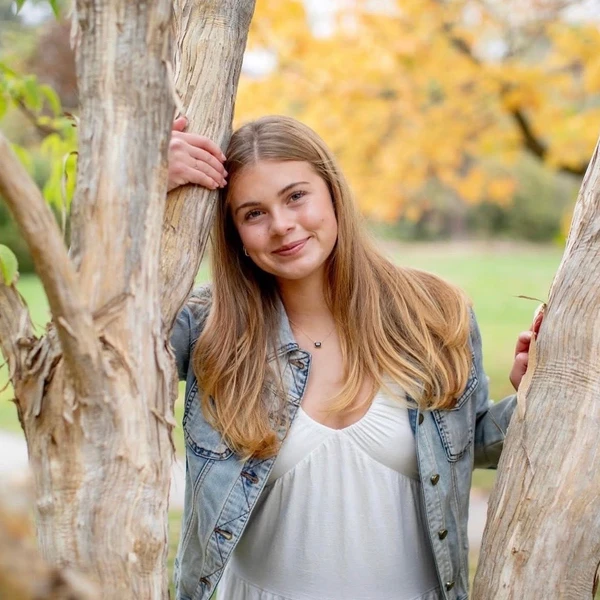
Lilia Baril is a motivated high school senior from Lunenburg, Massachusetts, and a member of the Class of 2026. She is an active student-athlete, serving as a dedicated member and captain of her school’s cross country and track teams. Lilia balances her commitment to athletics with strong academic focus and meaningful involvement in her school and community.
Living with Postural Orthostatic Tachycardia Syndrome (POTS), Lilia has developed resilience, discipline, and a deep sense of perseverance. Her experiences have shaped both her character and her future aspirations. She plans to pursue a degree in exercise science or a related health field, with the goal of becoming a physical or occupational therapist and helping others overcome physical challenges.
Beyond academics and athletics, Lilia enjoys cooking, spending time with family and friends, and giving back through community initiatives such as volunteering with local organizations and advocating for healthier school environments.
Education
Lunenburg High
High SchoolMiscellaneous
Desired degree level:
Doctoral degree program (PhD, MD, JD, etc.)
Majors of interest:
- Health Professions and Related Clinical Sciences, Other
Career
Dream career field:
- Health, Wellness, and Fitness
Dream career goals:
Become an Occupational Therapist or a Physicians Assistant
Customer Service / Ice Cream Scooper
Cherry Hill Ice Cream2025 – Present1 year
Sports
Track & Field
Varsity2020 – Present6 years
Awards
- Division 5 State Champion - High Jump
- Captain
Public services
Volunteering
Hoop for Haddie — Supporter, Organizer2025 – 2026
Carla M. Champagne Memorial Scholarship
WinnerMy name is Lilia Baril, and I am a high school senior from Massachusetts who has learned that some of the most meaningful moments in life come from showing up for others. As a student-athlete competing in cross country and track, I have always been driven to push myself, but volunteering has shown me that impact is not measured by personal achievement. It is measured by how you make others feel.
One experience that has stayed with me was volunteering at a unified basketball event focused on inclusion for individuals of all abilities. I went in expecting to help run activities, but what I found was something much more personal. During the event, I noticed one participant standing just outside the group, unsure and hesitant to join. No one had excluded them, but they still felt separate from the moment.
I walked over and started talking with them, keeping it simple and natural. There was no pressure, just a conversation. After a few minutes, I asked if they wanted to try part of the activity with me. We went slowly, step by step, and I could see their confidence start to build. By the end of the event, they were fully participating, smiling, and engaging with others in a way they had not at the beginning.
What stayed with me was not just that they joined in, but how much it mattered to them to feel included. It made me realize that volunteering is not about stepping in to fix something. It is about being present, paying attention, and making sure someone feels seen when they might otherwise feel invisible.
Living with Postural Orthostatic Tachycardia Syndrome (POTS) has also shaped how I approach helping others. I understand what it feels like to struggle in ways that are not always obvious, and that perspective has made me more patient, more aware, and more intentional in how I support people.
Through volunteering, I have learned that small moments of kindness can create lasting change. Whether it is through community events or supporting my teammates as a captain, I try to create environments where people feel valued and included.
Looking ahead, I plan to pursue a degree in exercise science or a related health field and become a physical or occupational therapist. I want to build a career where helping others is not just something I do occasionally, but something I dedicate my life to. I want to work with individuals who are facing physical challenges and help them regain confidence, independence, and a sense of possibility.
Receiving this scholarship would help ease the financial burden of college, but more importantly, it would support my ability to continue doing what matters most to me. Showing up for others, creating connection, and making sure people feel like they belong.
Doing Hard Things My Way: Adaptive Athlete Scholarship
I got started as an athlete through running, and from the beginning it gave me more than competition. Cross country and track provided structure, identity, and a sense of belonging. I valued the discipline of training, the steady pursuit of improvement, and the connection built within a team working toward shared goals. Running quickly became something that shaped how I saw myself and how I approached challenges in other parts of life.
That foundation was tested when I began experiencing symptoms of Postural Orthostatic Tachycardia Syndrome (POTS). At first, the inconsistency was the hardest part. I could complete a strong workout one day and struggle to stand through portions of practice the next. The unpredictability forced me to confront a version of athletics I had not prepared for, one where effort did not always translate directly into performance. One of the most difficult moments was having to step off the track mid-workout while my teammates continued. I remember the frustration of feeling fully committed mentally but limited physically in a way I could not control.
Over time, I learned that continuing as an athlete required redefining what progress meant. I began to approach training with more intentional awareness, communicating closely with coaches and adjusting expectations based on how my body responded each day. I learned that showing up consistently, even in a modified capacity, was still meaningful. Success became less about isolated performances and more about sustained commitment over time. That shift required humility, patience, and a different kind of discipline than I had known before.
Being an adaptive athlete, to me, means continuing to pursue excellence within the reality of your circumstances rather than waiting for ideal conditions. It requires a willingness to adapt without losing ambition. It has taught me to think long term, to respect limits without being defined by them, and to find value in progress that is not always visible to others. It has also deepened my awareness of athletes and individuals who navigate challenges that are not always seen.
Sports have significantly shaped my mindset and leadership. As a captain, I have learned that influence is often quiet, built through consistency, encouragement, and example rather than words alone. I have also learned that resilience is not a single decision but a repeated one, made daily in how you respond to difficulty.
As I move into college, I plan to continue competing while pursuing a degree in exercise science or a related health field. My goal is to remain an athlete while also developing the skills to support others facing physical limitations. My experience as an adaptive athlete has shaped not only how I compete, but how I understand persistence, and I intend to carry that perspective forward in both athletics and my future career.
Ava Wood Stupendous Love Scholarship
“Creating Connection”
Creating connection for others has been an important part of my experience as a student-athlete and teammate. As a captain of my cross country and track teams, I have made it a priority to help build an environment where everyone feels included, regardless of ability level or experience. Running can be an individual sport, but I believe the strongest teams are built on support, encouragement, and shared purpose.
One way I try to create connection is by paying attention to teammates who may feel overlooked or discouraged. I make a point to check in with them during practice, encourage them after difficult workouts, and celebrate their progress, even when it feels small. I have found that these moments often matter more than formal leadership speeches or structured team events.
Living with Postural Orthostatic Tachycardia Syndrome (POTS) has also shaped how I view inclusion. There have been times when I could not fully participate in workouts or had to modify training. In those moments, I understood what it feels like to be on the outside of full participation. Because of that, I try to make sure others never feel excluded when they are struggling or working at a different pace.
Whether in sports, school, or volunteer settings, I try to help create spaces where people feel seen and valued. I have learned that connection does not always come from doing everything together, but from making sure no one feels left out while doing their best. That mindset is something I will continue to carry into college, athletics, and my future career in healthcare.
Kindness in Action”
One of the most meaningful moments of kindness I have ever experienced came during a unified basketball event focused on inclusion for athletes of all abilities. I went in thinking I was there to help, but I left understanding something much deeper about what kindness actually looks like.
At the event, I worked with participants as they rotated through activities on the court. Everything moved quickly at first, and I focused on keeping things organized. But then I noticed a young participant standing slightly back from the group, unsure of where to go or how to join in. No one was excluding them, but they were still on the outside of the moment.
Instead of rushing past, I walked over and started a simple conversation. I did not try to correct or direct anything. I just stayed present. After a few minutes, I asked if they wanted to join me for a small part of the activity. They hesitated, then nodded. We started slowly, step by step, with no pressure to keep up with anyone else.
What I remember most is not the activity itself, but what happened after. Their posture changed. They smiled more. By the end, they were fully participating with confidence. When it was over, they thanked me quietly, as if they were not sure they had done anything significant. But to me, they had.
That moment stayed with me because it showed me that kindness is not loud. It is not complicated. Sometimes it is simply choosing to notice someone, to slow down, and to make space for them to belong.
That unified event taught me that inclusion is not automatic. It is created by people who are willing to be intentional with their kindness. That experience has stayed with me as both an athlete and someone who hopes to work in a health-related field. It reinforced my desire to build environments where people are not just present, but truly seen, supported, and valued.
Wesley Beck Memorial Scholarship
My name is Lilia Baril, and I am a high school student-athlete from Massachusetts with a strong interest in pursuing a career in exercise science or a related health field. What led me toward this path is both my personal experience as an athlete and my exposure to individuals who face physical challenges every day. Living with Postural Orthostatic Tachycardia Syndrome (POTS) has given me a firsthand understanding of what it feels like to navigate physical limitations while still trying to live an active, meaningful life. That experience has shaped my desire to help others in similar situations.
I am especially interested in working with individuals who have special needs or physical disabilities in a physical therapy or occupational therapy setting. I want to be someone who not only helps improve physical ability, but also supports confidence, independence, and quality of life. I understand that progress can look different for every individual, and I hope to be the kind of professional who meets people where they are and helps them move forward in ways that are realistic, encouraging, and empowering.
One experience that had a lasting impact on me was volunteering at a community basketball event which supported athletes with special needs. I helped with activities on the court and spent time interacting with participants and families. What stood out most to me was not the basketball itself, but the energy and inclusion around the event. I saw how excited the athletes were to participate and how meaningful it was for them to be part of something where they were fully included and encouraged. That experience showed me how powerful it is when people are given space to belong, participate, and be supported without limits placed on them.
Sports have also played a major role in shaping how I view support and mentorship. As a captain of my cross country and track teams, I have learned how important it is to encourage others, especially when they are struggling. I have seen how small acts of support can make a big difference in someone’s confidence and performance. That mindset is something I plan to carry into my future career.
I am motivated to pursue a career serving individuals with special needs because I want to be part of a field that focuses on improving daily life in real and lasting ways. Whether through physical therapy, occupational therapy, or another related profession, my goal is to help individuals build strength, independence, and confidence while feeling seen and supported as people, not just patients.
I also have financial need, and receiving this scholarship would significantly reduce the burden of college costs for my family. It would allow me to focus more fully on my education, clinical experience, and preparation for a career dedicated to helping others.
I am committed to building a future where I can make a meaningful difference in the lives of individuals with special needs by combining compassion, patience, and clinical knowledge to support their growth and well-being.
Norton "Adapt and Overcome" Scholarship
Throughout my high school experience, I have had to learn what it truly means to adapt and overcome. As a student-athlete living with Postural Orthostatic Tachycardia Syndrome (POTS), I have faced challenges that are not always visible but are very real in how they affect my daily life, especially as a runner. There have been days when getting through a full school schedule or completing a practice required far more effort than most people would realize.
One moment that stands out happened during a track workout when I had to step off the track midway through a run because my symptoms became overwhelming. I remember feeling frustrated and disappointed, watching my teammates continue while I sat on the sidelines trying to recover. In that moment, it felt like my body was working against everything I wanted to accomplish. What I learned over time, however, is that setbacks like that do not define the outcome of my journey. They shape how I respond and how I move forward.
Living with POTS has forced me to adapt in ways I never expected. I have had to become more intentional with my training, more aware of my body, and more patient with progress. I have learned how to communicate with my coaches, adjust expectations when needed, and focus on long-term growth rather than short-term setbacks. While I once saw these adjustments as limitations, I now see them as part of what has made me stronger and more disciplined.
Academically, I have worked hard to maintain strong performance while balancing the demands of athletics and health management. There are times when fatigue or symptoms make it more difficult to focus, but I have learned how to structure my time, stay organized, and push through when things are not easy. That consistency has helped me stay on track toward my goals even when the process is not simple.
Being a captain of my cross country and track teams has also given me perspective on leadership during adversity. I have learned that showing up, even on difficult days, can set an example for others. I try to support my teammates not just when things are going well, but especially when challenges arise. I understand what it feels like to struggle physically while still wanting to give your best, and I try to bring encouragement and stability to those around me.
My experiences have shaped my future goals. I plan to pursue a degree in exercise science or a related health field and eventually become a physical or occupational therapist. I want to work with individuals who are facing their own physical challenges and help them find ways to adapt, recover, and regain confidence in their abilities. I understand firsthand how important it is to feel supported during those moments.
For me, “adapt and overcome” is not just a phrase. It is something I live every day. It means continuing to move forward even when progress is not linear, and finding strength in persistence rather than perfection. My goal is to carry that mindset into my education, athletics, and future career, and to continue proving that challenges do not end opportunity. They shape it.
John F. Puffer, Sr. Smile Scholarship
I have worked hard throughout high school to excel both academically and as a student-athlete, while also striving to make a positive impact on those around me. Maintaining a strong GPA while competing in cross country and track has required discipline, time management, and consistency. I have learned how to balance early morning practices, school responsibilities, and recovery while still holding myself to high academic standards. This balance has taught me that success is not only about talent, but about commitment and showing up every day with purpose.
One of the most defining parts of my journey has been living with Postural Orthostatic Tachycardia Syndrome (POTS) while competing in endurance sports. There have been times when I have had to step back from workouts or adjust my training because my body could not keep up with what I mentally wanted to do. Early on, that was difficult to accept. Over time, I learned how to adapt, communicate with my coaches, and push myself in smarter and more intentional ways. This experience has shaped my resilience and helped me understand that excellence looks different for everyone.
Being a captain of my cross country and track teams has also given me the opportunity to lead and support others. I try to set an example not just through performance, but through attitude and effort. Whether it is encouraging a teammate during a tough workout or staying positive during a difficult meet, I have learned that leadership is often about small actions that help others believe in themselves. I have seen how a supportive word or consistent effort can shift the energy of an entire team.
Outside of athletics, I have made it a priority to stay involved in my school community and contribute in ways that matter to others. I have learned that giving back does not always have to be something large. It can be showing up for others, offering help when it is needed, or setting a standard of kindness and respect. These values have shaped how I interact with teachers, teammates, and peers, and they are qualities I will continue to carry forward.
Looking ahead, I hope to study exercise science or a related health field and eventually become a physical or occupational therapist. My goal is to work with individuals who are facing physical challenges of their own and help them regain strength, independence, and confidence. My experiences have given me a deeper understanding of what it means to struggle physically while still trying to move forward, and I want to use that understanding to help others.
I hope my actions reflect the values of S.M.I.L.E. by showing up consistently, motivating others through effort, inspiring teammates through resilience, leading with integrity, and striving for excellence in everything I do. My goal is to continue building a legacy defined not only by achievement, but by the positive impact I leave on people and the community around me.
No Limits Athletic Scholarship
I would like to receive this scholarship because it represents more than financial support. It represents belief in athletes like me who have had to redefine what strength and perseverance look like. Living with Postural Orthostatic Tachycardia Syndrome (POTS) has challenged me in ways I never expected, especially as a competitive runner. There have been moments where simply getting through a practice felt harder than any race.
One moment that stands out happened during a midseason workout. I had to stop halfway through a run while my teammates continued. I remember standing off to the side trying to steady myself, feeling frustrated and embarrassed because my body was not responding the way I wanted it to. My coach told me that day that strength is not always about finishing first or even finishing at all, but about coming back the next day willing to try again. That moment changed how I view myself as an athlete. Instead of focusing only on performance, I began to value persistence, effort, and consistency even more.
This scholarship would recognize not only the obstacles I have faced, but also the determination it has taken to continue showing up every day.
I plan to use this scholarship to pursue a degree in exercise science or a related health field while continuing my athletic career at the collegiate level. Financial support would allow me to focus more fully on my academics, training, and recovery without placing additional pressure on my family. It would also give me access to important resources such as proper training, nutrition, and academic support that are essential for success both in the classroom and in competition. With fewer financial concerns, I will be able to fully commit to my goals and take advantage of every opportunity available to me.
Sports have had a major impact on my life. Running has taught me discipline, leadership, and how to push through challenges even when the outcome is uncertain. As a captain of my track and cross country teams, I have learned how to lead by example, support my teammates, and stay positive during difficult moments. Living with POTS has forced me to adapt in ways many athletes do not have to. I have had to listen closely to my body, adjust my training, and accept that progress is not always linear. While that has been difficult, it has also made me stronger mentally and more resilient in everything I do.
These experiences have shaped my future goals. I plan to become a physical or occupational therapist and work with individuals who are dealing with their own physical challenges. I understand how frustrating and isolating those experiences can feel, and I want to help others regain confidence and strength. My condition has given me a perspective that I will carry into my career, allowing me to connect with others in a meaningful way.
My dream is to continue competing at the collegiate level while succeeding academically and building a career where I can make a real difference in people’s lives. This scholarship would help me take another step toward that future and continue proving that limitations do not define potential.