user profile avatar

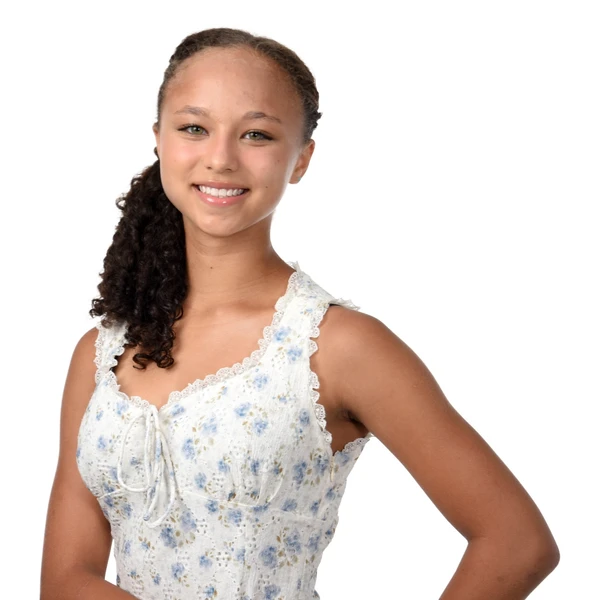
Lia Macdonell

1x

Finalist

General information

Religion
Christian
Church
Nondenominational

Hobbies & Interests

  • African American Studies
  • Acting And Theater
  • Choir
  • Rugby

Reading

-

I read books multiple times a week.

Bio

As a rising senior and a third-culture American student who grew up in Singapore and Hong Kong, I bring a deeply global perspective to my passion for international relations. Being bilingual in Chinese and living abroad has shaped my worldview, while my work as an officer for the Black Student Union has grounded my commitment to community leadership. Athletics are a massive part of my life; I play flag football and rugby, and I was incredibly honored to win the Steve Back Award and MVP at the Tanglin Rugby Club (TRC). For me, sports are about community, which is why I dedicate my time to coaching U12 girls and organizing fundraisers for TRC and the Atlas Foundation to make rugby accessible to everyone. This scholarship will directly support my journey toward a career in international diplomacy, where I hope to bridge cultural and socioeconomic divides.

Education

Franklin High

High School

2026 – 2027
Miscellaneous

Desired degree level:
Bachelor's degree program
Majors of interest:
International/Globalization Studies, Health Professions and Related Clinical Sciences, Other
Desired degree modality:
In-Person, Full-Time
Medical school interest:
No

Career

Miscellaneous

Dream career field:
Law Practice
Work experience:
0 years
Has nursing license:
No

Future Interests

  • Advocacy
  • Politics
  • Volunteering
  • Philanthropy
  • Entrepreneurship
Michael Rudometkin Memorial Scholarship
Applying for a scholarship by arguing why you are the most selfless and deserving applicant feels like an inherently paradoxical process. To improve one’s financial standing before college, a student is asked to debate the morality of bragging about their own good deeds. Yet true selflessness is not a performance; it is a quiet, ongoing practice carried out without any expectation of recognition or reward. Reducing acts of genuine care into a polished, persuasive essay strips those actions of their original intent. When a good deed is performed, cataloged, and polished specifically to be judged and rewarded, it loses its pure altruism. True selflessness requires recognizing that the most meaningful contributions are those that do not demand an audience, a grade, or a line on a resume. It is defined by quiet consistency, active empathy, and a willingness to step up simply because it is the right thing to do. Choosing not to parade specific acts of service for financial gain is a choice to keep those experiences where they belong: between myself and the people I sought to support. Publicly displaying those moments to secure a reward risks recasting quiet empathy into a transactional asset. When service becomes a tool for personal advancement, the boundary between sincere care and calculated self-interest grows blurred. At the same time, withholding these experiences from a selection committee could be viewed as an act of self-preservation or non-compliance rather than quiet humility, making the choice feel ambiguous. The paradox remains: sharing good deeds can feel performative, while concealing them risks obscuring the very values the committee seeks to evaluate. And for the record, I'd like to state that this is not an act of self-preservation, but rather a risk I really hope doesn't choose to blow up in my face. Ultimately, this tension exposes a broader question about how society evaluates character and merit. Is integrity best demonstrated through documented impact, or is it better proven by maintaining the sanctity of quiet, unadvertised service? How am I supposed to truly believe I am a representative of selflessness when I have chosen to write an essay about just how selfless I am? Navigating this conflict requires balancing practical necessity with personal ethics. While this perspective may challenge standard expectations, it reflects a commitment to keeping quiet service intact, leaving the interpretation of that choice entirely up to you. I know that this prompt has left me debating but I hope this essay leaves you with newfound clarity.
Jason Choi Memorial Scholarship for Guitarists
The first time I touched a guitar, I was in second grade. My Grandpa had asked me to come into our cabin in Tahoe to show me something. And if I'm being honest, second-grade me wanted nothing more than to be outside playing in the sand with my cousins. But when he told me that he would teach me how to play guitar, I was over the moon. Looking back, I had no idea that stepping away from the beach for a moment would mean I was stepping into a passion that shaped much of my later life. As a child, I had a really bad habit of using what some would call "annoying filler words." At the end of every sentence, I added a "right?" or "you know?" just to gauge if people were listening to me. And most of the time, they weren't. Though it was a frustrating endeavor, when my clumsy little fingers pressed against the fretboard and the sound of a perfectly clean G rang out, I knew that this instrument was my medium. A way I could connect with others, a way that I could make them listen to what I had to say. Though at the time, it was more of a melodramatic realization that my parents couldn't ignore their 7-year-old if she was running through the house strumming a guitar as loudly as possible. As time went on, I didn’t stress as much importance on improving the skill as I did using it. Though I may not be the most skilled guitarist, I have continued to use guitar to forward my passion for music. From learning how to finger-pick Disney songs to writing my own music, I have used guitar to hone my musical goals through various endeavors. It has become an opening line of mine at open mics when I say, “For all the guitarists in the room, I’m sorry if I offend you with my playing tonight.” This is partially because I have never taken up classical guitar or learned how to play lead on the electric. For every self-taught musician, I owe them a lot of credit, because it’s hard. But it has never been about the quality or the advanced skill for me. What matters most is how you feel when you play.
Hines Scholarship
As a Black third-culture student raised in the unique, fast-paced environments of Hong Kong and Singapore, my life has been a study in constant transition. Growing up navigating spaces where very few people looked like me, I had to learn early on how to define my own identity rather than letting external environments actively dictate it for me. Moving to the United States for my senior year of high school was another massive pivot, a sudden shift in culture, community, and academic systems. Throughout these global upheavals, I realized that higher education is not merely the logical next step in my schooling; it is the ultimate arena where I can transform my multi-layered background into a tool for systemic advocacy. To me, going to college means claiming complete ownership over my future and connecting the distinct worlds that I carry from past experience. It represents the opportunity to prove that strategic pivots are not making room for failure, but essential steps in building resilience. Being fluent in both Chinese and English while navigating complex international dynamics has given me a rare global perspective on communication and nuance. College is the proving ground where I can refine these linguistic and cultural assets, moving past the survival of adapting to new environments and stepping into a space of intellectual execution. For a minority student, higher education is the ultimate equalizer, the mechanism that allows us to turn our lived complexities into profound strengths. Through my higher education, I am determined to pursue a pre-law track. The legal field requires immense stamina, unwavering resilience, and a refusal to back down in the face of adversity. My education will equip me with the rigorous and analytical tools needed to understand how laws cross borders and how minority communities navigate structural barriers globally. I want to use my degree to advocate for those caught between complex geopolitical and legal systems, ensuring that marginalized voices aren't lost in translation. I am going to college to acquire the institutional knowledge necessary to become a fearless, globally-minded advocate. Furthermore, pursuing this degree is about building a lasting legacy. The radical wealth gap and systemic inequities often dictate whose stories are told and whose rights are protected. By earning my degree and entering the legal field, I aim to alter that narrative, offering representation in a profession where diverse, global perspectives are severely lacking. I want to show other minority youth who come from unconventional backgrounds that our multi-layered identities are not liabilities, but powerful assets. The Hines Scholarship will provide the critical financial foundation I need to focus entirely on my undergraduate pre-law studies without the looming burden of financial strain. Higher education is the bridge to the impactful future I have envisioned across three different countries. I am fully prepared to put in the years of rigorous preparation, to face every academic challenge head-on, and to confidently cast my own shadow, shaping a legal career defined by global perspective, relentless advocacy, and an unshakeable sense of purpose.
Lia Macdonell Student Profile | Bold.org