Hobbies and interests
Reading
Painting and Studio Art
Reading
Adult Fiction
Fantasy
Thriller
Social Issues
Realistic Fiction
True Story
I read books multiple times per week
Leyla Said
1x
FinalistLeyla Said
1x
FinalistBio
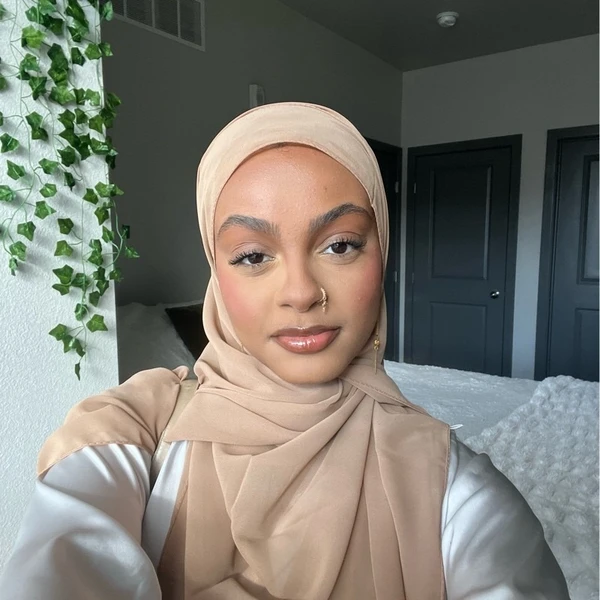
My name is Leyla Said, a first-generation college student at the University of Minnesota, majoring in Information Technology Infrastructure with a minor in Management. My journey into technology and healthcare is fueled by a passion for solving real-world problems and creating meaningful change through new and innovative solutions.
With leadership experience and a strong academic foundation, I’ve developed skills like communication, adaptability, and problem-solving that prepare me to succeed in professional settings. My work in a care environment has taught me the value of empathy and teamwork, shaping how I approach challenges and opportunities. I aspire to lead in the tech and business space by contributing to innovative projects that drive progress and positive change, and I’m eager to learn, grow, and collaborate with others who share a vision for impactful work as I look forward to the journey ahead and the opportunities it will bring.
Education
University of Minnesota-Twin Cities
Bachelor's degree programMajors:
- Computer Science
- Information Science/Studies
Minors:
- Management Information Systems and Services
Irondale Senior High
High SchoolMiscellaneous
Desired degree level:
Bachelor's degree program
Graduate schools of interest:
Transfer schools of interest:
Majors of interest:
- Computer and Information Sciences and Support Services, Other
- Information Science/Studies
Career
Dream career field:
Computer & Network Security
Dream career goals:
Data Analyst
Future Interests
Advocacy
Volunteering
Philanthropy
Entrepreneurship
Bick First Generation Scholarship
Being a first-generation college student means I’m living a dream that my parents only ever hoped for. It means stepping into rooms that once felt too far away, trying to build a life I’ve never seen modeled, and doing it while carrying the weight of people who sacrificed everything so I could have this chance.
When I first got to college, I didn’t feel like I belonged. Everyone around me seemed to already know how things worked, what classes to take, how to talk to professors, and how to find internships. I was just trying to keep up while pretending I wasn’t lost. There were nights I cried quietly in my dorm, wondering if I had made a mistake, wondering if I was enough. But I kept going, because I didn’t come this far to stop now.
Being first-gen has taught me how to figure things out on my own. From navigating FAFSA to balancing work, school, and family responsibilities, I’ve had to learn by doing. There was no blueprint, just faith, perseverance, and the reminder that I’m making a way for those who come after me.
One of my biggest challenges was learning how to balance being a student while caring for others. Before working in elder care, I helped raise my younger sister, who was diagnosed with autism at a young age. That experience changed me. It taught me patience, empathy, and how to find strength in the quiet moments, when no one sees your effort, but you show up anyway. Now, working as a caregiver and later as a cybersecurity intern in healthcare, I’ve realized that my path has always been about helping people, whether that’s protecting their data, their safety, or their dignity.
There have been moments when I’ve felt burnt out, overwhelmed, or unseen. But those same moments remind me why I’m doing this. My parents came to this country with little, yet they gave me everything, faith, resilience, and the belief that no struggle is wasted. Every late night, every sacrifice, and every small win is part of a bigger story I’m still writing.
My dream is to keep using technology to create safer and more inclusive systems in healthcare. I want to be part of something that makes people’s lives better, not just through innovation, but through care.
This scholarship would mean more than financial help. It would mean someone sees the effort behind the scenes, the sleepless nights, the determination to keep going even when it’s hard. It would mean that my story matters, that all the times I felt invisible weren’t in vain.
Being first-gen isn’t just about being the first to go to college. It’s about being the first to believe that you can change the story for your family. And I’m doing that. One day, one challenge, and one step at a time.
Liz & Wayne Matson Jr. Caregiver Scholarship
My caregiving journey began long before I ever earned a paycheck for it. When my younger sister was diagnosed with autism at a young age, I quickly learned what it meant to take on responsibility and patience beyond my years. Helping her with daily routines, communicating when words didn’t always come easily, and advocating for her needs taught me compassion and understanding in ways no classroom could. Watching her navigate the world differently shaped how I view people—not by their limitations, but by their unique strengths.
Those early experiences with my sister sparked something in me. They made me realize how much I cared about helping others feel seen and supported, especially when they face challenges most people overlook. Years later, when I began working in a care setting with elderly residents, those same lessons came back to me. Caring for older adults—many of whom face memory loss, limited mobility, or loneliness—reminded me of the empathy I learned growing up. It also showed me how deeply caregiving connects generations, experiences, and the simple need for human connection.
Balancing college, work, and caregiving hasn’t been easy. There have been nights I stayed up late finishing assignments after long shifts or missed out on social events because someone needed me more. But those sacrifices have taught me resilience, self-discipline, and the importance of showing up for others even when it’s inconvenient.
Being a caregiver has also shaped my academic and career goals. As an Information Technology major, I’ve found a passion in the intersection of technology and healthcare, especially cybersecurity and data protection. Working in healthcare environments has shown me how much trust patients place in systems that hold their most personal information. I want to use my skills to protect that trust by creating safer, more reliable technology for caregivers, patients, and medical teams alike.
My caregiving experiences, first with my sister, then with elderly residents, have defined who I am. They’ve taught me to see leadership as service, not authority. They’ve given me empathy that drives every decision I make, whether I’m helping a resident, leading a group project, or learning something new in class. Most importantly, they’ve shown me that impact doesn’t always come from grand gestures. Sometimes, it comes from the quiet, everyday acts of care that change someone’s world.
Caregiving has shaped my identity, strengthened my character, and clarified my purpose. It’s why I approach both life and learning with patience, compassion, and a genuine desire to make technology work better for people, especially those who rely on the care and understanding of others.
Cybersecurity for Your Community Scholarship
Over coffee, I’d tell you that cybersecurity, to me, is protection rooted in purpose. Growing up watching my parents navigate new systems taught me how easily technology can leave people behind. I want to change that by helping my community build digital trust and literacy, one person at a time. Just like coffee connects people around a table, I want my work in cybersecurity to connect people safely across the digital world.
Women in STEM Scholarship
I’ve always been the kind of person who wants to understand how things work. How systems connect, how technology shapes lives, and how people use it to solve problems. As a first-generation Ethiopian and East African Muslim woman, I didn’t grow up surrounded by people in STEM, but I knew I wanted to be part of the world that built things people depend on every day. My parents came to the United States with faith and determination, starting over from nothing so I could have the opportunities they never had. Their sacrifices taught me to lead with gratitude, work hard, and make my voice count.
When I began studying Information Technology with a Management minor at the University of Minnesota, I often found myself being one of the few women in the room, sometimes the only Black or visibly Muslim student. At first, that was intimidating. I felt the pressure of being “the only one,” of representing more than just myself. But over time, that feeling turned into motivation. I realized that my presence alone challenged stereotypes and opened doors for others to see what was possible.
I chose STEM because I love problem-solving, but more importantly, because I believe technology can change lives when it’s used with empathy and intention. As a Cybersecurity Intern at M Health Fairview, I support the Vulnerability and Risk Management team, helping assess vendor security and protect sensitive patient information. Before that, I worked as a Research Assistant on a clinical trial focused on older adults with Type 2 Diabetes. That experience opened my eyes to how inequities in data, access, and trust can affect people’s health outcomes. Both roles taught me something important—technology isn’t just about systems; it’s about people. Whether I’m analyzing a report or helping safeguard data, I’m driven by the idea that real impact starts with understanding the human side of STEM.
Outside of work, I’m active in the Black Student Union, Women in Business, and the National Association of Black Accountants. These communities have given me a sense of belonging and purpose, and they’ve taught me the importance of showing up for others. I mentor first-generation and women of color students who are new to STEM, helping them navigate classes, build confidence, and see themselves as capable. I’ve learned that leadership isn’t about always having the loudest voice; it’s about creating space for others to be heard.
As a woman in STEM, I hope to make a difference by bridging technology and equity, especially in healthcare. I want to help design systems that are not only innovative but also fair and accessible. Long term, I see myself working in cybersecurity or healthcare IT project management, roles that allow me to protect and empower people through the systems we build.
Being a woman in STEM means constantly stepping into rooms where you might not see yourself represented but showing up anyway. It means knowing that every project, every solution, and every success helps make it easier for the next person who follows. My goal is to keep learning, growing, and paving that path.
I hope to use my voice and work to prove that women, especially women of color, belong in every space where ideas and innovation happen. For me, STEM isn’t just about breaking barriers; it’s about building a foundation where others can rise too.
Mohamed Magdi Taha Memorial Scholarship
Inna lillahi wa inna ilayhi raji’un, to Allah we belong, and to Him we return. May Allah grant Mohamed Magdi Taha the highest place in Jannah and surround his family with patience and peace. Reading about Mohamed’s life reminded me of the type of person I strive to be, someone who leads with compassion, stands up for what’s right, and uses their voice to build understanding.
For me, being an up-stander means choosing courage over comfort and using my voice to uplift others, even when it’s difficult. My sense of purpose has been shaped by my faith, my culture, and my experiences as a first-generation Ethiopian and East African Muslim woman. Growing up in a community that shares deep cultural and spiritual ties with Sudan, I’ve always admired the strength and unity of our people. Both Ethiopian and Sudanese cultures value hospitality, justice, and collective care, values that guide the way I move through the world and the way I hope to serve others.
My parents immigrated to the United States with little more than faith and determination, building a new life from the ground up so that I could have opportunities they never had. Watching them navigate challenges with patience and perseverance taught me that resilience is not only about surviving; it’s about finding meaning in what you overcome. There were many times when I felt unseen or misunderstood in academic or professional spaces, but my faith grounded me and reminded me that every challenge is an opportunity for growth.
At the University of Minnesota, I’ve carried that mindset into the work I do on campus. As a member of the Black Student Union, Women in Business, and the National Association of Black Accountants, I’ve learned that true leadership begins with service. I’ve used my positions not just to advocate, but to listen, mentor, and create spaces where others, especially women of color and first-generation students, feel supported and valued. Being an up-stander doesn’t always mean being the loudest voice in the room; sometimes it means showing up, creating space, and reminding others that they belong.
My work as a research assistant in a clinical trial focused on improving the health of older adults with Type-2 diabetes has strengthened that commitment to advocacy. Many of the participants came from underrepresented or low-income communities, and I saw how important empathy and cultural awareness are in healthcare. That experience inspired me to pursue a career that bridges technology, management, and equity in healthcare systems. As an Information Technology major with a Management minor, I hope to use my skills to create technology that serves people, especially those who are too often overlooked.
Like Mohamed, I believe that courage and compassion must work together. His example reminds me that change begins when we act with integrity and empathy, even in small ways. I want to honor that by using my voice to advocate for inclusion in STEM, support other Muslim and Black women pursuing higher education, and challenge the systems that silence or exclude us.
Being an up-stander isn’t about seeking recognition; it’s about consistency and conviction. It’s about doing what’s right, even when it’s uncomfortable, and leading with humility and faith. I plan to continue standing up for others, amplifying voices from my community, and building spaces rooted in equity and belonging. In that, I hope to carry forward the spirit of Mohamed Magdi Taha. May Allah accept his deeds, reward his kindness, and allow his legacy to live on through the lives he continues to inspire.
Future Women In STEM Scholarship
My name is Leyla Said, and I am a first-generation African Muslim woman studying Information Technology with a management minor. Growing up, education always carried a deeper meaning for me. As the eldest daughter of a single immigrant mother, I felt a responsibility not just for myself but for my younger siblings who looked up to me. My mother worked tirelessly to give us opportunities she never had, and I knew that making the most of my education was one way to honor her sacrifices.
My early schooling years weren’t easy. I grew up in the inner cities of Colorado, where schools often lacked resources and many students didn’t see college as a realistic goal. Even as a strong student, I didn’t always have the guidance or encouragement to think beyond the classroom. That changed when my mom made the difficult decision to move us to Minnesota for a better education. Suddenly, I was in suburban schools where there were advisors to help with college applications, but I felt behind compared to my peers. For a while, I doubted if I was capable of succeeding in higher education.
Those experiences shaped my perspective. I understood what it felt like to be overlooked and underestimated, but I also knew the value of persistence. When I entered college, I first chose computer science because it seemed like the expected and “safe” STEM path. But I quickly realized it didn’t feel like me. The coursework left me disconnected, and I started to question if I belonged in STEM at all. That uncertainty forced me to reflect on what I actually wanted from my education.
What I found was that I’ve always been drawn to problem-solving and to making an impact. Discovering Information Technology opened a door for me. IT gave me the technical challenge I craved, but also the chance to apply those skills to meaningful areas, especially in healthcare. That connection became even clearer when I joined a clinical research team studying Type-2 Diabetes among elderly patients from underrepresented backgrounds. Many participants lacked access to healthcare and health literacy, and our work wasn’t just about collecting data, it was about the potential outreach, education, and building needed trust. I saw how technology and data could play a role in closing gaps in care and improving equity. That experience helped me realize that STEM, for me, is about more than coding or systems. It’s about using new-found technology and innovation to solve real problems in people’s lives.
Reflecting on my journey, I see how my upbringing and challenges shaped my interest in STEM. Growing up in under-resourced schools, transitioning into unfamiliar environments, and navigating the pressures of being first-gen taught me resilience and adaptability. Those same traits fuel my drive in IT today. I don’t just want to build a career; I want to create solutions that make systems more accessible and equitable, especially for communities like the one I came from.
That is what excites me most about being in STEM, the opportunity to bridge my personal experiences with my academic goals and to use both to make an impact.
Victoria Johnson Minority Women in STEM Scholarship
As a first-generation African Muslim woman in STEM, my journey hasn’t been simple. When I first started college, I thought I had to follow a “safe” career path, so I began with computer science. But I quickly realized it didn’t align with my strengths or passions, and I felt lost and unmotivated. It wasn’t until I explored information technology and healthcare IT that things began to click. For the first time, I saw a field where I could combine problem-solving with impact, and I started to imagine a career that could truly make a difference in the world.
Still, pursuing this path hasn’t been without challenges. Financial barriers are one of the hardest parts of being a first-gen student. While I work hard to manage tuition and living expenses, the added costs of preparing for professional programs, admissions tests, study materials, and application fees, are overwhelming. I’ve often had to weigh whether I could afford to apply to opportunities I was qualified for, and there have been times where I worried that financial stress, rather than my abilities or drive, would hold me back. Balancing work, school, and personal responsibilities has made me more resilient, but it has also shown me how financial strain can limit students like me from reaching their full potential.
Receiving this scholarship would lift some of those burdens and allow me to focus on what matters most, my academic and professional growth. Instead of constantly stressing over how to afford application fees or the right prep resources, I could invest that energy into learning, building skills, and seizing opportunities. This support would give me the confidence to take the next steps in my education, knowing I have the backing to pursue my goals without hesitation.
My long-term goal is to build a career in healthcare IT, where I can play a role in creating more efficient, secure, and accessible systems. I’ve already seen firsthand, through my clinical research work, how underrepresented groups face barriers in healthcare access and outcomes. Technology can be a powerful tool to bridge those gaps, whether through improving data security, streamlining care, or making resources easier to access. I want to use my skills not just to protect information but to improve lives.
Beyond my career, I feel a responsibility to give back. I know what it’s like to be the first, to feel unseen in certain spaces, and to doubt whether you belong. That’s why I want to mentor other first-generation and underrepresented students in STEM. Whether through campus organizations, professional networks, or future mentorship programs, I want to encourage students who share my background to keep pushing, even when challenges feel overwhelming. If I can make the path a little smoother for someone else, that will mean just as much to me as my own success.
This scholarship would not only relieve financial pressures, it would be an investment in the person I am becoming. It would allow me to keep moving forward toward my career in healthcare IT, while also positioning me to give back to others. I see this as more than financial aid, t’s a way to ensure that students like me can focus on achieving their goals and, in turn, open doors for the next generation.
Eric W. Larson Memorial STEM Scholarship
Growing up as the eldest daughter in a first-generation African-American Muslim household has shaped every part of who I am, my work ethic, my resilience, and my dreams for the future. My parents came to this country with the hope of building a better life, but the reality was filled with long work hours, financial uncertainty, and sacrifices that left little room for personal ambitions. They taught me the value of persistence and the belief that education could open doors that had always been closed to them.
As the oldest child, I often had to navigate new systems on my own. I learned how to fill out forms, interpret school communications, and advocate for myself in spaces where my parents couldn’t always guide me. I became a role model for my younger siblings, one who was diagnosed with autism at a young age. I've been determined to show them what was possible through hard work and determination and be the representation I wish I had. This early responsibility gave me independence, leadership skills, and a strong sense of purpose.
Financial hardship has been a consistent part of my journey. Paying for school has meant balancing multiple responsibilities. Maintaining a high GPA, working part-time, and taking on internships while also contributing to household needs. There have been semesters when I worried about how I would cover my expenses, especially when unexpected costs like transportation repairs came up. Moving back home to save on rent was a necessary decision, but it also meant longer commutes and balancing family responsibilities alongside school. Despite these challenges, I’ve refused to let financial strain hold me back from pursuing my goals.
My passion for STEM, specifically Information Technology, developed gradually. In high school, I was drawn to technology because of its ability to solve problems and connect people. I joined and led my school's the Black Student Union, where I learned the value of community-building, representation, and leading initiatives that create impact. While BSU wasn’t a tech-focused group, it taught me the power of organization, planning, and making resources accessible, all skills I would later use in my IT work.
When I started college, I chose computer science, thinking it was the most straightforward path to a tech career. But as I progressed, I realized that my strengths didn’t align with spending all day coding. I was more energized by strategic thinking, collaboration, and big-picture problem-solving. Switching my major to Information Technology Infrastructure with a Management minor was one of the best decisions I’ve made. It gave me the chance to work at the intersection of technology, process improvement, and leadership.
Today, I’m a Cybersecurity Intern at Fairview Health Services, working on the Vulnerability and Risk Management team. My responsibilities include coordinating vendor security assessments, reporting on risks, and supporting AWS cloud migration projects. In this role, I’ve learned how critical it is to protect sensitive information and ensure systems are efficient and reliable, especially in healthcare, where technology directly impacts patient care. Seeing how my work contributes to safeguarding health systems has deepened my commitment to a career in healthcare IT.
One of the biggest challenges I’ve faced in this field is breaking into spaces where people who look like me are underrepresented. As a Black Muslim woman in STEM, I’ve often been one of the few, if not the only, in the room. Instead of letting that discourage me, I’ve used it as motivation to perform at my best and open doors for others. Being part of programs like Management Leadership for Tomorrow and the Forte Foundation’s Career Ready program has given me access to mentorship, professional development, and a network of peers who share my ambition to lead and innovate.
The adversity I’ve faced, financial and otherwise, has taught me how to adapt, problem-solve, and keep moving forward even when resources are limited. I’ve learned to seek out opportunities, advocate for myself, and be resourceful with what I have. These skills are just as valuable as anything I’ve learned in the classroom.
Looking ahead, my goal is to work as a project manager or business analyst in healthcare IT. I want to lead initiatives that strengthen data security, improve system accessibility, and make processes more efficient so healthcare providers can focus on patients rather than struggling with technology. I’m particularly interested in bridging the gap between technical teams and non-technical stakeholders, ensuring that solutions are practical, secure, and user-friendly.
Beyond my career, I want to mentor first-generation students and young women of color in STEM. Representation matters, and I want others to see that there’s space for them to thrive in technology fields. I want to help them navigate the challenges I faced, from choosing the right career path to finding opportunities for growth.
This scholarship would help ease the financial burden of continuing my education and give me more freedom to focus on building the skills and experiences I need to make a lasting impact. It would allow me to invest in certifications, attend professional conferences, and continue pursuing internships that align with my career goals. More importantly, it would be a step toward achieving the life my parents dreamed of, and the one I’ve been working toward since I was old enough to understand their sacrifices.
My story is one of persistence and purpose. Every challenge I’ve faced has prepared me for the work I want to do: using technology to solve meaningful problems, improving the systems people rely on, and creating opportunities for those who come after me. With the support of this scholarship, I can continue turning that vision into reality.
Sloane Stephens Doc & Glo Scholarship
Growing up as the eldest daughter in a first-generation African-American Muslim household shaped my view of the world long before I stepped foot on a college campus. My parents came to this country determined to create a better life for their children, but their dreams were often put on hold due to financial struggles, limited opportunities, and the sacrifices they made to keep our family afloat. From a young age, I understood that their hard work were gifts, and I made it my mission to carry those sacrifices forward by pushing myself to achieve what they could not.
Being the eldest meant more than just setting a good example. It meant stepping into responsibility early. I became a bridge for my family, helping navigate new systems, translating complicated processes, and making sure my younger siblings saw what was possible. That responsibility instilled in me a strong work ethic, independence, and a deep sense of accountability, not just for myself, but for those who look up to me.
I’ve always been passionate about community and creating spaces where people feel supported. In high school, I joined and later became president of the Black Student Union, where I helped organize cultural events and lead discussions on social issues impacting students of color. It was there that I learned the importance of representation and the power of shared experiences. I carried that passion into my college years, joining the National Association of Black Accountants and Women in Business, organizations that have connected me to networks of mentors and peers with shared values. Outside of school, my time working in an assisted living facility reminded me that service, no matter how small, can leave a lasting impact.
My passion for helping others eventually connected with my interest in technology. I’ve always been curious about how systems work and how they can be improved to better serve people. When I entered college, I initially pursued computer science, thinking it was the clearest path to a tech career. But as I progressed, I realized my strengths lay in problem-solving, collaboration, and strategy rather than pure coding. I shifted to a degree in Information Technology Infrastructure with a Management minor, a decision that allowed me to merge my technical skills with my passion for security and accessibility.
Today, I’m applying that blend of skills as a Cybersecurity Intern at Fairview Health Services. On the Vulnerability and Risk Management team, I coordinate vendor security assessments, report risks, and support AWS cloud migration efforts. Working in healthcare IT has shown me how technology can directly improve lives, whether it’s protecting sensitive patient information or helping medical staff work more efficiently. This is the kind of impact I want my career to have.
My goal is to work in healthcare IT, leading initiatives that strengthen system security and accessibility. Long term, I want to mentor other first-generation students and women of color entering tech, helping them find the confidence and opportunities they need to succeed.
My journey hasn’t been without challenges. Balancing school, internships, and financial responsibilities while maintaining a 3.32 GPA has required discipline and sacrifice. But those challenges have also made my achievements, such as making the Dean’s List for Spring 2024 and earning places in Management Leadership for Tomorrow, even more meaningful.
Everything I’ve experienced, from my family’s sacrifices to my community involvement, has shaped me into someone who leads with purpose, learns from every challenge, and works toward impact that lasts. This scholarship would not only lighten my financial burden but also help me keep pursuing an education and career dedicated to making a difference.