Hobbies and interests
Acting And Theater
Crafting
Dance
Ballet
Gender Studies
Human Rights
Health Sciences
Mentoring
Nursing
Spending Time With Friends and Family
Singing
Public Health
Public Speaking
Community Service And Volunteering
Child Development
Journaling
Government
Movies And Film
Research
True Crime
Babysitting And Childcare
Biology
Board Games And Puzzles
Exploring Nature And Being Outside
History
Social Justice
Fashion
Theater
Medicine
Meditation and Mindfulness
Politics and Political Science
Science
Volunteering
Trivia
Reading
Gardening
Physiology
Advocacy And Activism
Public Policy
Epidemiology
Liberal Arts and Humanities
Nutrition and Health
Physical Therapy
Tarot
Statistics
Reading
Cultural
Health
Politics
Science Fiction
Science
Social Science
Thriller
Biography
History
Academic
Leadership
Sociology
Novels
Humanities
Social Issues
Education
I read books multiple times per week
Leslie Ortbals
1x
Finalist1x
WinnerLeslie Ortbals
1x
Finalist1x
WinnerBio
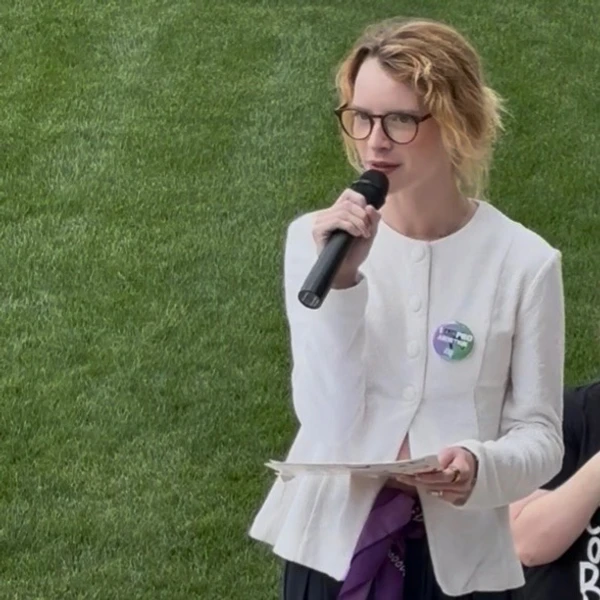
I started in health care with a love for helping people. What came next was shaped by the realization that equitable care cannot exist without changing the systems around it. My journey has been non-linear, marked by obstacles that taught me to keep moving, even when the path disappears. Stepping away from nursing school due to chronic illness became a driving force for a larger goal: to fight for care, dignity, and access through systems-level change.
I work where people and policy collide. Whether coordinating care in community spaces, supporting legislative research in the Missouri House or organizing for reproductive justice, I remain committed to challenging the systems that continue to exclude vulnerable populations.
With accountability, I move forward as an ambitious student who turns experience into action. As I continue my pursuits in acquiring an MSW, I will prioritize creating a Just future through intersectional, policy-driven work grounded in public health, science, and wisdom forged through adversity. I am not simply part of the generation redefining what social change looks like, I am here to lead it. I am grateful for consideration for financial support that would remove barriers and expand my capacity to learn, serve, and make my dreams a reality.
Education
Washington University in St Louis
Master's degree programMajors:
- Health Professions Education, Ethics, and Humanities
- Health Professions and Related Clinical Sciences, Other
- Public Policy Analysis
- Public Health
- Social Work
University of Missouri-Columbia
Bachelor's degree programMajors:
- Liberal Arts and Sciences, General Studies and Humanities
- Health Professions and Related Clinical Sciences, Other
Minors:
- Human Development, Family Studies, and Related Services
Miscellaneous
Desired degree level:
Master's degree program
Graduate schools of interest:
Transfer schools of interest:
Majors of interest:
- Public Health
- Social Work
- Health Professions and Related Clinical Sciences, Other
- Health Professions Education, Ethics, and Humanities
- Mental and Social Health Services and Allied Professions
- Clinical/Medical Laboratory Science/Research and Allied Professions
- Political Science and Government
- Legal Professions and Studies, Other
- Public Administration and Social Service Professions, Other
- Cell/Cellular Biology and Anatomical Sciences
Career
Dream career field:
Public Policy
Dream career goals:
To become a Macro-Level Social Worker, Policy Leader, and Public Health Educator who designs and advances equitable healthcare and reproductive justice systems at the state and national level, driving systemic change at the intersection of health care, public policy, and social justice.
Host
The Pasta Factory- Columbia, MO2016 – 20193 yearsRetail Associate
Speckled Frog Toys and Books2019 – 20223 yearsTeacher's Aide
Briarwood Early Learning Center2019 – 20212 yearsCamp Counselor
Country Day Summer Camp2020 – Present6 yearsPatient Service Representative
University of Missouri Health Care2022 – 20231 yearFull time Nurse Assistant (CTA-C)
University of Missouri Health Care2022 – 2022Choreographer
Columbia Public Schools: Battle High School Theatre Department2025 – 2025In-district staff/Policy Advisor
MO House of Representatives2026 – Present3 monthsPatient Coordinator
Lumia Med Spa2023 – Present3 years
Sports
Dancing
2008 – Present18 years
Research
Health Professions Education, Ethics, and Humanities
University of Missouri — Student Researcher2025 – 2025
Arts
Talking Horse
TheatreFun Home2023 – 2023
Public services
Volunteering
Spectrum Health Care — Student Intern/Medical Assistant2024 – 2025Volunteering
Yes on 3 Missouri — Volunteer: Canvassing2024 – 2024Advocacy
Abortion Action Missouri — Volunteer Strategy Team Leader2024 – PresentVolunteering
CoMo Mobile Aid — Volunteer with Pop-Up Med Clinic2024 – 2024Public Service (Politics)
MO House of Representatives — In-district staff/Policy Advisor/Intern2026 – Present
Future Interests
Advocacy
Politics
Volunteering
Philanthropy
Entrepreneurship
ADHDAdvisor Scholarship for Health Students
After surviving sexual assault early in college, I learned how quickly people are expected to move on, even when they are broken. Rather than care, resources, and protection, I was met with silence, disbelief and institutional failure. Years later, I learned that the same perpetrators continued their crimes, and that real consequences took nearly seven years. This is because many systems still value reputation over people.
A delayed ADHD diagnosis further transformed my understanding of myself and others. For years, I struggled without the resources I needed to succeed. To this day, I am constantly working through feelings of shame that often limit people with ADHD. Though I have found relief through therapy, medication, and lifestyle changes, ADHD will always impact my life. Additionally, neurodivergence and mental health are common "trendy" buzzwords seen in the media, erasing the painful realities of those who live with these unique struggles. Moreover, many people may never receive proper diagnoses, accommodations, or support, not because they lack effort, but because equitable access to care is still out of reach. They are left believing they are the problem, when in reality, the system is.
I have been open about my struggles, with an intention to bring awareness and representation to the continued harm that can almost always be prevented. Because of this, I became someone that others trusted with their fears, burnout, and hardships. In healthcare and academic spaces, peers and patients confided in me. In turn, I supported them through active listening, validation, and by helping them locate the resources that would best serve them. My goal is always to help people feel seen, believed, and empowered.
Through my own mental health struggles, I have encountered loss, redirection, and resilience that shaped my passion to fight for better conditions. I am pursuing a Master's degree in Policy and Political Social Work, where I plan to dismantle unjust systems, slow the spread of harmful misinformation, and build policy rooted in lived experience and research.
I do this because mental health is universal, whether spoken about or not. Mental health is still misunderstood and dismissed in so many facets of our society. Fighting for equitable, timely, individualized, and compassionate care is the only way forward. As a future leader in social change, I will continue to fight for better systems that prioritize education, well-being, genuine support, and access to mental health resources for all.
Priscilla Shireen Luke Scholarship
Helping others has always been central to who I am. Service is how I respond to what I have lost, what I have learned, and what I refuse to ignore.
A few years ago, I was driven nursing student whose dreams were lined by hospital halls and patient charts. I never imagined having to let go of that future when I suddenly became a patient myself, grieving the life I had worked so hard to build. Through that loss, I felt anger, grief, and eventually clarity. I am learning to trust a path that I did not choose, but one that chose me.
Along the way, I have also navigated experiences that reshaped how I understand vulnerability and power: through sexual violence, neurodivergence, and navigating care with stigmatized illnesses, I learned quickly that our current systems are not designed to protect everyone. Privilege has given me access to resources that helped me overcome these stressors, and this awareness has driven my commitment to dismantle the systems that fail those who face layered oppressions. This has reinforced my understanding that trust is the foundation for healing, justice, and meaningful social change.
Before this redirection, I served people through clinical care. As a CNA on a high-acuity floor and patient coordinator at a cancer clinic, I learned how to sit with people in fear, advocate for them when systems felt overwhelming, and how small, authentic moments of dignity can serve as a driving force for survival. With radical hospitality, I worked alongside unhoused individuals, veterans, and patients living with stigmatized illnesses, listening as they shared how often they felt like invisible, second-class citizens. Some of their stories mirrored barriers I had seen before, and sometimes even felt myself.
What I learned is that sincere connection begins with trust. In the wake of widespread misinformation, fear and doubt often overwhelm truth and unbiased education efforts. But when people feel seen, they become open to learning. I have witnessed how connection can soften resistance, how honesty can replace shame, and how trust creates space for conversations that once felt impossible. Service, to me, is not about having all of the answers, but about creating room for understanding.
Today, my service extends beyond individual care into community impact. Through my work with a reproductive justice advocacy organization, I bring similar compassion and empathy to organize, educate, and mobilize voters about bodily autonomy and complex policy issues. I speak with students, assist with outreach, and support efforts to protect access to care in a state where these basic rights are continuously under threat. This work has shown me that service is not limited to helping individuals through a single moment, but include changing the conditions that invite suffering in the first place.
I have been accepted into the University of Michigan's Master of Social Work (MSW) program, where I plan to focus on policy and political advocacy. I want lived experience, especially from those facing layered stressors such as illness, trauma, housing instability, and systemic barriers, to become the researched data that shapes future policy. I hope to help build systems that are more humane, accessible, and Just. I want to work where the decisions are made that determine who is protected, believed, and left behind.
Priscilla Shireen Luke's legacy is one of quiet courage and unwavering devotion to others. This spirit lives within my own steadfast commitment to service: choosing connection over comfort, refusing to look away, and allowing hope to persist, even when change feels out of reach.
No Essay Scholarship by Sallie
MastoKids.org Educational Scholarship
WinnerThis is not the life I dreamed of. I was supposed to become a nurse. I trusted my body to keep up with my ambition. It didn’t. Mast Cell Activation Syndrome (MCAS) changed everything. With the frightening, unpredictable symptoms I was experiencing, I made the painful decision to leave nursing school behind. The faculty warned me: “Once you leave, you’ll never come back.”
The words lingered, slowly unraveling the hope I was still holding onto. I shared the news with friends and family, though I hardly understood it myself. This illness was nearly invisible, yet affected every body system. Each doubtful glance and uncomfortable pause left me feeling like I had to justify my pain and choices.
I was now merely a witness to the upheaval of my life. Reactions, as I came to call them, arrived without warning: fatigue, dizziness, heart palpitations, rashes, nausea, swelling, and severe nerve pain. I needed answers. I dissected scholarly articles and joined online support groups. Each specialist referred me to the next. The appointments were rushed, tests were inconclusive, and I received more shrugs than answers.
They asked, “Why did you leave school? Was it the stress? You seem healthy enough.”
That gnawing urge to over-share always left a lump in my throat. Biting my tongue I’d think: Why in the world would I want to quit nursing school? I was the top of my class! I was almost done! I want to go back, why won’t you help me? I knew I had to advocate for myself, and refused to be ignored.
Eventually, I received the “triad” diagnosis: MCAS, POTS, and hEDS. But a diagnosis didn’t bring normalcy. The humidity of a Missouri summer, a single bite of parmesan, or walking past Bath and Body Works could trigger week-long flares. In time, I grieved what was, accepting life would never be the same. I refused to lament within the systems that failed vulnerable patients. I was ready to start changing them.
My experience as a patient and caregiver gave me unique perspectives. I started sharing excerpts of my own clinic notes in support groups to reach patients of all backgrounds, dispersing information that would otherwise be inaccessible. Many people who suffer from Mast Cell Diseases are never diagnosed, treated, or even seen. Layers of identity, such as race, gender, disability, and socioeconomic status, directly influence if patients feel believed, supported, and protected. These are not isolated moments, but systemic failures within our health care system.
My health journey forced me to reimagine my future, ultimately leading me to finding a new purpose, one grounded in impact, clarity, and hope. I was no longer limited to clinical spaces, but could exist at the intersection of policy, advocacy, and health care. This revelation led me to pursue a Master’s in Social Work (MSW) in the Policy Pathway at the University of Michigan. As the nation’s top-ranked social work program, U-M will equip me to transform systems that fail vulnerable communities by meeting people where they are, rather than demanding more than what they have. This scholarship would ease the financial burden of graduate school and allow me to continue the medical treatments that I rely on to learn and function every single day. This opportunity would be an investment in both my future, and the communities I hope to support.
MCAS may have taken the life I once dreamed of, but it became the catalyst for the work I now feel called to pursue. Thank you for considering my application and for supporting students whose dreams are reshaped, not diminished, by Mast Cell Diseases.