
Hobbies and interests
Advocacy And Activism
Business And Entrepreneurship
Community Service And Volunteering
Counseling And Therapy
Mental Health
Music
Mentoring
Social Work
Reading
Leadership
Psychology
Self-Help
Social Issues
Humanities
I read books multiple times per month
Lernard Lawley
1x
Finalist
Lernard Lawley
1x
FinalistBio
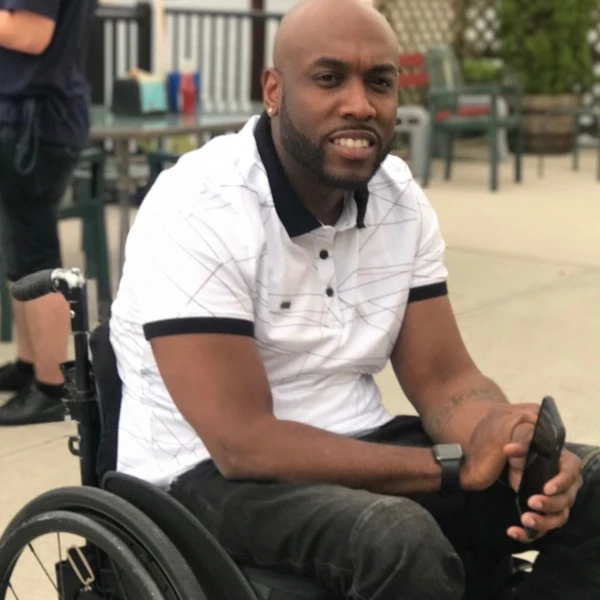
I am a father, graduate student, and disability advocate whose life was forever changed by a spinal cord injury that left me paralyzed from the waist down. After my injury, I had to rebuild my life physically, emotionally, and mentally while learning firsthand how inaccessible the world can be for people with disabilities. That experience gave me a deeper purpose.
I earned my bachelor’s degree in Business Administration and later pursued my MBA while maintaining a 4.0 GPA during one of the most challenging seasons of my life. My education, resilience, and lived experience have shaped my commitment to service, advocacy, and leadership.
I am now pursuing a career in social work and mental health so I can support individuals and families facing disability, trauma, poverty, and barriers to access. My goal is to become the kind of professional who listens without judgment, connects people to resources, and helps others feel seen, respected, and empowered. I believe my story is not just about what I survived, but about how I can use that experience to make a positive impact in the lives of others.
Education
Fordham University
Master's degree programMajors:
- Social Work
Minors:
- Mental and Social Health Services and Allied Professions
Capella University
Master's degree programMajors:
- Business Administration, Management and Operations
Southern New Hampshire University
Bachelor's degree programMajors:
- Business Administration, Management and Operations
Minors:
- Finance and Financial Management Services
Miscellaneous
Desired degree level:
Master's degree program
Graduate schools of interest:
Transfer schools of interest:
Majors of interest:
Career
Dream career field:
Mental Health Care
Dream career goals:
Mental Health Advocate
Direct Support Professional
HeartShare Human Resources of New York2008 – 20157 yearsContractor
The Lawley Group, LLC2022 – 20253 years
Sports
Crossfit
Intramural2014 – Present12 years
Research
Business Operations Support and Assistant Services
The Lawley Group, LLC — Primary Researcher2022 – 2023
Arts
We All In Clothing
Design2007 – Present
Public services
Volunteering
LP Fam's Youth Organization Inc. — Volunteer Counselor2018 – PresentVolunteering
crisis text hotline — Counselor2026 – Present
Future Interests
Advocacy
Volunteering
Philanthropy
Entrepreneurship
Bulkthreads.com's "Let's Aim Higher" Scholarship
The gym was full of equipment, but almost none of it was built for me. Machines stood in rows. Treadmills moved. People lifted, pushed, pulled, and trained without thinking twice about whether they belonged in that space. But from my wheelchair, I saw something different. I saw benches I could not safely transfer to, machines I could not access, layouts too tight to move through, and a fitness world that seemed to forget people like me existed. That is what I want to build: an accessible gym designed specifically for people with disabilities.
After my spinal cord injury left me paralyzed from the waist down, I learned how difficult it can be to stay active in a wheelchair. People often assume the hardest part of disability is not being able to walk, but there are other challenges that come with it. Sitting for long periods affects your body. Weight gain becomes easier because movement is limited. Muscle strength, circulation, energy, and confidence can all suffer. Even when you want to work out, there are very few spaces built around accessibility, safety, and dignity.
I want to build a gym where wheelchair users and people with physical disabilities do not feel like an afterthought. This space would include adaptive strength equipment, wheelchair-accessible cardio machines, arm bikes, resistance training stations, transfer-safe benches, open floor space, trained staff, and programs designed for different ability levels. It would also include education on nutrition, mental health, independence, and confidence. But I do not want this gym to only be about exercise. I want it to be about community.
Many people with disabilities deal with isolation, depression, and the feeling that life became smaller after injury or illness. An accessible gym could become a place where people rebuild more than their bodies. They could rebuild confidence, friendships, discipline, and belief in themselves. It would be a space where people are not stared at, pitied, or treated like they are limited. They would be surrounded by others who understand the fight.
My education will help me build this future. With my business background and my goal of pursuing social work and mental health, I want to combine fitness, advocacy, and emotional support into one mission. I want to create a place that helps disabled people improve their health while also reminding them that their lives still have strength, purpose, and possibility.
The Bulkthreads.com “Let’s Aim Higher” Scholarship would help me continue my education and move closer to building something that can serve my community. I do not just want to build a gym. I want to build access. I want to build confidence. I want to build a space where people with disabilities can aim higher because, finally, the room was built with them in mind.
Arin Kel Memorial Scholarship
I did not know that a simple text message would become one of the last promises I ever made to my sister. I was in college when I found an old picture of us from my elementary school graduation. I sent it to her with excitement, telling her that when I graduated from college, we had to retake the same picture. Same brother and sister. Same love. A different graduation. A different chapter. In my mind, she would be there, smiling beside me, proud of how far I had come. But shortly after that message, she was gone.
Losing my sister while I was still in undergrad broke something in me that is hard to explain. She was not just my sister. She was my support system, my encourager, and one of the people who believed in me when my life changed after my spinal cord injury. She was an LPN nurse, so caring for people came naturally to her. But with me, it was deeper than her profession. She advocated for me because she loved me.
If I could start a business with my sister, it would be a disability support and advocacy organization for people who are adjusting to life after injury, illness, or major physical changes. It would help people who do not have someone like my sister in their corner. The organization would connect clients with resources, mental health support, accessibility guidance, care coordination, family education, and advocacy. It would be built for people who feel overwhelmed, forgotten, or unsure how to rebuild their lives after everything changes.
My sister was the oldest of ten, and leadership came naturally to her. She knew how to show up for people. After I became paralyzed, she helped me see that I still had a future. Her support is one of the reasons I decided to pivot my career toward social work. She made me want to advocate for others the way she advocated for me.
Together, I believe we would have created something that combined her nursing background with my lived experience, business education, and future social work training. She would have brought medical knowledge, compassion, and the heart of a caregiver. I would bring the perspective of someone who understands disability from the inside and wants to build systems that help people feel seen and supported.
The Arin Kel Memorial Scholarship would support my education and help me move closer to building the kind of work my sister would have been proud of. I cannot retake that graduation picture with her now, but I can still honor what she meant to me.
If I could start a business with my sister, it would be one that carries her spirit forward: helping people survive the hardest chapter of their lives and reminding them that they do not have to face it alone.
Learner Mental Health Empowerment for Health Students Scholarship
There were nights when the assignment on my screen was not the only thing I was fighting to finish. The house would be quiet, my body would be in pain, and my mind would be full of thoughts I did not always know how to silence. I would sit there staring at my laptop, trying to focus, while carrying grief, depression, disability, fatherhood, and the pressure of trying to rebuild my life. In those moments, I learned that mental health is not separate from education. It follows you into the classroom, into every assignment, and into every goal you are trying to reach.
Mental health is important to me as a student because I know what it feels like to struggle silently while still trying to succeed. I lost my mother to a drug overdose when I was six years old, and that loss affected me long before I understood words like trauma, grief, or depression. Later in life, after a spinal cord injury left me paralyzed from the waist down, I faced mental health challenges in a deeper way. I had to adjust to chronic pain, life in a wheelchair, accessibility barriers, and the emotional weight of losing the life I once knew.
During one of the darkest times in my life, I used alcohol to numb what I did not know how to face. But I have now been sober for three years. Going back to school, counseling, and volunteer work helped me stay on track and gave me a reason to keep moving forward. School became more than a place to earn a degree. It became part of my healing. It gave me structure, purpose, and proof that I could still build something meaningful.
As a student, I believe mental health matters because people cannot reach their full potential when they are suffering in silence. A person can be intelligent, ambitious, and capable, but still feel overwhelmed by pain they never talk about. That is why support, understanding, and open conversations are so important. No student should feel ashamed for needing help.
I advocate for mental health in my community by being honest about my own journey and by supporting others who are going through difficult moments. I volunteered as a Crisis Text Line counselor, where I learned how powerful it can be to simply listen without judgment. That experience showed me that many people do not need someone to have all the answers. Sometimes they need someone to stay present, validate their feelings, and remind them they are not alone.
I also advocate through the way I speak with my family, my children, and people around me. I try to break the idea that mental health is something to hide. I want my children to understand that strength is not pretending everything is okay. Strength is being honest, asking for help, and choosing healing even when it is hard.
My future goal is to pursue a career in social work and mental health so I can help others facing trauma, addiction, disability, grief, and life challenges. I want to turn my lived experience into service. I know what it feels like to be lost, but I also know what it feels like to find purpose again. That is why mental health will always matter to me, not just as a student, but as a father, advocate, and future professional.
Lost Dreams Awaken Scholarship
Recovery means choosing my future even on the days when my past tries to pull me back. For me, recovery is not just about putting the bottle down. It is about facing the pain I was trying to escape. After my spinal cord injury, my life changed in ways I was not prepared for. I was dealing with paralysis, chronic pain, depression, loss, and the feeling that the man I used to be was gone. During one of the darkest periods of my life, alcohol became a way to numb what I did not know how to talk about.
But three years ago, I made a decision to stop running from my pain and start rebuilding my life. Going back to school became part of my recovery. Counseling helped me understand myself instead of hiding from myself. Volunteer work gave me purpose and reminded me that my experience could help someone else.
Recovery means discipline. It means honesty. It means waking up and choosing not to go backward. It means being present for my children, protecting my peace, and building a life I do not need to escape from.
I am still healing, but I am not the same person I was three years ago. Recovery gave me my focus back, my purpose back, and the belief that my story can still become something meaningful.
Elijah's Helping Hand Scholarship Award
The glass was in my hand before I realized what I was really reaching for. It was not just the alcohol. It was escape. It was silence. It was a way to numb everything I did not know how to face. By that point in my life, I had already survived loss, grief, and a spinal cord injury that left me paralyzed from the waist down. But surviving something physically does not mean you are healed mentally. Sometimes the body keeps going while the mind is still stuck in the wreckage.
Mental health has impacted my life in ways I did not always understand at first. I was six years old when my mother died from a drug overdose. At that age, I did not have the words for trauma, addiction, grief, or depression. I only knew my mother was gone, my father was left to raise me and my siblings, and life felt different from the families I saw around me. I carried questions for years. Why did it happen? Could anything have changed? What would my life have looked like if she had lived?
As I got older, I learned how easy it is to bury pain instead of talking about it. In many families and communities, people are taught to be strong, keep moving, and not speak too much about what hurts. I learned how to function while carrying things I had not fully processed. But pain does not disappear just because you ignore it.
Later, after my spinal cord injury, my mental health reached one of its lowest points. I lost the life I knew. I had to adjust to chronic pain, life in a wheelchair, accessibility barriers, and the fear that I would never be the same again. My marriage ended after my injury, and I felt like I had lost my family, my identity, and my purpose all at once. That was when drinking became a way to avoid the pain instead of facing it. But I did not want that to be the way my story continued.
Through counseling, rehabilitation, and the responsibility I felt as a father, I slowly began to rebuild myself. I learned that asking for help is not weakness. I learned that healing takes honesty. I learned that mental health is not something people should have to hide or be ashamed of. Sometimes the strongest thing a person can do is admit they are not okay and still choose to keep going.
My experience with mental health has shaped the career I want to pursue. I want to continue my education in social work and mental health so I can support people who feel overwhelmed, forgotten, or alone. I know what it feels like to sit in darkness and wonder how life will ever feel normal again. I also know how powerful it can be when someone listens without judgment.
Volunteering as a Crisis Text Line counselor also showed me how many people are silently fighting battles that others cannot see. Sometimes people do not need perfect answers. They need patience, compassion, and someone willing to stay present with them in a difficult moment.
Mental health has taught me that pain can either isolate you or push you toward purpose. I cannot change what I have lived through, but I can use it to become someone who helps others feel seen, heard, and supported. That is the future I am working toward.
Ethel Hayes Destigmatization of Mental Health Scholarship
The hardest thoughts usually came when everything was quiet. Not during the day, when people could see me pushing forward. Not when I was around family, trying to look strong. It was at night, when the noise settled, when I was alone with the memories, the questions, and the pain I did not always know how to say out loud. That is when I understood that mental health is not always something people can see. Sometimes it is the weight you carry in silence while the world thinks you are doing fine.
My experience with mental health began early, before I even had the words to understand it. I was six years old when my mother died from a drug overdose. At that age, you do not understand addiction, grief, or trauma. You only understand that someone who was supposed to come home is gone. You understand that the house feels different. You understand adults whispering, faces looking heavy, and a pain you cannot explain.
Losing my mother affected me in ways I did not fully recognize until later in life. I grew up with questions that followed me. Why did it happen? Could anything have been different? What would my life have looked like if she was still here? My father raised me and my siblings after her passing, and I respect him deeply for that. He carried a family through pain while dealing with his own grief. Watching him keep going taught me strength, but it also showed me how often people suffer quietly because they feel they have no choice.
For a long time, I did not know how to talk about pain. In many families and communities, mental health is not always discussed openly. People tell you to be strong, keep going, pray about it, or move on. Those things may come from love, but they do not always give a person space to be honest about what they are feeling. I learned to hold things inside. I learned how to function while hurting. But pain that is buried does not disappear.
Later in life, after a spinal cord injury left me paralyzed from the waist down, I faced mental health in a way I could no longer ignore. My body changed, my independence changed, and my future felt uncertain. I had to adjust to chronic pain, life in a wheelchair, accessibility barriers, and the loneliness that can come when people do not understand what you are going through. I was no longer just grieving my mother. I was grieving the life I used to have.
There were moments when I felt lost. After my injury, my marriage ended, and I had to face the pain of losing the family life I once knew. I struggled with depression, anger, sadness, and the feeling that my identity had been taken from me. I started drinking daily during one of the darkest periods of my life, trying to escape what I was feeling instead of facing it. It took time, counseling, rehabilitation, and honesty for me to begin rebuilding myself.
That journey changed my relationships. It made me value the people who stayed, checked on me, and listened without judging. It also made me more aware of how important it is to be emotionally present for my children. One of my biggest fears after becoming disabled was whether I could still be the father they needed. Over time, I learned that being a father is not only about what I can physically do. It is about love, consistency, honesty, and showing them that even when life breaks you down, you can still get back up in a different way.
My experience with mental health has shaped my understanding of the world. I now understand that people are often fighting battles no one can see. Some people are grieving. Some are depressed. Some are overwhelmed. Some are trying to survive trauma while still showing up for school, work, family, and life. This has made me more compassionate and less judgmental. It has taught me that sometimes the strongest people are the ones silently asking for help.
It has also shaped my goals. I want to continue my education and build a career in social work and mental health because I know what it feels like to need support. I want to work with people facing trauma, grief, addiction, disability, and family hardship. I want to help create spaces where people can speak honestly about what they are going through without shame. I want to be part of breaking the stigma, especially in communities where mental health has been misunderstood or ignored for too long.
I cannot change losing my mother. I cannot erase the pain of my injury or the dark moments I went through afterward. But I can choose what I do with everything I survived. My goal is to turn that pain into purpose by helping others feel seen, heard, and supported.
Mental health has taught me that healing is not about pretending nothing happened. Healing is learning how to live with the truth, ask for help, and keep building a future anyway. That is the kind of future I am working toward, not just for myself, but for the people I hope to serve.
Jules Ehlers-Danlos Syndrome Resilience Scholarship
Some nights, the assignment was not the hardest thing in front of me. The hardest thing was my own body. There were nights when pain made it difficult to focus, when sitting up felt exhausting, and when my mind wanted to keep going but my body demanded rest. I would look at my laptop, knowing the work still had to be done, and remind myself that my education was bigger than that one moment. It was bigger than the pain. It was bigger than the limitations. It was part of the future I was still fighting to build.
I live with a permanent spinal cord injury that left me paralyzed from the waist down. Along with the mobility challenges, I also deal with chronic pain and the daily reality of managing a body that no longer works the way it once did. This condition has affected every part of my life, including my education. School is not just about attending class or completing assignments for me. It also means planning around pain, fatigue, accessibility, medical needs, and the emotional weight of living with a chronic condition.
There have been times when my body made school harder than I expected. Some days, I had to push through discomfort just to complete basic tasks. Other days, I had to give myself grace and accept that resilience does not always mean moving fast. Sometimes resilience means opening the laptop again after a difficult day. Sometimes it means submitting the assignment even when no one sees what it took to finish it.
My chronic condition has taught me discipline in a way nothing else could. It taught me how to keep going when life is uncomfortable, how to adjust when things do not go as planned, and how to stay focused on my goals even when my circumstances are difficult. I have learned that strength is not about pretending everything is fine. Strength is being honest about the struggle and still refusing to give up.
One of the biggest steps I have taken to remain resilient is continuing my education despite the challenges of disability and chronic pain. I returned to school because I wanted to create a better future for myself, my children, and the people I hope to serve. Education became a way for me to rebuild my identity and prove that my condition does not get to decide the limits of my life.
My goal is to pursue a career in social work and mental health. I want to work with people who are facing disability, trauma, grief, poverty, and other barriers that can make life feel overwhelming. My own experience has helped me understand how important it is to have support, compassion, and someone who truly listens. I want to use both my education and my lived experience to help others feel seen, respected, and capable of moving forward.
Receiving this scholarship would help reduce the financial burden of continuing my education. It would allow me to focus more on my academic goals and less on the stress of how to pay for school. More importantly, it would support a student who is determined to turn pain into purpose.
Trinity Lodge 127 PH Scott Heckstall Scholarship
There were nights when my body hurt so badly that even opening my laptop felt like lifting a weight. The screen would glow in front of me while the rest of the house was quiet. My pain was loud. My doubts were even louder. Part of me wanted to close the computer, turn away from the assignment, and tell myself I had already been through enough. But every time I looked at that blank screen, I saw more than schoolwork. I saw my children. I saw my future. I saw the version of myself I was still fighting to become.
My name is Lernard C. Lawley Jr., and my life has been shaped by loss, fatherhood, disability, and determination. I grew up in New York and learned early that life can change without warning. I lost my mother when I was six years old, and my father raised me and my siblings in a single-parent household. That experience forced me to understand responsibility and resilience at a young age.
Later in life, I faced another challenge that changed everything. A spinal cord injury left me paralyzed from the waist down. In one moment, I had to learn how to live again, not only physically, but mentally and emotionally. I had to adjust to life in a wheelchair, chronic pain, accessibility barriers, and the reality that the world is not always built for people with disabilities. But I refused to let my injury become the end of my story.
I went back to school because I knew education could help me rebuild my life and create a future with purpose. Maintaining strong grades while dealing with disability, pain, and personal responsibilities has not been easy, but it has shown me what I am capable of. My academic journey represents more than earning credits or completing assignments. It represents discipline, growth, and my refusal to let hardship decide my future.
My future goal is to pursue a career in social work and mental health. I want to work with individuals and families facing trauma, disability, poverty, grief, and barriers that make them feel forgotten. My own life has taught me how important it is to have someone listen, advocate, and believe in you when you are at your lowest point. Counseling, support, and rehabilitation helped me begin rebuilding myself, and I want to use my education to become that kind of support for others.
I am especially passionate about serving people with disabilities and special needs because I understand what it feels like to fight for access, independence, and dignity. I know what it feels like to be overlooked because of what people see on the outside. I also know how powerful it can be when someone treats you like a whole person, not just a condition or circumstance.
My goal is to use my career to create positive impact by helping people feel seen, supported, and empowered. Whether I work in counseling, social work, advocacy, or community-based services, I want to use both my lived experience and my education to help others navigate difficult moments and build better futures.
This scholarship would help reduce the financial burden of higher education and allow me to stay focused on my goals. I am not pursuing a degree just for myself. I am pursuing it for my children, my community, and the people I hope to serve one day.
My life has not been easy, but it has given me purpose. I want to turn everything I have survived into a career built on service, compassion, and impact.
Frank and Patty Skerl Educational Scholarship for the Physically Disabled
The room was bright, cold, and filled with voices I did not recognize. Machines were beeping. Doctors were moving around me. My body felt heavy, something had to be wrong. I tried to move my legs, but nothing happened. In that moment, everything slowed down. I was no longer thinking about the night before. I was thinking about one terrifying question: What happened to me?
That moment was the beginning of my life as part of the disabled community, and it changed the way I see the world forever. It showed me that disability is not only about the body. It is about access, empathy, independence, and whether society gives people a fair chance to live with dignity. Because of my experience, I plan to use my future career in social work and mental health to advocate for people with disabilities, special needs, and others who are often overlooked by the systems meant to support them.
I became paralyzed from the waist down after suffering a spinal cord injury. In a matter of seconds, the life I knew changed. One day I was walking, moving freely, and living without thinking about my body. The next, I was learning that I might never stand on my own two feet again.
Before my injury, I did not think about ramps, narrow doorways, elevators, accessible bathrooms, transportation, or whether a home could fit a wheelchair. I did not understand how much planning it takes just to go somewhere. I did not understand how frustrating it feels when the world treats basic access like an extra instead of a necessity.
One of the hardest lessons came when I spent nearly a year in the hospital, not only because of my injury, but because my home was not wheelchair accessible. That experience changed my understanding of disability. My wheelchair is not what makes me feel disabled. The real barriers are the lack of access, lack of resources, lack of empathy, and the way society often overlooks people with physical disabilities until we are forced to fight for what should already be available.
Being part of the disabled community also changed how I see people. I now understand that everyone is carrying something, even when the world cannot see it. Some pain is physical. Some pain is emotional. Some people are fighting battles behind closed doors and still trying to smile in public. Living with paralysis has made me more patient, more compassionate, and more aware of how important it is to treat people with dignity.
There are moments when being disabled feels lonely. People stare. Some look away. Some speak to me differently, as if my wheelchair changed my mind, my ambition, or my worth. But those moments have also strengthened me. They taught me that I cannot allow the world’s limited view of disability to define how I see myself.
I plan to use this experience to positively impact my future by pursuing a career in social work and mental health. I want to serve people with disabilities, people with special needs, families in crisis, and individuals who feel forgotten by systems that are supposed to help them. I want to bring both education and lived experience into my work so I can advocate for better access, stronger support, and more dignity for people facing barriers.
My spinal cord injury changed my life, but it did not end my purpose. It opened my eyes to a world that still needs change. I want to be part of that change by turning my pain into service, my experience into advocacy, and my survival into impact.
Marie J. Lamerique Scholarship for Aspiring Scholars
One of the most challenging moments of my life happened when I was only six years old. That was the age I lost my mother. At six years old, you do not fully understand death. You know something is wrong, but you do not yet have the words for it. I remember life changing around me before I could even understand what had been taken from me. One day, I had a mother. Then suddenly, I had memories, questions, and a space in my life that no one else could completely fill.
After my mother passed away, my father was left to raise me and my siblings. He became both parents in a house where grief was already heavy. It was not just the loss of my mother that shaped my childhood. My family had already been through pain that most people never see. I had twin sisters who died when they were only two years old, playing in a locked car on a hot summer day. I also had another set of twin siblings who were placed for adoption when my mother because my father wasn't able to raise all of us. I often wish i was the one he put up for adoption. Later in life, I was blessed to reconnect with them, but as a child, I grew up with pieces of my family missing and questions I could not answer.
One specific moment that challenged me was realizing that my family was not going to look like the families I saw around me. I did not have my mother at school events, at home, or in the moments when a young boy needs that comfort. I had my father, who was doing everything he could, but I could still feel the absence. I remember watching other children with their mothers and trying not to show how much it hurt. I did not want people to feel sorry for me, but deep down, I knew my life was different.
In that moment, I had a choice, even if I did not understand it that way at the time. I could let the pain make me bitter, or I could keep going. As I got older, I chose to keep going. I learned how to carry grief without letting it destroy me. I learned how to appreciate the parent who stayed and sacrificed. I learned that family is not always simple, but it is still worth fighting for. Reconnecting with my siblings who had been adopted later in life taught me that what is broken does not always have to stay broken. Sometimes healing comes years later, but it still matters.
Growing up in a single-parent household as a Black male shaped the way I see responsibility. It made me grow up faster. It taught me that life is not always fair, and that nobody is coming to hand you a future. You have to build one. My upbringing gave me pain, but it also gave me drive. It made me determined to become the kind of man, father, student, and future professional who does not quit when life becomes difficult.
Today, I approach my future with purpose because I know what it feels like to lose stability early in life. I know what it feels like to have family circumstances shape your identity before you are old enough to understand them. That is part of why education means so much to me. Education is not just a degree. It is a way to create stability, honor the people I lost, and build a future that my children and my family can be proud of.
My story is not perfect. It includes loss, separation, grief, and unanswered questions. But it also includes survival, reconnection, faith, and determination. Losing my mother at six years old changed my life, but it did not end my future. It pushed me to become stronger, more focused, and more committed to turning my pain into purpose. This scholarship would support a student who has had to overcome family hardship, but who is still determined to build something meaningful from everything he has been through.
Charles B. Brazelton Memorial Scholarship
My awkward thing is that I often enter a room and people notice my wheelchair before they notice me. Sometimes it is the quick stare that someone tries to hide. Sometimes it is the way people suddenly do not know whether to hold the door, move out of the way, offer help, or pretend they do not see me at all. Sometimes people talk to me differently, like my chair somehow changed my intelligence, personality, or ambition. I have had people speak over me, avoid eye contact, or treat me like I am fragile before they even know my name.
At first, that felt uncomfortable. Honestly, it still does sometimes. It is awkward being reminded that you stand out before you even get the chance to introduce yourself. But over time, I learned that standing out does not have to be a weakness. Sometimes the thing that makes you different becomes the very thing that gives you purpose.
Before my spinal cord injury, I did not think deeply about accessibility, disability, or how much strength it takes for people to move through a world that was not built with them in mind. I was a father, a worker, and someone who expected life to keep moving the way it always had. Then everything changed. I had to learn how to live again, not just physically, but mentally and emotionally.
Being in a wheelchair forced me to see life from a different perspective. It showed me how quickly people can be judged by what others see on the outside. It also showed me how many people are carrying quiet battles that the world does not fully understand. That experience changed the way I look at people. It made me more patient, more aware, and more committed to helping others feel seen.
What makes me stand out is not only my wheelchair. It is the fact that I kept going after life changed in a way I never expected. I went back to school. I pushed myself academically. I became more focused on my future and more serious about the kind of impact I want to make. I am pursuing a career in social work and mental health because I want to serve people who are overlooked, misunderstood, or counted out because of their circumstances.
My awkward thing has become part of my strength. I know what it feels like to be different. I know what it feels like to walk into a space and wonder if people will see your value. Because of that, I want to build a career where I help others recognize their own worth, especially people dealing with disability, trauma, violence, loss, or barriers they did not choose.
I may stand out because of my wheelchair, but I want people to remember me for my resilience, my drive, and my purpose. Life has taught me that being different is not something to hide from. Sometimes being different is what prepares you to make a difference.
Ruthie Brown Scholarship
Student loan debt is something I think about seriously because I know how much education can change a person’s life, but I also know how heavy debt can become when you are already trying to rebuild your future. As an adult learner, a father, a working student, and a person living with a permanent spinal cord injury, I cannot look at college costs lightly. Every decision I make about school has to be responsible, planned, and connected to a real purpose.
I am not going back to school just to earn another degree. I am pursuing graduate education because I want to build a career in social work and mental health, serving people with disabilities, special needs, trauma, and barriers that are often ignored. My lived experience has taught me that people do not just need services; they need someone who understands what it feels like to fight through pain, loss, limited access, and uncertainty while still trying to keep going.
At the same time, I know that purpose does not erase the cost of education. Graduate school is expensive, and I do not want to put myself or my family in a position where student loan debt follows me for decades. That is why I am working to address my current and future debt in every way I can. I completed the FAFSA, I am applying for scholarships, and I am seeking disability-related educational support through programs such as vocational rehabilitation. I am also choosing online programs because they reduce unnecessary costs connected to transportation, housing, and accessibility barriers. For me, online education is not just convenient; it is a realistic and responsible way to continue school while managing my disability and my responsibilities.
I am also being careful about borrowing. I understand that loans can help open the door to opportunity, but they also have to be repaid. My plan is to accept only what I truly need, continue searching for grants and scholarships, and use my education to move into a stable career where I can support myself, provide for my family, and serve my community. I do not want to depend only on loans if there are opportunities to earn support through scholarships that recognize ambition, resilience, and need.
My journey has not been easy. After becoming paralyzed, I had to rebuild my life physically, mentally, and emotionally. There were moments when I questioned who I was and what my future would look like. But I kept going. I went back to school, stayed focused, and proved to myself that my circumstances did not have to define my outcome.
This scholarship would help reduce the amount of debt I would need to take on and allow me to focus more fully on my education and career goals. More importantly, it would support someone who is not only trying to earn a degree, but trying to turn lived experience into service.
I am working to address student debt by being intentional, disciplined, and proactive. I am applying for scholarships, using available resources, choosing accessible education, and pursuing a career that can create long-term stability. My goal is not just to avoid debt. My goal is to build a future where my education becomes a tool for independence, impact, and service.
Special Needs Advocacy Inc. Kathleen Lehman Memorial Scholarship
It took losing the life I once knew for me to understand how much the world still fails people with disabilities and special needs. Before my spinal cord injury, I moved through life without thinking about ramps, doorways, transportation, accessible housing, or how hard it can be to ask for help and still want to feel independent. I was a father, a provider, and a man who believed tomorrow would always look like yesterday. Then everything changed. I woke up in a hospital bed unable to feel my legs, and the first thing I thought about was not myself. I thought about my children. I wondered how I was supposed to protect them, provide for them, and still be the father they needed when I could no longer stand on my own two feet. That moment changed my body, but it also changed my purpose.
Living with a disability has taught me that the hardest barriers are not always physical. Sometimes the real barriers are the lack of empathy, the lack of access, and the way people with disabilities or special needs are treated like an afterthought. I spent nearly a year in the hospital, not only because of my injury, but because my home was not wheelchair accessible. That experience showed me that disability is not just about a medical condition. It is also about the systems, buildings, attitudes, and resources that either include people or shut them out.
That is why I am pursuing a career in social work and mental health. I want to serve people who know what it feels like to be overlooked, misunderstood, or forced to fight for basic support. I want to work with individuals with disabilities, children with special needs, families in crisis, and people who are carrying pain they may not know how to explain. My goal is not just to help people survive difficult circumstances. I want to help them feel seen, respected, and capable of building a future.
My own journey has not been easy. I have lived through paralysis, chronic pain, loss, depression, and the process of rebuilding my life piece by piece. Counseling and rehabilitation helped me find myself again, and that is part of why this field matters so much to me. Sometimes people do not need someone to fix everything. Sometimes they need someone to listen, believe them, and remind them that their life still has value.
I plan to make a positive social impact by becoming the kind of professional who brings lived experience, education, and compassion into every space I serve. I want to advocate for better access, connect families to resources, support mental health, and help people with disabilities and special needs move through the world with more dignity and less isolation.
My story is not perfect. But it is real. And if what I have survived can help someone else feel less alone, then my pain becomes more than something I went through. It becomes part of my purpose.