Hobbies and interests
Exercise And Fitness
Mental Health
Art
Art History
Bodybuilding
Reading
Adult Fiction
I read books multiple times per month
leonardo capovilla
1x
Finalistleonardo capovilla
1x
FinalistBio
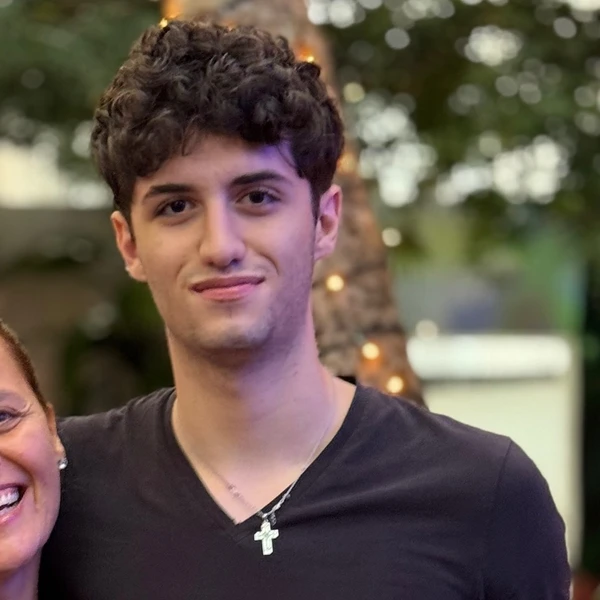
I’m Leonardo Souen Capovilla, a Fine Arts student at Pratt Institute, New York. Art has been a lifeline for me — a powerful medium of healing after the traumatic loss of my best friend during adolescence. Since then, drawing and painting have helped me process grief, express emotion, and find purpose.
I received a 30% scholarship from Pratt, but I am currently seeking funding to help cover the remaining tuition. As a permanent resident of the U.S., I’m committed to continuing my education and artistic growth.
My work explores the intersection of memory, emotion, and symbolism. I believe that art not only saves lives — it gives them deeper meaning.
I'm applying for scholarships to make it possible for me to keep creating, learning, and eventually giving back through my work as an artist.
Education
Design and Architecture Senior High School
Bachelor's degree programMiscellaneous
Desired degree level:
Bachelor's degree program
Graduate schools of interest:
Transfer schools of interest:
Majors of interest:
- Visual and Performing Arts, General
Career
Dream career field:
Arts
Dream career goals:
My long-term goal is to use art not only as a personal form of expression, but as a powerful tool for healing.
Sports
Bodybuilding
2018 – 20257 years
Arts
Dash school FL
Visual Arts2024 – 2024
Public services
Volunteering
Miami Dade shelter — Take care2022 – 2024
Future Interests
Entrepreneurship
Bulkthreads.com's "Let's Aim Higher" Scholarship
Art saved my life. After losing my best friend to suicide, I spiraled into a deep depression. For months, I couldn’t see a future. I stopped wanting to live, and in my darkest moments, I turned to self-harm. My mother, desperate to pull me out of that abyss, turned my bedroom into a small art studio. That space, filled with canvases and silence, became my sanctuary. I painted every day. I cried through the brushstrokes. My grief poured into portraits that captured pain, loss, and eventually—healing.
The piece that changed everything was a hyperrealistic portrait of my friend as an angel. When I handed it to her mother, we both cried. It wasn’t just a drawing—it was connection, remembrance, and peace. That moment showed me the power art has to heal not just the artist, but the viewer as well.
Now a student at Pratt Institute in New York, I’m honing my skills in Fine Arts with a focus on portraiture and realism. My dream is to create spaces—physical and digital—where people can experience emotional release and reflection through art. I want to build traveling exhibits that feature the work of young artists who have faced mental health struggles, turning their pain into beauty and their stories into bridges for empathy and understanding.
Although I plan to continue building my life and career in the United States, I carry a deep connection to my home country, Brazil—a nation marked by staggering social inequality. I hope to return there periodically to lead community-based art initiatives, offering creative opportunities to underprivileged youth and using art as a tool for social transformation.
This scholarship would allow me to focus more deeply on my education without the crushing weight of financial stress. But more importantly, it would be a vote of confidence in a young artist who once almost gave up—but chose to fight, with color and canvas as his weapons. I want to spend my life creating work that inspires others to do the same.
Diane Amendt Memorial Scholarship for the Arts
Art has been with me since before I even knew what it meant to be an artist.
When I was very young, my mother noticed something in me—an unusual way of observing faces, the need to capture emotion in lines. She enrolled me in a small after-school art class where I was free to experiment, imagine, and explore. That early exposure did more than improve my drawing skills—it gave me a language. A way to process the world, even when I didn’t yet understand it.
Years later, that silent language became a lifeline.
At 16, I experienced the most devastating loss of my life. My best friend died by suicide. I was the last person to see her—she placed her favorite cap on my head, said goodbye, and I didn’t realize what was about to happen. The shock broke me. I shut down emotionally and mentally. I could no longer attend high school in a traditional setting. For two years, I studied through a program called Hospitalized Home School, designed for students experiencing severe psychiatric trauma. During that time, I lost touch with nearly everything—except art.
My mother, quietly and lovingly, turned a room in our home into an art studio. She didn’t pressure me to speak or explain. She simply gave me space, and paper, and tools. In that silence, I began to draw again. The pieces I made were dark, honest, and filled with grief. But then one day, I drew my friend as an angel. I gave the drawing to her mother. She cried. So did I. It was the first moment I felt something real again—not just sadness, but connection. That’s when I knew that art wasn’t just a talent. It was healing. It was human.
Eventually, I returned to my former high school just in time for graduation, where I was honored with a state award for a public design project I created. Today, I study Fine Arts at Pratt Institute in New York, focusing on realistic portraiture. I paint faces—because to me, every face is a story. A life. A message.
Art saved my life. And I hope to use it to reach others the way it reached me.
I’m deeply grateful for the opportunity to apply for the Diane Amendt Memorial Scholarship. Her dedication to nurturing creativity in children reminds me of the love and vision my mother had for me. Thank you for considering my story and for honoring the power of art in education and healing.
Terry Masters Memorial Scholarship
I’m truly honored to apply for a scholarship that celebrates the life and legacy of Terry Masters. His love for nature, light, and the beauty in ordinary moments deeply resonates with my own artistic journey. I’m grateful for the opportunity to share how the world around me inspires my work, and I hope to carry forward the spirit he embodied.
The world outside has always spoken to me—not in words, but through shadow, movement, and light. I find beauty in quiet details: the reflection of trees in a puddle, the softness of early morning air, or the stillness of a city street at dusk. These ordinary scenes feel rich with emotion and story, and they often become the heart of my paintings.
I began creating art during one of the hardest periods of my life, after the sudden loss of my best friend. I withdrew from school and from people. My mother quietly set up a small studio at home, and it was there I began to draw again. But it wasn’t until I stepped outside—into the openness of the natural world—that I felt truly alive.
Painting outdoors helped me reconnect—with myself, with memory, and with my surroundings. Whether I’m sketching trees in a park or watching the colors of the sky shift at sunset, I find peace in observing what’s real, raw, and unposed.
Even when I work inside, I carry plein air with me. I paint not just what I see, but what I feel when I’m outside—vulnerability, wonder, and presence.
Though I never met Terry Masters, I understand his love for painting in open spaces. I hope my work continues that tradition—with heart, gratitude, and deep attention.
Pamela Branchini Memorial Scholarship
Before sharing my response, I’d like to express my deep gratitude for the opportunity to apply for a scholarship that honors Pamela Branchini’s legacy. Her belief in the power of art to build relationships and bring people together resonates deeply with my own journey. I see collaboration not just as a tool in the creative process, but as a lifeline—and I hope my story reflects that truth.
Collaboration as Human Connection in Art
For Pamela Branchini, art was never just about the final product—it was about the relationships built behind the scenes. That resonates deeply with me, because my journey in art began as a way to reconnect with life through human connection.
I was 16 when I lost my best friend to suicide. The shock, guilt, and grief silenced me completely. I withdrew from school and fell into a depression that left me unable to function. My mother, in a quiet act of love, turned a room in our house into a small studio. No words were needed—she simply gave me space, light, and tools. It became my sanctuary.
At first, I drew in solitude. My sketches reflected my sadness, but they also gave me a voice again. One day, I drew my friend as an angel and brought the drawing to her mother. We stood in silence, both crying, both connected through that piece of paper. That was my first experience of art as collaboration—not in the conventional sense, but as a bridge between souls.
Later, as I reentered the world, I participated in a public design competition to propose a train connecting Downtown Miami to the Design District. It was a collaborative project with urban artists, engineers, and city planners. Winning that award was meaningful, but what mattered most was the collective energy—each person contributing something unique to shape a shared vision.
For me, collaboration in art is not just teamwork—it’s empathy in motion. It’s the feeling in the room when you create together, when your brushstrokes respond to someone else’s energy, or when feedback becomes a shared language.
At Pratt, I seek that kind of connection. Whether in a studio critique, a community mural, or an impromptu jam session, I believe collaboration is what transforms solitary talent into something bigger than any one of us.
Art saved my life. But it was the relationships formed through art that brought me back to the world. That is the kind of collaboration I want to carry with me—for Pam, for my friend, and for every person who finds hope in the creative process.
Learner Mental Health Empowerment for Health Students Scholarship
Healing Through Art: My Mental Health Journey
When I say that art saved my life, I mean it quite literally.
I was a teenager when I lost my best friend to suicide. I was the last person she saw — she placed her favorite hat on my head, said “goodbye,” and walked away. I didn’t understand the weight of that moment until it was too late. Her death shattered me. The grief was unbearable. I couldn’t speak, couldn’t sleep, couldn’t function. I stopped going to school and withdrew completely.
The pain was so deep that I began to self-harm. I didn’t want to live. I was enrolled in a Hospitalized Homebound program for students facing severe psychiatric trauma. I felt like I had disappeared from the world. Everything felt numb — except when I was drawing.
My mom noticed that art was the only thing I still reached for. So she cleared out a room in our home and turned it into a small art studio just for me. That space became my sanctuary. I would spend entire days there, drawing nonstop. My early work from that time was dark, heavy — filled with pain — but it was also honest and strangely beautiful. I was beginning to express what I couldn’t say aloud.
One day, something shifted. I drew my friend as an angel. It was the first image I’d made of her that wasn’t soaked in grief, but filled with light. I took that drawing to her mother. She held it in her hands, and we both cried. She told me it looked just like her. That moment was one of profound connection — and healing — for both of us.
In my final year of high school, I returned to DASH (Design and Architecture Senior High). I created a public transit design project that connected Downtown Miami to the Miami Design District — and I won one of Florida’s most prestigious student awards. It was the first time in years I felt proud of something I had done. I had come back to life, little by little, through art.
Today, I’m studying Fine Arts at Pratt Institute in Brooklyn. My goal isn’t just to become an artist — it’s to become a voice. I want to use my work to raise awareness around mental health, grief, and healing. I want others to see their pain reflected and understood, so they feel less alone.
Mental health challenges often go unseen, but that doesn’t make them less real. I know how dark it can get — and I also know there is light on the other side. With this scholarship, I hope to continue transforming my experience into something that can support and uplift others.
Art didn’t just help me recover. It gave me back my voice, my vision, and my will to live.