Hobbies and interests
Art
Anime
Gaming
Guitar
Engineering
Crafting
Reading
Psychology
Philosophy
I read books multiple times per month
Leonard Oduro
1x
Finalist1x
WinnerLeonard Oduro
1x
Finalist1x
WinnerBio
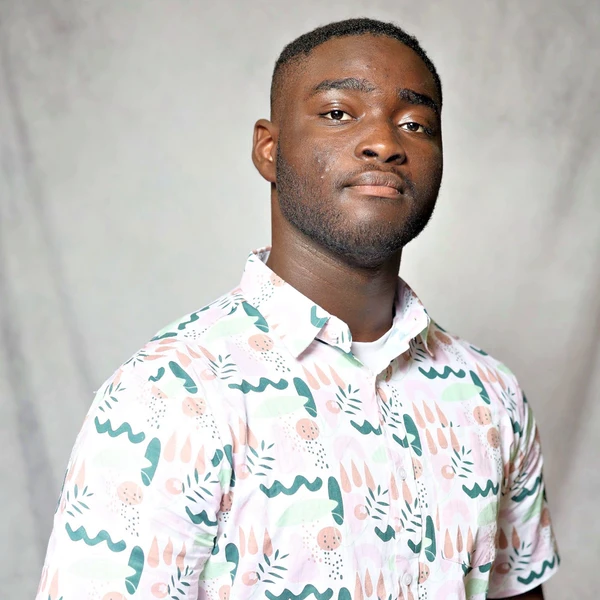
Hi, I'm Leonard David Oduro, a senior at Mount Vernon STEAM Academy with a passion for robotics and creative expression. In the summer of 2025, I completed an Aerial Robotics course at Stony Brook University's Pre-College Program. Outside the classroom, I enjoy playing guitar, drawing, gaming, and writing stories. I’ve performed guitar at multiple events and earned a regional gold medal and national silver medal for my short story. Driven by curiosity, I love tackling real-world tech challenges through hands-on learning.
Education
Mount Vernon STEAM Academy
High SchoolMiscellaneous
Desired degree level:
Master's degree program
Majors of interest:
- Computer Engineering
- Computer Science
- Engineering, General
Career
Dream career field:
Computer Software
Dream career goals:
Own a company
Sports
Wrestling
Intramural2024 – 2024
Research
Mechatronics, Robotics, and Automation Engineering
Stony Brook University — Student2025 – 2025
Arts
Naacp
Performance ArtAward-winning original short story submitted to the NAACP youth competition, Award-winning original short story submitted to the ACT-SO regional competion2024 – 2025
Public services
Volunteering
MVPL Creative writing camp — Founder2024 – 2024
Future Interests
Entrepreneurship
Matthew E. Minor Memorial Scholarship
My name is Leonard Oduro, and I am a high school senior in Mount Vernon, New York, with a strong interest in engineering, technology, and community leadership. Over the past few years, I have focused on using leadership opportunities to create safer, more supportive environments for students both in person and online. My experiences have shown me that when students feel heard and supported, they are more likely to succeed academically and socially.
One of the most impactful roles I have held is serving as the student trustee for the Mount Vernon School District. In this position, I represent student voices and participate in discussions that affect students across the entire district. This responsibility has allowed me to better understand the real challenges students face, including bullying, online behavior, and access to supportive academic resources. Being in a role where I can help influence conversations and advocate for students has motivated me to focus on creating positive and inclusive spaces.
Through my involvement at the district level, I have also worked to support programs that encourage student growth and confidence. One initiative I am especially proud of is partnering with my community library to help create a reading and writing literacy program for younger students. This program was designed to strengthen foundational skills while also creating a supportive learning environment where students feel encouraged rather than judged. I believe programs like this help prevent bullying by building confidence early and giving students safe spaces to express themselves.
My leadership experiences have also shaped how I approach online safety. As technology becomes more central to students’ lives, respectful digital communication is more important than ever. Through my work with student groups and district involvement, I encourage students to understand that online actions carry real consequences. I promote accountability, respectful interaction, and the importance of reporting harmful behavior so that issues can be addressed before they escalate.
As I prepare to pursue higher education, financial need is an important part of my journey. My family and I have worked hard to adjust after moving to the United States, and while education remains my top priority, the rising costs of college present a real challenge. Scholarships like this one help reduce that burden and allow me to continue focusing on leadership, service, and academic growth.
Overall, I believe preventing bullying, both in-person and online, requires leadership, awareness, and community support. Through my role as student trustee and my involvement in literacy and student programs, I have worked to help create environments where students feel respected and safe. As I continue my education in technology and engineering, I hope to expand this impact by supporting digital responsibility and creating opportunities that help students grow with confidence.
John F. Rowe, Jr. Memorial Scholarship
I was born and raised in Ghana before moving to Mount Vernon, New York, four years ago. Transitioning to a new country, school system, and environment presented challenges, but it also strengthened my determination to succeed academically and create opportunities for myself and others. Adjusting to a different educational structure, culture, and expectations required persistence, adaptability, and confidence, especially while continuing to stay focused on my long-term goals.
Rather than allowing these challenges to slow me down, I used them as motivation. I committed myself to maintaining strong academic performance while becoming involved in leadership and community initiatives that helped me grow both personally and academically. Through this process, I realized that education is not only about personal success, but it is also a pathway to service.
One of the most meaningful steps in my journey has been serving as the student trustee for the Mount Vernon School District. In this role, I represent student voices and contribute to conversations that impact hundreds of students across the district. This experience helped me understand how leadership can directly influence real change and showed me that public service can take many forms, especially through education and community involvement.
I have also worked to support my community through educational initiatives. I partnered with my local community library to help create programs focused on improving reading and writing literacy for younger students. Watching students gain confidence in their abilities reinforced my belief that small programs can make a lasting impact. In addition, as president of my school’s Gaming Club and esports team, I have organized activities that promote teamwork, strategy, and inclusion, creating spaces where students can connect and grow.
These experiences helped shape my sense of purpose. I plan to pursue a degree in engineering while continuing to explore business and leadership opportunities so that I can create solutions that improve everyday life. To me, public service means using education and skills to solve real problems and expand opportunities for others. Whether through mentoring students, creating educational programs, or designing technology that supports communities, I want my work to have a direct and positive impact.
The challenges I have faced, from adapting to a new country to balancing academic and leadership responsibilities, have strengthened my resilience and clarified my goals. They taught me that growth often comes from stepping outside of comfort zones and staying consistent even when change is difficult.
Public service calls to me because I have experienced how opportunity and encouragement can shape a person’s direction. As I continue pursuing my education, I hope to carry forward that same spirit, using what I learn to uplift my community and help others succeed.
Dr. Michal Lomask Memorial Scholarship
My name is Leonard Oduro, and I am a senior at Mount Vernon High School in New York. From a young age, I have been fascinated by how things work and how technology can improve people’s lives. This curiosity has driven me to pursue a STEM education, where I can combine problem-solving, creativity, and hands-on learning to tackle real-world challenges.
STEM excites me because it offers a path to innovation. Whether I am programming drones, exploring robotics, or experimenting with engineering projects, I enjoy the process of learning by doing, testing ideas, and refining solutions. I see STEM not just as a collection of subjects, but as a way to make a tangible difference. Each project teaches me critical thinking, resilience, and the value of perseverance, skills that extend beyond the classroom and into my community work.
Equally important to me is using STEM to benefit others. As the student trustee of the Mount Vernon School District, I advocate for students’ needs and help shape programs that affect hundreds of peers. I also partnered with our community library to design programs that improve reading and writing literacy, and I’ve created other school and community-based initiatives that give students the tools and confidence to succeed. Leading my school’s Gaming Club and esports team has further reinforced my leadership skills, as I organize events that teach teamwork, strategy, and problem-solving. These experiences have shown me that STEM skills are not only about technical expertise, but they’re also about applying knowledge in ways that empower others.
My passion for STEM is also tied to my long-term goal of becoming an engineer and innovator. I hope to design technologies that improve accessibility, sustainability, and efficiency, whether through community-based projects, infrastructure solutions, or creative applications of technology. I am particularly interested in finding ways to make STEM accessible to students who may not otherwise have exposure to it, so they, too, can develop skills, confidence, and opportunities.
Receiving the Dr. Michal Lomask Memorial Scholarship would allow me to pursue a rigorous STEM education without being limited by financial constraints. More importantly, it would be a recognition of my dedication, curiosity, and commitment to using STEM not just for personal achievement, but to create meaningful change in my community and beyond. With this support, I can continue exploring, learning, and building, while helping others see the possibilities that STEM offers.
A STEM education represents more than just a career path; it represents a way to contribute, inspire, and leave a positive legacy. By combining my passion, skills, and opportunities, I aim to honor the spirit of Dr. Lomask’s legacy and apply what I learn to make a difference for those around me.
Let Your Light Shine Scholarship
My name is Leonard Oduro, and I am a senior at Mount Vernon High School in New York. I’ve always been drawn to solving problems, building practical solutions, and creating opportunities for others. These passions guide not only my academic interests in engineering but also my long-term goal of becoming an entrepreneur, creating a business that leaves a lasting impact on my community and beyond.
To me, creating a legacy is about more than personal success; it’s about inspiring and enabling others to reach their potential. Throughout high school, I have sought ways to shine my light and make a difference. As the student trustee for the Mount Vernon School District, I represent my peers and help influence decisions that affect hundreds of students. I partnered with our community library to design programs that improve reading and writing literacy, and I have created other initiatives both in and out of school to support students in exploring their interests and developing skills. As president of my school’s Gaming Club and esports team, I organize events that teach teamwork, strategy, and leadership, helping students grow in confidence and problem-solving abilities. Each of these experiences has reinforced the belief that leadership and community impact go hand in hand.
Looking ahead, I hope to create a business that blends technology and entrepreneurship to solve real-world problems. I am particularly interested in companies that combine innovation, sustainability, and accessibility, businesses that not only provide products or services but also create opportunities for growth and learning in the communities they serve. Whether developing solutions that improve education, streamline processes, or create new opportunities for young people, I want my business to leave a tangible, positive mark.
I shine my light by taking initiative, creating programs, and mentoring others. Whether it’s leading student projects, organizing literacy programs, or mentoring peers in STEM and business-related skills, I aim to empower others to succeed alongside me. This approach reflects the kind of legacy I want to leave: one where creativity, collaboration, and encouragement create lasting change.
Receiving the Let Your Light Shine Scholarship would support my college education and allow me to focus on developing both the technical and business skills needed to turn ideas into impactful ventures. With this foundation, I can continue creating programs, leading initiatives, and building a business that inspires others to dream big, work hard, and shine their own light. I hope my future endeavors demonstrate that success is not just measured by achievements but by the opportunities and inspiration we leave behind for others.
Chris Ford Scholarship
My name is Leonard Oduro, and I am a senior at Mount Vernon High School in New York. I have always been drawn to solving problems, understanding systems, and building practical solutions that improve people’s lives. My curiosity and determination have guided me through academics, extracurricular projects, and community initiatives, and they now fuel my goal of pursuing a bachelor’s degree in engineering while eventually expanding my knowledge through an associate degree in business and finance.
From a young age, I have been fascinated by how technology and design can create meaningful change. Experimenting with robotics, programming drones, and exploring hands-on STEM projects has taught me that innovation requires persistence, creativity, and the willingness to embrace failure as a learning opportunity. Maintaining a GPA of 3.7 reflects both my commitment to academics and my drive to push myself to reach higher standards.
Equally important to me is creating opportunities for others. As president of my school’s Gaming Club and esports team, I organize events that engage students in strategic thinking, teamwork, and problem-solving. I also partnered with our community library to create programs that strengthen reading and writing literacy, and I have developed other initiatives both in and out of school to help students explore their interests and build skills. Serving as the student trustee for the Mount Vernon School District has given me the opportunity to represent my peers and contribute to decisions that affect hundreds of students. These experiences taught me that leadership is not only about personal achievement, but it’s also about creating programs, managing resources, and helping others succeed.
While my academic foundation is in engineering, I have always been interested in business. I plan to combine my technical skills with business knowledge to one day start my own company, creating innovative solutions while managing projects, budgets, and teams effectively. This approach will allow me to scale ideas, provide opportunities for others, and make a positive impact both locally and beyond. I also hope to continue mentoring students and leading community programs, sharing knowledge and encouragement so others can realize their potential, just as I have been supported along the way.
Receiving the Chris Ford Scholarship would provide essential support in pursuing my education and give me the freedom to focus on both academic excellence and leadership development. Beyond financial assistance, it would be a recognition of the hard work, resilience, and vision I am committed to nurturing throughout my education and career. With this foundation, I can continue building solutions that improve communities while developing the business skills to grow opportunities for others.
Jose Montanez Memorial Scholarship
Growing up in Mount Vernon, New York, I’ve learned that opportunity is not always evenly distributed, but encouragement and access to education can change everything. I am currently a high school senior with a strong interest in engineering, especially in areas that combine creativity and hands-on problem solving. Over time, I’ve realized that what excites me most about engineering is not just building things, but building solutions that can directly improve people’s lives.
I have always been curious about how things work. Whether it was taking apart small devices or learning new technical skills in school, I enjoyed experimenting, making mistakes, and trying again. That mindset has shaped how I approach both academics and personal challenges. Recently, I’ve become involved in STEM learning experiences focused on robotics and programming, which have helped me see how engineering connects to real-world needs, from transportation to accessibility to community infrastructure.
Equally important to me is contributing to my community. Serving as the student trustee of the Mount Vernon School District has given me the opportunity to represent my peers and help influence decisions that affect students across the district. Beyond that, I partnered with my community library to create a program designed to improve reading and writing literacy for local students. Seeing young students grow more confident in their abilities reinforced how impactful a supportive program can be. I have also volunteered at other local initiatives focused on tutoring, mentorship, and hands-on learning, all of which have strengthened my understanding of how communities thrive when people actively support one another.
Looking ahead, my goal is to pursue an engineering degree that allows me to design practical technologies that solve everyday problems. But I want my work to do more than that. I hope to return to communities like mine and help provide students with exposure to STEM fields and hands-on learning opportunities they might not otherwise have. Whether through mentoring, workshops, or community-based projects, I aim to make engineering tangible and accessible. I also want to contribute to local initiatives that address literacy, access to technology, and other educational challenges, so that students have both the resources and encouragement to pursue their passions.
Receiving the Jose Montanez Memorial Scholarship would support my education and bring me one step closer to these goals. More importantly, it would remind me to carry forward the spirit of giving that this award represents. I hope to use my education not only to build a successful career but also to open doors for others, inspiring them to reach their potential and contribute positively to their communities.
Kenneth R. Vessey Jr. Robotics Scholarship
My experience in FIRST Robotics Challenge has fundamentally shaped how I see my future in STEM, not just as a career path, but as a responsibility.
When I first joined FRC, I thought robotics was mainly about building a working machine. Over time, I realized it was really about problem-solving under pressure, collaboration, and learning how to think like an engineer. Being part of a team meant learning how to break down complex problems, test ideas that didn’t always work, and keep pushing forward even when progress felt slow. That mindset has carried into how I approach challenges both in and out of school.
FRC also introduced me to engineering as something tangible and impactful. Seeing code translate into movement, or a design decision affect performance on the field, made STEM feel real in a way that classrooms alone never could. It helped me understand that engineering isn’t just technical, it’s human. Every decision affects people, safety, and outcomes. That perspective strongly aligns with the values Kenneth R. Vessey stood for, especially his dedication to safety and mentorship.
My interest in robotics deepened further when I attended the Stony Brook University pre-college aerial robotics program. There, I worked hands-on with drones using Python and the Crazyflie platform, applying concepts I had first encountered through FRC at a higher level. That experience confirmed that this is what I want to pursue long-term. It showed me how robotics, software, and engineering theory come together in real research and real-world applications. More importantly, it helped me envision myself in a future where I am designing systems that are both innovative and responsible.
Through FRC, I also learned the importance of mentorship. I’ve benefited from mentors who took the time to explain not just what to do, but why it mattered. That has inspired me to want to give back in the same way, whether through mentoring future robotics students or working on projects that prioritize safety and accessibility.
Because of these experiences, I plan to pursue a STEM major in college, with a focus on engineering and robotics. FRC didn’t just prepare me academically; it gave me direction. It taught me how to think critically, work ethically, and stay committed to learning, even when things are difficult.
This scholarship represents more than financial support. It honors a mentor who believed in students and the power of STEM to make a difference. I hope to carry that legacy forward in my education and career.
Stewart Family Legacy Scholarship
Leadership and science are two forces that continually shape the world. Science provides the tools to understand, innovate, and push the boundaries of what is possible. Leadership ensures that this knowledge is applied responsibly, ethically, and for the benefit of society. Together, they guide the course of progress and determine the future we create.
Throughout history, scientific breakthroughs from vaccines that save millions to technology that connects the globe have transformed lives. Yet these advances only reach their full potential when guided by visionary leadership. Renewable energy, artificial intelligence, and medical innovations require both knowledge and the wisdom to implement them in ways that solve real-world challenges.
In my own journey, I’ve seen how leadership and science intersect. Participating in a science and engineering research program allowed me to explore experiments firsthand and access materials that enabled me to tackle real-world challenges. As president of my school’s esports team, I’ve led national tournaments requiring strategy, collaboration, and quick problem-solving skills that mirror the teamwork essential in scientific research. Partnering with my community library to create a summer program for kids taught me how to inspire curiosity and foster learning. Serving as student trustee for my entire district has given me the responsibility of representing thousands of students, showing me that leadership is about listening, advocating, and guiding a community. Even in my personal life, being my brother’s keeper has taught me that leadership begins with care, patience, and accountability.
These experiences have shown me that the future is shaped by the combination of knowledge and action. Science gives us the engine to innovate; leadership is the steering wheel that directs those innovations toward meaningful impact. Whether solving technical challenges in robotics and aerial drones or helping others discover their potential, I’ve learned that progress requires both skill and the ability to unite people toward a common goal.
As I continue to grow, I aspire to lead with curiosity and empathy, using science not only to innovate but to create solutions that are equitable, sustainable, and transformative. Our generation has the opportunity and the responsibility to ensure that the future we build is brighter, wiser, and more connected than ever before.
Tim Dunham Blood Disorder Awareness Scholarship
When I first learned I was a sickle cell carrier, the news hit me like a sudden explosion. One moment, I was sitting in my public speaking class, and the next, I was frozen in my seat, holding a phone to my ear as the blood donation company explained my test results. My mind went blank. I barely heard their words beyond, “You should not donate blood.” What lingered with me was a heavy fear: sickle cell. At that moment, I thought my life would be cut short.
It all started innocently. One evening after wrestling practice, my team captain, who is also a close friend, asked me to sign up for the school’s blood drive. Out of respect for him, I agreed. Weeks later, I nearly forgot, but I showed up, gave my blood, and thought little of it afterward. A few months later, he asked if I could do it again, and once more I agreed without hesitation. Then came that unexpected call in class. They explained my results, but shock drowned out everything except the word “sickle cell.”
I spent the rest of the day and week consumed by fear. I researched obsessively and was devastated when I read that people with sickle cell disease often have shorter lifespans. I sat in silence, depressed, imagining a future cut short. Even my friends noticed. One asked me directly if something was wrong, and when I finally hinted at what I had learned, she connected it to a lesson from her AP Biology class. Still, I could not bring myself to talk openly about it.
Eventually, I reached my older brother, who is a medical student. When I asked if he had sickle cell, he surprised me by saying yes, before quickly clarifying. Like me, he explained, he was not living with sickle cell disease, but was a carrier. He taught me what I had missed in my panic: that being a carrier is different, that my life was not in immediate danger, but that it was still important knowledge for my health and future. In that moment, the weight that had crushed me lifted, though not completely. I felt relief, but also a new awareness of the invisible burdens that blood disorders place on people and families.
This experience changed the way I see the world. It opened my eyes to the fear, confusion, and stigma that can accompany blood disorders, especially when people don’t fully understand them. Even though I am “only” a carrier, my story is a reminder of how vital education and awareness are.
I hope to spread awareness by first sharing my own story. Personal experiences have the power to make others stop and listen in a way that statistics cannot. I plan to use the platforms available to me, whether through social media, school presentations, volunteer opportunities, or even my role as a student board trustee, to educate others about blood disorders. My goal is to help people understand not just the science, but also the human impact: the fear, the silence, and ultimately, the hope that comes with knowledge.
Marcia Bick Scholarship
WinnerGrowing up in New York, Mount Vernon, I quickly realized that life doesn’t hand out equal opportunities. My family faced financial challenges that often made even simple resources like tutoring, extracurricular programs, or test prep feel out of reach. Yet, instead of letting these obstacles define me, I used them as motivation to work harder and pursue every opportunity available.
Balancing academics with responsibilities at home became a constant part of my life. I helped care for younger siblings while my parents worked long hours, and sometimes I had to navigate schoolwork with limited resources. There were moments when I doubted whether I could keep up with my peers, but I refused to let circumstance dictate my potential. Instead, I leaned into hard work and discipline, maintaining a 4.0 GPA through freshman and sophomore years and pushing through even when challenges felt overwhelming.
I’ve sought to maximize every opportunity despite these limitations. I actively participate in academic and STEM-focused programs, including an aerial robotics course at Stony Brook University, where I’ve gained hands-on experience coding and piloting drones. Beyond academics, I’ve pursued leadership and service, contributing to school clubs and mentoring younger students when possible. Each achievement reflects not just ability, but determination, resourcefulness, and resilience qualities, I believe, that are essential for success.
Receiving this scholarship would remove barriers that still stand in my way. It would give me access to programs, resources, and experiences I cannot afford on my own, allowing me to focus fully on college preparation and my long-term goal of pursuing engineering. It would also ease the financial strain on my family, giving me the space to fully dedicate myself to academics and personal growth without distraction.
I believe motivated students from disadvantaged backgrounds deserve opportunities like this because circumstances do not define potential. What defines potential is the willingness to rise above challenges, embrace growth, and remain committed to achieving goals despite setbacks. I have faced financial hardship, limited resources, and personal responsibilities, yet I have consistently worked to excel academically and personally. This scholarship would be both a recognition of my past efforts and a critical stepping stone toward future impact, allowing me not only to pursue my dreams but also to inspire and support others facing similar challenges.
Through determination, persistence, and hard work, I have learned to turn obstacles into motivation. I am committed to transforming opportunities into tangible achievements and to making a meaningful contribution to my community and field. This scholarship would not just help me succeed, it would allow me to rise fully into my potential and give back in ways that matter.