Hobbies and interests
Volleyball
digital art
Drawing And Illustration
Leia Dallas
1x
Finalist1x
Winner
Leia Dallas
1x
Finalist1x
WinnerBio
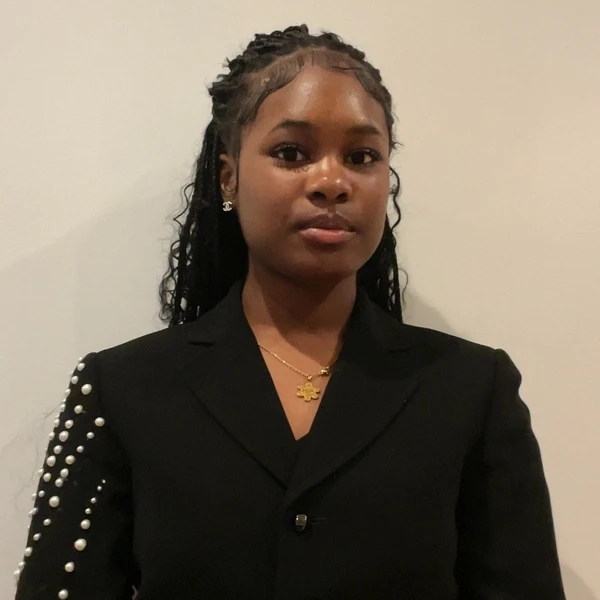
I am a graduating Senior at Thurgood Marshall Academy dedicated to the improvement of minority communities through civil engagement and policy reform. I am also an intern for Capital One Bank. This fall, I will be attending Spelman College as a political science major!
Education
Thurgood Marshall Academy Pcs
High SchoolMiscellaneous
Desired degree level:
Bachelor's degree program
Majors of interest:
- Agricultural Engineering
- Criminology
- Criminal Justice and Corrections, General
- Architecture and Related Services, Other
Career
Dream career field:
Law Practice
Dream career goals:
Civil Attorney
Sports
Volleyball
Varsity2024 – 20262 years
Janisse Berry Memorial Scholarship
WinnerI was destined for failure.
I woke up and started my usual routine for school. Brush, wash, floss, and fix my edges. I head to the train station and watch my Greenbelt train finally arrive. I get off at Anacostia station, which is only a 5-minute walk from my school. As I walk towards my school, my eyes widen at the sight of that familiar yellow police duct tape with a dozen police cars and ambulances nearby.
Someone had been shot right next to my school.
I passed a few police cars, walked into my school building, and began class as normal.
Most students haven’t become desensitized to the disappearance of classmates because they have died or been sent to prison. Most students don’t fear for their safety when walking to school, and most students aren’t entrenched with the smell of marijuana in school hallways and classrooms.
Unfortunately, I am not most students.
I see and experience these occurrences nearly every day, so much so that I have become numb to them. But what I didn’t recognize was that this numbness was poor mental health. The emotional walls I built to survive my environment slowly disconnected me from my feelings, my hope, and even my belief in my own potential. The numbness I needed in order to keep moving forward was really the mental exhaustion of a student who needed their community to be changed and uplifted.
Indeed, these factors are symptoms of a larger systemic problem, one that also influences my entire school’s academic experience. The average SAT score in my entire school is 580–950. When students such as myself are constantly exposed to violence, instability, and low expectations, it becomes difficult to prioritize mental wellness or academic success.
I was destined for failure.
And I believed it.
It was not until tenth grade that I discovered a superpower within myself: my voice.
I joined the debate club at my school, and after winning my first tournament round, something shifted in me. Standing in front of a room full of strangers and defending my argument gave me confidence I had never felt before. For the first time, I realized my voice carried power, and that meant I had power too. Power to advocate for my community. Power to change my future. Power to guide future generations of students in the right direction.
I began using that power outside of debate through my school’s voter registration club and Pathways 2 Power (P2P), a student-led gun violence intervention group. In communities like mine, many people feel ignored by the political system because they believe they don't have power, that their voice doesn't matter. I wanted to help change that mindset by encouraging students and community members to register to vote and engage civically. Through the voter registration club, I hosted candidate forums to educate young voters on ranked-choice voting and connect them directly with local candidates. Through P2P, I also worked to prioritize mental wellness in my community by leading roundtable discussions that encouraged students and teachers to openly express their emotions through questions like, “How are you feeling today?” or “What color best represents your mood right now?”
My lived experience taught me that oppression is not always one singular moment. Sometimes it is the accumulation of low expectations, unsafe environments, and systems designed to keep communities trapped in cycles of inequity. But I also learned that it only takes one voice, one question, one idea to eradicate all injustices.
I was destined for failure, but I chose to become destined for impact instead.