user profile avatar

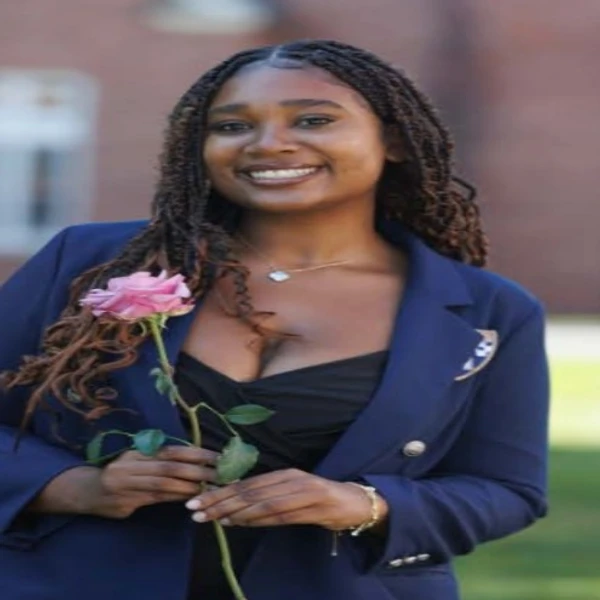
Leah Watson

1x

Finalist

General information

Gender
Female
Ethnicity
Black/African
Religion
Christian

Hobbies & Interests

  • Babysitting And Childcare
  • Bible Study
  • Piano
  • Ceramics And Pottery
  • Tennis
  • Golf
  • Reading
  • Journaling
  • Community Service And Volunteering

Reading

  • Fantasy

I read books multiple times a week.

Bio

My life goals are simple but deeply personal: become an OB-GYN, become a property owner, and become a traveler. As a pre-med biology student at Spelman College with a 3.8 major GPA, I'm working every day toward a career in medicine that's about more than just practicing, it's about addressing the maternal health crisis facing Black women and becoming a trusted, empathetic face in healthcare. I'm passionate about learning new things and growing, both personally and intellectually. I'm adaptable, buildable, and flexible, someone who thrives in new environments and finds opportunity in change rather than being intimidated by it. This shows up in everything I do, from leading student organizations focused on health equity and civic engagement, to public speaking in front of hundreds of people, to picking up new skills like American Sign Language. What makes me a great candidate is the combination of ambition and follow-through. I don't just set goals, I build the track record to back them up: leadership roles, community service, real healthcare exposure through shadowing, and a consistent drive to show up for the people and communities around me.

Education

Spelman College

Bachelor's degree program

2025 – 2026

Majors:
  • Biology, General

Miss Halls School

High School

2021 – 2025

Miscellaneous

Desired degree level:
Doctoral degree program (PhD, MD, JD, etc.)
Graduate schools of interest:
Albert Einstein College of Medicine
Majors of interest:
Biology, General
Medical school interest:
Yes

Career

  • Camp Counselor

    Recreational Facilities and Services · Englewood Field Club

    Jan 2023 – Jan 2024

  • Cashier

    Consumer Goods · ShopRite

    Jan 2025 – Jan 2025

  • Tutor Counselor

    Civic & Social Organization · TRIO Program

    Jan 2026 – Jan 2026

Miscellaneous

Dream career field:
OBGYN
Work experience:
4 years
Has nursing license:
No

Future Interests

  • Advocacy
  • Volunteering
  • Philanthropy
  • Entrepreneurship
Kayla Nicole Monk Memorial Scholarship
I chose to study biology on the pre-med track because I want to become an OB-GYN who actually listens to her patients, not one who dismisses their symptoms and sends them home. Growing up, I watched women in my life, including myself, go years without real answers about their own bodies. I got my first period at 12 and had no idea what my body was doing to me. I've spent years learning on my own about hormonal cycles, mood changes, and physical symptoms that no one ever explained. That gap in my own education is exactly what pushed me toward medicine. I want to be the kind of doctor who closes that gap for other women instead of letting them figure it out alone the way I had to. Outside of the classroom, that same drive has shaped almost everything I do. I've researched and presented on medical distrust in the Black community, mentored younger students through Morehouse's TRIO program, and spent countless hours in community health outreach, all because I believe access to real information is one of the most powerful things you can give someone. STEM isn't just a major to me. It's the foundation for the kind of care I want to be able to give one day, care that's accurate, honest, and doesn't leave people confused about their own bodies for over a decade before they get help. Right now, the biggest obstacle standing between me and that future isn't my drive or my grades. It's money. I'm attending my dream school, and being here has meant everything to me: the people I've met, the experiences I've had, the opportunities that have opened up because of this specific place. But every year, it's become harder to afford. I've had to take out loans, and so has my mom, and that's the part that weighs on me most. I don't want to put her in debt for my education. She's already given me so much, and the last thing I want is for my dream to become a financial burden she carries for years after I graduate. On top of the loans, I'm also paying out of pocket for parts of school, which has meant I haven't been able to build any savings or an emergency fund for myself. There's no cushion right now, just tuition bills and the hope that everything works out. Financial freedom isn't a luxury goal for me. It's the difference between finishing my degree with some stability or finishing it buried under debt that follows me and my mom for years. This scholarship would ease that pressure directly. It would mean fewer loans, less strain on my mom, and the ability to actually focus on my education and the community work I care about instead of constantly worrying about how to pay for the next semester. Kayla Nicole Monk's story is about someone who had a vision and worked to make it real despite the odds against her. That's exactly what I'm trying to do, and this scholarship would help make sure money isn't the reason I can't finish!
Charlene K. Howard Chogo Scholarship
My relationship with women's empowerment began with two transformations, both of which happened inside all-girls schools. The first was leaving a public, predominantly Black school for Miss Hall's School, a private all-girls boarding school that was overwhelmingly white. I went from a place where I never had to explain myself to one where I often felt like a representative before I felt like a student. Instead of shrinking into that discomfort, I chose to lead through it, serving as Essence Co-Head and Spectrum Co-Head, and later as Black Student Union Tri-Head, building spaces where young women of color could see themselves reflected and supported in an environment not originally built with us in mind. The second transformation was choosing Spelman College, an HBCU and another all-women's institution, where for the first time that space already existed, built by and for women like me. Being educated in all-girls environments for both of these chapters shaped how I understand empowerment. It is not just about being in rooms with other women, it is about what happens inside those rooms, whether women are being handed a seat at the table or handed the whole table to build as they see fit. That contrast taught me that women's empowerment looks different depending on whether you are building a community from nothing or stepping into one already built by generations of women before you. At Miss Hall's, my effect on women's empowerment was often about creation, organizing Health Advocacy Workshops that reached over 500 attendees on topics like medical distrust in the Black community, and leading cultural history workshops that gave young women a chance to see their own histories taken seriously. At Spelman, my effect has shifted toward continuation, showing up for organizations like My Sister's Keeper and Black Girls Who Vote, where the work is less about proving a space deserves to exist and more about deepening what generations of Spelman women have already built. I see a direct connection between that work and Charlene K. Howard's legacy at FSU and FAMU, another HBCU whose mission mirrors much of what Spelman represents to me. Her role as a mentor and academic advisor was not just about guiding students academically, it was about making sure young women, particularly Black women, had someone in their corner who believed in their potential before they fully believed in it themselves. That is exactly what I try to be for the younger students I mentor and the peers I lead alongside, whether through my current involvement in campus organizations at Spelman or through my continued commitment to health education and advocacy. My effect on women's empowerment, ultimately, comes from refusing to separate my own growth from the growth of the women around me. Having spent my education entirely within all-women's spaces, I do not just want to succeed individually, in the classroom, in medicine, in leadership, I want every space I move through to be a little more open, a little more affirming, and a little more empowering for the next young woman who walks through it after me. That is the same legacy Charlene Howard left behind, and it is the one I intend to carry forward.
STLF Memorial Pay It Forward Scholarship
In 2023, I helped lead the Maui SOS Leadership Initiative at Miss Hall's School after wildfires devastated Maui and left entire communities without basic necessities. I organized a presentation to educate our school about the crisis, since I noticed that most students had seen headlines but did not understand the scale of what people were actually losing. From there, I organized a clothing drive, coordinating collection, sorting, and donation logistics, and we ultimately donated 464.1 pounds of clothing to Maui Preparatory Academy. What started as a single idea became a school-wide effort because I made sure people understood not just what had happened, but why their specific contribution mattered. That same approach shaped my Health Advocacy Workshops at Miss Hall's School. Over several years, I led a workshop on African American pop culture for over 100 attendees at our school's culture fair, presented a "Jumping the Broom" cultural history workshop to 200 people, and delivered "History of Vaccinations in the Black Community & Medical Distrust" twice, once at the school level and once at a multi-school conference, reaching over 500 attendees combined. Organizing these workshops meant researching sensitive, sometimes uncomfortable histories, building a presentation that respected that history, and creating a space where students felt safe enough to ask real questions instead of staying silent out of discomfort. Both experiences taught me that leadership through service is not about stepping in with answers already prepared. It is about noticing a real need, whether that is a community across the ocean losing everything to wildfire or students who have never been taught why medical distrust exists in their own community, and building something that actually meets that need instead of something that simply looks good on paper. Organizing the Maui clothing drive required more than good intentions. It required logistics: figuring out collection points, communicating deadlines, and following through until every pound of clothing actually reached the people who needed it. Leading the health workshops required more than passion for the topic. It required earning trust so that difficult conversations about race and medicine could actually happen honestly. I believe leadership through service matters because it is proof, not promise. Anyone can say they care about a cause. Leadership through service means showing up consistently enough that people can measure your impact, in pounds of clothing donated, in the number of students who walked away from a workshop with a different understanding than they walked in with, in the trust built over time rather than a single gesture. That belief carries directly into my future. As a pre-med Biology student at Spelman College working toward a career in medicine, I plan to keep leading through service rather than simply participating in it, organizing the resources, education, and access that communities actually need, the same way I learned to do through Maui SOS and my health advocacy work in high school. Service taught me that real leadership is measured by what you build for other people, not by what you are given credit for.
Nadia Ansari Design Award
I refuse to accept that my grandmother's story has to end in forgetting. She was diagnosed with Lewy Body Dementia last year, and watching it slowly alter her mind and brain chemistry, watching her lose both the small memories and the large ones, has broken my heart in a way I wasn't prepared for. But I refuse to treat that loss as simply inevitable, something to grieve and move past. I want to understand it well enough to change what happens next, for her, and for the people who come after her. Memory loss and dementia run through my mother's side of the family across generations. My mom is already struggling to care for my grandmother while quietly carrying the fear of what that might mean for her own future, and for mine. That fear pushed me to actually study what's happening, not just accept it as something that runs in families and can't be touched. I started researching the science behind cognitive decline, specifically how continuous mental stimulation and active engagement of the brain can help build cognitive reserve and potentially slow the progression of memory-related conditions. What I found gave me something grief alone never could: a plan, not just a feeling. That research shapes how I want to approach medicine. As a pre-med Biology major at Spelman College, I want to understand neurodegenerative conditions like Lewy Body Dementia on a deeper level, studying neurology and psychology enough to understand how the brain changes, how memory and cognition are affected, and what interventions, like continuous mental stimulation and early lifestyle changes, could help slow that decline. I don't need it to define my specialty to believe it matters. I want to carry that understanding into whatever room I end up in, the same way Nadia Ansari let her own experience with chronic pain shape work far beyond her original diagnosis. This isn't only about medicine for me, it's personal in a way that keeps me honest about why the work matters. I want to keep my own mind active and engaged throughout my life, continuously learning, so that one day I can still tell my story, and my grandmother's story, to my own great-grandchildren. I don't want her legacy to end where her memory does. I want to be the one who carries it forward, and I want my career to help make sure other families get to do the same. This scholarship would support me in pursuing that goal seriously, through my education, through research opportunities in neuroscience and aging, and eventually through work where I can turn this refusal into something built.
Kalia D. Davis Memorial Scholarship
"I will worship toward thy holy temple, and praise thy name for thy lovingkindness and for thy truth." Psalm 138:2 (KJV) Growing up, I watched my mom grade papers at our kitchen table late into the night, long after my sister and I had gone to bed. She's an elementary school teacher and a single parent, raising the two of us on her own, and I never once saw her let the weight of that show. She taught me that loving and kindness aren't just feelings, they're a discipline. It's choosing to show up for people, patiently and consistently, even when you're tired, even when no one's watching. That verse reminds me of her every time I read it. That's the lens I bring to everything I do, whether it's academics, service, or the people I meet along the way. This past summer, I started volunteering at the Bergen Family Center in Englewood, New Jersey, sorting donated clothing, helping in the daycare, and organizing community events. That daycare happens to be the very first place I ever went to school, so being back there now feels less like volunteering and more like coming home to return what was given to me. I try to remember the small things about the people I meet there, a kid's favorite color, a parent's rough week, because I've learned that's often where real care lives, not in grand gestures, but in the details people don't expect you to notice. I believe that same instinct is what would make me a strong candidate for this scholarship. I don't do things for recognition. I do them because I genuinely believe life is precious and that my time here should leave people a little more encouraged than I found them. That shows up in small ways, being co-captain of my junior varsity soccer team and choosing to lead through consistency rather than volume, and in bigger ones, working toward a career where I can carry that same care into a hospital room. Reading about Kalia D. Davis, I recognized so much of what I hope to become. She was disciplined and excellent in everything she touched, but she was also someone people could count on for encouragement and a good laugh, someone who made people feel loved in the everyday moments. That's the kind of legacy that doesn't require a title, just a decision, made over and over, to show up for people fully. I want to honor that by living the same way: working hard toward my goals as a pre-med student at Spelman College on my way to becoming an OB-GYN, while never losing the part of me that checks in on people just because I remembered they were having a hard week. This scholarship would ease a real financial weight and let me keep showing up fully, for my education, for my community, and for the people I meet along the way, without that pressure pulling me away from what actually matters. My mom taught me that perseverance and education go hand in hand, and that you carry the people who raised you into every room you enter. I plan to carry her, and now Kalia's memory too, into every room I enter for the rest of my life.
Byte into STEM Scholarship
I failed my first chemistry test in tenth grade. I remember staring at that paper thinking maybe I didn't belong there. But instead of giving up, I went to office hours and started showing up differently. That one decision changed the direction of my life. My chemistry teacher, Ms. Quinonez-Jones, was passionate about science in a way that was contagious. One day she shared something personal: her closest friend, a Hispanic woman who was pregnant, kept being dismissed by her doctors and felt invisible in a system meant to protect her. She was eventually diagnosed with preeclampsia. I went home and researched it, and what I found is that women, especially women of color, are dying at significantly higher rates during and after childbirth. Then I talked to my mom. She told me about giving birth to me and my twin sister, how she kept telling her doctors she was in pain and they didn't listen, how her epidural was placed incorrectly three times, and how she developed sepsis. While my sister and I came into the world, our mother spent the next two weeks in a hospital bed instead of coming home with us. That conversation made everything click. This wasn't just something I'd read about, it was my own family. I needed to be in that room. I needed to be the doctor who actually listens. That passion for science isn't separate from my passion for people, it's the same thing. I'm now a Biology major on a pre-med track at Spelman College, carrying a 3.8 major GPA. Outside the classroom, I'm a member of Alpha Lambda Delta Honor Society and the Health Careers Program, and I shadow physicians to build real exposure to clinical environments. This summer, I came back to Atlanta to work as a tutor counselor in the TRIO program, mentoring underprivileged students and serving as a resident advisor, because I believe education, like healthcare, should be something everyone has access to, not something only some people are handed. One of my students, Morgan, told me she comes to the program because it's the place she feels most loved. That stayed with me. It's why I show up every day, in the lab and outside of it. My Biology degree at Spelman is the foundation for a specific plan, not just a general interest in science. I chose Spelman deliberately because, as an HBCU, it sits at the intersection of academic excellence and community. This winter, I'm working to secure a clinical internship and a research position to gain early hands-on experience. I'm also looking to get my CNA license so I can work directly with patients before I even reach medical school. After that, I'll study for the MCAT and apply to medical school, with Albert Einstein College of Medicine in the Bronx as my top choice, close to the community I come from, with a strong reputation in research and primary care, matching the kind of medicine I want to practice. From there, I plan to complete a residency in obstetrics and gynecology and build a practice centered on women of color, particularly in maternal health, treating patients the way I wish my own mother had been treated. I don't come from much, but I'm determined to pour everything I've been given back into every community I enter, in a lab, in a classroom, and eventually in a delivery room. If I'm invested in now, I plan to spend my career giving that back: to my patients, my community, and the next generation of young women in STEM.
Mattie K Peterson Higher Education Scholarship
Serving my community is important to me because it's how I was taught to understand who I am in relation to other people. I grew up in Englewood, New Jersey, and it's still home, I return there every summer and every school break, and it's where my family and roots are. My mom, one of the most community-oriented people I know, raised me to believe that it takes a village, not just as a saying, but as something you live out. When I was younger, we'd go peach and apple picking together, then bake pies to bring to new neighbors, a small way of saying welcome, we're glad you're here. I was also in Girl Scouts growing up, which reinforced that same lesson: that showing up for people isn't optional, it's part of what it means to belong somewhere. That's why service, for me, was never about doing something extra. It's about honoring what I was given. It matters to me because it keeps me connected to where I come from, even while I'm away at school. That's part of why I started volunteering at the Bergen Family Center in Englewood this summer, the very first place I ever went to school myself. I sort donated clothing, help maintain the grounds, organize community events, and help out in the daycare there, caring for kids the way someone once cared for me in that same building. Going back reminded me that community isn't abstract, it's specific people and places, and it's important to me to keep showing up for them, even after I've grown past needing them myself. It's also important to me because of what it does for other people who are where I once was. This summer, mentoring high school students through Morehouse TRIO showed me that firsthand. Watching a student go from unsure they'd get into college to genuinely believing they belonged there reminded me why representation matters. When someone who looks like you shows you it's possible, it changes what you believe you're allowed to want. That's a big part of why I serve: not just to give back, but to widen what someone else believes is possible for themselves. This is also why Mattie K Peterson's story means something to me. She wasn't defined by one title or grand gesture. She was present, again and again, in the small, steady ways that hold a community together, as a mentor, a friend, a volunteer. That's exactly what my mom modeled for me in Englewood, and it's why I believe service isn't a single act but a lifelong habit. Ultimately, it's important to me to serve my community because none of us get anywhere alone, and I don't want anyone near me to feel like they have to navigate their hardest moments by themselves. Whether I'm sorting clothes at the center where I learned to read, mentoring a nervous high schooler, or one day delivering a baby in a hospital room as an OB-GYN, I want my presence to mean something to the person in front of me. That's the truest way I know to honor a legacy like Mattie Peterson's, and the one my village, Englewood, already gave me.
Leah Watson Student Profile | Bold.org